CEREBRAL CORTEX
• INTRODUCTION
• BASIC ANATOMY
• FUNCTIONAL DIVISIONS
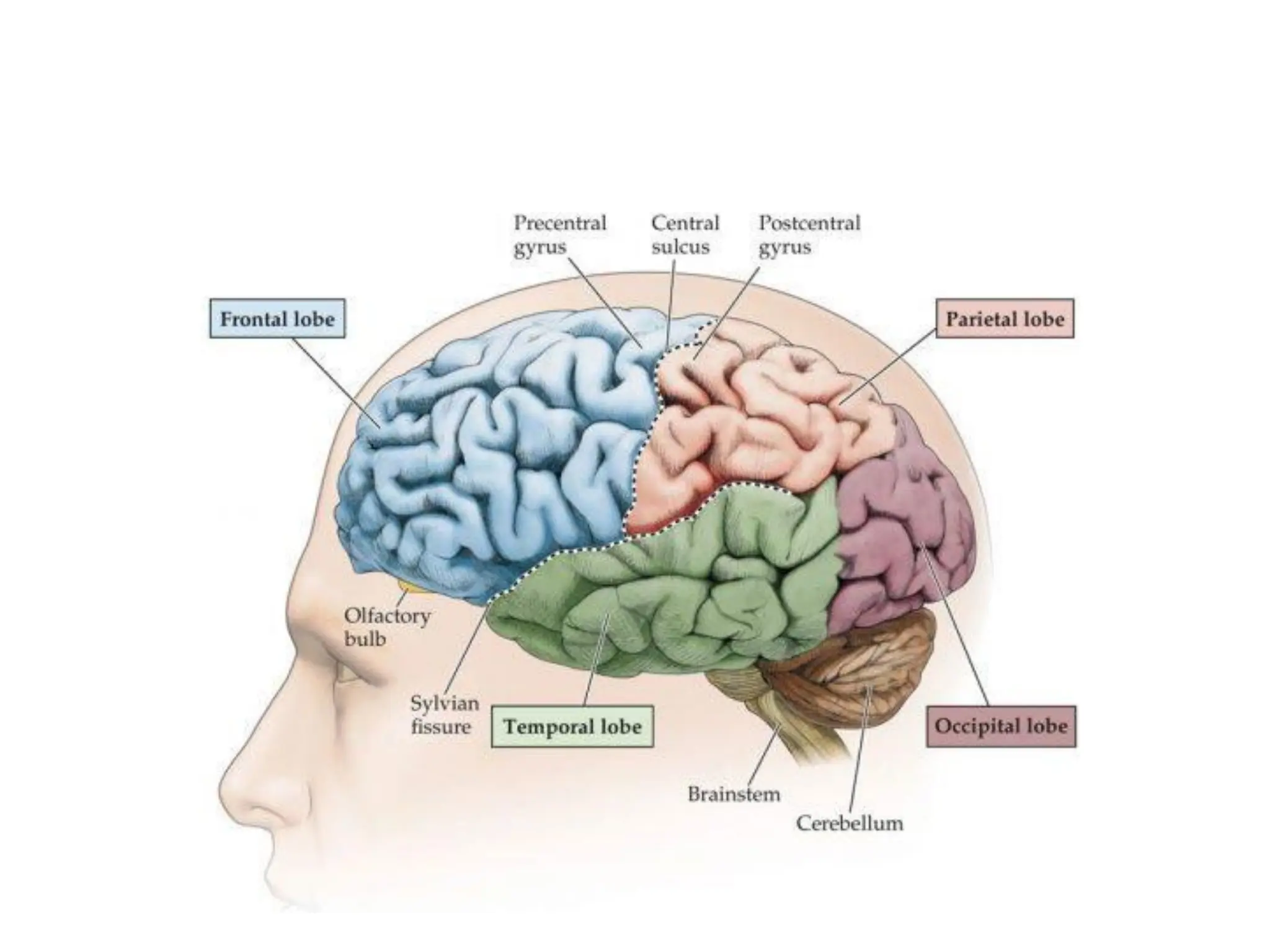
• FRONTAL LOBE
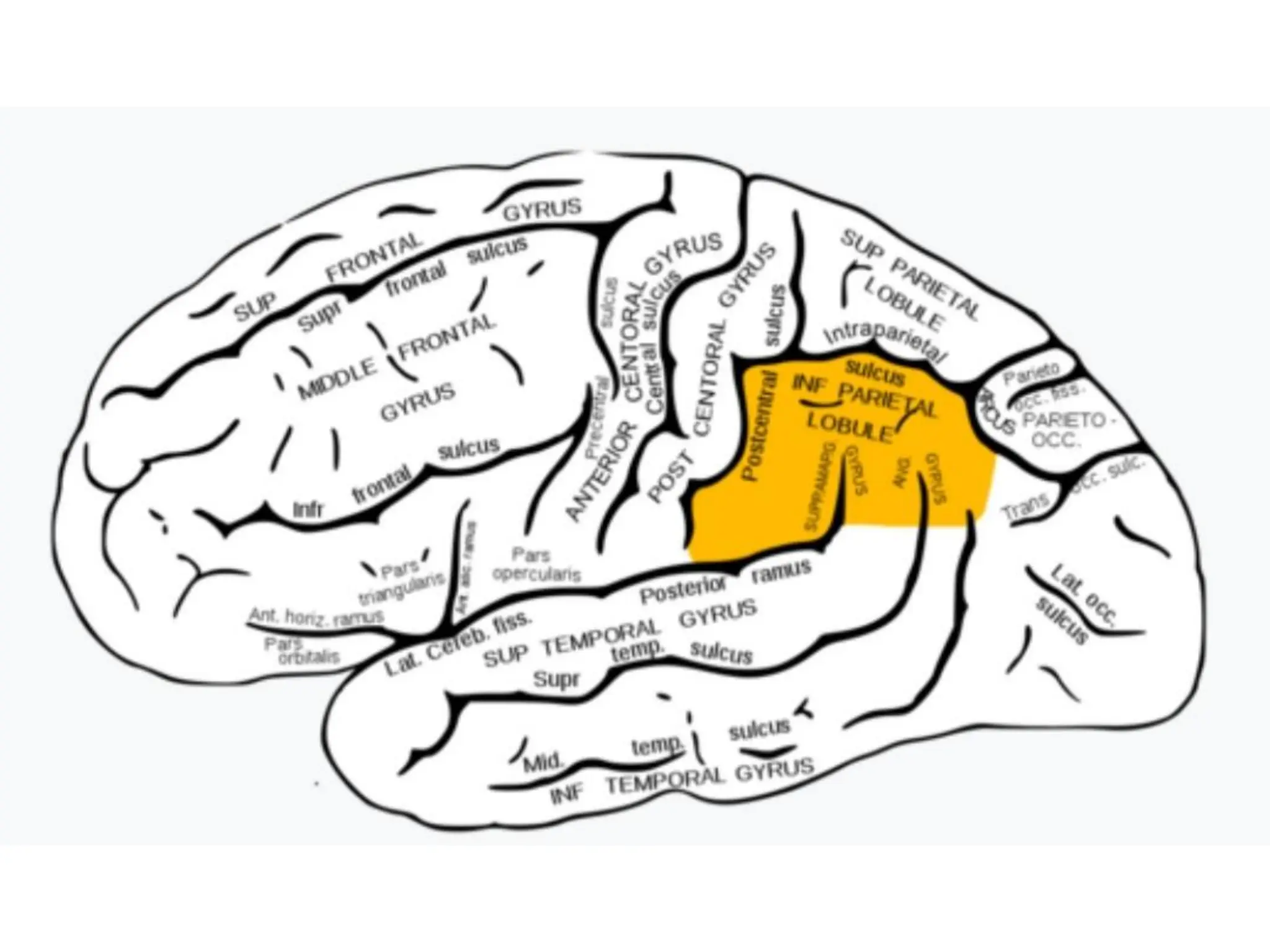
• PARIETAL LOBE
• TEMPORAL LOBE
• OCCIPITAL LOBE
GENERAL
CONSIDERATIONS
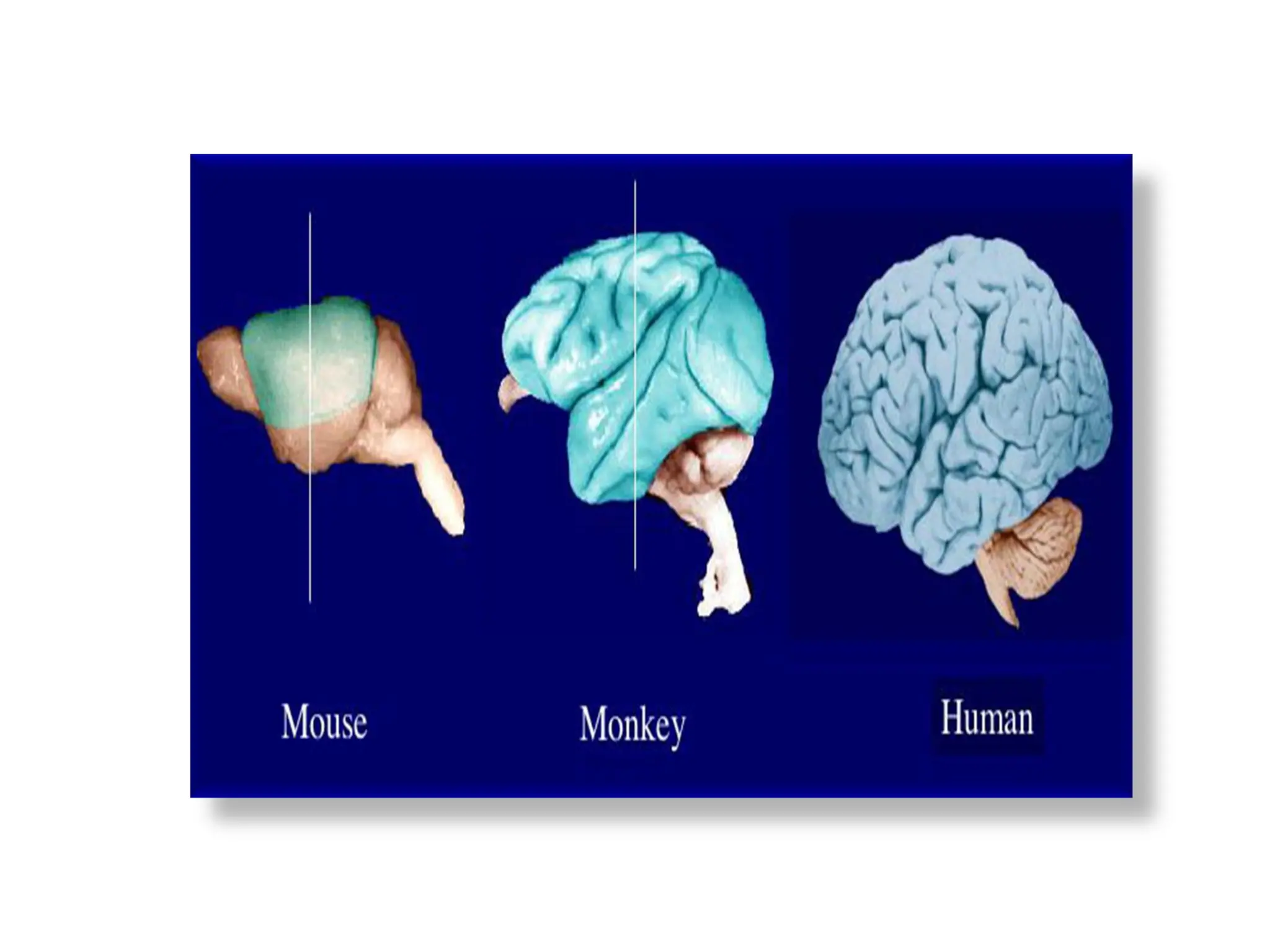
❑Highest level of CNS
❑Largest part of brain
❑Highly developed in humans
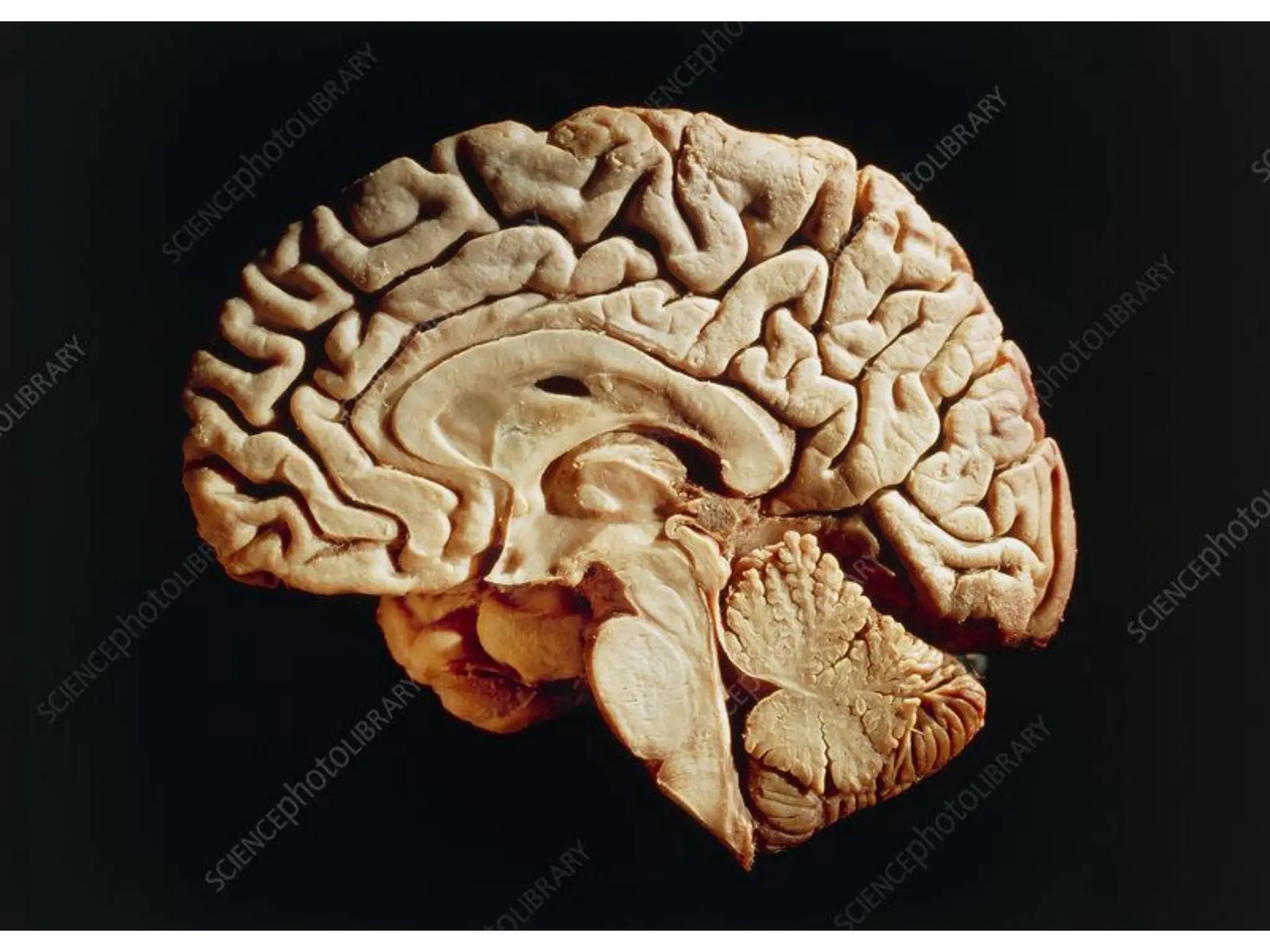
❖Cerebrum - Outer gray matter and inner
white matter.
❖Outer gray matter is called CEREBRAL
CORTEX
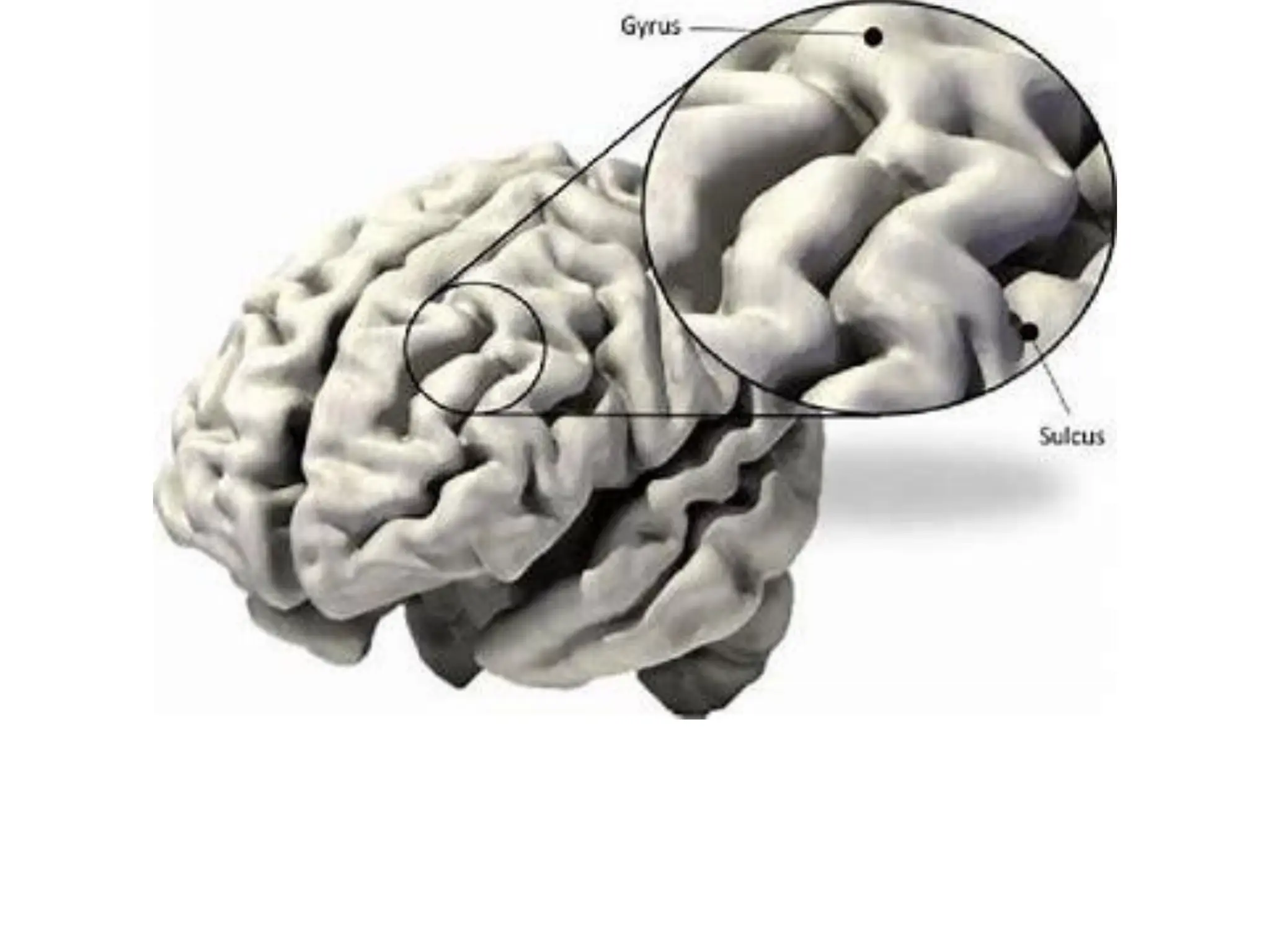
❖ Surface of cortex is convoluted. Folds are
called as gyri and intervening grooves
are called sulci.
Functional part of cerebral cortex is thin layer
of neurons covering the surface of all
convolutions. It is only 2-5 mm thick. Total
cerebral cortex contains about 100 billion
neurons.
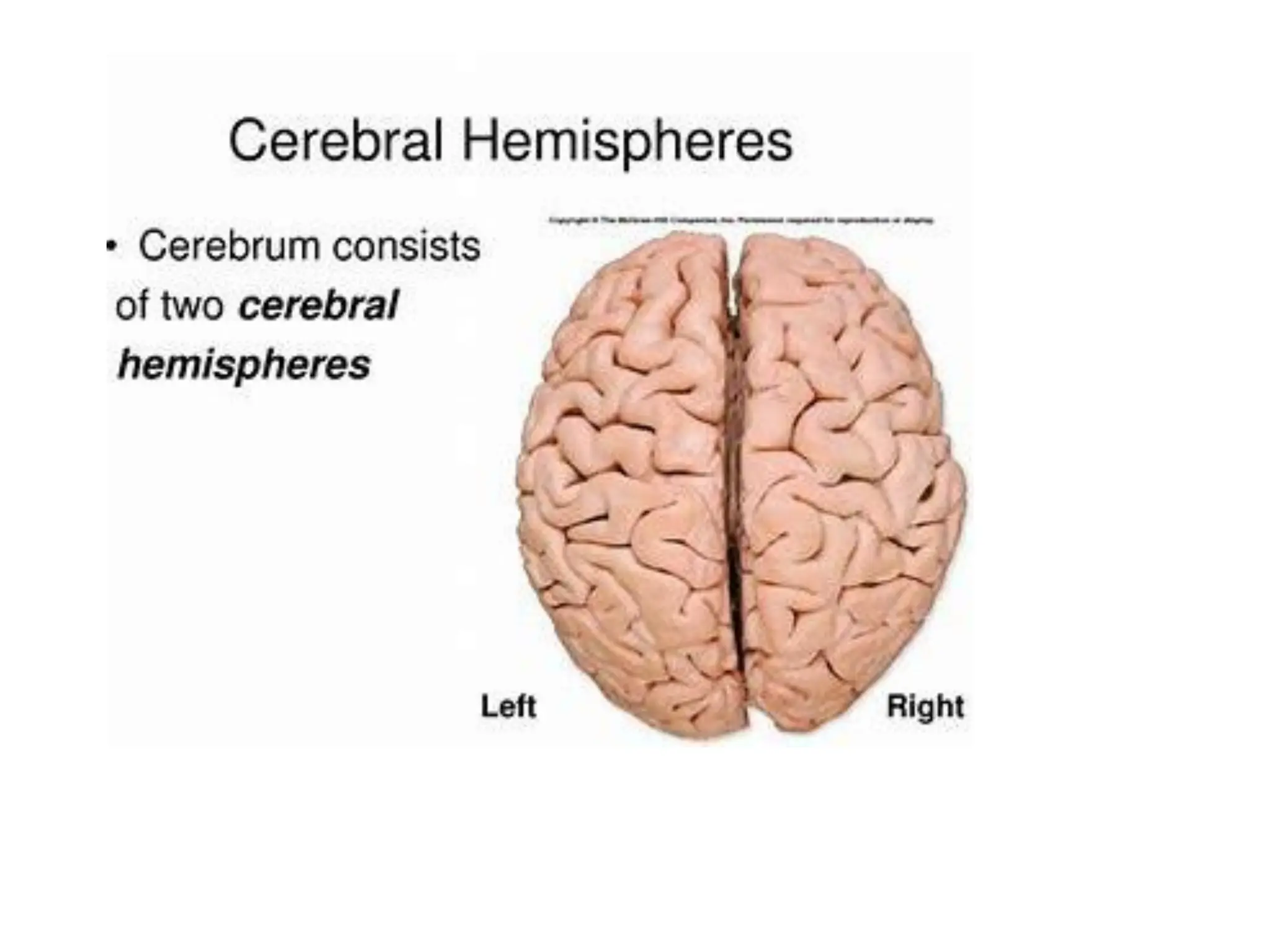
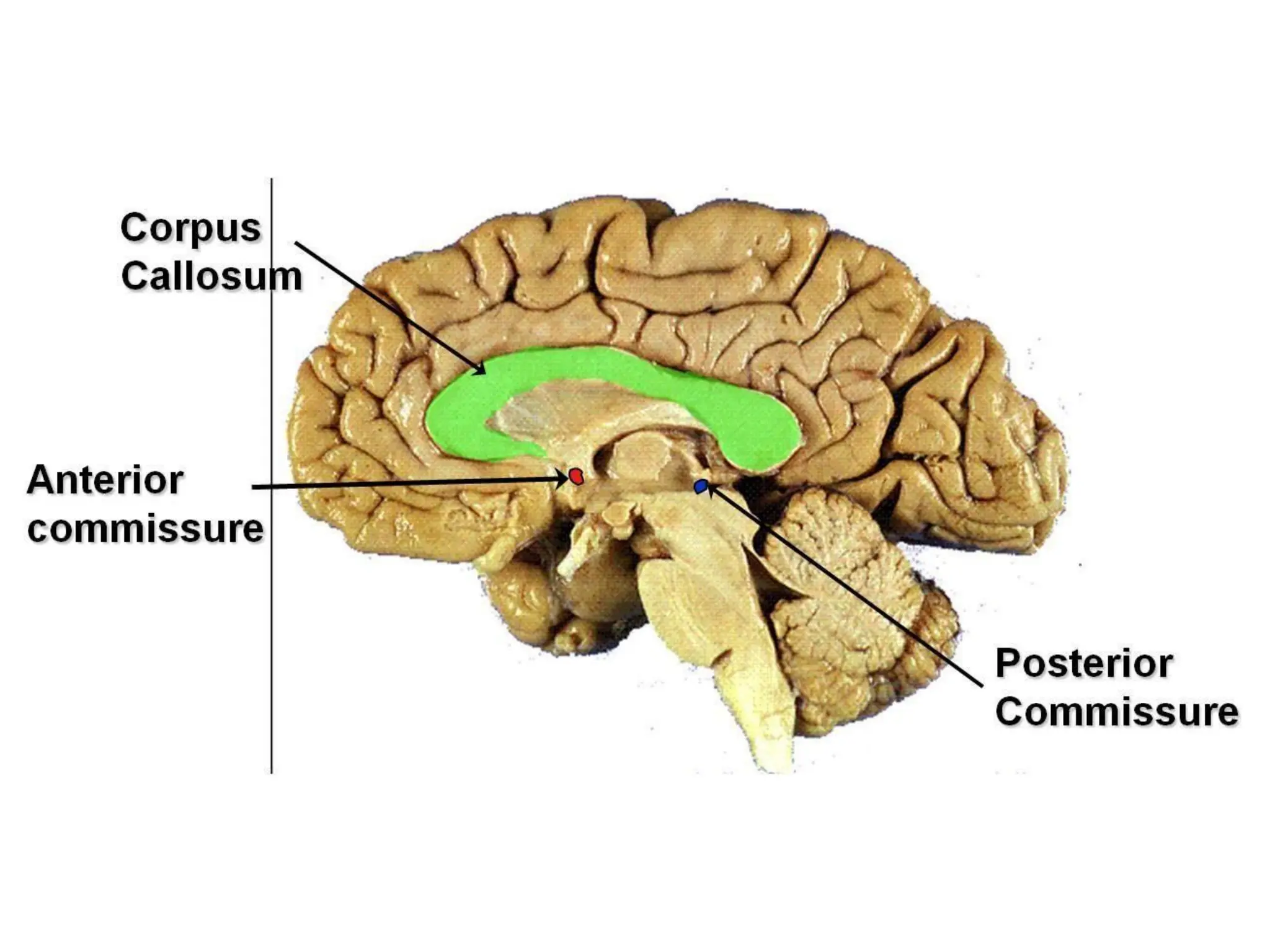
• Corpus callosum → bidirectional
neuronal connection between cortical
areas of 2 cerebral hemispheres
• Anterior portion of temporal lobe
including amygdala are interconnected
by fibres through anterior commissure
• 2 halves have independent capability for
consciousness, memory storage
communication and control of motor activities
• Corpus callosum is required for the 2 sides to
operate cooperatively at the superficial
subconscious level
• Anterior commissure plays an important role
in unifying emotional responses of 2 sides of
the brain.
Surfaces
1. Superolateral surface
2. Medial surface
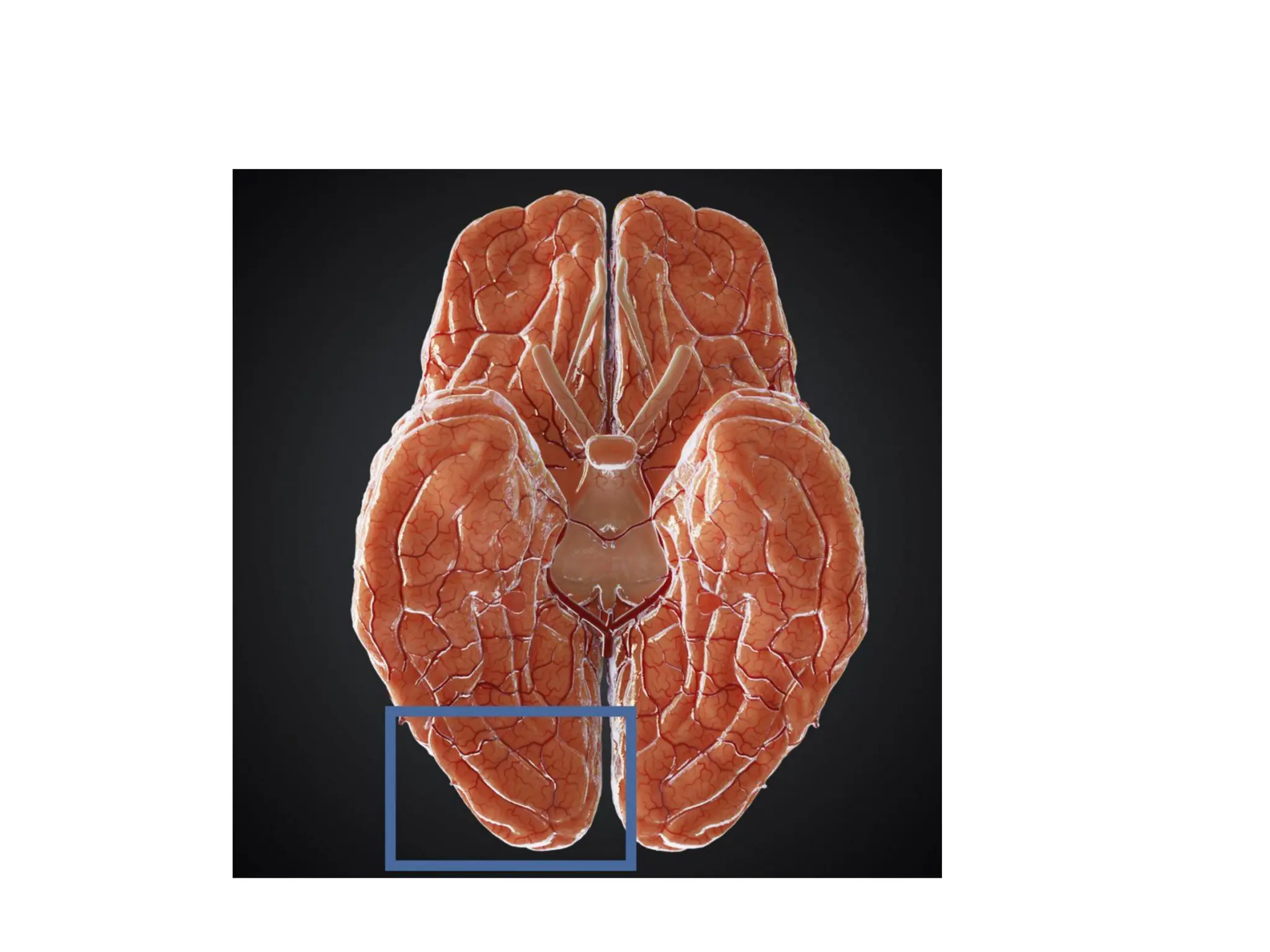
3. Inferior surface
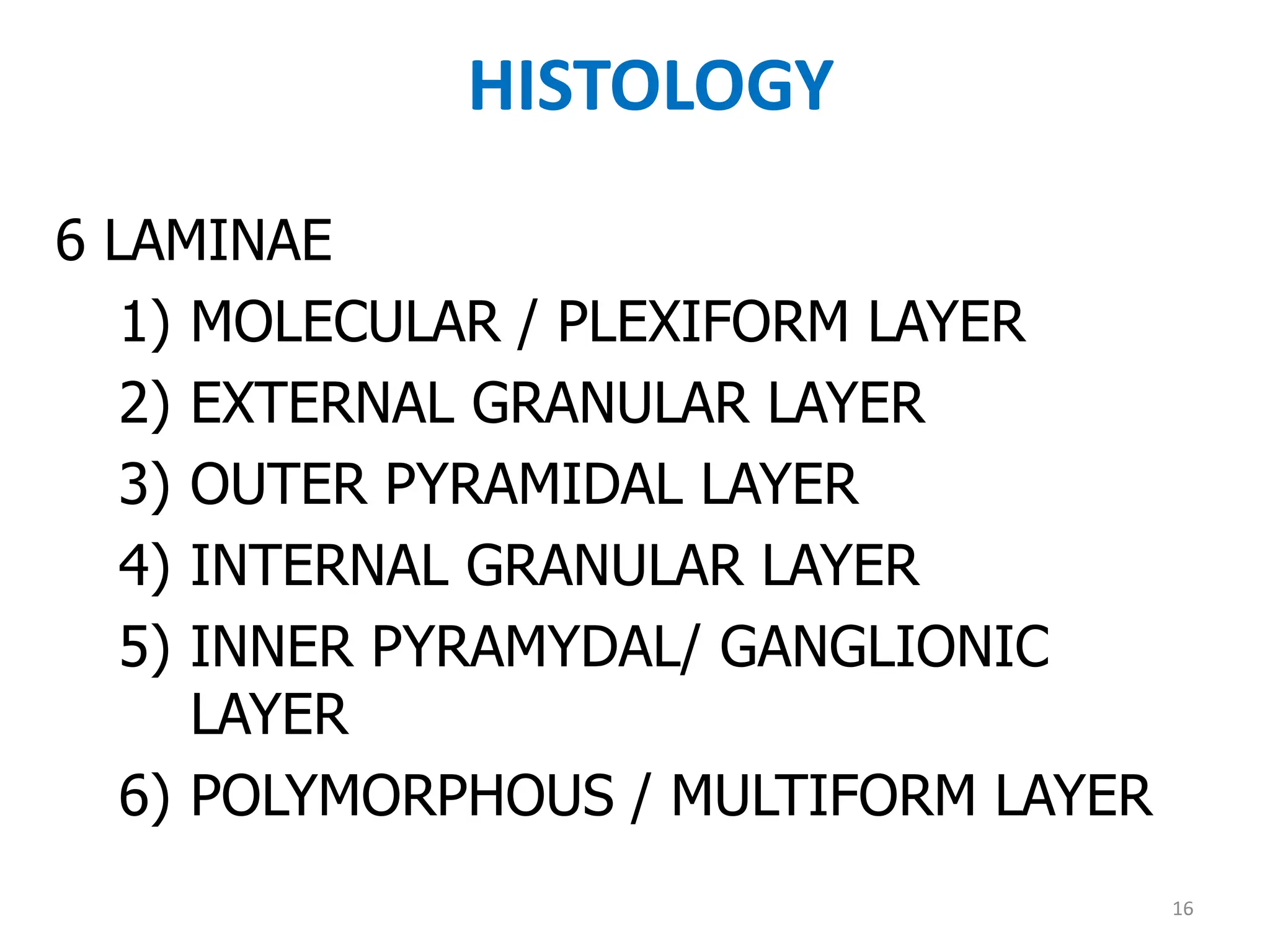
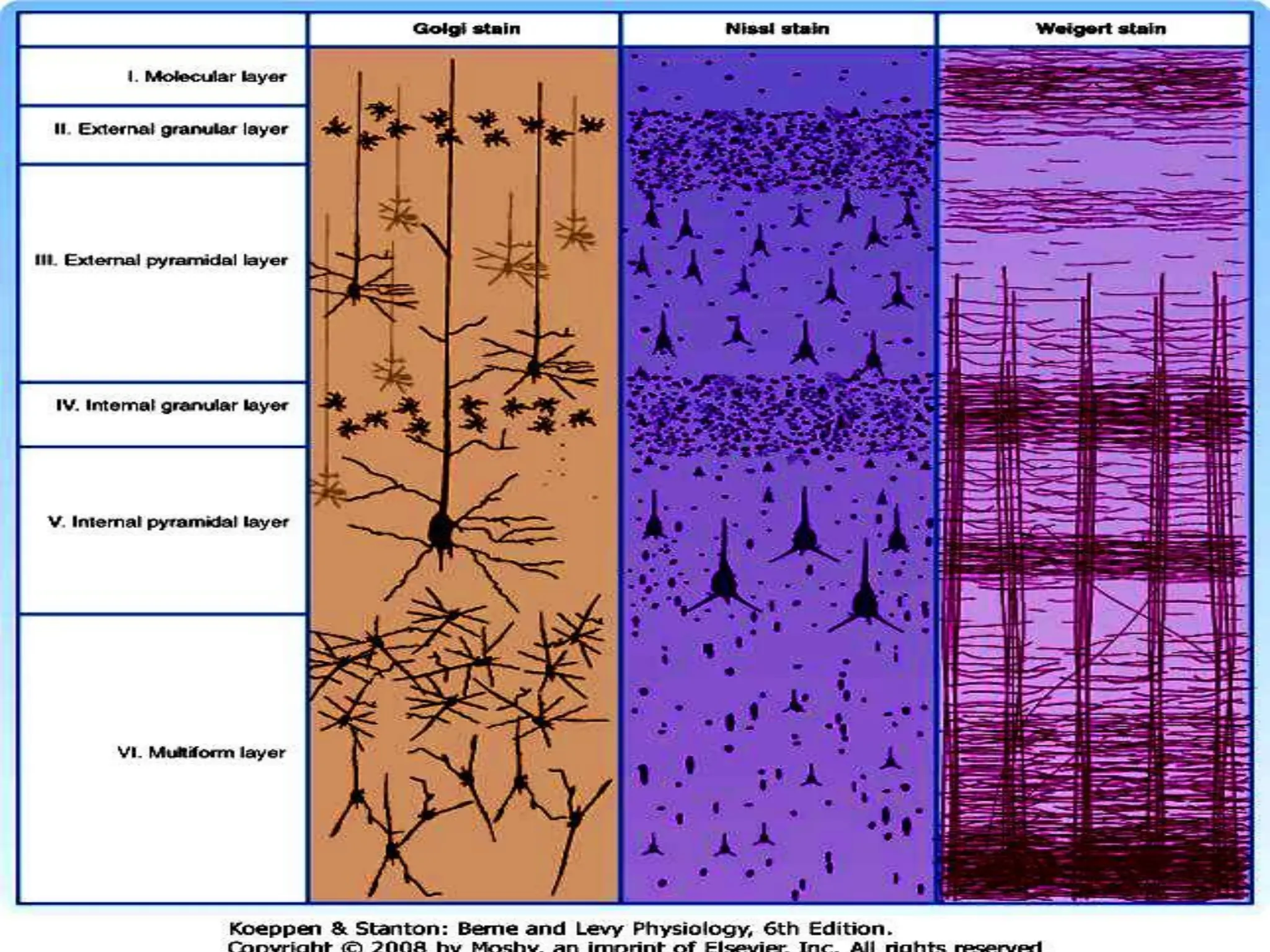
HISTOLOGY
6 LAMINAE
1) MOLECULAR / PLEXIFORM LAYER
2) EXTERNAL GRANULAR LAYER
3) OUTER PYRAMIDAL LAYER
4) INTERNAL GRANULAR LAYER
5) INNER PYRAMYDAL/ GANGLIONIC
LAYER
6) POLYMORPHOUS / MULTIFORM LAYER
16
17
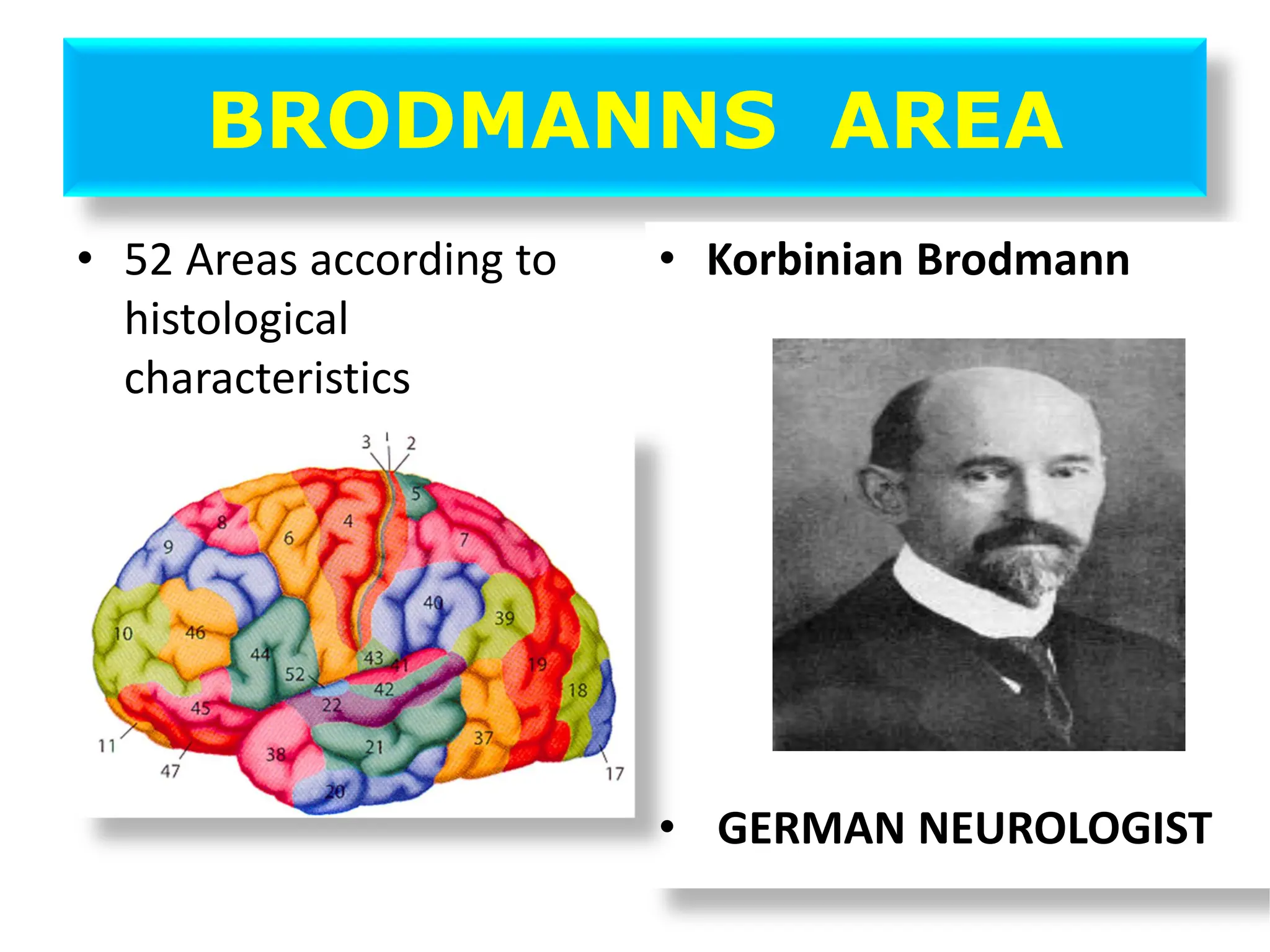
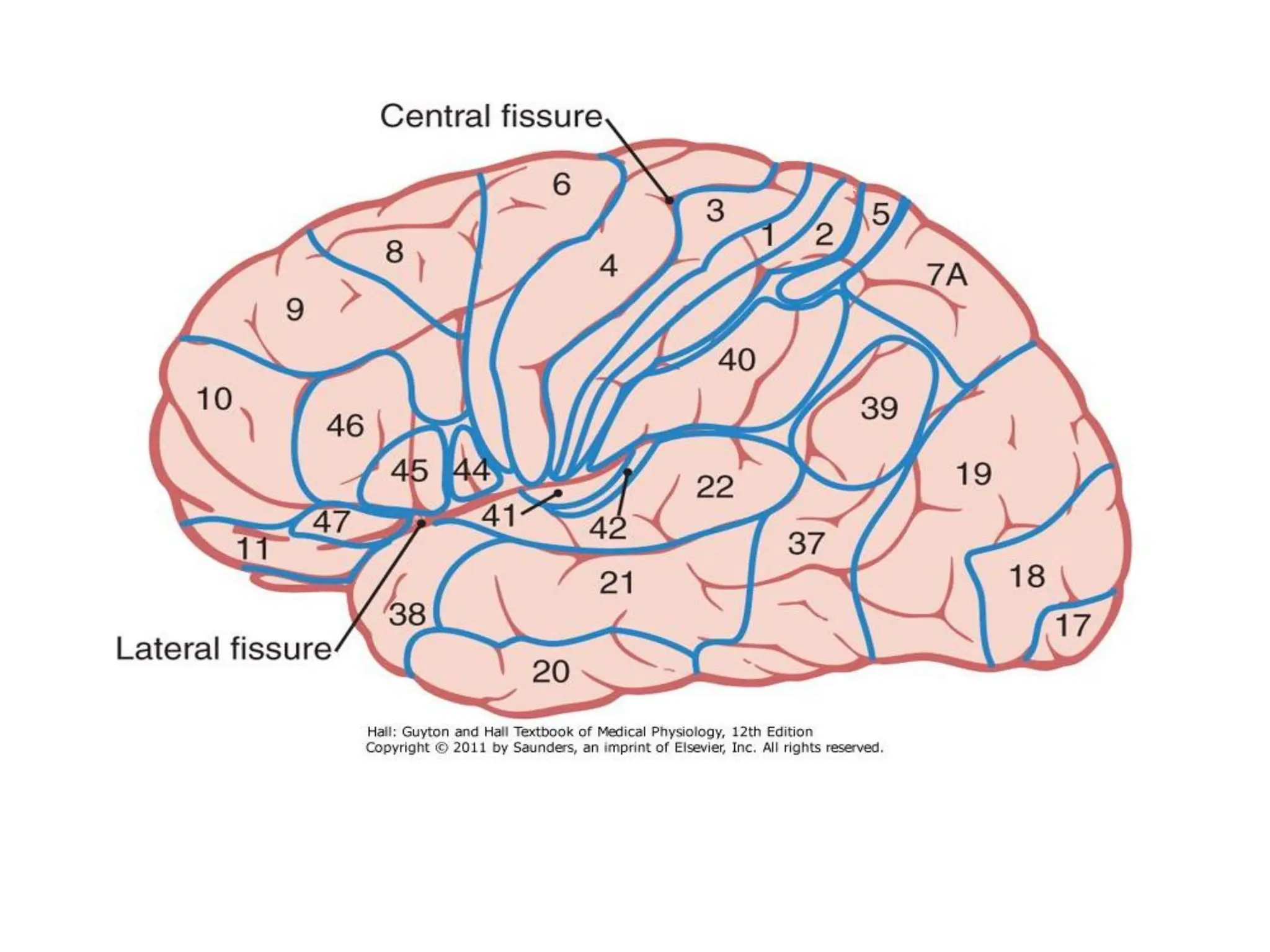
BRODMANNS AREA
• 52 Areas according to
histological
characteristics
• Korbinian Brodmann
• GERMAN NEUROLOGIST
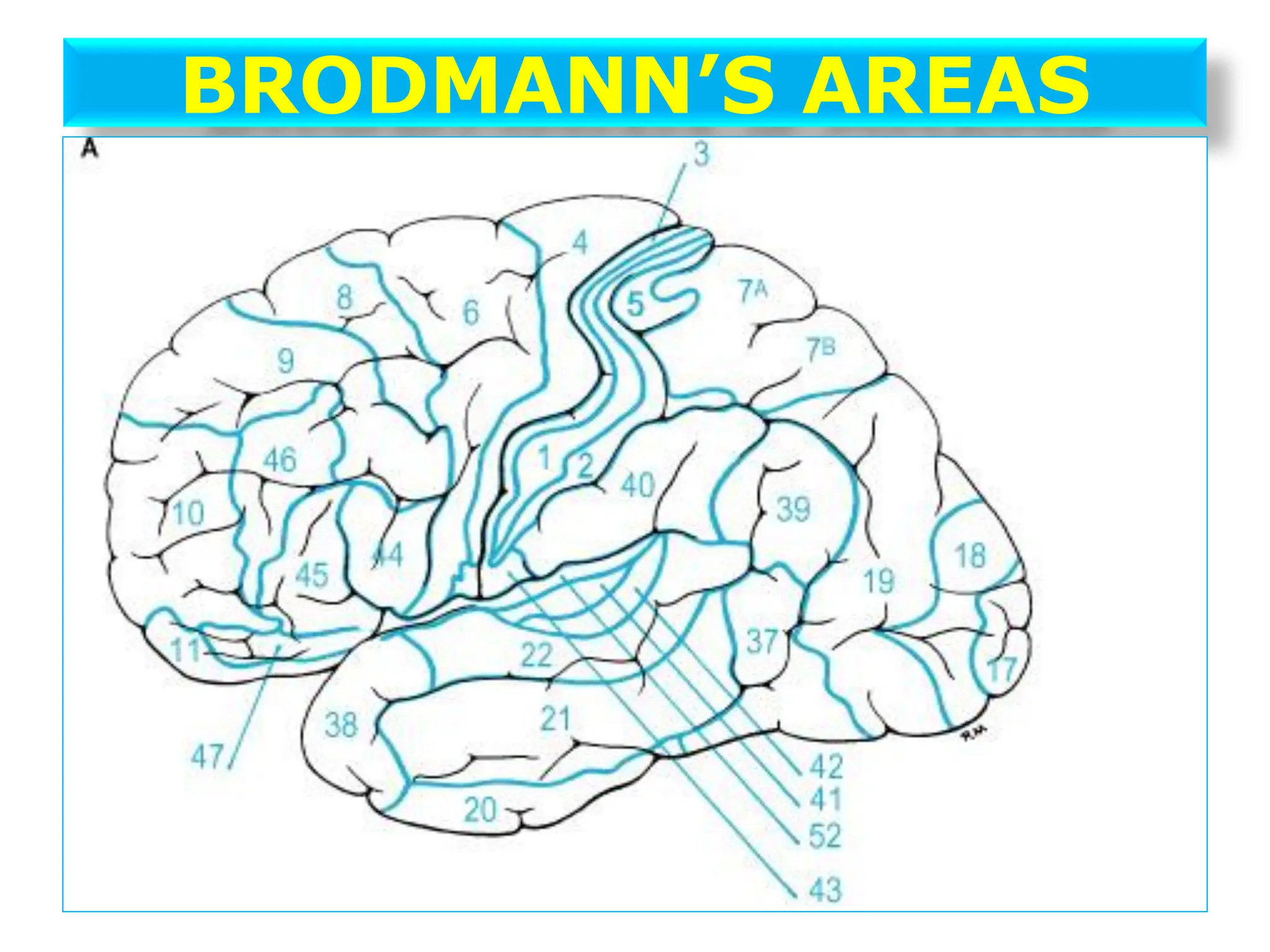
BRODMANN’S AREAS
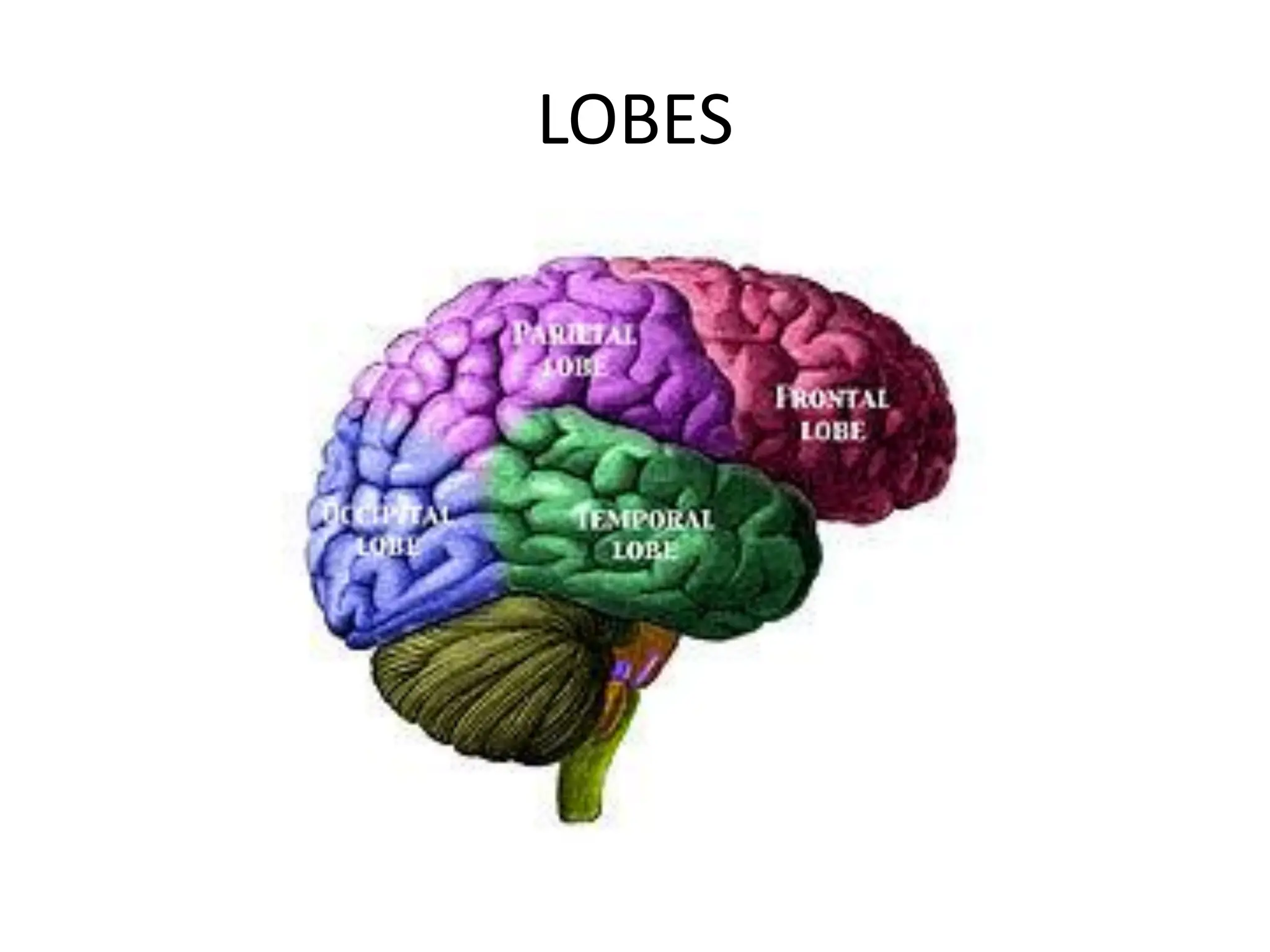
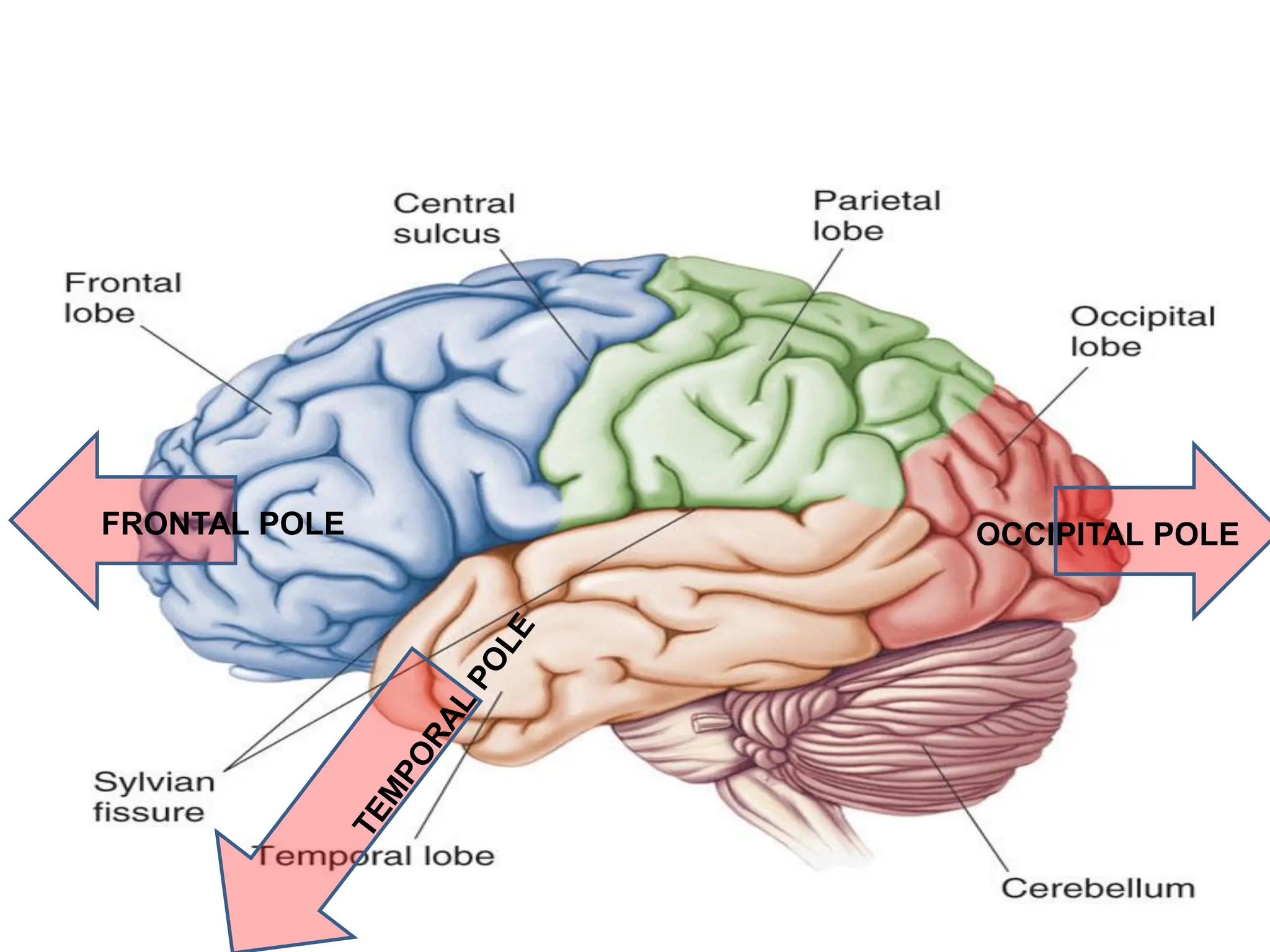
LOBES
FRONTAL POLE OCCIPITAL POLE
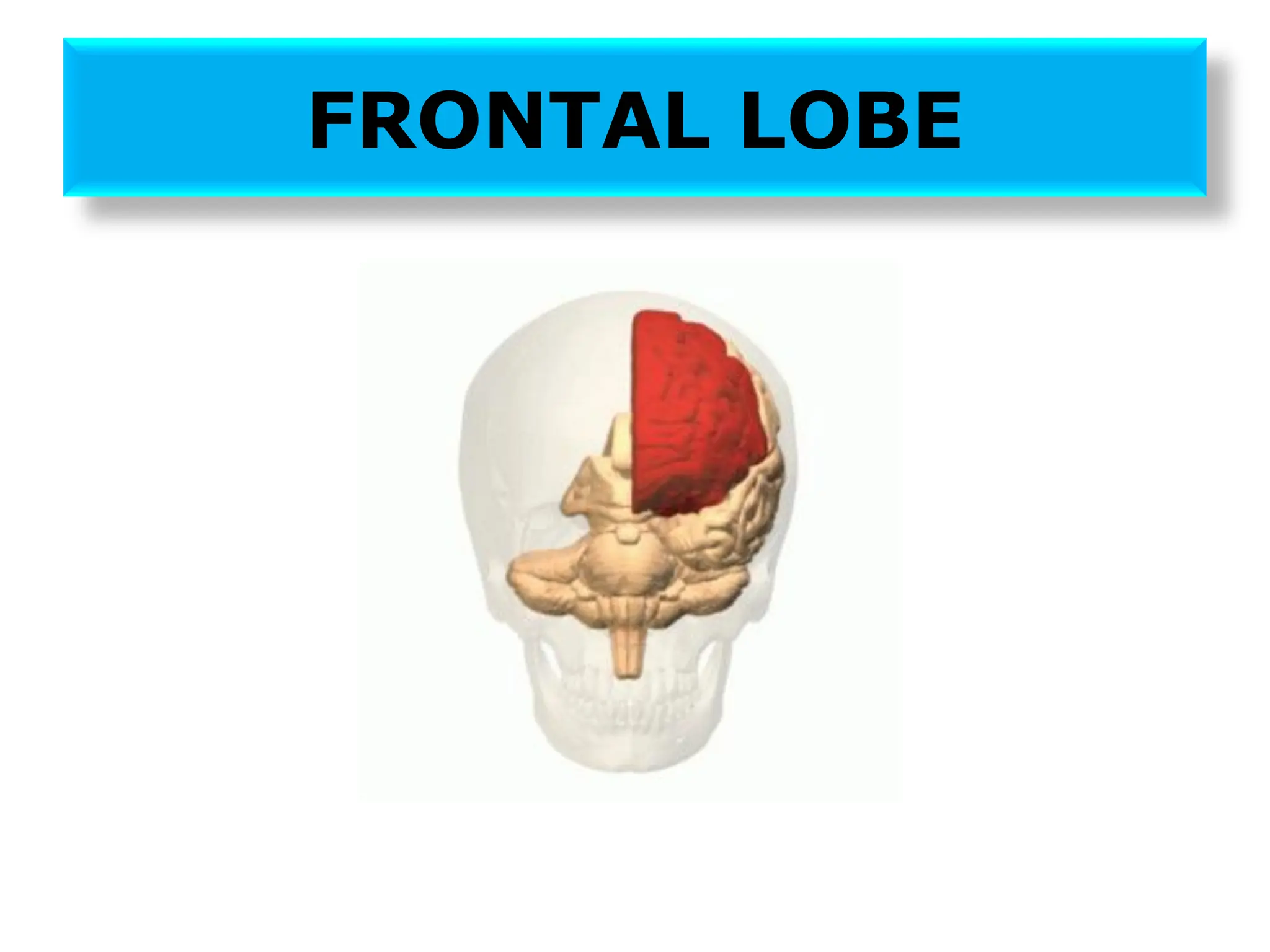
FRONTAL LOBE
FRONTAL LOBE
Subdivided into 2 according to function
• Precentral cortex
• Prefrontal cortex
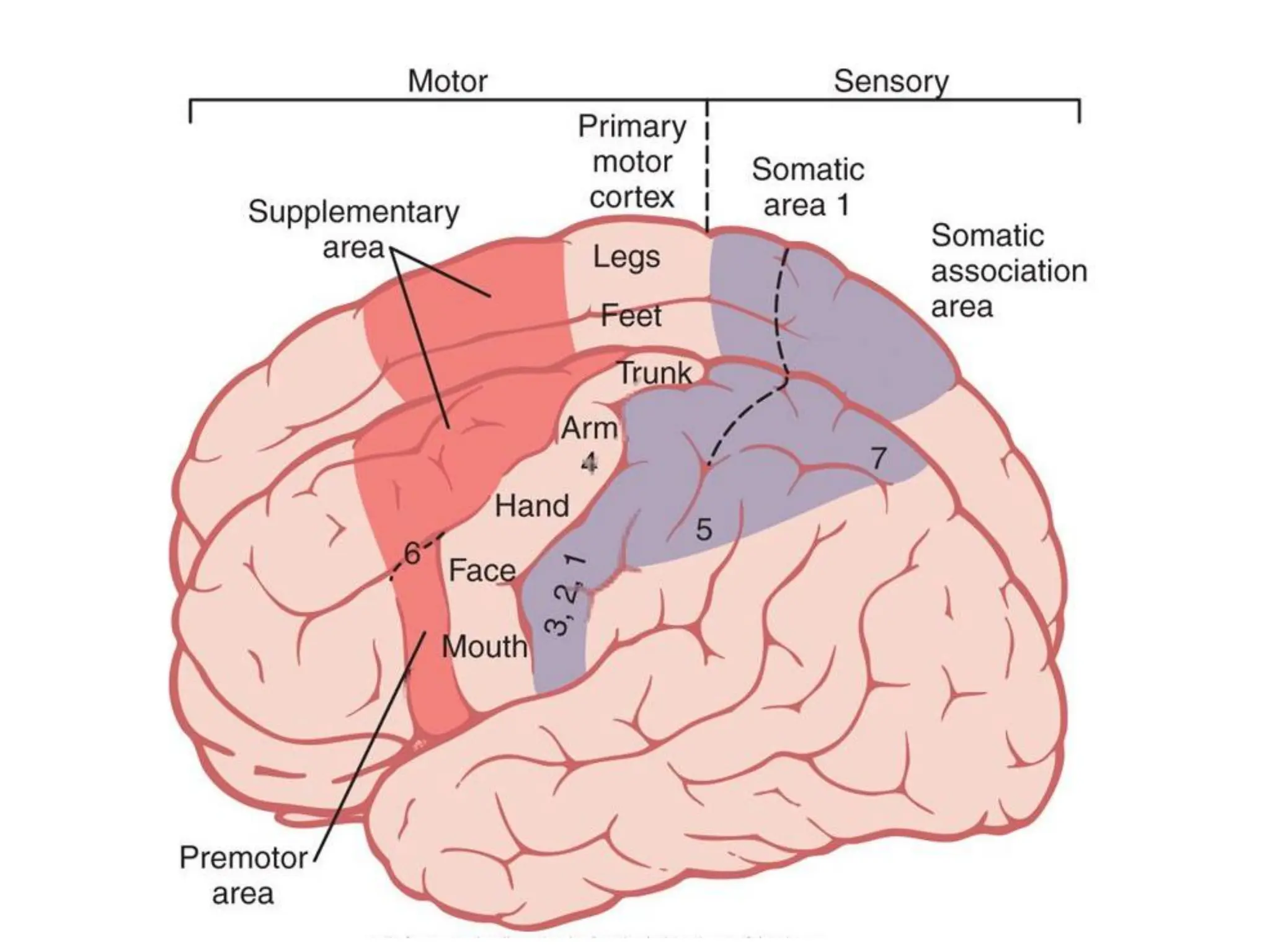
Areas present in precentral cortex are
❖ Primary motor area [area 4]
❖ Premotor area [area 6]
❖ Supplementary motor area
❖ Frontal eye field [area 8]
❖ Broca’s area (44,45)
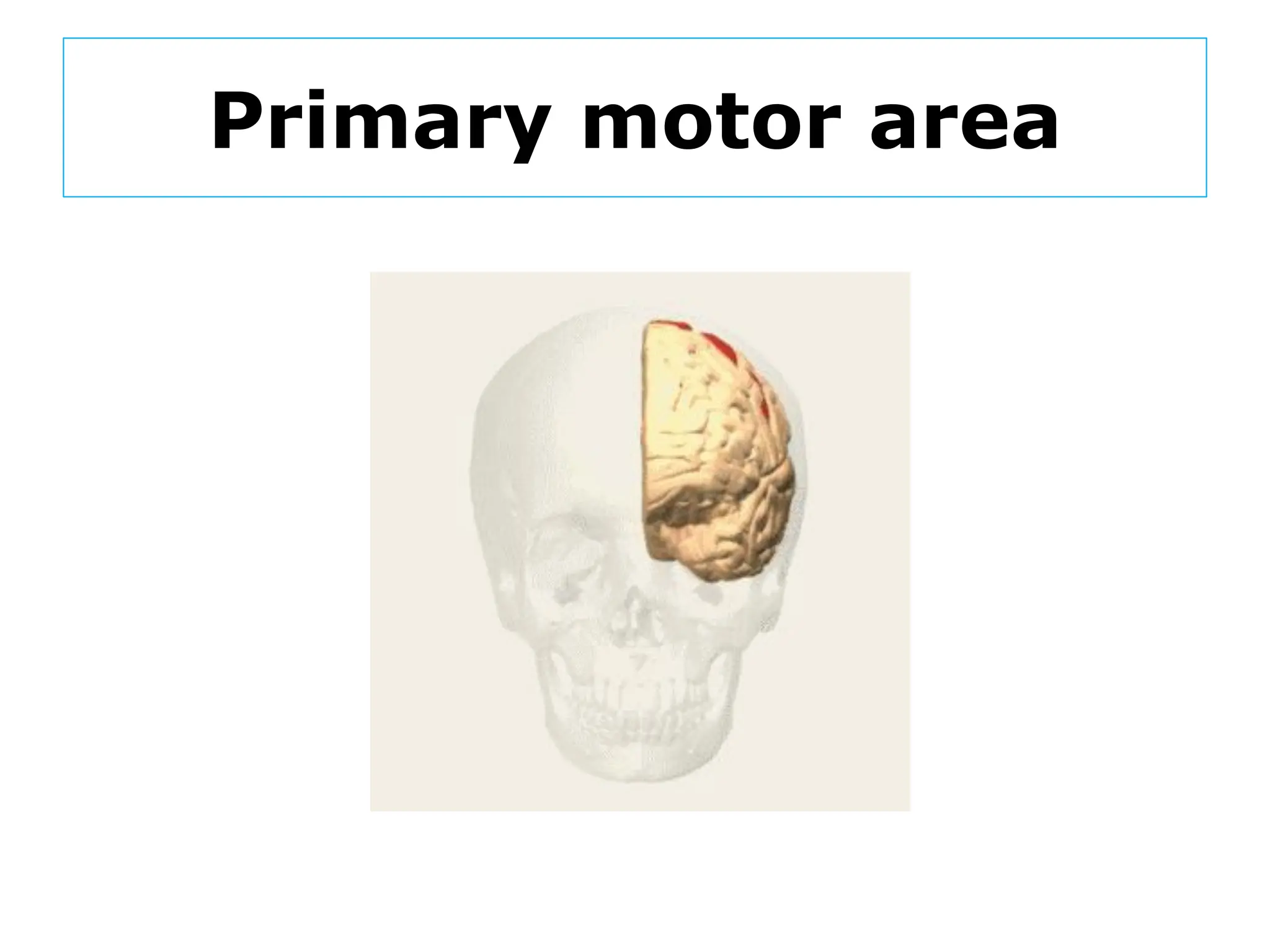
Primary motor area
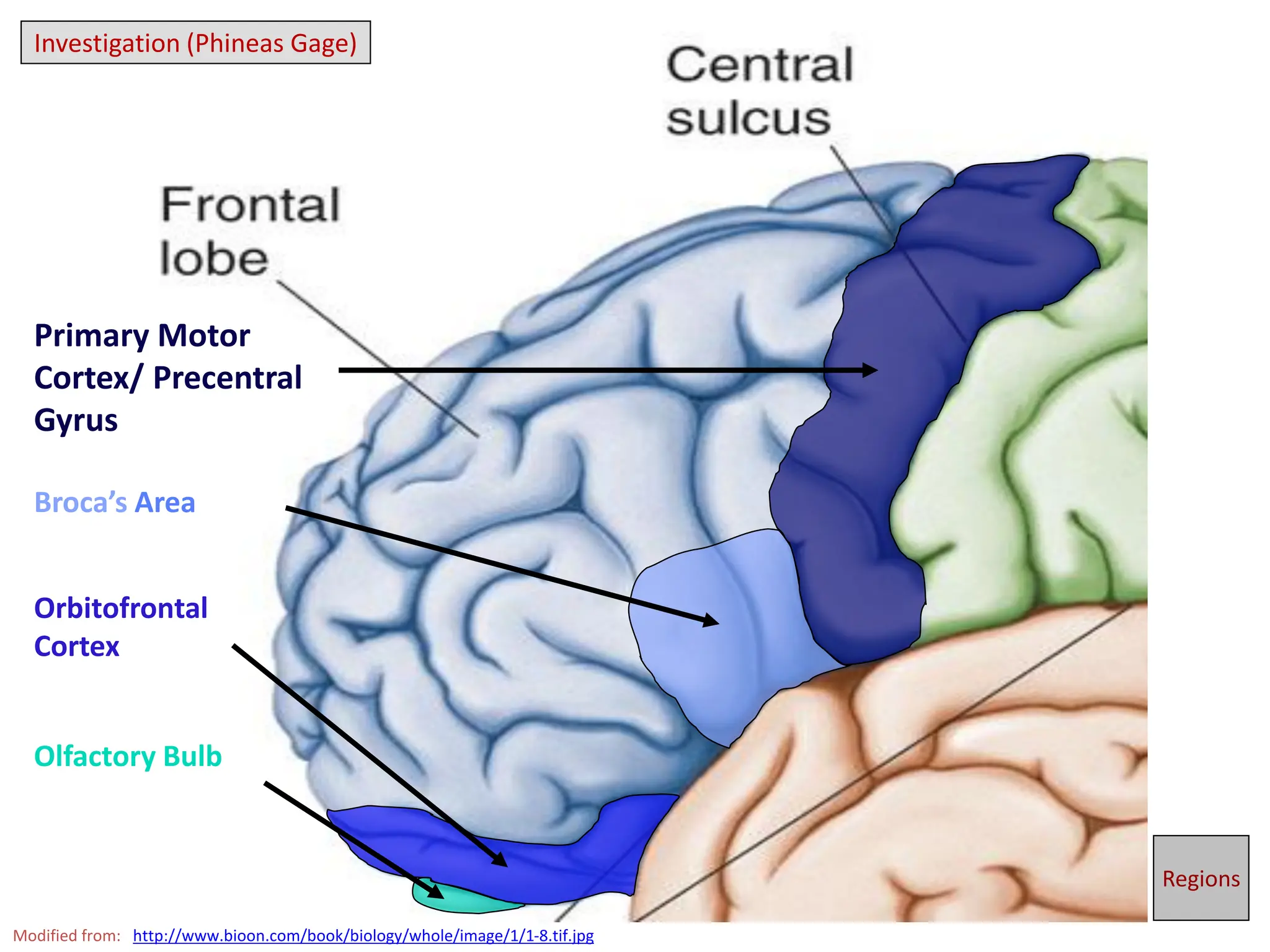
Primary Motor
Cortex/ Precentral
Gyrus
Broca’s Area
Orbitofrontal
Cortex
Olfactory Bulb
Modified from: http://www.bioon.com/book/biology/whole/image/1/1-8.tif.jpg
Regions
Investigation (Phineas Gage)
Primary motor area
Brodmann area 4
Functions
❖ It is concerned with voluntary control of
movements produced by skeletal muscles
of the contralateral half of the body
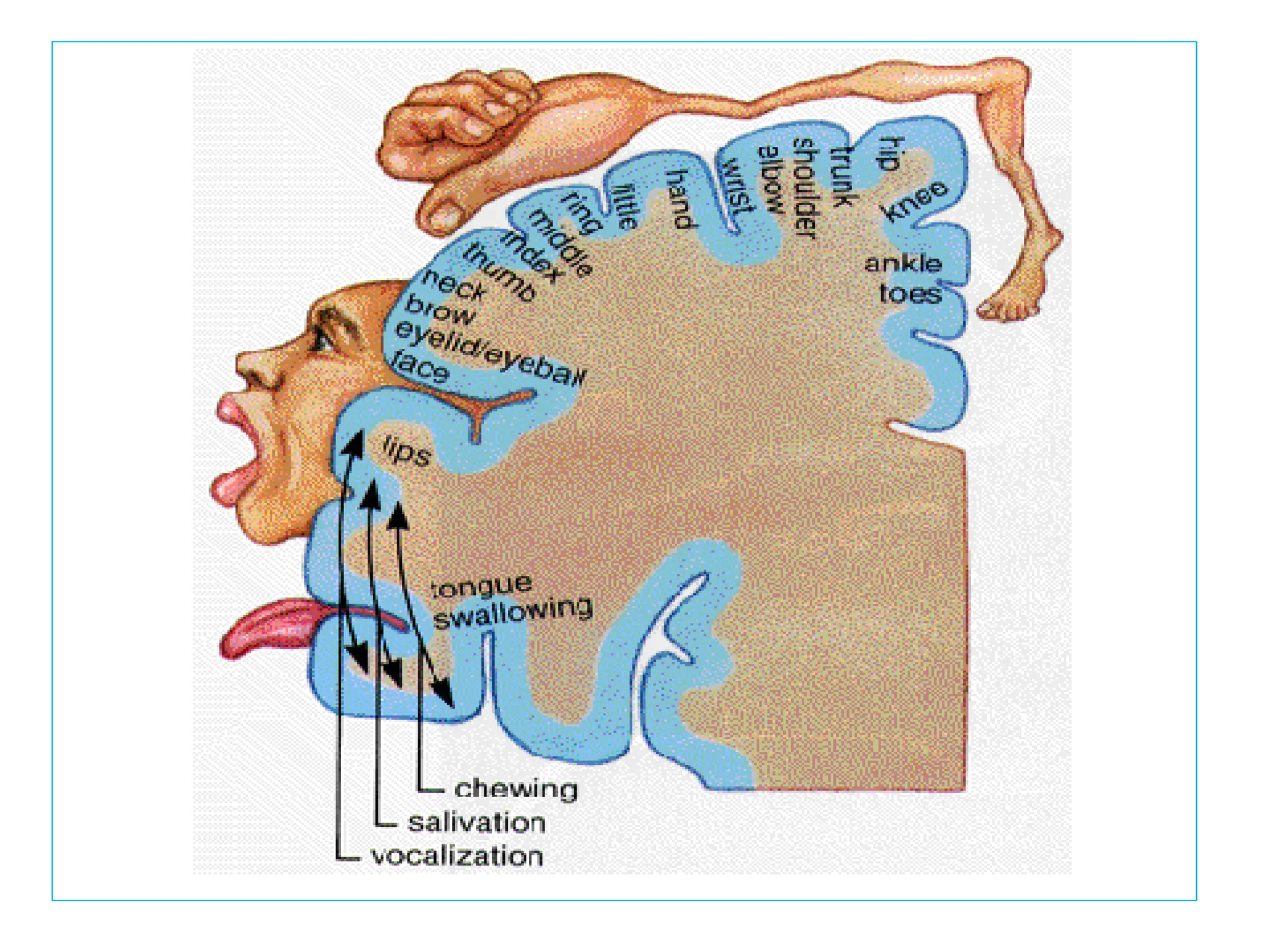
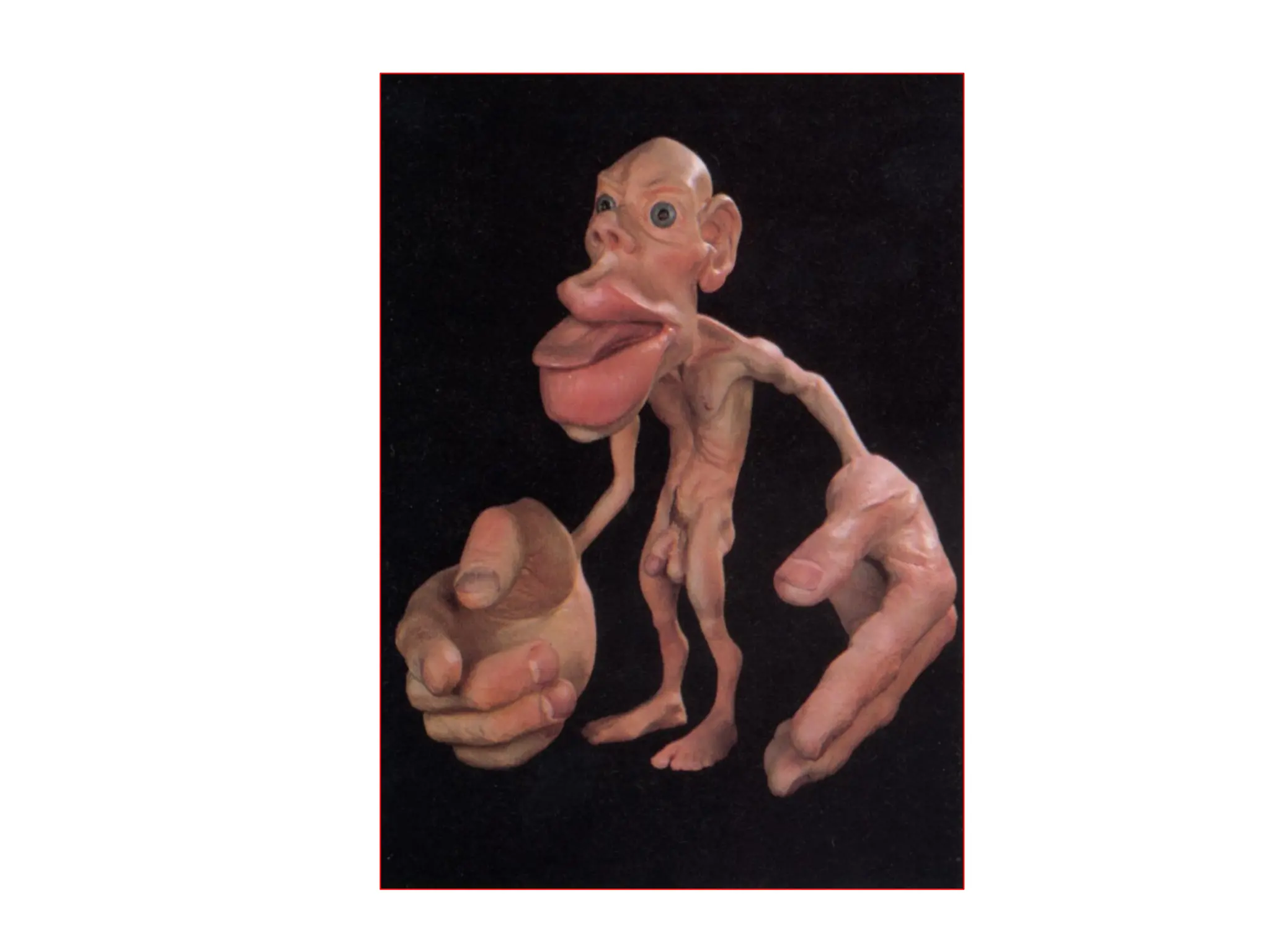
❑Topographic representation [ Motor
Homunculus]
❑ Different parts of contralateral half of
body are represented separately in more
or less inverted orders except for the face.
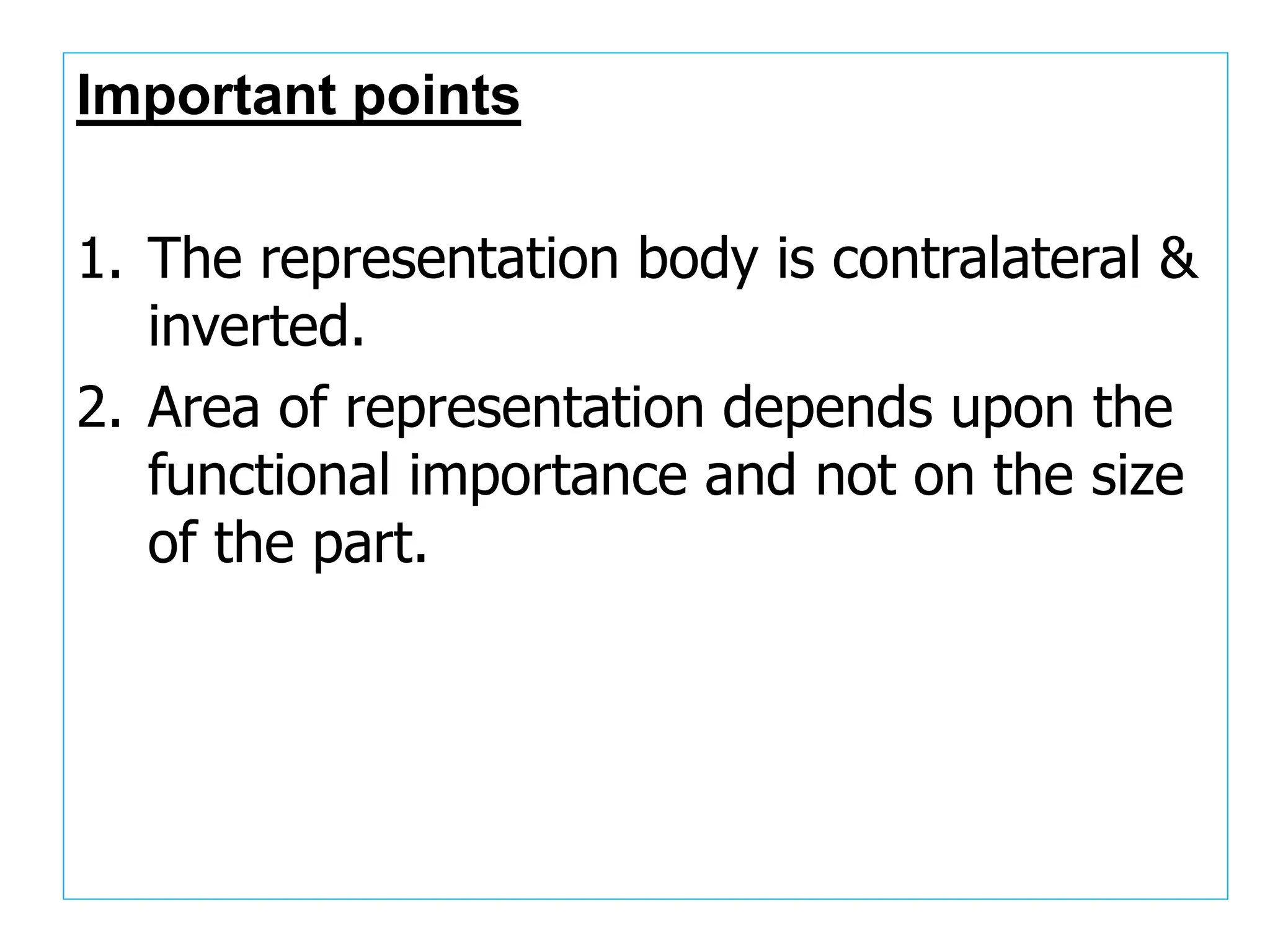
Important points
1. The representation body is contralateral &
inverted.
2. Area of representation depends upon the
functional importance and not on the size
of the part.
Premotor Area
Premotor Area
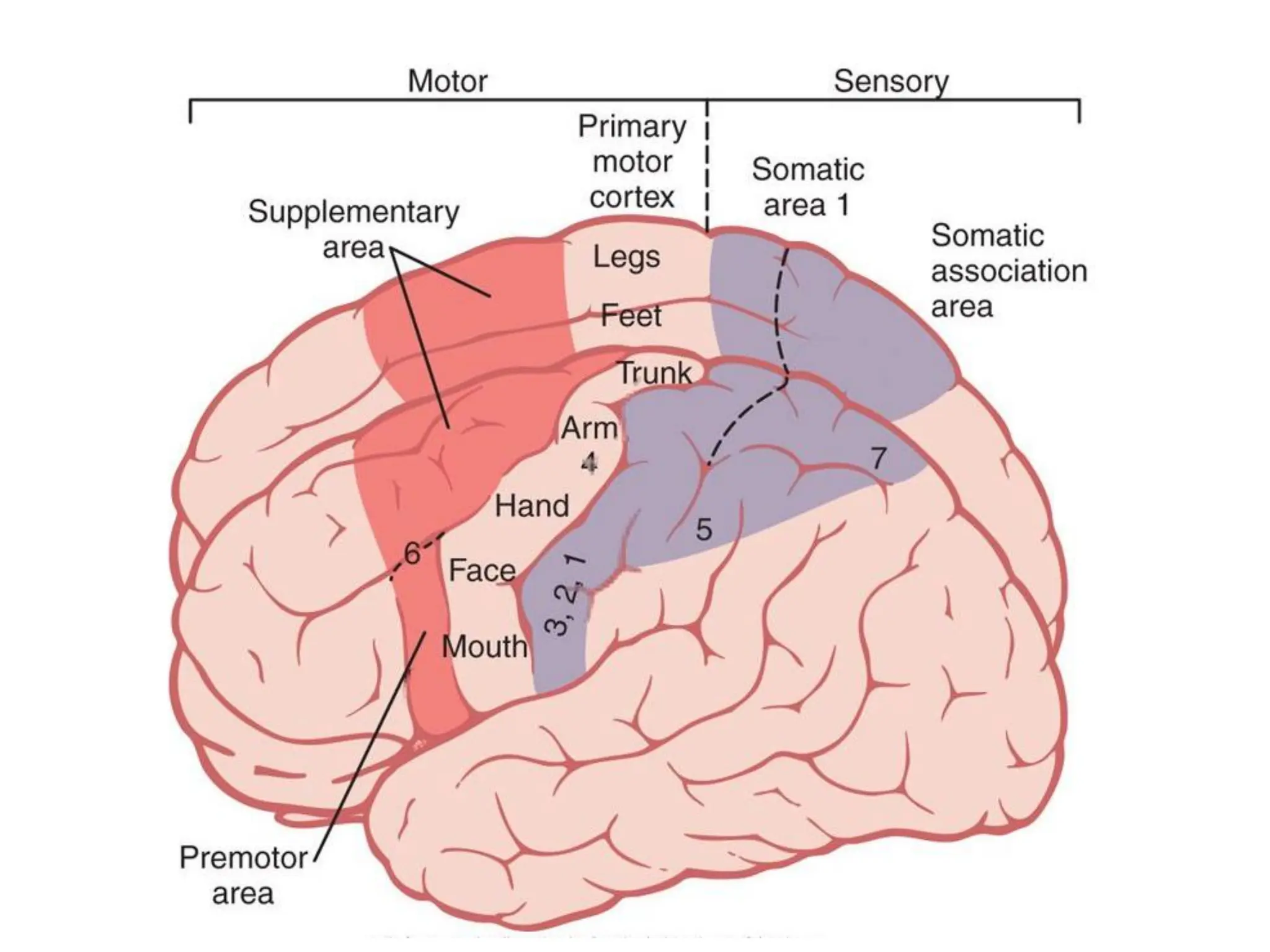
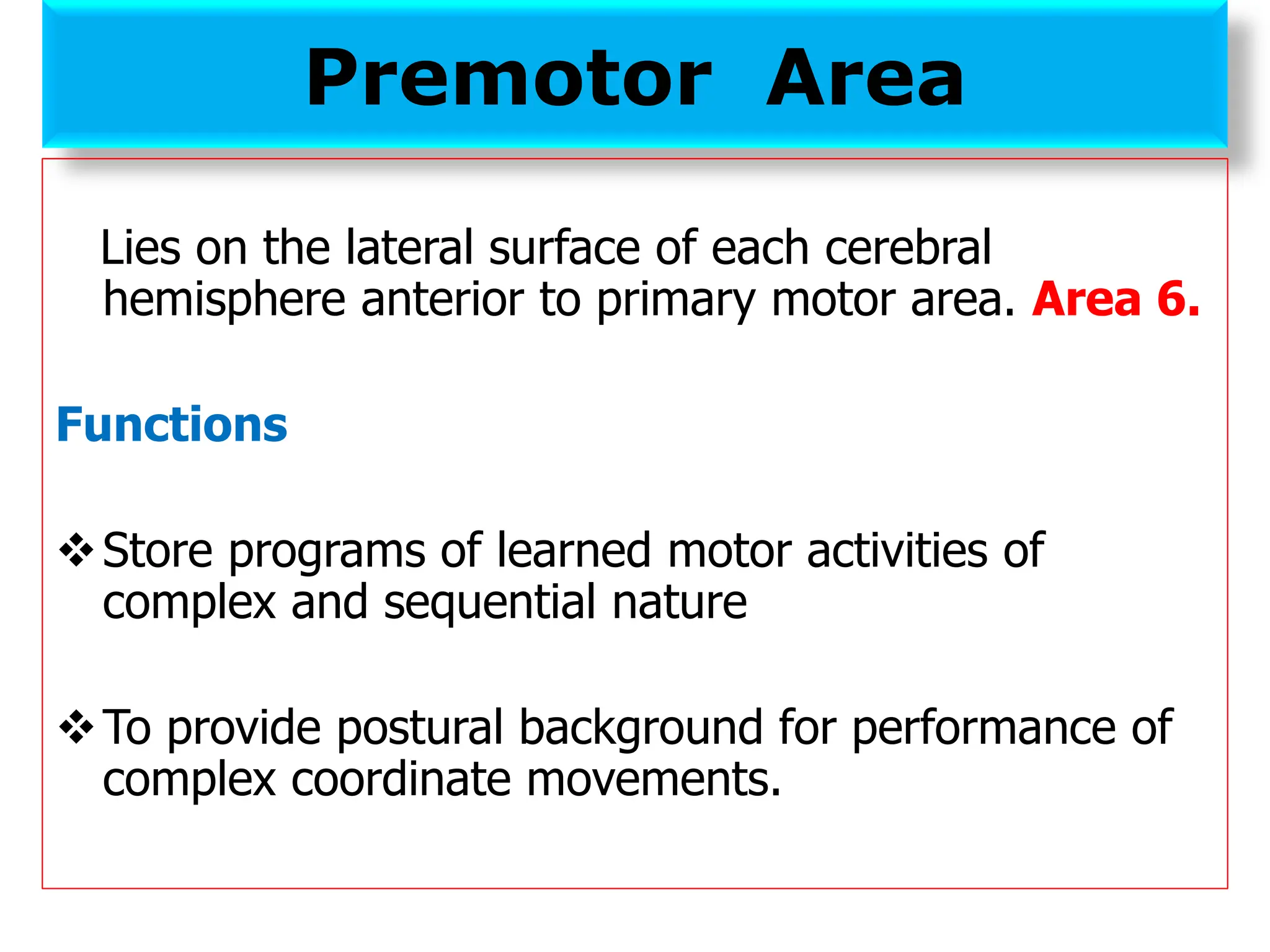
Lies on the lateral surface of each cerebral
hemisphere anterior to primary motor area. Area 6.
Functions
❖Store programs of learned motor activities of
complex and sequential nature
❖To provide postural background for performance of
complex coordinate movements.
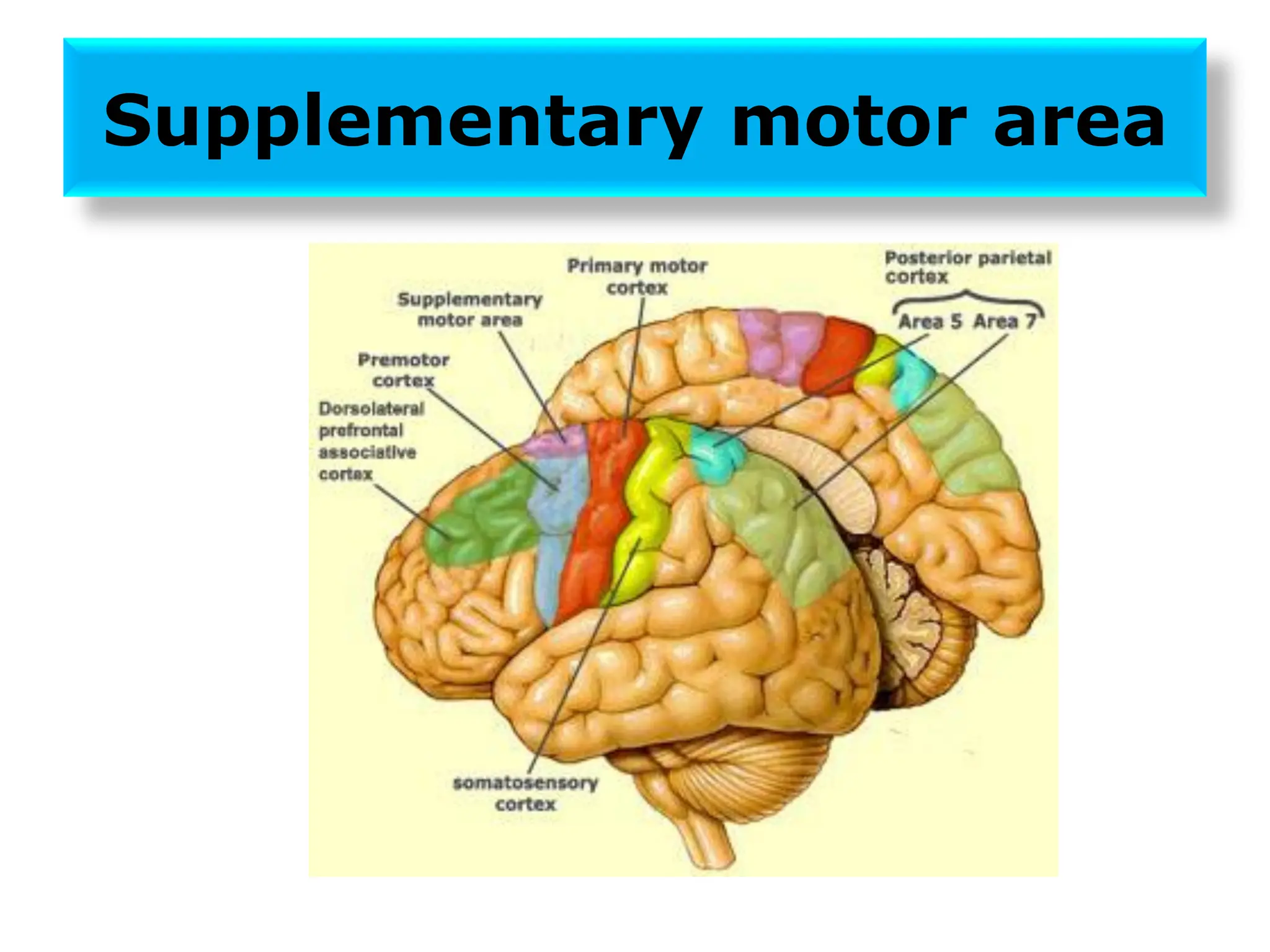
Supplementary motor area
Lies on the medial surface of each cerebral
hemisphere in front of primary motor cortex
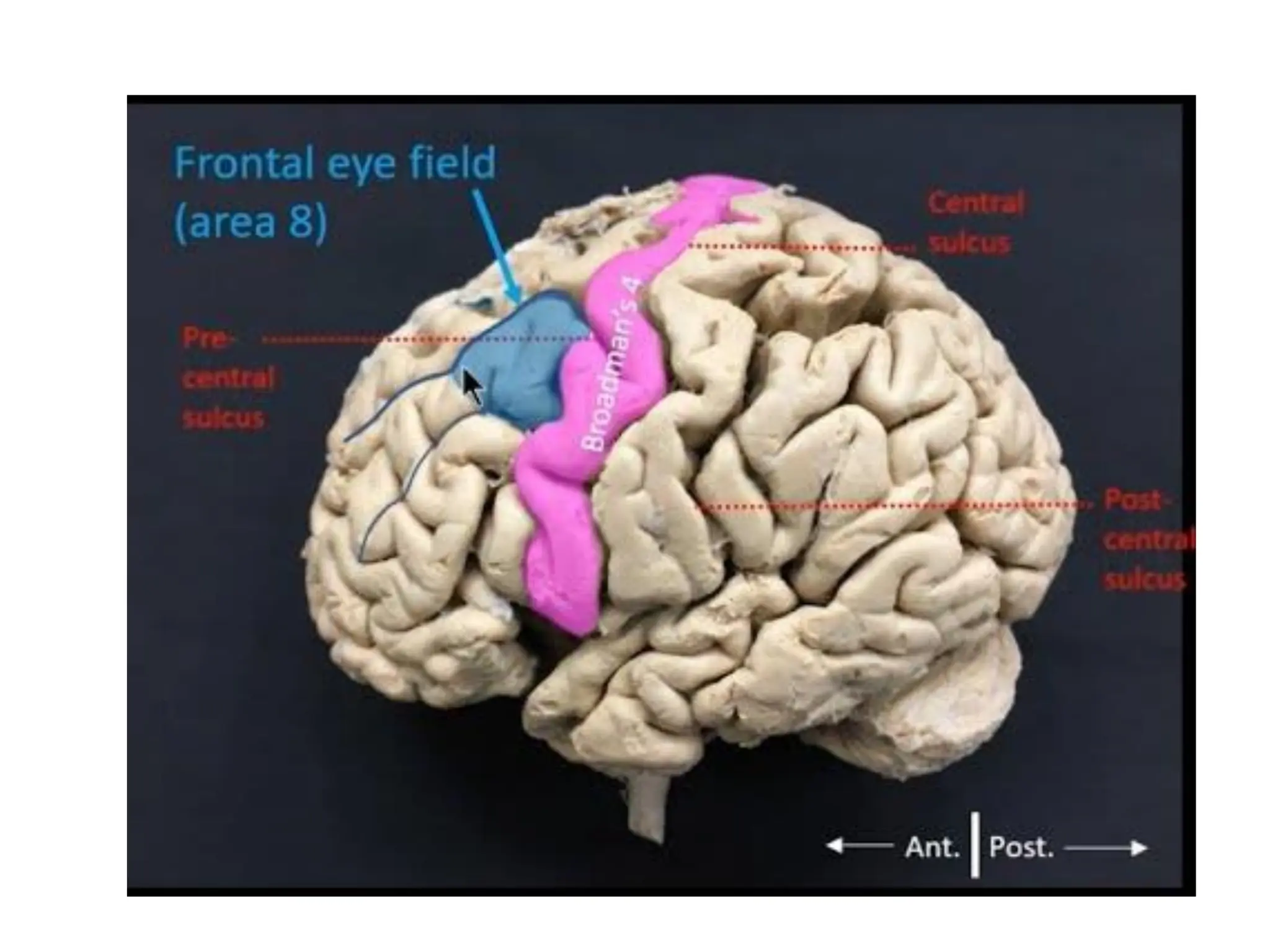
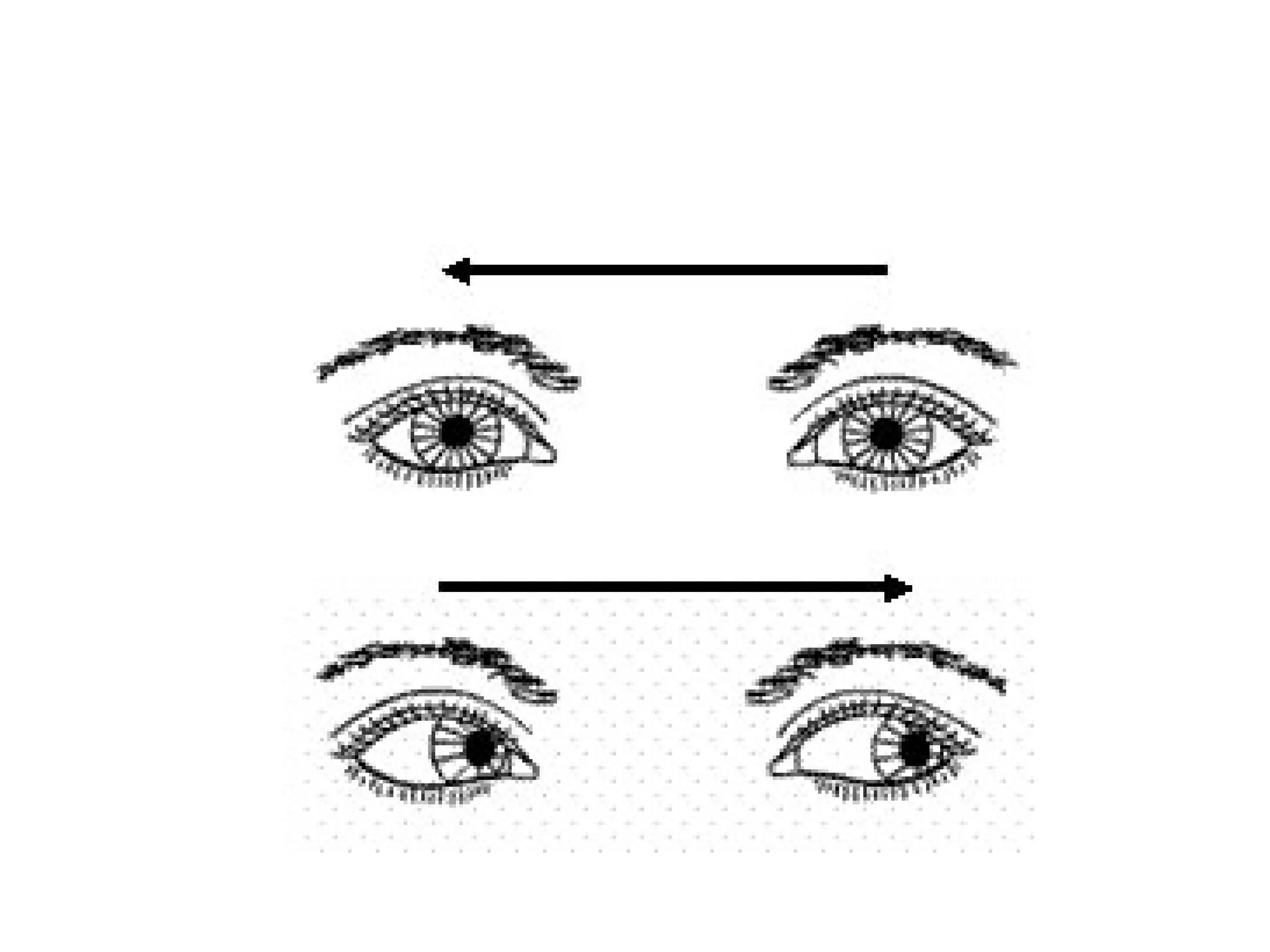
Frontal Eye Field
Area 8
Function
Voluntary scanning movements of eye
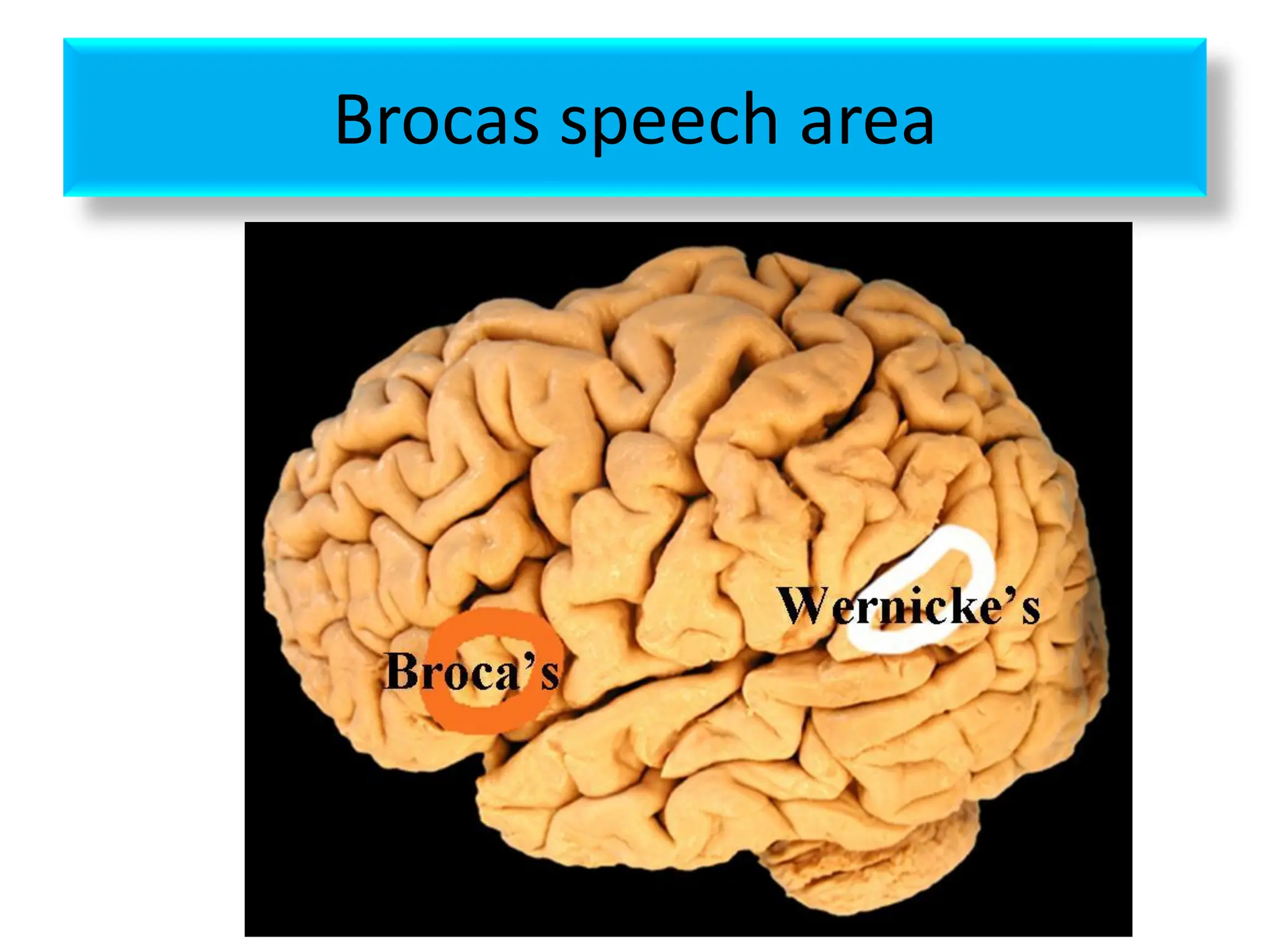
Brocas speech area
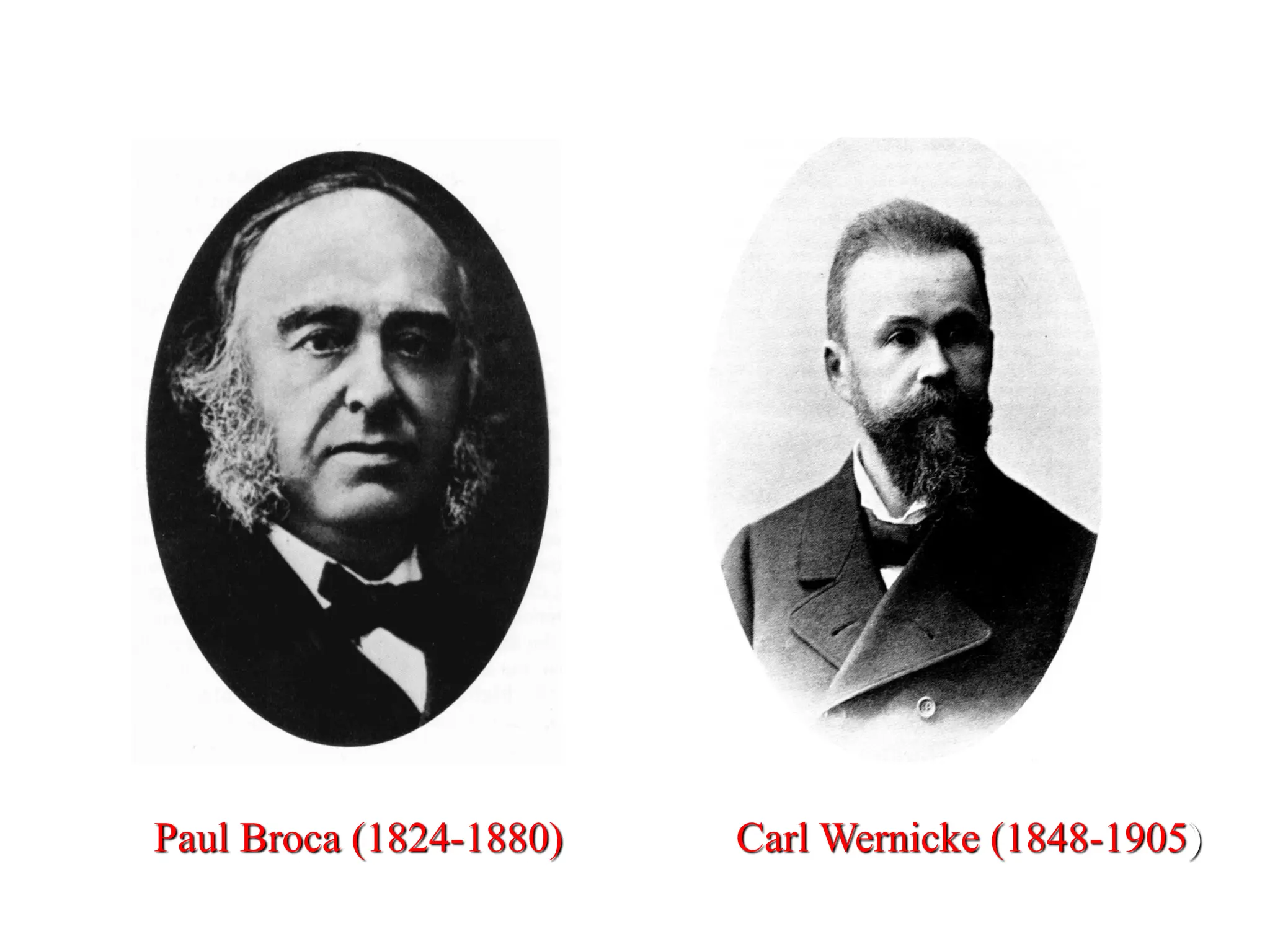
Paul Broca (1824-1880) Carl Wernicke (1848-1905)
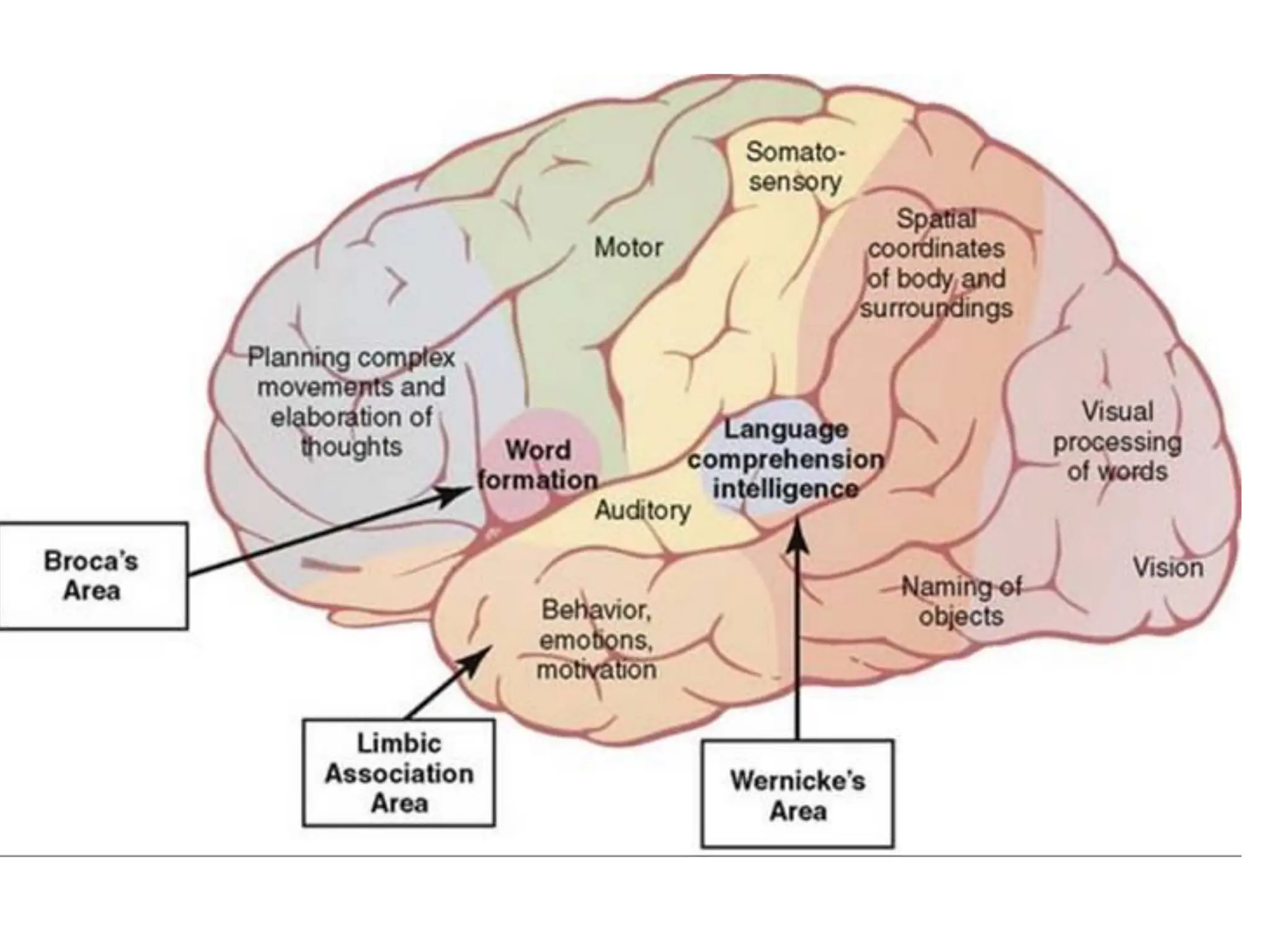
Broca’s area
Area 44,45 Motor Speech Area.
Location – Inferior Frontal Gyrus.
Functions–
• Formation of words
• It causes activation of vocal cord
simultaneously with movements of mouth &
tongue during speech.
• Lesion – expressive / Non fluent aphasia
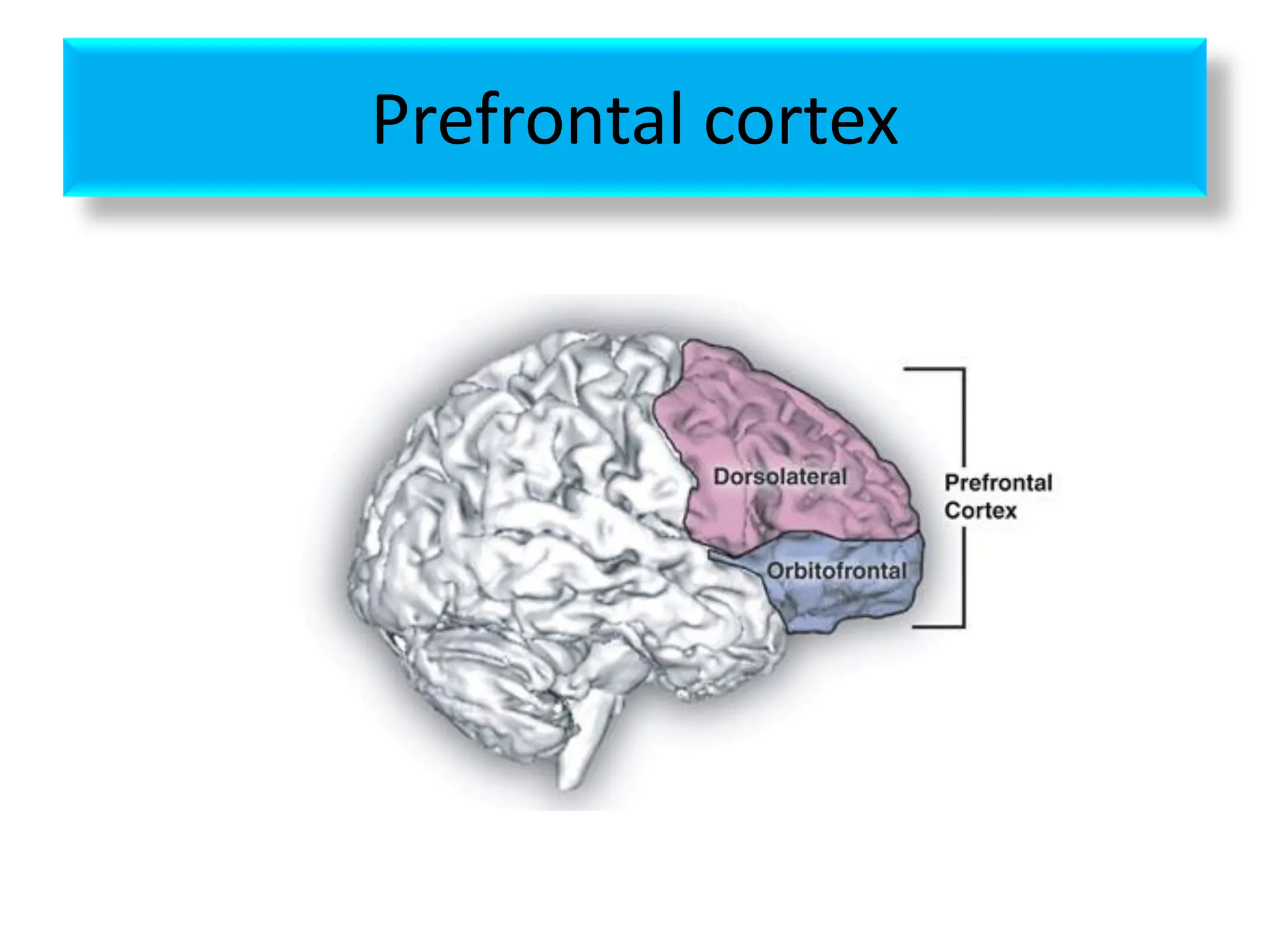
Prefrontal cortex
Functions
• Center for planned actions
• Center for higher functions
• Short term memories are registered in prefrontal
cortex.
• Control of intellectual activities
--To prognosticate , to plan future , allows
person to concentrate in central theme of
thought
--Plays role in solution of complicated
mathematical, legal, philosophical problems.
-- It allows to control one’s activity according to
moral laws.
APPLIED ASPECTS
FRONTAL LOBE SYNDROME
• Symptom complex due to injury or ablation of
prefrontal cortex. Also seen in prefrontal
leucotomy and B/L prefrontal lobectomy.
• Flight of ideas– difficulty in planning.
• Emotional instability– aggressiveness &
restlessness
• Euphoria – false sense of wellbeing.
• Impairment of recent memory
• Loss of moral and social sense.
• Lack of attention and power of concentration
associated with restlessness.
• Lack of initiative following marked depression of
intellectual activity.
• Functional abnormalities :
--loss of control over urinary and rectal
sphincters.
--disturbances in orientation.
--slight tremor
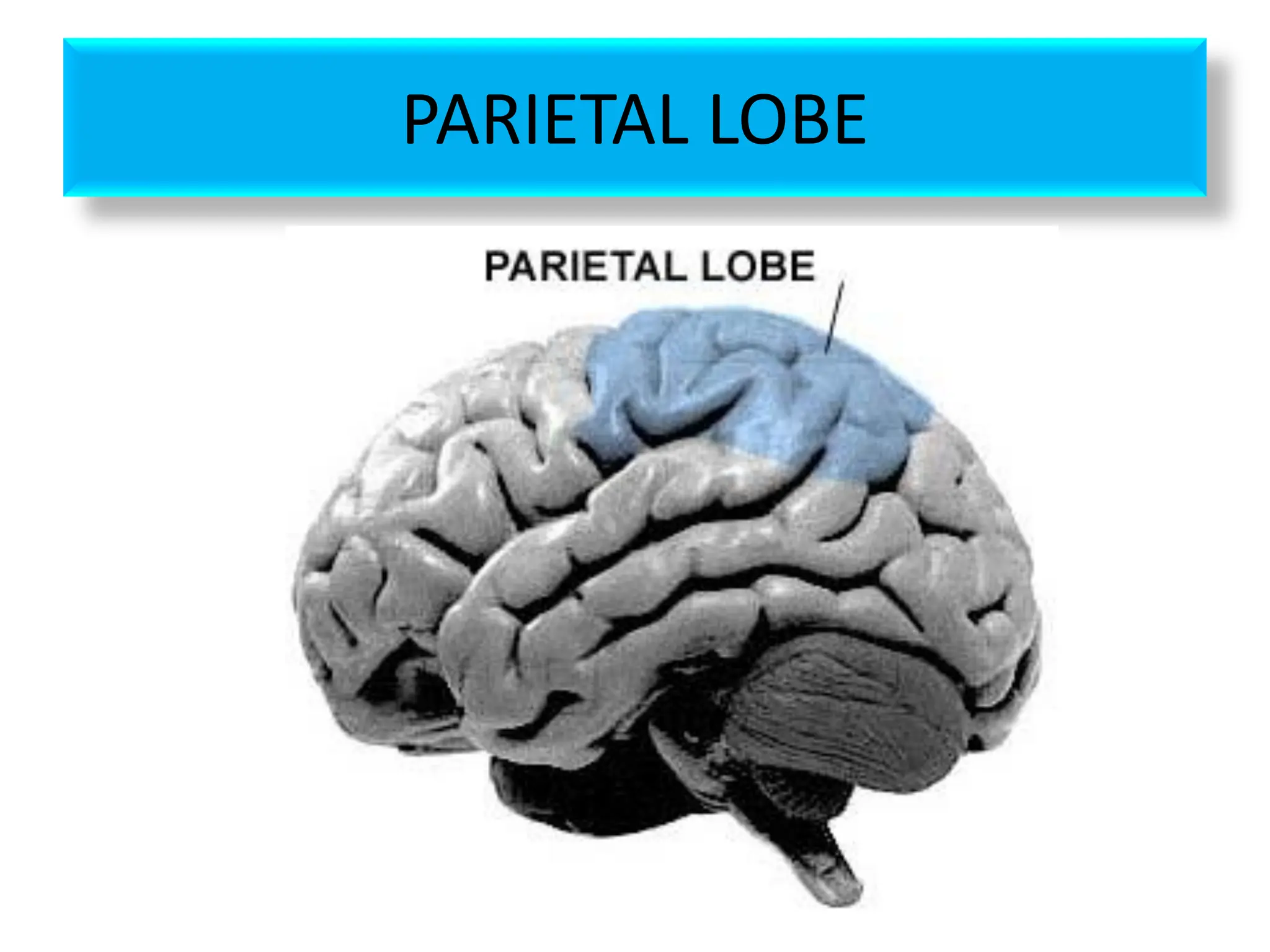
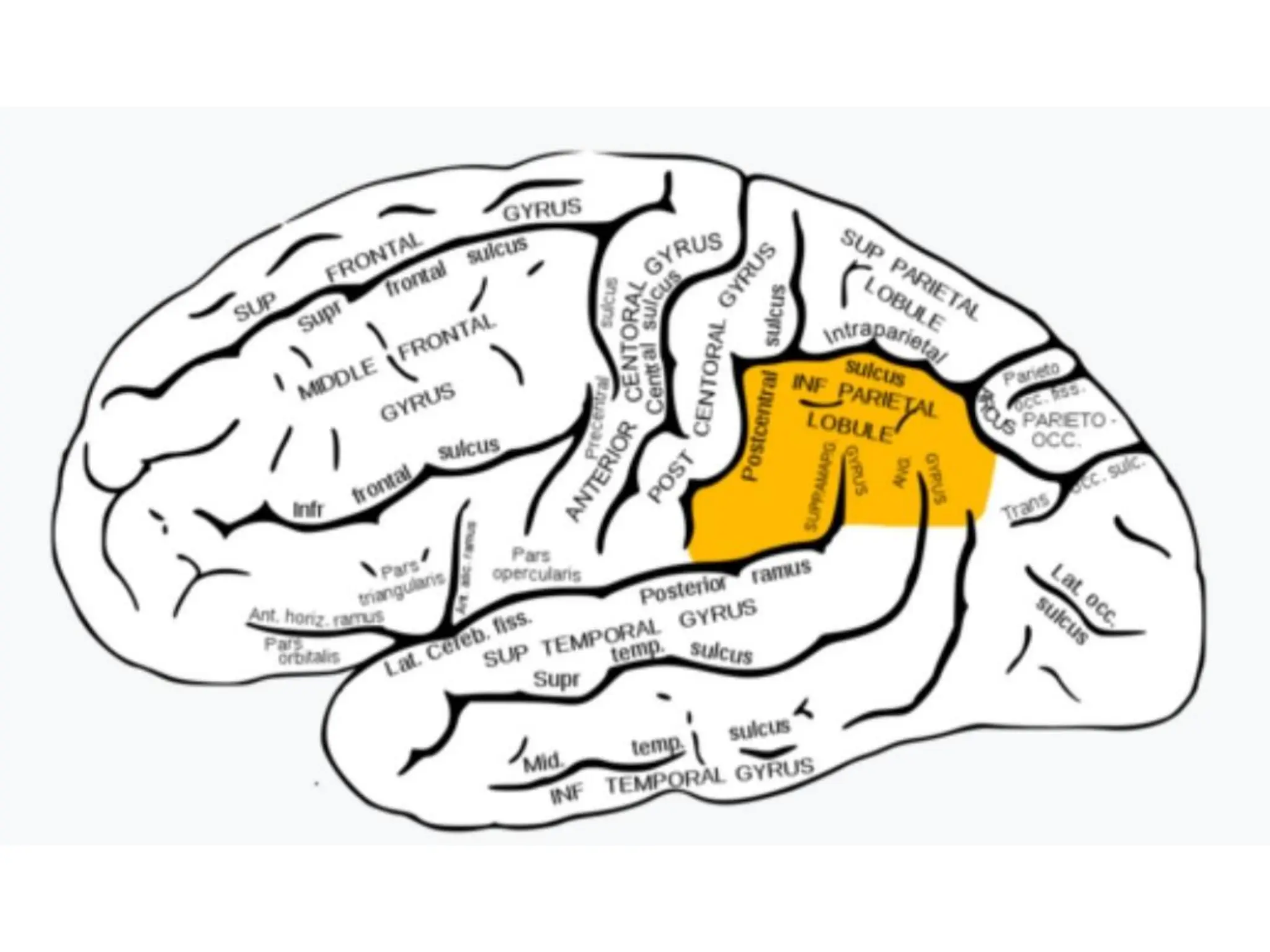
PARIETAL LOBE
SENSORY AREAS ARE
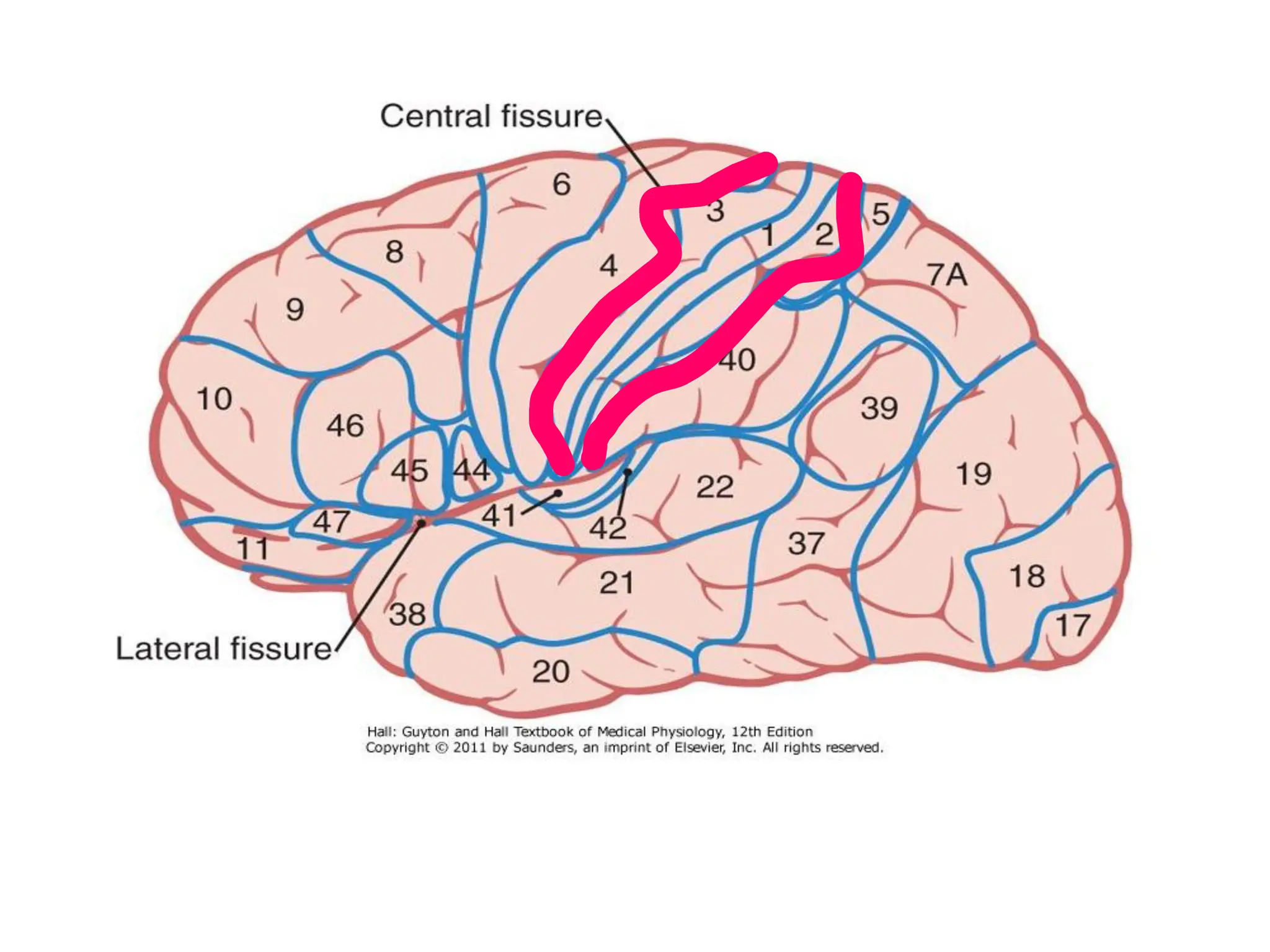
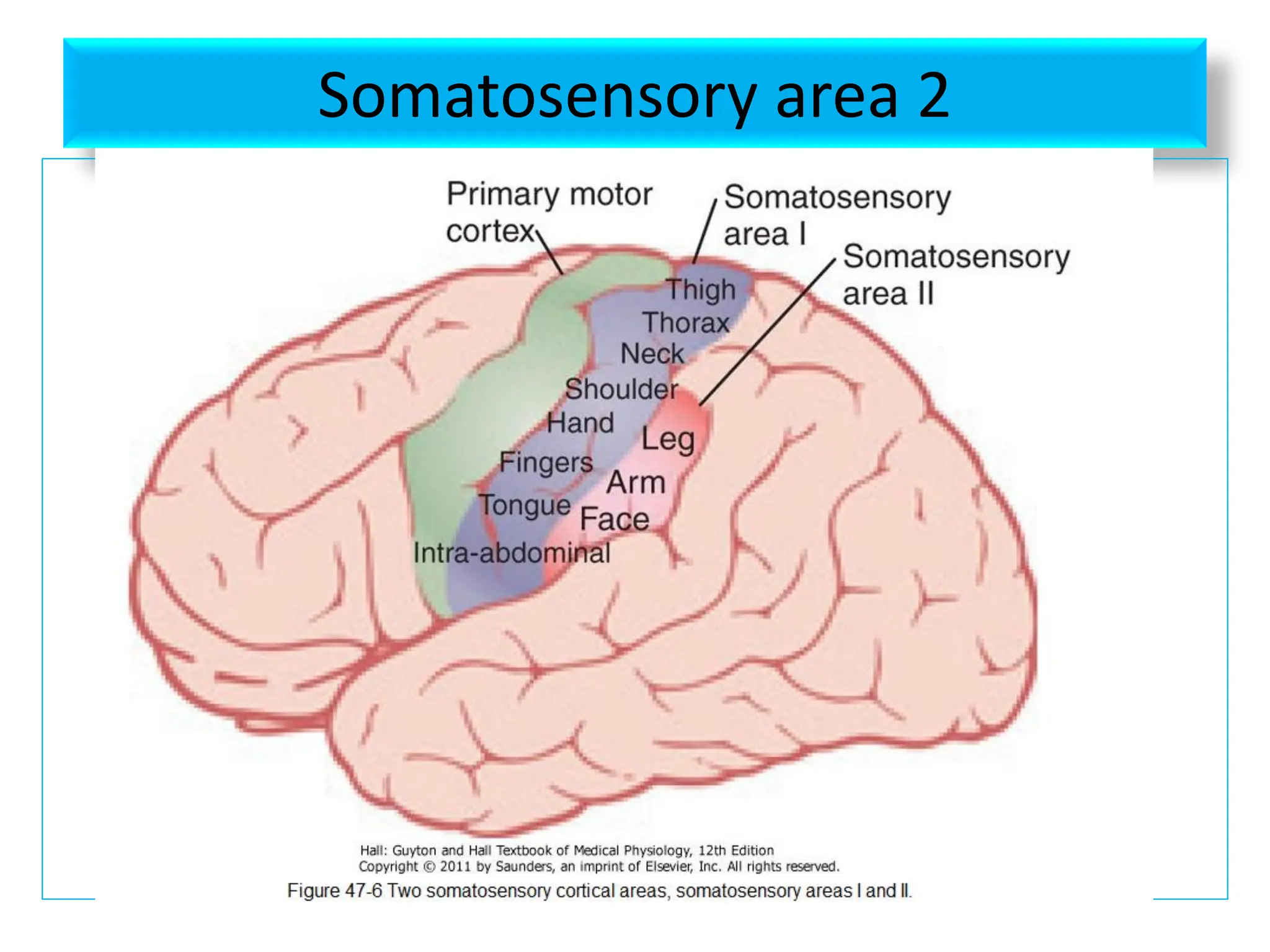
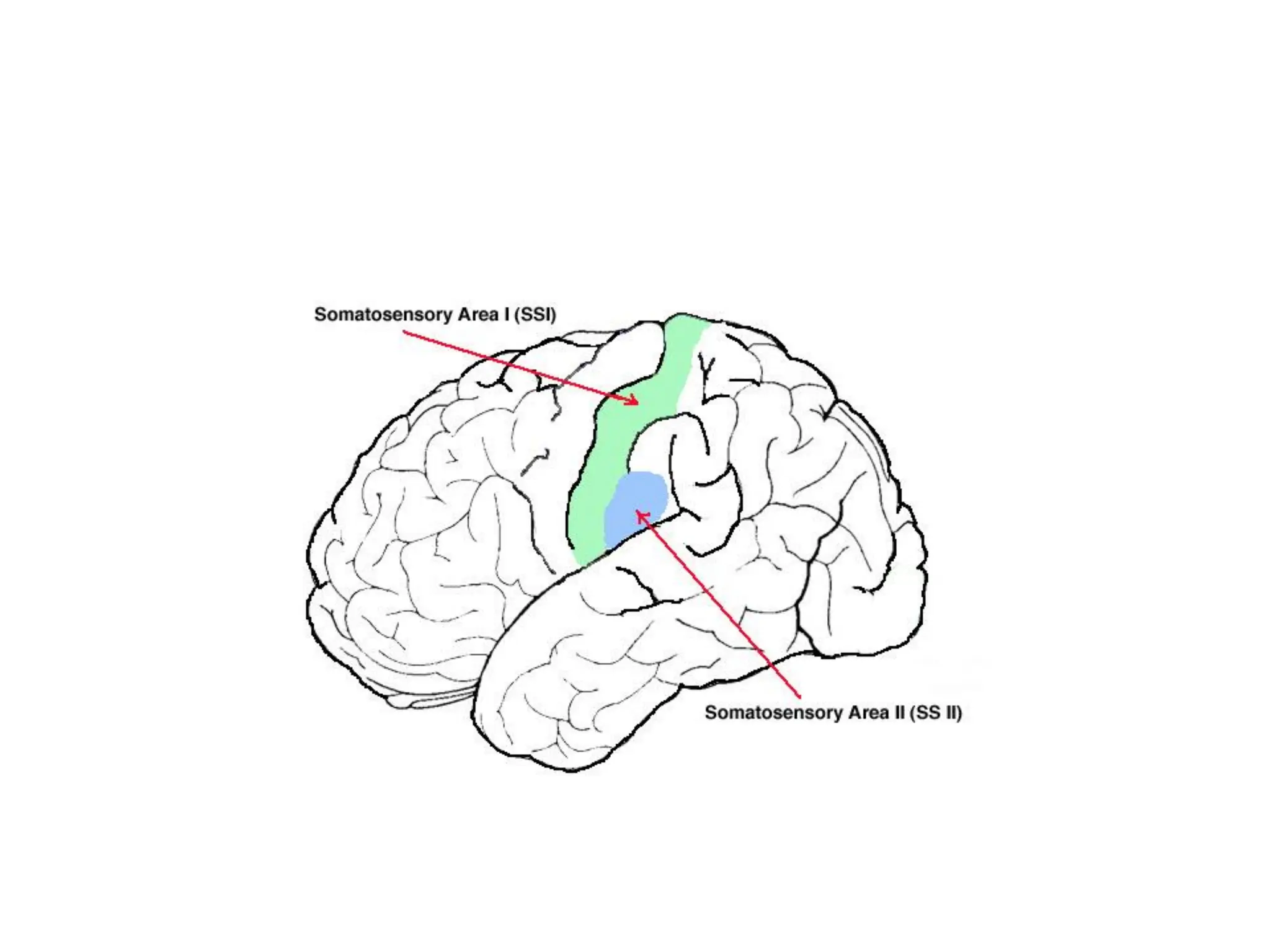
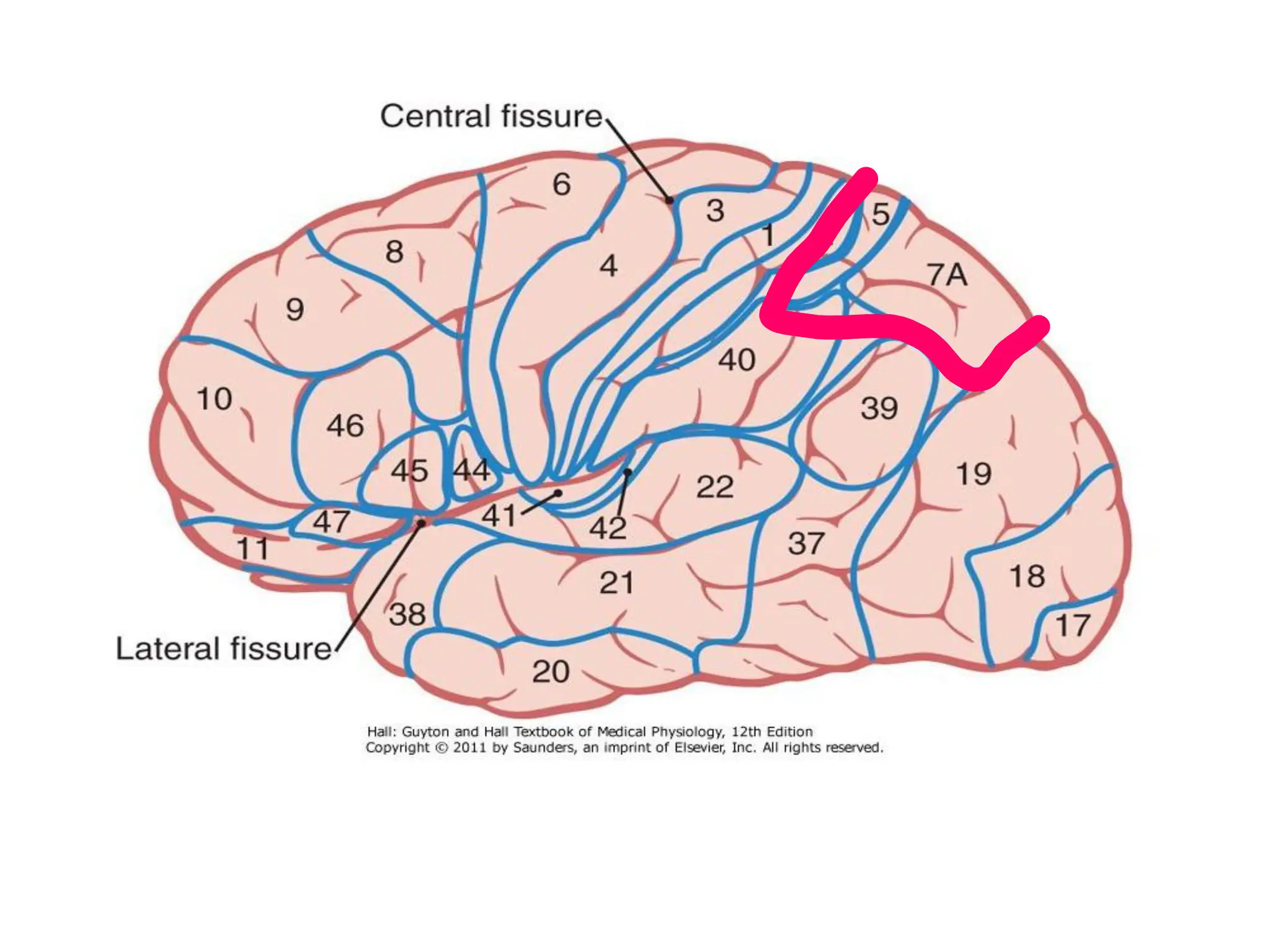
• Somatosensory area I [area 3,1,2]
• Somatosensory area II
• Sensory association area[area 5,7 and higher
association area 40]
SOMATOSENSORY AREA 1
• Location: posterior to central sulcus , post
central gyrus of each parietal lobe
• Major area: Brodmann’s area 3,1,2
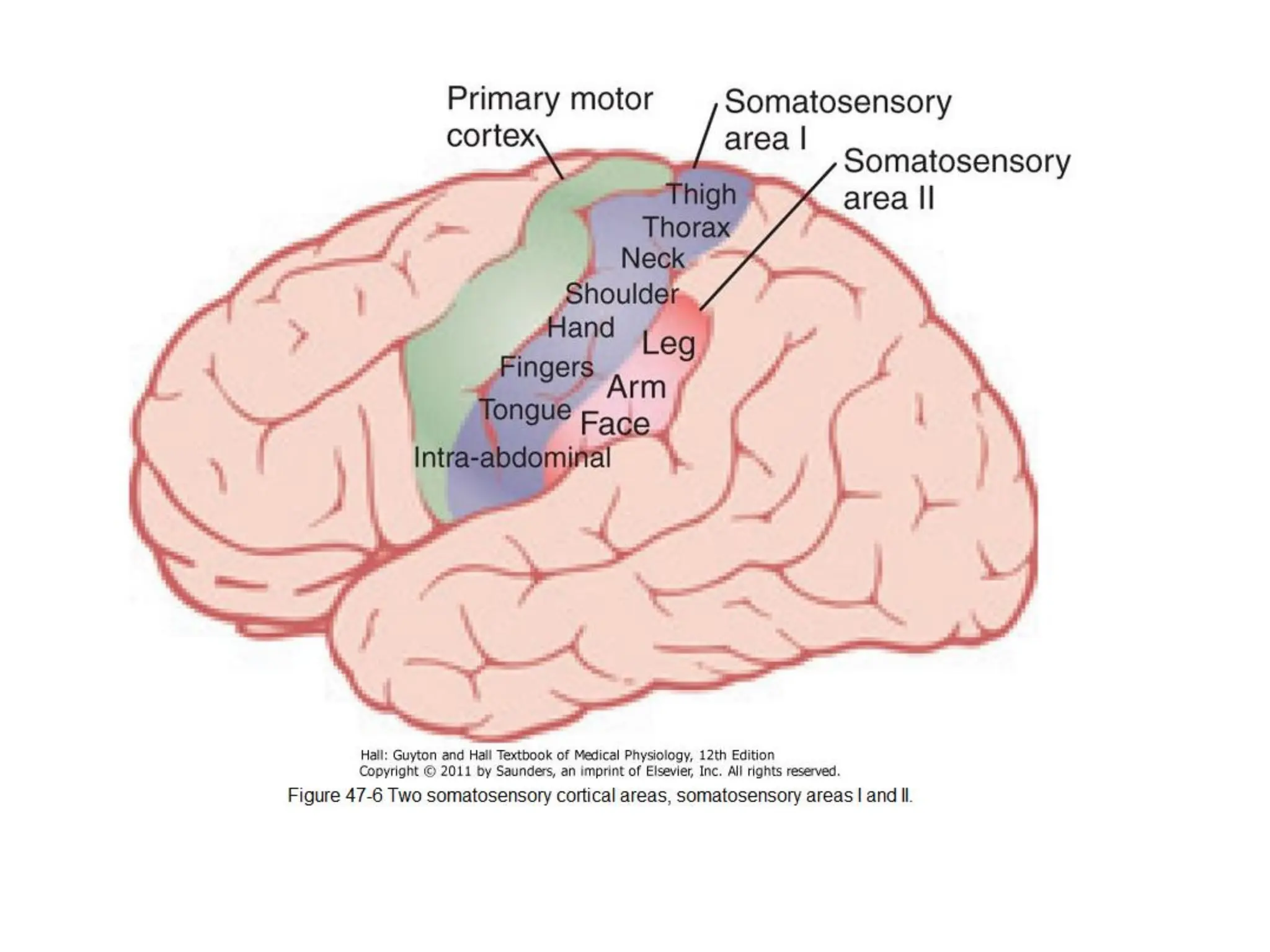
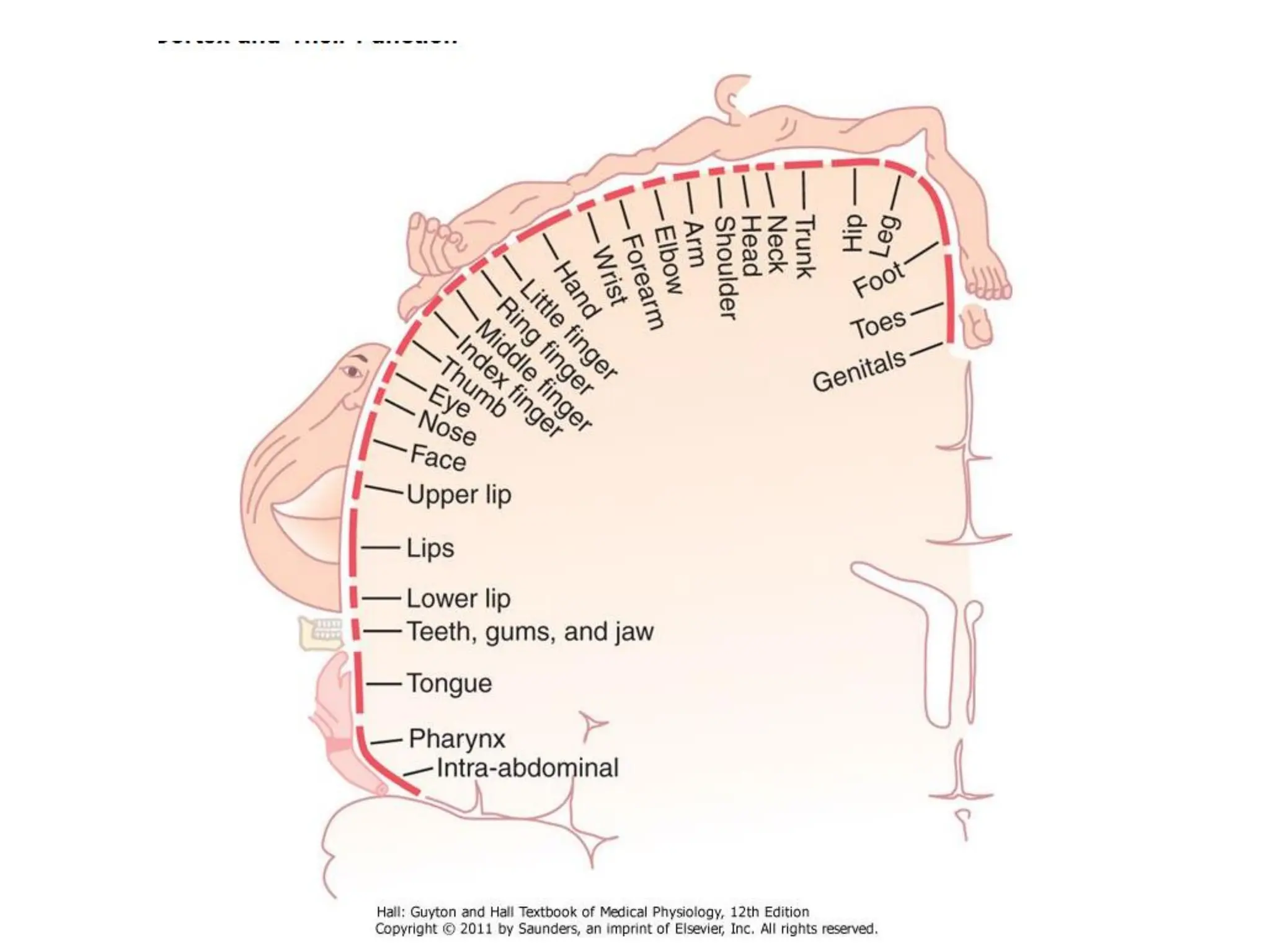
Sensory Homunculus
➢Representation of body is contralateral &
inverted.
➢ Representation of face is contralateral &
uninverted
➢Areas for lips , face and thumb are larger than
areas for trunk and leg.
➢Size of areas are directly proportional to
number of specialised sensory receptors in
each respective peripheral area of the body.
Somatosensory area1
Somatosensory area 2
SOMATOSENSORY ASSOCIATION AREA
• Location - Superior Parietal Lobule
• Area : Brodmann’s area 5,7.
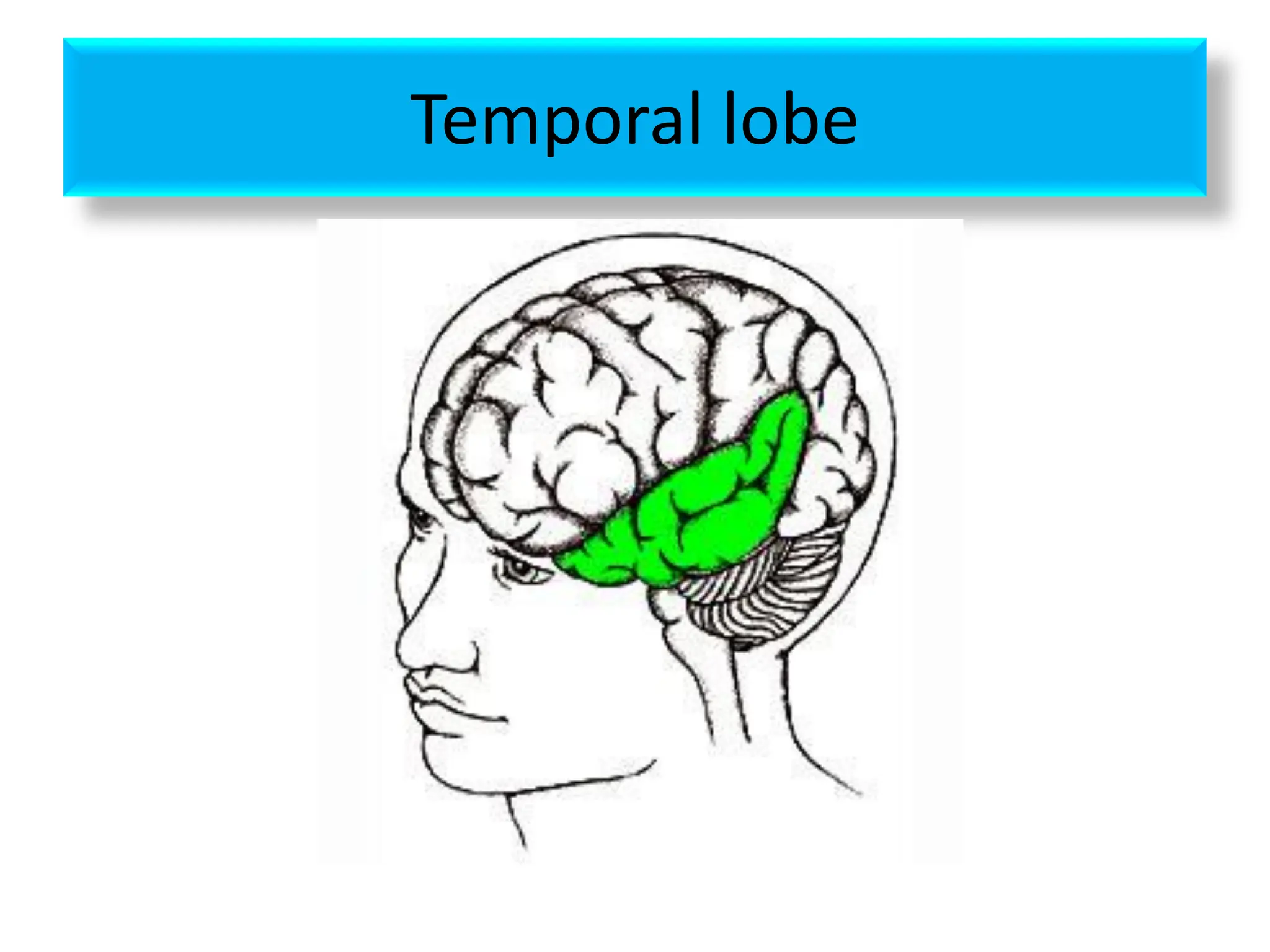
Temporal lobe
TEMPORAL LOBE
Location – area inferior to lateral sulcus
AREAS
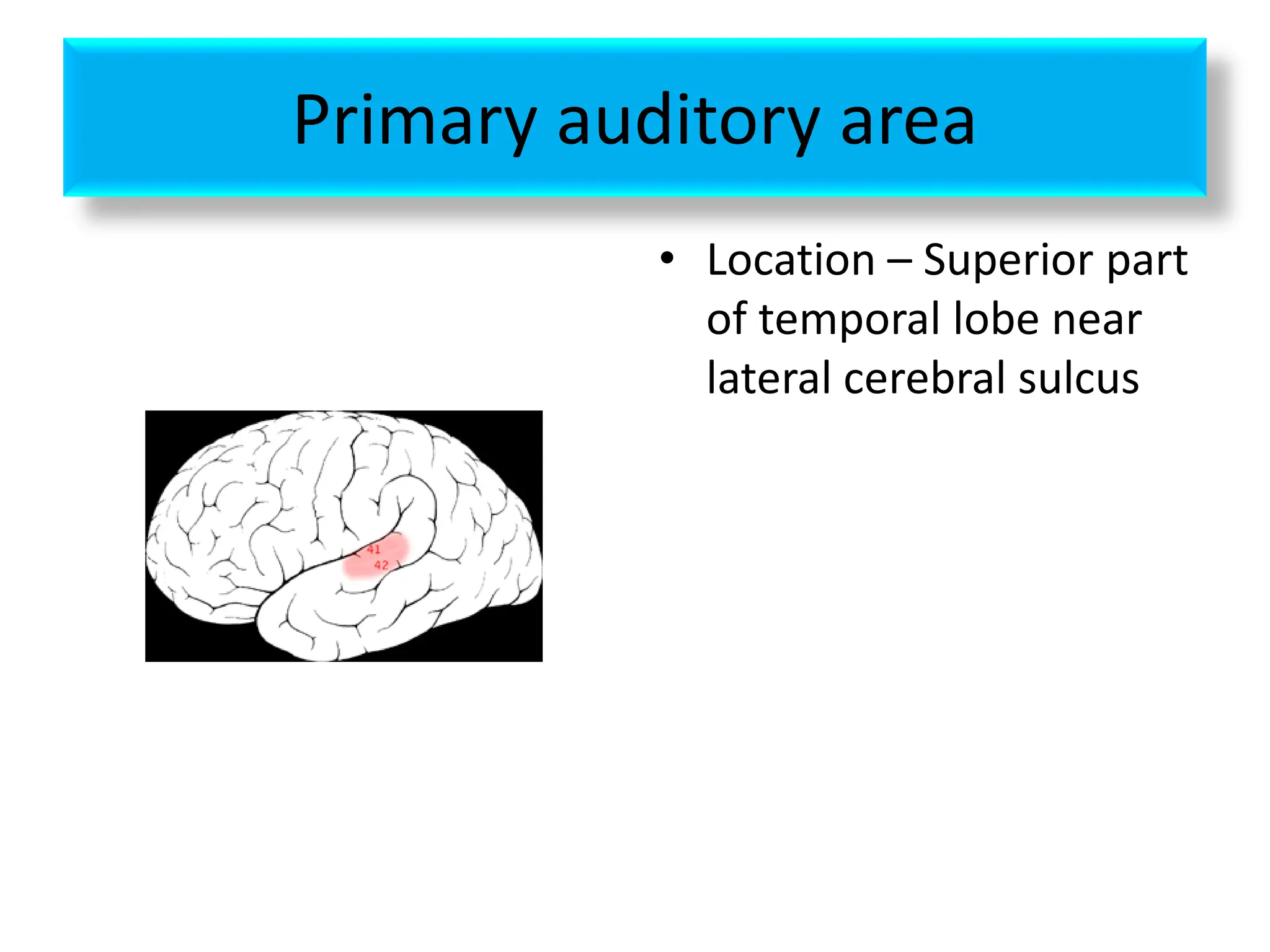
• Primary auditory area [area 41,42]
• Auditory association area [area 22]
Primary auditory area
• Location – Superior part
of temporal lobe near
lateral cerebral sulcus
WERNICKE’S AREA
• Superior temporal gyrus
• Brodmanns area 22
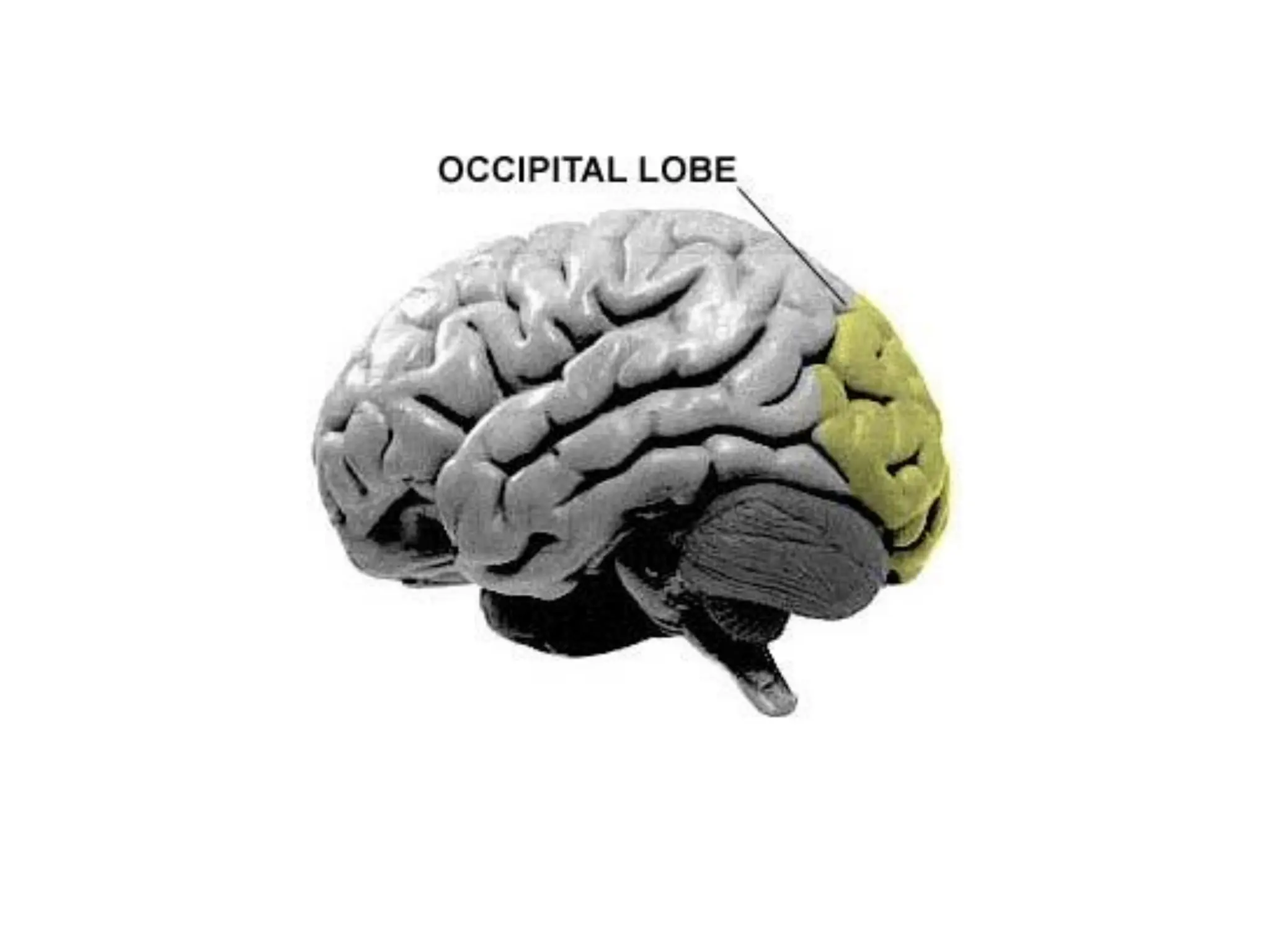
OCCIPITAL LOBE
Areas
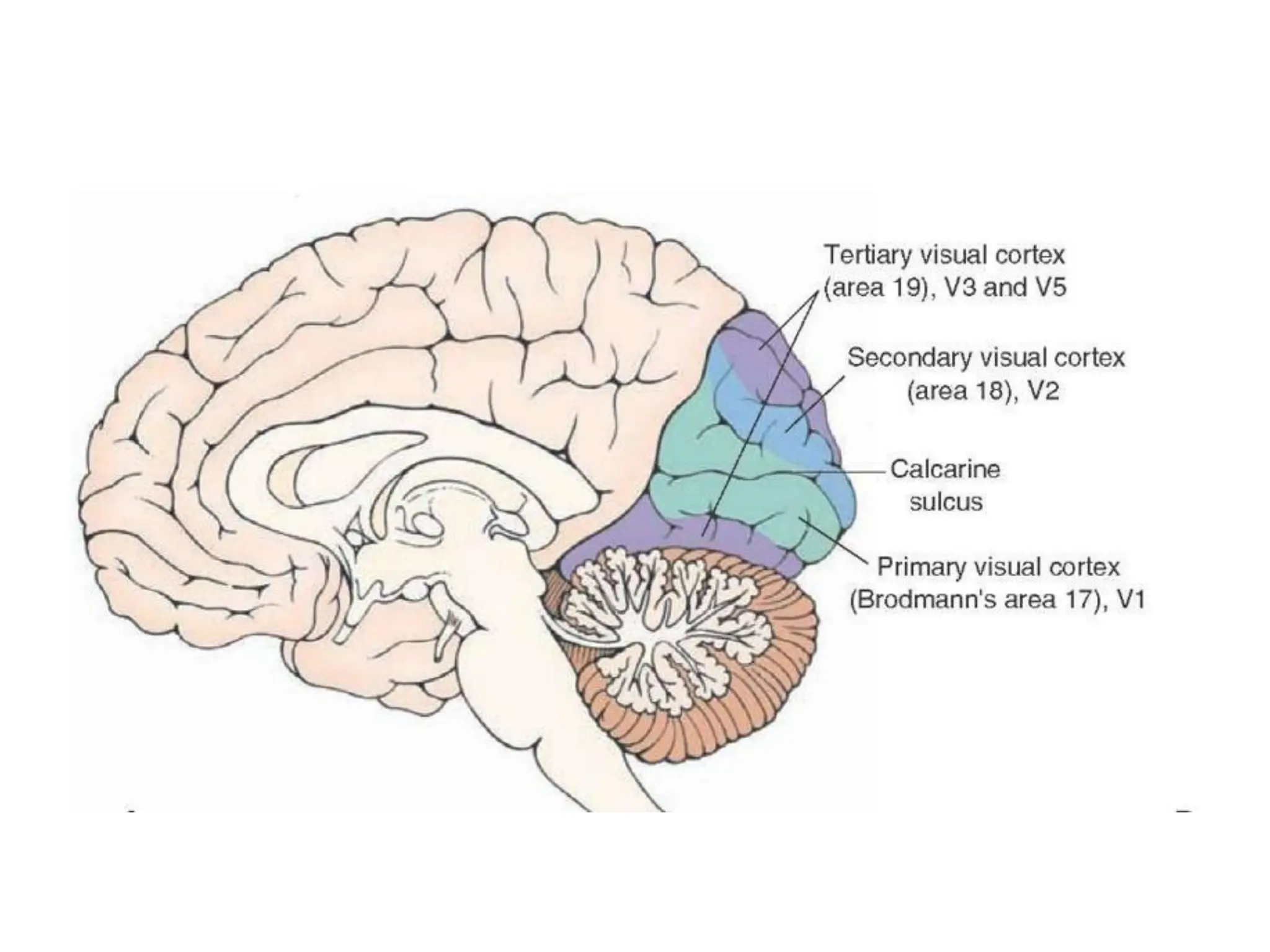
• Primary visual area
• Secondary visual area
• Occipital eye field
PRIMARY VISUAL AREA
• Brodmann’s area 17
• Visual Perception
SECONDARY VISUAL AREA
• Brodmann’s areas 18,19
• Surrounds the primary visual area
CEREBRAL CORTEX FOR BRAIN THE ORGAN OF .pdf

CEREBRAL CORTEX FOR BRAIN THE ORGAN OF .pdf

  • 1.
  • 2.
    • INTRODUCTION • BASICANATOMY • FUNCTIONAL DIVISIONS • FRONTAL LOBE • PARIETAL LOBE • TEMPORAL LOBE • OCCIPITAL LOBE
  • 3.
    GENERAL CONSIDERATIONS ❑Highest level ofCNS ❑Largest part of brain ❑Highly developed in humans
  • 5.
    ❖Cerebrum - Outergray matter and inner white matter. ❖Outer gray matter is called CEREBRAL CORTEX ❖ Surface of cortex is convoluted. Folds are called as gyri and intervening grooves are called sulci.
  • 6.
    Functional part ofcerebral cortex is thin layer of neurons covering the surface of all convolutions. It is only 2-5 mm thick. Total cerebral cortex contains about 100 billion neurons.
  • 10.
    • Corpus callosum→ bidirectional neuronal connection between cortical areas of 2 cerebral hemispheres • Anterior portion of temporal lobe including amygdala are interconnected by fibres through anterior commissure
  • 11.
    • 2 halveshave independent capability for consciousness, memory storage communication and control of motor activities • Corpus callosum is required for the 2 sides to operate cooperatively at the superficial subconscious level • Anterior commissure plays an important role in unifying emotional responses of 2 sides of the brain.
  • 12.
    Surfaces 1. Superolateral surface 2.Medial surface 3. Inferior surface
  • 16.
    HISTOLOGY 6 LAMINAE 1) MOLECULAR/ PLEXIFORM LAYER 2) EXTERNAL GRANULAR LAYER 3) OUTER PYRAMIDAL LAYER 4) INTERNAL GRANULAR LAYER 5) INNER PYRAMYDAL/ GANGLIONIC LAYER 6) POLYMORPHOUS / MULTIFORM LAYER 16
  • 17.
  • 18.
    BRODMANNS AREA • 52Areas according to histological characteristics • Korbinian Brodmann • GERMAN NEUROLOGIST
  • 19.
  • 20.
  • 21.
  • 22.
  • 23.
    FRONTAL LOBE Subdivided into2 according to function • Precentral cortex • Prefrontal cortex Areas present in precentral cortex are ❖ Primary motor area [area 4] ❖ Premotor area [area 6] ❖ Supplementary motor area ❖ Frontal eye field [area 8] ❖ Broca’s area (44,45)
  • 24.
  • 25.
    Primary Motor Cortex/ Precentral Gyrus Broca’sArea Orbitofrontal Cortex Olfactory Bulb Modified from: http://www.bioon.com/book/biology/whole/image/1/1-8.tif.jpg Regions Investigation (Phineas Gage) Investigation (Phineas Gage)
  • 26.
    Primary motor area Brodmannarea 4 Functions ❖ It is concerned with voluntary control of movements produced by skeletal muscles of the contralateral half of the body
  • 27.
    ❑Topographic representation [Motor Homunculus] ❑ Different parts of contralateral half of body are represented separately in more or less inverted orders except for the face.
  • 31.
    Important points 1. Therepresentation body is contralateral & inverted. 2. Area of representation depends upon the functional importance and not on the size of the part.
  • 32.
  • 34.
    Premotor Area Lies onthe lateral surface of each cerebral hemisphere anterior to primary motor area. Area 6. Functions ❖Store programs of learned motor activities of complex and sequential nature ❖To provide postural background for performance of complex coordinate movements.
  • 36.
  • 37.
    Supplementary motor area Lieson the medial surface of each cerebral hemisphere in front of primary motor cortex
  • 39.
    Frontal Eye Field Area8 Function Voluntary scanning movements of eye
  • 41.
  • 42.
    Paul Broca (1824-1880)Carl Wernicke (1848-1905)
  • 44.
    Broca’s area Area 44,45Motor Speech Area. Location – Inferior Frontal Gyrus. Functions– • Formation of words • It causes activation of vocal cord simultaneously with movements of mouth & tongue during speech. • Lesion – expressive / Non fluent aphasia
  • 45.
  • 46.
    Functions • Center forplanned actions • Center for higher functions • Short term memories are registered in prefrontal cortex. • Control of intellectual activities --To prognosticate , to plan future , allows person to concentrate in central theme of thought --Plays role in solution of complicated mathematical, legal, philosophical problems. -- It allows to control one’s activity according to moral laws.
  • 47.
    APPLIED ASPECTS FRONTAL LOBESYNDROME • Symptom complex due to injury or ablation of prefrontal cortex. Also seen in prefrontal leucotomy and B/L prefrontal lobectomy. • Flight of ideas– difficulty in planning. • Emotional instability– aggressiveness & restlessness • Euphoria – false sense of wellbeing. • Impairment of recent memory
  • 48.
    • Loss ofmoral and social sense. • Lack of attention and power of concentration associated with restlessness. • Lack of initiative following marked depression of intellectual activity. • Functional abnormalities : --loss of control over urinary and rectal sphincters. --disturbances in orientation. --slight tremor
  • 49.
  • 51.
    SENSORY AREAS ARE •Somatosensory area I [area 3,1,2] • Somatosensory area II • Sensory association area[area 5,7 and higher association area 40]
  • 54.
    SOMATOSENSORY AREA 1 •Location: posterior to central sulcus , post central gyrus of each parietal lobe • Major area: Brodmann’s area 3,1,2
  • 55.
    Sensory Homunculus ➢Representation ofbody is contralateral & inverted. ➢ Representation of face is contralateral & uninverted ➢Areas for lips , face and thumb are larger than areas for trunk and leg. ➢Size of areas are directly proportional to number of specialised sensory receptors in each respective peripheral area of the body.
  • 58.
  • 59.
  • 61.
    SOMATOSENSORY ASSOCIATION AREA •Location - Superior Parietal Lobule • Area : Brodmann’s area 5,7.
  • 64.
  • 65.
    TEMPORAL LOBE Location –area inferior to lateral sulcus AREAS • Primary auditory area [area 41,42] • Auditory association area [area 22]
  • 66.
    Primary auditory area •Location – Superior part of temporal lobe near lateral cerebral sulcus
  • 67.
    WERNICKE’S AREA • Superiortemporal gyrus • Brodmanns area 22
  • 68.
    OCCIPITAL LOBE Areas • Primaryvisual area • Secondary visual area • Occipital eye field
  • 70.
    PRIMARY VISUAL AREA •Brodmann’s area 17 • Visual Perception
  • 72.
    SECONDARY VISUAL AREA •Brodmann’s areas 18,19 • Surrounds the primary visual area