Centralized or Decentralized?
A Case study of Norwegian hospital reform
SCHOOL OF MANAGEMENT
Presented By-
Sunil Ku. Behera 317SM1004
Aditi Das 317SM1008
Rakesh Kumar 317SM1012
Shankar Pradhan 317SM1024
Akash Upadhyay 317SM1032
DECENTRALIZATION AND CENTRALIZATION –
A BREIF INTRODUCTION
Centralization and Decentralization are the two types of structures, that can be found in the organization,
government, management and even in purchasing.
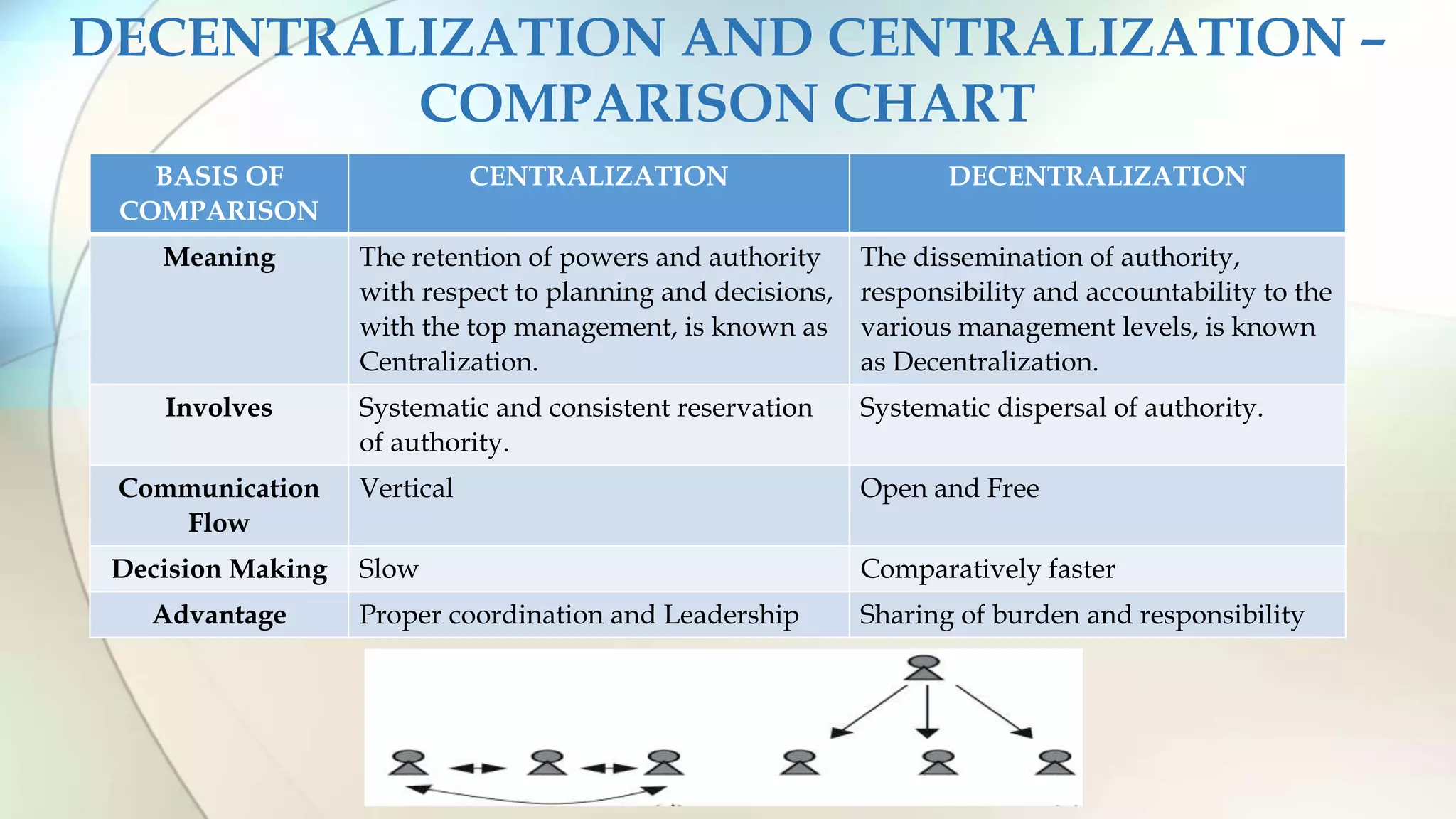
Centralization of authority means the power of planning and decision making are exclusively in the hands of top
management. It alludes to the concentration of all the powers at the apex level. They have full control over the
activities of the middle or low-level management. Apart from that personal leadership and coordination can also
be seen as well as work can also be distributed easily among workers.
Decentralization refers to the dissemination of powers by the top management to the middle or low-level
management. It is the delegation of authority, at all the levels of management. It is the perfect opposite of
centralization, in which the decision-making powers are delegated to the departmental, divisional, unit or centre
level managers, organization-wide. Decentralization can also be said as an addition to Delegation of authority.
DECENTRALIZATION AND CENTRALIZATION –
COMPARISON CHART
BASIS OF
COMPARISON
CENTRALIZATION DECENTRALIZATION
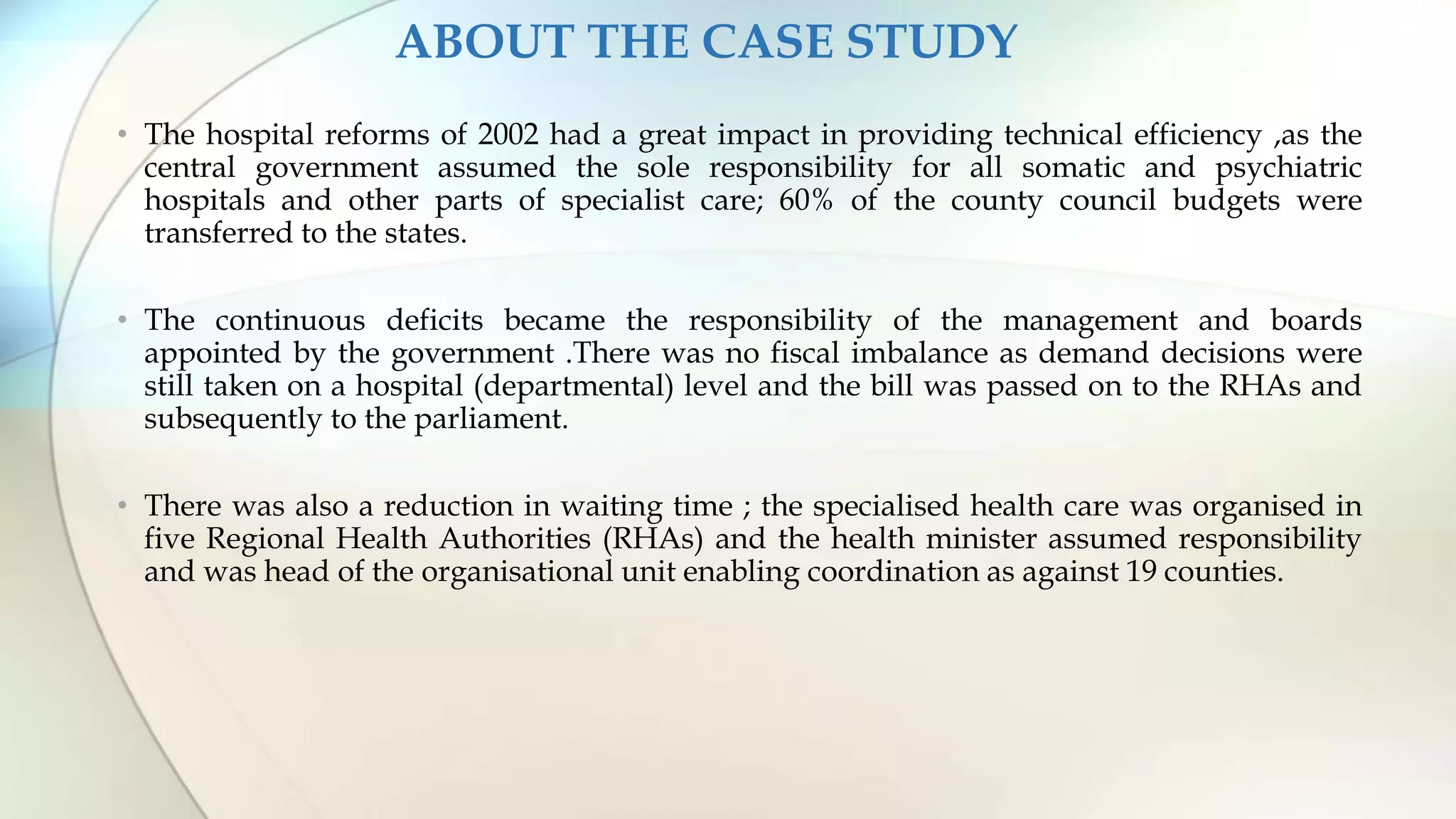
Meaning The retention of powers and authority
with respect to planning and decisions,
with the top management, is known as
Centralization.
The dissemination of authority,
responsibility and accountability to the
various management levels, is known
as Decentralization.
Involves Systematic and consistent reservation
of authority.
Systematic dispersal of authority.
Communication
Flow
Vertical Open and Free
Decision Making Slow Comparatively faster
Advantage Proper coordination and Leadership Sharing of burden and responsibility
ABOUT THE CASE STUDY
• The hospital reforms of 2002 had a great impact in providing technical efficiency ,as the
central government assumed the sole responsibility for all somatic and psychiatric
hospitals and other parts of specialist care; 60% of the county council budgets were
transferred to the states.
• The continuous deficits became the responsibility of the management and boards
appointed by the government .There was no fiscal imbalance as demand decisions were
still taken on a hospital (departmental) level and the bill was passed on to the RHAs and
subsequently to the parliament.
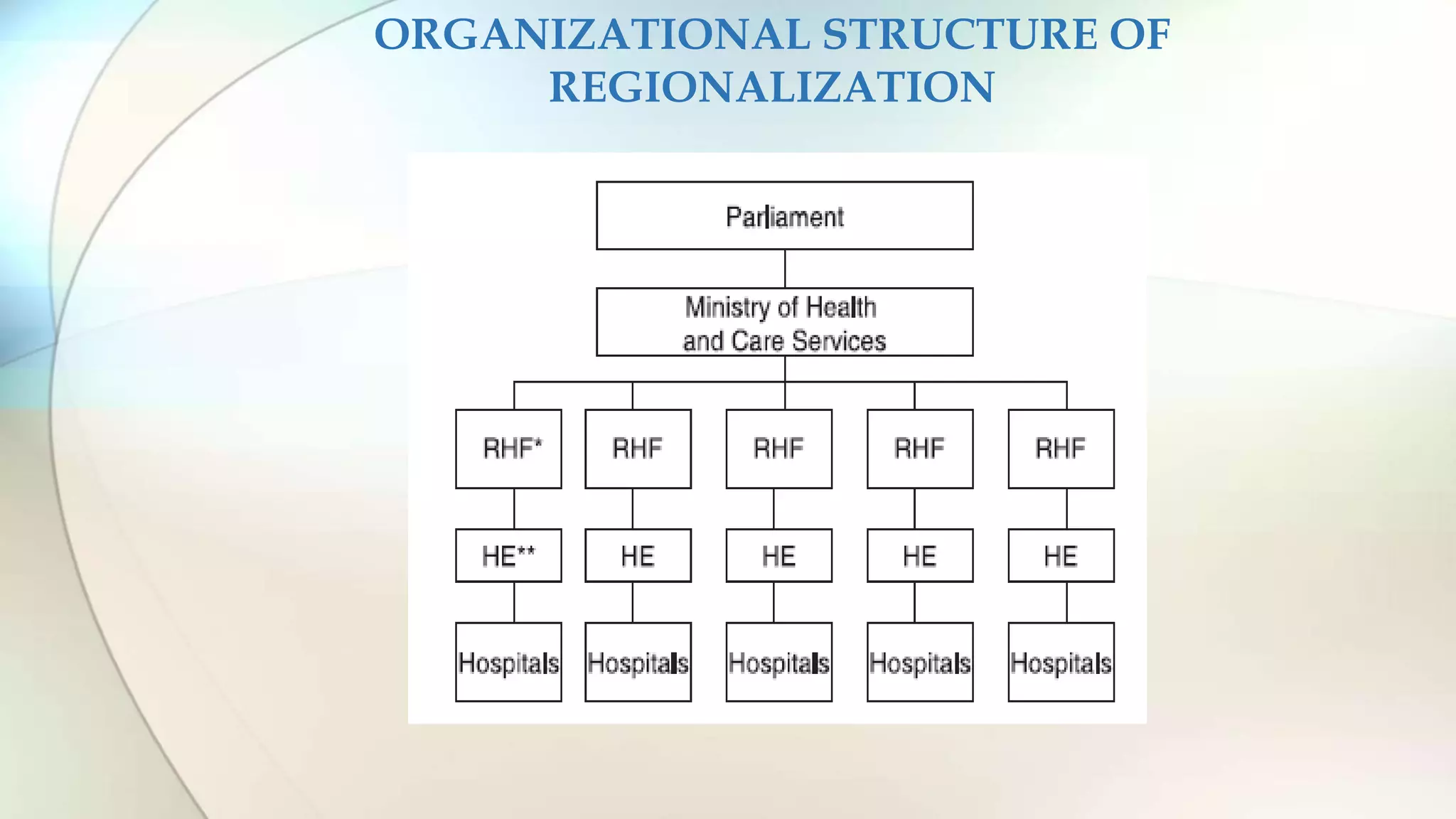
• There was also a reduction in waiting time ; the specialised health care was organised in
five Regional Health Authorities (RHAs) and the health minister assumed responsibility
and was head of the organisational unit enabling coordination as against 19 counties.
RECENTRALIZATION
DEFINITION:-
To bring under one control especially in government to centralize budgeting in one agency.
If decentralization is the favored strategy in European health care systems, studies of countries
that resist the current trend will be of interest and importance as they may provide information
about the potential drawbacks of decentralization.
One country Norway raised voice against decentralization and adapted recentralization.
Why recentralization?
1. To provide cost efficiency
2. Achieve Technical efficiency
Why not recentralization?
1. Not able to meet Cost containment
2. Reduction in budget deficit.
RECENTRALIZATION AN
EFFECTIVE STRATEGY TO
IMPROVE EFFICIENCY
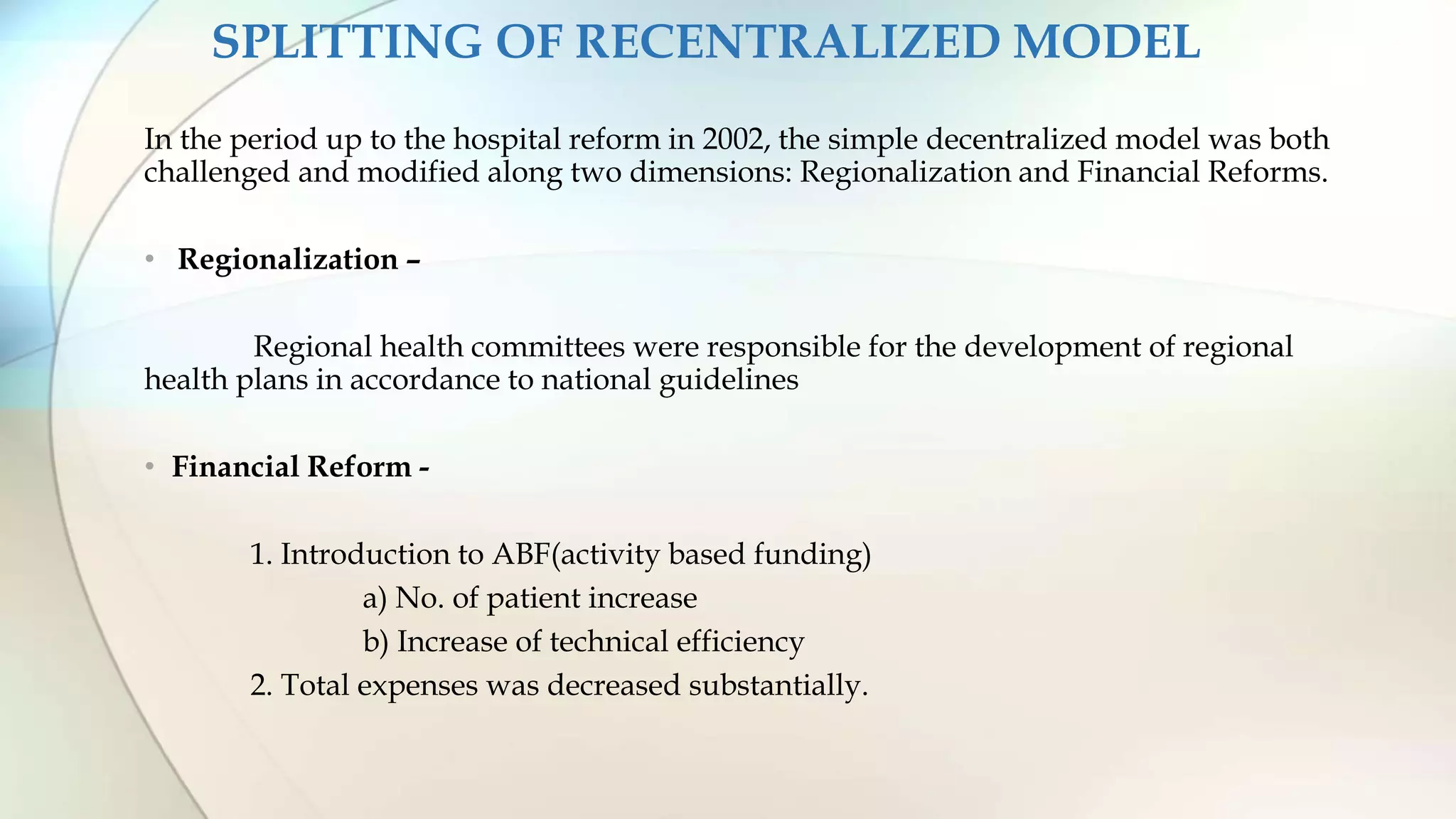
Technical efficiency as we find in the
case study increased
by an annual average of 0.4%
before the recentralization compared
with 2.5% after the reforms.
SPLITTING OF RECENTRALIZED MODEL
In the period up to the hospital reform in 2002, the simple decentralized model was both
challenged and modified along two dimensions: Regionalization and Financial Reforms.
• Regionalization –
Regional health committees were responsible for the development of regional
health plans in accordance to national guidelines
• Financial Reform -
1. Introduction to ABF(activity based funding)
a) No. of patient increase
b) Increase of technical efficiency
2. Total expenses was decreased substantially.
ORGANIZATIONAL STRUCTURE OF
REGIONALIZATION
CAUSES OF TECHNICAL EFFICIENCY OTHER
THAN RECENTRALIZATION
• Change in efficiency may be due to change in share of ABF(Activity Based
Funding) in this period.
• A high share of ABF will give incentives both to DRG(Diagnosis Related
Group) Creep and to select patient groups with a high price to cost ratio
.There is strong evidence in Norway of DRG Creep in the period after
recentralization.
• There is evidence of strategic actions to increase the number of hospital
stays.
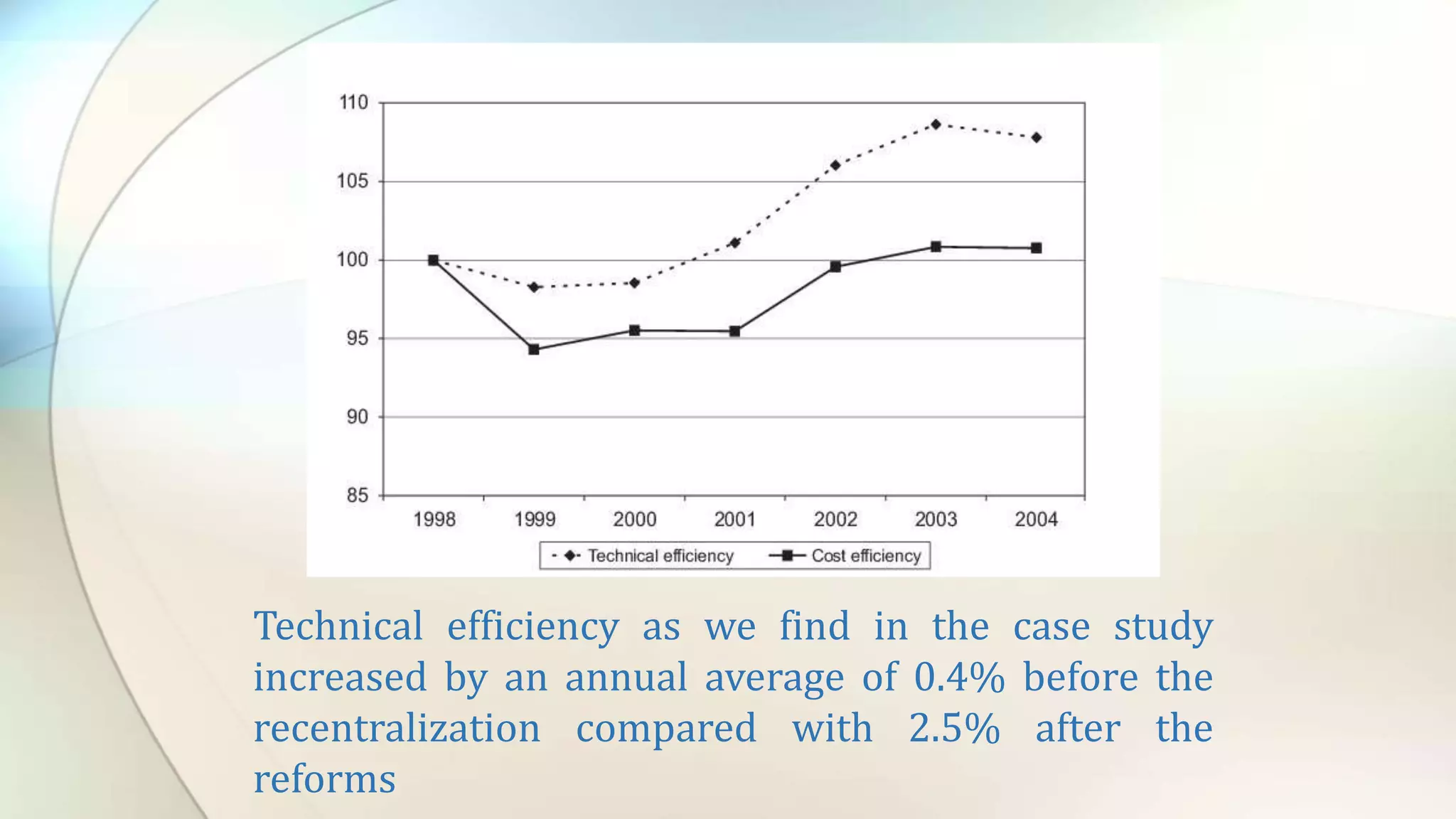
Technical efficiency as we find in the case study
increased by an annual average of 0.4% before the
recentralization compared with 2.5% after the
reforms
MERITS OF RECENTRALIZATION
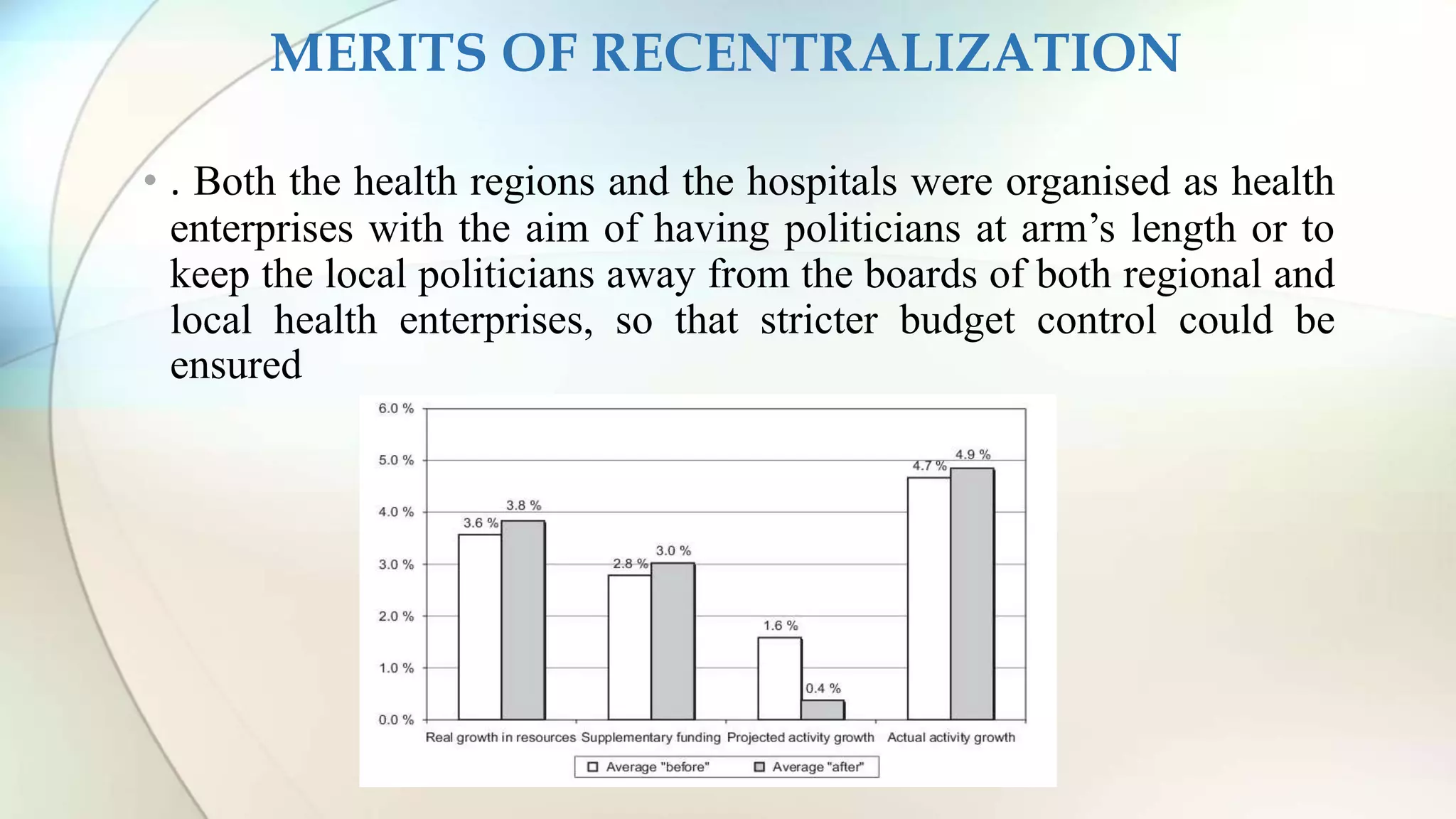
• . Both the health regions and the hospitals were organised as health
enterprises with the aim of having politicians at arm’s length or to
keep the local politicians away from the boards of both regional and
local health enterprises, so that stricter budget control could be
ensured
CONCLUSION DRAWN FROM THE CASE STUDY
• Whether RECENTRALIZATION is an effective strategy to obtain
control over health care costs and improve efficiency?
• Well our conclusion is NO the recentralization is not an effective
strategy to obtain control over health care costs
• Although we see that comparing the period from 1999-2001 with
2002-2004, the cost efficiency fell by 0.7% on average per year before
the reform it increased by an annual average of 2.3% after.
• But recentralization did not lead to cost containment or soft
budgeting, extra funding provided by the parliament on an average
seems to have increased.
Thank You for your
attention
Questions are invited…

Centralized or decentralized

  • 1.
    Centralized or Decentralized? ACase study of Norwegian hospital reform SCHOOL OF MANAGEMENT Presented By- Sunil Ku. Behera 317SM1004 Aditi Das 317SM1008 Rakesh Kumar 317SM1012 Shankar Pradhan 317SM1024 Akash Upadhyay 317SM1032
  • 2.
    DECENTRALIZATION AND CENTRALIZATION– A BREIF INTRODUCTION Centralization and Decentralization are the two types of structures, that can be found in the organization, government, management and even in purchasing. Centralization of authority means the power of planning and decision making are exclusively in the hands of top management. It alludes to the concentration of all the powers at the apex level. They have full control over the activities of the middle or low-level management. Apart from that personal leadership and coordination can also be seen as well as work can also be distributed easily among workers. Decentralization refers to the dissemination of powers by the top management to the middle or low-level management. It is the delegation of authority, at all the levels of management. It is the perfect opposite of centralization, in which the decision-making powers are delegated to the departmental, divisional, unit or centre level managers, organization-wide. Decentralization can also be said as an addition to Delegation of authority.
  • 3.
    DECENTRALIZATION AND CENTRALIZATION– COMPARISON CHART BASIS OF COMPARISON CENTRALIZATION DECENTRALIZATION Meaning The retention of powers and authority with respect to planning and decisions, with the top management, is known as Centralization. The dissemination of authority, responsibility and accountability to the various management levels, is known as Decentralization. Involves Systematic and consistent reservation of authority. Systematic dispersal of authority. Communication Flow Vertical Open and Free Decision Making Slow Comparatively faster Advantage Proper coordination and Leadership Sharing of burden and responsibility
  • 4.
    ABOUT THE CASESTUDY • The hospital reforms of 2002 had a great impact in providing technical efficiency ,as the central government assumed the sole responsibility for all somatic and psychiatric hospitals and other parts of specialist care; 60% of the county council budgets were transferred to the states. • The continuous deficits became the responsibility of the management and boards appointed by the government .There was no fiscal imbalance as demand decisions were still taken on a hospital (departmental) level and the bill was passed on to the RHAs and subsequently to the parliament. • There was also a reduction in waiting time ; the specialised health care was organised in five Regional Health Authorities (RHAs) and the health minister assumed responsibility and was head of the organisational unit enabling coordination as against 19 counties.
  • 5.
    RECENTRALIZATION DEFINITION:- To bring underone control especially in government to centralize budgeting in one agency. If decentralization is the favored strategy in European health care systems, studies of countries that resist the current trend will be of interest and importance as they may provide information about the potential drawbacks of decentralization. One country Norway raised voice against decentralization and adapted recentralization. Why recentralization? 1. To provide cost efficiency 2. Achieve Technical efficiency Why not recentralization? 1. Not able to meet Cost containment 2. Reduction in budget deficit.
  • 6.
    RECENTRALIZATION AN EFFECTIVE STRATEGYTO IMPROVE EFFICIENCY Technical efficiency as we find in the case study increased by an annual average of 0.4% before the recentralization compared with 2.5% after the reforms.
  • 7.
    SPLITTING OF RECENTRALIZEDMODEL In the period up to the hospital reform in 2002, the simple decentralized model was both challenged and modified along two dimensions: Regionalization and Financial Reforms. • Regionalization – Regional health committees were responsible for the development of regional health plans in accordance to national guidelines • Financial Reform - 1. Introduction to ABF(activity based funding) a) No. of patient increase b) Increase of technical efficiency 2. Total expenses was decreased substantially.
  • 8.
  • 9.
    CAUSES OF TECHNICALEFFICIENCY OTHER THAN RECENTRALIZATION • Change in efficiency may be due to change in share of ABF(Activity Based Funding) in this period. • A high share of ABF will give incentives both to DRG(Diagnosis Related Group) Creep and to select patient groups with a high price to cost ratio .There is strong evidence in Norway of DRG Creep in the period after recentralization. • There is evidence of strategic actions to increase the number of hospital stays.
  • 10.
    Technical efficiency aswe find in the case study increased by an annual average of 0.4% before the recentralization compared with 2.5% after the reforms
  • 11.
    MERITS OF RECENTRALIZATION •. Both the health regions and the hospitals were organised as health enterprises with the aim of having politicians at arm’s length or to keep the local politicians away from the boards of both regional and local health enterprises, so that stricter budget control could be ensured
  • 12.
    CONCLUSION DRAWN FROMTHE CASE STUDY • Whether RECENTRALIZATION is an effective strategy to obtain control over health care costs and improve efficiency? • Well our conclusion is NO the recentralization is not an effective strategy to obtain control over health care costs • Although we see that comparing the period from 1999-2001 with 2002-2004, the cost efficiency fell by 0.7% on average per year before the reform it increased by an annual average of 2.3% after. • But recentralization did not lead to cost containment or soft budgeting, extra funding provided by the parliament on an average seems to have increased.
  • 13.
    Thank You foryour attention Questions are invited…