Downloaded 306 times
![Customer Experience Strategy
2009
meetings, performance reviews, and other rituals Monitor the Customer’s World
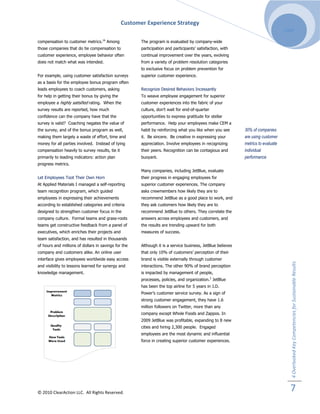
in your company? Make a concerted effort to A customer satisfaction survey typically provides
incorporate customer-first thinking and essential yet insufficient insight on the quality of
discussions in all of these business processes, customer interactions. Some surveys focus on
and you’ll see a monumental increase in the overall relationship, while others measure the
customer-focused employee engagement. Audit effectiveness of transactions. User groups and
your customer programs to identify what’s-in-it- advisory boards often focus on future offerings.
for-me (WIIFM) from the customers’ perspective. There may be multiple influencers for purchase
Create a ratio of WIIFM for your company versus decisions, and the sentiment of each influencer
WIIFM for customers, both short-term and long- should be monitored, to paint the whole picture
term, and make adjustments that strengthen the of your status with customers. Social media
customer relationship from the customer’s monitoring provides a window to customer
perspective. interaction quality among those who are vocal.
Call center logs and complaint lines are also very Customers apply 50
important sources of customer experience to 150 metrics to
feedback, yet not often used company-wide. measure how well the
job is getting done
In nearly every case, these feedback
Ongoing Customer-Centricity Journey mechanisms and forums are designed around
As Amazon exemplifies, building a customer- the company’s world, rather than the customer’s
focused culture is an ongoing journey. This world. “For any given job [i.e. purchase],
journey is called internal branding, where customers collectively apply 50 to 150 metrics to
outside-in thinking is integrated into the job of measure how well the job is getting done”, says
everyone company-wide, managing their Anthony Ulwick in his book, What Customers
personal impact on customer experience. Top- Want. Hence, the best way to monitor the
performing companies in customer service, quality of customer interactions is to use
according to BusinessWeek’s list of high- customers’ inherent measurements of goodness
performers from JD Power & Associates’ recent rather than the company’s measures of
studies, are: Amazon, USAA, Jaguar, Ritz goodness. The hardest thing for competitors to
Carlton, Publix Super Markets, Zappos, Hewlett- copy is the customer experience you create.
Packard, T Rowe Price, and Ace Hardware. These
companies are well-respected on several Embrace Constructive Feedback
dimensions, demonstrating that it pays Many firms that measure customer satisfaction
4 Overlooked Key Competencies for Sustainable Results
widespread dividends to put customers’ well- emphasize the positive and de-emphasize the
being first. negative responses. Lack of processes and
comfort levels for digesting and acting on
3) Monitor Quality of Customer constructive feedback can leave a company
Interactions vulnerable to severe consequences. One out of
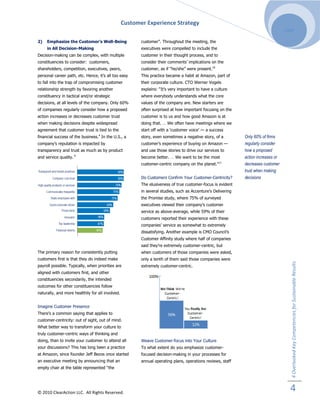
While surveys have long been in place for most two companies (44%) acknowledge that high-
companies, only 31% of marketing executives profile negative customer experiences have at
report that their company takes customer some time compromised their brand, yet only
listening seriously, and just 38% of companies 29% have high ability to handle and resolve
are gathering customer insight from customer customer complaints.4
12
engagement situations. This means that
companies willing to adopt a disciplined Make it safe for executives and employees to
approach to customer experience management receive less than stellar results – as long as they
may enjoy significant competitive advantages by diligently improve. A motto such as this one may
being first or best at monitoring and improving be useful in establishing curiosity rather than
the quality of customer interactions. fear: Good news is no news; no news is bad
© 2010 ClearAction LLC. All Rights Reserved.
5](https://image.slidesharecdn.com/cemstrategyclearaction-110605075434-phpapp02/85/Customer-Experience-Strategy-5-320.jpg)

The document outlines four key competencies necessary for an effective customer experience management (CEM) strategy: shared vision, sound rationale in decision-making, accountability in quality interactions, and recognition of employee contributions. It emphasizes the importance of understanding the customer's world, incorporating customer well-being in decision-making, and fostering a culture of customer-centricity across organizations. The lack of a formal CEM process in many companies presents opportunities for improvement, as businesses with strong CEM competencies tend to outperform their competitors.


![Call center assessment[1]](https://cdn.slidesharecdn.com/ss_thumbnails/callcenterassessment1-150311081248-conversion-gate01-thumbnail.jpg?width=640&height=640&fit=bounds)


