Cellular Abnormalities and
Disease
Cancer, Diabetes, and Genetic
Disorders
Cancer: Genomic Instability
• • Genome instability includes chromosomal
breaks, mutations, and DNA repair errors.
• • Mutations in caretaker and gatekeeper
genes drive malignant transformation.
• • Accumulation of mutations leads to
uncontrolled cell growth.
Diabetes: Oxidative Cellular
Damage
• • Hyperglycemia triggers oxidative stress via
reactive oxygen species (ROS).
• • Damaging pathways: AGE, PKC, PARP, polyol,
hexosamine.
• • Inflammatory signaling in pancreatic islets
causes β-cell dysfunction and death.
• • Mitochondrial damage contributes to
complications.
Diabetes: Vascular & Cellular
Damage
• • Endothelial dysfunction and impaired nitric
oxide signaling.
• • Microangiopathy and macroangiopathy lead
to complications.
• • Linked to atherosclerosis and diabetic
vasculopathy.
Genetic/Metabolic Disorders &
Cancer Metabolism
• • Mutations in metabolic enzymes cause
inherited metabolic disorders.
• • Cancer cells often shift to aerobic glycolysis
(Warburg effect).
• • Leads to rapid biomass production and
altered energy pathways.
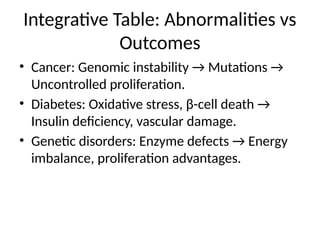
Integrative Table: Abnormalities vs
Outcomes
• Cancer: Genomic instability → Mutations →
Uncontrolled proliferation.
• Diabetes: Oxidative stress, β-cell death →
Insulin deficiency, vascular damage.
• Genetic disorders: Enzyme defects → Energy
imbalance, proliferation advantages.
Therapeutic Insights
• • Target oxidative stress and cell death
pathways.
• • Hyperglycemia-induced genomic instability
may be targeted with DNA repair inhibitors.
• • Use of antioxidants, metabolic modulators,
and anti-inflammatory agents.
Conclusion
• • Cellular dysfunction is at the root of many
diseases.
• • DNA damage in cancer, metabolic
inflammation in diabetes, and enzyme defects
in genetic disorders share common cellular
themes.
• • Understanding these mechanisms is key to
prevention and treatment.
cellular_abnormalities_disease presentation

  • 1.
    Cellular Abnormalities and Disease Cancer,Diabetes, and Genetic Disorders
  • 2.
    Cancer: Genomic Instability •• Genome instability includes chromosomal breaks, mutations, and DNA repair errors. • • Mutations in caretaker and gatekeeper genes drive malignant transformation. • • Accumulation of mutations leads to uncontrolled cell growth.
  • 3.
    Diabetes: Oxidative Cellular Damage •• Hyperglycemia triggers oxidative stress via reactive oxygen species (ROS). • • Damaging pathways: AGE, PKC, PARP, polyol, hexosamine. • • Inflammatory signaling in pancreatic islets causes β-cell dysfunction and death. • • Mitochondrial damage contributes to complications.
  • 4.
    Diabetes: Vascular &Cellular Damage • • Endothelial dysfunction and impaired nitric oxide signaling. • • Microangiopathy and macroangiopathy lead to complications. • • Linked to atherosclerosis and diabetic vasculopathy.
  • 5.
    Genetic/Metabolic Disorders & CancerMetabolism • • Mutations in metabolic enzymes cause inherited metabolic disorders. • • Cancer cells often shift to aerobic glycolysis (Warburg effect). • • Leads to rapid biomass production and altered energy pathways.
  • 6.
    Integrative Table: Abnormalitiesvs Outcomes • Cancer: Genomic instability → Mutations → Uncontrolled proliferation. • Diabetes: Oxidative stress, β-cell death → Insulin deficiency, vascular damage. • Genetic disorders: Enzyme defects → Energy imbalance, proliferation advantages.
  • 7.
    Therapeutic Insights • •Target oxidative stress and cell death pathways. • • Hyperglycemia-induced genomic instability may be targeted with DNA repair inhibitors. • • Use of antioxidants, metabolic modulators, and anti-inflammatory agents.
  • 8.
    Conclusion • • Cellulardysfunction is at the root of many diseases. • • DNA damage in cancer, metabolic inflammation in diabetes, and enzyme defects in genetic disorders share common cellular themes. • • Understanding these mechanisms is key to prevention and treatment.