Immunology
T Lymphocytes
T Cells
Introduction
 Tymus derived T lymphocytes
 Effectors and regulatory response
 Function of T cells
 Cytotoxic, suppression and killer property
T Cells
T Cell origin
 Start from multipotent stem cell
 From bone marrow to thymus
 Epithelium stroma and sponge contains
lymphocytes
Migrates to blood stream
Immunological function of
Thymus
 Production of T cells
 T cells are involved in cell mediated
immunity
 T cell cannot produces antibodies
 Thymic hormones
Immunological function of
Thymus
 Production of T cells
 T cells are involved in cell mediated
immunity
 T cell cannot produces antibodies
Immunological function of
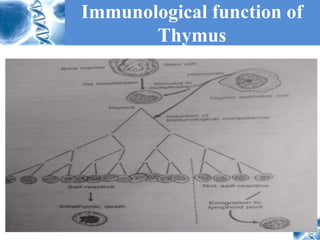
Thymus
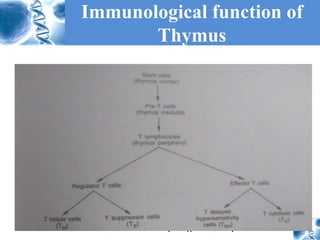
 Thymic extract – thymosin – induce
differentiation
 Self reactive – Purine deoxynucleotides
 Non self reactive - MHC antigen
Multipotent
cell
Pre T
Cell
Thymus
T helper Cell
Cytotoxic T Cell
Supressor T Cell
Delayed Hypersensitivity T Cell
Immunological function of
Thymus
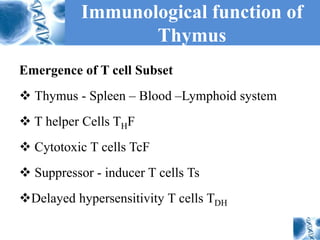
Emergence of T cell Subset
 Thymus - Spleen – Blood –Lymphoid system
 T helper Cells THF
 Cytotoxic T cells TcF
 Suppressor - inducer T cells Ts
Delayed hypersensitivity T cells TDH
Immunological function of
Thymus
 Thymic extract – thymosin – induce
differentiation
 Self reactive – Purine deoxynucleotides
 Non self reactive - MHC antigen
Multipotent
cell
Pre T
Cell
Thymus
T helper Cell
Cytotoxic T Cell
Supressor T Cell
Delayed Hypersensitivity T Cell
Immunological function of
Thymus
Immunological function of
Thymus
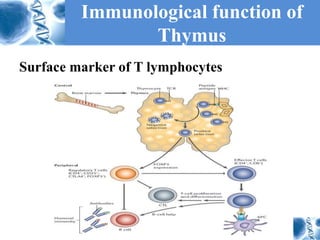
Surface marker of T lymphocytes
Stem cells (Thymus
Surface marker of T
lymphocytes
Surface marker of T lymphocytes
 Displaying of surface markers
 Markers are glycoprotein coded by MHC
genes
 Identify T cell subset and their function
Surface marker of T
lymphocytes
 Thy 1 in mouse
 Marker on T cell bind with sheep erythrocytes
 First CD2 CD4, CD5 and CD8 are
expressed
 CD4 and CD8 appears
T cell receptors
 Antigen specific receptors
 α – β disulphide bonds
 CD2 – sheep red cells
 CD3 – stabilize cell
 CD4 –MHC class II
 CD8 – MHC class I
T cell receptors
 Antigen specific receptors
 α – β disulphide bonds
 CD2 – sheep red cells
 CD3 – stabilize cell
 CD4 –MHC class II
 CD8 – MHC class I
Surface marker of T
lymphocytes
T cell receptors
 Receptor is heterodimer
 α and β chain linked with disulphide bond
 Sheep erythrocyte and CD2
 CD3 molecules – stabilize T cell
 CD4 and CD8 with MHC class I and II
Function of T subset
 Tc cell – Lymphotoxins
 Activating signals IL1 and IL2
 TH cells
 MHC class I and II
 Ts cell
 TDH
Inducer of help
Inducer of suppression
T cell Activation
T cell Factors
 Antigen specific factor
 Antigen independent factor
Cooperation between T and B cells

Cell mediated immunity .pptx

  • 1.
  • 2.
  • 3.
    T Cells Introduction  Tymusderived T lymphocytes  Effectors and regulatory response  Function of T cells  Cytotoxic, suppression and killer property
  • 4.
    T Cells T Cellorigin  Start from multipotent stem cell  From bone marrow to thymus  Epithelium stroma and sponge contains lymphocytes Migrates to blood stream
  • 5.
    Immunological function of Thymus Production of T cells  T cells are involved in cell mediated immunity  T cell cannot produces antibodies  Thymic hormones
  • 6.
    Immunological function of Thymus Production of T cells  T cells are involved in cell mediated immunity  T cell cannot produces antibodies
  • 7.
    Immunological function of Thymus Thymic extract – thymosin – induce differentiation  Self reactive – Purine deoxynucleotides  Non self reactive - MHC antigen Multipotent cell Pre T Cell Thymus T helper Cell Cytotoxic T Cell Supressor T Cell Delayed Hypersensitivity T Cell
  • 8.
    Immunological function of Thymus Emergenceof T cell Subset  Thymus - Spleen – Blood –Lymphoid system  T helper Cells THF  Cytotoxic T cells TcF  Suppressor - inducer T cells Ts Delayed hypersensitivity T cells TDH
  • 9.
    Immunological function of Thymus Thymic extract – thymosin – induce differentiation  Self reactive – Purine deoxynucleotides  Non self reactive - MHC antigen Multipotent cell Pre T Cell Thymus T helper Cell Cytotoxic T Cell Supressor T Cell Delayed Hypersensitivity T Cell
  • 10.
  • 11.
    Immunological function of Thymus Surfacemarker of T lymphocytes Stem cells (Thymus
  • 12.
    Surface marker ofT lymphocytes Surface marker of T lymphocytes  Displaying of surface markers  Markers are glycoprotein coded by MHC genes  Identify T cell subset and their function
  • 13.
    Surface marker ofT lymphocytes  Thy 1 in mouse  Marker on T cell bind with sheep erythrocytes  First CD2 CD4, CD5 and CD8 are expressed  CD4 and CD8 appears
  • 14.
    T cell receptors Antigen specific receptors  α – β disulphide bonds  CD2 – sheep red cells  CD3 – stabilize cell  CD4 –MHC class II  CD8 – MHC class I
  • 15.
    T cell receptors Antigen specific receptors  α – β disulphide bonds  CD2 – sheep red cells  CD3 – stabilize cell  CD4 –MHC class II  CD8 – MHC class I
  • 16.
    Surface marker ofT lymphocytes
  • 17.
    T cell receptors Receptor is heterodimer  α and β chain linked with disulphide bond  Sheep erythrocyte and CD2  CD3 molecules – stabilize T cell  CD4 and CD8 with MHC class I and II
  • 18.
    Function of Tsubset  Tc cell – Lymphotoxins  Activating signals IL1 and IL2  TH cells  MHC class I and II  Ts cell  TDH Inducer of help Inducer of suppression
  • 19.
  • 20.
    T cell Factors Antigen specific factor  Antigen independent factor Cooperation between T and B cells