CELL DISTRUPTION
PHYSICAL METHOD
DONE BY
SWATHI.K M.sc.BIOTECHNOLOGY.
(1ST YEAR)
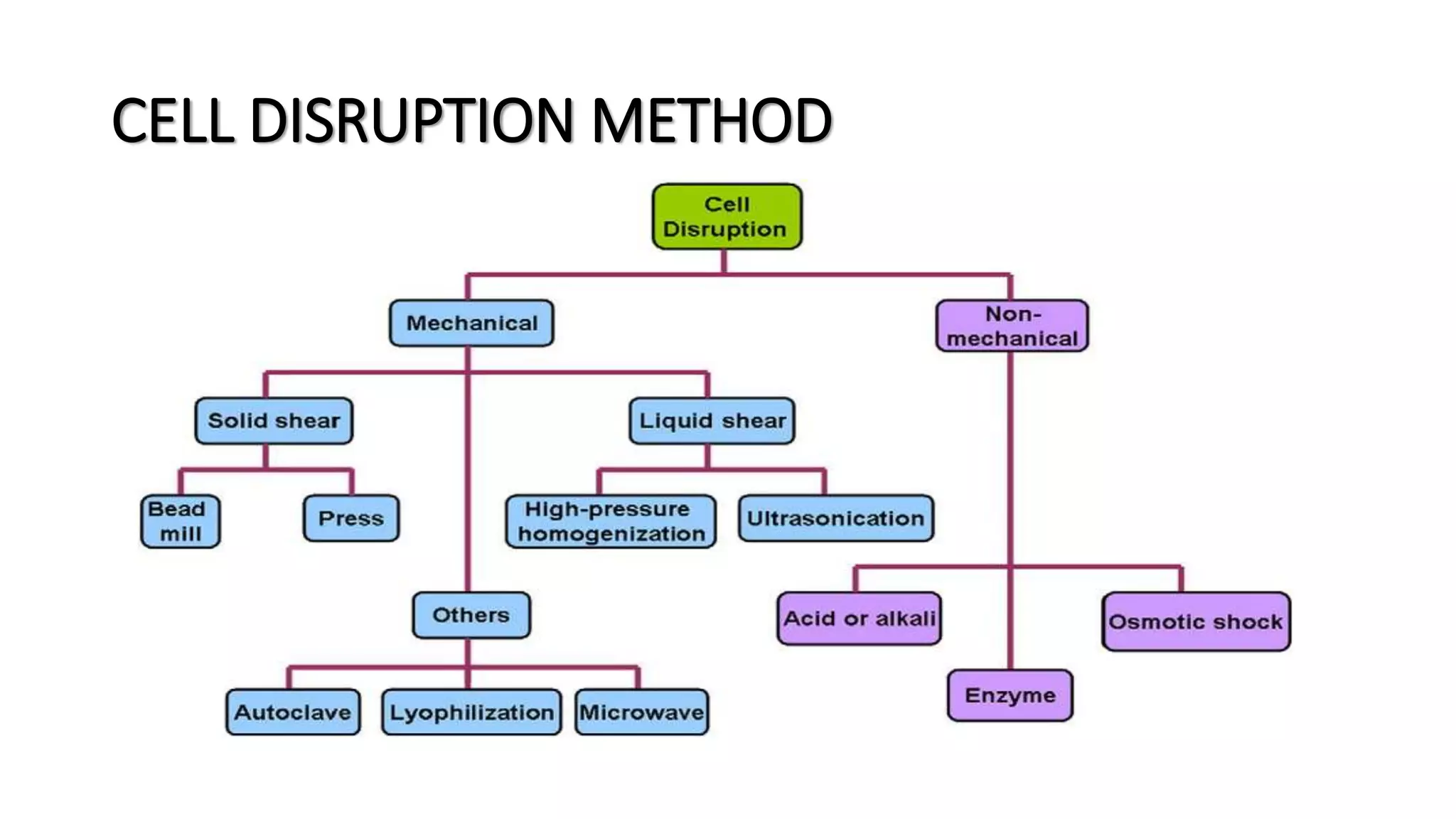
CELL DISRUPTION METHOD
NON MECHANICAL PHYSICAL METHODS:
THERMOLYSIS:
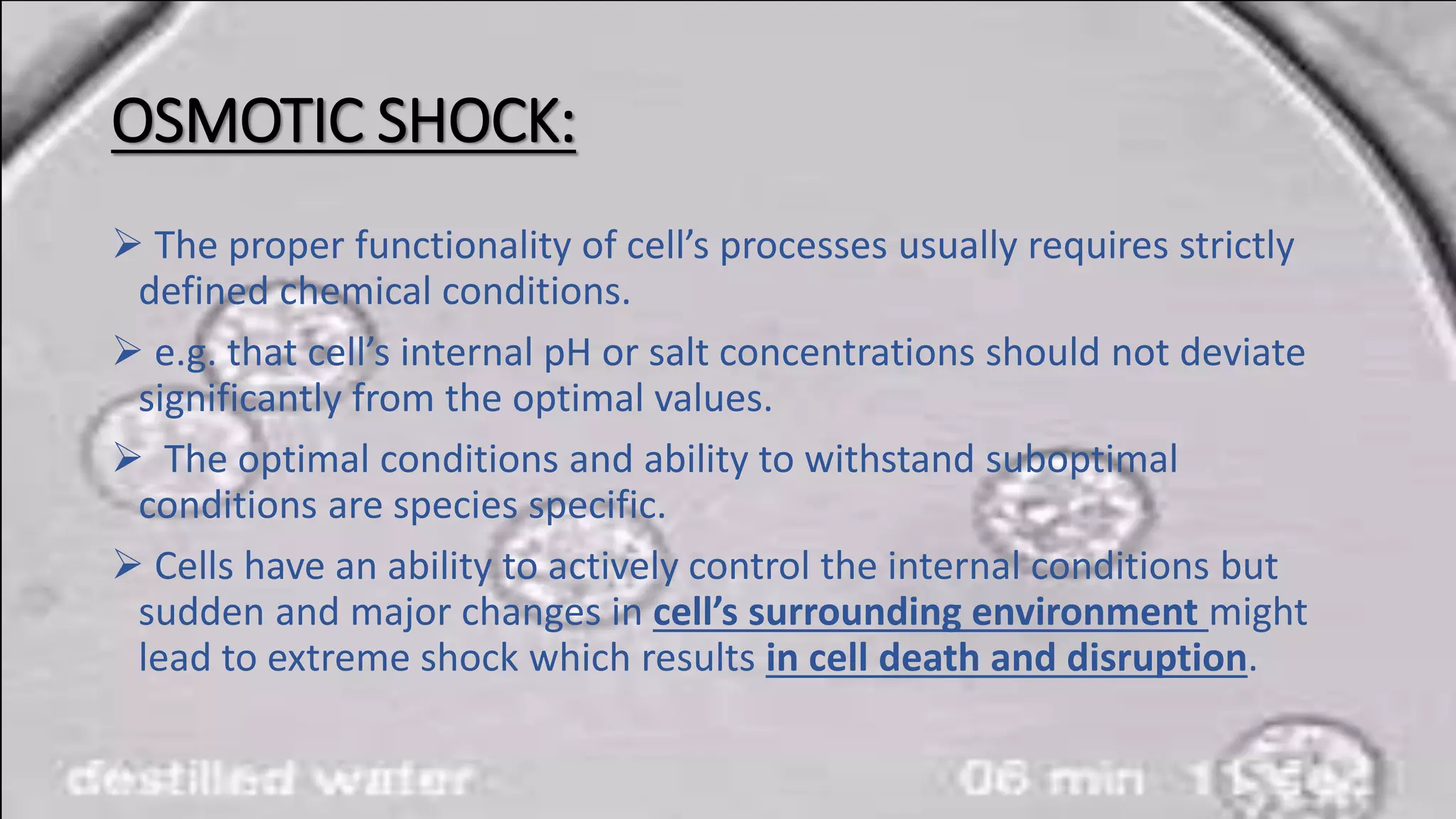
OSMOTIC SHOCK:
 The proper functionality of cell’s processes usually requires strictly
defined chemical conditions.
 e.g. that cell’s internal pH or salt concentrations should not deviate
significantly from the optimal values.
 The optimal conditions and ability to withstand suboptimal
conditions are species specific.
 Cells have an ability to actively control the internal conditions but
sudden and major changes in cell’s surrounding environment might
lead to extreme shock which results in cell death and disruption.
 Osmotic shock is a technology which can be utilized in biotechnical applications
to cause cell lysis.
 In this technology, cells are first exposed to either high or low salt concentration.
 Then the conditions are quickly changed to opposite conditions which leads to
osmotic pressure and cell lysis.
 The reason for that is that water quickly flows from low salt concentration
conditions towards conditions with high salt concentration.
 Thus, if the cells are first exposed to high salt concentration solution, water flows
into cell after exposure to low salt concentration
 RESULT pressure in cell increases and cell explodes
 Conversely, if cell are exposed to high salt concentration (~1
molar solution) after exposure to low concentration, water
flows out of the cell which leads cell disruption.
 Osmotic shock is not commonly used method for cell
disruption because of its low efficiency
 The efficient disruption would commonly require for
example enzymatic pre-treatment to weaken the cells.
 In addition, this technology requires addition of high
amounts of salts and water usage is high.
 Also product may be diluted which increases downstream
processing costs.
Cell disruption

Cell disruption

  • 1.
    CELL DISTRUPTION PHYSICAL METHOD DONEBY SWATHI.K M.sc.BIOTECHNOLOGY. (1ST YEAR)
  • 2.
  • 3.
    NON MECHANICAL PHYSICALMETHODS: THERMOLYSIS:
  • 4.
    OSMOTIC SHOCK:  Theproper functionality of cell’s processes usually requires strictly defined chemical conditions.  e.g. that cell’s internal pH or salt concentrations should not deviate significantly from the optimal values.  The optimal conditions and ability to withstand suboptimal conditions are species specific.  Cells have an ability to actively control the internal conditions but sudden and major changes in cell’s surrounding environment might lead to extreme shock which results in cell death and disruption.
  • 5.
     Osmotic shockis a technology which can be utilized in biotechnical applications to cause cell lysis.  In this technology, cells are first exposed to either high or low salt concentration.  Then the conditions are quickly changed to opposite conditions which leads to osmotic pressure and cell lysis.  The reason for that is that water quickly flows from low salt concentration conditions towards conditions with high salt concentration.  Thus, if the cells are first exposed to high salt concentration solution, water flows into cell after exposure to low salt concentration  RESULT pressure in cell increases and cell explodes
  • 6.
     Conversely, ifcell are exposed to high salt concentration (~1 molar solution) after exposure to low concentration, water flows out of the cell which leads cell disruption.  Osmotic shock is not commonly used method for cell disruption because of its low efficiency  The efficient disruption would commonly require for example enzymatic pre-treatment to weaken the cells.  In addition, this technology requires addition of high amounts of salts and water usage is high.  Also product may be diluted which increases downstream processing costs.