Celiac
Disease
B Y : A N D R E W PA R K E R
0 3 / 1 2 / 2 5
What is
Celiac
Disease?
Celiac Disease
• Celiac disease is an autoimmune disorder triggered by gluten.
• Affects approximately 1% of the population but is underdiagnosed.
• Important for Family Medicine physicians to recognize early signs.
Epidemiology
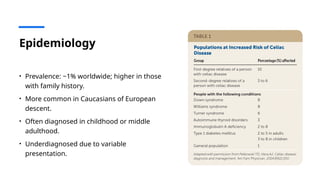
• Prevalence: ~1% worldwide; higher in those
with family history.
• More common in Caucasians of European
descent.
• Often diagnosed in childhood or middle
adulthood.
• Underdiagnosed due to variable
presentation.
Pathophysiology
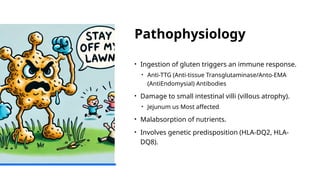
• Ingestion of gluten triggers an immune response.
• Anti-TTG (Anti-tissue Transglutaminase/Anto-EMA
(AntiEndomysial) Antibodies
• Damage to small intestinal villi (villous atrophy).
• Jejunum us Most affected
• Malabsorption of nutrients.
• Involves genetic predisposition (HLA-DQ2, HLA-
DQ8).
Risk Factors
• First-degree relative with celiac disease.
• Type 1 diabetes.
• Autoimmune thyroid disease.
• Down syndrome, Turner syndrome.
Clinical
Presentatio
n
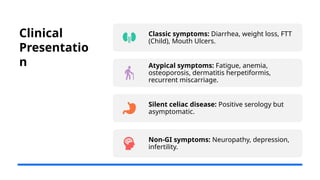
Classic symptoms: Diarrhea, weight loss, FTT
(Child), Mouth Ulcers.
Atypical symptoms: Fatigue, anemia,
osteoporosis, dermatitis herpetiformis,
recurrent miscarriage.
Silent celiac disease: Positive serology but
asymptomatic.
Non-GI symptoms: Neuropathy, depression,
infertility.
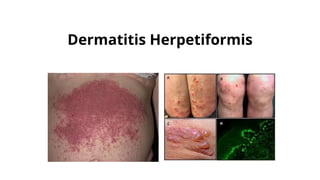
Dermatitis Herpetiformis
Case Presentation
• History: 38-year-old woman with chronic fatigue, iron deficiency anemia, and
intermittent bloating.
• Exam: Mild pallor, no significant findings.
• Labs: CBC shows microcytic anemia; low ferritin.
• Next steps?
Diagnosis
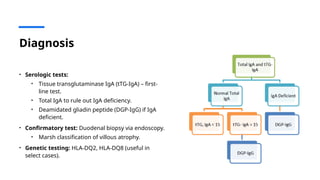
• Serologic tests:
• Tissue transglutaminase IgA (tTG-IgA) – first-
line test.
• Total IgA to rule out IgA deficiency.
• Deamidated gliadin peptide (DGP-IgG) if IgA
deficient.
• Confirmatory test: Duodenal biopsy via endoscopy.
• Marsh classification of villous atrophy.
• Genetic testing: HLA-DQ2, HLA-DQ8 (useful in
select cases).
Recommendation
• It is recommended to co-test in all new DM 1 diagnosis (Strong Association)
Differential DX
• Irritable bowel syndrome (IBS).
• Crohn’s disease.
• Small intestinal bacterial overgrowth (SIBO).
• Lactose intolerance.
• Functional dyspepsia.
Management
• Gluten-free diet (GFD): Lifelong, strict adherence.
• Nutritional deficiencies: Supplement iron, calcium, vitamin D, B12.
• Monitor symptoms: Follow-up serology (tTG-IgA).
• Screen at-risk family members.
• Consider referral to gastroenterology if severe or uncertain diagnosis.
AAFP Recs
Role of the Family Medicine Physician
• Recognize early and atypical presentations.
• Order appropriate screening tests.
• Educate patients about dietary changes.
• Address nutritional deficiencies.
• Iron, B12, Folate, Vitamin D, Calcium, Magnesium, Zinc, Etc…
• Remember Levothyroxine may not be absorbed as well…
• Monitor adherence and refer if needed.
Complications
• Osteoporosis.
• Malignancy: Increased risk of enteropathy-associated T-cell lymphoma (EATL).
• Persistent symptoms: Consider refractory celiac disease or hidden gluten exposure.
Follow-Up & Long-Term Care
• Annual follow-up for symptoms, adherence, and nutritional status.
• Repeat tTG-IgA levels.
• Bone density screening in high-risk patients.
• Psychological support for dietary changes.
Summary
• Celiac disease is often underdiagnosed in primary care.
• Classic and atypical presentations exist.
• Diagnosis via serology and biopsy.
• Strict gluten-free diet is the cornerstone of treatment.
• Family Medicine physicians play a key role in screening, initial management, and follow-
up.
Advances
Zonulin inhibitors, enzyme therapy, and immune modulation.
Zonulin and Intestinal Permeability
• What is Zonulin?
• A protein that modulates intestinal permeability by regulating tight junctions between
enterocytes.
• Role in Celiac Disease:
• Increased zonulin levels lead to greater intestinal permeability.
• Allows gluten peptides to cross the epithelial barrier, triggering an immune response.
• Discovery:
• Identified by Dr. Alessio Fasano as a critical factor in the pathogenesis of celiac disease.
Therapeutic Approaches Targeting Zonulin
• Zonulin Inhibitors:
• Larazotide acetate (AT-1001): A drug in clinical trials that tightens intestinal junctions to
prevent gluten peptide leakage.
• Shown to reduce symptoms and inflammation in celiac patients.
• Potential Benefits:
• May allow better symptom control even with minimal gluten exposure.
• Could serve as an adjunct to a gluten-free diet.
Emerging Therapeutic Research
• IMU-856:
• A novel small-molecule drug promoting gut barrier integrity.
• Early trials suggest improved nutrient absorption and reduced damage from gluten exposure.
• Enzyme Therapies:
• Latiglutenase: An oral enzyme therapy designed to break down gluten peptides before they trigger an
immune response.
• Aimed at reducing symptoms in patients with accidental gluten exposure.
• Vaccine Research:
• Nexvax2: An experimental vaccine targeting the immune response to gluten.
• Aims to induce immune tolerance but currently on hold due to trial results.
Future Directions in Celiac Disease Treatment
• Current Challenges:
• Strict gluten-free diet remains the only proven treatment.
• Need for therapies that provide greater flexibility in dietary management.
• Future Research:
• Combining zonulin inhibitors, enzyme therapy, and immune modulation.
• Genetic and microbiome studies to identify additional therapeutic targets.


Celiac Disease - Basic discussion on the Disease

  • 1.
    Celiac Disease B Y :A N D R E W PA R K E R 0 3 / 1 2 / 2 5
  • 2.
  • 3.
    Celiac Disease • Celiacdisease is an autoimmune disorder triggered by gluten. • Affects approximately 1% of the population but is underdiagnosed. • Important for Family Medicine physicians to recognize early signs.
  • 4.
    Epidemiology • Prevalence: ~1%worldwide; higher in those with family history. • More common in Caucasians of European descent. • Often diagnosed in childhood or middle adulthood. • Underdiagnosed due to variable presentation.
  • 5.
    Pathophysiology • Ingestion ofgluten triggers an immune response. • Anti-TTG (Anti-tissue Transglutaminase/Anto-EMA (AntiEndomysial) Antibodies • Damage to small intestinal villi (villous atrophy). • Jejunum us Most affected • Malabsorption of nutrients. • Involves genetic predisposition (HLA-DQ2, HLA- DQ8).
  • 6.
    Risk Factors • First-degreerelative with celiac disease. • Type 1 diabetes. • Autoimmune thyroid disease. • Down syndrome, Turner syndrome.
  • 7.
    Clinical Presentatio n Classic symptoms: Diarrhea,weight loss, FTT (Child), Mouth Ulcers. Atypical symptoms: Fatigue, anemia, osteoporosis, dermatitis herpetiformis, recurrent miscarriage. Silent celiac disease: Positive serology but asymptomatic. Non-GI symptoms: Neuropathy, depression, infertility.
  • 8.
  • 9.
    Case Presentation • History:38-year-old woman with chronic fatigue, iron deficiency anemia, and intermittent bloating. • Exam: Mild pallor, no significant findings. • Labs: CBC shows microcytic anemia; low ferritin. • Next steps?
  • 10.
    Diagnosis • Serologic tests: •Tissue transglutaminase IgA (tTG-IgA) – first- line test. • Total IgA to rule out IgA deficiency. • Deamidated gliadin peptide (DGP-IgG) if IgA deficient. • Confirmatory test: Duodenal biopsy via endoscopy. • Marsh classification of villous atrophy. • Genetic testing: HLA-DQ2, HLA-DQ8 (useful in select cases).
  • 11.
    Recommendation • It isrecommended to co-test in all new DM 1 diagnosis (Strong Association)
  • 12.
    Differential DX • Irritablebowel syndrome (IBS). • Crohn’s disease. • Small intestinal bacterial overgrowth (SIBO). • Lactose intolerance. • Functional dyspepsia.
  • 13.
    Management • Gluten-free diet(GFD): Lifelong, strict adherence. • Nutritional deficiencies: Supplement iron, calcium, vitamin D, B12. • Monitor symptoms: Follow-up serology (tTG-IgA). • Screen at-risk family members. • Consider referral to gastroenterology if severe or uncertain diagnosis.
  • 14.
  • 15.
    Role of theFamily Medicine Physician • Recognize early and atypical presentations. • Order appropriate screening tests. • Educate patients about dietary changes. • Address nutritional deficiencies. • Iron, B12, Folate, Vitamin D, Calcium, Magnesium, Zinc, Etc… • Remember Levothyroxine may not be absorbed as well… • Monitor adherence and refer if needed.
  • 16.
    Complications • Osteoporosis. • Malignancy:Increased risk of enteropathy-associated T-cell lymphoma (EATL). • Persistent symptoms: Consider refractory celiac disease or hidden gluten exposure.
  • 17.
    Follow-Up & Long-TermCare • Annual follow-up for symptoms, adherence, and nutritional status. • Repeat tTG-IgA levels. • Bone density screening in high-risk patients. • Psychological support for dietary changes.
  • 18.
    Summary • Celiac diseaseis often underdiagnosed in primary care. • Classic and atypical presentations exist. • Diagnosis via serology and biopsy. • Strict gluten-free diet is the cornerstone of treatment. • Family Medicine physicians play a key role in screening, initial management, and follow- up.
  • 19.
    Advances Zonulin inhibitors, enzymetherapy, and immune modulation.
  • 20.
    Zonulin and IntestinalPermeability • What is Zonulin? • A protein that modulates intestinal permeability by regulating tight junctions between enterocytes. • Role in Celiac Disease: • Increased zonulin levels lead to greater intestinal permeability. • Allows gluten peptides to cross the epithelial barrier, triggering an immune response. • Discovery: • Identified by Dr. Alessio Fasano as a critical factor in the pathogenesis of celiac disease.
  • 21.
    Therapeutic Approaches TargetingZonulin • Zonulin Inhibitors: • Larazotide acetate (AT-1001): A drug in clinical trials that tightens intestinal junctions to prevent gluten peptide leakage. • Shown to reduce symptoms and inflammation in celiac patients. • Potential Benefits: • May allow better symptom control even with minimal gluten exposure. • Could serve as an adjunct to a gluten-free diet.
  • 22.
    Emerging Therapeutic Research •IMU-856: • A novel small-molecule drug promoting gut barrier integrity. • Early trials suggest improved nutrient absorption and reduced damage from gluten exposure. • Enzyme Therapies: • Latiglutenase: An oral enzyme therapy designed to break down gluten peptides before they trigger an immune response. • Aimed at reducing symptoms in patients with accidental gluten exposure. • Vaccine Research: • Nexvax2: An experimental vaccine targeting the immune response to gluten. • Aims to induce immune tolerance but currently on hold due to trial results.
  • 23.
    Future Directions inCeliac Disease Treatment • Current Challenges: • Strict gluten-free diet remains the only proven treatment. • Need for therapies that provide greater flexibility in dietary management. • Future Research: • Combining zonulin inhibitors, enzyme therapy, and immune modulation. • Genetic and microbiome studies to identify additional therapeutic targets.