UNDERSTANDING CCTV
CAMERAS
An Introduction.
Table of Contents
 Introduction
 Benefits of CCTV Cameras
 CCTV System Types
 CCTV Camera Types
Introduction
 CCTV Cameras are specialized types of cameras used to monitor activities within a
given location
 It is abbreviation for ‘Close Circuit Television Camera’
Benefits of CCTV Cameras
 Maintaining security in restricted or secure areas such as homes and financial
institutions among others
 Monitoring traffic
 Building and ground security
 Observing behavior of people within a given setting such as workplace, prisons or
hospitals
 Crime prevention and detection
CCTV System Types
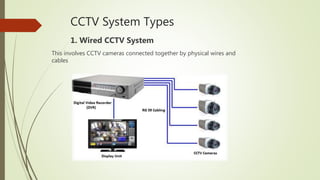
1. Wired CCTV System
This involves CCTV cameras connected together by physical wires and
cables
2. Wireless CCTV System
This involves CCTV cameras connected together using the internet or local area wireless
connection. The illustration also shows the hybrid IP Camera system
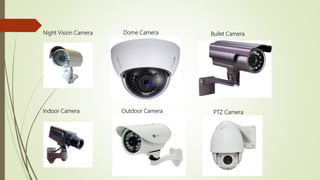
CCTV Camera Types
 Indoor Camera
 Outdoor Camera
 Night-vision Camera
 Dome Camera
 Bullet Camera
 Pan Tilt Zoom (PTZ) Camera
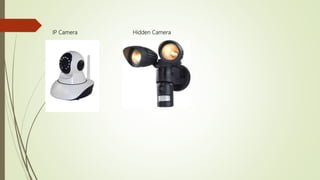
 Hidden Camera
Night Vision Camera Dome Camera
Indoor Camera Outdoor Camera PTZ Camera
Bullet Camera
IP Camera Hidden Camera
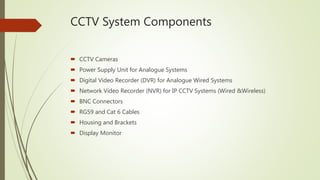
CCTV System Components
 CCTV Cameras
 Power Supply Unit for Analogue Systems
 Digital Video Recorder (DVR) for Analogue Wired Systems
 Network Video Recorder (NVR) for IP CCTV Systems (Wired &Wireless)
 BNC Connectors
 RG59 and Cat 6 Cables
 Housing and Brackets
 Display Monitor
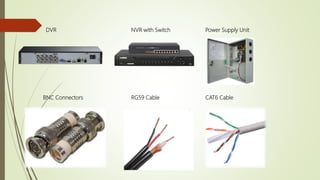
CAT6 Cable
NVR with Switch Power Supply Unit
BNC Connectors RG59 Cable
DVR
CCTV System Project Steps
 Expression of Interest
 Site Survey to establish requirements and specifications
 Proposal, Acceptance and Contract Signing
 Supply and delivery of components required
 Installation and Configuration –
1. Mapping and installation of Coaxial cables, or network cables
2. Camera mounting and setup
3. Power unit and DVR/ NVR installation
4. Configuration of the system
 Training and Commissioning

CCTV Security Cameras - Basics

  • 1.
  • 2.
    Table of Contents Introduction  Benefits of CCTV Cameras  CCTV System Types  CCTV Camera Types
  • 3.
    Introduction  CCTV Camerasare specialized types of cameras used to monitor activities within a given location  It is abbreviation for ‘Close Circuit Television Camera’
  • 4.
    Benefits of CCTVCameras  Maintaining security in restricted or secure areas such as homes and financial institutions among others  Monitoring traffic  Building and ground security  Observing behavior of people within a given setting such as workplace, prisons or hospitals  Crime prevention and detection
  • 5.
    CCTV System Types 1.Wired CCTV System This involves CCTV cameras connected together by physical wires and cables
  • 6.
    2. Wireless CCTVSystem This involves CCTV cameras connected together using the internet or local area wireless connection. The illustration also shows the hybrid IP Camera system
  • 7.
    CCTV Camera Types Indoor Camera  Outdoor Camera  Night-vision Camera  Dome Camera  Bullet Camera  Pan Tilt Zoom (PTZ) Camera  Hidden Camera
  • 8.
    Night Vision CameraDome Camera Indoor Camera Outdoor Camera PTZ Camera Bullet Camera
  • 9.
  • 10.
    CCTV System Components CCTV Cameras  Power Supply Unit for Analogue Systems  Digital Video Recorder (DVR) for Analogue Wired Systems  Network Video Recorder (NVR) for IP CCTV Systems (Wired &Wireless)  BNC Connectors  RG59 and Cat 6 Cables  Housing and Brackets  Display Monitor
  • 11.
    CAT6 Cable NVR withSwitch Power Supply Unit BNC Connectors RG59 Cable DVR
  • 12.
    CCTV System ProjectSteps  Expression of Interest  Site Survey to establish requirements and specifications  Proposal, Acceptance and Contract Signing  Supply and delivery of components required  Installation and Configuration – 1. Mapping and installation of Coaxial cables, or network cables 2. Camera mounting and setup 3. Power unit and DVR/ NVR installation 4. Configuration of the system  Training and Commissioning