STEM TEACHER PATHWAYS:
   PREPARING STEM TEACHERS
THROUGH REAL-WORLD EXPERIENCES
 BOTH IN AND OUT OF SCHOOL TIME

    John Keller, Cal Poly Center for Excellence in
   Science and Mathematics Education (CESaME)
       Sue Johnson, UCSB CalTeach Program
MODELS FOR TEACHER RECRUITMENT AND
     PREPARATION THROUGH CROSS-SECTOR
               PARTNERSHIPS

 Formal Classroom Environment
 Out-of-School Time

 Research Environment

 Year-long Clinical Credentialing Experiences
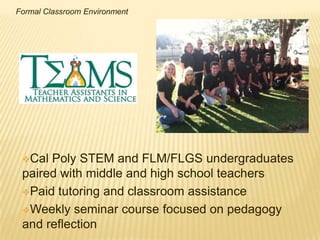
Formal Classroom Environment


 Cal Poly STEM and FLM/FLGS undergraduates
 paired with middle and high school teachers
 Paid tutoring and classroom assistance

 Weekly seminar course focused on pedagogy
 and reflection
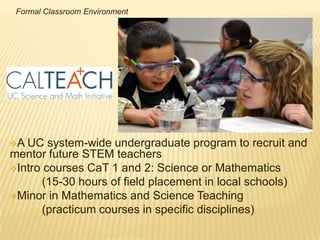
Formal Classroom Environment


A UC system-wide undergraduate program to recruit and
mentor future STEM teachers
Intro courses CaT 1 and 2: Science or Mathematics
       (15-30 hours of field placement in local schools)
Minor in Mathematics and Science Teaching
       (practicum courses in specific disciplines)
Formal Classroom Environment


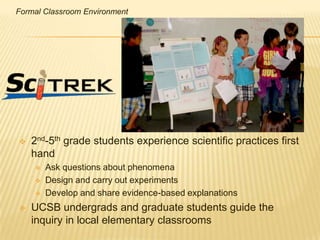
   2nd-5th grade students experience scientific practices first
    hand
       Ask questions about phenomena
       Design and carry out experiments
       Develop and share evidence-based explanations
   UCSB undergrads and graduate students guide the
    inquiry in local elementary classrooms
Formal Classroom Environment


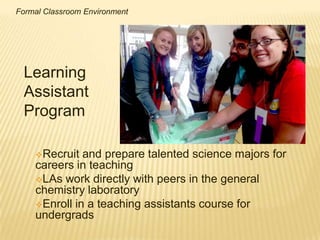
 Learning
 Assistant
 Program

    Recruit  and prepare talented science majors for
    careers in teaching
    LAs work directly with peers in the general
    chemistry laboratory
    Enroll in a teaching assistants course for
    undergrads
Out-of-School Time


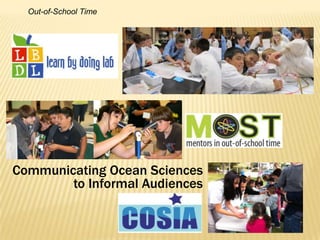
Communicating Ocean Sciences
        to Informal Audiences
Research Environment

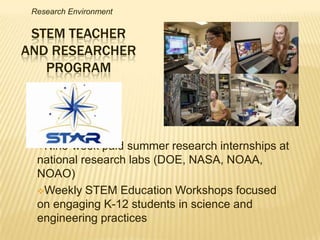
 STEM TEACHER
AND RESEARCHER
   PROGRAM


  Nine-week   paid summer research internships at
  national research labs (DOE, NASA, NOAA,
  NOAO)
  Weekly STEM Education Workshops focused
  on engaging K-12 students in science and
  engineering practices
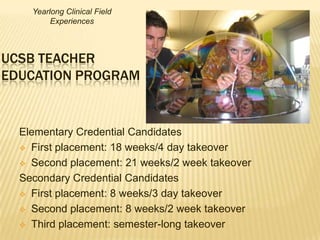
Yearlong Clinical Field
         Experiences


UCSB TEACHER
EDUCATION PROGRAM


  Elementary Credential Candidates
   First placement: 18 weeks/4 day takeover

   Second placement: 21 weeks/2 week takeover

  Secondary Credential Candidates
   First placement: 8 weeks/3 day takeover

   Second placement: 8 weeks/2 week takeover

   Third placement: semester-long takeover
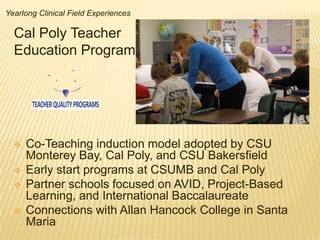
Yearlong Clinical Field Experiences

  Cal Poly Teacher
  Education Program


       TEACHER QUALITY PROGRAMS


     Co-Teaching induction model adopted by CSU
      Monterey Bay, Cal Poly, and CSU Bakersfield
     Early start programs at CSUMB and Cal Poly
     Partner schools focused on AVID, Project-Based
      Learning, and International Baccalaureate
     Connections with Allan Hancock College in Santa
      Maria
YOUR CURRENT AND PROSPECTIVE MODELS FOR
CROSS-SECTOR PARTNERSHIPS TO ENHANCE
TEACHER PATHWAYS?
  Please use the paper provided at your tables to record the
                            following :
                      Name and affiliation
       Similar and/or unique programs in your region.
   Solutions to challenges that you may have encountered.
  Once everyone at your table is done please share with one
    another what you wrote. We will collect your comments
                 after the share out. Thank you!

CC STEM

  • 1.
    STEM TEACHER PATHWAYS: PREPARING STEM TEACHERS THROUGH REAL-WORLD EXPERIENCES BOTH IN AND OUT OF SCHOOL TIME John Keller, Cal Poly Center for Excellence in Science and Mathematics Education (CESaME) Sue Johnson, UCSB CalTeach Program
  • 2.
    MODELS FOR TEACHERRECRUITMENT AND PREPARATION THROUGH CROSS-SECTOR PARTNERSHIPS  Formal Classroom Environment  Out-of-School Time  Research Environment  Year-long Clinical Credentialing Experiences
  • 3.
    Formal Classroom Environment Cal Poly STEM and FLM/FLGS undergraduates paired with middle and high school teachers Paid tutoring and classroom assistance Weekly seminar course focused on pedagogy and reflection
  • 4.
    Formal Classroom Environment AUC system-wide undergraduate program to recruit and mentor future STEM teachers Intro courses CaT 1 and 2: Science or Mathematics (15-30 hours of field placement in local schools) Minor in Mathematics and Science Teaching (practicum courses in specific disciplines)
  • 5.
    Formal Classroom Environment  2nd-5th grade students experience scientific practices first hand  Ask questions about phenomena  Design and carry out experiments  Develop and share evidence-based explanations  UCSB undergrads and graduate students guide the inquiry in local elementary classrooms
  • 6.
    Formal Classroom Environment Learning Assistant Program Recruit and prepare talented science majors for careers in teaching LAs work directly with peers in the general chemistry laboratory Enroll in a teaching assistants course for undergrads
  • 7.
    Out-of-School Time Communicating OceanSciences to Informal Audiences
  • 8.
    Research Environment STEMTEACHER AND RESEARCHER PROGRAM Nine-week paid summer research internships at national research labs (DOE, NASA, NOAA, NOAO) Weekly STEM Education Workshops focused on engaging K-12 students in science and engineering practices
  • 9.
    Yearlong Clinical Field Experiences UCSB TEACHER EDUCATION PROGRAM Elementary Credential Candidates  First placement: 18 weeks/4 day takeover  Second placement: 21 weeks/2 week takeover Secondary Credential Candidates  First placement: 8 weeks/3 day takeover  Second placement: 8 weeks/2 week takeover  Third placement: semester-long takeover
  • 10.
    Yearlong Clinical FieldExperiences Cal Poly Teacher Education Program TEACHER QUALITY PROGRAMS  Co-Teaching induction model adopted by CSU Monterey Bay, Cal Poly, and CSU Bakersfield  Early start programs at CSUMB and Cal Poly  Partner schools focused on AVID, Project-Based Learning, and International Baccalaureate  Connections with Allan Hancock College in Santa Maria
  • 11.
    YOUR CURRENT ANDPROSPECTIVE MODELS FOR CROSS-SECTOR PARTNERSHIPS TO ENHANCE TEACHER PATHWAYS? Please use the paper provided at your tables to record the following :  Name and affiliation  Similar and/or unique programs in your region.  Solutions to challenges that you may have encountered. Once everyone at your table is done please share with one another what you wrote. We will collect your comments after the share out. Thank you!