The Leading Protagonist
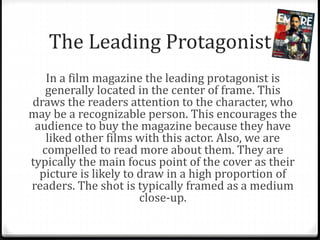
In a film magazine the leading protagonist is
generally located in the center of frame. This
draws the readers attention to the character, who
may be a recognizable person. This encourages the
audience to buy the magazine because they have
liked other films with this actor. Also, we are
compelled to read more about them. They are
typically the main focus point of the cover as their
picture is likely to draw in a high proportion of
readers. The shot is typically framed as a medium
close-up.
A Puff
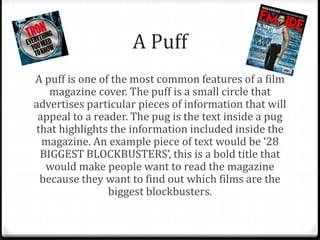
A puff is one of the most common features of a film
magazine cover. The puff is a small circle that
advertises particular pieces of information that will
appeal to a reader. The pug is the text inside a pug
that highlights the information included inside the
magazine. An example piece of text would be ‘28
BIGGEST BLOCKBUSTERS’, this is a bold title that
would make people want to read the magazine
because they want to find out which films are the
biggest blockbusters.
Bold Masthead
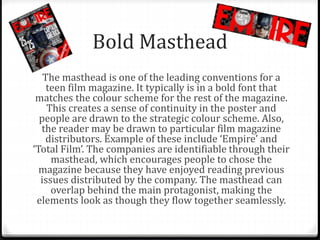
The masthead is one of the leading conventions for a
teen film magazine. It typically is in a bold font that
matches the colour scheme for the rest of the magazine.
This creates a sense of continuity in the poster and
people are drawn to the strategic colour scheme. Also,
the reader may be drawn to particular film magazine
distributors. Example of these include ‘Empire’ and
‘Total Film’. The companies are identifiable through their
masthead, which encourages people to chose the
magazine because they have enjoyed reading previous
issues distributed by the company. The masthead can
overlap behind the main protagonist, making the
elements look as though they flow together seamlessly.
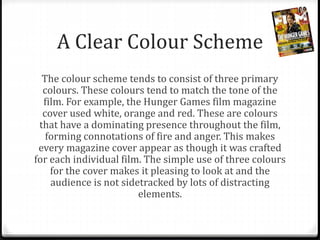
A Clear Colour Scheme
The colour scheme tends to consist of three primary
colours. These colours tend to match the tone of the
film. For example, the Hunger Games film magazine
cover used white, orange and red. These are colours
that have a dominating presence throughout the film,
forming connotations of fire and anger. This makes
every magazine cover appear as though it was crafted
for each individual film. The simple use of three colours
for the cover makes it pleasing to look at and the
audience is not sidetracked by lots of distracting
elements.
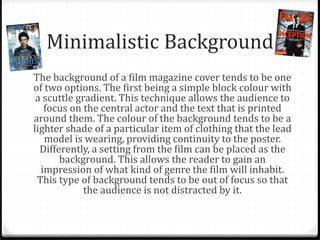
Minimalistic Background
The background of a film magazine cover tends to be one
of two options. The first being a simple block colour with
a scuttle gradient. This technique allows the audience to
focus on the central actor and the text that is printed
around them. The colour of the background tends to be a
lighter shade of a particular item of clothing that the lead
model is wearing, providing continuity to the poster.
Differently, a setting from the film can be placed as the
background. This allows the reader to gain an
impression of what kind of genre the film will inhabit.
This type of background tends to be out of focus so that
the audience is not distracted by it.

C+C Film Magazines

  • 2.
    The Leading Protagonist Ina film magazine the leading protagonist is generally located in the center of frame. This draws the readers attention to the character, who may be a recognizable person. This encourages the audience to buy the magazine because they have liked other films with this actor. Also, we are compelled to read more about them. They are typically the main focus point of the cover as their picture is likely to draw in a high proportion of readers. The shot is typically framed as a medium close-up.
  • 3.
    A Puff A puffis one of the most common features of a film magazine cover. The puff is a small circle that advertises particular pieces of information that will appeal to a reader. The pug is the text inside a pug that highlights the information included inside the magazine. An example piece of text would be ‘28 BIGGEST BLOCKBUSTERS’, this is a bold title that would make people want to read the magazine because they want to find out which films are the biggest blockbusters.
  • 4.
    Bold Masthead The mastheadis one of the leading conventions for a teen film magazine. It typically is in a bold font that matches the colour scheme for the rest of the magazine. This creates a sense of continuity in the poster and people are drawn to the strategic colour scheme. Also, the reader may be drawn to particular film magazine distributors. Example of these include ‘Empire’ and ‘Total Film’. The companies are identifiable through their masthead, which encourages people to chose the magazine because they have enjoyed reading previous issues distributed by the company. The masthead can overlap behind the main protagonist, making the elements look as though they flow together seamlessly.
  • 5.
    A Clear ColourScheme The colour scheme tends to consist of three primary colours. These colours tend to match the tone of the film. For example, the Hunger Games film magazine cover used white, orange and red. These are colours that have a dominating presence throughout the film, forming connotations of fire and anger. This makes every magazine cover appear as though it was crafted for each individual film. The simple use of three colours for the cover makes it pleasing to look at and the audience is not sidetracked by lots of distracting elements.
  • 6.
    Minimalistic Background The backgroundof a film magazine cover tends to be one of two options. The first being a simple block colour with a scuttle gradient. This technique allows the audience to focus on the central actor and the text that is printed around them. The colour of the background tends to be a lighter shade of a particular item of clothing that the lead model is wearing, providing continuity to the poster. Differently, a setting from the film can be placed as the background. This allows the reader to gain an impression of what kind of genre the film will inhabit. This type of background tends to be out of focus so that the audience is not distracted by it.