2 
Started in Ancient Civilizations
HISTORY OF BANQUET AND CATERING 
3 
EGYPT 
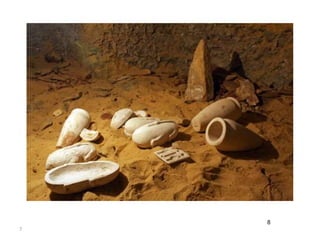
 Filled their tombs with foodstuff for the 
preparation in the next world 
 Simultaneously covering the walls with 
mural design to record food preparation styles 
and table setting.
4 
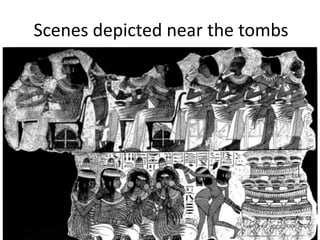
Scenes depicted near the tombs 
3
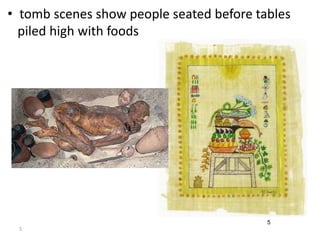
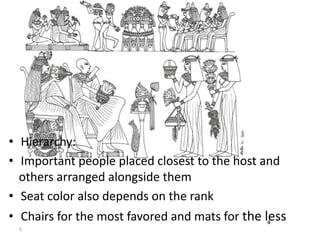
• tomb scenes show people seated before tables 
piled high with foods 
5 
5
• Hierarchy: 
• Important people placed closest to the host and 
others arranged alongside them 
• Seat color also depends on the rank 
• Chairs for the most favored and mats for the less 4 
6
7 
8
8 
Greeks 
• nutritional value was not regarded as 
important 
• guests would lie down on a specially designed 
couch with one table at the middle 
• focused on the consumption of food than 
nutritional value 
8
9 
Romans 
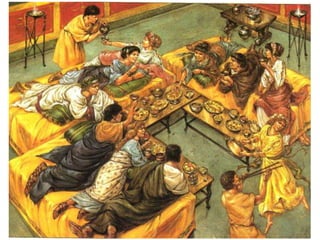
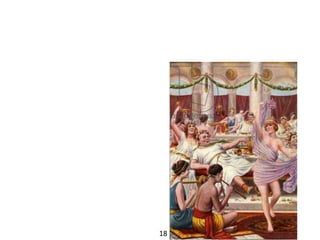
• Roman elite private banquets as a kind of feast 
for the senses, during which the host strove to 
impress his guests with extravagant fare, 
luxurious tableware, and diverse forms of 
entertainment. 
9
• The dining room was one of the most 
important reception spaces of the 
residence 
• high-quality decorative fixtures 
• floor mosaics 
• particularly sculptures and furniture 
10 
10
11 
11
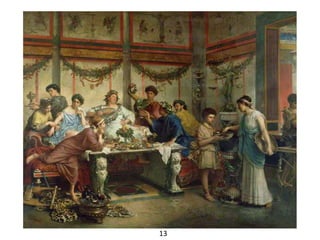
• During Greek symposium, or male aristocratic 
drinking party, which female attendees were 
restricted to entertainers such as flute-girls and 
dancers as well as courtesans 
12 
12
13 
13
Concept of 5th Century Roman Feast 
• With a drink of wine and honey, to be followed 
by fresh eggs , quarters of beef, mutton, and 
pork, all highly seasoned with pepper, pickles, 
caraway and poppy seeds, saffron, honey and 
salt. 
• Boar meat with apples, deer, hare and wild 
buffalo. 
15 
11
• Everything was tasted from grasshopper to 
ostrich, from dormouse to wild boar. 
• Guinea and truffles-Africa 
• Rabbits-Spain 
• Pheasants-Greece 
• Peacocks-Asia 
16 
12
18 
14
Middle Ages 
• 17th-18th Century 
• Guilds had monopoly on special food items. 
• An innkeeper, in order to serve meals to the 
guests, had to get the various menu items from 
those operations that were licensed to provide 
them. 
• Boulanger-began selling dishes which he referred 
to as ‘restoratives’ (to restore) 
• Boulanger challenged the rules of the guild by 
providing choices for the customers.
• French Revolution effectively abolished 
guilds.
Scope of Banquet 
Business
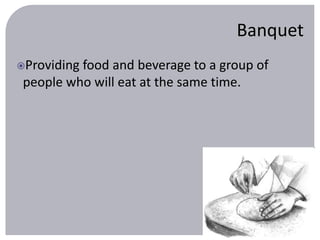
Banquet 
Providing food and beverage to a group of 
people who will eat at the same time.
Catering.. 
Usually done by prearranged contract – food and 
drink provided at a certain cost to a specific 
number of people. 
Catering is the business of providing foodservice 
at a remote site. 
Catering is food prepared by professionals to be 
served to a group of people at a designated place 
for a designated time and fee. 
 Catering has been considered a “service for the 
wealthy,” it is now in demand for many occasions.
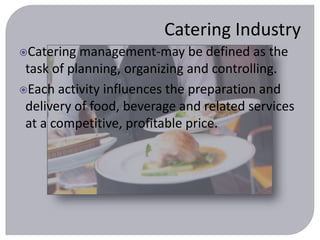
Catering Industry 
Catering management-may be defined as the 
task of planning, organizing and controlling. 
Each activity influences the preparation and 
delivery of food, beverage and related services 
at a competitive, profitable price.
Two Main Categories of Catering 
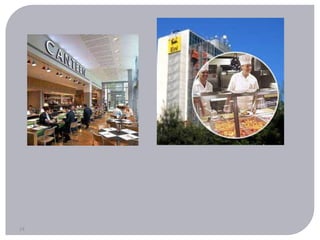
Institutional: 
• Hospitals 
• Universities 
• Airlines 
• Large hotels 
• Retirement centers
24
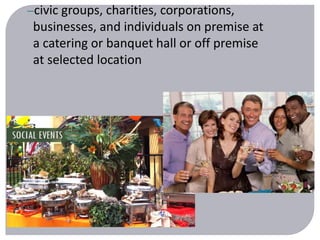
–civic groups, charities, corporations, 
businesses, and individuals on premise at 
a catering or banquet hall or off premise 
at selected location
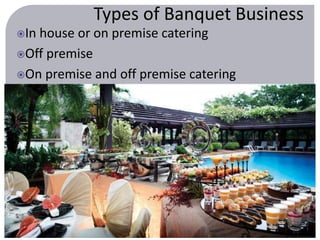
Types of Banquet Business 
In house or on premise catering 
Off premise 
On premise and off premise catering
On premise Catering 
On premise catering-indicates that the function is : 
held exclusively within the facility 
The food is prepared and served on the same location. 
All of the required functions and services that the caterer 
executes are done at their own facility.
Advantages and disadvantages 
The distinct advantage of catering a banquet on 
premise is that everything is within reach. You 
have an alternative if a problem strikes
Full Service Restaurants 
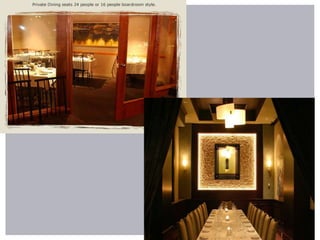
Many restaurants have specialized rooms on-premise 
29 
to cater to the private parties. 
Restaurants in rural areas-office complexes 
Restaurants in suburban areas-social events.
•A restaurant may have a layout strategically designed 
with three separate dining rooms attached to a 
centralized commercial food production kitchen. 
•These separate dining rooms are available at the same 
time to support the restaurant’s operation and for 
reservation and overflow seating
Private parties 
If it is a small restaurant, they may offer private party catering for 25 
or 30 people. 
They could cater bridal showers, small retirement dinner, or small awards 
dinner for a special occasion
Dual restaurant catering operations 
Many restaurants will cater on-premise special events and 
pursue off-premise opportunities. 
Advantages: 
1. Increase gross sales without expanding restaurant space 
2. Maximize use of equipment and staff
In –house or on-premise catering 
Function that took place in: 
•Hotels 
•Conference rooms 
•Clubs 
•Banquet halls 
•restaurants
In hotels and in conference centers with 
sleeping rooms, catering can be grouped into: 
•COMMERCIAL BUSINESS 
•SOCIAL BUSINESS
COMMERCIAL BUSINESS 
Directly supports sleeping room occupancy. 
Conventions, trade shows, meetings, incentive 
business and tours 
Has a greater impact on the profitability of the 
hotel
Social Business 
Not directly connected with guest room 
occupancy 
Weddings, anniversaries, birthdays, charity 
events, meetings, speeches, seminars, balls and 
dances.
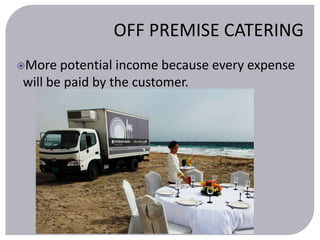
OFF PREMISE CATERING 
More potential income because every expense 
will be paid by the customer.
Off-Premise Catering 
Off-premise catering is food that is 
prepared in a kitchen and transported to the 
location where it will be served to a group 
of people. 
An important consideration for off-premise 
catering is that there must be access to 
equipment needed to prepare the food.
40 
39
41 
40
42 
41
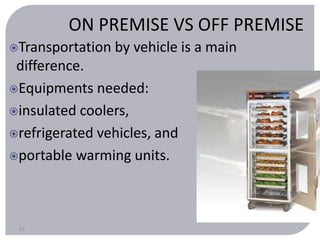
Transportation by vehicle is a main 
difference. 
Equipments needed: 
insulated coolers, 
refrigerated vehicles, and 
portable warming units. 
43 
ON PREMISE VS OFF PREMISE
transportation must be provided for the staff to 
get to the site. 
Some off premise events are so large that the 
caterer will have to rent buses to get the wait-staff 
to the location so that they all arrive 
dressed properly at the same time.
Advantages and disadvantages 
The distinct advantage of catering a banquet on 
premise is having alternative if a problem strikes
46 
Catering Trends 
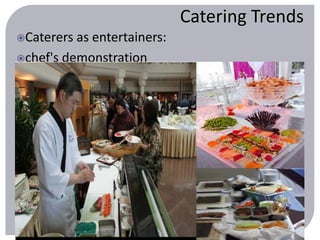
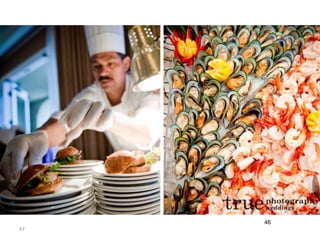
Caterers as entertainers: 
chef's demonstration
47 
46
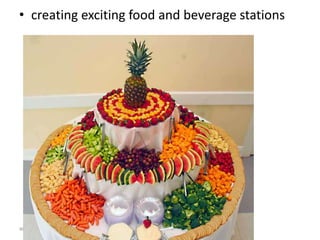
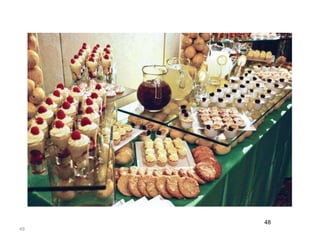
• creating exciting food and beverage stations 
48
49 
48
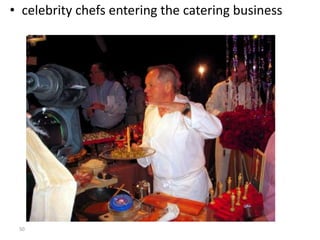
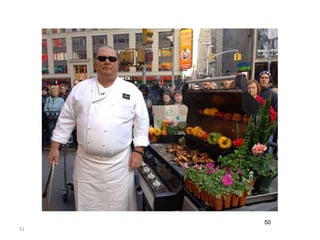
• celebrity chefs entering the catering business 
50
51 
50
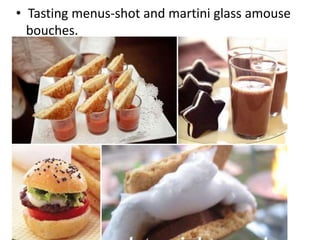
• Tasting menus-shot and martini glass amouse 
bouches. 
52 
48
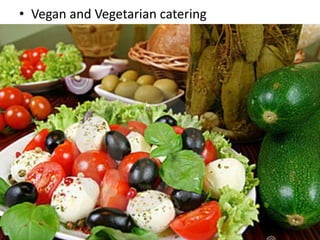
• Vegan and Vegetarian catering 
53
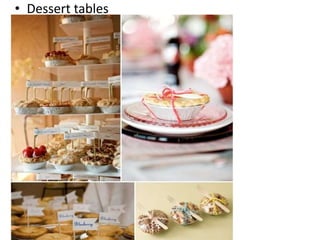
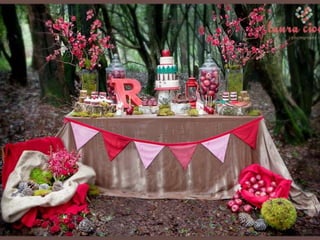
• Dessert tables 
54
55 
54
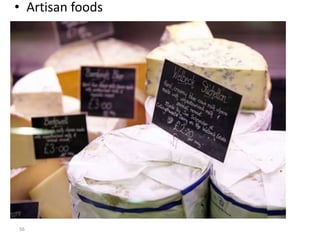
• Artisan foods 
56
57 
56
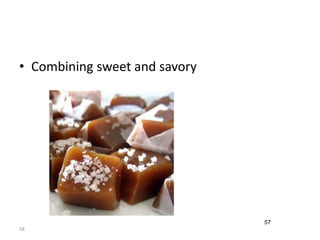
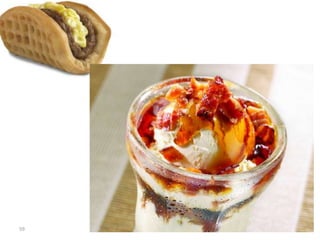
• Combining sweet and savory 
58 
57
59 
58
The hospitality business and you 
Answer with a Yes, No or Sometimes 
1. Can I talk to strangers? 
2. Am I pleasant and courteous even when under 
stress? 
3. Am I at ease when using the telephone? 
4. Do I generally look clean and neat? 
5. Can I follow orders?
The hospitality business and you 
6. Do I accept criticism gracefully? 
7. Do I like staying busy? 
8. Do I do detailed work well? 
9. Do I enjoy working with other people? 
10.Do I enjoy helping people?
Give yourself 2 points for each yes, 1 point 
for sometimes and 0 for no. If you scored 
16pts. or more you would make an 
excellent hospitality worker
The success of the service 
- Focus on the guest 
- Understand the role of the guest-contact 
employee 
- Weave a service culture into education and 
training systems 
- Thrive on change
Disney Service Model 
Smile 
Make Eye contact 
Respect and welcome all guests 
Value the magic 
Initiate guest contact 
Creative service solutions 
End with a “thank you”
“Seven Deadly Sins of Service” 
- Apathy (absence of passion) 
- Brush-off (To ignore or behave coldly toward); 
- Coldness 
- Condescension (lack of respect) 
- Robotics 
- Rule book 
- Runaround (form of evasive excuses )
66 
ASSIGNMENT 
• Visit an independent caterer, a catering 
department of a hotel or restaurant. 
• Identify and discuss the different types of 
catering events they have executed or handled 
in the past year. 
59
END