Apply & removing cast


 By zainab
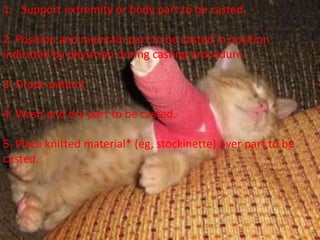
1. Support extremity or body part to be casted.

2. Position and maintain part to be casted in position
indicated by physician during casting procedure.

3. Drape patient.

4. Wash and dry part to be casted.

5. Place knitted material* (eg, stockinette) over part to be
casted.
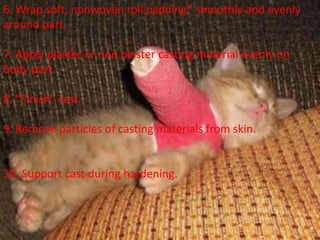
6. Wrap soft, nonwoven roll padding* smoothly and evenly
around part.

7. Apply plaster or non plaster casting material evenly on
body part.

8. “Finish” cast.

9. Remove particles of casting materials from skin.


10. Support cast during hardening.
Guidelines for removing a cast
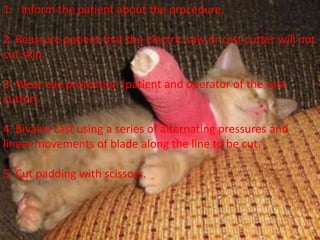
1. Inform the patient about the procedure.

2. Reassure patient that the electric saw or cast cutter will not
cut skin.

3. Wear eye protection (patient and operator of the cast
cutter).

4. Bivalve cast using a series of alternating pressures and
linear movements of blade along the line to be cut.

5. Cut padding with scissors.
6. Support body part as it is removed from the cast.

7. Gently wash and dry area that has been immobilized.*
Apply emollient lotion.

8. Teach patient to avoid rubbing and scratching skin.

9. Collaborates with physical therapist to teach patient to
resume active use of body part gradually within the
guidelines of prescribed therapeutic regimen.

10. Teach patient to control swelling by elevating the
extremity or using elastic bandage if prescribed.
Cast

Cast

  • 1.
    Apply & removingcast By zainab
  • 2.
    1. Support extremityor body part to be casted. 2. Position and maintain part to be casted in position indicated by physician during casting procedure. 3. Drape patient. 4. Wash and dry part to be casted. 5. Place knitted material* (eg, stockinette) over part to be casted.
  • 3.
    6. Wrap soft,nonwoven roll padding* smoothly and evenly around part. 7. Apply plaster or non plaster casting material evenly on body part. 8. “Finish” cast. 9. Remove particles of casting materials from skin. 10. Support cast during hardening.
  • 4.
  • 5.
    1. Inform thepatient about the procedure. 2. Reassure patient that the electric saw or cast cutter will not cut skin. 3. Wear eye protection (patient and operator of the cast cutter). 4. Bivalve cast using a series of alternating pressures and linear movements of blade along the line to be cut. 5. Cut padding with scissors.
  • 6.
    6. Support bodypart as it is removed from the cast. 7. Gently wash and dry area that has been immobilized.* Apply emollient lotion. 8. Teach patient to avoid rubbing and scratching skin. 9. Collaborates with physical therapist to teach patient to resume active use of body part gradually within the guidelines of prescribed therapeutic regimen. 10. Teach patient to control swelling by elevating the extremity or using elastic bandage if prescribed.