Asian Architecture Project 2: Case Study Proposal
Student Name and ID: Bryan Lum Zi Yang 0314959
Tutor: Shahrianne Mohamad Shah
Incorporation of nature as a means of a design principle in the
Azuma House and its effectiveness when compared to nature
incorporated in Traditional Japanese Architecture
Research Questions:
Question 1: What was the main drive or purpose for incorporating nature into the Azuma
House, and what are the benefits of developing from said design principles?
Question 2: How is nature used in both traditional Japanese Architecture and the Azuma
House?
Question 3: How effective is the incorporation of nature in terms of Lighting, Ventilation
and etc?
Question 4: How do these factors affect the overall living experience of the user in terms of
both Traditional Japanese Architecture and the Azuma house?
Question 5: How can the current practices in Traditional Japanese Architecture be utilised to
help design sustainable buildings and how does the Azuma house fare in terms of that?
Summary:
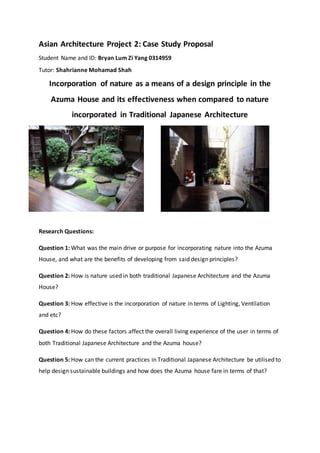
Nature is regarded as a core component in most traditional Japanese architecture. From the
thin paper shoji walls that are used for creating open spaces to the outside, to the use of
natural materials such as wood and rice straw to the emphasis on designing interior gardens
and/or courtyards. These design concepts, while more aesthetic and based on beliefs, rather
than sustainability still do have properties in which sustainable designs can possibly derive
from. In our current situation of a constant expanding population in world with limited
resources, ideals like these go a long way in developing sustainable buildings for the future.
Therefore, it comes to no surprise that Tadao Ando, uses this ideal of nature being a
necessity as his main driving design brief when it came to designing the Azuma House. By
designing the overall spatial organization in such a way, he quintessentially forces the user
to experience nature throughout most of their lives by making all the different spaces such
as kitchen, bedroom, toilet and living room in separate areas, separated by this open
courtyard that is vulnerable to the elements. However, whether or not the use of nature in
the Azuma house serves as more than an artistic statement, is still up for debate. While
designing in a way that the user experiences nature most of their days does provide a very
strong statement of the quality of life lead by the common man, it is still very different from
designing sustainable buildings which help provide a greener future.
Therefore, it is important to analyse the effectiveness of the use of nature that derives from
traditional Japanese Architecture and whether or not the developments of said ‘use of
nature’ is improved upon by Tadao Ando.

Case Study Proposal

  • 1.
    Asian Architecture Project2: Case Study Proposal Student Name and ID: Bryan Lum Zi Yang 0314959 Tutor: Shahrianne Mohamad Shah Incorporation of nature as a means of a design principle in the Azuma House and its effectiveness when compared to nature incorporated in Traditional Japanese Architecture Research Questions: Question 1: What was the main drive or purpose for incorporating nature into the Azuma House, and what are the benefits of developing from said design principles? Question 2: How is nature used in both traditional Japanese Architecture and the Azuma House? Question 3: How effective is the incorporation of nature in terms of Lighting, Ventilation and etc? Question 4: How do these factors affect the overall living experience of the user in terms of both Traditional Japanese Architecture and the Azuma house? Question 5: How can the current practices in Traditional Japanese Architecture be utilised to help design sustainable buildings and how does the Azuma house fare in terms of that?
  • 2.
    Summary: Nature is regardedas a core component in most traditional Japanese architecture. From the thin paper shoji walls that are used for creating open spaces to the outside, to the use of natural materials such as wood and rice straw to the emphasis on designing interior gardens and/or courtyards. These design concepts, while more aesthetic and based on beliefs, rather than sustainability still do have properties in which sustainable designs can possibly derive from. In our current situation of a constant expanding population in world with limited resources, ideals like these go a long way in developing sustainable buildings for the future. Therefore, it comes to no surprise that Tadao Ando, uses this ideal of nature being a necessity as his main driving design brief when it came to designing the Azuma House. By designing the overall spatial organization in such a way, he quintessentially forces the user to experience nature throughout most of their lives by making all the different spaces such as kitchen, bedroom, toilet and living room in separate areas, separated by this open courtyard that is vulnerable to the elements. However, whether or not the use of nature in the Azuma house serves as more than an artistic statement, is still up for debate. While designing in a way that the user experiences nature most of their days does provide a very strong statement of the quality of life lead by the common man, it is still very different from designing sustainable buildings which help provide a greener future. Therefore, it is important to analyse the effectiveness of the use of nature that derives from traditional Japanese Architecture and whether or not the developments of said ‘use of nature’ is improved upon by Tadao Ando.