De Beers :
A Monopoly in the
Diamond Industry
Presented by:
OMER MALIK 104205078
ASIM MUSTAFA 104205077
HAIDER ABDUL RAB 094005053
ADNAN JAAN 104205053
FAHAD KHICHI 094005066
1
 Diamond is the only appropriate gem to
symbolize lifetime love and commitment
 The company spends $180 million a year
worldwide to advertise cut diamonds - a
product it doesn't even sell ...
2
DE BEERS
CUTTERS
JEWELERS
3
Rough Diamonds
4
Cut Diamonds
5
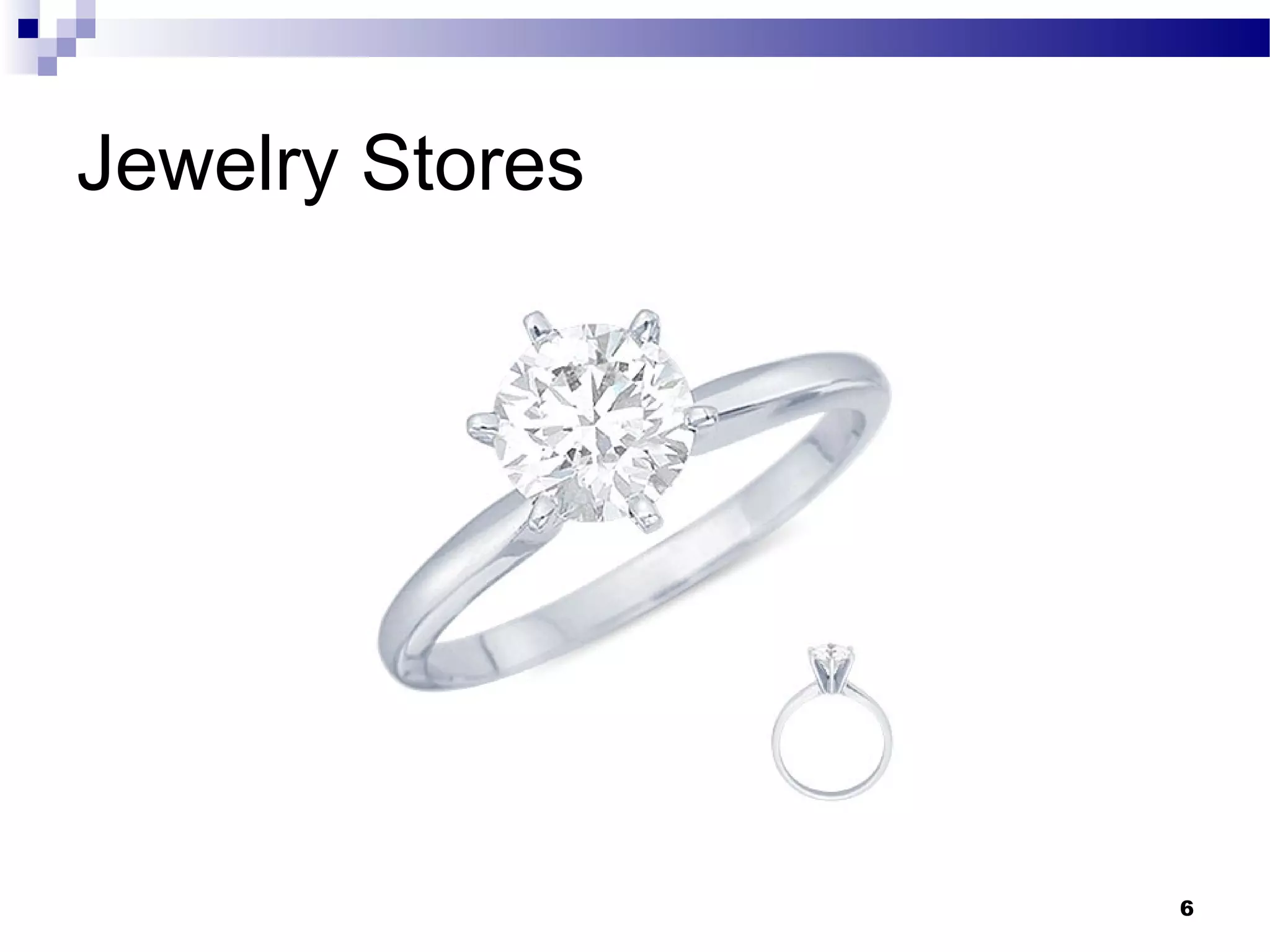
Jewelry Stores
6
What is De Beers?
 arbiter of their prices
not retailer
not manufacturer
BUT
miner and buyer of 70-90% of the world's
rough diamonds
7
Outline
 Facts about De Beers
 Origin
 How it achieved its market power
 How it has managed to control the market
 How the Monopoly operates
 Inefficiencies created by monopolies
 High Prices
 “Blood” Diamonds
8
Facts about De Beers
 Most successful monopoly of modern
trade
Other commodity prices (e.g. gold, silver)
fluctuate greatly in response to economic
conditions
Diamonds’ prices are constantly rising
9
 20th century, De Beers sold 85% to 90%
of the diamonds mined worldwide
10
De Beers is a typical example of
monopoly!!!
 It is almost the sole seller of diamonds.
(sells almost 90% of world production)
 Sells a commodity with no close substitutes
(created this illusion by advertising)
 It restricts output and it responds to changes in
market demand
11
Are diamonds rare?
12
Before the 19th
century:
 Diamonds were
exceptionally rare
 Small quantities in
India and Brazil
 No diamond mines
were discovered
Nowadays:
Many diamond
mines:
 Republic of
South Africa
 Sub-Saharan
countries
 Siberia
 Australia
 Canada
13
Origin
 1869
 First diamond mines in the colonies of
southern Africa
 Drastically increased the number of stones
available
 1870
Many diamond hunters bought mines
14
Cecil Rhodes
Bought the rights to two
mines on the farm of :
 Nicolas
and
 Diedrick De Beer
in the Cape Colony (now
South Africa).
15
Diamond hunters realized that
scarcity increases diamond prices.
Had no other alternative than to merge
their interests into a single entity:
 control the mines’ production
 keep the scarcity illusion
16
De Beers Consolidated Mines
Limited
 Established 12th
March 1888
 Rhodes, founding chairman
17
De Beers:
 South African company
 By 1890, De Beers controlled 95% of the
world’s diamond production
18
DE BEERS
CUTTERS
JEWELERS
19
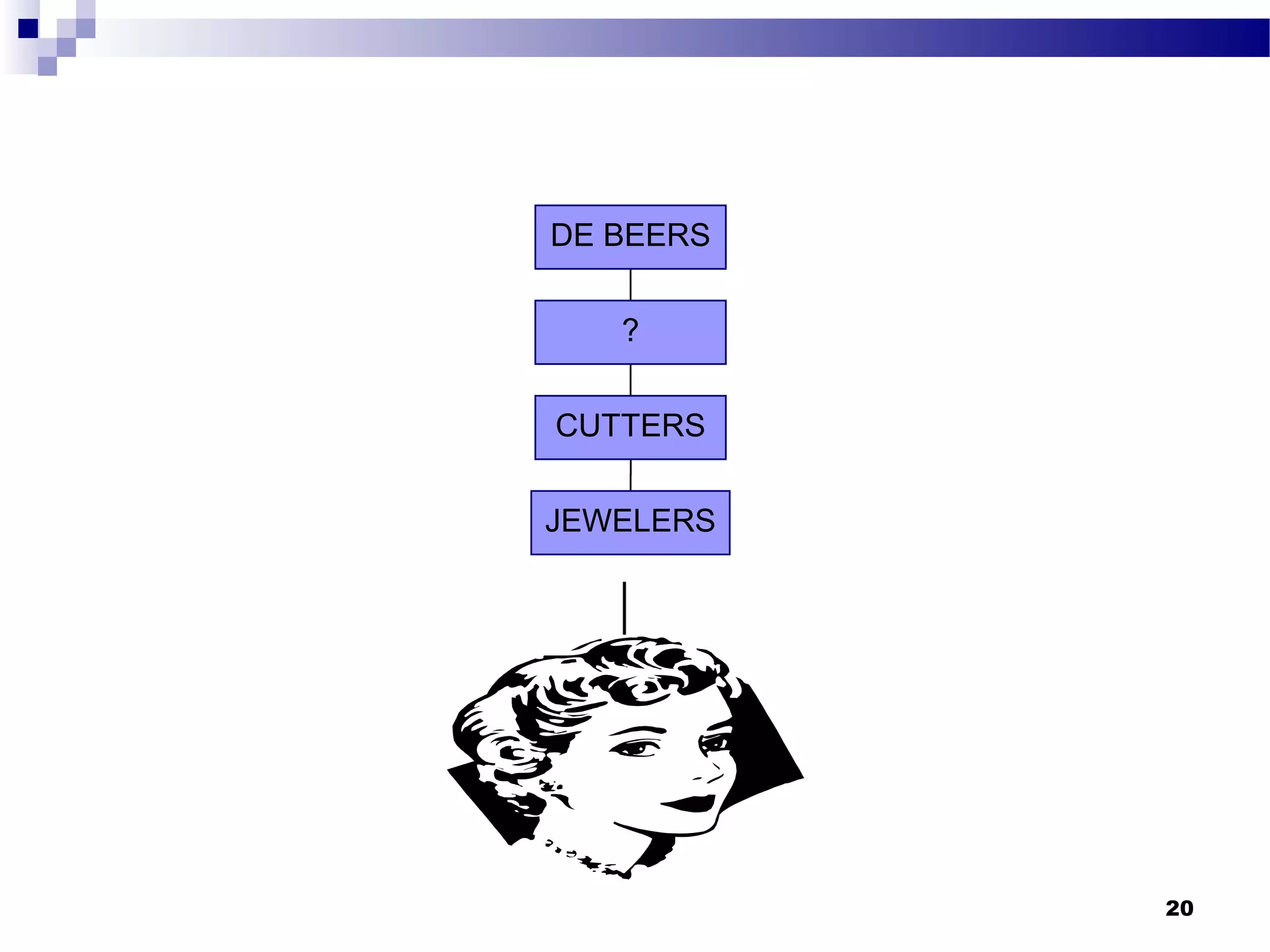
DE BEERS
?
CUTTERS
JEWELERS
20
Wholesalers
 Group of 10 merchants
(London Diamond Syndicate)
Agree to be purchasing the entire production
from all the De Beers mines
Resell them to cutters
21
DE BEERS
SYNDICATE
CUTTERS
JEWELERS
22
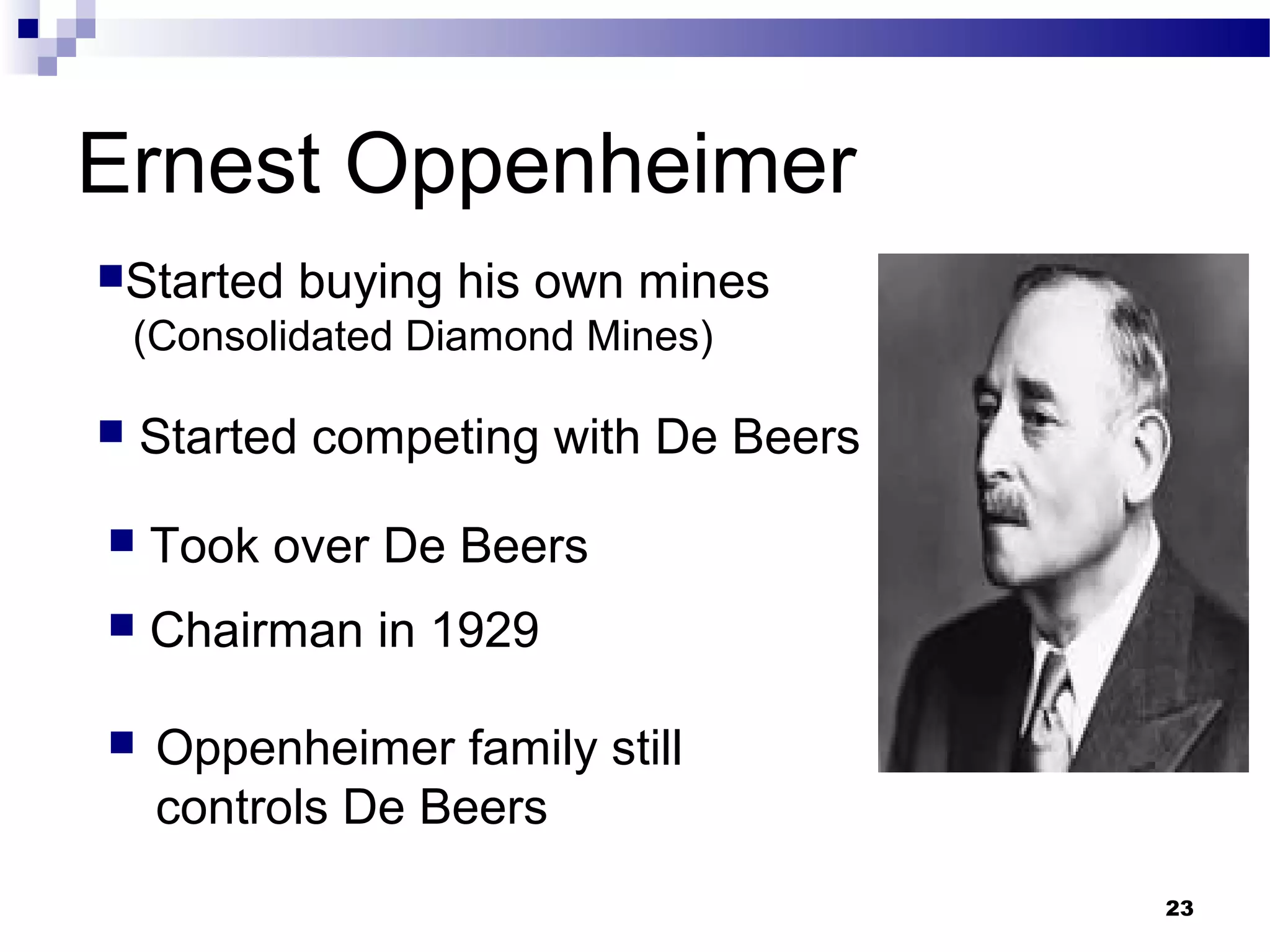
Ernest Oppenheimer
 Oppenheimer family still
controls De Beers
Started buying his own mines
(Consolidated Diamond Mines)
 Started competing with De Beers
 Took over De Beers
 Chairman in 1929
23
His thinking was:
“The only way to increase the value of diamonds
is to make them scarce, that is to reduce
production”
24
Example: Great Depression
 Oppenheimer realized that:
 Prices will fall
 People will lose faith in diamonds
 Public stopped buying diamonds (demand shifted left)
 London Diamond Syndicate could not absorb the
world’s diamond production at the high prices
 Huge Stockpiles
 Wanted to put them in the market
25
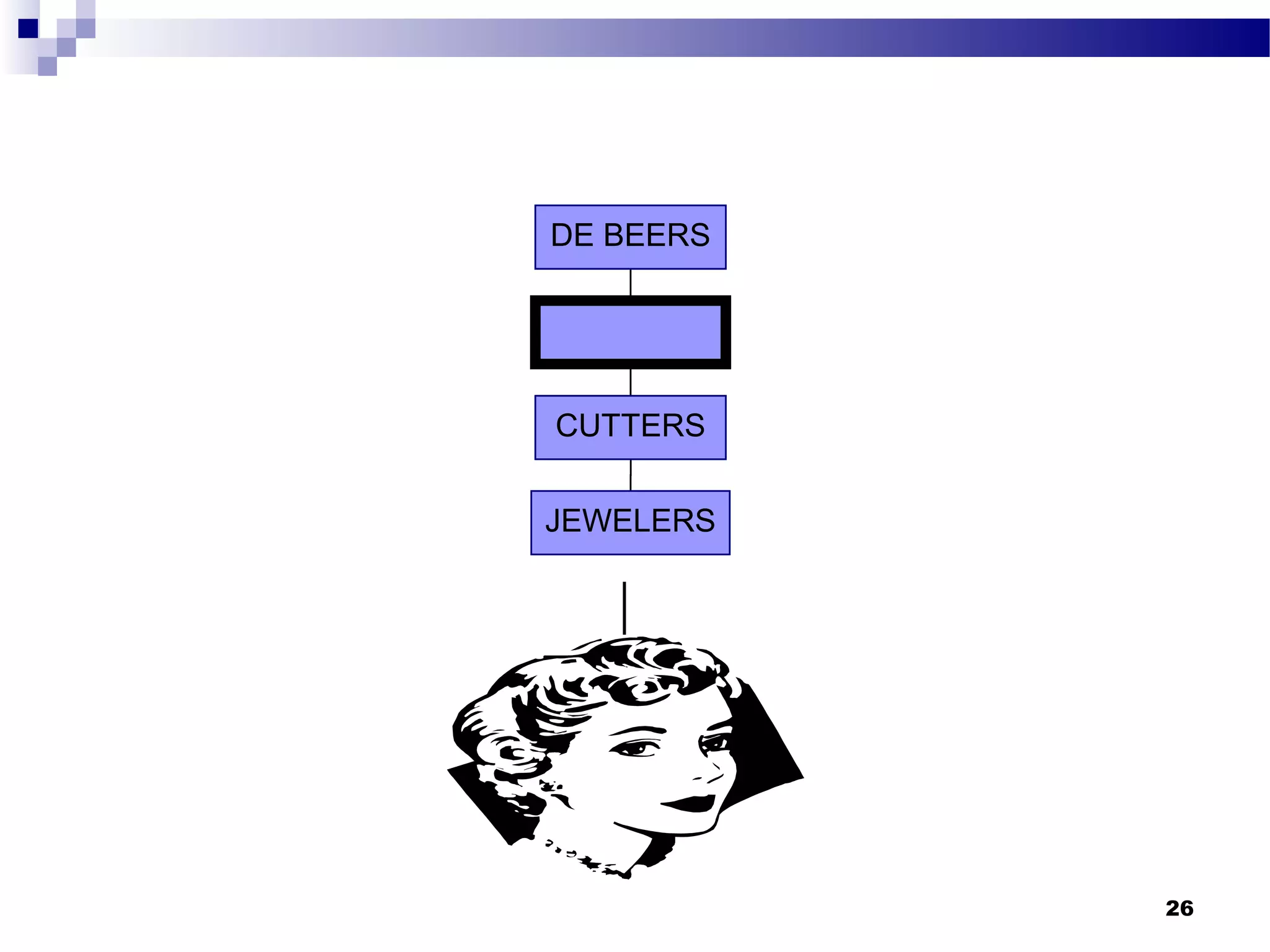
DE BEERS
CUTTERS
JEWELERS
26
 Took over the Syndicate
27
 Sell the diamonds to a selected group of
cutters that abide De Beers rules.
 To eliminate excess supply closed all
major mines in South Africa
Year Production (carats)
1930 2,242,000
1933 14,000
28
De Beers’ Stockpile……
By 1937 De Beers stockpile of diamonds
had grown to………..
40 million carats (20 years supply) !!!
29
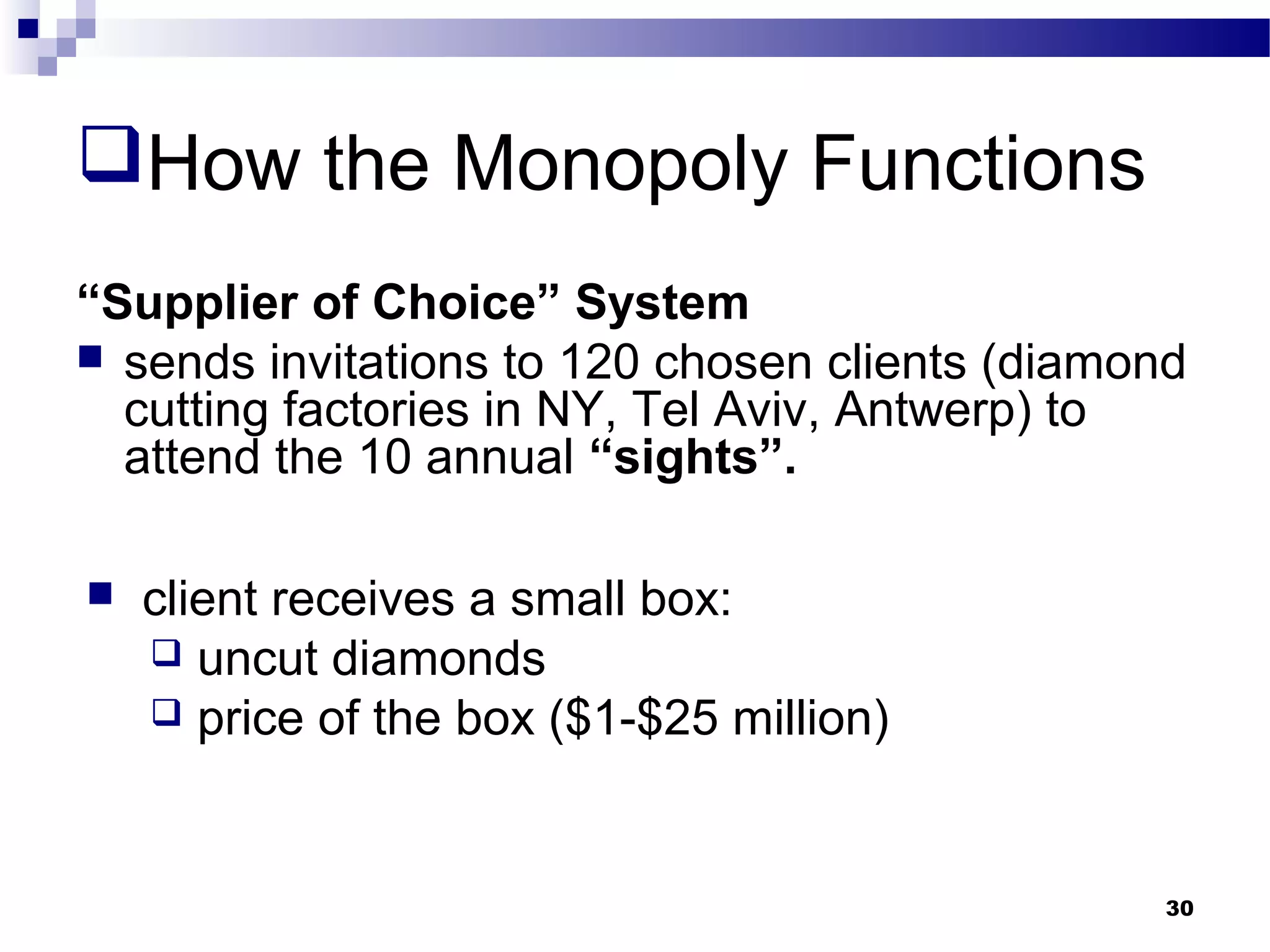
How the Monopoly Functions
“Supplier of Choice” System
 sends invitations to 120 chosen clients (diamond
cutting factories in NY, Tel Aviv, Antwerp) to
attend the 10 annual “sights”.
 client receives a small box:
 uncut diamonds
 price of the box ($1-$25 million)
30
Rules of the Game
Rule #1
DTC decides who gets which diamond
Rule #2
No Haggling over price (price maker)
Rule #3
Take the entire Box or None
31
Rule #4
No client may resell the diamonds in his box
in their uncut form
 Avoid Competition
 Israeli Dealers (1977)
32
Rule #5
Clients will provide any information to evaluate
the diamond market
 Before the sight, clients fill out a detailed
questionnaire
 number of uncut diamonds in inventory
 diamonds in process to cut
 future sales
 De Beers audits their cutting factories in
surprised visits.
33
Thus, De Beers decides:
 How many diamonds of each quality will
be distributed in total
 How this supply will be divided among the
clients
 Price of diamonds.
34
Using Demand and Supply…..
 Find the categories of diamonds in excess
supply
 Omit from the boxes in next “sights”
35
In the News …..
July 15, 2005
 The Belgian Polished Diamond Dealers
Association asked EU to outlaw De Beers's
distribution system.
 BPDDA claimed De Beers is using obscure
criteria to select traders thus denying them
access to adequate quantities of diamonds.
 De Beers said it helped promote competition in
the market.
36
Things to consider…..
 Diamonds are easy to carry around
 Due to the monopoly, they worth a lot…
37
What happens if they go to the wrong hands?
38
 Angola and “Blood” Diamonds
 25-year civil war
 Began as a struggle against the Portuguese
occupation
 Now it is over the country's natural resources:
oil and diamonds ($600-800 million annually)
39
De Beers buys lots of diamonds from areas
controlled by rebels.
 Rebels used the money to finance the war.
 By 1998, De Beers' Angolan adventure
threatened to become a PR nightmare.
 Fearful of a consumer backlash, De Beers
closed its buying offices in Angola and the
Democratic Republic of Congo (DRC).
40
Conclusion
 Price Maker
 Controls Supply of Diamonds
41
“De Beers:
A diamond is forever…”
42
De Beers:
A monopoly is forever?
43

Case Study DeBeers a monopoly

  • 1.
    De Beers : AMonopoly in the Diamond Industry Presented by: OMER MALIK 104205078 ASIM MUSTAFA 104205077 HAIDER ABDUL RAB 094005053 ADNAN JAAN 104205053 FAHAD KHICHI 094005066 1
  • 2.
     Diamond isthe only appropriate gem to symbolize lifetime love and commitment  The company spends $180 million a year worldwide to advertise cut diamonds - a product it doesn't even sell ... 2
  • 3.
  • 4.
  • 5.
  • 6.
  • 7.
    What is DeBeers?  arbiter of their prices not retailer not manufacturer BUT miner and buyer of 70-90% of the world's rough diamonds 7
  • 8.
    Outline  Facts aboutDe Beers  Origin  How it achieved its market power  How it has managed to control the market  How the Monopoly operates  Inefficiencies created by monopolies  High Prices  “Blood” Diamonds 8
  • 9.
    Facts about DeBeers  Most successful monopoly of modern trade Other commodity prices (e.g. gold, silver) fluctuate greatly in response to economic conditions Diamonds’ prices are constantly rising 9
  • 10.
     20th century,De Beers sold 85% to 90% of the diamonds mined worldwide 10
  • 11.
    De Beers isa typical example of monopoly!!!  It is almost the sole seller of diamonds. (sells almost 90% of world production)  Sells a commodity with no close substitutes (created this illusion by advertising)  It restricts output and it responds to changes in market demand 11
  • 12.
  • 13.
    Before the 19th century: Diamonds were exceptionally rare  Small quantities in India and Brazil  No diamond mines were discovered Nowadays: Many diamond mines:  Republic of South Africa  Sub-Saharan countries  Siberia  Australia  Canada 13
  • 14.
    Origin  1869  Firstdiamond mines in the colonies of southern Africa  Drastically increased the number of stones available  1870 Many diamond hunters bought mines 14
  • 15.
    Cecil Rhodes Bought therights to two mines on the farm of :  Nicolas and  Diedrick De Beer in the Cape Colony (now South Africa). 15
  • 16.
    Diamond hunters realizedthat scarcity increases diamond prices. Had no other alternative than to merge their interests into a single entity:  control the mines’ production  keep the scarcity illusion 16
  • 17.
    De Beers ConsolidatedMines Limited  Established 12th March 1888  Rhodes, founding chairman 17
  • 18.
    De Beers:  SouthAfrican company  By 1890, De Beers controlled 95% of the world’s diamond production 18
  • 19.
  • 20.
  • 21.
    Wholesalers  Group of10 merchants (London Diamond Syndicate) Agree to be purchasing the entire production from all the De Beers mines Resell them to cutters 21
  • 22.
  • 23.
    Ernest Oppenheimer  Oppenheimerfamily still controls De Beers Started buying his own mines (Consolidated Diamond Mines)  Started competing with De Beers  Took over De Beers  Chairman in 1929 23
  • 24.
    His thinking was: “Theonly way to increase the value of diamonds is to make them scarce, that is to reduce production” 24
  • 25.
    Example: Great Depression Oppenheimer realized that:  Prices will fall  People will lose faith in diamonds  Public stopped buying diamonds (demand shifted left)  London Diamond Syndicate could not absorb the world’s diamond production at the high prices  Huge Stockpiles  Wanted to put them in the market 25
  • 26.
  • 27.
     Took overthe Syndicate 27
  • 28.
     Sell thediamonds to a selected group of cutters that abide De Beers rules.  To eliminate excess supply closed all major mines in South Africa Year Production (carats) 1930 2,242,000 1933 14,000 28
  • 29.
    De Beers’ Stockpile…… By1937 De Beers stockpile of diamonds had grown to……….. 40 million carats (20 years supply) !!! 29
  • 30.
    How the MonopolyFunctions “Supplier of Choice” System  sends invitations to 120 chosen clients (diamond cutting factories in NY, Tel Aviv, Antwerp) to attend the 10 annual “sights”.  client receives a small box:  uncut diamonds  price of the box ($1-$25 million) 30
  • 31.
    Rules of theGame Rule #1 DTC decides who gets which diamond Rule #2 No Haggling over price (price maker) Rule #3 Take the entire Box or None 31
  • 32.
    Rule #4 No clientmay resell the diamonds in his box in their uncut form  Avoid Competition  Israeli Dealers (1977) 32
  • 33.
    Rule #5 Clients willprovide any information to evaluate the diamond market  Before the sight, clients fill out a detailed questionnaire  number of uncut diamonds in inventory  diamonds in process to cut  future sales  De Beers audits their cutting factories in surprised visits. 33
  • 34.
    Thus, De Beersdecides:  How many diamonds of each quality will be distributed in total  How this supply will be divided among the clients  Price of diamonds. 34
  • 35.
    Using Demand andSupply…..  Find the categories of diamonds in excess supply  Omit from the boxes in next “sights” 35
  • 36.
    In the News….. July 15, 2005  The Belgian Polished Diamond Dealers Association asked EU to outlaw De Beers's distribution system.  BPDDA claimed De Beers is using obscure criteria to select traders thus denying them access to adequate quantities of diamonds.  De Beers said it helped promote competition in the market. 36
  • 37.
    Things to consider….. Diamonds are easy to carry around  Due to the monopoly, they worth a lot… 37
  • 38.
    What happens ifthey go to the wrong hands? 38
  • 39.
     Angola and“Blood” Diamonds  25-year civil war  Began as a struggle against the Portuguese occupation  Now it is over the country's natural resources: oil and diamonds ($600-800 million annually) 39
  • 40.
    De Beers buyslots of diamonds from areas controlled by rebels.  Rebels used the money to finance the war.  By 1998, De Beers' Angolan adventure threatened to become a PR nightmare.  Fearful of a consumer backlash, De Beers closed its buying offices in Angola and the Democratic Republic of Congo (DRC). 40
  • 41.
    Conclusion  Price Maker Controls Supply of Diamonds 41
  • 42.
    “De Beers: A diamondis forever…” 42
  • 43.
    De Beers: A monopolyis forever? 43