CASE PRESENTATION
By : NAYANA DINESH
1
PATIENT PROFILE
NAME : XXX
AGE : 45 yrs
SEX : FEMALE
DOA : 22-02-18
COMPLAINTS ON ADMISSION :
• Generalized tiredness
• Drowsiness
• Confusion
• Seizures
 Past history : 1 episode of seizures
 Medication history : NIL
 Family history : NIL 2
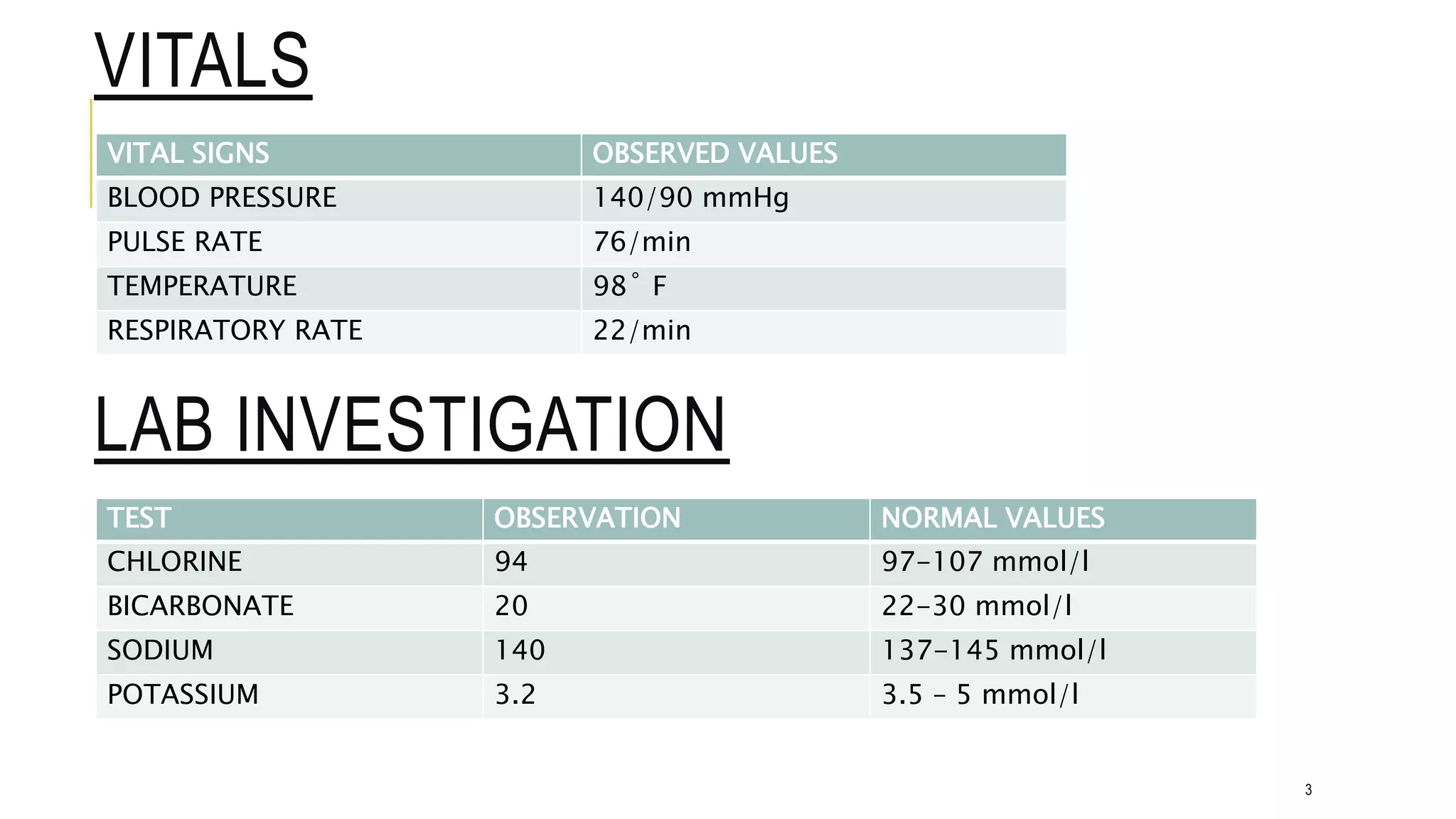
VITALS
LAB INVESTIGATION
TEST OBSERVATION NORMAL VALUES
CHLORINE 94 97-107 mmol/l
BICARBONATE 20 22-30 mmol/l
SODIUM 140 137-145 mmol/l
POTASSIUM 3.2 3.5 – 5 mmol/l
3
VITAL SIGNS OBSERVED VALUES
BLOOD PRESSURE 140/90 mmHg
PULSE RATE 76/min
TEMPERATURE 98˚ F
RESPIRATORY RATE 22/min
TREATMENT CHART
GENERIC NAME BRAND NAME DOSE FREQUENCY
Inj.Dexamethasone Dexona 4mg BD
T.Nimodipine Nimodip 60mg Q4H
T.Pantoprazole Rinda 40 mg OD
T.Paracetamol Calpol 650mg Q8H
Inj.Fosphenytoin Fosphen 150mg Q8H
Inj.Mannitol Mannitol 100ml BD
Inj.Ondansetron Emeset 4mg Q8H
T.Phenytoin Celetoin 100mg TID
4
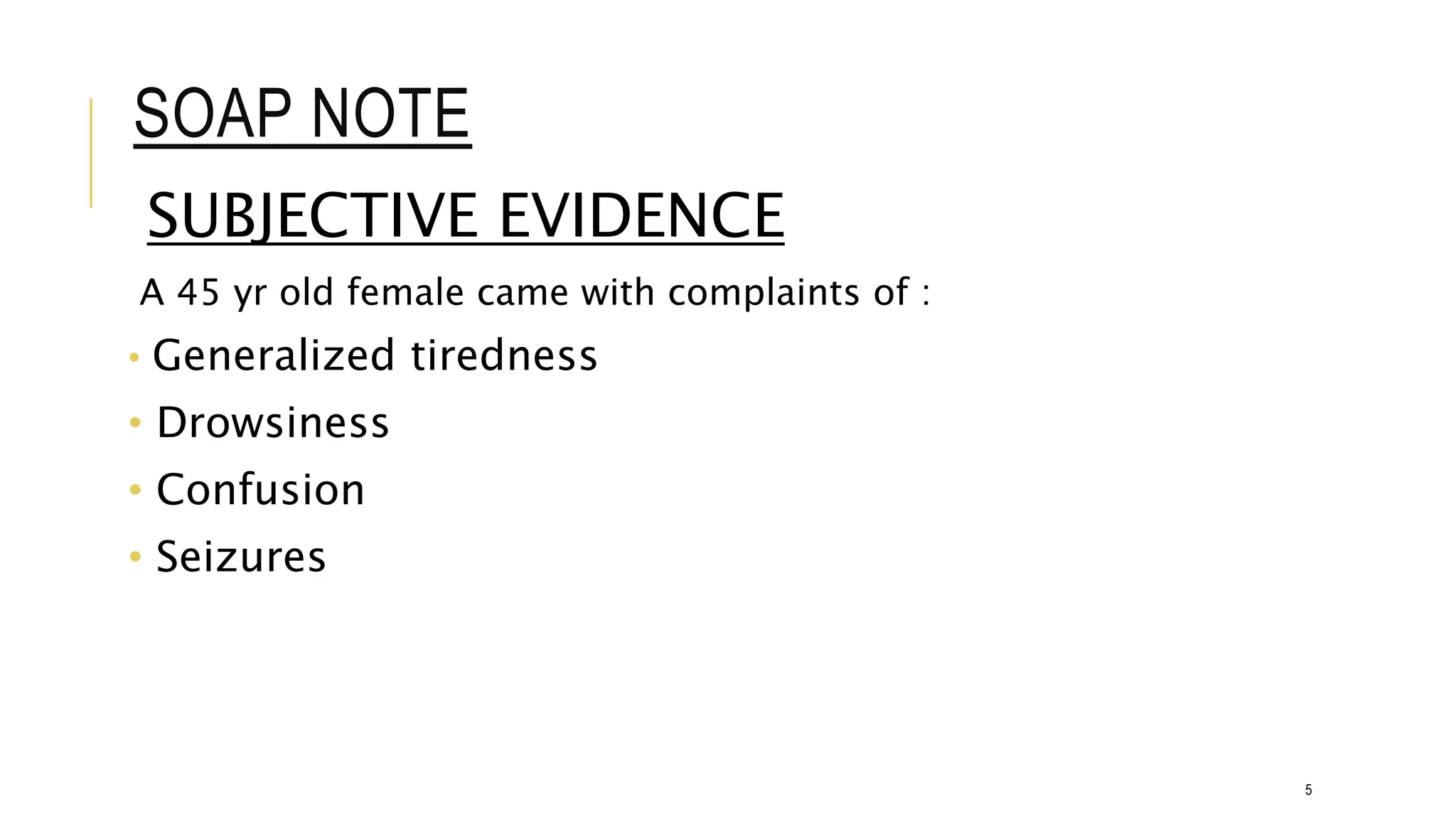
SOAP NOTE
SUBJECTIVE EVIDENCE
A 45 yr old female came with complaints of :
• Generalized tiredness
• Drowsiness
• Confusion
• Seizures
5
OBJECTIVE EVIDENCE
VITALS
LAB INVESTIGATION
CT SCAN
• Early hydrocephalous
• Suspicious lesion at the level of fourth ventricle 6
ASSESSMENT
According to the subjective and objective evidence the diagnosis was
made to be SAH (SUBARACHNOID HEMORRHAGE) due to aneurysm
rupture and treatment was started .
PLANNING
The patient was admitted in Neuro ICU
Physicians planning
• Take lifesaving measures
• Relief symptoms
• Repair of the bleeding vessel
• Prevention of complications
• Prevention of recurrence
7
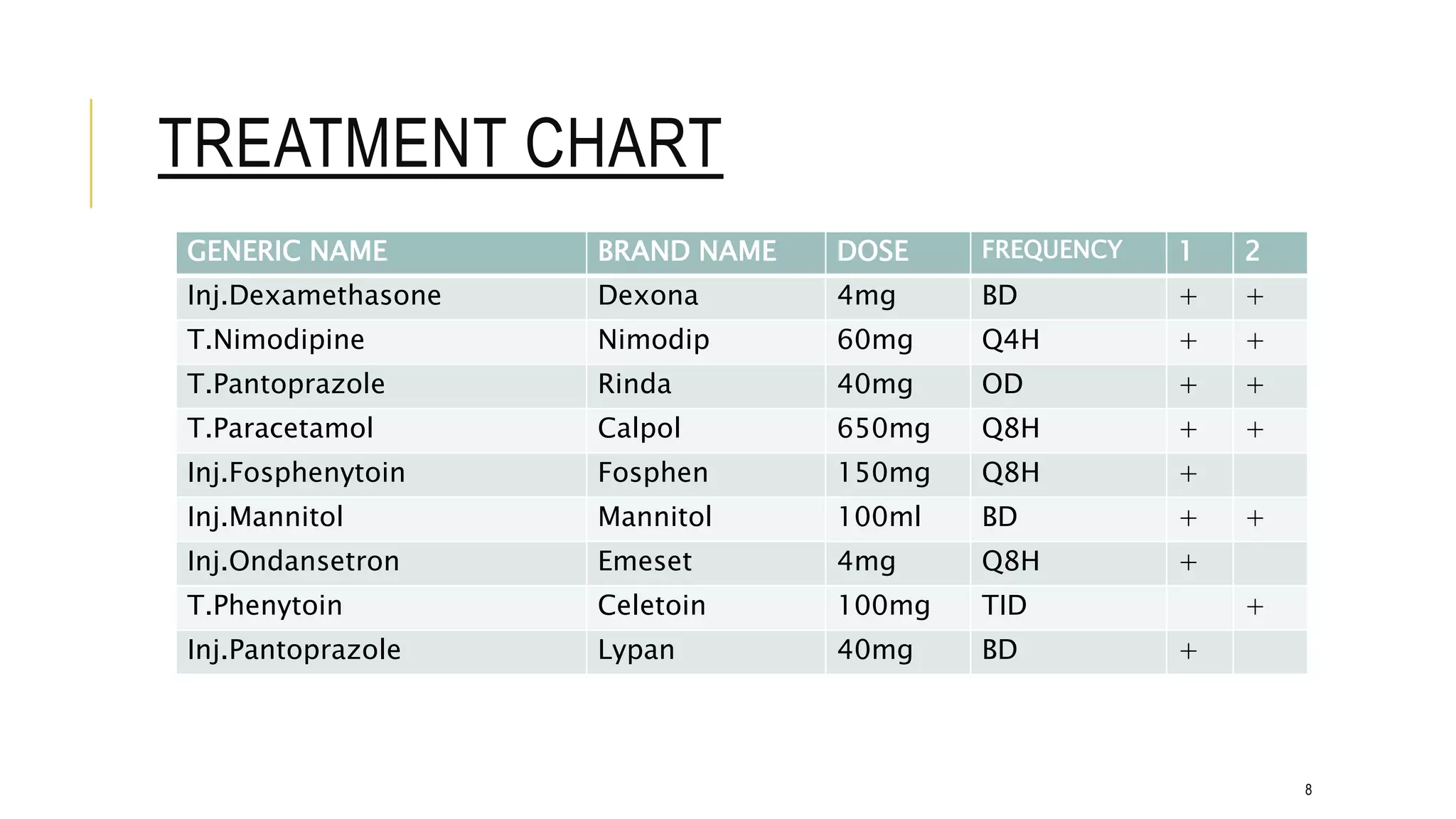
TREATMENT CHART
GENERIC NAME BRAND NAME DOSE FREQUENCY 1 2
Inj.Dexamethasone Dexona 4mg BD + +
T.Nimodipine Nimodip 60mg Q4H + +
T.Pantoprazole Rinda 40mg OD + +
T.Paracetamol Calpol 650mg Q8H + +
Inj.Fosphenytoin Fosphen 150mg Q8H +
Inj.Mannitol Mannitol 100ml BD + +
Inj.Ondansetron Emeset 4mg Q8H +
T.Phenytoin Celetoin 100mg TID +
Inj.Pantoprazole Lypan 40mg BD +
8
CURRENT MEDICATIONS
Inj.DEXONA
• To suppress the immune system
• ADRs include electrolyte imbalance , bone degradation , increased blood
pressure
T. NIMODIPINE
• Treat SAH
• ADRs include decreased blood pressure , slow heart rate
T.PANTOPRAZOLE
• Reduce acidity
• ADRs include headache , diarrhea , nausea and vomiting
T.PHENYTOIN
• Treat seizures
• ADRs include nystagmus , peripheral neuropathy , gingival hyperplasia
9
T.PARACETAMOL
• Treat pain
• ADRs include allergic reactions
Inj. FOSPHENYTOIN
• Treat seizures
• ADRs include nystagmus , slurred speech , euphoria , tinnitus ,
dysgeusia
Inj.MANNITOL
• Decrease fluid volume to treat cerebral edema
• ADRs include headache , dehydration
Inj.ONDANSETRON
• Treat and prevent nausea and vomiting
• ADRs include constipation , allergic reactions , fatigue , flushing
10
PHARMACIST INTERVENTION
PATIENT COUNSELLING
DISEASE
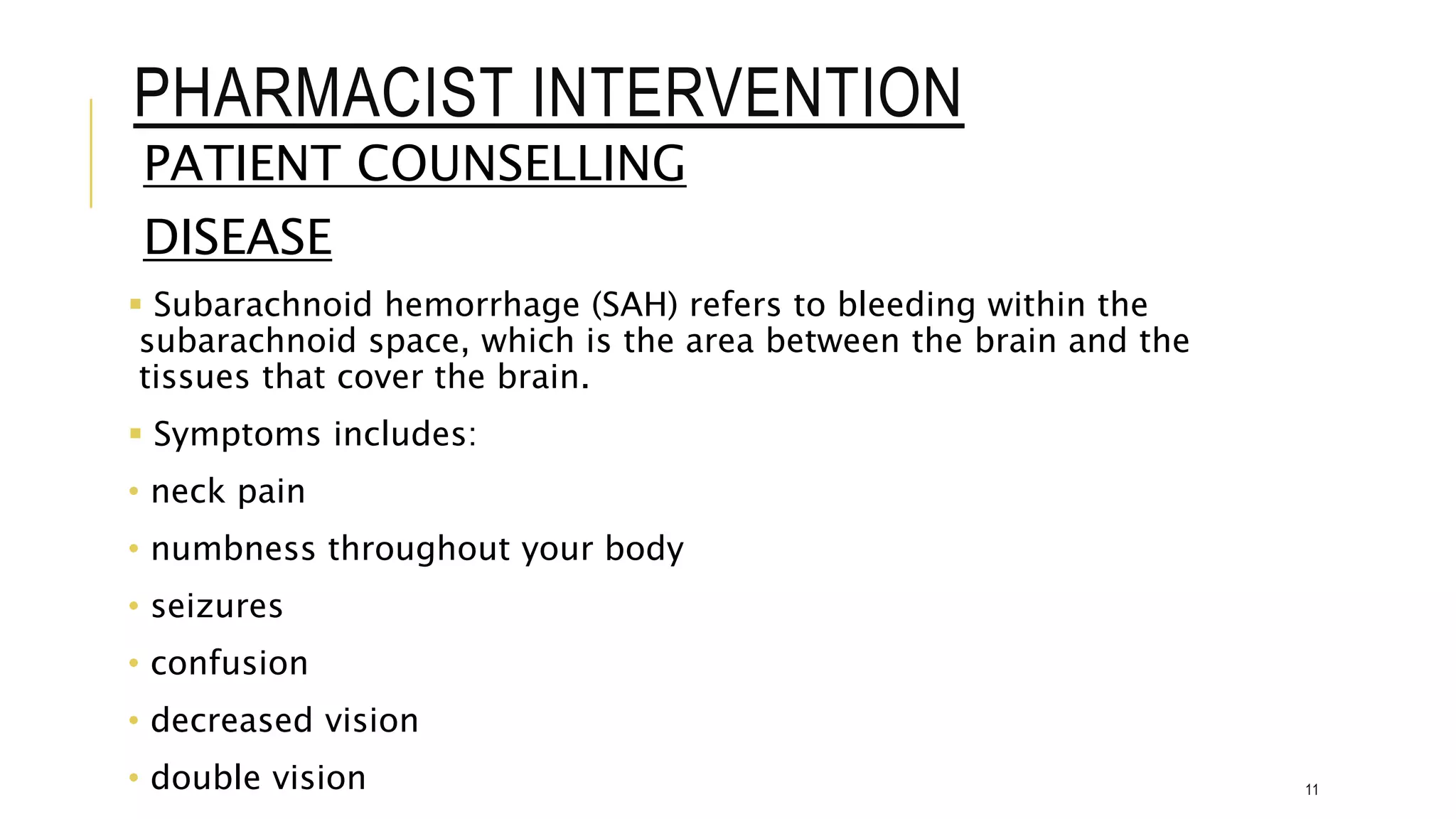
 Subarachnoid hemorrhage (SAH) refers to bleeding within the
subarachnoid space, which is the area between the brain and the
tissues that cover the brain.
 Symptoms includes:
• neck pain
• numbness throughout your body
• seizures
• confusion
• decreased vision
• double vision 11
DRUGS
• Nimodipine , fosphenytoin , mannitol and phenytoin should be avoided
during driving and operating machineries as it may cause dizziness and
avoid alcohol consumption
• Pantopazole may decrease the magnesium level in blood therefore
magnesium levels must be checked regularly and it may also decrease
calcium level therefore calcium supplements may be taken
• Paracetamol should not be taken in a dose of > 4 g /day and avoid
alcohol intake
• Fosphenytoin and phenytoin may increase the blood sugar level
therefore it should be regularly monitored
12
LIFE STYLE MODIFICATIONS
 Lifestyle changes to reduce the chance of a stroke include :
• Avoid smoking
• A low-fat diet high in fruits and vegetables
• Drinking in moderation
• Exercising regularly
• Maintaining a normal body weight
 These changes can reduce conditions that can contribute to strokes,
including high blood pressure, diabetes and carotid or other artery
disease.
13
POINTS TO PHYSICIAN
• Blood electrolytes , blood counts , liver function , kidney function and
heart function must be regularly monitored as the patient is
administered with mannitol
• Fosphenytoin will decrease the level of dexamethasone therefore an
alternate drug may be used
• Phenytoin will decrease the level of ondansetron therefore an alternative
drug may be used
14

Case Presentation on STROKE (Subarachnoid Hemorrhage)

  • 1.
    CASE PRESENTATION By :NAYANA DINESH 1
  • 2.
    PATIENT PROFILE NAME :XXX AGE : 45 yrs SEX : FEMALE DOA : 22-02-18 COMPLAINTS ON ADMISSION : • Generalized tiredness • Drowsiness • Confusion • Seizures  Past history : 1 episode of seizures  Medication history : NIL  Family history : NIL 2
  • 3.
    VITALS LAB INVESTIGATION TEST OBSERVATIONNORMAL VALUES CHLORINE 94 97-107 mmol/l BICARBONATE 20 22-30 mmol/l SODIUM 140 137-145 mmol/l POTASSIUM 3.2 3.5 – 5 mmol/l 3 VITAL SIGNS OBSERVED VALUES BLOOD PRESSURE 140/90 mmHg PULSE RATE 76/min TEMPERATURE 98˚ F RESPIRATORY RATE 22/min
  • 4.
    TREATMENT CHART GENERIC NAMEBRAND NAME DOSE FREQUENCY Inj.Dexamethasone Dexona 4mg BD T.Nimodipine Nimodip 60mg Q4H T.Pantoprazole Rinda 40 mg OD T.Paracetamol Calpol 650mg Q8H Inj.Fosphenytoin Fosphen 150mg Q8H Inj.Mannitol Mannitol 100ml BD Inj.Ondansetron Emeset 4mg Q8H T.Phenytoin Celetoin 100mg TID 4
  • 5.
    SOAP NOTE SUBJECTIVE EVIDENCE A45 yr old female came with complaints of : • Generalized tiredness • Drowsiness • Confusion • Seizures 5
  • 6.
    OBJECTIVE EVIDENCE VITALS LAB INVESTIGATION CTSCAN • Early hydrocephalous • Suspicious lesion at the level of fourth ventricle 6
  • 7.
    ASSESSMENT According to thesubjective and objective evidence the diagnosis was made to be SAH (SUBARACHNOID HEMORRHAGE) due to aneurysm rupture and treatment was started . PLANNING The patient was admitted in Neuro ICU Physicians planning • Take lifesaving measures • Relief symptoms • Repair of the bleeding vessel • Prevention of complications • Prevention of recurrence 7
  • 8.
    TREATMENT CHART GENERIC NAMEBRAND NAME DOSE FREQUENCY 1 2 Inj.Dexamethasone Dexona 4mg BD + + T.Nimodipine Nimodip 60mg Q4H + + T.Pantoprazole Rinda 40mg OD + + T.Paracetamol Calpol 650mg Q8H + + Inj.Fosphenytoin Fosphen 150mg Q8H + Inj.Mannitol Mannitol 100ml BD + + Inj.Ondansetron Emeset 4mg Q8H + T.Phenytoin Celetoin 100mg TID + Inj.Pantoprazole Lypan 40mg BD + 8
  • 9.
    CURRENT MEDICATIONS Inj.DEXONA • Tosuppress the immune system • ADRs include electrolyte imbalance , bone degradation , increased blood pressure T. NIMODIPINE • Treat SAH • ADRs include decreased blood pressure , slow heart rate T.PANTOPRAZOLE • Reduce acidity • ADRs include headache , diarrhea , nausea and vomiting T.PHENYTOIN • Treat seizures • ADRs include nystagmus , peripheral neuropathy , gingival hyperplasia 9
  • 10.
    T.PARACETAMOL • Treat pain •ADRs include allergic reactions Inj. FOSPHENYTOIN • Treat seizures • ADRs include nystagmus , slurred speech , euphoria , tinnitus , dysgeusia Inj.MANNITOL • Decrease fluid volume to treat cerebral edema • ADRs include headache , dehydration Inj.ONDANSETRON • Treat and prevent nausea and vomiting • ADRs include constipation , allergic reactions , fatigue , flushing 10
  • 11.
    PHARMACIST INTERVENTION PATIENT COUNSELLING DISEASE Subarachnoid hemorrhage (SAH) refers to bleeding within the subarachnoid space, which is the area between the brain and the tissues that cover the brain.  Symptoms includes: • neck pain • numbness throughout your body • seizures • confusion • decreased vision • double vision 11
  • 12.
    DRUGS • Nimodipine ,fosphenytoin , mannitol and phenytoin should be avoided during driving and operating machineries as it may cause dizziness and avoid alcohol consumption • Pantopazole may decrease the magnesium level in blood therefore magnesium levels must be checked regularly and it may also decrease calcium level therefore calcium supplements may be taken • Paracetamol should not be taken in a dose of > 4 g /day and avoid alcohol intake • Fosphenytoin and phenytoin may increase the blood sugar level therefore it should be regularly monitored 12
  • 13.
    LIFE STYLE MODIFICATIONS Lifestyle changes to reduce the chance of a stroke include : • Avoid smoking • A low-fat diet high in fruits and vegetables • Drinking in moderation • Exercising regularly • Maintaining a normal body weight  These changes can reduce conditions that can contribute to strokes, including high blood pressure, diabetes and carotid or other artery disease. 13
  • 14.
    POINTS TO PHYSICIAN •Blood electrolytes , blood counts , liver function , kidney function and heart function must be regularly monitored as the patient is administered with mannitol • Fosphenytoin will decrease the level of dexamethasone therefore an alternate drug may be used • Phenytoin will decrease the level of ondansetron therefore an alternative drug may be used 14