Leonardtown High School
Christopher Adams, Carla Bacon, Pat Carr,
  Jessica Garner, Stephanie Gonzalez,
     Greg Robison, Katharine Sheehan
Justification for Proximity
Strategies
• Classroom Management
  o St. Mary’s County Public Schools Master
    Plan Goal 4: All students will be educated in
    learning environment that are safe, drug
    free, and conducive to learning.
  o Keep track of how often students are
    performing in a disruptive behavior using a
    tally mark for every five minutes.
  o Students disruptive behavior ranges from
    side conversations to sleeping during class
    time.
Proximity Strategy
• Stand next to off task students without
  using verbal cues, in order for them to
  stop unwanted disruptive behaviors.
Research Question
• We are studying how using proximity
  strategies aids in improving classroom
  management. We want to discover if
  non-verbal cues reduce off task behavior
  through multiple grade levels and content
  areas in order to aid students to stay on
  task in class, engaged, and be active
  learned throughout the class period.
Data Collection
First Week Observations
• Observe two classes through the duration
  of one week and write down the
  disruptive behaviors the students are
  exhibiting.
Observation Guidelines
• Create a data collection chart in the form of
  a seating chart.

• Every five minutes check the students’
  behaviors and mark in the correct box on
  the students chart the acronym of the off
  task behavior.

• Every five minutes place a tally next to the
  acronym if the behavior persists.
Observation Guidelines
• Off task behavior being observed:
  o SL (sleeping)
  o SC ( side conversations)
  o GI (spacing out, day dreaming, General
    Inattentiveness)
  o TX (using cellular devices)
  o PN (passing/exchanging notes)
  o TS (students who are talking, singing
    dancing)
Week 2 Strategy Implementation
• Implement Proximity Strategy
• Collection of data:
  o   A fellow intern or mentor will fill in a
      behavioral chart on Monday to see how
      students first react to proximity strategy.
  o   Tally with a star the area where the intern stood
      during the non-verbal proximity strategy.
Week 2 Intervention cont’
• At the end of each class interns will write in a
  reflective journal about how he/she felt about
  the how the proximity strategy went.

• Friday, a intern or mentor will observe the class
  once again and fill in a behavioral chart and
  see if proximity strategy effective.
  o   Tally with a star an area where the intern stood
      during the non-verbal intervention.
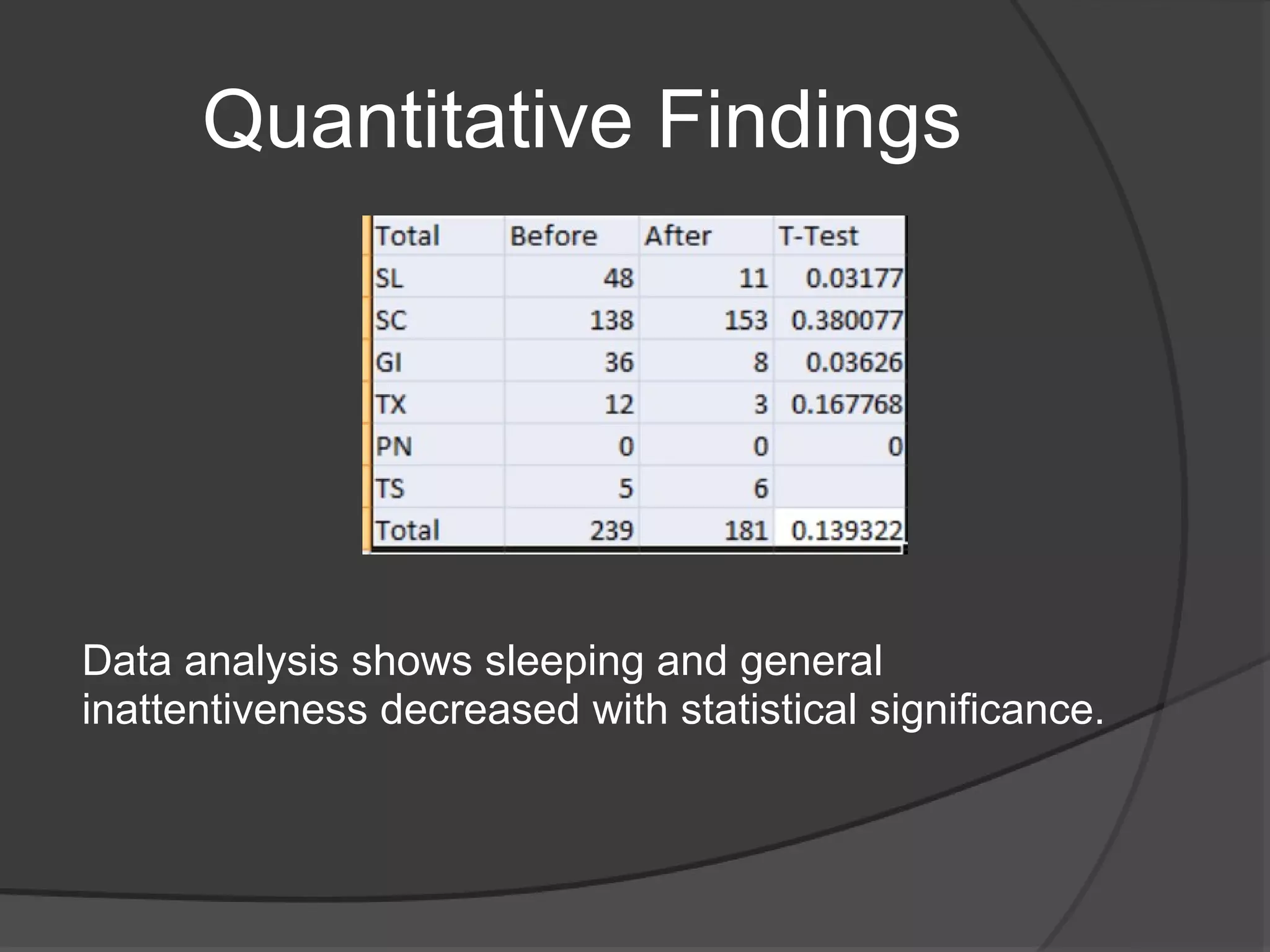
Quantitative Findings


Data analysis shows sleeping and general
inattentiveness decreased with statistical significance.
Qualitative Findings
• Hard to complete the strategy due to
  classroom environment.

• Spirit week and class time period affected
  class behavior.

• Less disruptive manner to stop students’
  disruptive behaviors.
Answers to research questions

 It was found that proximity behavior management was
 effective to curtail sleeping and general
 inattentiveness in the classroom.

 This technique was utilized across multiple grade
 levels (9-12) and across multiple disciplines (Social
 Studies, English, and Math).
Next steps?
• Proximity strategy should be used in every classroom as
  a first resort to address off-task behavior.
• Would you recommend future action research directions?
   o A longer study of this strategy might reveal more
      positive results that the strategy worked.
Back to the big picture
• Proximity strategies work as an initial
  intervention
• Other strategies should supplement
  proximity strategies
• Strategies should be used in response to
  student attitudes and personalities

CARP Leonardtown High School

  • 1.
    Leonardtown High School ChristopherAdams, Carla Bacon, Pat Carr, Jessica Garner, Stephanie Gonzalez, Greg Robison, Katharine Sheehan
  • 2.
    Justification for Proximity Strategies •Classroom Management o St. Mary’s County Public Schools Master Plan Goal 4: All students will be educated in learning environment that are safe, drug free, and conducive to learning. o Keep track of how often students are performing in a disruptive behavior using a tally mark for every five minutes. o Students disruptive behavior ranges from side conversations to sleeping during class time.
  • 3.
    Proximity Strategy • Standnext to off task students without using verbal cues, in order for them to stop unwanted disruptive behaviors.
  • 4.
    Research Question • Weare studying how using proximity strategies aids in improving classroom management. We want to discover if non-verbal cues reduce off task behavior through multiple grade levels and content areas in order to aid students to stay on task in class, engaged, and be active learned throughout the class period.
  • 5.
  • 6.
    First Week Observations •Observe two classes through the duration of one week and write down the disruptive behaviors the students are exhibiting.
  • 7.
    Observation Guidelines • Createa data collection chart in the form of a seating chart. • Every five minutes check the students’ behaviors and mark in the correct box on the students chart the acronym of the off task behavior. • Every five minutes place a tally next to the acronym if the behavior persists.
  • 8.
    Observation Guidelines • Offtask behavior being observed: o SL (sleeping) o SC ( side conversations) o GI (spacing out, day dreaming, General Inattentiveness) o TX (using cellular devices) o PN (passing/exchanging notes) o TS (students who are talking, singing dancing)
  • 9.
    Week 2 StrategyImplementation • Implement Proximity Strategy • Collection of data: o A fellow intern or mentor will fill in a behavioral chart on Monday to see how students first react to proximity strategy. o Tally with a star the area where the intern stood during the non-verbal proximity strategy.
  • 10.
    Week 2 Interventioncont’ • At the end of each class interns will write in a reflective journal about how he/she felt about the how the proximity strategy went. • Friday, a intern or mentor will observe the class once again and fill in a behavioral chart and see if proximity strategy effective. o Tally with a star an area where the intern stood during the non-verbal intervention.
  • 11.
    Quantitative Findings Data analysisshows sleeping and general inattentiveness decreased with statistical significance.
  • 12.
    Qualitative Findings • Hardto complete the strategy due to classroom environment. • Spirit week and class time period affected class behavior. • Less disruptive manner to stop students’ disruptive behaviors.
  • 13.
    Answers to researchquestions It was found that proximity behavior management was effective to curtail sleeping and general inattentiveness in the classroom. This technique was utilized across multiple grade levels (9-12) and across multiple disciplines (Social Studies, English, and Math).
  • 14.
    Next steps? • Proximitystrategy should be used in every classroom as a first resort to address off-task behavior. • Would you recommend future action research directions? o A longer study of this strategy might reveal more positive results that the strategy worked.
  • 15.
    Back to thebig picture • Proximity strategies work as an initial intervention • Other strategies should supplement proximity strategies • Strategies should be used in response to student attitudes and personalities

Editor's Notes

  • #4 Evidence/reasoning that this strategy will address the problem you laid out Evidence/reasoning that the strategy is appropriate for the population
  • #6 Explanation of this chart is later on in the slide presentation.
  • #13 Information from our journals: Over time students’ began to understand the need for them to be quiet when a teacher began to move towards them.