By – rohit singh
The Myths: What Retail isn’t…..
 Poor salary prospects
 Graduate salary starts as high ..
 Long, unsociable hours
 Varied hours, giving flexibility to suit
your lifestyle
 Not creative or stimulating
 Brand specialists and visual
merchandisers to name just two
important roles
 Dead end job
 Training programs encourage your
development and progress
 Anyone can do retail
 Retail apprenticeships are a
recognized route in; 29% of all the
graduate join the retail
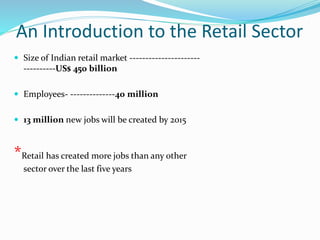
An Introduction to the Retail Sector
 Size of Indian retail market ----------------------
----------US$ 450 billion
 Employees- --------------40 million
 13 million new jobs will be created by 2015
*Retail has created more jobs than any other
sector over the last five years
Careers in Retail: Key Themes
 Variety
 Profit
 Progress
 Flexibility
 Lifestyle
With a huge choice of roles
and opportunities to move
around, there’s something
for virtually everyone.
Variety: breaking it down
 Store operations
 HR and training
 Finance and administration
 Buying
 Customer contact centers
 Marketing
 Logistics
 IT
 Visual Merchandising
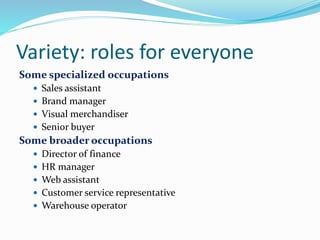
Variety: roles for everyone
Some specialized occupations
 Sales assistant
 Brand manager
 Visual merchandiser
 Senior buyer
Some broader occupations
 Director of finance
 HR manager
 Web assistant
 Customer service representative
 Warehouse operator
Progress: Salary and Development
 Earn while you learn
with an apprenticeship
 Graduate training
programs
 Progression towards
manager level
 Great perks and extras
in all posts
 Continuous
professional
development
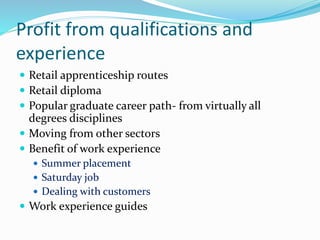
Profit from qualifications and
experience
 Retail apprenticeship routes
 Retail diploma
 Popular graduate career path- from virtually all
degrees disciplines
 Moving from other sectors
 Benefit of work experience
 Summer placement
 Saturday job
 Dealing with customers
 Work experience guides
Flexibility: A break from the norm
Getting away from 9 to 5
Fit your life around your work
Part-time working
Opportunity to move around the
business
Lifestyle: in your best interest
People often buy things they’re
interested in
Sport, music, technology, games
Working with goods and services of
personal interest.
Trends in Retail: the current market
 Retailers need to respond quickly to new fashions and
new products
 Mobile retailing
 Internet -e-tailing
 Impact on customer interface
 Websites and contact centers
 Home delivery for groceries and many other items
Skills required: what employers
want
Employability skills
 People skills
 Sales skills
 Personal presentation
 The right attitude
 Enthusiasm and reliability
 Team working
 Managerial potential
Desired skill-set required for Sales
Executive/Store Manager
 Good communication skills (ability to persuade
customer).
 Patience to deal with all kinds of customers.
 Good product knowledge (in terms of features).
 Knowledge of competitor’s products.
 Good knowledge of store dynamics in terms of hot
selling products, hot traffic spots (in the store), and
merchandising requirements.
Thank you

Career in retail

  • 1.
  • 2.
    The Myths: WhatRetail isn’t…..  Poor salary prospects  Graduate salary starts as high ..  Long, unsociable hours  Varied hours, giving flexibility to suit your lifestyle  Not creative or stimulating  Brand specialists and visual merchandisers to name just two important roles  Dead end job  Training programs encourage your development and progress  Anyone can do retail  Retail apprenticeships are a recognized route in; 29% of all the graduate join the retail
  • 3.
    An Introduction tothe Retail Sector  Size of Indian retail market ---------------------- ----------US$ 450 billion  Employees- --------------40 million  13 million new jobs will be created by 2015 *Retail has created more jobs than any other sector over the last five years
  • 4.
    Careers in Retail:Key Themes  Variety  Profit  Progress  Flexibility  Lifestyle With a huge choice of roles and opportunities to move around, there’s something for virtually everyone.
  • 5.
    Variety: breaking itdown  Store operations  HR and training  Finance and administration  Buying  Customer contact centers  Marketing  Logistics  IT  Visual Merchandising
  • 6.
    Variety: roles foreveryone Some specialized occupations  Sales assistant  Brand manager  Visual merchandiser  Senior buyer Some broader occupations  Director of finance  HR manager  Web assistant  Customer service representative  Warehouse operator
  • 7.
    Progress: Salary andDevelopment  Earn while you learn with an apprenticeship  Graduate training programs  Progression towards manager level  Great perks and extras in all posts  Continuous professional development
  • 8.
    Profit from qualificationsand experience  Retail apprenticeship routes  Retail diploma  Popular graduate career path- from virtually all degrees disciplines  Moving from other sectors  Benefit of work experience  Summer placement  Saturday job  Dealing with customers  Work experience guides
  • 9.
    Flexibility: A breakfrom the norm Getting away from 9 to 5 Fit your life around your work Part-time working Opportunity to move around the business
  • 10.
    Lifestyle: in yourbest interest People often buy things they’re interested in Sport, music, technology, games Working with goods and services of personal interest.
  • 11.
    Trends in Retail:the current market  Retailers need to respond quickly to new fashions and new products  Mobile retailing  Internet -e-tailing  Impact on customer interface  Websites and contact centers  Home delivery for groceries and many other items
  • 12.
    Skills required: whatemployers want Employability skills  People skills  Sales skills  Personal presentation  The right attitude  Enthusiasm and reliability  Team working  Managerial potential
  • 13.
    Desired skill-set requiredfor Sales Executive/Store Manager  Good communication skills (ability to persuade customer).  Patience to deal with all kinds of customers.  Good product knowledge (in terms of features).  Knowledge of competitor’s products.  Good knowledge of store dynamics in terms of hot selling products, hot traffic spots (in the store), and merchandising requirements.
  • 14.