By:
Emy Mathew
Padmashree Deshpande
Rahul Khatri
Sanjana Singh Jadon
Vineet Agrawal
Yashwant Singh Rathore
Introduction
 Career: A career is the job or profession that
someone does for a long period of their life
 Career plays an important role in individual’s life
 Career development is lifelong process of
managing, learning, work, leisure, and transitions
in order to move toward a personally determined
and evolving preferred future
Diagnostic Instruments
These are the tools used to analyse and
determine the career goals
 Aptitude test
 Psychometric test
 Personality test
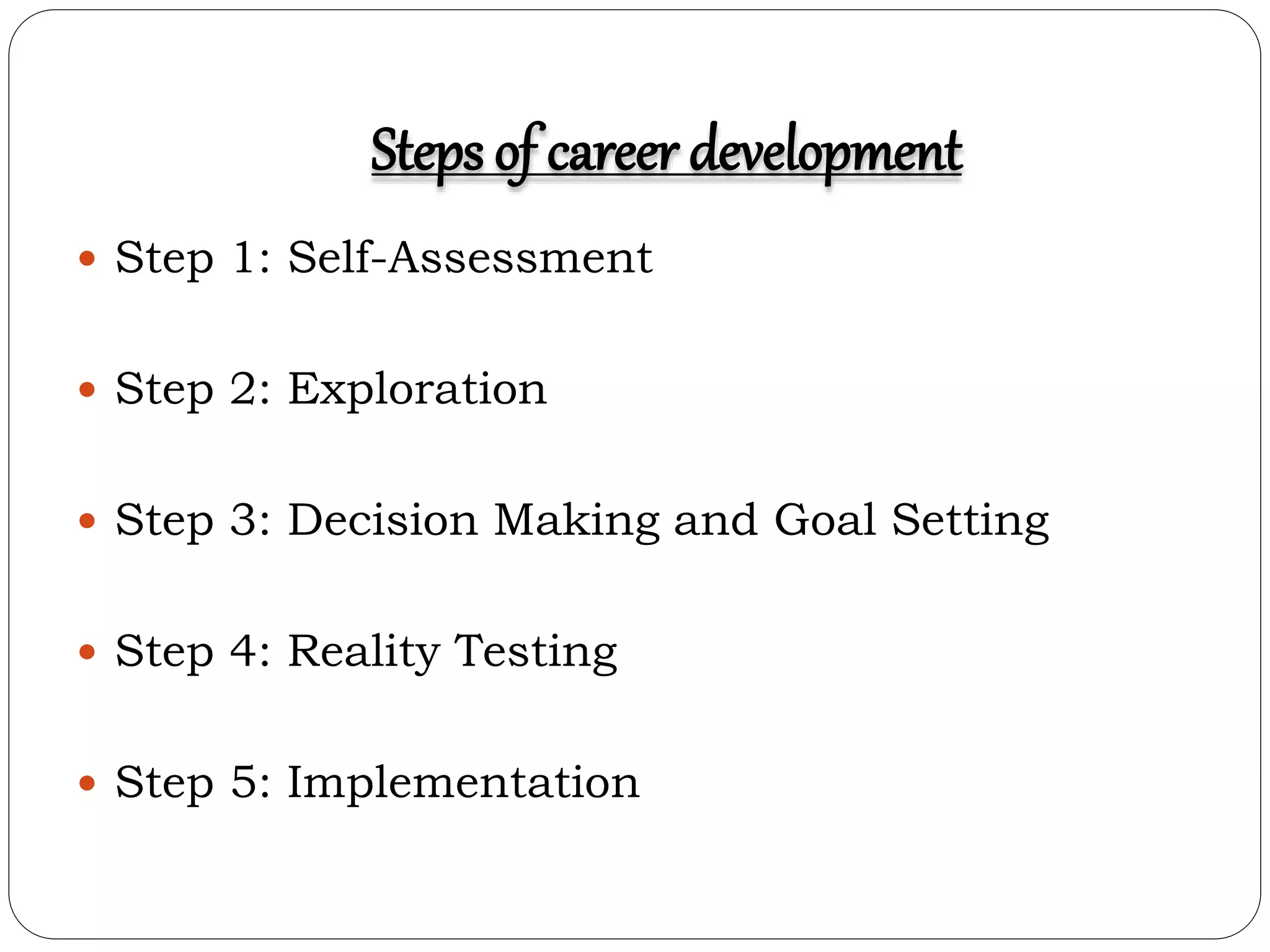
Steps of career development
 Step 1: Self-Assessment
 Step 2: Exploration
 Step 3: Decision Making and Goal Setting
 Step 4: Reality Testing
 Step 5: Implementation
Career Counselling
 It is a holistic method to evaluate
the interests and needs of students
and suggest a career path based
on their needs.
5 Stages of career counselling
 Stage 1 : Initiation
 Getting to know the student
 Data Gathering
 Awareness
 Alliance
 Stage 2: Exploration
 Stage 3: Decision Making
 Stage 4: Preparation
 Stage 5: Implementation
Face to Face Feedback
 Feedback: It is an information about reactions to
a product, person’s performance of a task, etc
which is used as a basis for improvement
 Face to Face feedback: It means giving response
to a person on face
 It is used for giving a quick feedback and on the
spot response
Importance of Feedback
 Feedback is an effective listening
 Feedback can be a motivating factor
 It can be used for improving performance
 It acts as a tool for continued learning
 Helps in problem solving
Giving, Receiving and Seeking
face to face feedback
 GIVING – This is the easiest feedback to give. While
saying “thank you” and “well done” are important, to
take time out to give specific feedback is invaluable.
 RECEIVING – In this stage one should be open,
sincerely interested and accepting the feedback.
 Receiving positive feedback
 Receiving negative feedback
 SEEKING – The things we do to commonly seek from
others about the performance or message delivered
Thank You!

Career development process

  • 1.
    By: Emy Mathew Padmashree Deshpande RahulKhatri Sanjana Singh Jadon Vineet Agrawal Yashwant Singh Rathore
  • 2.
    Introduction  Career: Acareer is the job or profession that someone does for a long period of their life  Career plays an important role in individual’s life  Career development is lifelong process of managing, learning, work, leisure, and transitions in order to move toward a personally determined and evolving preferred future
  • 3.
    Diagnostic Instruments These arethe tools used to analyse and determine the career goals  Aptitude test  Psychometric test  Personality test
  • 4.
    Steps of careerdevelopment  Step 1: Self-Assessment  Step 2: Exploration  Step 3: Decision Making and Goal Setting  Step 4: Reality Testing  Step 5: Implementation
  • 5.
    Career Counselling  Itis a holistic method to evaluate the interests and needs of students and suggest a career path based on their needs.
  • 6.
    5 Stages ofcareer counselling  Stage 1 : Initiation  Getting to know the student  Data Gathering  Awareness  Alliance  Stage 2: Exploration  Stage 3: Decision Making  Stage 4: Preparation  Stage 5: Implementation
  • 7.
    Face to FaceFeedback  Feedback: It is an information about reactions to a product, person’s performance of a task, etc which is used as a basis for improvement  Face to Face feedback: It means giving response to a person on face  It is used for giving a quick feedback and on the spot response
  • 8.
    Importance of Feedback Feedback is an effective listening  Feedback can be a motivating factor  It can be used for improving performance  It acts as a tool for continued learning  Helps in problem solving
  • 9.
    Giving, Receiving andSeeking face to face feedback  GIVING – This is the easiest feedback to give. While saying “thank you” and “well done” are important, to take time out to give specific feedback is invaluable.  RECEIVING – In this stage one should be open, sincerely interested and accepting the feedback.  Receiving positive feedback  Receiving negative feedback  SEEKING – The things we do to commonly seek from others about the performance or message delivered
  • 10.

Editor's Notes

  • #3 There should be a systematic process of planning and implementing career development.