Adarsh S A
3rd year B.Sc. Nursing
Assisi College of Nursing
DEFINITION
Cardiac arrest can be defined as the sudden cessation of heartbeat and cardiac
function, resulting in the loss of effective circulation.
ETIOLOGY
• Influx problems in heart
• Congenital heart disease
• Valvular heart disease
• Cardiomyopathy
• Heart attack
• Coronary artery disease
• Electrical abnormalities
RISK FACTORS
• Family history of coronary artery disease
• Smoking
• High blood pressure
• High blood cholesterol
• Obesity
• Diabetes
• Sedentary lifestyle
• Previous episode of cardiac arrest
• Age
• Nutritional imbalance
• Chronic kidney disease
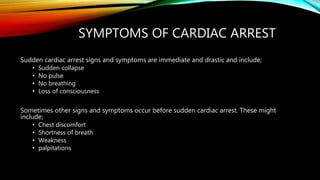
SYMPTOMS OF CARDIAC ARREST
Sudden cardiac arrest signs and symptoms are immediate and drastic and include;
• Sudden collapse
• No pulse
• No breathing
• Loss of consciousness
Sometimes other signs and symptoms occur before sudden cardiac arrest. These might
include;
• Chest discomfort
• Shortness of breath
• Weakness
• palpitations
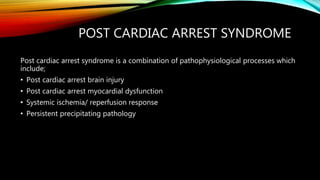
POST CARDIAC ARREST SYNDROME
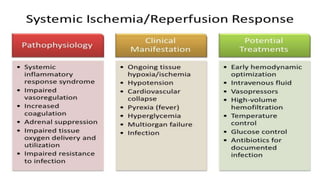
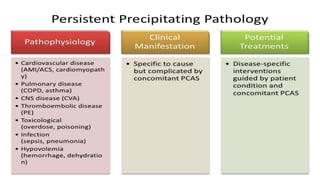
Post cardiac arrest syndrome is a combination of pathophysiological processes which
include;
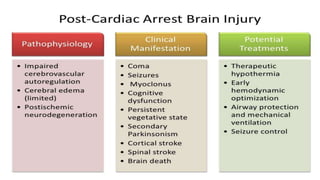
• Post cardiac arrest brain injury
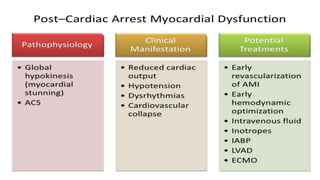
• Post cardiac arrest myocardial dysfunction
• Systemic ischemia/ reperfusion response
• Persistent precipitating pathology
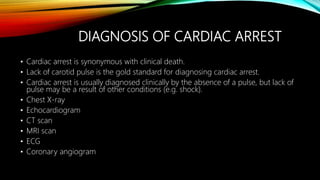
DIAGNOSIS OF CARDIAC ARREST
• Cardiac arrest is synonymous with clinical death.
• Lack of carotid pulse is the gold standard for diagnosing cardiac arrest.
• Cardiac arrest is usually diagnosed clinically by the absence of a pulse, but lack of
pulse may be a result of other conditions (e.g. shock).
• Chest X-ray
• Echocardiogram
• CT scan
• MRI scan
• ECG
• Coronary angiogram
MANAGEMENT
The management of cardiac arrest includes procedures and supportive care. This is a
medical emergency and needs immediate CPR or use of a defibrillator. The treatment
includes;
• Supportive care
• Medications
• Devices
SUPPORTIVE CARE
The supportive care consist of;
• Cardiopulmonary resuscitation (CPR)
• Defibrillation
• Tracheal intubation
• Targeted temperature management
CARDIOPULMONARY
RESUSCITATION (CPR)
Cardiopulmonary resuscitation is a technique of basic life support for the purpose of
oxygenation to the heart, lungs and brain until and unless the appropriate medical
treatment can come and restore the normal cardiopulmonary function.
INDICATION
• Road traffic accident
• Drowning
• Electric shock
• Airway obstruction
• Cardiac arrest
CHAIN OF SURVIVAL
EARLY RECOGNITION
Assessment is of crucial importance. It includes;
• Unresponsiveness
• No breathing or no normal breathing
• No pulse within 10 seconds
CPR SEQUENCE
CPR involves;
• Compressions
• Airway
• Breathing
Chest compressions:
• Patient must be placed on a hard surface
• The palm of one hand is placed in the lower half of the sternum
• The other hand is placed over the hand on the sternum
• Shoulders should be positioned directly over the hands with elbows locked straight.
Use upper body weight to compress.
• Sternum must be depressed at least 5 cm in adults, and 2-4 cm in children, 1-2 cm
in infants.
• It must be performed at a rate of 100-120/ min
• The ratio of chest compressions and rescue breaths must be 30:2
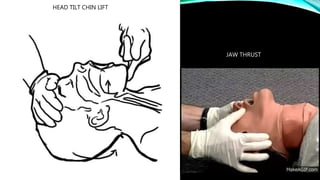
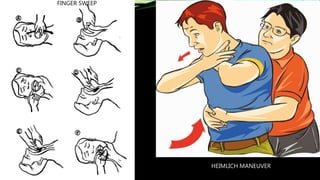
Airway:
1. Head tilt, chin lift
2. Jaw thrust
3. Finger sweep
4. Heimlich maneuver
HEAD TILT CHIN LIFT
JAW THRUST
FINGER SWEEP
HEIMLICH MANEUVER
Breathing:
1. Mouth to mouth breathing
2. Mouth to nose breathing
3. Mouth to mouth and nose
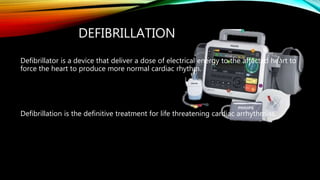
DEFIBRILLATION
Defibrillator is a device that deliver a dose of electrical energy to the affected heart to
force the heart to produce more normal cardiac rhythm.
Defibrillation is the definitive treatment for life threatening cardiac arrhythmias.
IMPLANTABLE DEVICES
• An implantable cardioverter defibrillator (ICD) is a small battery-powered device
placed in your chest to monitor your heart rhythm and detect irregular heart beats.
• An ICD can deliver electric shocks via one or more wires connected to your heart to
fix an abnormal heart rhythm.
• ICD constantly monitors for abnormal heart rhythms and instantly tries to correct
them, it helps when the heart stops beating in case of cardiac arrest.
PREVENTION
The cardiac arrest can be prevented by;
• Eating a healthy diet. Avoid foods that are oily, high in cholesterol, sugary and high
in carbohydrates.
• Doing regular exercise reduces risk of cardiac diseases.
• Maintain healthy body weight.
• Reduce stress level by meditation and other relaxation activities.
• Avoid the use of tobacco and alcohol.
• Avoid unnecessary use of over the counter drugs.
• The people at risk of heart diseases has to control blood pressure, lower cholesterol
levels and regular medical check-ups.
cardiacarrest-201113055915.pdf

cardiacarrest-201113055915.pdf

  • 1.
    Adarsh S A 3rdyear B.Sc. Nursing Assisi College of Nursing
  • 2.
    DEFINITION Cardiac arrest canbe defined as the sudden cessation of heartbeat and cardiac function, resulting in the loss of effective circulation.
  • 3.
    ETIOLOGY • Influx problemsin heart • Congenital heart disease • Valvular heart disease • Cardiomyopathy • Heart attack • Coronary artery disease • Electrical abnormalities
  • 4.
    RISK FACTORS • Familyhistory of coronary artery disease • Smoking • High blood pressure • High blood cholesterol • Obesity • Diabetes • Sedentary lifestyle • Previous episode of cardiac arrest • Age • Nutritional imbalance • Chronic kidney disease
  • 5.
    SYMPTOMS OF CARDIACARREST Sudden cardiac arrest signs and symptoms are immediate and drastic and include; • Sudden collapse • No pulse • No breathing • Loss of consciousness Sometimes other signs and symptoms occur before sudden cardiac arrest. These might include; • Chest discomfort • Shortness of breath • Weakness • palpitations
  • 6.
    POST CARDIAC ARRESTSYNDROME Post cardiac arrest syndrome is a combination of pathophysiological processes which include; • Post cardiac arrest brain injury • Post cardiac arrest myocardial dysfunction • Systemic ischemia/ reperfusion response • Persistent precipitating pathology
  • 11.
    DIAGNOSIS OF CARDIACARREST • Cardiac arrest is synonymous with clinical death. • Lack of carotid pulse is the gold standard for diagnosing cardiac arrest. • Cardiac arrest is usually diagnosed clinically by the absence of a pulse, but lack of pulse may be a result of other conditions (e.g. shock). • Chest X-ray • Echocardiogram • CT scan • MRI scan • ECG • Coronary angiogram
  • 12.
    MANAGEMENT The management ofcardiac arrest includes procedures and supportive care. This is a medical emergency and needs immediate CPR or use of a defibrillator. The treatment includes; • Supportive care • Medications • Devices
  • 13.
    SUPPORTIVE CARE The supportivecare consist of; • Cardiopulmonary resuscitation (CPR) • Defibrillation • Tracheal intubation • Targeted temperature management
  • 14.
    CARDIOPULMONARY RESUSCITATION (CPR) Cardiopulmonary resuscitationis a technique of basic life support for the purpose of oxygenation to the heart, lungs and brain until and unless the appropriate medical treatment can come and restore the normal cardiopulmonary function. INDICATION • Road traffic accident • Drowning • Electric shock • Airway obstruction • Cardiac arrest
  • 15.
  • 16.
    EARLY RECOGNITION Assessment isof crucial importance. It includes; • Unresponsiveness • No breathing or no normal breathing • No pulse within 10 seconds
  • 17.
    CPR SEQUENCE CPR involves; •Compressions • Airway • Breathing
  • 18.
    Chest compressions: • Patientmust be placed on a hard surface • The palm of one hand is placed in the lower half of the sternum • The other hand is placed over the hand on the sternum • Shoulders should be positioned directly over the hands with elbows locked straight. Use upper body weight to compress. • Sternum must be depressed at least 5 cm in adults, and 2-4 cm in children, 1-2 cm in infants. • It must be performed at a rate of 100-120/ min • The ratio of chest compressions and rescue breaths must be 30:2
  • 19.
    Airway: 1. Head tilt,chin lift 2. Jaw thrust 3. Finger sweep 4. Heimlich maneuver
  • 20.
    HEAD TILT CHINLIFT JAW THRUST
  • 21.
  • 22.
    Breathing: 1. Mouth tomouth breathing 2. Mouth to nose breathing 3. Mouth to mouth and nose
  • 23.
    DEFIBRILLATION Defibrillator is adevice that deliver a dose of electrical energy to the affected heart to force the heart to produce more normal cardiac rhythm. Defibrillation is the definitive treatment for life threatening cardiac arrhythmias.
  • 24.
    IMPLANTABLE DEVICES • Animplantable cardioverter defibrillator (ICD) is a small battery-powered device placed in your chest to monitor your heart rhythm and detect irregular heart beats. • An ICD can deliver electric shocks via one or more wires connected to your heart to fix an abnormal heart rhythm. • ICD constantly monitors for abnormal heart rhythms and instantly tries to correct them, it helps when the heart stops beating in case of cardiac arrest.
  • 25.
    PREVENTION The cardiac arrestcan be prevented by; • Eating a healthy diet. Avoid foods that are oily, high in cholesterol, sugary and high in carbohydrates. • Doing regular exercise reduces risk of cardiac diseases. • Maintain healthy body weight. • Reduce stress level by meditation and other relaxation activities. • Avoid the use of tobacco and alcohol. • Avoid unnecessary use of over the counter drugs. • The people at risk of heart diseases has to control blood pressure, lower cholesterol levels and regular medical check-ups.