DEFINITION :
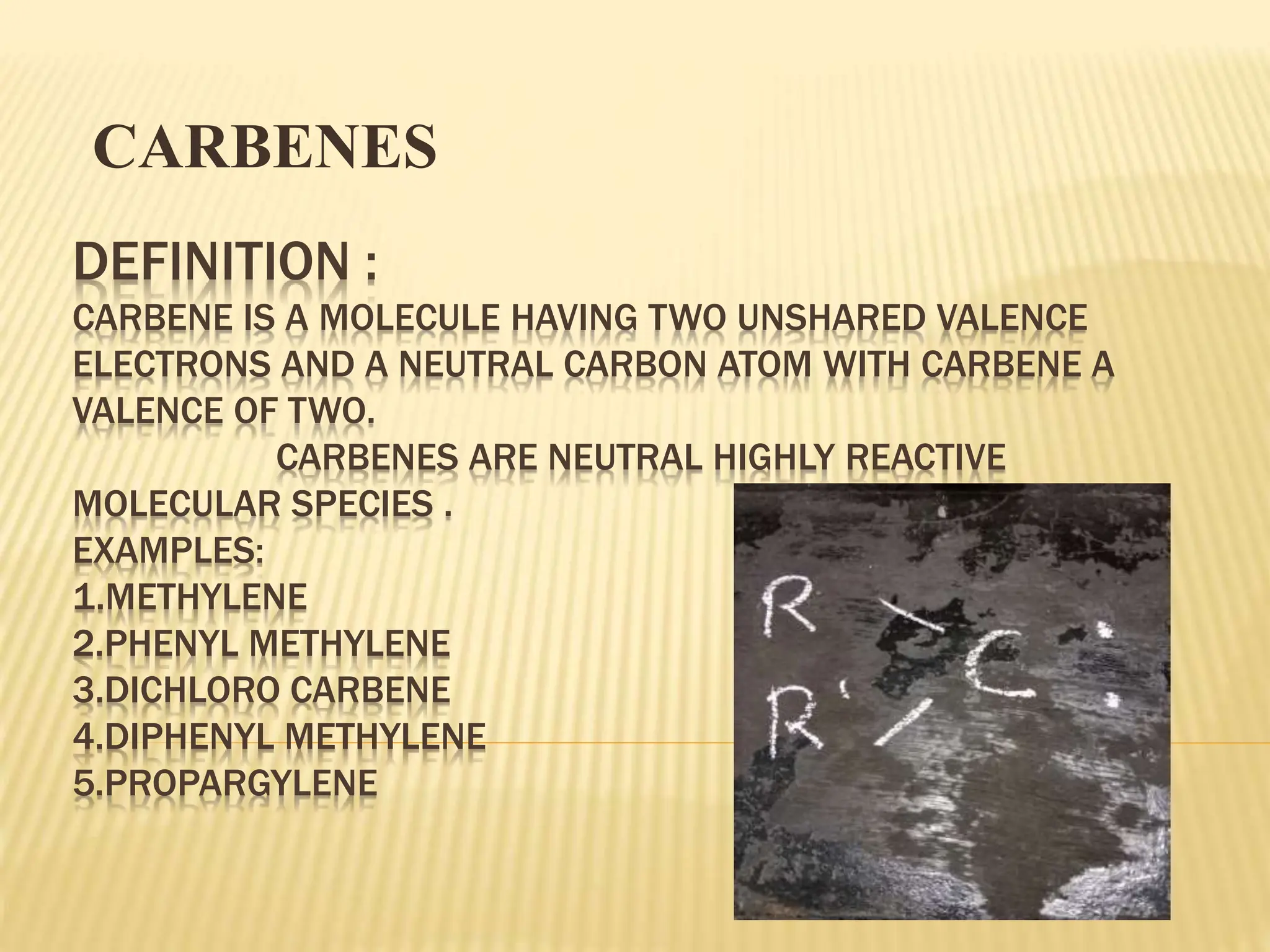
CARBENE IS A MOLECULE HAVING TWO UNSHARED VALENCE
ELECTRONS AND A NEUTRAL CARBON ATOM WITH CARBENE A
VALENCE OF TWO.
CARBENES ARE NEUTRAL HIGHLY REACTIVE
MOLECULAR SPECIES .
EXAMPLES:
1.METHYLENE
2.PHENYL METHYLENE
3.DICHLORO CARBENE
4.DIPHENYL METHYLENE
5.PROPARGYLENE
CARBENES
HISTORY OF CARBENES
 Carbenes had first been postulated by
eduard buchner in 1903 in
cyclopropanationstudies of ethyl
diazoacetate with toulene
 In 1912 Hermann staudinger also converted
alkenes to cyclopropanes with diazomethane
and CH2 as an inetrmediate.
 Doering in 1954 demonstrated with
dichlorocarbene synthetic utility
TYPES OF CARBENES
SINGLET AND TRIPLET
 Carbenes are classified as singlets or triplets
depending on electrical structure.
 Carbenes , divalent carbon species are well
known reactive intermediates that enable new
carbon carbon bond formation.
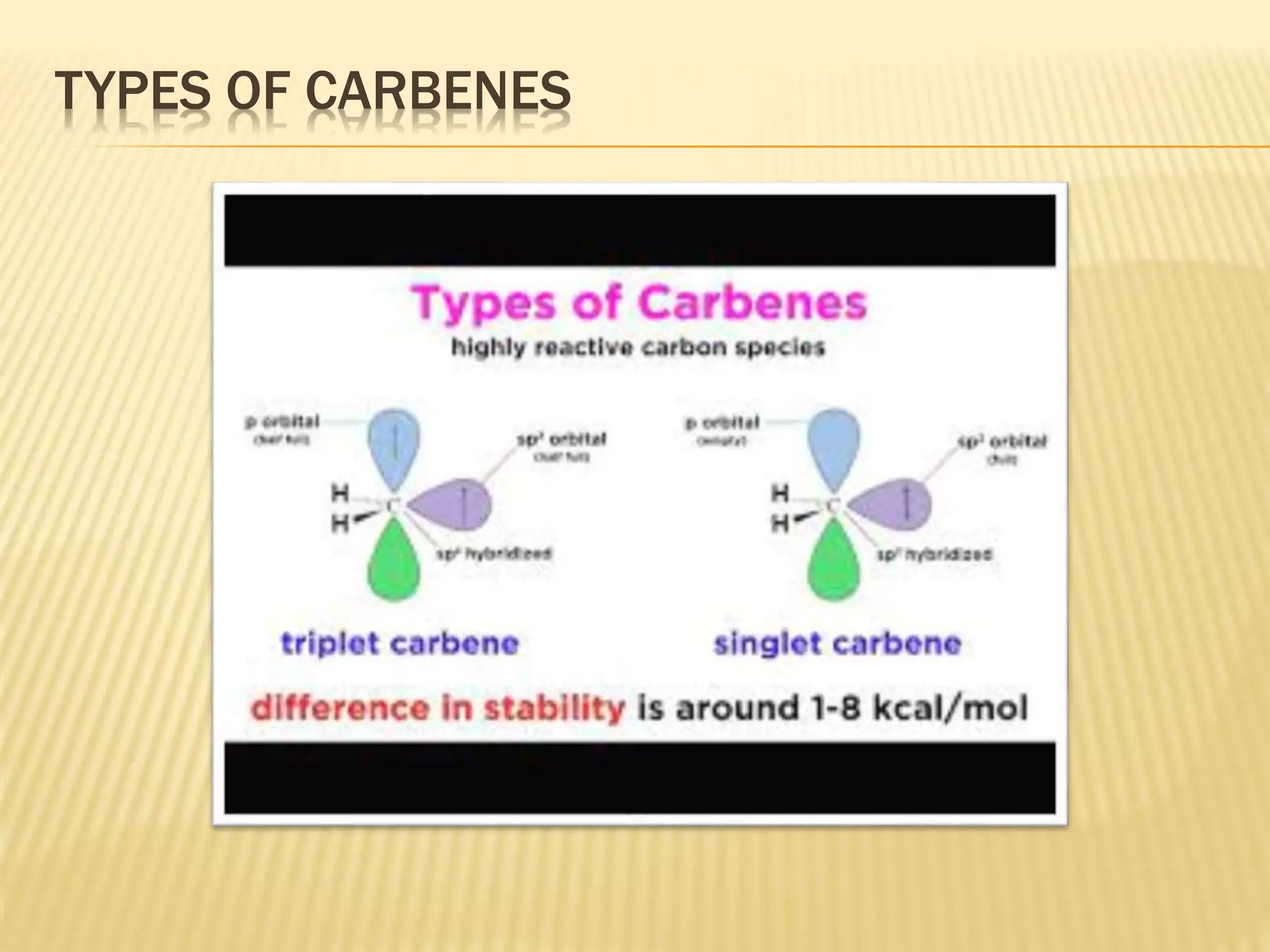
 SINGLET: one vacant P orbital is there. SP2
hybridized. sp2 orbital full with electrons in
opposite spin
 TRIPLET: sp2 hybridized
 p orbital and sp2 orbital are half filled.
SIGNIFICANCE OF CARBENES
 CARBENES ARE USUALLY UNSTABLE IN
NATURE . THEY ATTACH THEM SELVES TO
METALS TO FORM METAL CARBENE
COMPLEXES THAT SERVE AS EFFICIENT
CATALYSTS USED WIDELY IN THE
PHARMACEUTICAL INDUSTRY.
 CARBENES ARE VERY REACTIVE MOLECULES
THAT CONTAIN CARBON ATOM WITH 2
UNSHARED ELECTRONS.
 THEY CONVERT QUICKLY TO MORE STABLE
MOLECULES.THEY ARE IMPORTANT BUILDING
BLOCKS FOR MOLECULES IN COMBUSTION
SYSTEMS.
SYNTHESIS OF CARBENES
 1.CARBENES ARE FORMED BY
REACTIONS OF HALOGENATED
COMPOUNDS WITH BASES.
 2.THERMAL DECOMPOSITION OF DIAZO
COMPOUNDS.
 3.ELIMINATION OF CHLOROFORM ITH
BASE.
 4.METAL [RHODIUM OR COPPER
CATALYSED DECOMPOSITION OF DIAZO
CARBONYL COMPOUND.
 5.FROM TOSYLHYDRAZONES.
FORMATION OF CARBENE
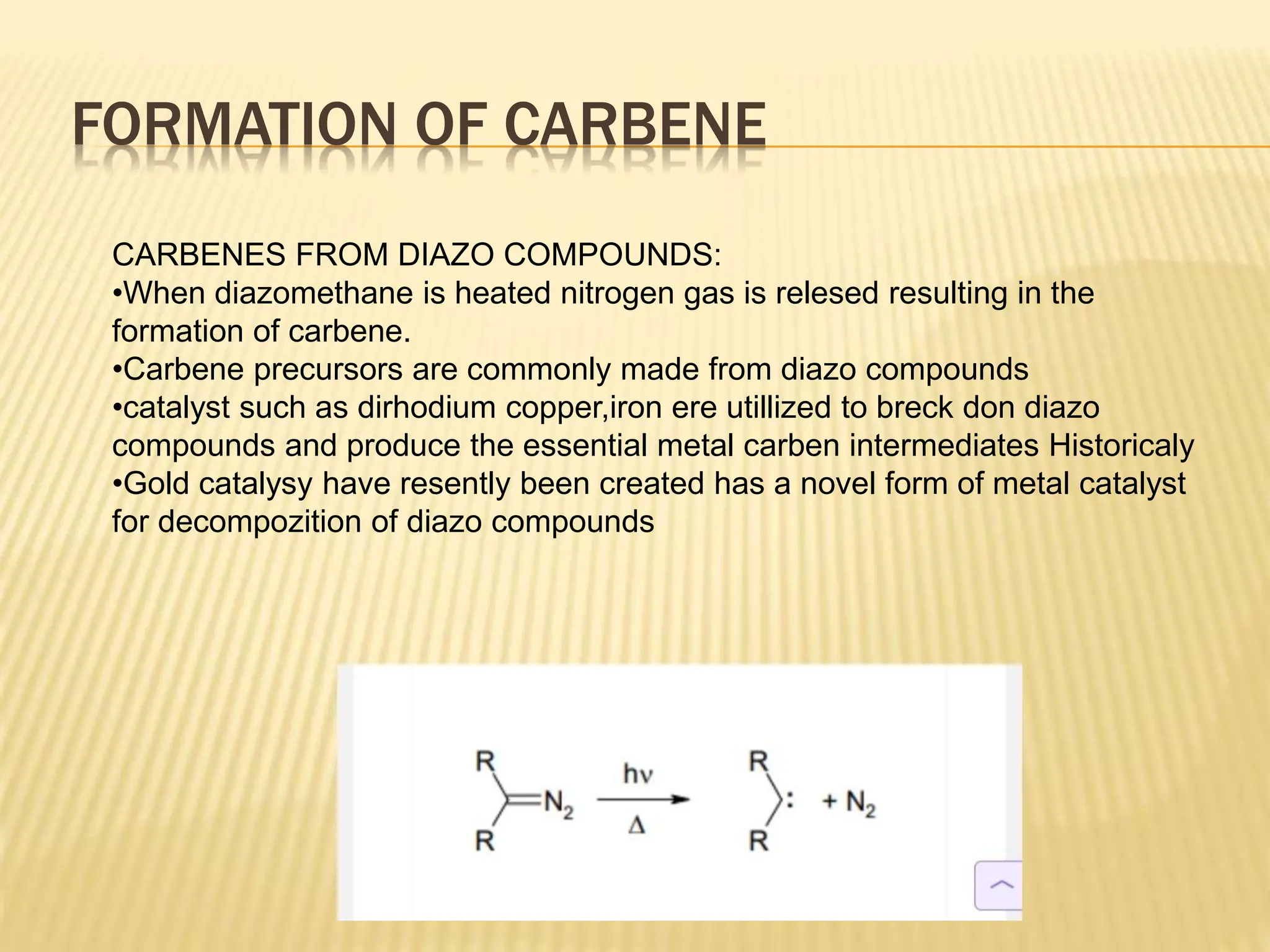
CARBENES FROM DIAZO COMPOUNDS:
•When diazomethane is heated nitrogen gas is relesed resulting in the
formation of carbene.
•Carbene precursors are commonly made from diazo compounds
•catalyst such as dirhodium copper,iron ere utillized to breck don diazo
compounds and produce the essential metal carben intermediates Historicaly
•Gold catalysy have resently been created has a novel form of metal catalyst
for decompozition of diazo compounds
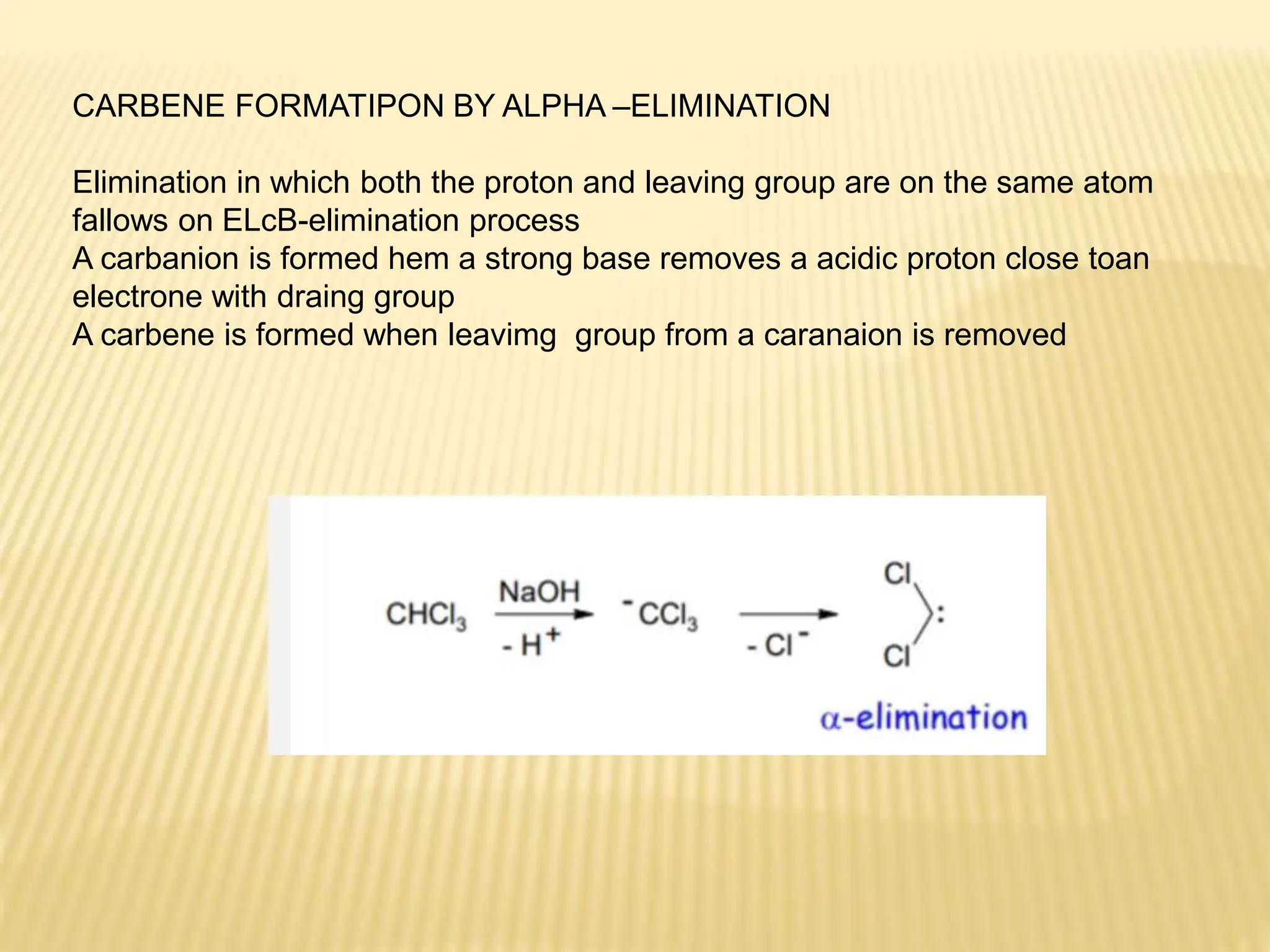
CARBENE FORMATIPON BY ALPHA –ELIMINATION
Elimination in which both the proton and leaving group are on the same atom
fallows on ELcB-elimination process
A carbanion is formed hem a strong base removes a acidic proton close toan
electrone with draing group
A carbene is formed when leavimg group from a caranaion is removed
Carbene reactions:
1.Carbene insertions
2.Addition reactions
3.Carbene rearrangement
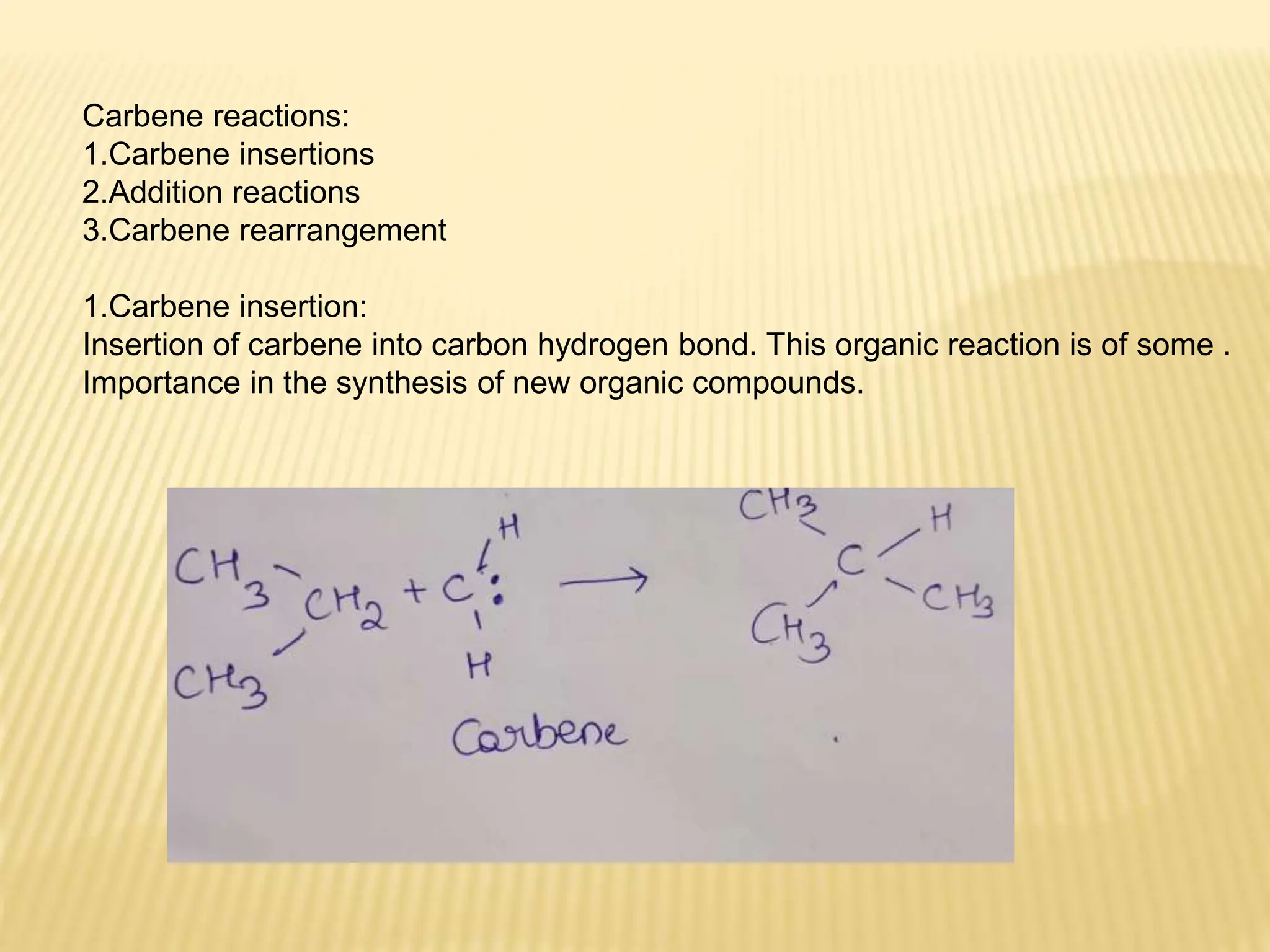
1.Carbene insertion:
Insertion of carbene into carbon hydrogen bond. This organic reaction is of some .
Importance in the synthesis of new organic compounds.
Addition reactions:
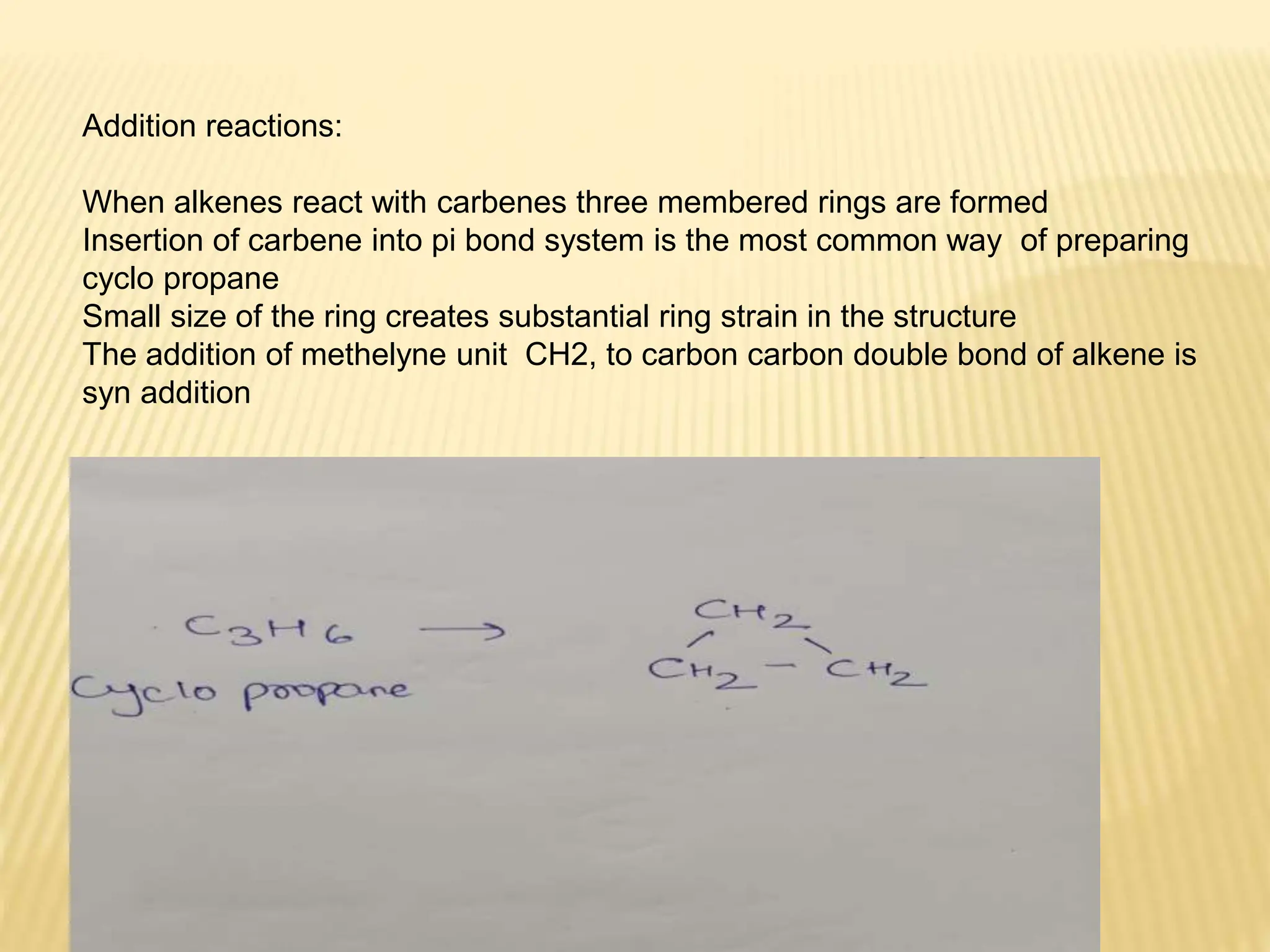
When alkenes react with carbenes three membered rings are formed
Insertion of carbene into pi bond system is the most common way of preparing
cyclo propane
Small size of the ring creates substantial ring strain in the structure
The addition of methelyne unit CH2, to carbon carbon double bond of alkene is
syn addition
Named reactions..
1.REIMER TIEMANN REACTION
2.CARBYL AMINE REACTION
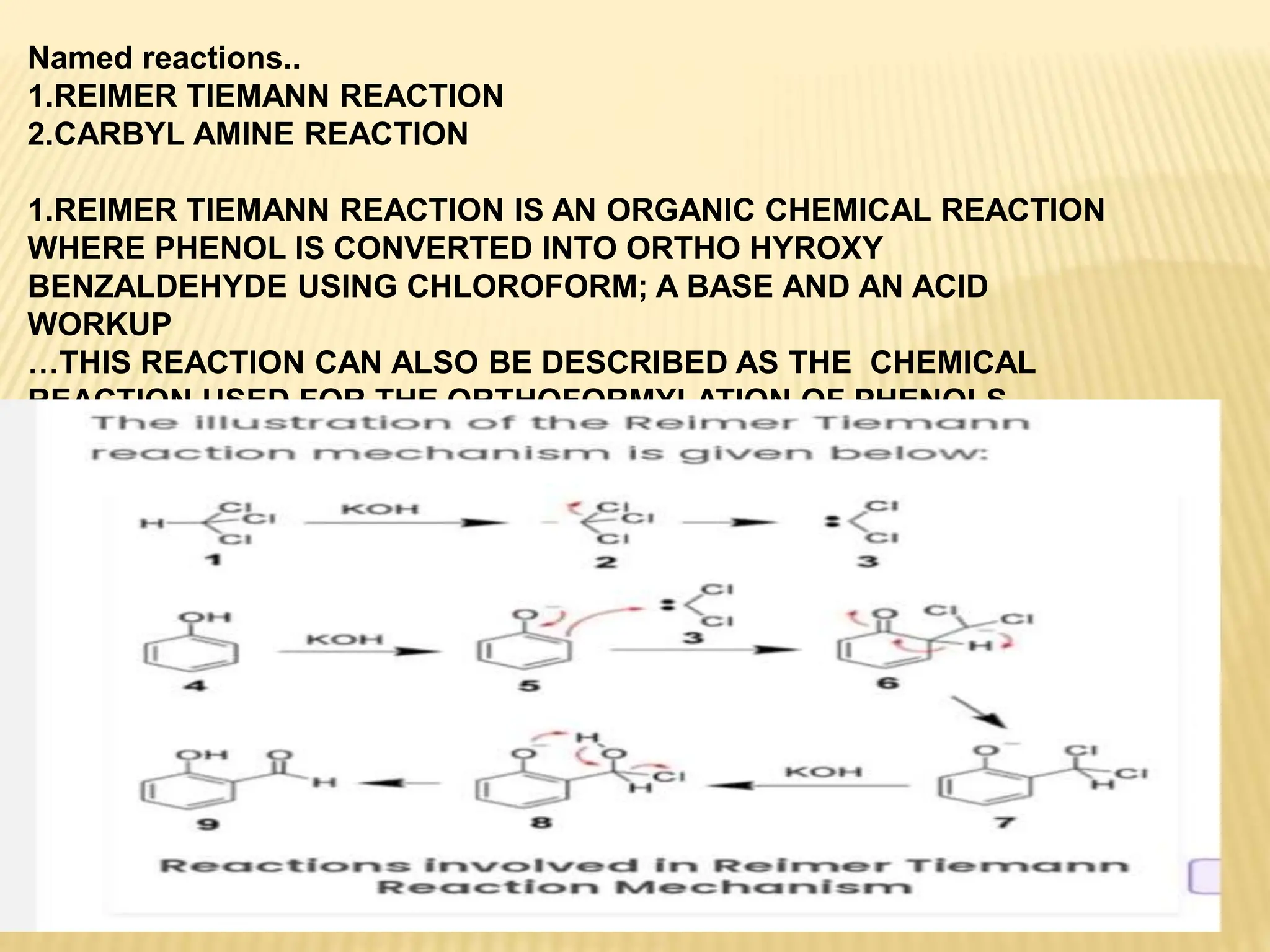
1.REIMER TIEMANN REACTION IS AN ORGANIC CHEMICAL REACTION
WHERE PHENOL IS CONVERTED INTO ORTHO HYROXY
BENZALDEHYDE USING CHLOROFORM; A BASE AND AN ACID
WORKUP
…THIS REACTION CAN ALSO BE DESCRIBED AS THE CHEMICAL
REACTION USED FOR THE ORTHOFORMYLATION OF PHENOLS..
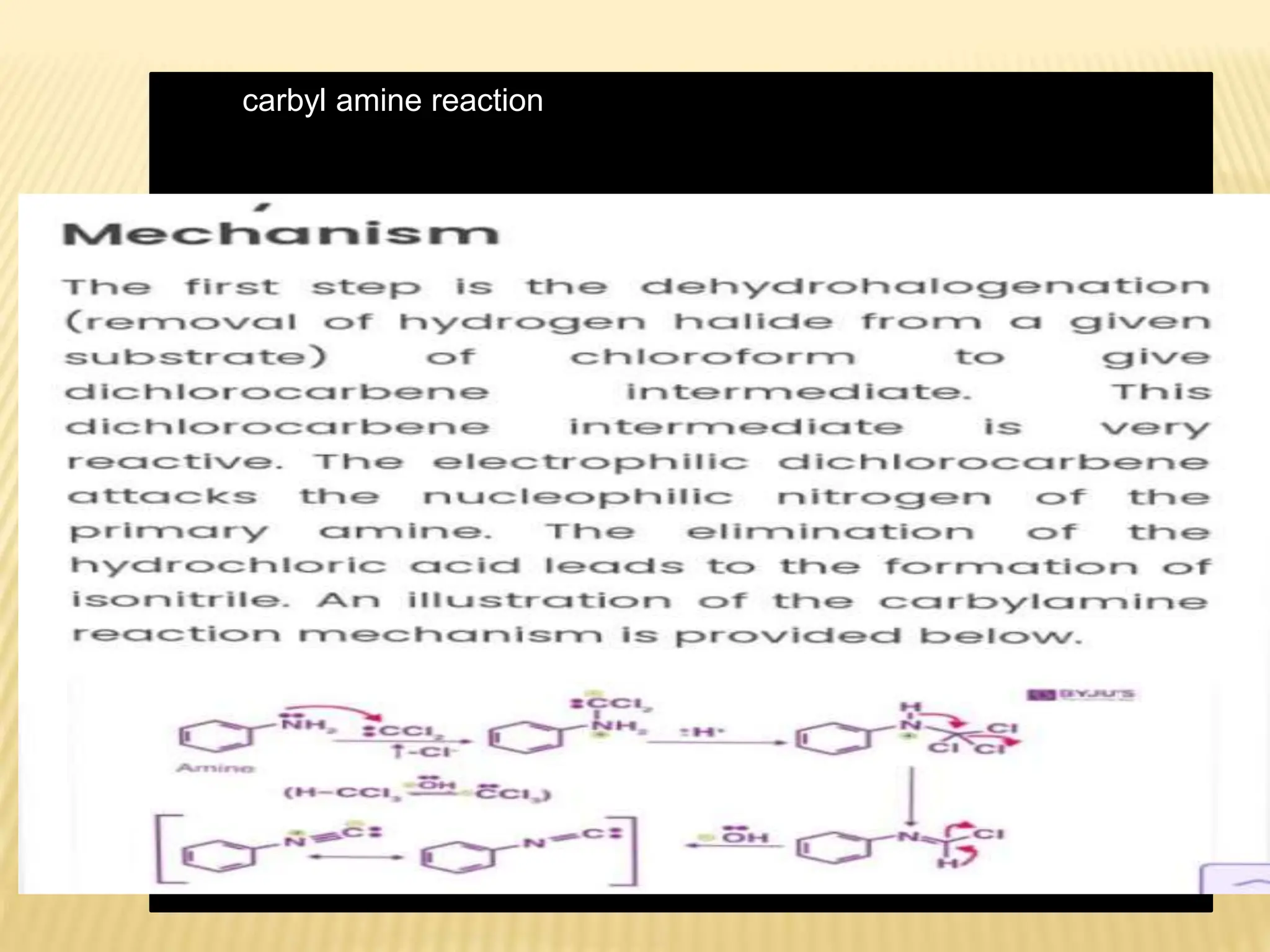
2.
CARBYL AMINE REACTION:::
Carcarbyl amine reaction
THANK YOU

carbene s.pptx.pptx by navajyothirani.andhra University 2023 to 2025batch

  • 1.
    DEFINITION : CARBENE ISA MOLECULE HAVING TWO UNSHARED VALENCE ELECTRONS AND A NEUTRAL CARBON ATOM WITH CARBENE A VALENCE OF TWO. CARBENES ARE NEUTRAL HIGHLY REACTIVE MOLECULAR SPECIES . EXAMPLES: 1.METHYLENE 2.PHENYL METHYLENE 3.DICHLORO CARBENE 4.DIPHENYL METHYLENE 5.PROPARGYLENE CARBENES
  • 2.
    HISTORY OF CARBENES Carbenes had first been postulated by eduard buchner in 1903 in cyclopropanationstudies of ethyl diazoacetate with toulene  In 1912 Hermann staudinger also converted alkenes to cyclopropanes with diazomethane and CH2 as an inetrmediate.  Doering in 1954 demonstrated with dichlorocarbene synthetic utility
  • 3.
  • 4.
    SINGLET AND TRIPLET Carbenes are classified as singlets or triplets depending on electrical structure.  Carbenes , divalent carbon species are well known reactive intermediates that enable new carbon carbon bond formation.  SINGLET: one vacant P orbital is there. SP2 hybridized. sp2 orbital full with electrons in opposite spin  TRIPLET: sp2 hybridized  p orbital and sp2 orbital are half filled.
  • 7.
    SIGNIFICANCE OF CARBENES CARBENES ARE USUALLY UNSTABLE IN NATURE . THEY ATTACH THEM SELVES TO METALS TO FORM METAL CARBENE COMPLEXES THAT SERVE AS EFFICIENT CATALYSTS USED WIDELY IN THE PHARMACEUTICAL INDUSTRY.  CARBENES ARE VERY REACTIVE MOLECULES THAT CONTAIN CARBON ATOM WITH 2 UNSHARED ELECTRONS.  THEY CONVERT QUICKLY TO MORE STABLE MOLECULES.THEY ARE IMPORTANT BUILDING BLOCKS FOR MOLECULES IN COMBUSTION SYSTEMS.
  • 8.
    SYNTHESIS OF CARBENES 1.CARBENES ARE FORMED BY REACTIONS OF HALOGENATED COMPOUNDS WITH BASES.  2.THERMAL DECOMPOSITION OF DIAZO COMPOUNDS.  3.ELIMINATION OF CHLOROFORM ITH BASE.  4.METAL [RHODIUM OR COPPER CATALYSED DECOMPOSITION OF DIAZO CARBONYL COMPOUND.  5.FROM TOSYLHYDRAZONES.
  • 9.
    FORMATION OF CARBENE CARBENESFROM DIAZO COMPOUNDS: •When diazomethane is heated nitrogen gas is relesed resulting in the formation of carbene. •Carbene precursors are commonly made from diazo compounds •catalyst such as dirhodium copper,iron ere utillized to breck don diazo compounds and produce the essential metal carben intermediates Historicaly •Gold catalysy have resently been created has a novel form of metal catalyst for decompozition of diazo compounds
  • 10.
    CARBENE FORMATIPON BYALPHA –ELIMINATION Elimination in which both the proton and leaving group are on the same atom fallows on ELcB-elimination process A carbanion is formed hem a strong base removes a acidic proton close toan electrone with draing group A carbene is formed when leavimg group from a caranaion is removed
  • 11.
    Carbene reactions: 1.Carbene insertions 2.Additionreactions 3.Carbene rearrangement 1.Carbene insertion: Insertion of carbene into carbon hydrogen bond. This organic reaction is of some . Importance in the synthesis of new organic compounds.
  • 12.
    Addition reactions: When alkenesreact with carbenes three membered rings are formed Insertion of carbene into pi bond system is the most common way of preparing cyclo propane Small size of the ring creates substantial ring strain in the structure The addition of methelyne unit CH2, to carbon carbon double bond of alkene is syn addition
  • 13.
    Named reactions.. 1.REIMER TIEMANNREACTION 2.CARBYL AMINE REACTION 1.REIMER TIEMANN REACTION IS AN ORGANIC CHEMICAL REACTION WHERE PHENOL IS CONVERTED INTO ORTHO HYROXY BENZALDEHYDE USING CHLOROFORM; A BASE AND AN ACID WORKUP …THIS REACTION CAN ALSO BE DESCRIBED AS THE CHEMICAL REACTION USED FOR THE ORTHOFORMYLATION OF PHENOLS.. 2. CARBYL AMINE REACTION:::
  • 14.
  • 15.