AdnlS    2io               Page 1 3
                                                                                   of
RECORD TYPE: FEDERAL    (NOTES MAIL)

CREATOR:Elizabeth A. Stolpe ( CN=Elizabeth A. Stolpe/OTJ=CBQ/O=EOP[ CEQI

CREATION DATE/TIME:12-JUL-2002 09:18:I39,.00

SUBJECT:: Re: BNA

TO:Samuel A. Thernstrom(   CN=Samuel A. Thernstrom/OU=CEQ/O=EOP@EOP[ CEQ I
READ :UNKNOWN

TEXT:
can't you get into BNA?

No. 134
Friday, July 12, 2002
                                                                   Page
A-13
TSSN 1521-9402
                                                                    News

Climate Change
Administration Agrees Humans Responsible
For Climate Effects, but Rejects Drastic Rules


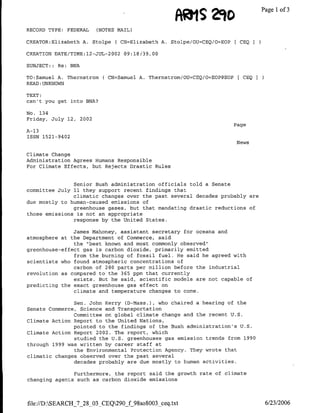
               Senior Bush administration officials told a Senate
committee July 11 they support recent findings that
               climatic changes over the past several decades probably are
due mostly to human-caused emissions of
               greenhouse gases, but that mandating drastic reductions of
those emissions is not an appropriate
               response by the United States.

               James Mahoney, assistant secretary for oceans and
atmosphere at the Department of Commerce, said
               the "best known and most commonly observed"
greenhouse-effect gas is carbon dioxide, primarily emitted
               from the burning of fossil fuel. He said he agreed with
scientists who found atmospheric concentrations of
               carbon of 280 parts per million before the industrial
revolution as compared to the 365 ppm that currently
               exists. But he said, scientific models are not capable of
predicting the exact greenhouse gas effect on
               climate and temperature changes to come.

               Sen. John Kerry (D-Nass.), who chaired a hearing of the
Senate Commerce, Science and Transportation
               Committee on global climate change and the recent U.S.
Climate Action Report to the United Nations,
               pointed to the findings of the Bush administration's U.S.
Climate Action Report 2002. The report, which
                studied the U.S. greenhouses gas emission trends from 1990
through 1999 was written by career staff at
                the Environmental Protection Agency. They wrote that
climatic changes observed over the past several
               decades probably are due mostly to human activities.

               Furthermore, the report said the growth rate of climate
changing agents such as carbon dioxide emissions


file://D:SEARCH_7_28_03 CEQ290_f 9SsoSOO3 ceq.txt                           6/23/2006
Page 2 of 3


                will accelerate and the "predicted warning" of 3 degrees
Celsius  (5.4 degrees Fahrenheit) "by the end of
                the 21st century is consistent with the assumptions about
how clouds and atmospheric relative humidity
                will react to global warming" (107 DEN A-i, 06/4/02)

                                       Connaughton, Hubbard Target
'Intensity.'

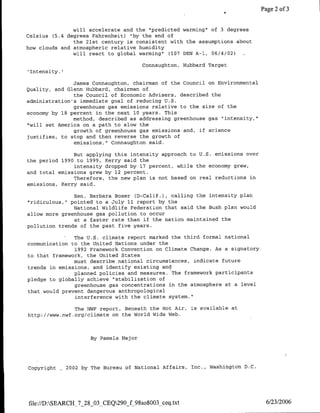
               James Connaughton, chairman of the Council on Environmental
Quality, and Glenn Hubbard, chairman of
               the Council of Economic Advisers, described the
administration's immediate goal of reducing U.S.
               greenhouse gas emissions relative to the size of the
economy by 18 percent in the next 10 years. This
               method, described as addressing greenhouse gas "intensity,"
"will set America on a path to slow the
               growth of greenhouse gas emissions-and, if science
justifies, to stop and then reverse the growth of
               emissions," Connaughton said.

               But applying this intensity approach to U.S. emissions over
the period 1990 to 1999, Kerry said the
               intensity dropped by 17 percent, while the economy grew,
and total emissions grew by 12 percent.
               Therefore, the new plan is not based on real reductions in
emissions, Kerry said.

               Sen. Barbara Boxer (D-Calif.), calling the intensity plan
"ridiculous," pointed to a July 11 report by the
               National Wildlife Federation that said the mush plan would
allow more greenhouse gas pollution to occur
               at a faster rate than if the nation maintained the
pollution trends of the past five years.

              IThe U.S. climate report marked the third formal national
communication to the United Nations under the
               1992 Framework Convention on Climate Change. As a signatory
to that framework, the United States
               must describe national circumstances, indicate future
trends in emissions, and identify existing and
               planned policies and measures. The framework participants
pledge to globally achieve "stabilization of
               greenhouse gas concentrations in the atmosphere at a level
that would prevent dangerous anthropological
                interference with the climate system."

               The NWF report, Beneath the Hot Air, is available at
http://www.nwf.org/climate on the World Wide Web.


                     By Pamela Najor


Copyright ,2002   by The Bureau of National Affairs, Inc., Washington D.C.


file://D:SEARCH_7_28_03_CEQ290_f 9SsoSOO3 ceq.txt                            6/23/2006
Page 3 of 3


Samuel A. Thernstrom
07/12/2002 09:05:39 AM
Record Type:    Record

To:      Elizabeth A. Stolpe/CEQ/EOP@ECP
cc:
Subject:         BNA


could you check BNA today for their story on yesterday's climate hearing?


 file://D:SEARCH_7_28_03 CEQ290_f 9Sso8003 ceq.txt                          6/23/2006

CAR Email 7.12.02 (a)

  • 1.
    AdnlS 2io Page 1 3 of RECORD TYPE: FEDERAL (NOTES MAIL) CREATOR:Elizabeth A. Stolpe ( CN=Elizabeth A. Stolpe/OTJ=CBQ/O=EOP[ CEQI CREATION DATE/TIME:12-JUL-2002 09:18:I39,.00 SUBJECT:: Re: BNA TO:Samuel A. Thernstrom( CN=Samuel A. Thernstrom/OU=CEQ/O=EOP@EOP[ CEQ I READ :UNKNOWN TEXT: can't you get into BNA? No. 134 Friday, July 12, 2002 Page A-13 TSSN 1521-9402 News Climate Change Administration Agrees Humans Responsible For Climate Effects, but Rejects Drastic Rules Senior Bush administration officials told a Senate committee July 11 they support recent findings that climatic changes over the past several decades probably are due mostly to human-caused emissions of greenhouse gases, but that mandating drastic reductions of those emissions is not an appropriate response by the United States. James Mahoney, assistant secretary for oceans and atmosphere at the Department of Commerce, said the "best known and most commonly observed" greenhouse-effect gas is carbon dioxide, primarily emitted from the burning of fossil fuel. He said he agreed with scientists who found atmospheric concentrations of carbon of 280 parts per million before the industrial revolution as compared to the 365 ppm that currently exists. But he said, scientific models are not capable of predicting the exact greenhouse gas effect on climate and temperature changes to come. Sen. John Kerry (D-Nass.), who chaired a hearing of the Senate Commerce, Science and Transportation Committee on global climate change and the recent U.S. Climate Action Report to the United Nations, pointed to the findings of the Bush administration's U.S. Climate Action Report 2002. The report, which studied the U.S. greenhouses gas emission trends from 1990 through 1999 was written by career staff at the Environmental Protection Agency. They wrote that climatic changes observed over the past several decades probably are due mostly to human activities. Furthermore, the report said the growth rate of climate changing agents such as carbon dioxide emissions file://D:SEARCH_7_28_03 CEQ290_f 9SsoSOO3 ceq.txt 6/23/2006
  • 2.
    Page 2 of3 will accelerate and the "predicted warning" of 3 degrees Celsius (5.4 degrees Fahrenheit) "by the end of the 21st century is consistent with the assumptions about how clouds and atmospheric relative humidity will react to global warming" (107 DEN A-i, 06/4/02) Connaughton, Hubbard Target 'Intensity.' James Connaughton, chairman of the Council on Environmental Quality, and Glenn Hubbard, chairman of the Council of Economic Advisers, described the administration's immediate goal of reducing U.S. greenhouse gas emissions relative to the size of the economy by 18 percent in the next 10 years. This method, described as addressing greenhouse gas "intensity," "will set America on a path to slow the growth of greenhouse gas emissions-and, if science justifies, to stop and then reverse the growth of emissions," Connaughton said. But applying this intensity approach to U.S. emissions over the period 1990 to 1999, Kerry said the intensity dropped by 17 percent, while the economy grew, and total emissions grew by 12 percent. Therefore, the new plan is not based on real reductions in emissions, Kerry said. Sen. Barbara Boxer (D-Calif.), calling the intensity plan "ridiculous," pointed to a July 11 report by the National Wildlife Federation that said the mush plan would allow more greenhouse gas pollution to occur at a faster rate than if the nation maintained the pollution trends of the past five years. IThe U.S. climate report marked the third formal national communication to the United Nations under the 1992 Framework Convention on Climate Change. As a signatory to that framework, the United States must describe national circumstances, indicate future trends in emissions, and identify existing and planned policies and measures. The framework participants pledge to globally achieve "stabilization of greenhouse gas concentrations in the atmosphere at a level that would prevent dangerous anthropological interference with the climate system." The NWF report, Beneath the Hot Air, is available at http://www.nwf.org/climate on the World Wide Web. By Pamela Najor Copyright ,2002 by The Bureau of National Affairs, Inc., Washington D.C. file://D:SEARCH_7_28_03_CEQ290_f 9SsoSOO3 ceq.txt 6/23/2006
  • 3.
    Page 3 of3 Samuel A. Thernstrom 07/12/2002 09:05:39 AM Record Type: Record To: Elizabeth A. Stolpe/CEQ/EOP@ECP cc: Subject: BNA could you check BNA today for their story on yesterday's climate hearing? file://D:SEARCH_7_28_03 CEQ290_f 9Sso8003 ceq.txt 6/23/2006