AV                              AFM 2~~~~~~~~~~sz
                                                                  Page 1 of 4
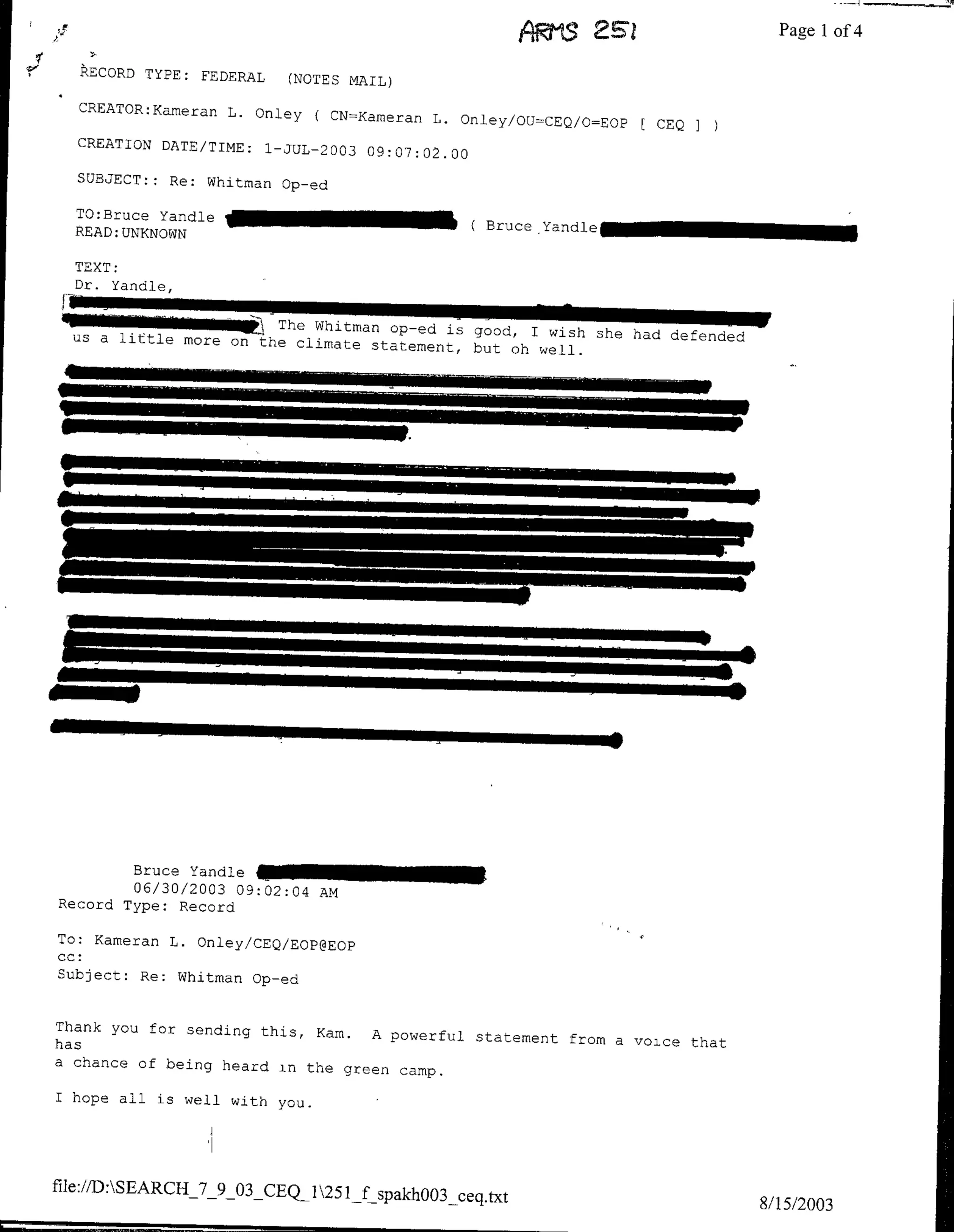
VI   RECORD TYPE:       FEDERAL   (NOTES MAIL)

     CREATOR:Kameran L. Onley ( CN~Kameran
                                           L. Onley/OU=CEQ/o=EOP[ CEQ
     CREATION DATE/TINE: 1-JUL-2003 09:07:02.00

     SUBJECT::    Re:   Whitman Op-ed
     TO:Bruce Yandle(
                                                  Bruce Yandle~
     READ: UNKNOWN

     TEXT:
     Dr. Yandle,

                         -  he Whitman Op-ed is good, I wish
     us a little more on the climate                         she had defended
                                     statement, but oh well.


                                                                     MINO


        Bruce Yandle
        06/30/2003 09:02:04 AN
Record Type: Record

To: Kameran L. Onley/CEQ/EoP@EoP
cc:
Subject: Re: Whitman Op-ed


Thank you for sending this, Kam.
                                  A powerful statement from a voice
has                                                                 that
a chance of being heard in the
                               green camp.

I hope all       is well with you.


file://D:SEARCH'7_9-03 CEQl25l-fspakh003_ceq.txt
                                                                                8/15/2003
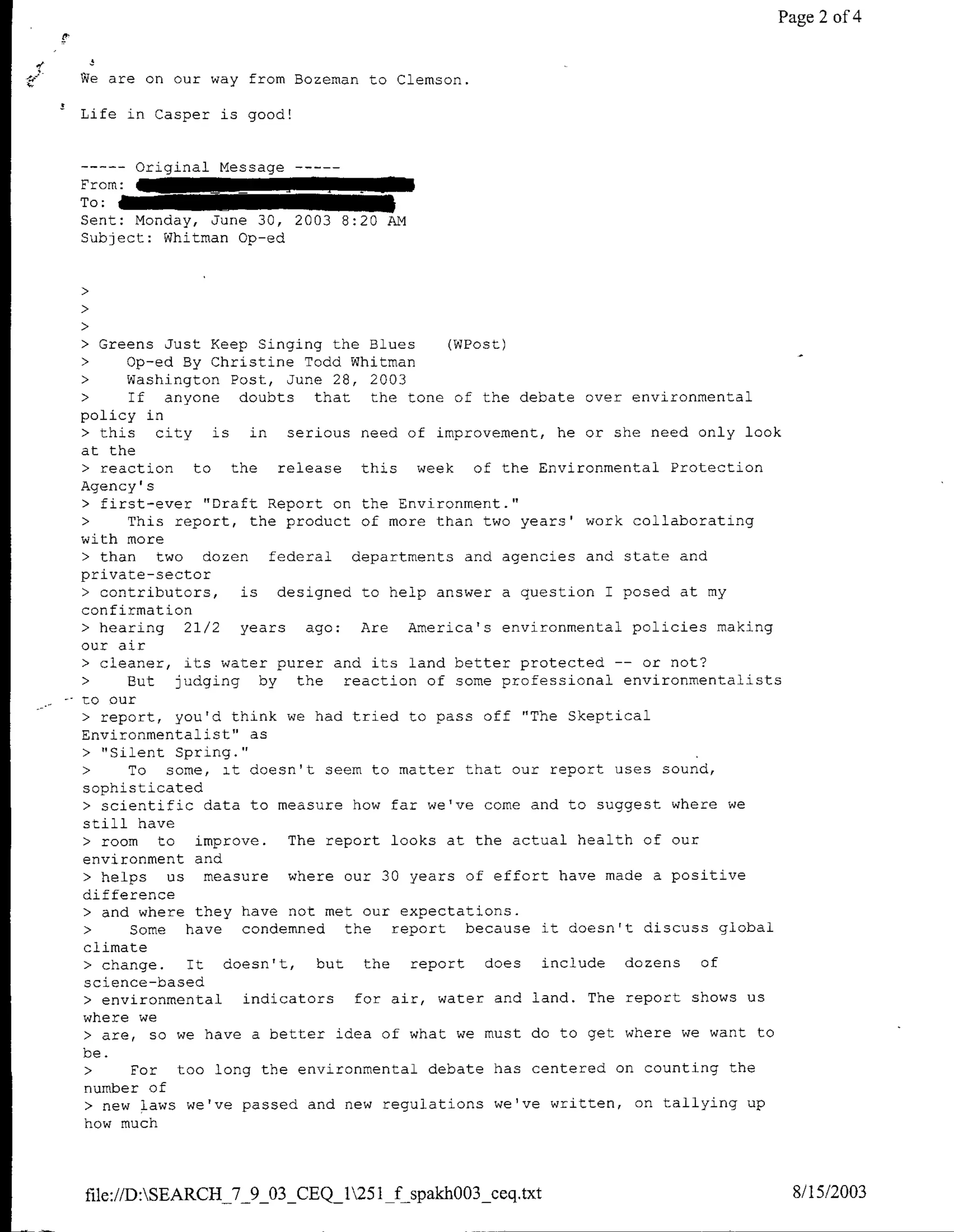
Page 2 of 4


We are on our way from Bozeman to Clemson.

Life in Casper is good!


----  Original Message…---
From:
To:
Sent: Monday, June 30, 2003 8:20 AM
Subject: Whitman Op-ed


  • Greens Just Keep Singing the Blues              (WPost)
  •       Op-ed By Christine Todd Whitman
  •       Washington Post, June 28, 2003
  •       If anyone      doubts    that    the tone of the debate over environmental
  policy in
  > this      city is      in   serious need of improvement, he or she need only look
  at the
  > reaction       to the      release   this week     of the Environmental Protection
  Agency's
  • first-ever "Draft Report on the Environment."
  •       This report, the product of more than two years' work collaborating
  with more
  > than      two    dozen    federal   departments and agencies and state and
  private-sector
  > contributors,        is    designed to help answer a question I posed at my
  confirmation
  > hearing       21/2   years    ago:   Are   America' s environmental policies making
  our air
  • cleaner, its       water purer and its     land better protected -- or not?
  •       But    judging    by the     reaction of some professional environmentalists
--to    our
  > report, you'd think we had tried to pass off "The Skeptical
  Environmentalist" as
  • "Silent Spring."
  •       To   some, it doesn't seem to matter that our report uses sound,
  sophisticated
  > scientific data to measure how far we've come and to suggest where we
  still     have
  > room to        improve.     The report looks at the actual health of our
  environment and
  > helps      us measure       where our 30 years of effort have made a positive
  difference
  • and where they have not met our expectations.
  •       Some    have condemned       the   report   because it doesn't discuss global
  climate
  > change.       It   doesn't,    but the     report   does  include dozens    of
   science-based
  > environmental         indicators    for air, water and land. The report shows us
  where we
  > are, so we have a better idea of what we must do to get where we want to
  be.
   >       For too long the environmental debate has centered on counting the
   number of
   > new laws we'ye passed and new regulations we'vye written, on tallying up
  how much


                                  fspakh003_ceq.txt
 file://D:SEARCH 7 9 03_CEQ_1251f                                                       8/15/2003
Page 3 of 4


   in  fines,    fees    and penalties we've     levied on polluters. Focusing
on
those
> aspects    --    measuring process instead of progress -- may be easier, but
it has
> made    it difficult       to adapt environmental policymaking to changing
times and
• challenges.
•     When   the    environmental    debate turns    on questions of process,
attempts at
> innovation     have    a hard time     getting out of the starting gate. An
attempt to
> modernize a law is cast as an effort to undermine it. A good-faith effort
to try
> new   methods     of achieving better      results   is characterized as a
retreat from
• existing commitments.
•     That   is    why I was disappointed that so many of those people who
make
their
> living    as Washington       environmentalists immediately and instinctively
attacked
> our   report.     Because    it  contradicts their public stance that the state
of our
> environment,      without exception, is bad and getting worse, they
apparently
found
> it important to shoot the messenger before they could even digest the
message.
>     But   facts    are   stubborn   things, as John Adams said, and the simple
fact is
> that the health of America' s environment has improved considerably over
the past
> several    decades.     The modern, bipartisan commitment to environmental
protection
  >--  inaugurated by        a Republican president,     Richard Nixon, 33 years
ago and
> sustained     by   six presidents from both parties ever since -- has
produced
real,
> measurable     results.     That  news  should hearten    all  those who care
about the
> environment.
>     I wonder, sometimes, why the environmentalists find it so hard to
admit that
$ they really have made a difference. As our report relates, by many
measures our
> air   is   cleaner, our drinking water purer and our land better protected
than it
> was -- and those in the environmental movement can take some pride in
that.
>     But our      report    also  shows  that  some   real challenges remain,
including
> sometimes unhealthy air in large parts of the country, pollution in
thousands of
> waterways     and an increasing volume of waste materials. These are
challenges on
• which we should all be working together.
•     Unfortunately      for   the tenor of the public debate over environmental
policy,


file://D:SEARCH_'7_9_03_CEQI125lfspakhOO3_ceq.txt                                 8/15/2003
Page 4 of 4


> too     many in the environmental lobby want to hear only the bad news -
-they see
 > only evil,      hear only evil and speak only evil. That is why we are
 treated to
 > bizarre     spectacles such as what happened this spring when the Natural
 Resources
 > Defense Council      praised a Bush administration proposal to limit
 emissions from
 > diesel     engines on tractors, bulldozers and ot4er off-road vehicles.
 "Heresy,"
 > cried     their allies, who were appalled at the thought that any
 environmental
 • group would actually support something the Bush administration was doing.
 •      One of the lessons I learned during my 29 months at the EPA is that
 until the
 > tone     of the debate over environmental policy changes, the next
 generation of
 > environmental     progress will be made more difficult than it should
 be. If
 > environmental groups are truly interested in progress, not politics, they
  should
  > let    the facts speak for themselves and look for ways to support efforts
  to get
  • to a cleaner environment.
  •     Our "Draft Report on the Environment" does just that by giving us a
  factual,
  • nonpolitical look at where we are and where we need to go.
  >     Thoughtful criticism is always welcome and productive. Mindless
  attacks are
  • not.
  > The writer ended her tenure as administrator of the Environmental
  Protection
   > Agency yesterday


  file://D:SEARCH_7_9_03_CEQ_1251if spakho03_seq.txt                           8/1 5/2003

EPA DROE Email 7.1.03

  • 1.
    AV AFM 2~~~~~~~~~~sz Page 1 of 4 VI RECORD TYPE: FEDERAL (NOTES MAIL) CREATOR:Kameran L. Onley ( CN~Kameran L. Onley/OU=CEQ/o=EOP[ CEQ CREATION DATE/TINE: 1-JUL-2003 09:07:02.00 SUBJECT:: Re: Whitman Op-ed TO:Bruce Yandle( Bruce Yandle~ READ: UNKNOWN TEXT: Dr. Yandle, - he Whitman Op-ed is good, I wish us a little more on the climate she had defended statement, but oh well. MINO Bruce Yandle 06/30/2003 09:02:04 AN Record Type: Record To: Kameran L. Onley/CEQ/EoP@EoP cc: Subject: Re: Whitman Op-ed Thank you for sending this, Kam. A powerful statement from a voice has that a chance of being heard in the green camp. I hope all is well with you. file://D:SEARCH'7_9-03 CEQl25l-fspakh003_ceq.txt 8/15/2003
  • 2.
    Page 2 of4 We are on our way from Bozeman to Clemson. Life in Casper is good! ---- Original Message…--- From: To: Sent: Monday, June 30, 2003 8:20 AM Subject: Whitman Op-ed • Greens Just Keep Singing the Blues (WPost) • Op-ed By Christine Todd Whitman • Washington Post, June 28, 2003 • If anyone doubts that the tone of the debate over environmental policy in > this city is in serious need of improvement, he or she need only look at the > reaction to the release this week of the Environmental Protection Agency's • first-ever "Draft Report on the Environment." • This report, the product of more than two years' work collaborating with more > than two dozen federal departments and agencies and state and private-sector > contributors, is designed to help answer a question I posed at my confirmation > hearing 21/2 years ago: Are America' s environmental policies making our air • cleaner, its water purer and its land better protected -- or not? • But judging by the reaction of some professional environmentalists --to our > report, you'd think we had tried to pass off "The Skeptical Environmentalist" as • "Silent Spring." • To some, it doesn't seem to matter that our report uses sound, sophisticated > scientific data to measure how far we've come and to suggest where we still have > room to improve. The report looks at the actual health of our environment and > helps us measure where our 30 years of effort have made a positive difference • and where they have not met our expectations. • Some have condemned the report because it doesn't discuss global climate > change. It doesn't, but the report does include dozens of science-based > environmental indicators for air, water and land. The report shows us where we > are, so we have a better idea of what we must do to get where we want to be. > For too long the environmental debate has centered on counting the number of > new laws we'ye passed and new regulations we'vye written, on tallying up how much fspakh003_ceq.txt file://D:SEARCH 7 9 03_CEQ_1251f 8/15/2003
  • 3.
    Page 3 of4 in fines, fees and penalties we've levied on polluters. Focusing on those > aspects -- measuring process instead of progress -- may be easier, but it has > made it difficult to adapt environmental policymaking to changing times and • challenges. • When the environmental debate turns on questions of process, attempts at > innovation have a hard time getting out of the starting gate. An attempt to > modernize a law is cast as an effort to undermine it. A good-faith effort to try > new methods of achieving better results is characterized as a retreat from • existing commitments. • That is why I was disappointed that so many of those people who make their > living as Washington environmentalists immediately and instinctively attacked > our report. Because it contradicts their public stance that the state of our > environment, without exception, is bad and getting worse, they apparently found > it important to shoot the messenger before they could even digest the message. > But facts are stubborn things, as John Adams said, and the simple fact is > that the health of America' s environment has improved considerably over the past > several decades. The modern, bipartisan commitment to environmental protection >-- inaugurated by a Republican president, Richard Nixon, 33 years ago and > sustained by six presidents from both parties ever since -- has produced real, > measurable results. That news should hearten all those who care about the > environment. > I wonder, sometimes, why the environmentalists find it so hard to admit that $ they really have made a difference. As our report relates, by many measures our > air is cleaner, our drinking water purer and our land better protected than it > was -- and those in the environmental movement can take some pride in that. > But our report also shows that some real challenges remain, including > sometimes unhealthy air in large parts of the country, pollution in thousands of > waterways and an increasing volume of waste materials. These are challenges on • which we should all be working together. • Unfortunately for the tenor of the public debate over environmental policy, file://D:SEARCH_'7_9_03_CEQI125lfspakhOO3_ceq.txt 8/15/2003
  • 4.
    Page 4 of4 > too many in the environmental lobby want to hear only the bad news - -they see > only evil, hear only evil and speak only evil. That is why we are treated to > bizarre spectacles such as what happened this spring when the Natural Resources > Defense Council praised a Bush administration proposal to limit emissions from > diesel engines on tractors, bulldozers and ot4er off-road vehicles. "Heresy," > cried their allies, who were appalled at the thought that any environmental • group would actually support something the Bush administration was doing. • One of the lessons I learned during my 29 months at the EPA is that until the > tone of the debate over environmental policy changes, the next generation of > environmental progress will be made more difficult than it should be. If > environmental groups are truly interested in progress, not politics, they should > let the facts speak for themselves and look for ways to support efforts to get • to a cleaner environment. • Our "Draft Report on the Environment" does just that by giving us a factual, • nonpolitical look at where we are and where we need to go. > Thoughtful criticism is always welcome and productive. Mindless attacks are • not. > The writer ended her tenure as administrator of the Environmental Protection > Agency yesterday file://D:SEARCH_7_9_03_CEQ_1251if spakho03_seq.txt 8/1 5/2003