an
                                                         A~~~nS           ~~~Page      Ilof
RECORD TYPE: FEDERAL    (NOTES MAIL)

CREATOR:Samfuel A. ThernStrom   ( CN=Samuel A. Thernstromf/OU=CEQ/O=EOP    CEQ   I

CREATION DATE/TIME:1Q-JtJN-2002 09:57:32.00

SUBJECT::   USCAR: Whitman letter in today's   WSJ

TO:Phil Cooney   ( CN=Phil Cooney!OU=CEQ/O=EOP@EOP [CEQ I
READ :UNKNOWN

TEXT:
To the Editor:

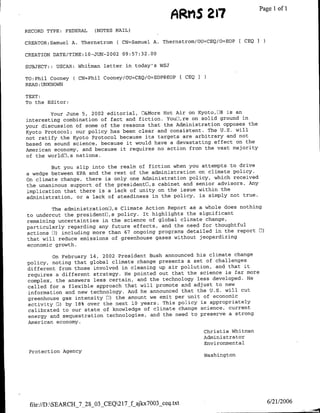
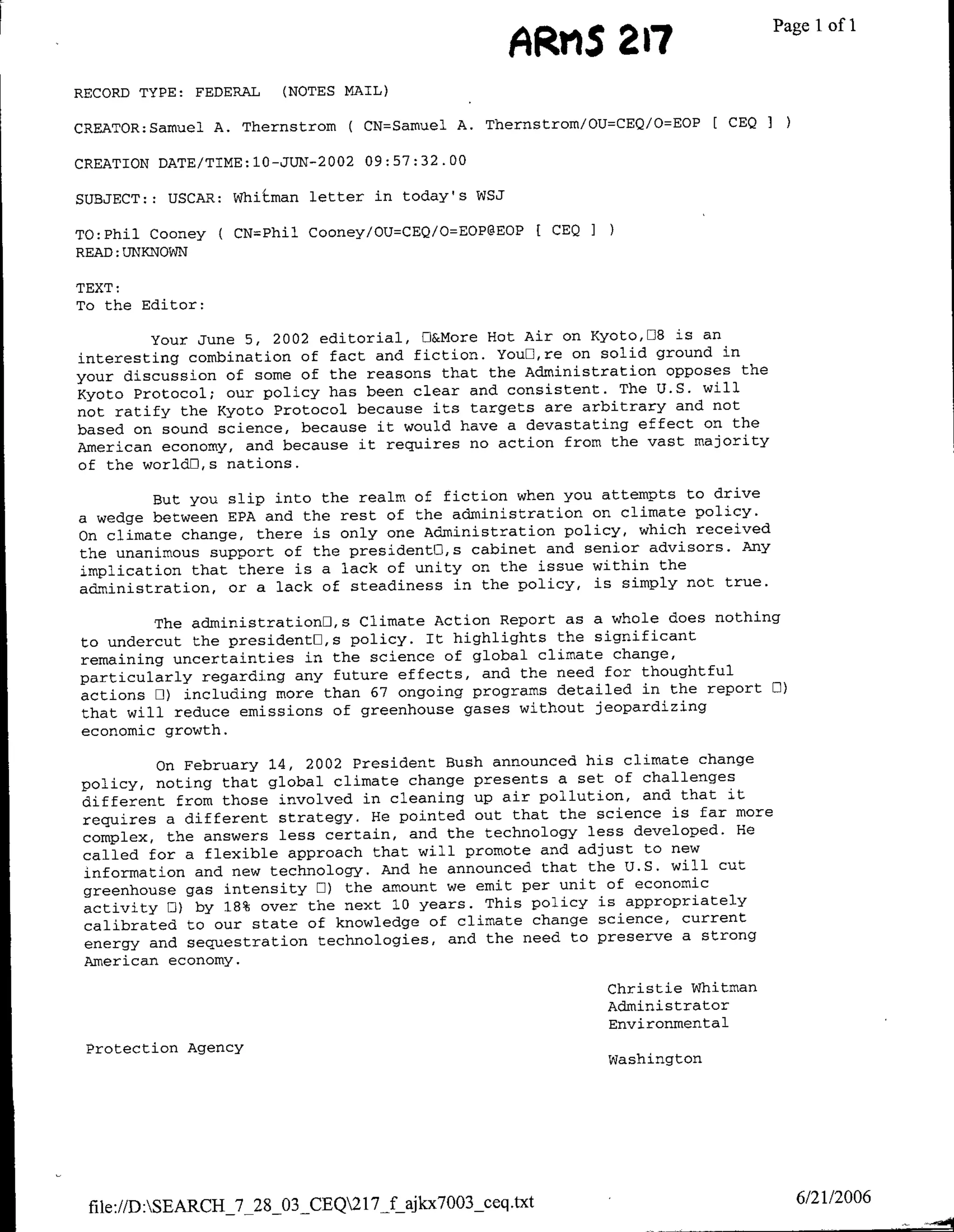
        Your June 5, 2002 editorial, fl&More Hot Air on Kyoto,D8 is an
interesting combination of fact and fiction. YouEtre on solid ground in
your discussion of same of the reasons that the Administration opposes the
Kyoto Protocol; our policy has been clear and consistent. The U3.S. will
not ratify the Kyoto Protocol because its targets are arbitrary and not
based on sound science, because it would have a devastating effect on the
American economy, and because it requires no action from the vast majority
of the worldE,s nations.

        But you slip into the realm of fiction when you attempts to drive
a wedge between EPA and the rest of the administration on climate policy.
On climate change, there is only one Administration policy, which received
the unanimous support of the presidentfl,s cabinet and senior advisors. Any
implication that there is a lack of unity on the issue within the
administration, or a lack of steadiness in the policy, is simply not true.

        The administrationEl,s Climate Action Report as a whole does nothing
to undercut the president~lts policy. It highlights the significant
remaining uncertainties in the science of global climate change,
particularly regarding any future effects, and the need for thoughtful
actions H1) including more than 67 ongoing programs detailed in the report H)
that will reduce emissions of greenhouse gases without jeopardizing
economic growth.

        on February 14, 2002 President Bush announced his climate change
policy, noting that global climate change presents a set of challenges
different from those involved in cleaning up air pollution, and that it
requires a different strategy. He pointed out that the science is far more
complex, the answers less certain, and the technology less developed. He
called for a flexible approach that will promote and adjust to new
information and new technology. And he announced that the U.S. will cut
greenhouse gas intensity El) the amount we emit per unit of economic
activity H) by 18% over the next 10 years. This policy is appropriately
calibrated to our state of knowledge of climate change science, current
energy and sequestration technologies, and the need to preserve a strong
American economy.
                                                            Christie Whitman
                                                            Administrator
                                                            Environmental
 Protection Agency
                                                            Washington


 file://D :SEARCH_7_28_03_CEQ21 7f aJkx7003 ceq .txt                               6/21/2006

CAR Email 6.10.02 (c)

  • 1.
    an A~~~nS ~~~Page Ilof RECORD TYPE: FEDERAL (NOTES MAIL) CREATOR:Samfuel A. ThernStrom ( CN=Samuel A. Thernstromf/OU=CEQ/O=EOP CEQ I CREATION DATE/TIME:1Q-JtJN-2002 09:57:32.00 SUBJECT:: USCAR: Whitman letter in today's WSJ TO:Phil Cooney ( CN=Phil Cooney!OU=CEQ/O=EOP@EOP [CEQ I READ :UNKNOWN TEXT: To the Editor: Your June 5, 2002 editorial, fl&More Hot Air on Kyoto,D8 is an interesting combination of fact and fiction. YouEtre on solid ground in your discussion of same of the reasons that the Administration opposes the Kyoto Protocol; our policy has been clear and consistent. The U3.S. will not ratify the Kyoto Protocol because its targets are arbitrary and not based on sound science, because it would have a devastating effect on the American economy, and because it requires no action from the vast majority of the worldE,s nations. But you slip into the realm of fiction when you attempts to drive a wedge between EPA and the rest of the administration on climate policy. On climate change, there is only one Administration policy, which received the unanimous support of the presidentfl,s cabinet and senior advisors. Any implication that there is a lack of unity on the issue within the administration, or a lack of steadiness in the policy, is simply not true. The administrationEl,s Climate Action Report as a whole does nothing to undercut the president~lts policy. It highlights the significant remaining uncertainties in the science of global climate change, particularly regarding any future effects, and the need for thoughtful actions H1) including more than 67 ongoing programs detailed in the report H) that will reduce emissions of greenhouse gases without jeopardizing economic growth. on February 14, 2002 President Bush announced his climate change policy, noting that global climate change presents a set of challenges different from those involved in cleaning up air pollution, and that it requires a different strategy. He pointed out that the science is far more complex, the answers less certain, and the technology less developed. He called for a flexible approach that will promote and adjust to new information and new technology. And he announced that the U.S. will cut greenhouse gas intensity El) the amount we emit per unit of economic activity H) by 18% over the next 10 years. This policy is appropriately calibrated to our state of knowledge of climate change science, current energy and sequestration technologies, and the need to preserve a strong American economy. Christie Whitman Administrator Environmental Protection Agency Washington file://D :SEARCH_7_28_03_CEQ21 7f aJkx7003 ceq .txt 6/21/2006