CAPITALISM AND ENVIRONMENT
In addition, this system, directly or indirectly; imposes ideals and
"forces" society to have certain behaviors.
Capitalism is the prevailing economic system in the world today. It not only governs the
economy but also regulates the way in which social interactions take place.
This system is based on the exploitation of one class over another for its operation.
There are tho sides in this system:
The proletariat and the bourgeoisie.
The proletariat is all those people who work for the bourgeoisie; who own the capital.
Therefore, the exploited class is the proletariat.
However, this class is not the only victim of the exploitation of capitalism.
Nature is also exploited by this system.
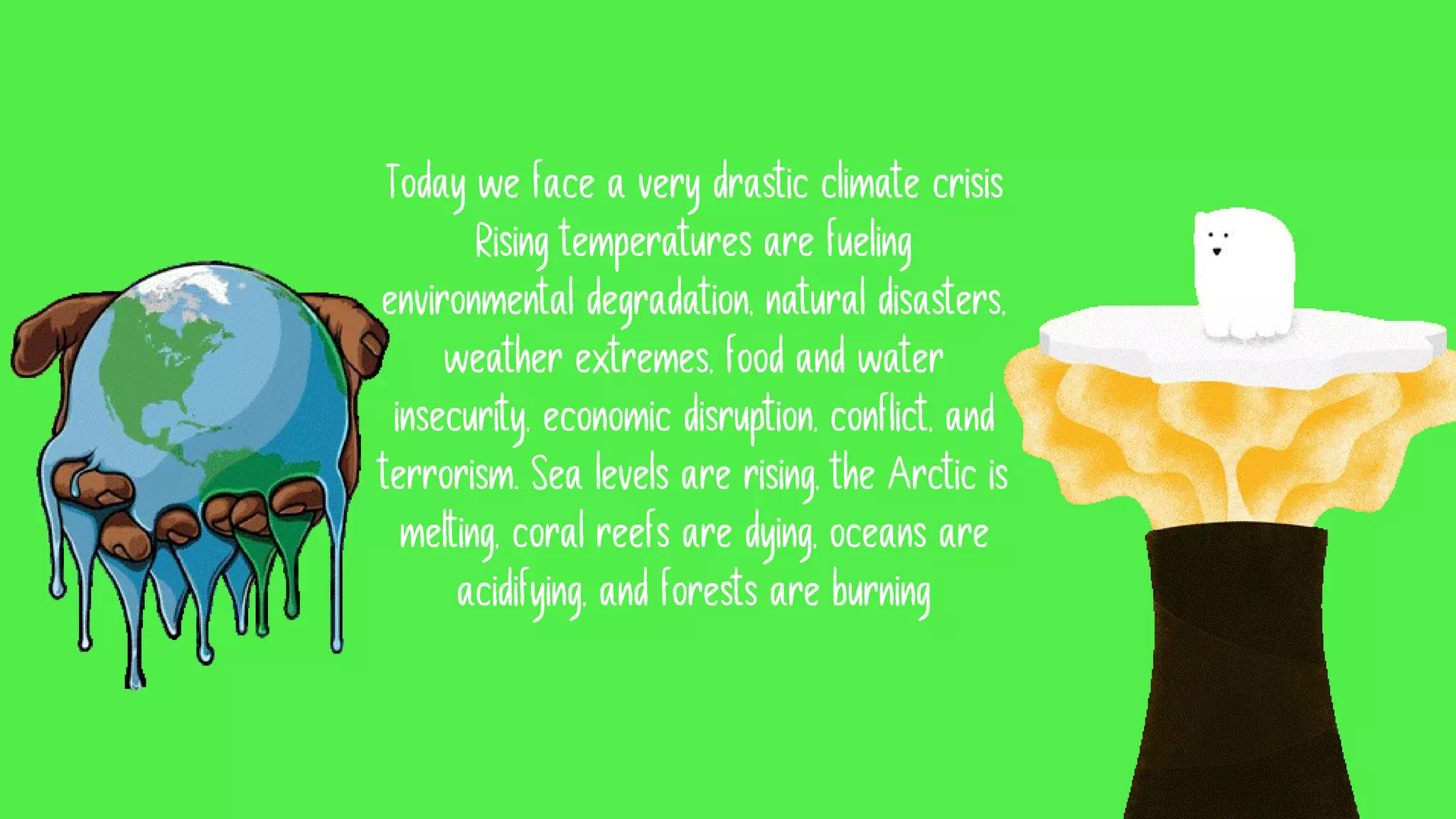
Today we face a very drastic climate crisis
Rising temperatures are fueling
environmental degradation, natural disasters,
weather extremes, food and water
insecurity, economic disruption, conflict, and
terrorism. Sea levels are rising, the Arctic is
melting, coral reefs are dying, oceans are
acidifying, and forests are burning
How capitalism relates to the enviroment?
Capitalism prioritizes increasing its
capital no matter what,
Therefore, the impact it generates at
the enviromental level is of none
importance, this cause a fracture
between nature and society.
The capitalist system, by prioritizing having a constant increase in capital, imposes on society the habit of
consumerism.
A habit that creates the false need to need something in order to impulsively buy products.
These unconscious purchases, contribute to the current climate crisis.
Products created for sale have been lowered
in quality, which makes them functional
products for a very short time; this forcing
consumers to buy new things constantly,
favoring the owners who produce these
products, and contributing to the
environmental crisis.
How?
How?
The reason is that to create these products it is needed
raw materials which are obtained from nature:
materials such as trees, water, electricity, oil.
Everything we consume today;
clothing, footwear, furniture, electronic devices, even our own food, are
products that: pollute and are not friendly to the environment; they are not
sustainable.
And in the case of food; priority is given to growing
soybean plants to feed animals used in the livestock
industry
As a consequence; thousands of meters of forests and
jungles are cut down to be able to plant these plants and
establish cattle farms.
There is also the case of
the export of fruits and
vegetables, for example:
exporting apples from
Washington to Mexico
for the consumption of
Mexicans, these exports
leave behind a large
carbon footprint.
Another example is that
of obtaining palm oil;
Thousands of hectares
of jungles are cut down
to be able to plant the
palm and obtain its oil,
contributing to; alteration
in the ecosystem of the
place and the extinction
of biodiversity.
The production of all these things does not
seek to have a balance between what
nature gives us and what we extract from
it, excessive production does not come close
to sustainability in the least.
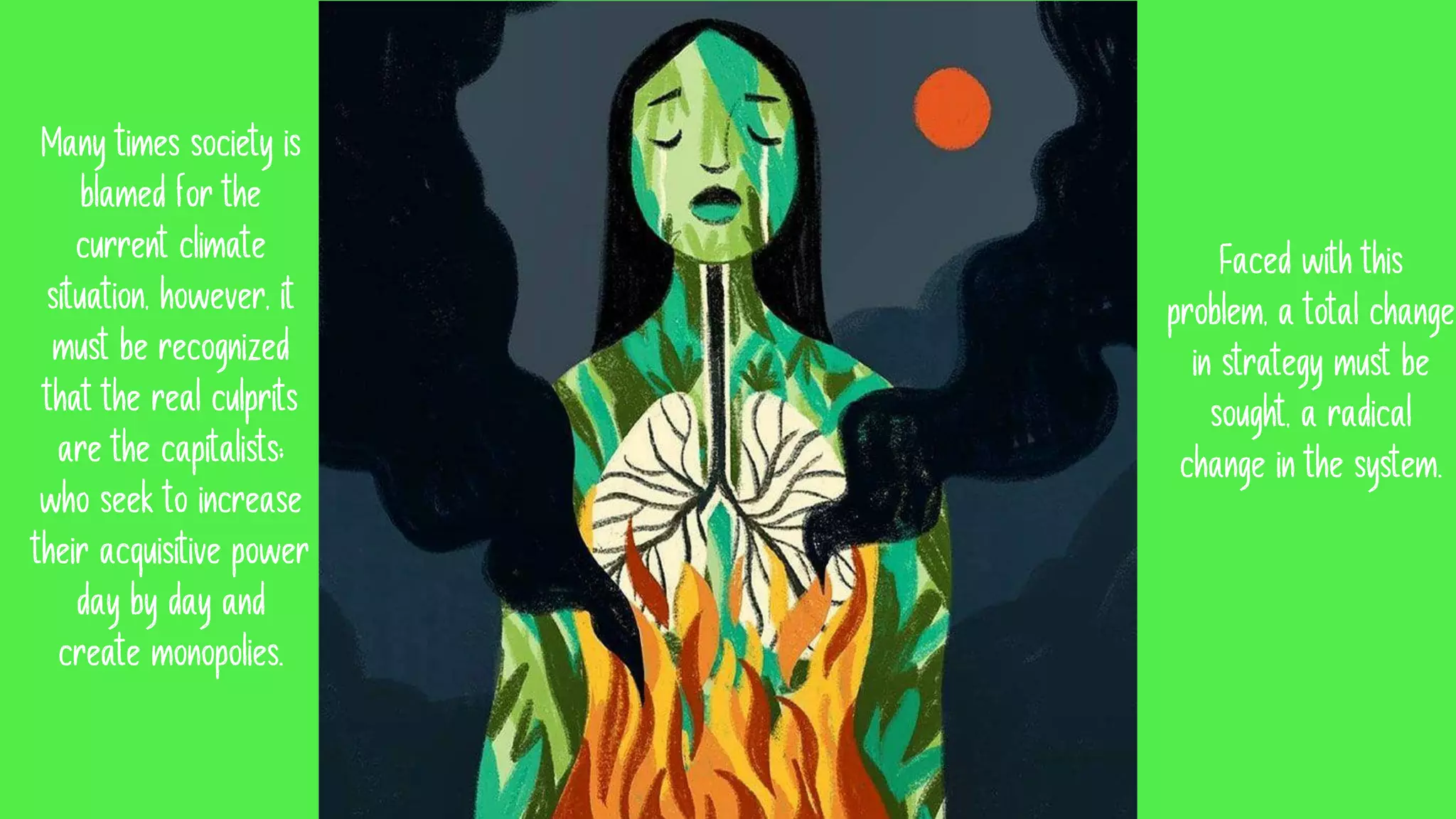
Faced with this
problem, a total change
in strategy must be
sought, a radical
change in the system.
Many times society is
blamed for the
current climate
situation, however, it
must be recognized
that the real culprits
are the capitalists;
who seek to increase
their acquisitive power
day by day and
create monopolies.
"Green capitalism" has been an alternative to face the current climate crisis.
Within this new capitalism, the implementation of a tax on carbon dioxide
emissions released by companies is proposed.
Despite this, this tax would bring with it an increase in the prices of
products; which would affect the acquisition of products and services for
society.
So, what is needed to solve this
environmental crisis?
So, what is needed to solve this
environmental crisis?
Despite the fact that the blame for this climate crisis is on the capitalistm; we must recognize our responsibility as
individuals to begin to effect change.
The change has three stages:
Individual change
Collective change
Systematic change
Make sure not to fall into the trap of
containers, cutlery, straws, bags and
all kinds of products that claim to be
environmentally friendly or
biodegradable because most of them
are not, many only degrade in
industrial compost or need to certain
characteristics to be able to do so,
otherwise, these will continue to
contaminate
We cannot leave our future
in the hands of politicians
and monopolists, which is
why the importance of
changing our habits and
seeking to get closer to
having a more
environmentally friendly life
Create eco bricks with the
wrappers
Start your own urban garden
Compost
Reduce your meat consumption
Eat seasonal fruits and
vegetables
Choose to buy at local markets
instead of supermarkets
Actions to lead a more ecofriendly life
Reject all types of
products that contain
single-use plastic
Buy local products
Avoid buying clothes in
fast fashion stores and
instead look for second-
hand stores to buy
clothes
Always carry a bottle
and cutlery with you to
avoid disposables
Actions to lead a more ecofriendly life
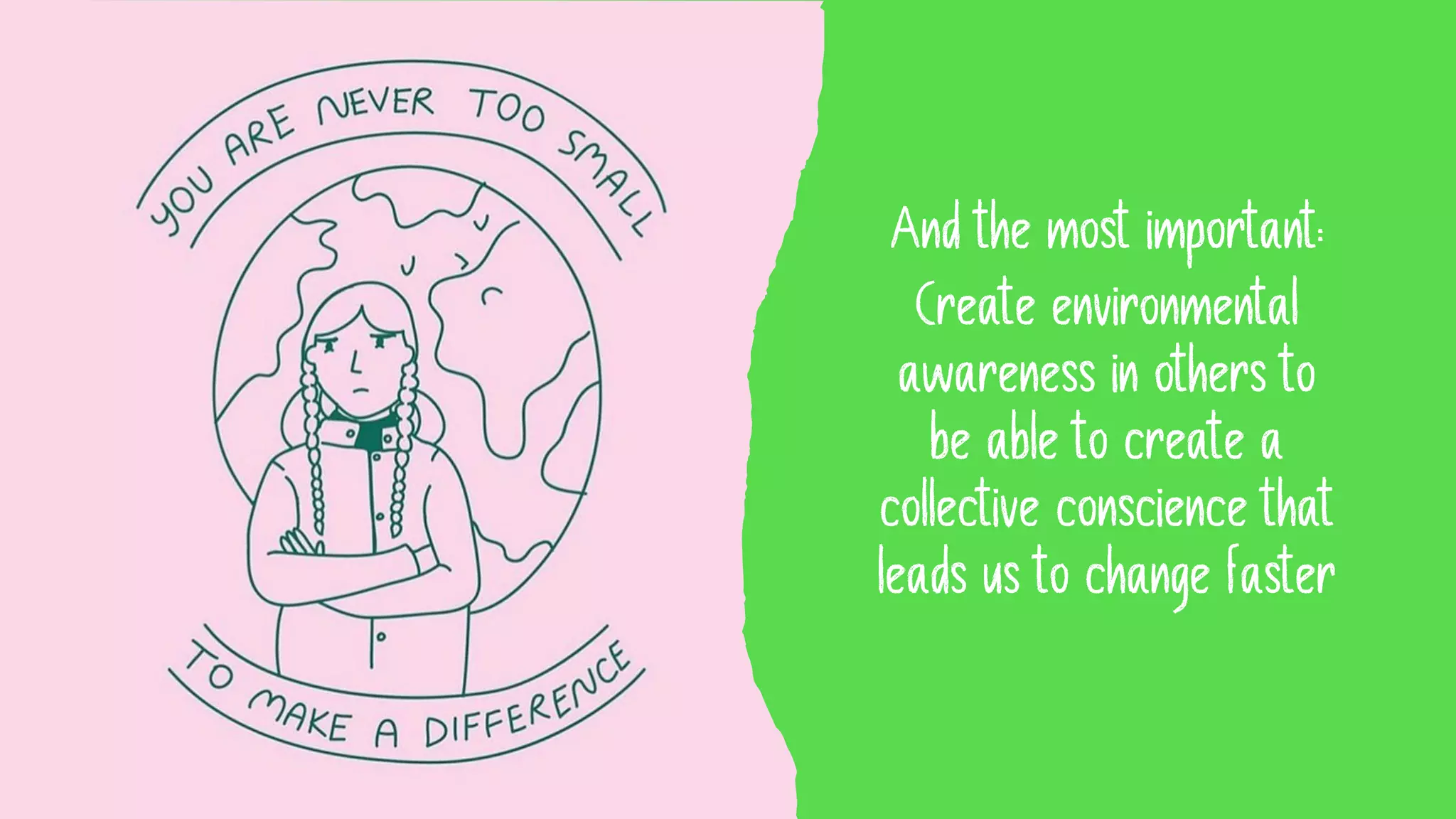
And the most important:
Create environmental
awareness in others to
be able to create a
collective conscience that
leads us to change faster

Capitalism and environment

  • 1.
  • 2.
    In addition, thissystem, directly or indirectly; imposes ideals and "forces" society to have certain behaviors. Capitalism is the prevailing economic system in the world today. It not only governs the economy but also regulates the way in which social interactions take place.
  • 3.
    This system isbased on the exploitation of one class over another for its operation. There are tho sides in this system: The proletariat and the bourgeoisie. The proletariat is all those people who work for the bourgeoisie; who own the capital. Therefore, the exploited class is the proletariat. However, this class is not the only victim of the exploitation of capitalism. Nature is also exploited by this system.
  • 4.
    Today we facea very drastic climate crisis Rising temperatures are fueling environmental degradation, natural disasters, weather extremes, food and water insecurity, economic disruption, conflict, and terrorism. Sea levels are rising, the Arctic is melting, coral reefs are dying, oceans are acidifying, and forests are burning
  • 5.
    How capitalism relatesto the enviroment? How capitalism relates to the enviroment?
  • 6.
    Capitalism prioritizes increasingits capital no matter what, Therefore, the impact it generates at the enviromental level is of none importance, this cause a fracture between nature and society.
  • 7.
    The capitalist system,by prioritizing having a constant increase in capital, imposes on society the habit of consumerism. A habit that creates the false need to need something in order to impulsively buy products. These unconscious purchases, contribute to the current climate crisis. Products created for sale have been lowered in quality, which makes them functional products for a very short time; this forcing consumers to buy new things constantly, favoring the owners who produce these products, and contributing to the environmental crisis. How? How?
  • 8.
    The reason isthat to create these products it is needed raw materials which are obtained from nature: materials such as trees, water, electricity, oil. Everything we consume today; clothing, footwear, furniture, electronic devices, even our own food, are products that: pollute and are not friendly to the environment; they are not sustainable.
  • 9.
    And in thecase of food; priority is given to growing soybean plants to feed animals used in the livestock industry As a consequence; thousands of meters of forests and jungles are cut down to be able to plant these plants and establish cattle farms.
  • 10.
    There is alsothe case of the export of fruits and vegetables, for example: exporting apples from Washington to Mexico for the consumption of Mexicans, these exports leave behind a large carbon footprint. Another example is that of obtaining palm oil; Thousands of hectares of jungles are cut down to be able to plant the palm and obtain its oil, contributing to; alteration in the ecosystem of the place and the extinction of biodiversity.
  • 11.
    The production ofall these things does not seek to have a balance between what nature gives us and what we extract from it, excessive production does not come close to sustainability in the least.
  • 12.
    Faced with this problem,a total change in strategy must be sought, a radical change in the system. Many times society is blamed for the current climate situation, however, it must be recognized that the real culprits are the capitalists; who seek to increase their acquisitive power day by day and create monopolies.
  • 13.
    "Green capitalism" hasbeen an alternative to face the current climate crisis. Within this new capitalism, the implementation of a tax on carbon dioxide emissions released by companies is proposed. Despite this, this tax would bring with it an increase in the prices of products; which would affect the acquisition of products and services for society.
  • 14.
    So, what isneeded to solve this environmental crisis? So, what is needed to solve this environmental crisis?
  • 15.
    Despite the factthat the blame for this climate crisis is on the capitalistm; we must recognize our responsibility as individuals to begin to effect change. The change has three stages: Individual change Collective change Systematic change
  • 16.
    Make sure notto fall into the trap of containers, cutlery, straws, bags and all kinds of products that claim to be environmentally friendly or biodegradable because most of them are not, many only degrade in industrial compost or need to certain characteristics to be able to do so, otherwise, these will continue to contaminate
  • 17.
    We cannot leaveour future in the hands of politicians and monopolists, which is why the importance of changing our habits and seeking to get closer to having a more environmentally friendly life
  • 18.
    Create eco brickswith the wrappers Start your own urban garden Compost Reduce your meat consumption Eat seasonal fruits and vegetables Choose to buy at local markets instead of supermarkets Actions to lead a more ecofriendly life Reject all types of products that contain single-use plastic Buy local products Avoid buying clothes in fast fashion stores and instead look for second- hand stores to buy clothes Always carry a bottle and cutlery with you to avoid disposables Actions to lead a more ecofriendly life
  • 19.
    And the mostimportant: Create environmental awareness in others to be able to create a collective conscience that leads us to change faster