Building Broadcaster Capacity For effective farm radio programming Ottawa, September  23, 2009
Why? “ The effectiveness of radio-based communications in helping African farming families achieve greater food security will be widely known and understood, with corresponding commitment to greater investment in broadcaster capacity building and content development.” -  AFRRI’s vision of success AFRRI objective no 4: “ Build the capacity of radio stations & broadcasters”
Training and capacity building programme  Design phase : Competency list development Needs assessment Monitoring visits, discussions with NRCs Curriculum development Global Learning Partners Dynamind (online distance course)
Training and capacity building programme  Structure : 6 day face to face workshop Introduction to the story-based approach to farm radio programming Introduction to new technologies (digital audio recording and editing) 4-month online distance course Reinforcement of the story-based approach Interviewing and production skills Researching topics
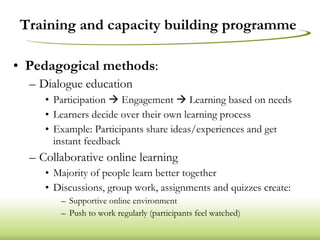
Training and capacity building programme  Pedagogical methods : Dialogue education Participation    Engagement    Learning based on needs Learners decide over their own learning process Example: Participants share ideas/experiences and get instant feedback Collaborative online learning Majority of people learn better together Discussions, group work, assignments and quizzes create: Supportive online environment Push to work regularly (participants feel watched)
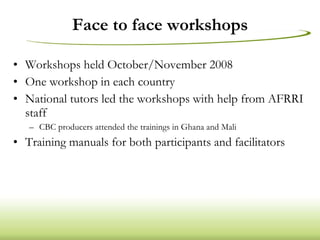
Face to face workshops Workshops held October/November 2008 One workshop in each country National tutors led the workshops with help from AFRRI staff  CBC producers attended the trainings in Ghana and Mali Training manuals for both participants and facilitators
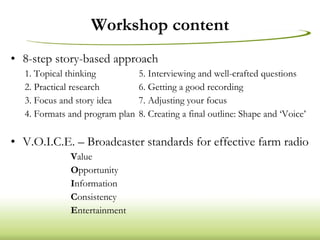
Workshop content 8-step story-based approach 1. Topical thinking 5. Interviewing and well-crafted questions 2. Practical research 6. Getting a good recording 3. Focus and story idea 7. Adjusting your focus 4. Formats and program plan 8. Creating a final outline: Shape and ‘Voice’ V.O.I.C.E. – Broadcaster standards for effective farm radio V alue O pportunity I nformation C onsistency E ntertainment
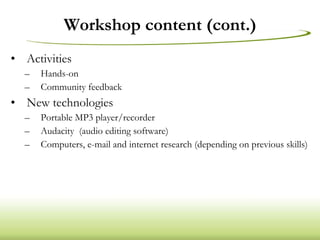
Workshop content (cont.) Activities Hands-on Community feedback New technologies Portable MP3 player/recorder Audacity  (audio editing software) Computers, e-mail and internet research (depending on previous skills)
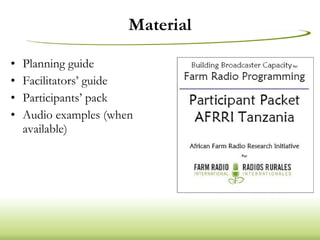
Material Planning guide Facilitators’ guide Participants’ pack Audio examples (when available)
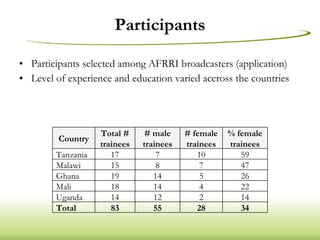
Participants Participants selected among AFRRI broadcasters (application) Level of experience and education varied accross the countries Country Total # trainees # male trainees # female trainees % female trainees Tanzania 17 7 10 59 Malawi 15 8 7 47 Ghana  19 14 5 26 Mali 18 14 4 22 Uganda 14 12 2 14 Total 83 55 28 34
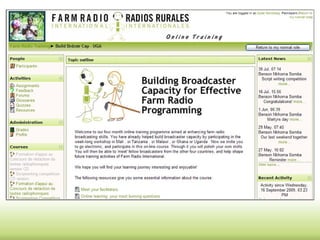
Online distance course Courses held February-May 2009 Ghana, Malawi, Tanzania and Uganda Same course content, but different work spaces Mali, special case Shortened course Country specific facilitators led the courses Online workshop before the course started
Online content Reinforcement of the story-based approach Integration of the V.O.I.C.E. standard into radio programmes Formats for radio programmes Interviewing techniques Research from various sources (including internet) Production of a radio programme Divided into 4 modules (one per month)
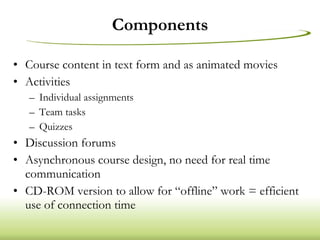
Components Course content in text form and as animated movies Activities Individual assignments Team tasks Quizzes Discussion forums Asynchronous course design, no need for real time communication CD-ROM version to allow for “offline” work = efficient use of connection time
 
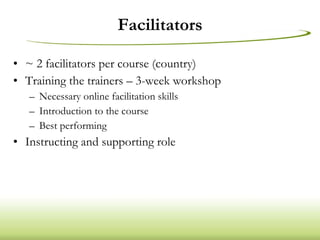
Facilitators ~ 2 facilitators per course (country) Training the trainers – 3-week workshop Necessary online facilitation skills Introduction to the course Best performing  Instructing and supporting role
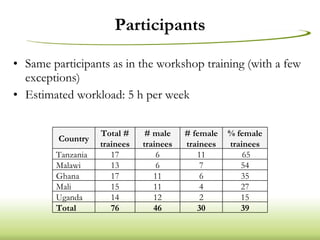
Participants Same participants as in the workshop training (with a few exceptions) Estimated workload: 5 h per week Country Total # trainees # male trainees # female trainees % female trainees Tanzania 17 6 11 65 Malawi 13 6 7 54 Ghana  17 11 6 35 Mali 15 11 4 27 Uganda 14 12 2 15 Total 76 46 30 39
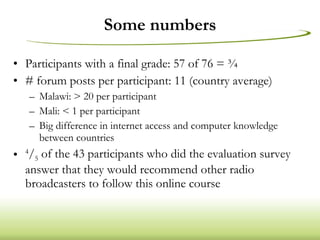
Some numbers Participants with a final grade: 57 of 76 = ¾ # forum posts per participant: 11 (country average) Malawi: > 20 per participant Mali: < 1 per participant Big difference in internet access and computer knowledge between countries 4 / 5  of the 43 participants who did the evaluation survey answer that they would recommend other radio broadcasters to follow this online course
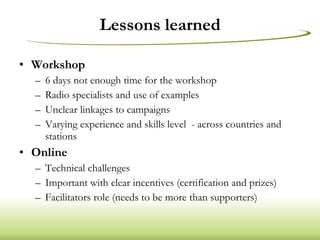
Lessons learned Workshop 6 days not enough time for the workshop Radio specialists and use of examples Unclear linkages to campaigns Varying experience and skills level  - across countries and stations Online Technical challenges Important with clear incentives (certification and prizes) Facilitators role (needs to be more than supporters)
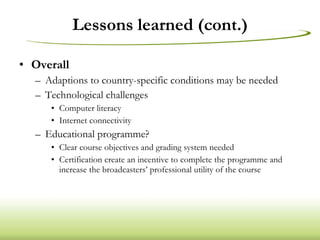
Lessons learned (cont.) Overall Adaptions to country-specific conditions may be needed Technological challenges Computer literacy Internet connectivity Educational programme? Clear course objectives and grading system needed Certification create an incentive to complete the programme and increase the broadcasters’ professional utility of the course
Building Broadcaster Capacity For effective farm radio programming

AFRRI Capacity Building

  • 1.
    Building Broadcaster CapacityFor effective farm radio programming Ottawa, September 23, 2009
  • 2.
    Why? “ Theeffectiveness of radio-based communications in helping African farming families achieve greater food security will be widely known and understood, with corresponding commitment to greater investment in broadcaster capacity building and content development.” - AFRRI’s vision of success AFRRI objective no 4: “ Build the capacity of radio stations & broadcasters”
  • 3.
    Training and capacitybuilding programme Design phase : Competency list development Needs assessment Monitoring visits, discussions with NRCs Curriculum development Global Learning Partners Dynamind (online distance course)
  • 4.
    Training and capacitybuilding programme Structure : 6 day face to face workshop Introduction to the story-based approach to farm radio programming Introduction to new technologies (digital audio recording and editing) 4-month online distance course Reinforcement of the story-based approach Interviewing and production skills Researching topics
  • 5.
    Training and capacitybuilding programme Pedagogical methods : Dialogue education Participation  Engagement  Learning based on needs Learners decide over their own learning process Example: Participants share ideas/experiences and get instant feedback Collaborative online learning Majority of people learn better together Discussions, group work, assignments and quizzes create: Supportive online environment Push to work regularly (participants feel watched)
  • 6.
    Face to faceworkshops Workshops held October/November 2008 One workshop in each country National tutors led the workshops with help from AFRRI staff CBC producers attended the trainings in Ghana and Mali Training manuals for both participants and facilitators
  • 7.
    Workshop content 8-stepstory-based approach 1. Topical thinking 5. Interviewing and well-crafted questions 2. Practical research 6. Getting a good recording 3. Focus and story idea 7. Adjusting your focus 4. Formats and program plan 8. Creating a final outline: Shape and ‘Voice’ V.O.I.C.E. – Broadcaster standards for effective farm radio V alue O pportunity I nformation C onsistency E ntertainment
  • 8.
    Workshop content (cont.)Activities Hands-on Community feedback New technologies Portable MP3 player/recorder Audacity (audio editing software) Computers, e-mail and internet research (depending on previous skills)
  • 9.
    Material Planning guideFacilitators’ guide Participants’ pack Audio examples (when available)
  • 10.
    Participants Participants selectedamong AFRRI broadcasters (application) Level of experience and education varied accross the countries Country Total # trainees # male trainees # female trainees % female trainees Tanzania 17 7 10 59 Malawi 15 8 7 47 Ghana 19 14 5 26 Mali 18 14 4 22 Uganda 14 12 2 14 Total 83 55 28 34
  • 11.
    Online distance courseCourses held February-May 2009 Ghana, Malawi, Tanzania and Uganda Same course content, but different work spaces Mali, special case Shortened course Country specific facilitators led the courses Online workshop before the course started
  • 12.
    Online content Reinforcementof the story-based approach Integration of the V.O.I.C.E. standard into radio programmes Formats for radio programmes Interviewing techniques Research from various sources (including internet) Production of a radio programme Divided into 4 modules (one per month)
  • 13.
    Components Course contentin text form and as animated movies Activities Individual assignments Team tasks Quizzes Discussion forums Asynchronous course design, no need for real time communication CD-ROM version to allow for “offline” work = efficient use of connection time
  • 14.
  • 15.
    Facilitators ~ 2facilitators per course (country) Training the trainers – 3-week workshop Necessary online facilitation skills Introduction to the course Best performing Instructing and supporting role
  • 16.
    Participants Same participantsas in the workshop training (with a few exceptions) Estimated workload: 5 h per week Country Total # trainees # male trainees # female trainees % female trainees Tanzania 17 6 11 65 Malawi 13 6 7 54 Ghana 17 11 6 35 Mali 15 11 4 27 Uganda 14 12 2 15 Total 76 46 30 39
  • 17.
    Some numbers Participantswith a final grade: 57 of 76 = ¾ # forum posts per participant: 11 (country average) Malawi: > 20 per participant Mali: < 1 per participant Big difference in internet access and computer knowledge between countries 4 / 5 of the 43 participants who did the evaluation survey answer that they would recommend other radio broadcasters to follow this online course
  • 18.
    Lessons learned Workshop6 days not enough time for the workshop Radio specialists and use of examples Unclear linkages to campaigns Varying experience and skills level - across countries and stations Online Technical challenges Important with clear incentives (certification and prizes) Facilitators role (needs to be more than supporters)
  • 19.
    Lessons learned (cont.)Overall Adaptions to country-specific conditions may be needed Technological challenges Computer literacy Internet connectivity Educational programme? Clear course objectives and grading system needed Certification create an incentive to complete the programme and increase the broadcasters’ professional utility of the course
  • 20.
    Building Broadcaster CapacityFor effective farm radio programming