Case Study on the role of radio based
extension and advisory services: Lessons
learnt of farm radio programming in
Malawi‟
Chapota. R, Mthinda, C & Fatch, P.
June 2013
Presentation Outline
• Introduction of the case study
• Use of radio in agricultural extension and
advisory services
• Experiences of farm radio programming
• Major actors in farm radio programming
• Key Lessons Learnt
• Conclusion
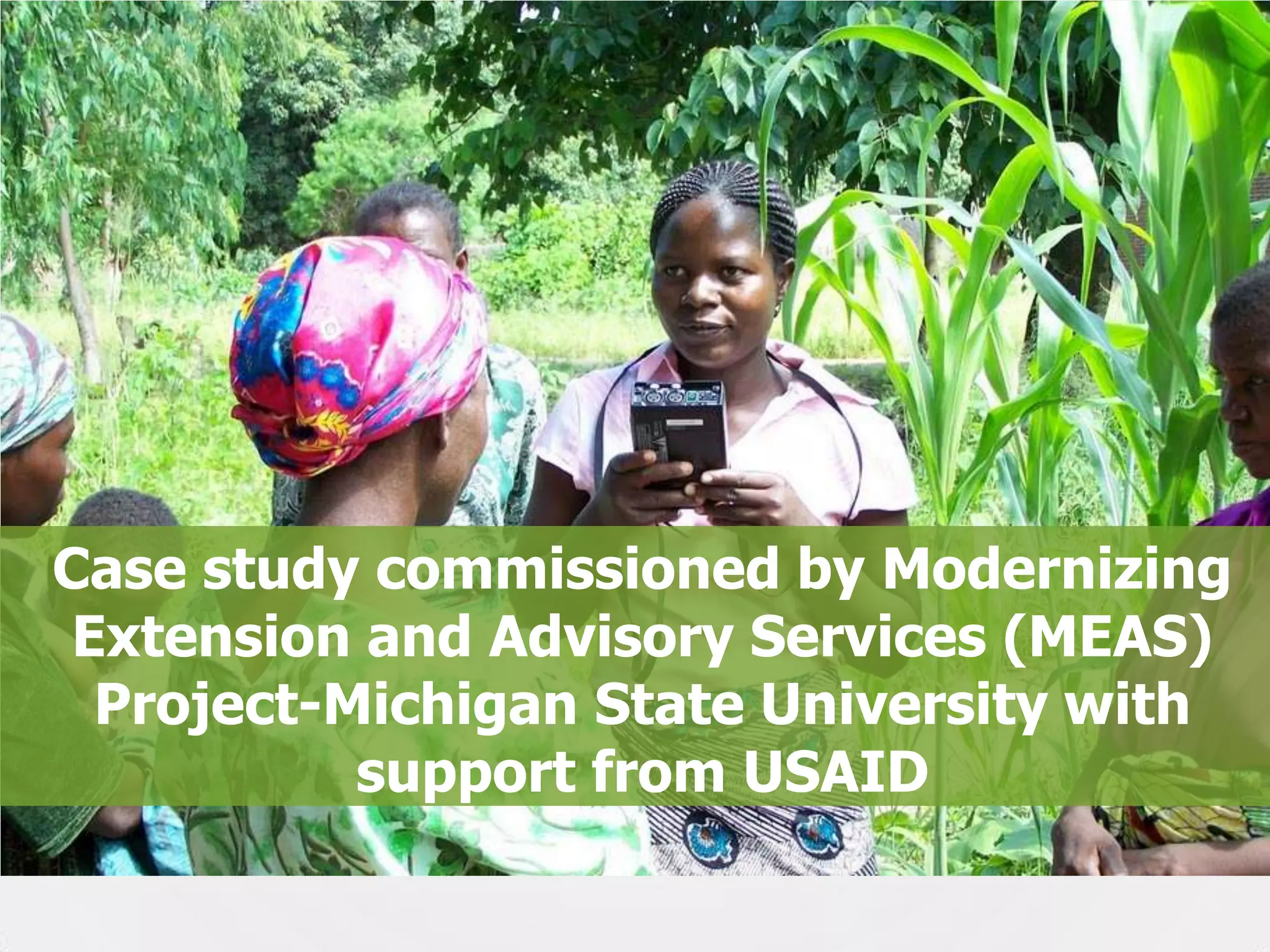
Case study commissioned by Modernizing
Extension and Advisory Services (MEAS)
Project-Michigan State University with
support from USAID
3
• Rationale:
•Unavailability of published work in the

area of ICT for extension especially role
of radio in extension delivery in view of
the vibrant farm radio industry in
Malawi.

•Key Research Question:

•What lessons have been learnt in the

provision of radio based extension and
advisory services focussing on the role
Farm Radio Trust has played since
inception in 2007.

4
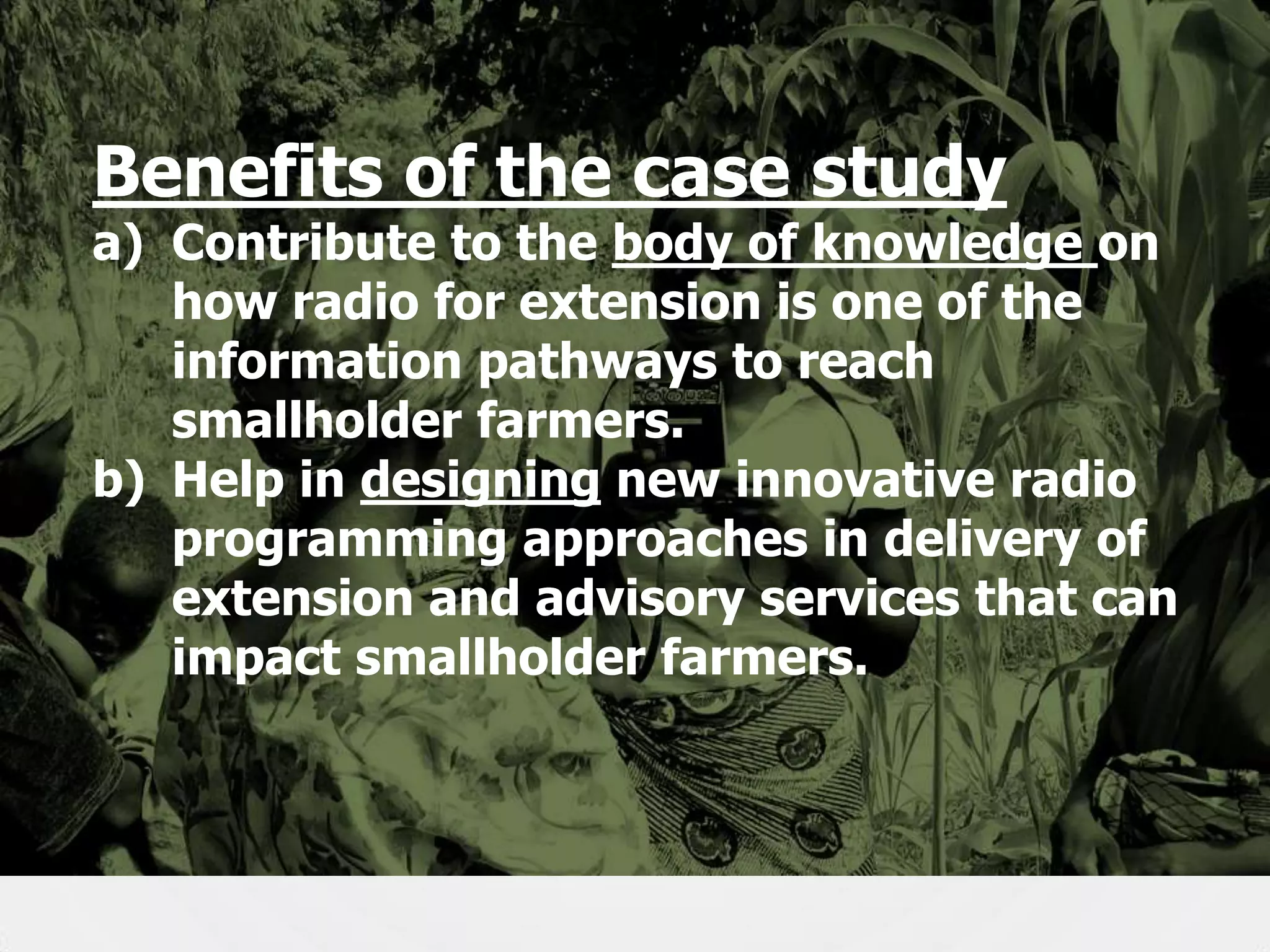
Benefits of the case study

a) Contribute to the body of knowledge on
how radio for extension is one of the
information pathways to reach
smallholder farmers.
b) Help in designing new innovative radio
programming approaches in delivery of
extension and advisory services that can
impact smallholder farmers.

5
•

6
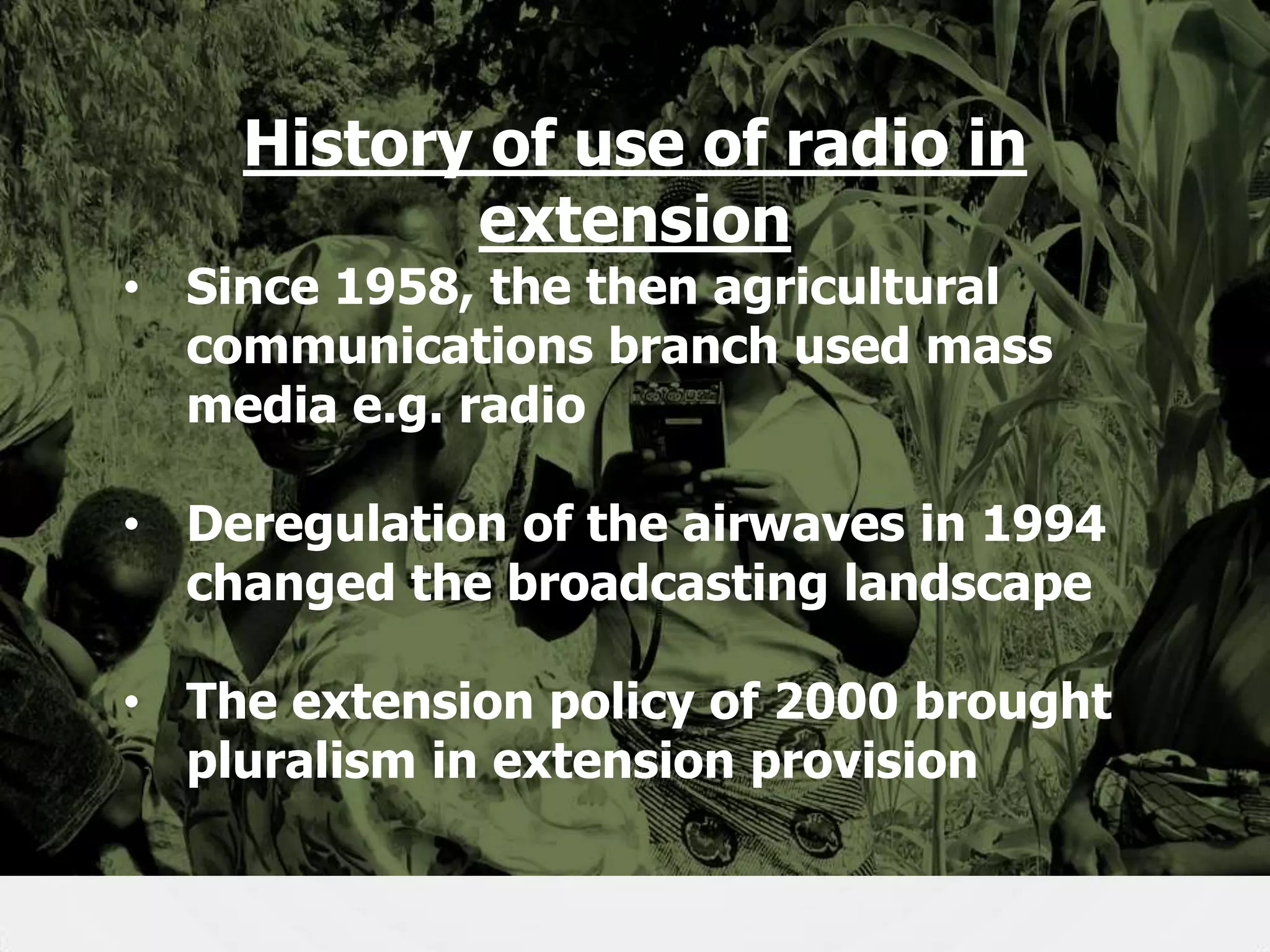
History of use of radio in
extension

• Since 1958, the then agricultural
communications branch used mass
media e.g. radio
• Deregulation of the airwaves in 1994
changed the broadcasting landscape
• The extension policy of 2000 brought
pluralism in extension provision
7
8
Rationale for Use of Radio in
Extension and Advisory Services
• Increased accessibility: 64.1%-70% ownership at
household level-NSO, 2008; FRI 2010
• Easy to reach even illiterate people
• Adaptable to various local languages and dialects
esp community radios
• Provides platform and voices for end users e.g.
farmers
• High extension to farmer ratio provides alternative
pathway to access of information
• Greater reach and scale per unit time
9
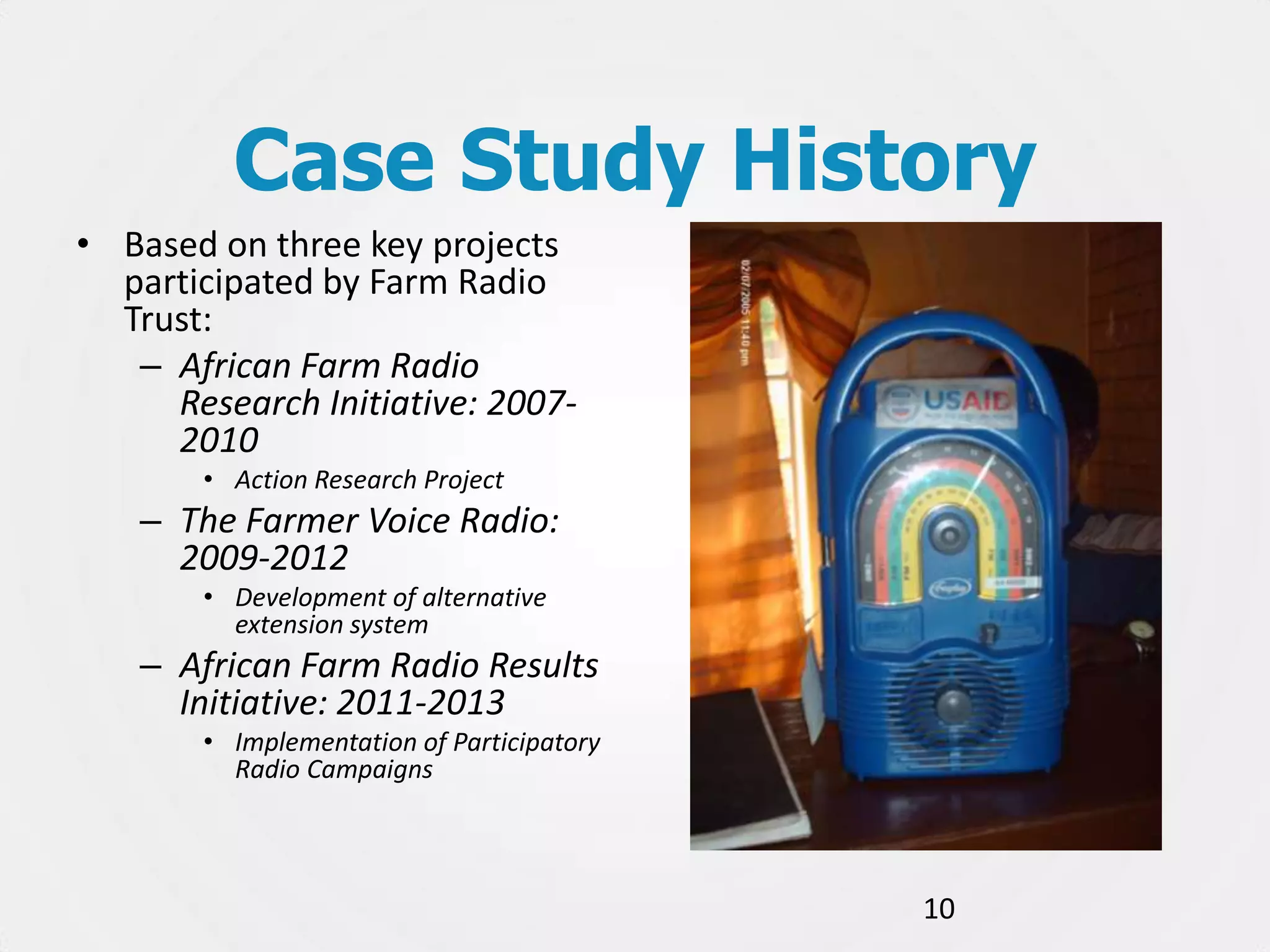
Case Study History
• Based on three key projects
participated by Farm Radio
Trust:
– African Farm Radio
Research Initiative: 20072010
• Action Research Project

– The Farmer Voice Radio:
2009-2012
• Development of alternative
extension system

– African Farm Radio Results
Initiative: 2011-2013
• Implementation of Participatory
Radio Campaigns

10
KEY ACTORS
• Small holder farmers
– ‘Even though I had some
information about
manure use, my practice
was inappropriate. But
the radio program
engaged us farmers as if
this was ‘school on air’
from which I learned
how to make and use
manure properly’

• Radio Stations and
broadcasters
– ‘we have discovered that
the farmer is the best
researcher and producer
of radio programs and
that what we need to do
as broadcasters is to
collaborate with them
and never go with the I
know it attitude’
11
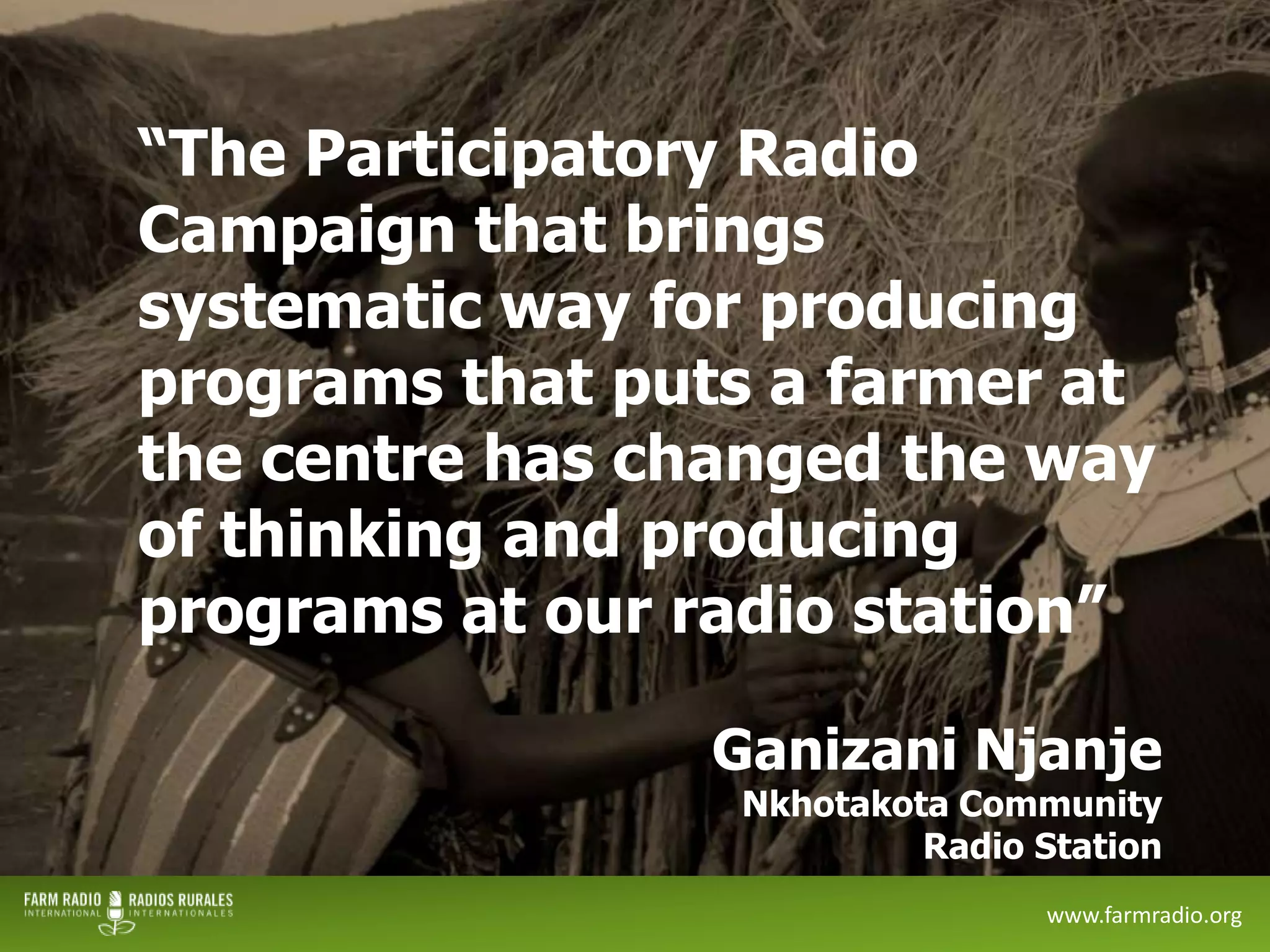
“The Participatory Radio
Campaign that brings
systematic way for producing
programs that puts a farmer at
the centre has changed the way
of thinking and producing
programs at our radio station”
Ganizani Njanje

Nkhotakota Community
Radio Station

12

www.farmradio.org
KEY ACTORS….
• Government agricultural
extension system
– ‘the radio programs have
triggered a lot of demand
from farmers and I have
started to read more than
before to cope up with the
issues that are on air’

• Knowledge partners such
as research institutes and
academia
– ‘as much as we teach
agricultural extension and
mention mass media as
one of the approaches; this
is the first time we have
been fully involved to
provide technical
backstopping to radio
programs’
13
KEY ACTORS….
• Other agricultural value chain stakeholders such
as NGOs
– ‘This is the 1st time in a number of years that we have
received farmers request for vetiver grass like this. The
radio programs have had tremendous impact in this
area; in the past we had to encourage them to do the
nurseries and now it is them demanding it from us’

14
KEY ACTORS
• Farm Radio Trust as a Key Knowledge
Broker
– ‘There was no player that could bring the
farmer, the researcher, an extension
worker, the policy maker and the
broadcaster on the same table to design
radio programming as is being done in
this so called Participatory Radio
Campaign approach’
15
What we have learned in
the implementation of radio
based extension and
advisory services?
16
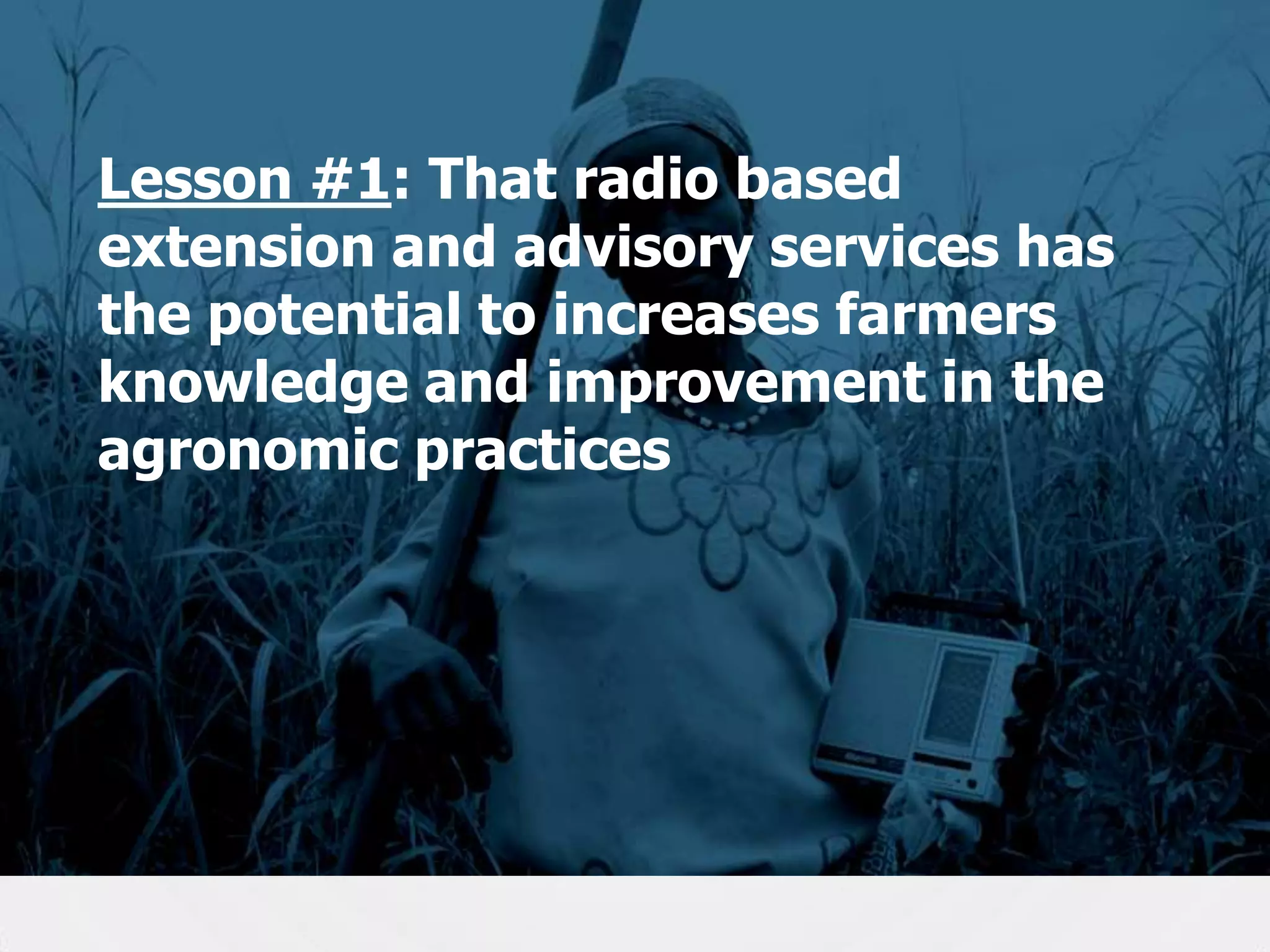
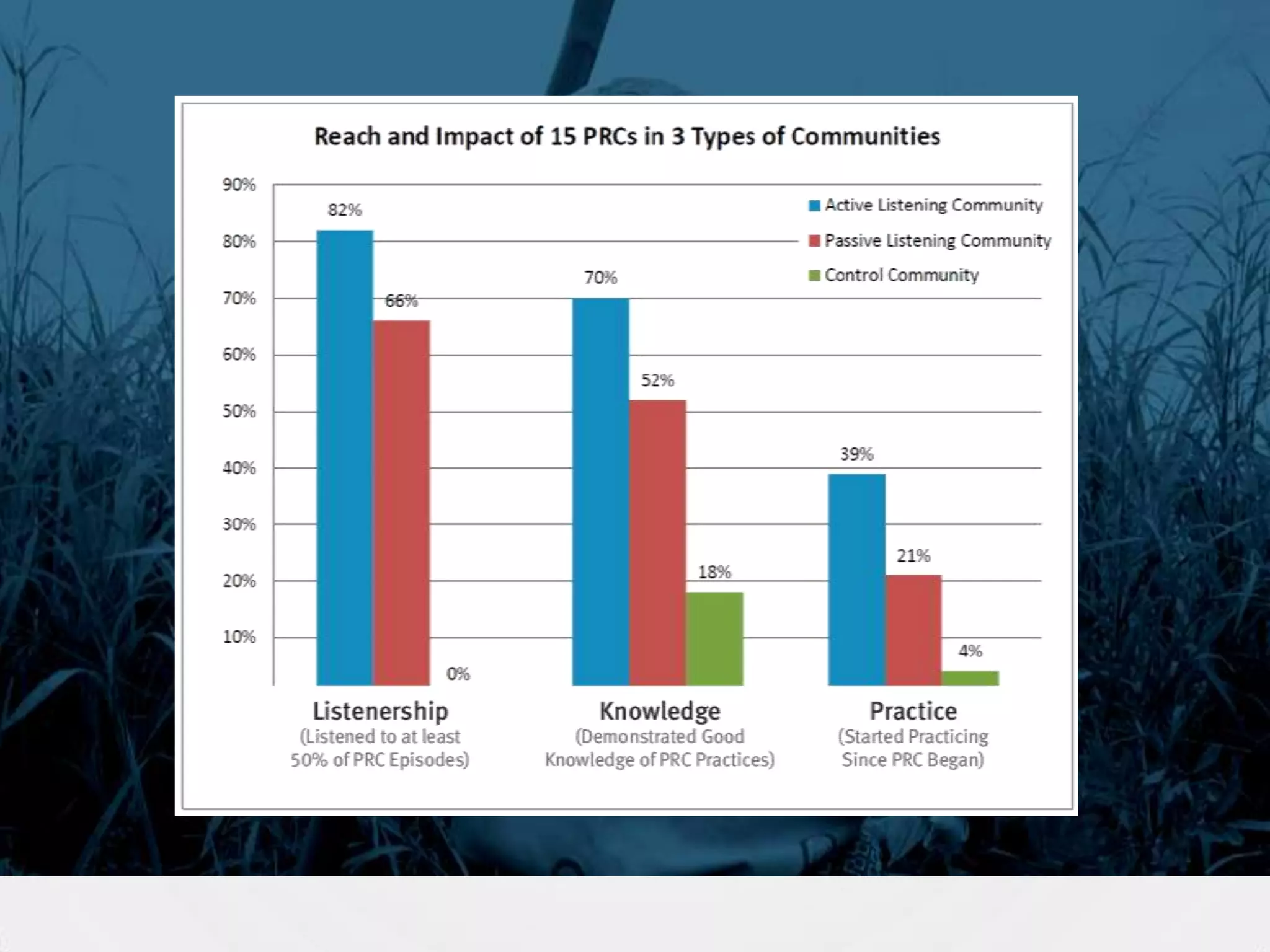
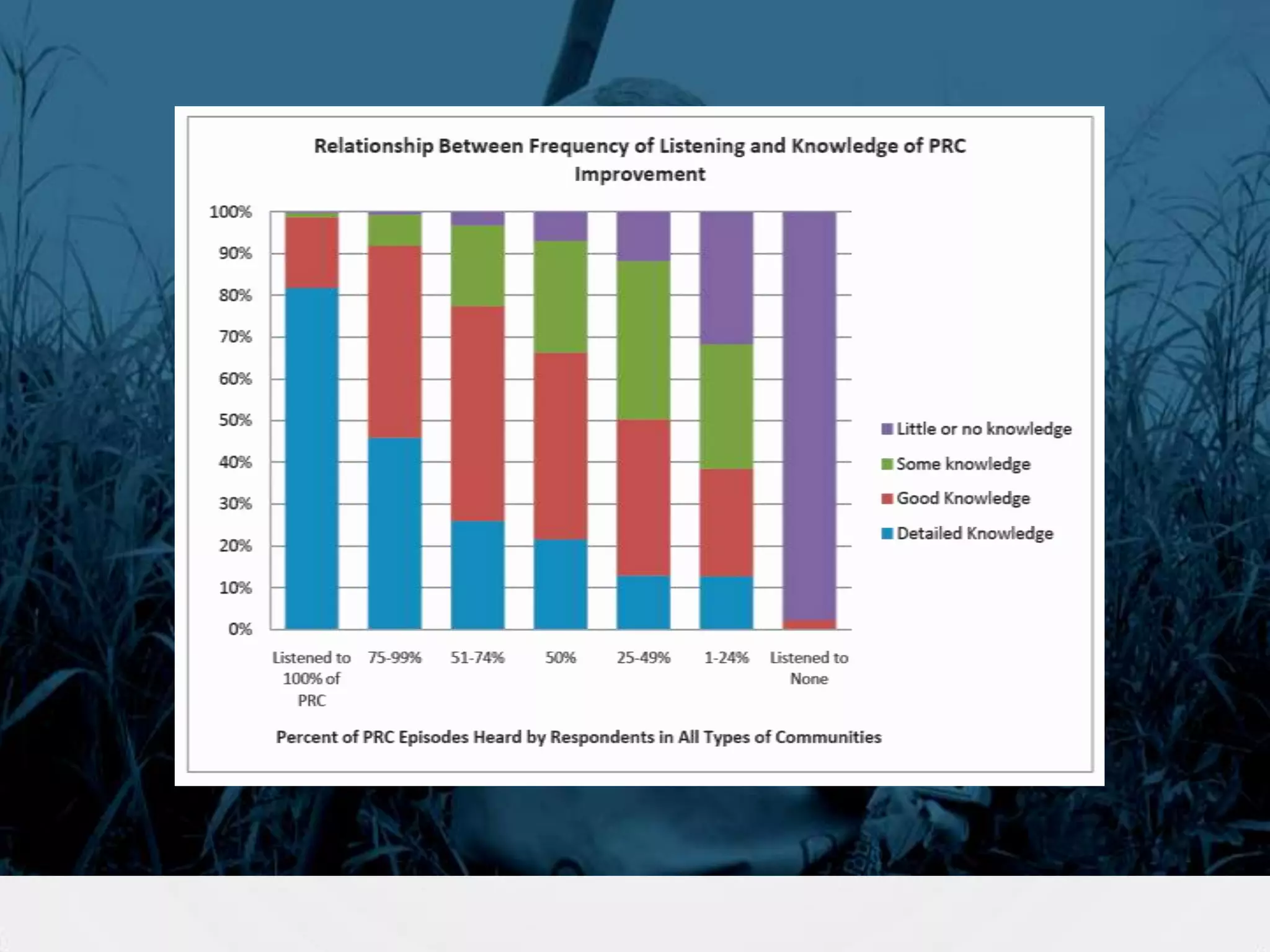
Lesson #1: That radio based
extension and advisory services has
the potential to increases farmers
knowledge and improvement in the
agronomic practices

17
18
19
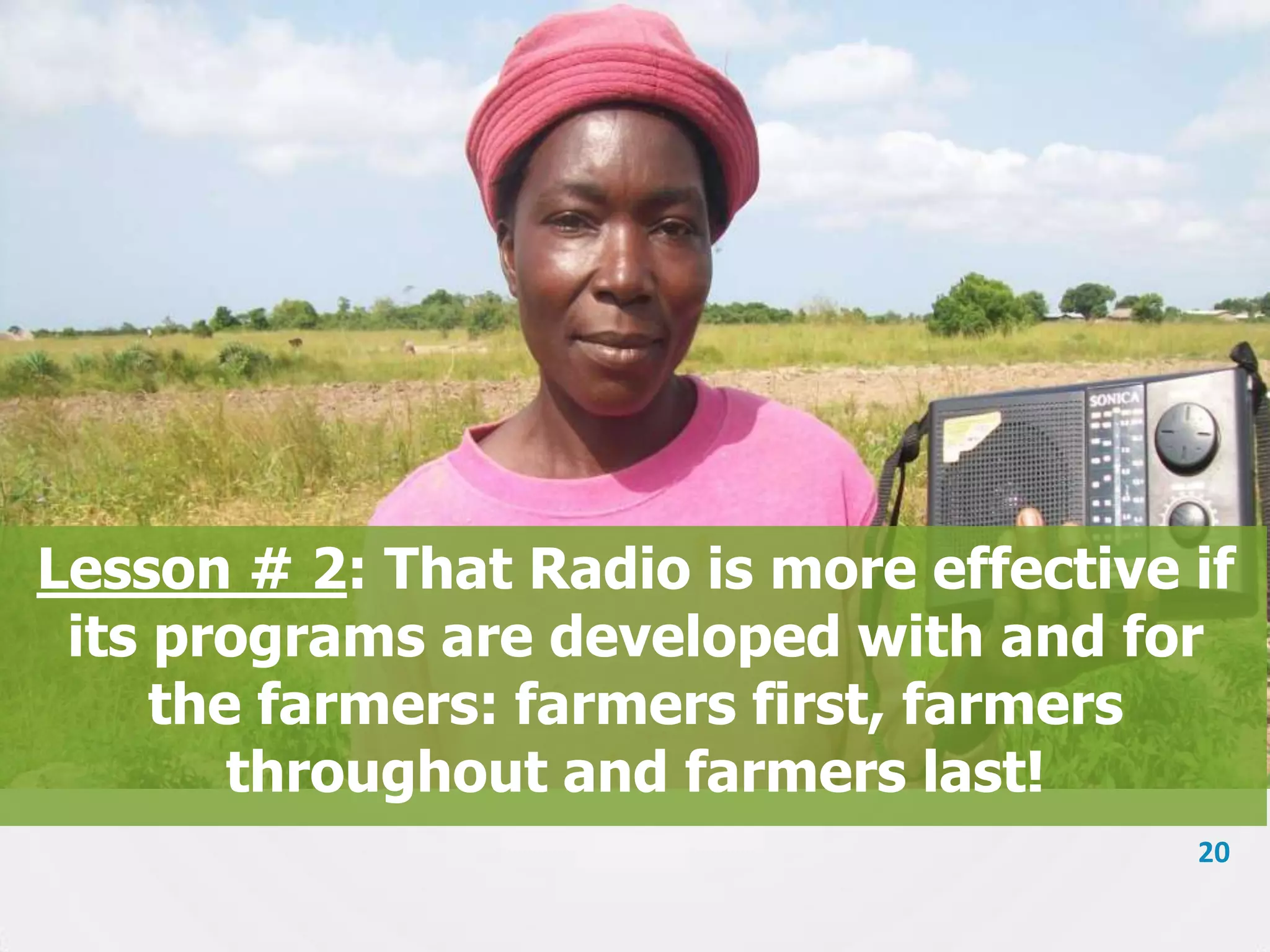
Lesson # 2: That Radio is more effective if
its programs are developed with and for
the farmers: farmers first, farmers
throughout and farmers last!
20
21
22
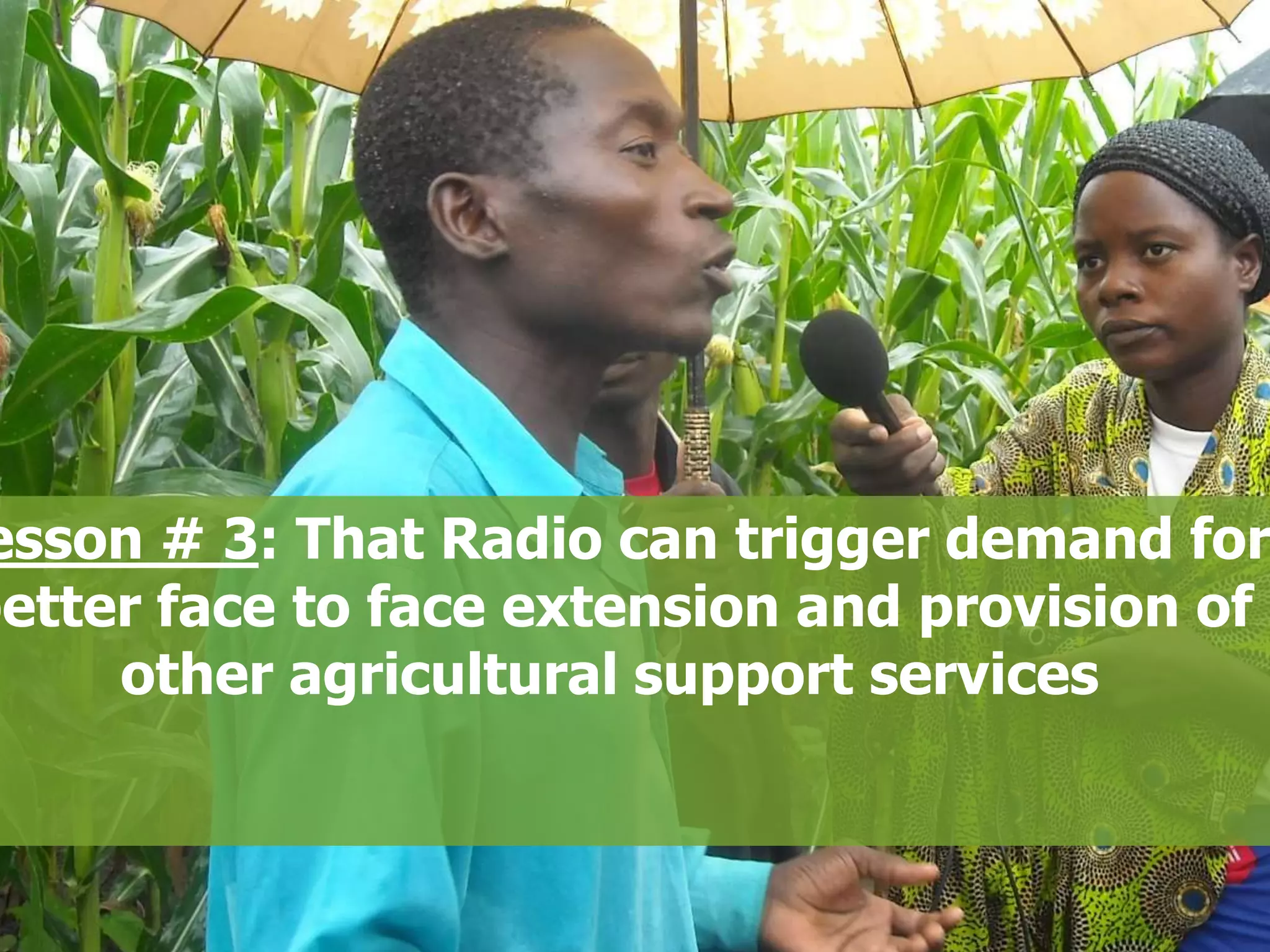
esson # 3: That Radio can trigger demand for
better face to face extension and provision of
other agricultural support services
23
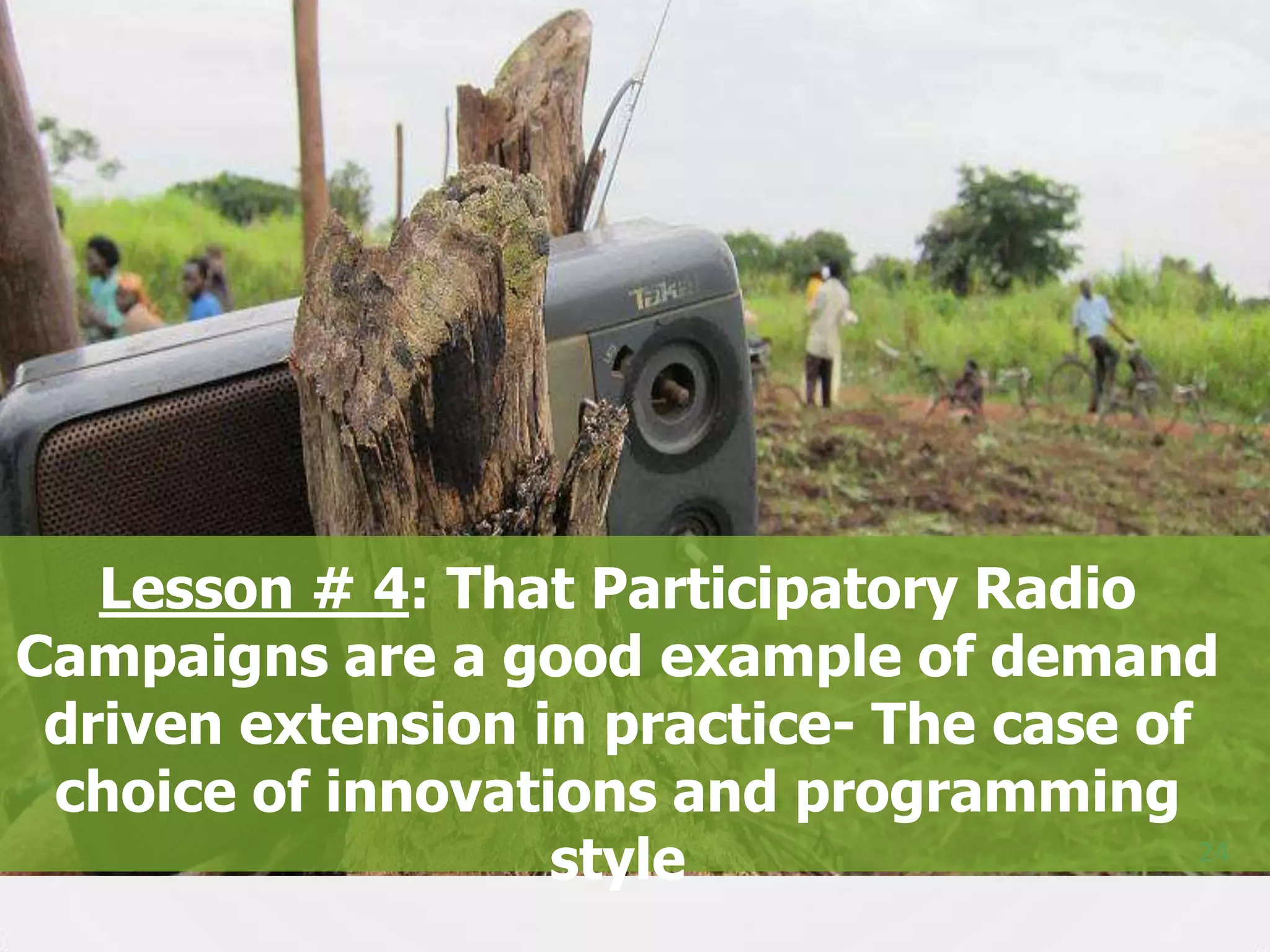
Lesson # 4: That Participatory Radio
Campaigns are a good example of demand
driven extension in practice- The case of
choice of innovations and programming
24
style
25
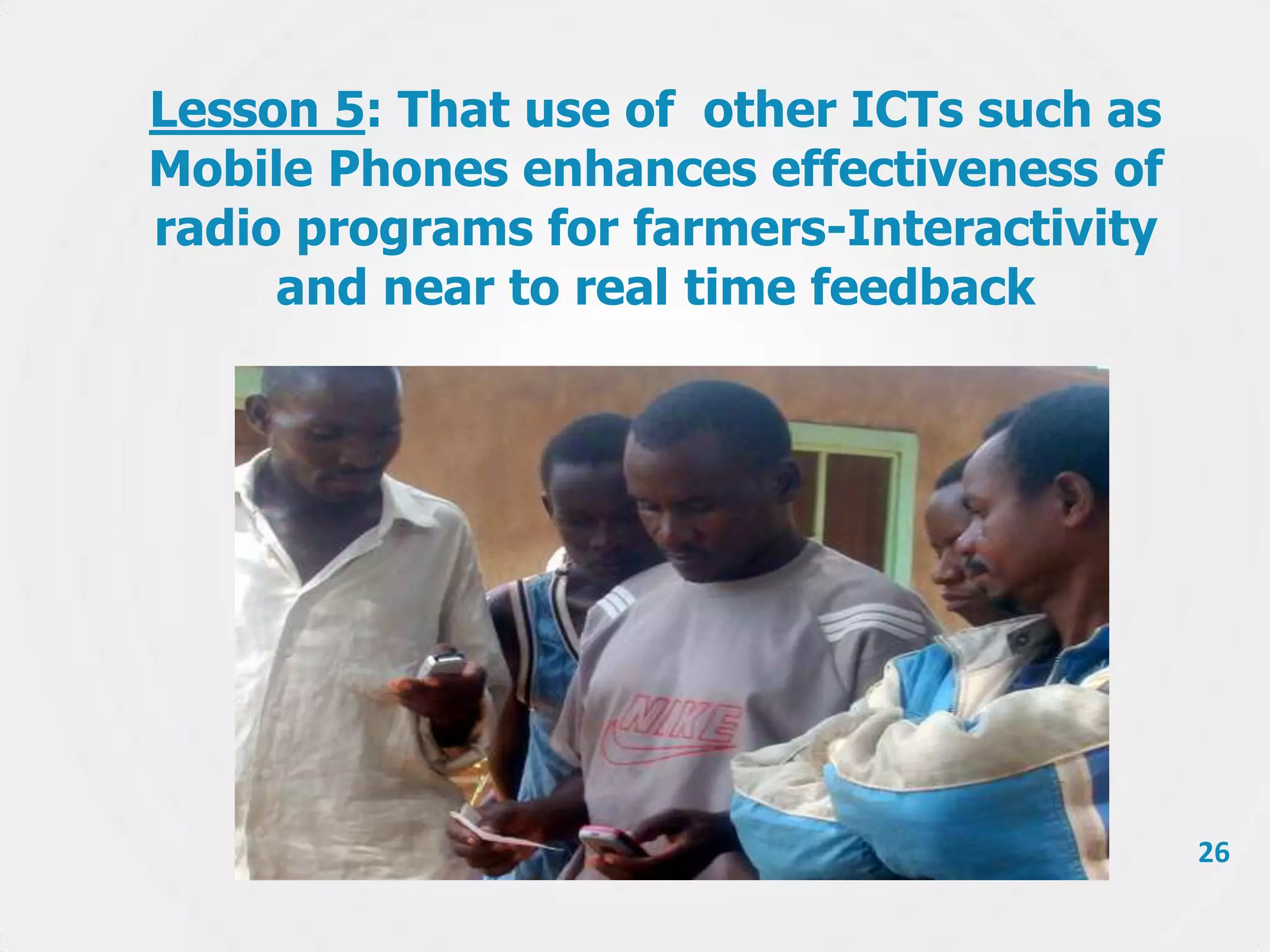
Lesson 5: That use of other ICTs such as
Mobile Phones enhances effectiveness of
radio programs for farmers-Interactivity
and near to real time feedback

26
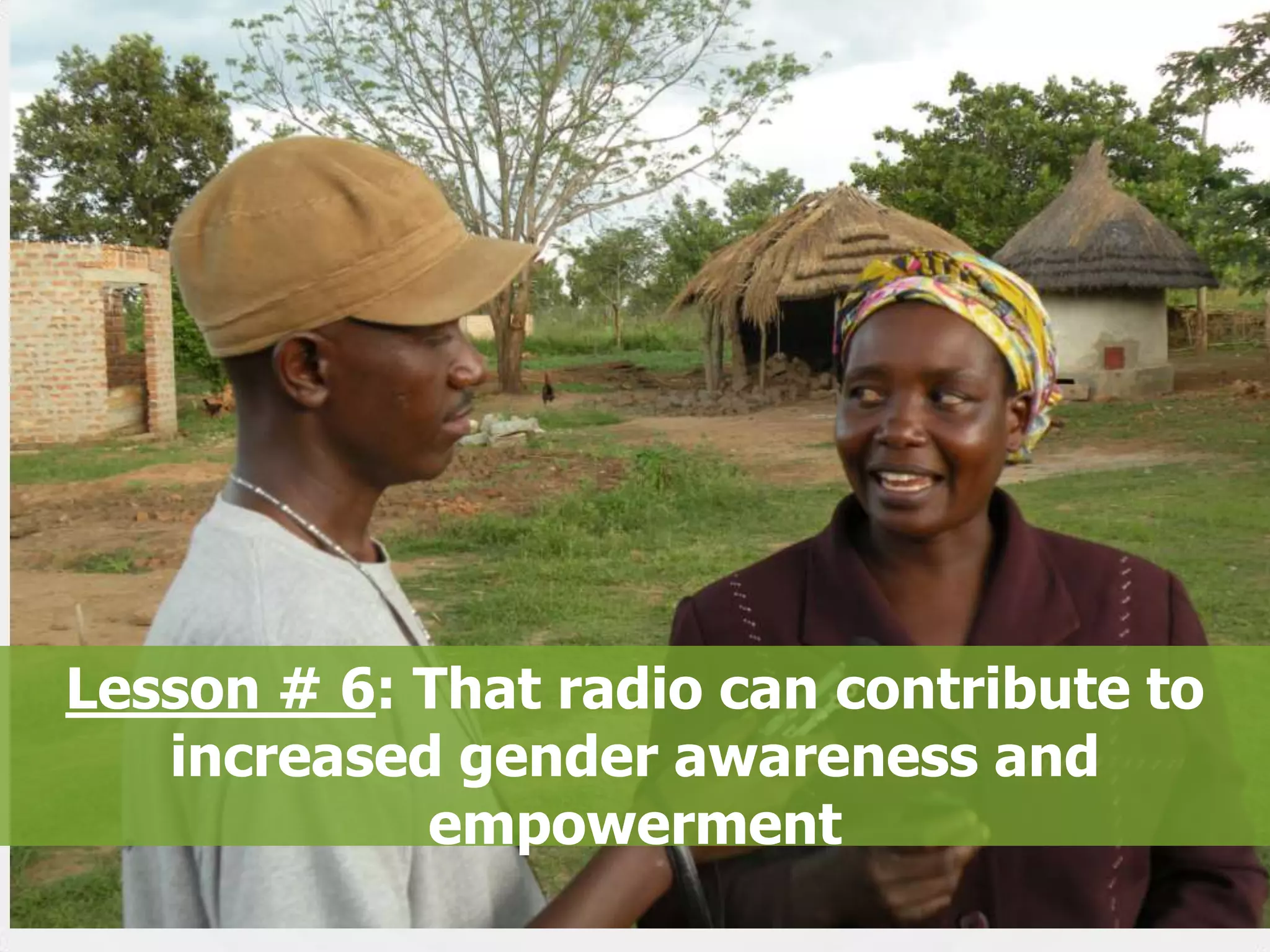
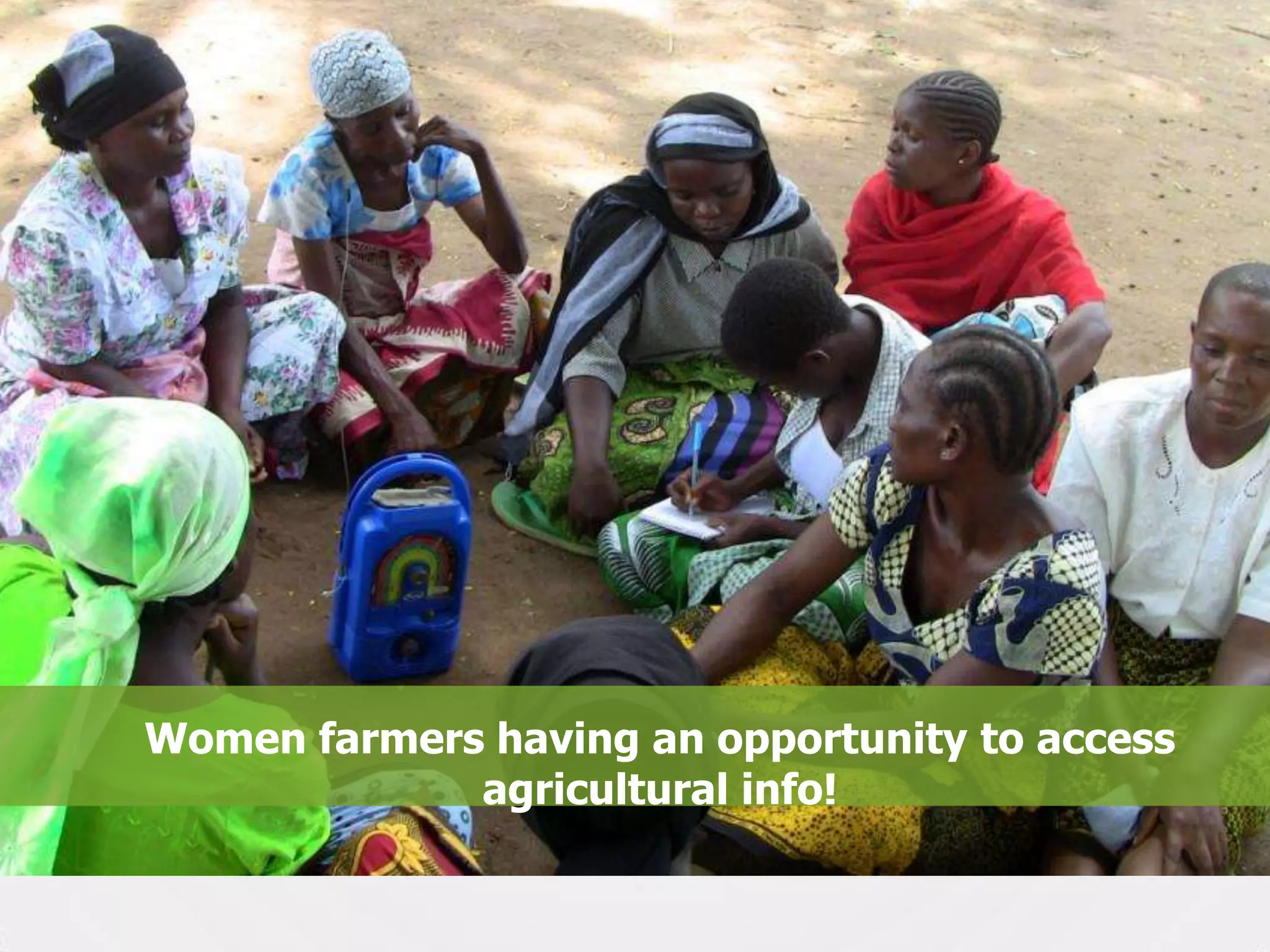
Lesson # 6: That radio can contribute to
increased gender awareness and
empowerment
27
28
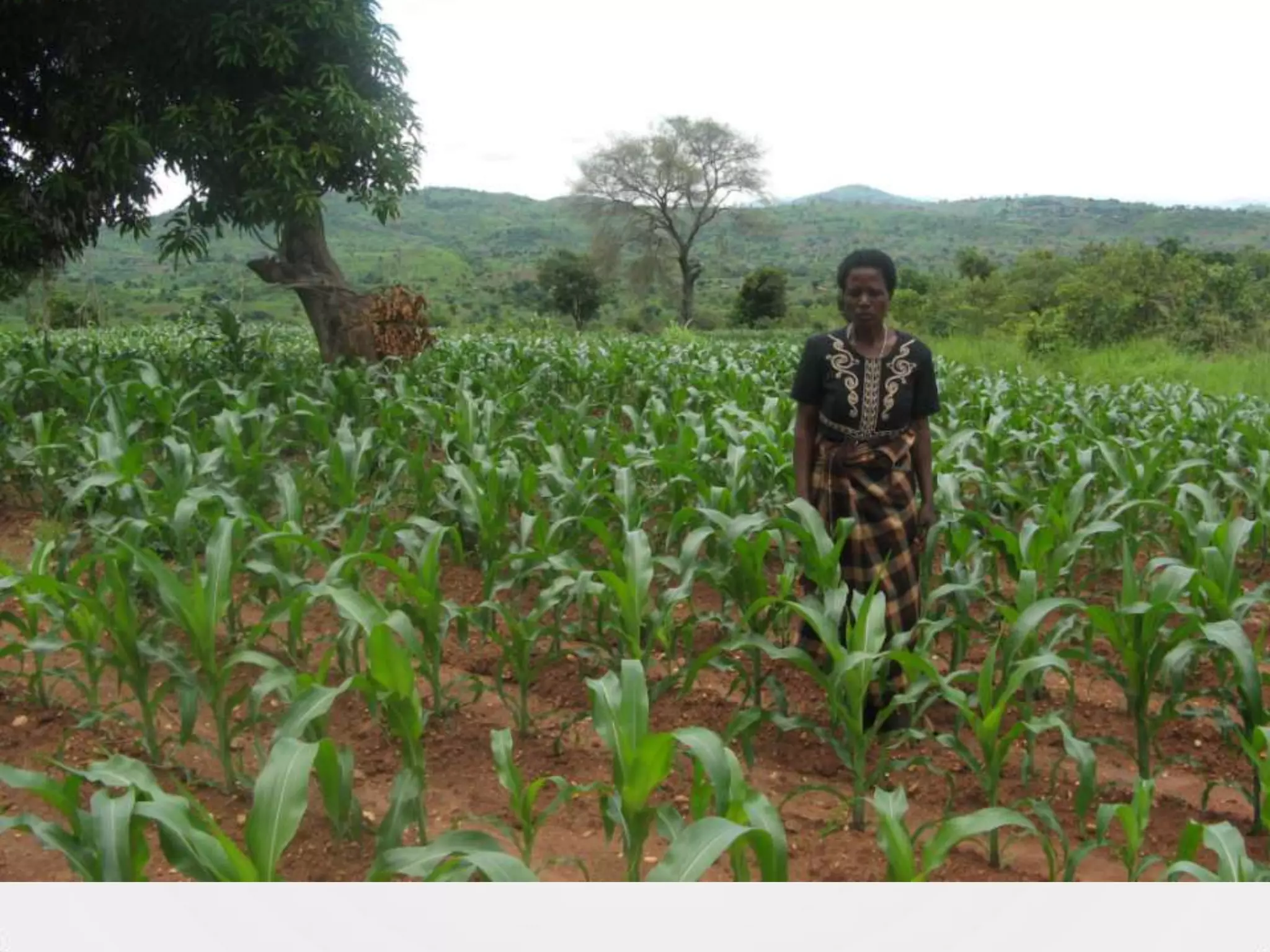
Women farmers having an opportunity to access
agricultural info!
29
• Farm

Radio Programming Is an

„Alternative‟ and „Complimentary‟
Information Pathway
for Improved Extension Service

Delivery
30
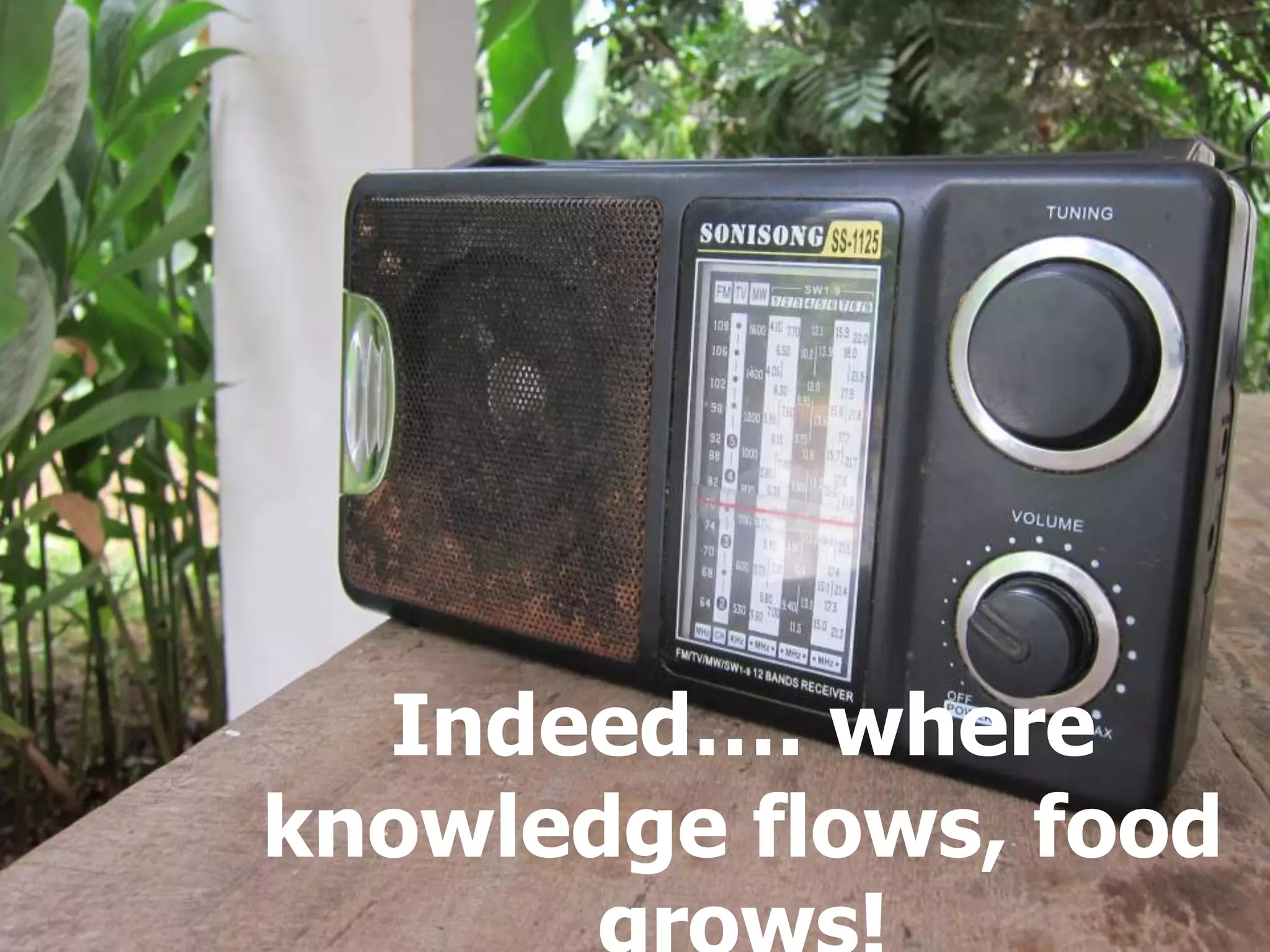
Indeed…. where
knowledge flows, food

31

Case Study on the role of radio based extension and advisory services: Lessons learnt of farm radio programming in Malawi

  • 1.
    Case Study onthe role of radio based extension and advisory services: Lessons learnt of farm radio programming in Malawi‟ Chapota. R, Mthinda, C & Fatch, P. June 2013
  • 2.
    Presentation Outline • Introductionof the case study • Use of radio in agricultural extension and advisory services • Experiences of farm radio programming • Major actors in farm radio programming • Key Lessons Learnt • Conclusion
  • 3.
    Case study commissionedby Modernizing Extension and Advisory Services (MEAS) Project-Michigan State University with support from USAID 3
  • 4.
    • Rationale: •Unavailability ofpublished work in the area of ICT for extension especially role of radio in extension delivery in view of the vibrant farm radio industry in Malawi. •Key Research Question: •What lessons have been learnt in the provision of radio based extension and advisory services focussing on the role Farm Radio Trust has played since inception in 2007. 4
  • 5.
    Benefits of thecase study a) Contribute to the body of knowledge on how radio for extension is one of the information pathways to reach smallholder farmers. b) Help in designing new innovative radio programming approaches in delivery of extension and advisory services that can impact smallholder farmers. 5
  • 6.
  • 7.
    History of useof radio in extension • Since 1958, the then agricultural communications branch used mass media e.g. radio • Deregulation of the airwaves in 1994 changed the broadcasting landscape • The extension policy of 2000 brought pluralism in extension provision 7
  • 8.
  • 9.
    Rationale for Useof Radio in Extension and Advisory Services • Increased accessibility: 64.1%-70% ownership at household level-NSO, 2008; FRI 2010 • Easy to reach even illiterate people • Adaptable to various local languages and dialects esp community radios • Provides platform and voices for end users e.g. farmers • High extension to farmer ratio provides alternative pathway to access of information • Greater reach and scale per unit time 9
  • 10.
    Case Study History •Based on three key projects participated by Farm Radio Trust: – African Farm Radio Research Initiative: 20072010 • Action Research Project – The Farmer Voice Radio: 2009-2012 • Development of alternative extension system – African Farm Radio Results Initiative: 2011-2013 • Implementation of Participatory Radio Campaigns 10
  • 11.
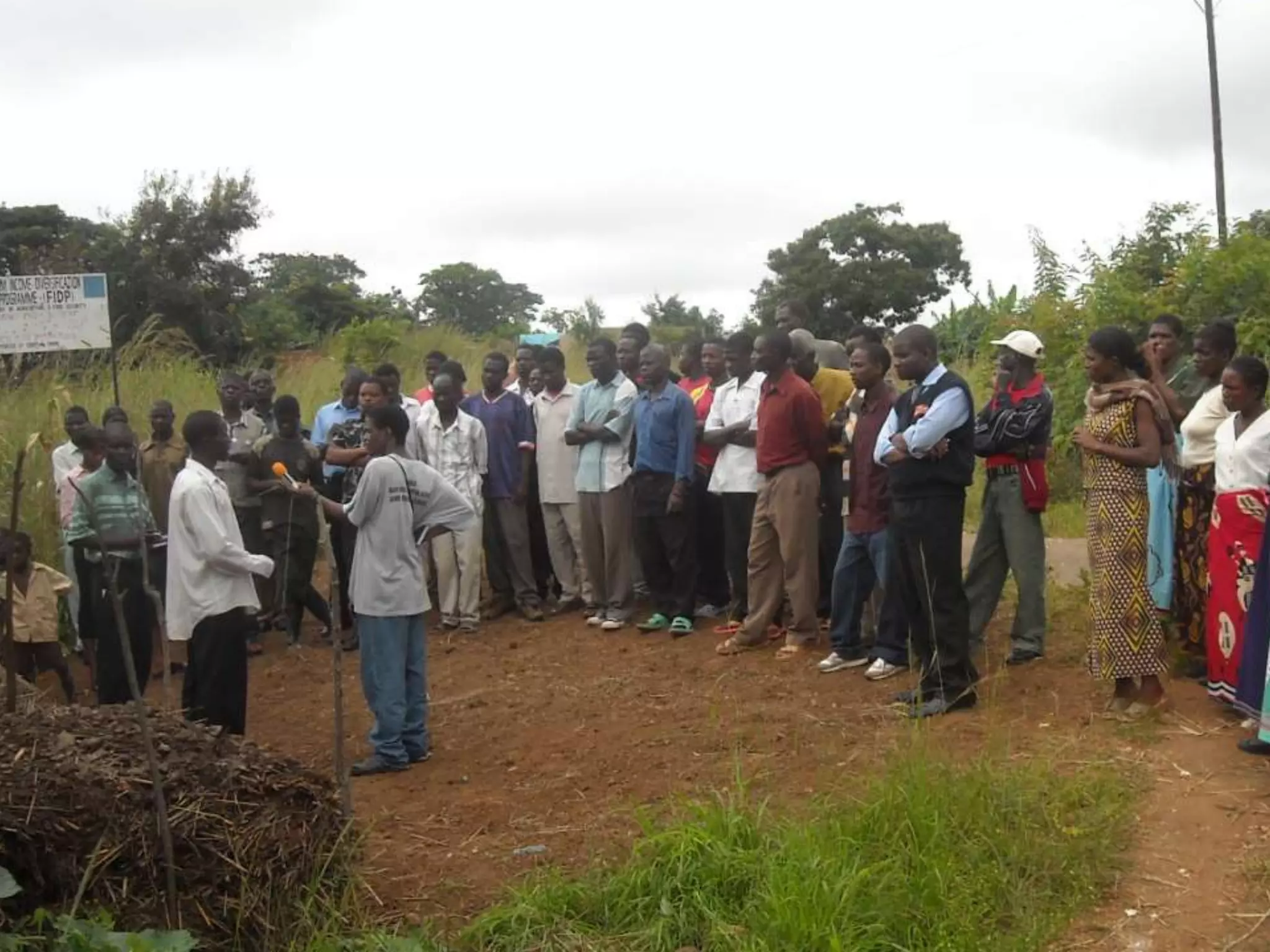
    KEY ACTORS • Smallholder farmers – ‘Even though I had some information about manure use, my practice was inappropriate. But the radio program engaged us farmers as if this was ‘school on air’ from which I learned how to make and use manure properly’ • Radio Stations and broadcasters – ‘we have discovered that the farmer is the best researcher and producer of radio programs and that what we need to do as broadcasters is to collaborate with them and never go with the I know it attitude’ 11
  • 12.
    “The Participatory Radio Campaignthat brings systematic way for producing programs that puts a farmer at the centre has changed the way of thinking and producing programs at our radio station” Ganizani Njanje Nkhotakota Community Radio Station 12 www.farmradio.org
  • 13.
    KEY ACTORS…. • Governmentagricultural extension system – ‘the radio programs have triggered a lot of demand from farmers and I have started to read more than before to cope up with the issues that are on air’ • Knowledge partners such as research institutes and academia – ‘as much as we teach agricultural extension and mention mass media as one of the approaches; this is the first time we have been fully involved to provide technical backstopping to radio programs’ 13
  • 14.
    KEY ACTORS…. • Otheragricultural value chain stakeholders such as NGOs – ‘This is the 1st time in a number of years that we have received farmers request for vetiver grass like this. The radio programs have had tremendous impact in this area; in the past we had to encourage them to do the nurseries and now it is them demanding it from us’ 14
  • 15.
    KEY ACTORS • FarmRadio Trust as a Key Knowledge Broker – ‘There was no player that could bring the farmer, the researcher, an extension worker, the policy maker and the broadcaster on the same table to design radio programming as is being done in this so called Participatory Radio Campaign approach’ 15
  • 16.
    What we havelearned in the implementation of radio based extension and advisory services? 16
  • 17.
    Lesson #1: Thatradio based extension and advisory services has the potential to increases farmers knowledge and improvement in the agronomic practices 17
  • 18.
  • 19.
  • 20.
    Lesson # 2:That Radio is more effective if its programs are developed with and for the farmers: farmers first, farmers throughout and farmers last! 20
  • 21.
  • 22.
  • 23.
    esson # 3:That Radio can trigger demand for better face to face extension and provision of other agricultural support services 23
  • 24.
    Lesson # 4:That Participatory Radio Campaigns are a good example of demand driven extension in practice- The case of choice of innovations and programming 24 style
  • 25.
  • 26.
    Lesson 5: Thatuse of other ICTs such as Mobile Phones enhances effectiveness of radio programs for farmers-Interactivity and near to real time feedback 26
  • 27.
    Lesson # 6:That radio can contribute to increased gender awareness and empowerment 27
  • 28.
  • 29.
    Women farmers havingan opportunity to access agricultural info! 29
  • 30.
    • Farm Radio ProgrammingIs an „Alternative‟ and „Complimentary‟ Information Pathway for Improved Extension Service Delivery 30
  • 31.