Unraveling the Mysteries of Cancer: A
Journey Through the Biology of the
Disease
ARVIND KAUR
:
Cancer
Biology
Cellular Biology Underlying Cancer
Risk factor
Stage of tumor development
Treatment strategies
Description Regarding Cancer Biology
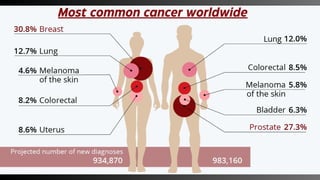
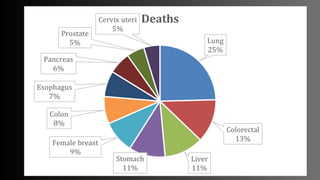
Most common cancer worldwide
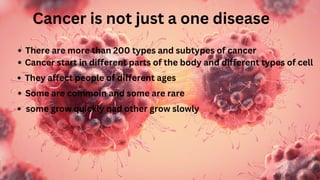
Cancer is not just a one disease
There are more than 200 types and subtypes of cancer
Cancer start in different parts of the body and different types of cell
They affect people of different ages
Some are commoin and some are rare
some grow quickly nad other grow slowly
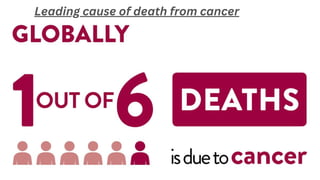
Leading cause of death from cancer
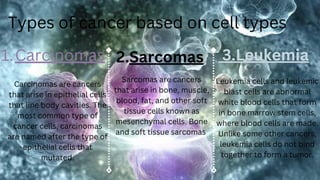
Types of cancer based on cell types
Carcinomas
1.
Carcinomas are cancers
that arise in epithelial cells
that line body cavities. The
most common type of
cancer cells, carcinomas
are named after the type of
epithelial cells that
mutated.
2.Sarcomas
Sarcomas are cancers
that arise in bone, muscle,
blood, fat, and other soft
tissue cells known as
mesenchymal cells. Bone
and soft tissue sarcomas
3.Leukemia
Leukemia cells and leukemic
blast cells are abnormal
white blood cells that form
in bone marrow stem cells,
where blood cells are made.
Unlike some other cancers,
leukemia cells do not bind
together to form a tumor.
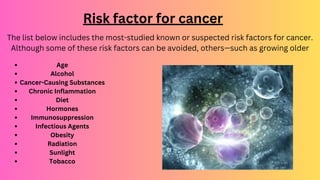
Risk factor for cancer
The list below includes the most-studied known or suspected risk factors for cancer.
Although some of these risk factors can be avoided, others—such as growing older
Age
Alcohol
Cancer-Causing Substances
Chronic Inflammation
Diet
Hormones
Immunosuppression
Infectious Agents
Obesity
Radiation
Sunlight
Tobacco
Risk relate to TABACCO
Tobacco use causes many types of cancer, including cancer of the lung, larynx (voice
box), mouth, esophagus, throat, bladder, kidney, liver, stomach, pancreas, colon and
rectum, and cervix, as well as acute myeloid leukemia. People who use smokeless
tobacco (snuff or chewing tobacco) have increased risks of cancers of the mouth,
esophagus, and pancreas.
Risk relate to OBESITY
People with obesity may have an increased risk of several types of cancer,
including cancers of the breast (in women who have been through menopause),
colon, rectum, endometrium (lining of the uterus), esophagus, kidney, pancreas,
and gallbladder.
Most cancer are derived from from single
cell
All cancers begin in cells. Our bodies
are made up of more than a hundred
million million
(100,000,000,000,000) cells.
Cancer starts with changes in one
cell or a small group of cells.
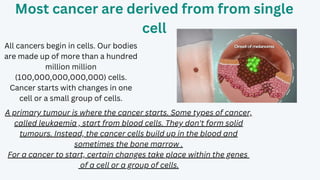
A primary tumour is where the cancer starts. Some types of cancer,
called leukaemia , start from blood cells. They don't form solid
tumours. Instead, the cancer cells build up in the blood and
sometimes the bone marrow .
For a cancer to start, certain changes take place within the genes
of a cell or a group of cells.
Cancer is caused by abnormal by changes in gense
:Mutation
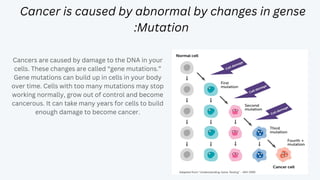
Cancers are caused by damage to the DNA in your
cells. These changes are called “gene mutations.”
Gene mutations can build up in cells in your body
over time. Cells with too many mutations may stop
working normally, grow out of control and become
cancerous. It can take many years for cells to build
enough damage to become cancer.
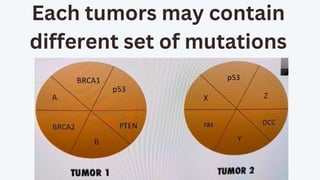
Each tumors may contain
different set of mutations
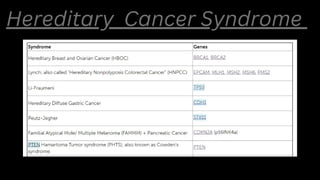
Hereditary Cancer Syndrome
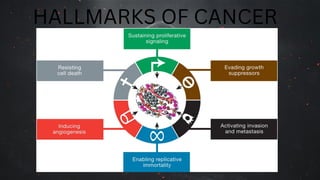
HALLMARKS OF CANCER
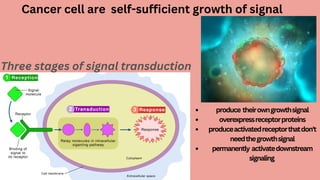
Cancer cell are self-sufficient growth of signal
Three stages of signal transduction
produce theirowngrowthsignal
overexpressreceptorproteins
produceactivatedreceptorthatdon't
needthegrowthsignal
permanently activatedownstream
signaling

Cancer Biology (1).pdf

  • 1.
    Unraveling the Mysteriesof Cancer: A Journey Through the Biology of the Disease ARVIND KAUR :
  • 2.
  • 3.
    Cellular Biology UnderlyingCancer Risk factor Stage of tumor development Treatment strategies Description Regarding Cancer Biology
  • 4.
  • 5.
    Cancer is notjust a one disease There are more than 200 types and subtypes of cancer Cancer start in different parts of the body and different types of cell They affect people of different ages Some are commoin and some are rare some grow quickly nad other grow slowly
  • 6.
    Leading cause ofdeath from cancer
  • 8.
    Types of cancerbased on cell types Carcinomas 1. Carcinomas are cancers that arise in epithelial cells that line body cavities. The most common type of cancer cells, carcinomas are named after the type of epithelial cells that mutated. 2.Sarcomas Sarcomas are cancers that arise in bone, muscle, blood, fat, and other soft tissue cells known as mesenchymal cells. Bone and soft tissue sarcomas 3.Leukemia Leukemia cells and leukemic blast cells are abnormal white blood cells that form in bone marrow stem cells, where blood cells are made. Unlike some other cancers, leukemia cells do not bind together to form a tumor.
  • 9.
    Risk factor forcancer The list below includes the most-studied known or suspected risk factors for cancer. Although some of these risk factors can be avoided, others—such as growing older Age Alcohol Cancer-Causing Substances Chronic Inflammation Diet Hormones Immunosuppression Infectious Agents Obesity Radiation Sunlight Tobacco
  • 10.
    Risk relate toTABACCO Tobacco use causes many types of cancer, including cancer of the lung, larynx (voice box), mouth, esophagus, throat, bladder, kidney, liver, stomach, pancreas, colon and rectum, and cervix, as well as acute myeloid leukemia. People who use smokeless tobacco (snuff or chewing tobacco) have increased risks of cancers of the mouth, esophagus, and pancreas. Risk relate to OBESITY People with obesity may have an increased risk of several types of cancer, including cancers of the breast (in women who have been through menopause), colon, rectum, endometrium (lining of the uterus), esophagus, kidney, pancreas, and gallbladder.
  • 11.
    Most cancer arederived from from single cell All cancers begin in cells. Our bodies are made up of more than a hundred million million (100,000,000,000,000) cells. Cancer starts with changes in one cell or a small group of cells. A primary tumour is where the cancer starts. Some types of cancer, called leukaemia , start from blood cells. They don't form solid tumours. Instead, the cancer cells build up in the blood and sometimes the bone marrow . For a cancer to start, certain changes take place within the genes of a cell or a group of cells.
  • 12.
    Cancer is causedby abnormal by changes in gense :Mutation Cancers are caused by damage to the DNA in your cells. These changes are called “gene mutations.” Gene mutations can build up in cells in your body over time. Cells with too many mutations may stop working normally, grow out of control and become cancerous. It can take many years for cells to build enough damage to become cancer.
  • 13.
    Each tumors maycontain different set of mutations
  • 14.
  • 15.
  • 16.
    Cancer cell areself-sufficient growth of signal Three stages of signal transduction produce theirowngrowthsignal overexpressreceptorproteins produceactivatedreceptorthatdon't needthegrowthsignal permanently activatedownstream signaling