CANAPE
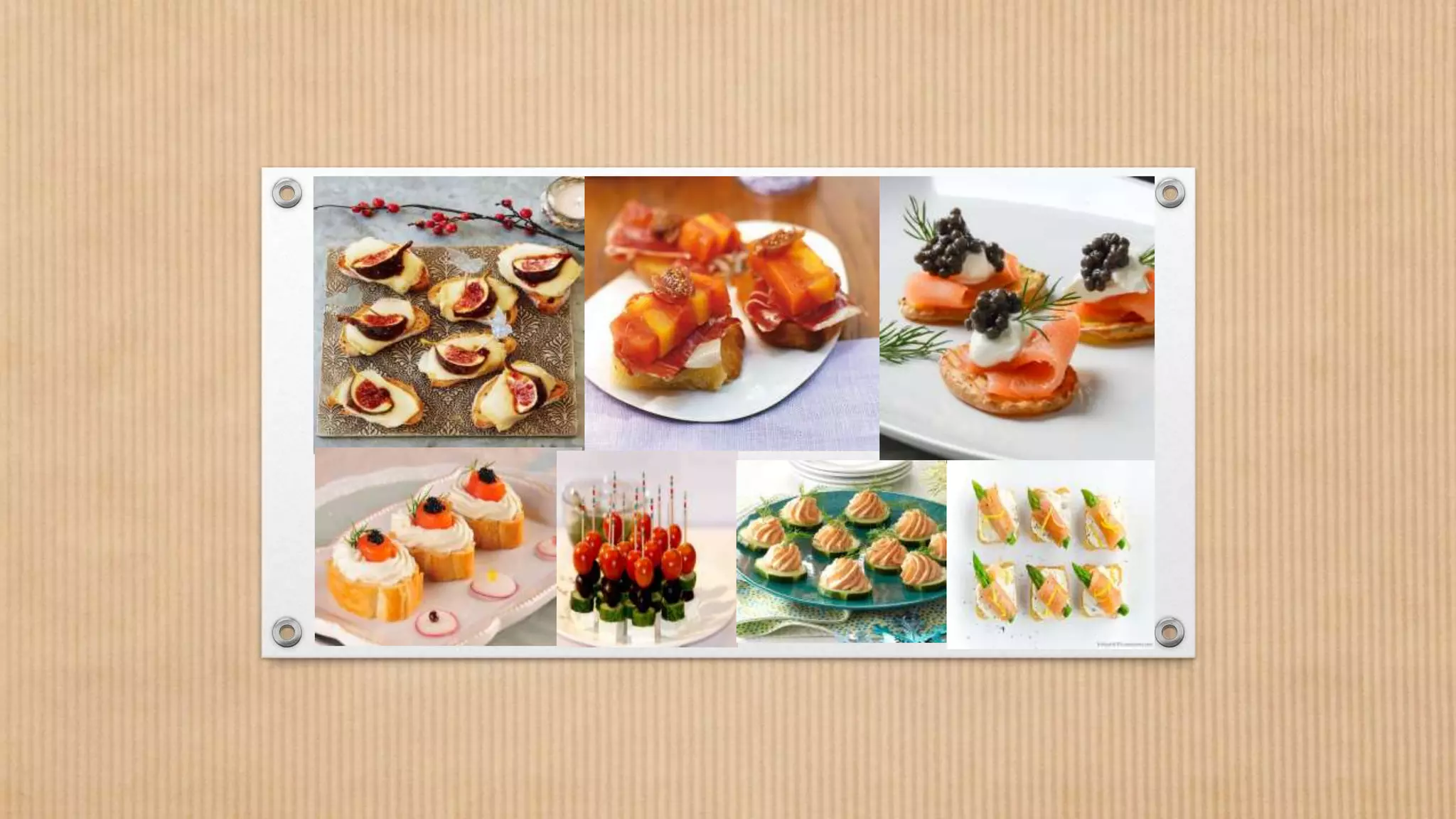
bite-size open faced sandwiches consist of tiny
portions of food presented on bases of
bread, toast, or pastry easily handled and
eaten.
Canapés Consists of Three Parts
1. Base – holds the spread and garnish.
Example:
Crackers Bread Cutouts
Tiny biscuits Chips
Miniature pancakes
2. Spread – placed on the top of the base so the garnish
sticks to it without falling off.
Three Types of Spread
A. Flavored Butter
B. Flavored Cream Cheese
C. Meat or Fish salad Spreads
3. Garnish – any food item or combination of items placed on top
of spread which usually gives color, design, and texture or flavour
accent to canapé.
Food Items Used to Decorate Canapés
A. Vegetables, pickles and relishes
Example:
Tomatoes Olives Parsley
Cucumber slices Asparagus tips
Pickled Onions Radish slices
B. Fish
Example:
Salmon Caviar Tuna Flakes Shrimp
C. Meats
Examples:
Ham Turkey Chicken Roast beef
D. Cheese, hard cooked egg slices
Guidelines for Assembling Canapés
1. Good mise en place is essential.
2. Assemble as close as possible to serving time.
3. Select harmonious flavour combinations in spreads and garnish such
as;
Mustard and ham Pimiento cream cheese and sardines
Lemon Butter and caviar Tuna salad and capers
Anchovy butter, hard cooked egg slice and olive
4. Make sure that at least one of the
ingredients is spicy in flavor.
5. Use high quality of ingredients.
6. Keep it simple.
7. Arrange canapés carefully and
attractively on trays.
COCKTAILS
Cocktail appetizers are made of seafood or fruit,
usually with a tart and tangy sauce. These appetizers
are always served chilled, often on a bed of crushed
ice.
Kinds of Cocktail Appetizers
1. Oysters and clams on the half
2. Shrimps shell
3. Crab meat
4. Lobster
5. Fruits
Relishes
are raw or pickled vegetables cut into attractive shapes and served as
appetizer.
Relishes include two categories:
1. Raw vegetables with dips
This are known as crudités ( croodeetays). Cru in French means “raw”.
Common bite size, cut raw vegetables serve
with dips are:
Celery Radishes
Tomatoes Cherry
Green and red bell pepper
Carrots Cucumber
Cauliflower Broccoli Stems
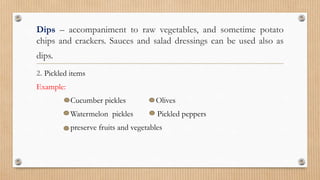
Dips – accompaniment to raw vegetables, and sometime potato
chips and crackers. Sauces and salad dressings can be used also as
dips.
2. Pickled items
Example:
Cucumber pickles Olives
Watermelon pickles Pickled peppers
preserve fruits and vegetables
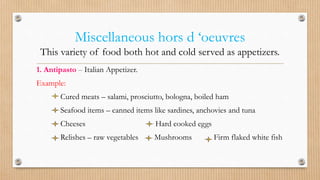
Miscellaneous hors d ‘oeuvres
This variety of food both hot and cold served as appetizers.
1. Antipasto – Italian Appetizer.
Example:
Cured meats – salami, prosciutto, bologna, boiled ham
Seafood items – canned items like sardines, anchovies and tuna
Cheeses Hard cooked eggs
Relishes – raw vegetables Mushrooms Firm flaked white fish
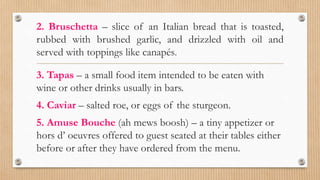
2. Bruschetta – slice of an Italian bread that is toasted,
rubbed with brushed garlic, and drizzled with oil and
served with toppings like canapés.
3. Tapas – a small food item intended to be eaten with
wine or other drinks usually in bars.
4. Caviar – salted roe, or eggs of the sturgeon.
5. Amuse Bouche (ah mews boosh) – a tiny appetizer or
hors d’ oeuvres offered to guest seated at their tables either
before or after they have ordered from the menu.
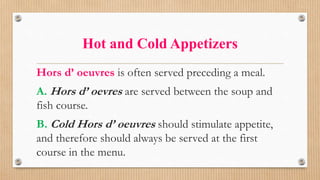
Hot and Cold Appetizers
Hors d’ oeuvres is often served preceding a meal.
A. Hors d’ oevres are served between the soup and
fish course.
B. Cold Hors d’ oeuvres should stimulate appetite,
and therefore should always be served at the first
course in the menu.
Five Types of Cold Hors d’ oeuvres
 Plate of hors d’ oeuvres may consist of shrimps, smoked
beef, poached egg, Spanish sardines and lettuce.
 Grisson Platter may consists of two kinds of cold meat, such
as ham, smoked beef and peppered ham.
 Hors d’ oeuvres Platter may consists of shrimps with jelly,
asparagus tip with mushrooms, sardines with onion rings,
tomatoes stuffed with salad and chicken loaf.
“Small quantity but big in quality.”
Assorted hors d’ oeuvres can be served in
special portioned platters with dishes or even from
a serving cart.
 Rich hors d’ oeuvres – still a classical form of
presentation. Lobsters should always be included.
Fundamentals of Plating
1. Balance
2. Portion size
3. Arrangement on the plate
Basic Principles of Platter Presentation
1. The Three Elements of Buffet Platters
Center piece or Grosse piece (gross pyess). This may
be an uncut portion of the main food item.
The slices or serving portions should be arranged
artistically.
The garnish should be artistically done in proportion
to the cuts slices.
2. The food should be easy to handle and and serve, so that
one portion can be remove without ruining the
arrangement
3. A simple design is best.
4. Attractive platter presentation may be made on silver or
other metals, on mirrors, chinaware, plastic ware, wood or
any other materials provided they are presentable and
suitable for food.
5. Once a piece of food has touched the tray, do not
remove it.
6. Think of the platter as part of the whole.
Designing the Platter
1. Plan ahead.
2. Get movement into your design.
3. Give the design a focal point.
4. Keep items in proportion.
5. Make the garnish count.
6. Don’t drown every plate in sauce or gravy.
7. Keep it simple.
“ Simplicity is more attractive than complicated
designs.”
8. Let the guest see the best side of everything.
•Thank You!!!
•  

CANAPE.pptx

  • 2.
    CANAPE bite-size open facedsandwiches consist of tiny portions of food presented on bases of bread, toast, or pastry easily handled and eaten.
  • 3.
    Canapés Consists ofThree Parts 1. Base – holds the spread and garnish. Example: Crackers Bread Cutouts Tiny biscuits Chips Miniature pancakes
  • 4.
    2. Spread –placed on the top of the base so the garnish sticks to it without falling off. Three Types of Spread A. Flavored Butter B. Flavored Cream Cheese C. Meat or Fish salad Spreads
  • 5.
    3. Garnish –any food item or combination of items placed on top of spread which usually gives color, design, and texture or flavour accent to canapé. Food Items Used to Decorate Canapés A. Vegetables, pickles and relishes Example: Tomatoes Olives Parsley Cucumber slices Asparagus tips Pickled Onions Radish slices
  • 6.
    B. Fish Example: Salmon CaviarTuna Flakes Shrimp C. Meats Examples: Ham Turkey Chicken Roast beef D. Cheese, hard cooked egg slices
  • 7.
    Guidelines for AssemblingCanapés 1. Good mise en place is essential. 2. Assemble as close as possible to serving time. 3. Select harmonious flavour combinations in spreads and garnish such as; Mustard and ham Pimiento cream cheese and sardines Lemon Butter and caviar Tuna salad and capers Anchovy butter, hard cooked egg slice and olive
  • 8.
    4. Make surethat at least one of the ingredients is spicy in flavor. 5. Use high quality of ingredients. 6. Keep it simple. 7. Arrange canapés carefully and attractively on trays.
  • 9.
    COCKTAILS Cocktail appetizers aremade of seafood or fruit, usually with a tart and tangy sauce. These appetizers are always served chilled, often on a bed of crushed ice.
  • 10.
    Kinds of CocktailAppetizers 1. Oysters and clams on the half 2. Shrimps shell 3. Crab meat 4. Lobster 5. Fruits
  • 11.
    Relishes are raw orpickled vegetables cut into attractive shapes and served as appetizer. Relishes include two categories: 1. Raw vegetables with dips This are known as crudités ( croodeetays). Cru in French means “raw”.
  • 12.
    Common bite size,cut raw vegetables serve with dips are: Celery Radishes Tomatoes Cherry Green and red bell pepper Carrots Cucumber Cauliflower Broccoli Stems
  • 13.
    Dips – accompanimentto raw vegetables, and sometime potato chips and crackers. Sauces and salad dressings can be used also as dips. 2. Pickled items Example: Cucumber pickles Olives Watermelon pickles Pickled peppers preserve fruits and vegetables
  • 14.
    Miscellaneous hors d‘oeuvres This variety of food both hot and cold served as appetizers. 1. Antipasto – Italian Appetizer. Example: Cured meats – salami, prosciutto, bologna, boiled ham Seafood items – canned items like sardines, anchovies and tuna Cheeses Hard cooked eggs Relishes – raw vegetables Mushrooms Firm flaked white fish
  • 15.
    2. Bruschetta –slice of an Italian bread that is toasted, rubbed with brushed garlic, and drizzled with oil and served with toppings like canapés. 3. Tapas – a small food item intended to be eaten with wine or other drinks usually in bars. 4. Caviar – salted roe, or eggs of the sturgeon. 5. Amuse Bouche (ah mews boosh) – a tiny appetizer or hors d’ oeuvres offered to guest seated at their tables either before or after they have ordered from the menu.
  • 16.
    Hot and ColdAppetizers Hors d’ oeuvres is often served preceding a meal. A. Hors d’ oevres are served between the soup and fish course. B. Cold Hors d’ oeuvres should stimulate appetite, and therefore should always be served at the first course in the menu.
  • 17.
    Five Types ofCold Hors d’ oeuvres  Plate of hors d’ oeuvres may consist of shrimps, smoked beef, poached egg, Spanish sardines and lettuce.  Grisson Platter may consists of two kinds of cold meat, such as ham, smoked beef and peppered ham.  Hors d’ oeuvres Platter may consists of shrimps with jelly, asparagus tip with mushrooms, sardines with onion rings, tomatoes stuffed with salad and chicken loaf.
  • 18.
    “Small quantity butbig in quality.” Assorted hors d’ oeuvres can be served in special portioned platters with dishes or even from a serving cart.  Rich hors d’ oeuvres – still a classical form of presentation. Lobsters should always be included.
  • 19.
    Fundamentals of Plating 1.Balance 2. Portion size 3. Arrangement on the plate
  • 20.
    Basic Principles ofPlatter Presentation 1. The Three Elements of Buffet Platters Center piece or Grosse piece (gross pyess). This may be an uncut portion of the main food item. The slices or serving portions should be arranged artistically. The garnish should be artistically done in proportion to the cuts slices.
  • 21.
    2. The foodshould be easy to handle and and serve, so that one portion can be remove without ruining the arrangement 3. A simple design is best. 4. Attractive platter presentation may be made on silver or other metals, on mirrors, chinaware, plastic ware, wood or any other materials provided they are presentable and suitable for food. 5. Once a piece of food has touched the tray, do not remove it.
  • 22.
    6. Think ofthe platter as part of the whole. Designing the Platter 1. Plan ahead. 2. Get movement into your design. 3. Give the design a focal point. 4. Keep items in proportion. 5. Make the garnish count.
  • 23.
    6. Don’t drownevery plate in sauce or gravy. 7. Keep it simple. “ Simplicity is more attractive than complicated designs.” 8. Let the guest see the best side of everything.
  • 24.