Cocktails- are usually juices of orange,
pineapple, grapefruit or tomatoes served with
cold salad dressings. It may be in the form of
a fruit or vegetable juice mixed with little
alcoholic beverage or seafood like shrimps,
crabs, or lobsters served with slightly
seasoned sauce.
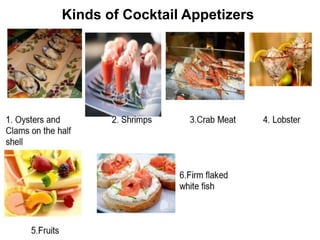
Kinds of Cocktail Appetizers
Hors D’ Oeuvres- is small portion of highly
seasoned foods, it is a combination of canapés,
olives, stuffed celery, pickled radishes, and fish.
It is served on individual plate when guests are
seated. Sometimes this is simply placed on a
platter and passed around. Hors d’oeuvres are
served cold or hot.
Miscellaneous hors d
‘oeuvres
These are variety of food both hot
and cold served as appetizers. The
serving is smaller in unit size or
portion size that can be eaten with
forks from small plates or with
fingers.
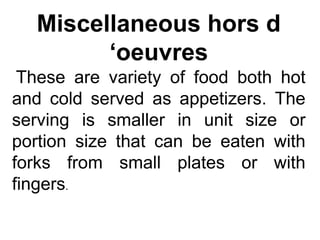
Cured meats –
Salami,
prosciutto,
bologna,
boiled ham
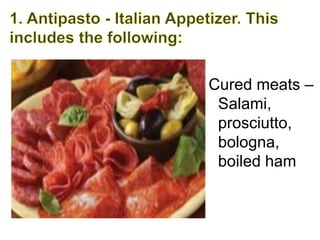
Seafood items-
Canned items
like sardines,
anchovies, and
tuna
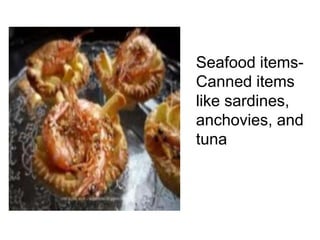
Cheeses –
provolone,
mozzarella
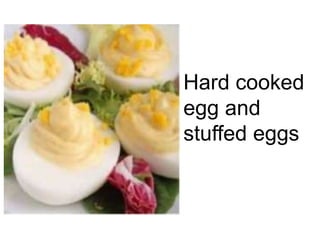
Hard cooked
egg and
stuffed eggs
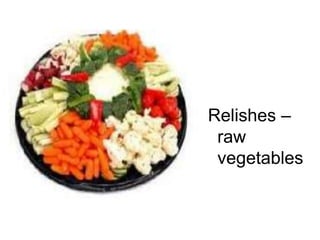
Relishes –
raw
vegetables
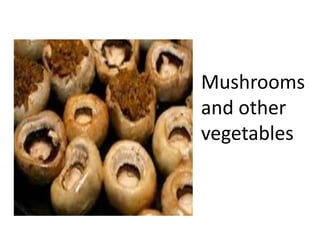
Mushrooms
and other
vegetables
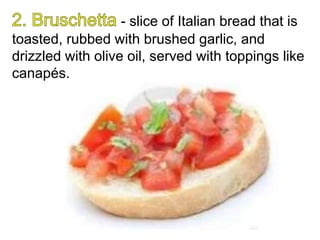
- slice of Italian bread that is
toasted, rubbed with brushed garlic, and
drizzled with olive oil, served with toppings like
canapés.
- a small food item intended to be
eaten with wine or other drinks usually in bars. They
are served in a small portion intended to be eaten
immediately.
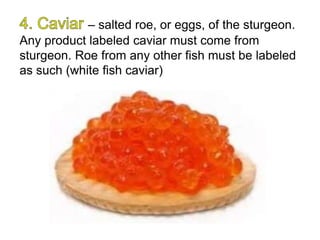
– salted roe, or eggs, of the sturgeon.
Any product labeled caviar must come from
sturgeon. Roe from any other fish must be labeled
as such (white fish caviar)
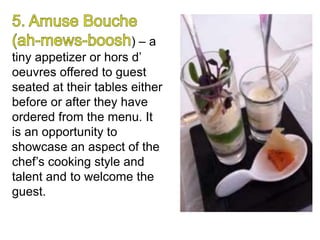
) – a
tiny appetizer or hors d’
oeuvres offered to guest
seated at their tables either
before or after they have
ordered from the menu. It
is an opportunity to
showcase an aspect of the
chef’s cooking style and
talent and to welcome the
guest.
Canapé- are made out of thin slices of bread in different
shapes. The bread may be toasted, sautéed in butter or
dipped in a well-seasoned mixture of egg, cheese, fish, or
meat then deep-fat fried. It is a finger food consisting of three
parts: a base, a spread or topping and garnish. They could
be served hot or cold. There are no set recipes for the
making of canapés. You may create your own combination of
several different colored items on the cut pieces of bread,
toasted or fried and biscuits etc. The larger canapés are
termed as ZAKUSKIS after the Chef Zakuski.
Canapés – bite-size open faced sandwiches consist of
tiny portions of food presented on bases of bread, toast,
or pastry easily handled and eaten.
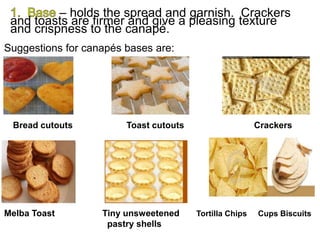
– holds the spread and garnish. Crackers
and toasts are firmer and give a pleasing texture
and crispness to the canapé.
Suggestions for canapés bases are:
Bread cutouts Toast cutouts Crackers
Melba Toast Tiny unsweetened Tortilla Chips Cups Biscuits
pastry shells
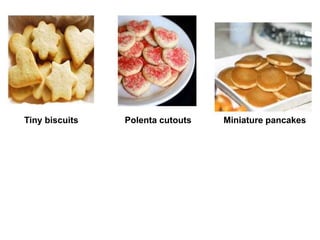
Tiny biscuits Polenta cutouts Miniature pancakes
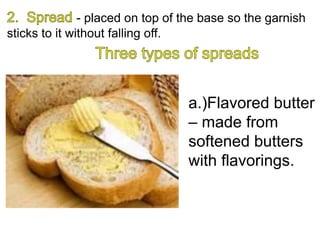
- placed on top of the base so the garnish
sticks to it without falling off.
a.)Flavored butter
– made from
softened butters
with flavorings.
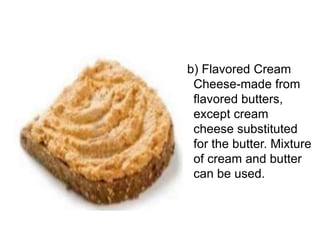
b) Flavored Cream
Cheese-made from
flavored butters,
except cream
cheese substituted
for the butter. Mixture
of cream and butter
can be used.
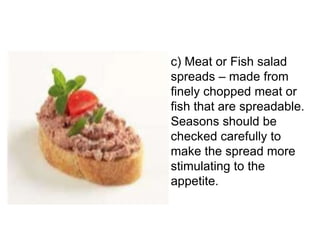
c) Meat or Fish salad
spreads – made from
finely chopped meat or
fish that are spreadable.
Seasons should be
checked carefully to
make the spread more
stimulating to the
appetite.
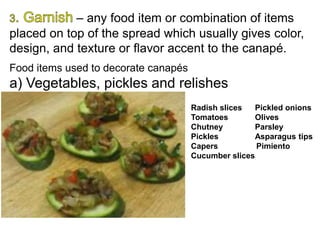
– any food item or combination of items
placed on top of the spread which usually gives color,
design, and texture or flavor accent to the canapé.
Food items used to decorate canapés
a) Vegetables, pickles and relishes
Radish slices Pickled onions
Tomatoes Olives
Chutney Parsley
Pickles Asparagus tips
Capers Pimiento
Cucumber slices
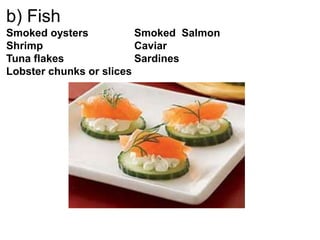
b) Fish
Smoked oysters Smoked Salmon
Shrimp Caviar
Tuna flakes Sardines
Lobster chunks or slices
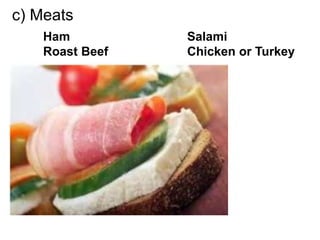
c) Meats
Ham Salami
Roast Beef Chicken or Turkey
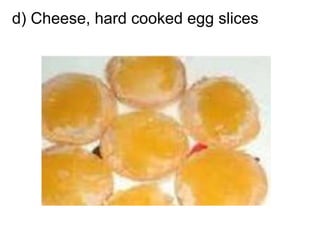
d) Cheese, hard cooked egg slices
1. Good mise en place is essentials.
In making canapés especially for large
functions, all bases, spreads and
garnishes must be prepared ahead of
time so that final assembly may go
quickly and smoothly.
2. Assemble as close as possible to serving
time.
Bases quickly become soggy, and spreads
and garnishes dry out easily. After placing
them in a tray, cover them lightly with
plastic and held for a short time under
refrigeration. Safe food handling and
storage must be observed.
3. Select harmonious flavor combinations
in spreads and garnish such as:
Mustard and ham
Lemon butter and caviar
Pimiento cream cheese and sardines
Tuna salad and capers
Anchovy butter, hard cooked egg slice
and olive.
4. Make sure that at least one of the
ingredients is spicy in flavor.
A bland canapé has little value as
an appetizer.
5. Use high quality ingredients.
Leftover can be used for
canapés, but they must be
carefully handled and stored to
retain freshness.
6. Keep it simple.
Simple meat arrangements are
more attractive than extravagant
one. Be sure that canapés hold
together and do not fall apart in the
customers hands.
7. Arrange canapés carefully and
attractively on trays.
Each tray should carry an
assortment of flavor and textures, so
there is something for every taste.

CLASSIFICATIONS OF APPETIZERS.pptx

  • 2.
    Cocktails- are usuallyjuices of orange, pineapple, grapefruit or tomatoes served with cold salad dressings. It may be in the form of a fruit or vegetable juice mixed with little alcoholic beverage or seafood like shrimps, crabs, or lobsters served with slightly seasoned sauce.
  • 3.
  • 4.
    Hors D’ Oeuvres-is small portion of highly seasoned foods, it is a combination of canapés, olives, stuffed celery, pickled radishes, and fish. It is served on individual plate when guests are seated. Sometimes this is simply placed on a platter and passed around. Hors d’oeuvres are served cold or hot.
  • 5.
    Miscellaneous hors d ‘oeuvres Theseare variety of food both hot and cold served as appetizers. The serving is smaller in unit size or portion size that can be eaten with forks from small plates or with fingers.
  • 6.
  • 7.
    Seafood items- Canned items likesardines, anchovies, and tuna
  • 8.
  • 9.
  • 10.
  • 11.
  • 12.
    - slice ofItalian bread that is toasted, rubbed with brushed garlic, and drizzled with olive oil, served with toppings like canapés.
  • 13.
    - a smallfood item intended to be eaten with wine or other drinks usually in bars. They are served in a small portion intended to be eaten immediately.
  • 14.
    – salted roe,or eggs, of the sturgeon. Any product labeled caviar must come from sturgeon. Roe from any other fish must be labeled as such (white fish caviar)
  • 15.
    ) – a tinyappetizer or hors d’ oeuvres offered to guest seated at their tables either before or after they have ordered from the menu. It is an opportunity to showcase an aspect of the chef’s cooking style and talent and to welcome the guest.
  • 16.
    Canapé- are madeout of thin slices of bread in different shapes. The bread may be toasted, sautéed in butter or dipped in a well-seasoned mixture of egg, cheese, fish, or meat then deep-fat fried. It is a finger food consisting of three parts: a base, a spread or topping and garnish. They could be served hot or cold. There are no set recipes for the making of canapés. You may create your own combination of several different colored items on the cut pieces of bread, toasted or fried and biscuits etc. The larger canapés are termed as ZAKUSKIS after the Chef Zakuski.
  • 17.
    Canapés – bite-sizeopen faced sandwiches consist of tiny portions of food presented on bases of bread, toast, or pastry easily handled and eaten.
  • 18.
    – holds thespread and garnish. Crackers and toasts are firmer and give a pleasing texture and crispness to the canapé. Suggestions for canapés bases are: Bread cutouts Toast cutouts Crackers Melba Toast Tiny unsweetened Tortilla Chips Cups Biscuits pastry shells
  • 19.
    Tiny biscuits Polentacutouts Miniature pancakes
  • 20.
    - placed ontop of the base so the garnish sticks to it without falling off. a.)Flavored butter – made from softened butters with flavorings.
  • 21.
    b) Flavored Cream Cheese-madefrom flavored butters, except cream cheese substituted for the butter. Mixture of cream and butter can be used.
  • 22.
    c) Meat orFish salad spreads – made from finely chopped meat or fish that are spreadable. Seasons should be checked carefully to make the spread more stimulating to the appetite.
  • 23.
    – any fooditem or combination of items placed on top of the spread which usually gives color, design, and texture or flavor accent to the canapé. Food items used to decorate canapés a) Vegetables, pickles and relishes Radish slices Pickled onions Tomatoes Olives Chutney Parsley Pickles Asparagus tips Capers Pimiento Cucumber slices
  • 24.
    b) Fish Smoked oystersSmoked Salmon Shrimp Caviar Tuna flakes Sardines Lobster chunks or slices
  • 25.
    c) Meats Ham Salami RoastBeef Chicken or Turkey
  • 26.
    d) Cheese, hardcooked egg slices
  • 28.
    1. Good miseen place is essentials. In making canapés especially for large functions, all bases, spreads and garnishes must be prepared ahead of time so that final assembly may go quickly and smoothly.
  • 29.
    2. Assemble asclose as possible to serving time. Bases quickly become soggy, and spreads and garnishes dry out easily. After placing them in a tray, cover them lightly with plastic and held for a short time under refrigeration. Safe food handling and storage must be observed.
  • 30.
    3. Select harmoniousflavor combinations in spreads and garnish such as: Mustard and ham Lemon butter and caviar Pimiento cream cheese and sardines Tuna salad and capers Anchovy butter, hard cooked egg slice and olive.
  • 31.
    4. Make surethat at least one of the ingredients is spicy in flavor. A bland canapé has little value as an appetizer.
  • 32.
    5. Use highquality ingredients. Leftover can be used for canapés, but they must be carefully handled and stored to retain freshness.
  • 33.
    6. Keep itsimple. Simple meat arrangements are more attractive than extravagant one. Be sure that canapés hold together and do not fall apart in the customers hands.
  • 34.
    7. Arrange canapéscarefully and attractively on trays. Each tray should carry an assortment of flavor and textures, so there is something for every taste.