



Cameco Community
    Relations


     Date:           November 16, 1998

     Prepared For:   Ms. Rita Mirwald
                             Senior Vice President
                             Human Resources and Corporate Affairs
                             Cameco Corporaton

     Prepared By:    Wayne Dunn & Associates
                           Canada
                           Tel: +1-250-743-7619
                           Fax: +1-250-743-7659
-i-


i          ACKNOWLEDGMENTS

The following report was prepared based on interviews conducted with senior executives and
managers of Cameco Corporation. A full list of the interviewees and the time and place of the
interviews is contained in Section 9. The recommendations developed in Section 8 are based
on our professional assessment of the situation. Although many of the recommendations are
generally consistent with the thoughts expressed in the interviews.

Without exception, everyone we interviewed was very open in their comments and generous
with their time. While everyone was extremely helpful and supportive, there were a number of
individuals who provided the logistical support and information that facilitated our work and
made the task much easier.           We would like to extend a special thank you to;
Mr. Jamie McIntyre, Manager, Human Resources who was the key facilitator for the entire
process; to Ms. JoAnne Arnold, who was always ready to drop whatever she was doing and
assist us; and, to Ms. Julia Ewing, Manager, Northern Affairs, who organized and facilitated an
extremely productive process in La Ronge.            And finally, we would like to thank
Ms. Rita Mirwald, Senior Vice-President, Human Resources and Corporate Relations for giving
our firm the opportunity to work with Cameco in this exciting area.

Any comments on this report can be directed to the writer at:

Wayne Dunn
Wayne Dunn & Associates
2457 Bakerview Rd
Mill Bay, BC V0R 2P0
CANADA
Tel:   250-743-7619
Fax: 250-743-7659
Email: wayne@waynedunn.com


    Cameco Community Relations (electronic version)
    November 16, 1998
- ii -


ii          TABLE OF CONTENTS

i       Acknowledgments ..................................................................................................... i

ii      Table of Contents..................................................................................................... ii

1       Executive Summary ................................................................................................ 1
     1.1 NORTHERN SASKATCHEWAN COMMUNITY RELATIONS ................................................... 1
     1.2 CORPORATE WIDE COMMUNITY RELATIONS ISSUES ........................................................ 2

2       Introduction and Background................................................................................ 4
     2.1 BACKGROUND – A SHORT GLOBAL PERSPECTIVE ON COMMUNITY RELATIONS ............. 4
     2.2 TERMS OF REFERENCE ....................................................................................................... 5

3       Methodology............................................................................................................. 5
     3.1 RESEARCH METHODOLOGY ............................................................................................... 5
     3.2 DEVELOPMENT TECHNOLOGY SYSTEM© .......................................................................... 6
       3.2.1 Corporate Ethos ........................................................................................................ 6
     3.3 CONSTRUCTIVE INTERACTIONS ......................................................................................... 7
       3.3.1 Measuring, Monitoring and Reporting...................................................................... 8

4       Community Relations Programs and Initiatives in Northern Saskatchewan.... 8
     4.1 PROCUREMENT................................................................................................................. 9
       4.1.1 Northern Business Development ............................................................................... 9
     4.2 EMPLOYMENT ................................................................................................................ 13
       4.2.1 Northern/Native Employment .................................................................................. 14
       4.2.2 Northern Summer Student Program ........................................................................ 18
     4.3 CAPACITY DEVELOPMENT ............................................................................................ 19
       4.3.1 Multi-party Training Plan (MPTP) ......................................................................... 19
       4.3.2 Junior Achievement - The Economics of Staying in School .................................... 20
       4.3.3 Cameco Access Program for Engineering and Science (CAPES)........................... 21
       4.3.4 Northern Scholarship Program ............................................................................... 22
     4.4 TRAINING AND EDUCATION ........................................................................................... 23
       4.4.1 Athabasca Education Awards.................................................................................. 23
     4.5 LEVERAGING RELATIONSHIPS ...................................................................................... 24
       4.5.1 Athabasca Working Group ...................................................................................... 24
       4.5.2 Environmental Quality Committees (EQC) ............................................................. 26
       4.5.3 Northern Liaison Committee ................................................................................... 27
     4.6 GRANTS AND DONATIONS .............................................................................................. 28


    Cameco Community Relations (electronic version)
    November 16, 1998
- iii -


       4.6.1 Educational School/Community Tours of Northern Operations ............................. 28
       4.6.2 Corporate Donations and Sponsorship Program .................................................... 30


5      Summary of Internal Interviews .......................................................................... 31


6      Analysis of Programs and Initiatives in Northern Saskatchewan .................... 33
    6.1 OVERALL ANALYSIS ........................................................................................................ 34
    6.2 CORPORATE ETHOS ......................................................................................................... 34
    6.3 CONSTRUCTIVE INTERACTIONS ....................................................................................... 36
      6.3.1 Program Placement on the Interaction Continuum©............................................... 36
    6.4 MEASURING AND MONITORING....................................................................................... 39

7      Observations .......................................................................................................... 39
    7.1 ON COMMUNITY RELATIONS IN NORTHERN SASKATCHEWAN ....................................... 39
    7.2 ON COMMUNITY RELATIONS GENERALLY ...................................................................... 40

8      Recommendations ................................................................................................. 41
    8.1 RECOMMENDATIONS – NORTHERN SASKATCHEWAN PROGRAM .................................... 41
    8.2 IMPLEMENTATION AND STRATEGIC STEPS ...................................................................... 43

9      List of Interviewees ............................................................................................... 44
    9.1 CAMECO INTERVIEWEES.................................................................................................. 44
    9.2 NON CAMECO INTERVIEWEES ......................................................................................... 45


List of Figures and Graphs

DEVELOPMENT TECHNOLOGY MODEL ........................................................................... 6
INTERACTION CONTINUUM .............................................................................................. 7
CAMECO PURCHASES FROM NORTHERN SUPPLIERS – 1991-98 ................................... 12
ABORIGINAL EMPLOYMENT - PERCENTAGE OF WORKFORCE 1989-98....................... 16
NUMBER OF ABORIGINAL EMPLOYEES - 1989-98 ......................................................... 17
PLACEMENT OF PROGRAMS ALONG THE INTERACTION CONTINUUM ......................... 37


 Cameco Community Relations (electronic version)
 November 16, 1998
-1-


                                                             The review and analysis concluded that,
1       EXECUTIVE SUMMARY                                    while Cameco is, essentially, doing a very
                                                             effective job of managing community
Cameco contracted Wayne Dunn &                               relations in Northern Saskatchewan, it does
Associates to undertake a review of its                      not appear to have a system to ensure that
community relations programs and                             community      relations    are   managed
activities in Northern Saskatchewan. The                     effectively in other areas where the
purpose of the review was to assist Cameco                   company operates. As well, the analysis
to build from its Northern Saskatchewan                      noted some specific opportunities to
experience and to more effectively manage                    improve Cameco’s community relations
community relations throughout the                           program in Northern Saskatchewan through
corporation. The project was conducted                       a more standardized approach to managing
through interviews (internal and external)                   the process.
and through a review of relevant internal
documents and information. The analysis                      The following two sub-sections briefly
was undertaken using the Development                         outline the analysis and recommendations
Technology System© 1 developed by Wayne                      for Cameco’s community relations efforts
Dunn & Associates.                                           in Northern Saskatchewan and also those of
                                                             a more corporate-wide nature.
Public and community relations is growing
in importance for the mining industry.
Communities are playing an increasingly                      1.1   Northern        Saskatchewan
important role in mineral exploration and                          Community Relations
development projects. Without a ‘local
license 2’ there is an increased risk that                   While Cameco’s community relations
community opposition will add cost and                       program in Northern Saskatchewan is
complexity to projects (and even force                       undoubtedly one of the most successful
abandonment in some instances). The                          examples of mining/community relations
international media and a growing number                     anywhere in the world, there are
of non-Governmental Organizations are                        opportunities to enhance it and make it
monitoring              corporate/community                  easier for the company to build from the
relationships and are quick to bring                         Saskatchewan experience and standardize
problems and issues to public attention.                     community relations throughout worldwide
This is especially significant for Cameco,                   operations.
as problems associated with Cameco
activities anywhere in the world can                         There is an inconsistent level of
increase international scrutiny of uranium                   understanding of the importance and the
mining       activities     in      Northern                 scope of community relations. This can
Saskatchewan.                                                become divisive if the lack of
                                                             understanding causes resentment towards
                                                             the preferences given to Northern workers
1
  The Development Technology System is explained             and suppliers.      Cameco may wish to
in detail in Section 3.2
2                                                            consider efforts to ‘socialize’ community
  This is a term coined by the International Finance
Corporation to refer to the need for a level of              relations throughout the organization
community acceptance of a project.                           through activities such as:

    Cameco Community Relations (electronic version)
    November 16, 1998
-2-


                                                         approach, they have evolved to the point
        •    Communications Materials –                  where they now form an inter-related
             developing and using materials              system, with programs such as pre-
             to effectively communicate                  employment training and the multi-party
             what Cameco is attempting to                training program being crucial to the
             accomplish in community                     success    of    the    Northern/native
             relations and why it is                     employment program.
             important.       This material
             should be aimed at both                     Several of the programs, most notably the
             internal and external audiences;            Northern/native employment program and
                                                         the Northern business development
        •    Orientation of Workers and
                                                         program, have measuring and monitoring
             Contractors – We suggest that
                                                         processes that are well structured and are
             information   on     Cameco’s
                                                         integrated into Cameco’s management
             commitment      to    Northern
                                                         evaluation program. Many of the other
             people and communities be a
                                                         programs are not systematically reported on
             standard component of the
                                                         or monitored. As well, there is not an
             briefing and orientation of all
                                                         overall measuring and monitoring process
             new workers and contractors,
                                                         in place to evaluate the overall community
             much the same as safety and
                                                         relations effort.   Failure to effectively
             environmental issues currently
                                                         measure and monitor community relations
             are;
                                                         programs, and the community relations
        •    Focal Point for Community                   effort as a whole, may reduce the
             Relations – Cameco does not                 effectiveness of Cameco’s investments in
             presently        have         an            this area. Therefore, Cameco may wish to
             ‘organizational home’ for                   consider implementing a systematic
             community             relations.            method for measuring and reporting on
             Although this is not currently a            all individual community relations
             major problem, it will likely               programs and for the entire set of
             become more problematic as                  community relations efforts.
             Cameco moves forward with
             standardizing       community
             relations. If a focal point is              1.2   Corporate Wide         Community
             established, it is important to                   Relations Issues
             ensure      that    community
             relations programs are still                Senior executives and managers throughout
             ‘owned’ by the responsible                  Cameco share an understanding of the
             departments (i.e. Northern                  importance of community relations to
             procurement with purchasing).               Cameco’s ongoing operations.        Recent
                                                         events at the Kumtor operation have helped
The analysis also indicated that Cameco has              to illustrate the need for effective
developed a comprehensive set of actions                 community relations throughout Cameco’s
that interact directly with Northern                     operations.
communities and people. While the various
programs were developed from an ad-hoc


 Cameco Community Relations (electronic version)
 November 16, 1998
-3-


                                                         (NGO) play an increasingly powerful role
While various departments are impacted in                in the resource development process. This
different ways, all identified direct impacts            is especially true for Cameco, a uranium-
that could or did result from community                  mining company that will be operating in
relations problems.      Potential problems              the shadow of the Kumtor spill for years to
that were cited included:                                come.

        •    Difficulties with lenders;              We recommend that Cameco consider the
                                                     following strategic steps now to position
        •    Difficulties with shareholders;
                                                     the company as a leading edge international
        •    Erosion of management credibility (external perception); and to recover from the
                                                     mining company
        •    Difficulty accessing exploration opportunities; of the Kumtor spill.
                                                     impact
        •    Decreased staff morale;                Standardize community relations – It was
        •    Long term loss of goodwill; and,       the consensus of those interviewed that this
         • Problems in certain markets (Sweden, Finland, Japan); important an area to be
                                                    is simply too
                                                    without a corporate-wide standardized
                                                    approach to guide individuals, departments
The bottom line result of these problems            and operations. As a starting point, it may
could be:                                           be worthwhile to consider establishing a
                                                    department/office that is a focal point for
         • Depressed share prices;                  community         relations    and       other
         • Increased risk profile  difficulties accessing capital  higher cost of capital;
                                                    sustainability issues such as environmental
                                                    stewardship, social responsibility and
         • Reduction in productivity  increased operating costs;
                                                    corporate ethics.
         • Increased exploration cost; and,
         • Potential to lose some key markets       Strategic Collaboration – many national
                                                    and international institutions (World Bank,
                                                    CIDA, United Nations agencies, etc.) are
There was a consensus that strong steps
                                                    potential collaborators in community
should be taken to minimize the potential
                                                    relations efforts in various areas where
for future community and public relations
                                                    Cameco operates. As well, Cameco can
problems such as what occurred at Kumtor.
                                                    build on its experience in working with
While the community relations program in
                                                    NGOs in Northern Saskatchewan to
Northern Saskatchewan is world class,
                                                    establish linkages into the international
there is no structure or standard in place to
                                                    NGO community. Collaboration with these
ensure that it is replicated elsewhere in
                                                    institutions and NGOs leverages and
Cameco’s operations. Every executive we
                                                    increases the return on Cameco’s direct
interviewed strongly supported the
                                                    community          relations     investment.
standardization of community relations
                                                    Additionally, it can help to prevent the type
across Cameco’s operations.
                                                    of solitary exposure that occurred in
                                                    Kyrgyzstan and help to provide the
Public and community relations will
                                                    effective communications networks that are
become increasingly important for the
                                                    necessary for an international company.
mining industry. Local communities and
activist Non-Governmental Organizations

 Cameco Community Relations (electronic version)
 November 16, 1998
-4-


Communication          and      Relationship             with economically marginalized people. At
Building – the profile that recent events                the same time, environmental and
have given Cameco, can help to effectively               regulatory          frameworks           and
communicate the new steps Cameco is                      licensing/permitting procedures, combined
taking to manage community relations and                 with the ubiquity of the global media and
sustainability issues. Cameco may wish to                the growth of the Internet, are focusing
consider making a series of presentations at             increased attention on the interface between
institutions such as the World Bank,                     local communities and mining and
International Finance Corporation (IFC)                  exploration activities. This gives local
and United Nations Development Program                   communities and activist NGOs an
(UNDP) to highlight internal actions (i.e.               increasingly powerful role in the resource
standardizing community relations, dealing               development process.
with other sustainability issues, community
relations     successes      in     Northern             This influence will likely intensify with the
Saskatchewan, etc.). This would help to                  next upswing in mineral prices. As prices
increase confidence in Cameco and begin                  rise, a large volume of projects in the newly
building relationships that are necessary for            explored areas will become economically
an international mining company operating                viable and will begin gearing up to enter
in today’s climate.                                      production – all under increasing scrutiny
                                                         of the global media, anti-mining activists
Ongoing Information and Networking –                     and the very influential NGO community.
It is important for Cameco to have regular               The volume of projects under development
information flow from an ever-expanding                  will result in numerous instances of
international network in the area of                     environmental and community problems
sustainable development.                                 arising. These issues will be quickly
                                                         brought to the attention of the world. It is
                                                         likely that the number of problematic
                                                         situations, coupled with an increasing
2     INTRODUCTION AND                                   global focus on environmental and
      BACKGROUND                                         social/community issues, will heighten
                                                         public concern over the mining industry as
                                                         a whole. This will focus increased attention
2.1   Background – A Short Global                        on the industry and on environmental and
      Perspective on Community                           social problems at various project sites.
      Relations
                                                         A critical skill for resource companies in
The mining industry is entering a new era,               this new environment will be the ability to
one in which public and community                        interact effectively with local communities
relations    will    become   increasingly               and the international community. Without
important.        Trade and investment                   this skill, companies will experience rising
liberalization has opened many new                       costs and falling profits as local hostility
countries and areas to mineral exploration               creates delays and adds complexity to their
and development – often-remote areas that                operations. The ability of communities and
have never before been explored with                     media to quickly bring local issues to
modern technology and that are populated                 international attention will increase the risk


 Cameco Community Relations (electronic version)
 November 16, 1998
-5-


of local problems impacting Cameco’s                     (a) Review    and    analyze Cameco's
activities   worldwide.        Conversely,                   community relations programs in
companies that are known for their ability                   Northern Saskatchewan.
to develop projects in ways that value and
                                                         (b) Prepare a report detailing the results of
benefit communities will become desirable
                                                             the analysis of Cameco’s community
partners as communities begin to play a
                                                             relations programs in Northern
role in determining who will be allowed to
                                                             Saskatchewan.
develop local resources.
                                                         (c) With a focus on international projects,
Despite current difficulties, Cameco is well                 comment on the potential for Cameco
positioned to thrive in this new                             to make strategic use of community
environment. The Northern Saskatchewan                       collaboration to enhance opportunity
operations are arguably the best in the                      acquisition activities.
world at collaborating with local
communities to leverage exploration and                  The original contract start date of May
mining activities for creating meaningful                1998 was postponed due to issues arising at
and sustainable local benefits. The recent               Cameco’s Kumtor operation in Kyrgyzstan.
developments at Kumtor have created an                   The community relations problems at the
internal awareness of the importance of                  Kumtor mine resulted in an expansion of
community and public relations that can be               the terms of reference to include
used to Cameco’s benefit.                                recommendations on how Cameco should
                                                         approach the issue of community relations
Unfortunately, Cameco’s profile after the                on a global basis.
Kumtor spill, coupled with its position as a
leading uranium producer, has also
increased the potential damage that could                3     METHODOLOGY
accrue from future environmental and
social problems.                                         3.1   Research Methodology

                                                         Research was conducted during three visits
Prior to the Kumtor spill Ms. Rita Mirwald               to Cameco’s operations in Saskatoon (July,
(Senior Vice-President, Human Resources                  August and September) and two visits to La
and Corporate Relations) and Mr. Jamie                   Ronge. Executives, managers and a Board
McIntyre (Manager – Human Resources)                     Member from Cameco were interviewed.
contracted Wayne Dunn & Associates to                    As well, a number of government officials
undertake an analysis and assessment of                  from Northern       Saskatchewan      were
Cameco’s community relations efforts in                  interviewed. (See section 9 for details)
Northern Saskatchewan.                                   Corporate documentation pertaining to
                                                         community relations was also reviewed.

2.2   Terms of Reference                                 Cameco    managers     responsible   for
                                                         community relations programs in Northern
                                                         Saskatchewan completed the Development
The terms of reference for the project were:             Technology Analysis Sheet for Community
                                                         Relations Programs and Initiatives for


 Cameco Community Relations (electronic version)
 November 16, 1998
-6-


individual community relations programs.
The individual program sheets were then
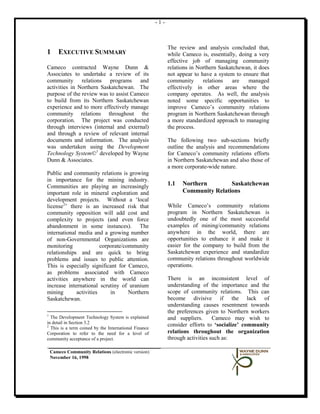
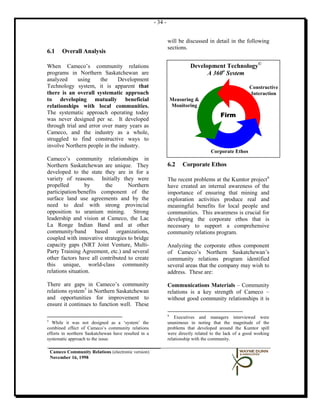
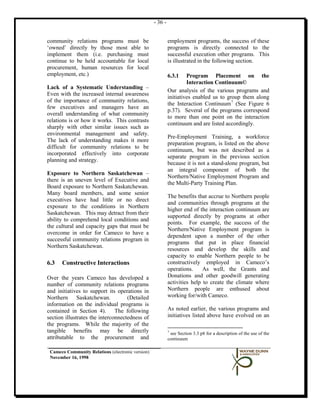
reviewed with Mr. Jamie McIntyre and                       Fig. 1: Development Technology Model
amended to include additional information
as necessary.
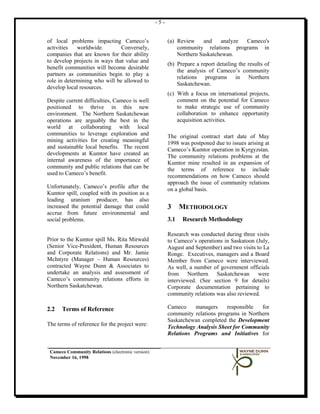
                                                                 Development Technology©
Cameco’s community relations activities in                             A 360o System
Northern Saskatchewan were then analyzed
using the Development Technology                                                            Constructive
                                                                                            Interaction
System© (See below for details on this
                                                         Measuring &
system). The results of this analysis are
                                                         Monitoring
contained in Section 6.     The analysis
produced    a    number     of   specific                                     Firm
recommendations which are contained in
section 8.

Based on information gathered from
internal interviews with Cameco executives                                Corporate Ethos
(See section 5 for details) and building
from Cameco’s and Wayne Dunn &
Associate’s experience and knowledge on                  There are three basic components to the
community relations, a strategic action plan             Development Technology methodology:
was developed for a corporate approach to
effectively managing community relations                  (a) Corporate Ethos – reviewing the
(See section 8 for details).                                  ability of a corporation to work
                                                              effectively in diverse cultural settings.

3.2   Development                Technology               (b) Constructive Interaction - the range,
      System©                                                 frequency and intensity of interactions
                                                              between the corporation and the
The analysis of Cameco’s community                            community.
relations efforts in Northern Saskatchewan
was carried out using our Development                     (c) Measuring, monitoring and evaluating
Technology©        methodology.        The                    the impact of corporate/community
methodology focuses on three critical                         interactions.
aspects     of     the    management    of
corporate/community relations and enables
a standardized evaluation of how a                       3.2.1   Corporate Ethos
corporation manages the interface between
its operations and local communities.                    Effective community relations demands
                                                         that the corporation, its personnel and sub-
                                                         contractors have the capacity, the desire
                                                         and the tools to bridge cultural and capacity
                                                         gaps that often separate them from local
                                                         communities. The ability to effectively
                                                         communicate and interact across diverse


 Cameco Community Relations (electronic version)
 November 16, 1998
-7-


cultures is an essential skill set for both              employment and procurement efforts). As
executives and front line technicians in a               well, there is often other development
modern resource company. Without these                   interests that are willing to assist financially
skills, it is nearly impossible to establish a           and operationally in developing various
systematic process for creating and                      interactions and programs.
maintaining good community relations.
                                                         Cameco’s various community relations
Evaluation of the corporate ethos includes
                                                         programs will be assessed and placed at
an assessment of the firm’s current capacity
                                                         appropriate locations along the Interaction
in this area; existing programs, activities
                                                         Continuum. As well the integration of the
and resources that support this competency
                                                         programs (the use of one program to
and any special issues pertaining to the
                                                         enhance the effectiveness of another) will
where the operation(s) are located.
                                                         be analyzed. It is expected that some
                                                         programs will ‘fit’ into more than one
                                                         grouping on the continuum.
3.3   Constructive Interactions
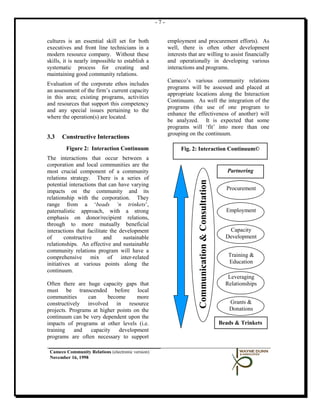
        Figure 2: Interaction Continuum                        Fig. 2: Interaction Continuum©
The interactions that occur between a
corporation and local communities are the
most crucial component of a community                                                                     Partnering
relations strategy. There is a series of


                                                                        Communication & Consultation
potential interactions that can have varying
impacts on the community and its                                                                         Procurement
relationship with the corporation. They
range from a ‘beads ‘n trinkets’,
paternalistic approach, with a strong                                                                    Employment
emphasis on donor/recipient relations,
through to more mutually beneficial
interactions that facilitate the development                                                              Capacity
of      constructive      and     sustainable                                                            Development
relationships. An effective and sustainable
community relations program will have a
comprehensive mix of inter-related                                                                        Training &
initiatives at various points along the                                                                   Education
continuum.
                                                                                                          Leveraging
Often there are huge capacity gaps that                                                                  Relationships
must be transcended before local
communities      can     become      more
constructively involved in resource                                                                       Grants &
projects. Programs at higher points on the                                                                Donations
continuum can be very dependent upon the
impacts of programs at other levels (i.e.                                                              Beads & Trinkets
training    and   capacity    development
programs are often necessary to support

 Cameco Community Relations (electronic version)
 November 16, 1998
-8-


                                                                      Procurement
3.3.1      Measuring,        Monitoring          and                  •  Northern               Business
           Reporting                                                         Developmen

                                                                      Employment
In order to maximize the effectiveness of
                                                                      • Northern/Native Employment
community relations investments, it is
                                                                      • Northern Summer Student
important to implement a comprehensive
                                                                        Program
measuring, monitoring and reporting
program and to integrate it into existing
                                                                      Capacity Development
management and contractor evaluation
                                                                      •  Multi-party Training Plan
processes. The assessment will evaluate
                                                                         (MPTP)
the extent to which Cameco systematically
                                                                      •  Junior Achievement - The
measures,     monitors  and     evaluates
                                                                         Economics of Staying in
community relations programs and
                                                                         School
activities.
                                                                      •  Cameco Access Program for
                                                                         Engineering    and     Science
                                                                         (CAPES)
4       COMMUNITY RELATIONS                                           •  Northern Scholarship Program
        PROGRAMS AND INITIATIVES
                                                                      Training and Education
        IN NORTHERN                                                   •  Athabasca Education Awards
        SASKATCHEWAN
                                                                      Leveraging Relationships
Cameco’s community relations programs                                 •  Athabasca Working Group
were analyzed using the Development                                   •  Environmental         Quality
Technology methodology discussed in the                                  Committees (EQC)
previous section.     The programs were                               •  Northern Liaison Committee
grouped in appropriate categories along the
Interaction Continuum (see Section 6.3.1                              Grants and Donations
Figure 6, p37). Many of the programs ‘fit’                            •  Educational
into two or more groupings. The following                                School/Community Tours of
descriptions of the individual programs are                              Northern Operations
organized based on the order in which they                            • Corporate Donations and
were first placed on the Interaction                                     Sponsorship Program
Continuum. A complete listing 3 of all
programs is:                                                   Note: Pre-Employment       Training,     a
                                                                     workforce preparation program, is
                                                                     not listed above because it is not a
                                                                     stand-alone program, but an
                                                                     integral component of both the
3
  Programs that are associated with more than one                    Northern/Native       Employment
grouping on the Interaction Continuum are only listed                Program and the Multi-Party
in the first grouping in which they were placed. For a
complete listing of all programs in each grouping, see               Training Plan.
Section 6.3.1, Program Placement on the Interaction
Continuum.

    Cameco Community Relations (electronic version)
    November 16, 1998
-9-


The following section presents detailed                  listed above.
descriptions of the programs and initiatives

4.1     Procurement
4.1.1  Northern Business Development
 Description             To select and develop Northern suppliers and contractors to provide goods
                         and services to Cameco’s operations. Also the program is beginning to
                         address assisting Northern suppliers to lessen their dependence on Cameco.
 Objective                    To facilitate the establishment and development of successful Northern
                              businesses and to familiarise Northern businesses with the Purchasing and
                              Transportation department at Cameco
 Responsibility               •   The Purchasing and Transportation Department
                              •   Northern Affairs Department
 History                      The focus on Northern business development was present prior to the
                              creation of Cameco in 1988. It was driven by a number of factors including
                              the surface land use agreement, the need for local support in the permitting
                              and regulatory process and by Cameco executives and managers who
                              recognised its importance.
                              The focus on developing Northern suppliers has matured over time. Initially
                              it was quite easy to qualify and many early attempts at partnerships between
                              a southern contractor and a Northern partner did not produce the Northern
                              benefits that were hoped for.
                              There has been an increasing emphasis on developing Northern businesses
                              that benefit Northerners, measuring and monitoring Northern employment
                              and benefits that are provided by Northern businesses (and other suppliers as
                              well).
                              Also, there is a growing sophistication to the Northern business development
                              program, a full time position has recently been created and the objectives of
                              the program are fully incorporated into the strategic planning process and
                              into CAMECO’s Performance Management Program.
                              Originally it was coordinated through Northern affairs and purchasing
                              departments. As the volume increased and the complexity of the
                              requirements increased it demanded a more strategic control of the program
                              and the Superintendent of Northern Purchasing and Transportation position
                              was developed. Currently this position has first line responsibility for this
                              function.
 Budget                       It is difficult to determine the overall budget for this program. There is a
                              new staff position, Superintendent of Northern Business Development and
                              Transportation that is dedicated to the program. Also, the program has


 Cameco Community Relations (electronic version)
 November 16, 1998
- 10 -


                             mindshare from other managers such as the Director of Purchasing, who
                             reports on the program at monthly management committee meetings. As
                             well, it is recognized that there are additional costs to developing Northern
                             suppliers, especially in the initial years as they develop the capacity and
                             expertise to compete on a cost basis with more experienced southern
                             suppliers.
Success Indicators           There is a well-developed measuring and monitoring process for this
Measuring and                program. It is fully incorporated into the MAP process with annual dollar
Monitoring                   targets established and progress reported on monthly.
                             Key success indicators are:
                                • Dollar value of Northern purchasing

                                • Northern/native   employees working for contractors
                                • Number   of Northern and native suppliers
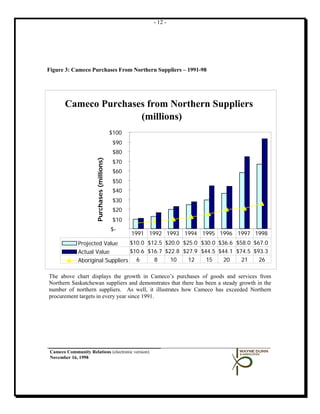
                             A committed focus on Northern procurement has produced some impressive
                             results.
                             The current target is to procure 35% of total purchases in support of
                             Northern mining operations from Northern suppliers Northern purchasing
                             has steadily surpassed target levels. In 1991 the target was $10 million and
                             the actual procurement was $10.6 million. In 1998 the target for the entire
                             year is $67 million and, as of August 31 Northern purchasing has already
                             reached $62.2 million. During this time the number of Aboriginal suppliers
                             has risen from 6 in 1991 to 26 in 1998. The chart on the following page
                             provides additional detail.
                             Northern purchasing has a direct impact on Northern employment. In
                             August 1998 of the 554 contract employees reporting to Cameco sites (this
                             doesn’t include NRT and other off site) 321 were Northerners and 275 are
                             aboriginal
                             In addition to measuring the dollar value of Northern procurement, the
                             program also tracks Northern employment and other Northern benefits that
                             flow from this initiative.
Community                    Communities benefit directly from this program. Local businesses are
Benefits                     supported (and often created) as a direct result of the program. Northern
                             suppliers are required to employ local Northern people, thus supporting the
                             local economy. Cameco’s focus on Northern suppliers puts salary and profit
                             into the economies of Northern communities and helps increase Northern
                             business’ capacity to capture other opportunities.
                             There is an important psychological benefit for communities when they have
                             the competent, highly visible entrepreneurs (community capacity)


Cameco Community Relations (electronic version)
November 16, 1998
- 11 -


Other Comments and           Cameco has actively facilitated the creation of joint ventures between
Information                  Northern contractors and traditional suppliers of goods and services. This
                             approach, originally developed with the Kitsaki/Trimac joint venture to form
                             NRT Trucking, has proven to be a successful method of enabling Northern
                             suppliers to bridge capacity gaps that prevent them from moving into some
                             business opportunities. Cameco has used this approach to develop Northern
                             suppliers for underground mining services, catering, sophisticated
                             engineering and construction and other services that the Northern business
                             community did not have the capacity to develop on its own.
                             Cameco is beginning to take a proactive role in supporting Northern
                             businesses beyond simply assisting them to supply goods and services to
                             Cameco’s operations.     One issue that is looming is the slowdown in
                             Northern procurement that will occur when the current construction phase
                             winds down. There is currently some internal thinking to address the issue
                             proactively by bringing major Northern industrial interests (Weyerhaeuser,
                             Sask. Power, Sask. Tel, other mines, Sask. Highways, etc.) together in a
                             Northern procurement committee. This committee could then share
                             information about opportunities and about supplier capacity.
                             Other issues that have been identified include the need for closer linkages
                             between the Northern business development program and other groups that
                             support Northern business development.       As well, there is interest in
                             promoting increased internal involvement in the program and in facilitating
                             training support for Northern suppliers.
Partners                     The managers of the program work closely with other mining interests in the
                             region. As well, they are establishing linkages with other associations and
                             agencies such as the Inter-provincial Association on Native Employment,
                             the Northern Labour Market Committee and various organisations that
                             support Northern and Aboriginal businesses (Sask. Northern Affairs,
                             Aboriginal Business Canada, Sask. Power Northern Enterprise Fund, etc.)
                             Business and employment reporting is now part of the surface lease
                             agreements. It is necessary to report Northern business and employment
                             statistics and to forecast business opportunities. Northern procurement and
                             hiring is part of the basis of a partnership with governments, assisting them
                             to allocate Northern development resources in a more targeted and focused
                             way.
                             As noted previously, the program managers are considering spearheading
                             the establishment of a Northern industrial procurement committee.


Cameco Community Relations (electronic version)
November 16, 1998
- 12 -


Figure 3: Cameco Purchases From Northern Suppliers – 1991-98


        Cameco Purchases from Northern Suppliers
                       (millions)
                                             $100
                                              $90
                                              $80
                      Purchases (millions)


                                              $70
                                              $60
                                              $50
                                              $40
                                              $30
                                              $20
                                              $10
                                             $-
                                                    1991 1992 1993 1994 1995 1996 1997 1998
              Projected Value     $10.0 $12.5 $20.0 $25.0 $30.0 $36.6 $58.0 $67.0
              Actual Value        $10.6 $16.7 $22.8 $27.9 $44.5 $44.1 $74.5 $93.3
              Aboriginal Suppliers 6      8     10    12    15    20    21    26

The above chart displays the growth in Cameco’s purchases of goods and services from
Northern Saskatchewan suppliers and demonstrates that there has been a steady growth in the
number of northern suppliers. As well, it illustrates how Cameco has exceeded Northern
procurement targets in every year since 1991.


 Cameco Community Relations (electronic version)
 November 16, 1998
- 13 -


4.2   Employment


 Cameco Community Relations (electronic version)
 November 16, 1998
- 14 -


Northern/Native Employment
 Cameco Community Relations (electronic version)
 November 16, 1998
- 15 -


Description                  A comprehensive set of inter-related initiatives to increase Northern and
                             native employment in Cameco’s operations
Objective                    To increase the total number of Northern and Native people employed at
                             Cameco’s operations and to increase the percentage of Northern and Native
                             people employed in supervisory and technical positions.
Responsibility               Responsibility is dispersed throughout the Human Resources and Operations
                             Management departments. Individual managers and supervisors have
                             responsibility for meeting objectives and targets integrated into their overall
                             objectives and evaluations.
History                      Northern and Native employment objectives were included in the
                             recommendations of the Bayda report, which supported the development of
                             Key Lake and the Northern Saskatchewan Uranium industry. Initial efforts
                             at meeting Northern employment targets were largely unsuccessful due to
                             low Northern literacy rates, lack of Northern capacity and industry’s lack of
                             expertise in developing the Northern workforce. Employment quotas were
                             removed from Surface Leases on the condition that companies would
                             enthusiastically endorse ‘best efforts’ to increase Northern and native
                             employment. This proved to be a key turning point.
                             A number of ad-hoc programs and initiatives by Cameco and others in the
                             industry attempted to increase Northern employment. While there was some
                             initial success the real turning point came with the introduction of the multi-
                             party training program (see separate description). This plan systematically
                             addressed capacity development and collaboration in a way that enabled
                             both an increase in the number of Northern/native employees and an
                             increase in the supervisory and technical level positions filled by Northern
                             and native personnel.
                             It should also be noted that an early attempt at collaboration, the Northern
                             Mine Co-ordinators group brought together industry, government and some
                             community interests on an informal basis. This group met quarterly, shared
                             information and helped to spearhead some initiatives such as the initial
                             underground mining training program.
Budget                       There is no direct budget for Northern/native employment. The initiative is
                             completely integrated into Cameco’s human resource management
                             processes.
Success Indicators           The key success indicators are the number of Northern and native people
Measuring and                employed at Cameco’s operations and the growth in occupational groupings
Monitoring                   as Northern and native people increase their representation in technical,
                             trade and managerial occupations.
Community                    •   Salaries earned by local employees
Benefits                     •   Increased focus on education (many employees are upgrading their own
                                 educational levels and this helps to develop a family/community culture
                                 supporting increased education)


Cameco Community Relations (electronic version)
November 16, 1998
- 16 -


                              •   Increased community education levels (through on the job training and
                                  development) increase the overall capacity of the community
 Other Comments and           •   The 7 in 7 out work schedule and aircraft commuting system has
 Information                      enabled Northern and native employees to maintain employment and
                                  retain time for traditional hunting, and other traditional activities
                              •   The Northern employment database helps with screening and targeted
                                  recruitment. Cameco collaborates with Cogema on the database
                              •   Cameco is beyond reacting to the Northern labour force – now
                                  managing it. Human Resource management has moved to external
                                  focus
                              •   Employees from over 20 Northern communities
                              •   Employment increases through hiring and also through purchasing (see
                                  Northern business development program)
                              •   Northern/native employment has gone from a legal obligation dictated
                                  by the surface land use agreements to a corporate mission that is even
                                  reflected in vision and values statement and in corporate policies
                              •   Cameco’s payroll to Aboriginal employees is over $20 million per year.
                              •   There is a strong focus on the need to move beyond entry level positions
                                  (workplace literacy)
                              •   There are supervisory development programs to identify and develop
                                  aboriginal supervisors
                              •   Cameco has been able to secure union co-operation – every second
                                  apprenticeship to Northerner of aboriginal descent.
                              •   The development of pre Employment training programs significantly
                                  enhanced the ability to recruit and retain Northern/native employees.
                              •   Strong collaboration with others in industry, with federal, provincial and
                                  local governments and other stakeholders to get major initiatives in
                                  place. Collaboration is so strong that Cameco has even trained
                                  employees specifically for competitors
                              •   Northern employment conditions have been written into contracts with
                                  suppliers
 Partners                     Partners and collaborators include;
                              •   Federal, provincial and local government departments
                              •   Aboriginal organisations
                              •   Unions
                              •   Other mining companies


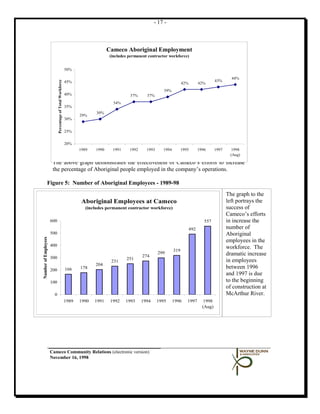
Figure 4: Aboriginal Employment - Percentage of Workforce 1989-98


 Cameco Community Relations (electronic version)
 November 16, 1998
- 17 -


                                                                                 Cameco Aboriginal Employment
                                                                                  (includes permanent contractor workforce)


                                                            50%

                                                                                                                                                          44%
                                                                                                                                                 43%
                            Percentage of Total Workforce


                                                            45%                                                            42%         42%
                                                                                                               39%
                                                            40%                             37%      37%
                                                                                   34%
                                                            35%
                                                                           30%
                                                                   29%
                                                            30%


                                                            25%


                                                            20%
                                                                   1989   1990     1991     1992     1993     1994         1995        1996      1997     1998
                                                                                                                                                          (Aug)

                       The above graph demonstrates the effectiveness of Cameco’s efforts to increase
                       the percentage of Aboriginal people employed in the company’s operations.

               Figure 5: Number of Aboriginal Employees - 1989-98
                                                                                                                                                        The graph to the
                                                                    Aboriginal Employees at Cameco                                                      left portrays the
                                                                      (includes permanent contractor workforce)                                         success of
                                                                                                                                                        Cameco’s efforts
                      600                                                                                                                 557           in increase the
                                                                                                                                 492                    number of
                      500                                                                                                                               Aboriginal
Number of Employees


                                                                                                                                                        employees in the
                      400                                                                                                                               workforce. The
                                                                                                                     319
                                                                                                            299                                         dramatic increase
                      300                                                                          274
                                                                                          251                                                           in employees
                                                                                  231
                                                                          204
                      200                                   166    178                                                                                  between 1996
                                                                                                                                                        and 1997 is due
                      100                                                                                                                               to the beginning
                                                                                                                                                        of construction at
                        0                                                                                                                               McArthur River.
                                                            1989   1990   1991    1992    1993     1994     1995     1996     1997        1998
                                                                                                                                         (Aug)


                      Cameco Community Relations (electronic version)
                      November 16, 1998
- 18 -


4.2.1  Northern Summer Student Program
 Description          A select group of students are employed for the summer at one of Cameco’s
                      Northern mines. Special (but not exclusive) consideration will be given to
                      students interested in pursuing careers related to the mining industry.
 Objective                    Cameco can utilize this opportunity to educate students about the mining
                              and uranium industry and perhaps encourage students to pursue a career in
                              mining.
                              Cameco’s summer employment program is designed to:
                              •   Educate students about the mining and uranium industry.
                              •   Enable the corporation to undertake special projects which can be done
                                  by students.
                              •   Provide relief coverage when regular employees take their holidays
                                  throughout the summer.
                              •   Assist students to gain experience in their chosen field of study.
                              •   Provide students with job related experience and assists them financially
                                  so that they may continue to finance their education.
 Responsibility               Cameco’s Northern Affairs Officer
 History                      This program has been in place since Cameco’s inception in 1988.
 Budget                       Each Dept/Site is responsible for their summer student program i.e. salaries,
                              medicals, accommodation, etc.
 Success Indicators           Success indicators include:
 Measuring and                 •   Number of applicants
 Monitoring                    •   Program participants who work with Cameco upon graduation
 Community                    •   Provides summer employment for students
 Benefits                     •   Provides students with
                                 - On the job education
                                 - Employment
                                 - Experience.
 Other Comments and           Students will be limited to 2 terms (summers) of employment with Cameco
 Information                  to ensure that a greater number of students are provided the opportunity to
                              gain experience directly related to their area of study. The exception will be
                              students who are in non-traditional areas of study and have been targeted as
                              future full time employees by a site or a department, particularly in an
                              advanced professional occupation.
                              To qualify, students must:
                               •   be 18 years of age
                               •   be in good physical health (a pre-employment medical is required).
                               •   have been a resident of Saskatchewan’s North for at least five years


 Cameco Community Relations (electronic version)
 November 16, 1998
- 19 -


                                     prior to applying (northern residents attending school in the south still
                                     qualify).
                                 •   Submit a verification of enrolment in school.
                                 •   Submit a verification of anticipated enrolment for the following
                                     school year.
4.3     Capacity Development
4.3.1  Multi-party Training Plan (MPTP)
 Description             The goals are to:
                         •   enhance the potential for economic development of the communities of
                             Saskatchewan’s North
                         •   maximize the employment and economic opportunities for people of the
                             communities of Saskatchewan’s North deriving from the activities of the
                             mineral industry in the North.
 Objective               To assist Northerners in upgrading their skills to meet the requirements of
                         the mining industry and gain employment in the industry
 Responsibility          The Mineral Sector Steering Committee co-ordinates the implementation of
                         the MPTP.
 History                 Multi-party Training Plan I (1993-1998)
                         Multi-party Training Plan II (1998-2003)
 Budget                  •   Plan I - $10.5 million
                         •   Plan II - $13.0 million
                         Cameco’s total contribution to this program has been $2.5 million.
                         Contributions for recent years are:
                           • April 1995 to March 1996 - $418,698
                           • April 1996 to March 1997 - $334,985
                           • April 1997 to March 1998 - $424,440
                         A small portion of these costs were direct cash expenses. The remainder
                         were indirect costs such as flights to and from minesites, supervision,
                         supernumerary positions and training expenses.
 Success Indicators      A key success indicator is the increase in the number of Northern residents
 Measuring and           of Saskatchewan holding technical and supervisory positions in the mining
 Monitoring              industry.
                         The program has elaborate measuring and monitoring processes that enable
                         tracking of students and impacts. Additionally, a comprehensive review of
                         the program was conducted in 1998.
                              The Department of Indian and Northern Affairs has noted that this program
                              created a 4-500% higher rate of Aboriginal participation in the industry than
                              other plans/initiatives
 Community                    More Northerners are able to gain employment in the mining industry; not
 Benefits                     only in entry-level positions but in technical, trade, supervisory and
                              professional positions. The training helps to minimize many of the barriers
                              preventing full participation of Northerners.


 Cameco Community Relations (electronic version)
 November 16, 1998
- 20 -


 Other Comments and           Courses include:
 Information                  •   Radiation/Environmental Tech
                              •   Workplace Ed/Literacy
                              •   Adult 12/Pre-Technologies
                              •   Geophysics
                              •   Ecological Technician
                              •   Chemical Technician
                              •   Instrumentation Technician
                              •   Underground Mining
                              •   Truck Driver Training
                              •   Apprenticeship Training
                              •   Work placements
                              An evaluation titled Summative Evaluation of the Multi-party Training Plan
                              1993-1998 was completed in April 1998 by the Business Advisory Services
                              from the College of Commerce at the University of Saskatchewan.
 Partners                     Training Program partners include::
                              •   The Province of Saskatchewan
                              •   The Government of Canada
                              •   The Prince Albert Grand Council
                              •   The Meadow Lake Tribal Council
                              •   The Metis Nation Training and Education Authorities
                              •   The Northern Mining Industry (Cameco, Cogema, and Cigar Lake)
4.3.2 Junior Achievement - The Economics of Staying in School
 Description           A series of four classroom activities designed to help students understand
                       the importance of an education and the personal and economic costs of
                       dropping out of school.
 Objective                    To encourage students to examine their future and to understand the
                              connection between education and future economic opportunities.
 Responsibility               Larry Chrispen and the Northern Affairs Department
 History                      Started in ‘97-’98 with four schools in the North as a pilot project
 Budget                       For ‘98-‘99 the cost was $35,000 shared between Cameco and Cogema.
 Success Indicators           Yearly suggestions from student participants, educator/volunteer
 Measuring and                participants, Northern development co-ordinator and JA president on
 Monitoring                   program successes and how the program could be improved.
 Community                    Encourages students to remain in school, increasing the overall education
 Benefits                     level of the community.
 Other Comments and           The program was specially developed for delivery to Aboriginal students in
 Information                  Saskatchewan’s north. It is expanding in ‘98-‘99 to include delivery of the
                              program to 10 Northern schools


 Cameco Community Relations (electronic version)
 November 16, 1998
- 21 -


 Partners                     •   Junior Achievement Organization
                              •   Various School Divisions
                              •   Cogema


4.3.3 Cameco Access Program for Engineering and Science (CAPES)
 Description          An agreement between Cameco and the University of Saskatchewan
 Objective            •   increase awareness and knowledge in the general areas of science,
                          technology and engineering among elementary and secondary students
                          in remote centres of Saskatchewan
                      •   supporting the pre-entrance training needs of rural and, in particular,
                          Northern aboriginal students
                      •   consulting with elders, community leaders, K-12 and post-secondary
                          educators in Northern Saskatchewan
                      •   collaborating with other institutions, engineering colleges, and
                          multimedia and distance education centres to develop a comprehensive
                          assessment of teaching materials and methodologies
                      •   providing academic, cultural and social support for students at the U of
                          S that includes individual counselling and tutoring
                      •   providing teaching support to the instructors involved with the program
 Responsibility       •   Jamie McIntyre and Roger Francis (Internal)
                      •   Harold Schultz, Cameco advisor to the CAPES board
                      •   CAPES advisory board
 History              An agreement between Cameco and The University of Saskatchewan which
                      came into effect June 1, 1997. A program organized under the umbrella of
                      the College of Engineering’s Innovative Teaching and Learning Centre.
 Budget               •   $1,000,000 over 5 years
                         - 1997/98 approved expenditures - $291,972
                         - 1998/99 approved commitments - $57,329
 Success Indicators   Success will be an increase in the number of students enrolling in and
 Measuring and        completing science and math post-secondary training. Ultimately, success
 Monitoring           will be a pool of Northern Saskatchewan expertise in science and
                      engineering.
 Community            •   Sci-Fi Camps
 Benefits             •   university math/science/engineering classes offered in Northern Sask.
                      •   more emphasis in K-12 on science and math
 Other Comments and • Development of computer based foundations course in mathematics and
 Information              math readiness course
                      •   Have held two Northern conferences on math/science education
 Partners             •   Cameco,
                      •   College of Engineering,
                      •   NORTEP/NORPAC,
                      •   Northlands College,
                      •   Post-Secondary Education and Skills Training


 Cameco Community Relations (electronic version)
 November 16, 1998
- 22 -


                              •   Ile a la Crosse School Division
                              •   University of Saskatchewan – College of Engineering/Extension
                                  Division
                              •   Northern Lights School Division


4.3.4  Northern Scholarship Program
 Description            Cameco recognizes the value of a post-secondary education and supports
                        Northern Saskatchewan students in their efforts. Winners are selected based
                        on academic standing, residency and career interest. Special (but not
                        exclusive) consideration will be given to applicants pursuing careers related
                        to some aspect of the mining industry.
 Objective                    To enhance post-secondary education opportunities for students of
                              Saskatchewan’s north, by providing financial assistance in the form of
                              scholarships.
 Responsibility               Cameco’s Northern Affairs Officer is in charge of the program, however,
                              applications are also reviewed by a selection committee of members from
                              Cameco, Saskatchewan Education - Northern Division, Northern Lights
                              School Division, and Prince Albert Grand Council.
 History                      This program has been in existence since Cameco’s inception in 1988.
 Budget                       •   Scholarships of up to $5,000 each are awarded to select qualified
                                  applicants enrolling in a university degree program
                              •   Cameco awards scholarships of up to $3,000 each to select applicants
                                  who are entering trades or technical training at a recognized technical
                                  institute.
 Success Indicators           •   Increases in the number of Northern students enrolling in math and
 Measuring and                    science related courses and in technical and professional.
 Monitoring
 Community                    •   Recognising the academic achievements of Northern students at the
 Benefits                         post-secondary level on an annual basis provides incentive to Northern
                                  students.
                              •   Increasing the education level of Northern residents
                              •   Increasing the academic performance of Northern students.
 Other Comments and           •   Applicants must have lived in Saskatchewan’s north for at least five
 Information                      years immediately prior to applying. Students who normally reside in
                                  this region but are attending school in the south are also eligible.
                              •   Recipients of other scholarships are eligible, but in such cases Cameco’s
                                  scholarship is reduced by the amount that the other award exceeds
                                  $1,000.
                              •   Applicants must meet the entrance requirements of, and plan to attend, a

 Cameco Community Relations (electronic version)
 November 16, 1998
- 23 -


                                  university or technical institute in Saskatchewan, unless the desired
                                  program of study is not available in this province.
                              •   Those applying for renewal must maintain at least a 75% academic
                                  average and be eligible to progress to the next year of a program which
                                  is acceptable to the selection committee.
 Partners                     N/A


4.4   Training and Education

The CAPES Program and the Northern Scholarship Program are both training and education
programs and capacity development programs. They are described in detail in the previous
section.

4.4.1 Athabasca Education Awards
 Description           Approximately forty Northern Students are recognized annually for their
                       combined achievements in the following areas:
                       •   Academic performance
                       •   Traditional cultural skills
                       •   School attendance
                       •   Athletics
                       •   Community service
                       •   Second language ability
                       •   Special talents and skills
 Objective             •   To promote student achievement and academic success and to
                           encourage students to graduate from Grade 12.
                       •   To identify the wide rage of student achievement in the Athabasca
                           region.
                       •   To promote and reflect the unique cultural fabric of the Athabasca
                           region.
 Responsibility        Cameco’s Northern Affairs Officer and a representative from Cigar Lake
                       Mining Corporation and Cogema Resources.
 History               Originally started in 1989 by Cameco and Cigar Lake Mining Corporation,
                       Cogema Resources joined the program in 1994.
 Budget                1. In addition to monetary awards, the corporate sponsors (Cameco, Cigar
                           Lake Mining and Cogema Resources) also provides each award winner
                           with a non-monetary award to symbolise the students’ achievement.
                       2. Value of the Awards is as follows:
                               •        Grade 7       $100.00
                               •        Grade 8       $150.00
                               •        Grade 9       $200.00
                               •        Grade 10 $250.00


 Cameco Community Relations (electronic version)
 November 16, 1998
- 24 -


                                      •         Grade 11 $300.00
                                      •         Grade 12 $500.00
                              The awards must be used in a fashion that is most beneficial and suited to
                              the recipients to further their education or individual interests such as sports,
                              leisure activities or hobbies. Local education authorities will be responsible
                              for ensuring that the recipients are guided by this principle.
 Success Indicators           The success of the Athabasca Awards Program are evaluated according to
 Measuring and                the following criteria:
 Monitoring                   •   Increased levels of academic achievement;
                              •   Increased student attendance rates and lower school drop out rates;
                              •   Evaluation data provided by participating schools.

 Community                    •  Since the start of the Program in 1989, 382 recipients have received the
 Benefits                        Awards.
                              •  It’s a stay-in-school initiative.
                              •  Lower dropout rate.
                              •  Recognizing the academic achievements of Northern students.
                              •  Recognizing and promoting traditional cultural skills.
 Other Comments and           Two awards are provided in Grade 7 through 12 in each community:
 Information                  •  one award is provided to the students achieving the top academic
                                 average in each class, Grade 7 through 12 in each school in the
                                 Athabasca Region. This award is called the Academic Award.
                              •  one award is also provided to the student judged to be the top overall
                                 student in each class, (Grade 7 through 12) in each school in the
                                 Athabasca Region. This award is called the Athabasca Award.
                              •  School principals are responsible for administering the program at the
                                 school level and for establishing a recipient selection process.
                                 Principals are requested to review program criteria with staff, students
                                 and community. The recipient selection process should include staff,
                                 administration and community members.
                              •  A student is only eligible to receive one award - either the Academic or
                                 the Athabasca Award - per school year.
 Partners                     •  Cigar Lake Mining Corporation
                              •  Cogema Resources.


4.5     Leveraging Relationships

The Multi-Party Training Plan, which was described in detail in Section 4.3 also classifies as a
program in the Leveraging Relationships category.

4.5.1    Athabasca Working Group


 Cameco Community Relations (electronic version)
 November 16, 1998
- 25 -


Description                  An agreement between the uranium mining companies and the Athabasca
                             communities with respect to:
                                 • Environmental protection, compensation and indemnification in the
                                   event of losses caused by emissions
                                 • Employment, training and business development opportunities; and
                                 • Benefit sharing
                             Related to the uranium mining projects of Rabbit Lake, McArthur River,
                             Cigar Lake, Mclean Lake and Midwest Lake
Objective                    To negotiate conditions with respect to the three key issues noted above and
                             to conclude with an Impact Management Agreement (IMA) signed between
                             the Companies and the Communities
Responsibility               The Athabasca Working Group (AWG) consists of members from the
                             respective Companies and from communities in the Athabasca region.
History                      An Agreement-in-Principle was signed May 30, 1994. It is anticipated that
                             the Impact Management Agreement will be signed in 1998.
Budget                       The cost of transporting, meals and accommodation of AWG members is
                             divided equally between Cameco, Cogema and Cigar Lake. Industry’s total
                             investment in the program to date is in excess of $200,000. (the costs were
                             much higher prior to 1996 during the hearing process). Cameco’s share of
                             costs in the past two years has been
                             •    1996 - $14,670
                             •    1997 - $32,081
Success Indicators           A variety of parameters including:
Measuring and                • number of employees at the mine sites from the Athabasca region;
Monitoring                   • quality of the relationships with the communities
                             • acceptance by elders in the communities
                             • acceptance by participating companies
                             • successful negotiation of an Impact Management Agreement
                             • donation and sponsorship dollars invested in the Communities
Community                    •    strategy in place if environmental damage occurs
Benefits                     •    preferential employment, training and business development
                                  opportunities; and
                             •    benefit sharing by enhancing the education, training, health, cultural
                                  recreational and economic development of the Region
Other Comments and           The IMA may not be signed until at least the fall of ‘98 however, the terms
Information                  of the agreement are currently being implemented.
Partners                     The project is based on collaboration between Industry and Communities.
                             Participants include;
                             •    Cameco,
                             •    Cigar Lake Mining Corporation,
                             •    Cogema,
                             •    Hatchet Lake Band,
                             •    Black Lake Band
                             •    Fond du Lac Band,


Cameco Community Relations (electronic version)
November 16, 1998
- 26 -


                              •   Wollaston Lake (hamlet)
                              •   Stony Rapids
                              •   Uranium City
                              •   Camsell Portage


4.5.2 Environmental Quality Committees (EQC)
 Description          The committees, which are formed by government, are composed of
                      individuals nominated by his/her community. The EQC serves as a bridge
                      between Northerners, government and the uranium mining industry. The
                      committee is a bridge built upon a solid foundation of mutual trust and
                      respect.
 Objective                    To assure people from Saskatchewan’s north that the uranium mines are
                              operating in compliance with all applicable Provincial and Federal
                              regulations and the Northern economic benefits are being maximized
                              through appropriate hiring practises and policies related to the enhanced
                              capture of business opportunities.
 Responsibility               Northern Mines Monitoring Secretariat (NMMS)
 History                      In the Government’s Position on Proposed Uranium Mining Developments
                              in Northern Saskatchewan (December, 1993), Saskatchewan committed to
                              the establishment of a central support agency responsible for collecting and
                              communicating government’s monitoring efforts (the NMMS) and for
                              providing support to regionally based committees composed of
                              representatives from impact communities (the EQCs).
 Budget                       Operational costs for the EQCs are paid by the Province of Saskatchewan
                              and Cameco pays direct costs associated with minesite visits and other direct
                              interactions. Also, Cameco makes professional expertise available to assist
                              the Committees to understand technical material and issues.
 Success Indicators           Increased awareness and understanding of Northerners regarding monitoring
 Measuring and                activities surrounding the uranium industry, and the role of government and
 Monitoring                   industry in protecting the environment, ensuring the health and safety of
                              workers and the public, and improving the distribution of benefits amongst
                              Northern residents.
 Community                    •   Providing a direct link between the community and the EQC and
 Benefits                         NMMS
                              •   Liaisoning with community residents in order to convey to the EQC any
                                  concerns on issues related to uranium industry activities or requests for
                                  information, meetings or activities
 Other Comments and           There are three EQCs – one in each of the regions. Each of the three visit
 Information                  the operation(s) in their region at least once per year. This is generally done
                              around re-licensing time to allow input into the re-licensing process. The


 Cameco Community Relations (electronic version)
 November 16, 1998
- 27 -


                                  tours are paid for and hosted by the companies.
                                  Cameco has set an objective of attending a minimum of one meeting per
                                  year in each region to discuss issues related to social and economic
                                  development, respond to other questions and issues and to provide up to date
                                  industry information. It is Cameco’s intention that the EQCs will become
                                  the primary liaison mechanism.
                                  The mining companies on occasion attend the EQCs to provide up to date
                                  industry information and answer any questions.
 Partners                         Northern Mines Monitoring Secretariat, Environmental Quality Committees,
                                  communities and mining companies


4.5.3 Northern Liaison Committee
 Description            A forum to facilitate dialogue and interaction with local communities4. The
                        Committee planned to meet four times per year. Membership on the original
                        committee was made up of four selected Northern Chiefs and two selected
                        Northern Mayors. Each person was expected to represent additional
                        communities beyond the one where they were an elected official (i.e. the
                        Beauval Mayor was also the representative for Meadow Lake, Green Lake
                        and Pinehouse). As well, several representatives from Cameco participated
                        in the meetings.
 Objective              The Committee was established by Cameco in order to provide a forum for
                        dialogue between the corporation and elected Northern leaders, chosen to
                        ensure effective regional representation throughout Northern Saskatchewan.
                        The committee’s mandate includes:
                        •    Open frank discussion of any issues of concern to the regional
                             representatives, relative to Cameco’s operation, with particular emphasis
                             on economic, environmental and employment matters.
                        •    Opportunities of Cameco to obtain first-hand reactions to Company
                             operations and initiatives in the north
                        •    Advice to Cameco from the regional representatives on how best to
                             proceed in dealing with Northern concerns.
 Responsibility         When it was operating previously the program was the responsibility of the
                        Corporate Affairs and Northern Affairs Department.
 History                The Committee held its first meeting in July 1990 and its last meeting in
                        1997. The Committee was expected to:
                        •    Improve community relations in the north
                        •    Facilitate communication with Northern leaders
                        •    Identify opportunities for improved operations
                        •    Identify issues and to explain circumstances which affect Cameco and

4
  The program is not currently operational in northern Saskatchewan, but consideration is being given to reviving it in
the near future. The information is based on prior operation of the program.

 Cameco Community Relations (electronic version)
 November 16, 1998
- 28 -


                                   its Northern neighbours.
                              Membership evolved to include senior company officials (executive
                              management, operations, environment, safety, corporate, human resources
                              and northern affairs. Community membership evolved to include direct
                              representation by up to 15 Northern mayors and Chiefs. The committee met
                              a minimum of three times per year.
                              It is expected that the committee will resume operation in 1999.
 Budget                       Total costs were about $35,000/year (including flight costs)
                              Community representatives receive a $250 honorarium per meeting
 Success Indicators           Although there was not an explicit listing of success indicators nor a formal
 Measuring and                measuring and monitoring process, success indicators for the project
 Monitoring                   included:
                              •    Level and effectiveness of communication with Northern communities
                              •    Ability of representatives to bring appropriate community concerns to
                                   the attention of the Committee
                              •    Community support for Cameco’s operations and activities
                              •    Improved communication between Cameco and Northern communities.
 Community                    •    Improved understanding of Cameco’s operations
 Benefits                     •    Mechanism for bringing community concerns to the attention of
                                   appropriate officials in Cameco
 Other Comments and           There seems to be some overlap between the EQCs and the Liaison
 Information                  Committees.
                              A similar program has been recommended for the Kumtor operation.

 Partners                     Cameco operated the committees directly without involvement from
                              government or from others in the mining industry.


4.6     Grants and Donations

A number of programs, which have been described previously, are also classified as Grants and
Donations programs. These are; Junior Achievement, CAPES and the Athabasca Education
Awards.

4.6.1  Educational School/Community Tours of Northern Operations
 Description            Cameco will, subject to operational constraints, accommodate requests to
                        visit operating locations, from representatives of groups or individuals
                        whose improved knowledge of Cameco’s operations will enhance the
                        achievement of the company’s business objectives.
 Objective                    To provide opportunities for various public and customer representatives to
                              visit Cameco’s operating locations.
 Responsibility               Any division/department of Cameco may sponsor a site visit, for reasons


 Cameco Community Relations (electronic version)
 November 16, 1998
- 29 -


                             that pertain to that division or department’s mandate. Two Tour Co-
                             ordinators have been appointed, one for Saskatchewan and the other for
                             Ontario.
History                      Despite the expense of touring a remote mining operation, Cameco has
                             maintained this program, which began in the early 1980s. It has provided an
                             excellent means of allowing Northerners to see Cameco’s operations and
                             better understand what Cameco is doing.
Budget                       Every site visit must have a sponsoring department which is responsible for
                             all administrative and travel arrangements, and bears the direct costs of the
                             visit. (i.e. transportation to the site, meals and accommodation during the
                             visit).
Success Indicators          •  Public opinion surveys are used to monitor the impacts. (Cameco
Measuring and                  commissions an annual public opinion survey in Saskatchewan and
Monitoring                     oversamples the north to ensure accurate data on Northern
                               issues/concerns)
                            • Recognition of the quality of the site operations by the visitors (elected
                               leaders, school children, etc.)
Community                   Visitors such as teachers, high school students, community groups, members
Benefits                    of employee families, etc. have a greater understanding of Cameco’s
                            operations and the uranium industry.
Other Comments and           •   The sponsoring department must advise the Tour Coordinator of the
Information                      names and titles of all tour participants at least two days in advance of
                                 the scheduled tour date.
                             • On-Site Procedures – Upon arrival at the site, the tour group will be
                                 met by the Tour Host who will be responsible for conducting the on-site
                                 tour. These responsibilities include:
                                - Greeting the tour
                                - On-site transportation
                                - Site orientation and information presentations(s)
                                - Issuance of required safety equipment
                                - Safety briefing instructions
Partners                     Joint venture partners may also sponsor visits to sites in which they
                             participate and/or have contracts.


Cameco Community Relations (electronic version)
November 16, 1998
- 30 -


4.6.2 Corporate Donations and Sponsorship Program
 Description           Donation and sponsorship program with community organizations and
                       agencies in Northern Saskatchewan. Typically the value of donations is
                       $500 or less. The 1998 Program focuses on Youth in 5 areas:
                       •   Community and Civic
                       •   Training and Education
                       •   Health and Welfare
                       •   Culture
                       •   Recreation and Sport
 Objective             As part of its vision, Cameco is committed to earning the respect of the
                       communities in which it operates. The program aims to earn the respect of
                       the community in which the company interacts and has three main
                       objectives:
                       •   To contribute to the prosperity and quality of life in communities where
                           Cameco works.
                       •   To support specific corporate needs such as the development of a skilled
                           and well-educated workforce.
                       •   To promote innovative educational business partnerships that build
                           economic opportunities for communities.
 Responsibility        The administration of the annual donations and sponsorship budget is
                       divided between the Northern Affairs Department, which manages the
                       Northern portion, and the community relations area of the investors and
                       corporate relations department.
 History               The program was incorporated when Cameco was formed in 1988 and has
                       been operated ever since.
 Budget                Cameco provides an annual budget for donations and sponsorships equal to
                       one half of one percent of the forecasted annual net earnings. The budget
                       allocation is divided between the geographic locations where Cameco has
                       active operations; Ontario, Northern Saskatchewan, and southern
                       Saskatchewan.
 Success Indicators    •   Corporate giving demonstrates to audiences outside the organization that
 Measuring and             Cameco is a responsive, concerned corporate citizen.
 Monitoring            •   It demonstrates to community leaders that Cameco is a committed and
                           active participant in the well being of communities located in the
                           vicinity of its operations.
                       •   It returns tangible benefits to, and raises the quality of life in, the
                           communities where many of Cameco’s employees live and work.
                       •   It is a source of pride for employees and demonstrates Cameco’s
                           commitment to them both on and off the job.
 Community             Corporate giving supports Cameco’s interests in developing educational
 Benefits              programs that fulfil the requirements of the uranium industry and supports
                       the economic development of the north.
                       •   It helps open doors to education and knowledge within the communities.

 Cameco Community Relations (electronic version)
 November 16, 1998
- 31 -


                                 •    It adds value to other human resources and training and development
                                      initiatives.
                                 •    Investing in communities demonstrates that Cameco is:
                                    • Available and accessible to the community
                                    • Active in forming alliances with other businesses and organizations for
                                         the betterment of the community.
    Other Comments and           A brochure and guidelines for the program are published and distributed
    Information                  throughout the north.
    Partners                     More than 100 organizations and agencies in Northern Saskatchewan benefit
                                 from or are involved in this program.
                                 Cameco co-operates with Cigar Lake and Cogema to increase the efficiency
                                 and effectiveness of the Northern donations and sponsorship programs.


                                                               A number of people openly acknowledged
5       SUMMARY OF INTERNAL                                    that the recent problems at the Kumtor
                                                               operation had changed their views on the
        INTERVIEWS                                             importance of community relations. Each
                                                               official interviewed identified community
The following information has been derived                     relations as being important to their
from interviews with senior officials at                       particular interest and to the corporation as
Cameco Corporation during July and                             a whole.
August 1998. A complete list of the
interviewees is contained in Section 9.                        The executives interviewed identified a
                                                               number of specific ways that community
Community relations is important to all                        relations problems could impact their
aspects of Cameco’s operations and                             departments and interests at Cameco (Many
should be systematically managed                               of these actually occurred as a result of the
throughout the corporation. This is the                        Kumtor incident). These include:
overriding message that came out in every
interview.


•      Difficulties with lenders                 Increased Risk  Potentially higher cost of
                                                 capital and more difficulty accessing capital. The
                                                 Kumtor incident created direct problems with
                                                 lenders. Lenders, guarantors and other financial
                                                 institutions are demonstrating a growing interest in
                                                 the risk posed by ineffective community relations.
                                                 This is similar to the interest they developed in
                                                 environmental stewardship as it developed into an
                                                 important risk area.


    Cameco Community Relations (electronic version)
    November 16, 1998
- 32 -


•      Difficulties with shareholders            Increased Risk  Depressed share prices and the
                                                 potential for increased investor relations costs.
                                                 Community relations is becoming a key stress point
                                                 in investor relations. Community relations problems
                                                 create a significant potential for the erosion of
                                                 investor confidence and market capitalization
                                                 leading to the breaking of covenants and impairing
                                                 the ability to raise financing in the capital markets.

•      Erosion of Management                     Higher cost of capital and depressed share prices.
       Credibility                               After the fact, community relations problems are
                                                 generally seen as preventable (management should
                                                 have seen and addressed the problem). The fact that
                                                 they weren’t prevented begins to erode investor
                                                 confidence in management, impacting capital and
                                                 share price.

•      Difficulty accessing opportunities        Increased exploration costs and more difficulty
                                                 accessing opportunities.      Cameco’s community
                                                 relations success in Northern Saskatchewan was a
                                                 key factor in securing the Kumtor project and is used
                                                 by exploration to help smooth relationships in other
                                                 parts of the world (Australia, Nunavut, etc.).
                                                 Community relations problems (anywhere in
                                                 Cameco’s operations) will undermine the company’s
                                                 reputation and erode the advantage that is currently
                                                 enjoyed in opportunity acquisition.

•      Long Term Loss of Goodwill                The problems at Kumtor will be associated with
                                                 Cameco for several years to come. This, coupled
                                                 with the fact that Cameco is a uranium producer, will
                                                 substantially increase the potential damage from any
                                                 future environmental or community relations
                                                 problems. This significantly increases the risk that
                                                 the corporate reputation will be damaged, impacting
                                                 relationships with much of the key stakeholder
                                                 group. Also, this could place all of the company’s
                                                 operations, including Northern Saskatchewan, under
                                                 increased scrutiny from NGOs and other outside
                                                 interests.


    Cameco Community Relations (electronic version)
    November 16, 1998
- 33 -


•      Problems in certain markets               Cameco’s community relations success in Northern
                                                 Saskatchewan is useful in marketing to Sweden,
                                                 Finland and Japan in particular. In Japan it is seen as
                                                 a long-term approach that helps ensure security of
                                                 supply. In Sweden and Finland it is used to help
                                                 combat those attempting to eliminate the use of
                                                 nuclear power. Other clients are also beginning to
                                                 show interest in Cameco’s community relations
                                                 programs (an Arizona client recently requested
                                                 information on Cameco’s ability to work
                                                 successfully   with     Northern      Saskatchewan’s
                                                 Aboriginal population)

•      Decreased staff morale                    Increased production cost (decreased production
                                                 per employee, increased turnover, etc.) There are no
                                                 facts to substantiate this conclusion, just observation
                                                 and extrapolation. Elsewhere studies have shown
                                                 the employees working with a company they are
                                                 proud of have higher production and decreased
                                                 turnover. Conversely, those working with a firm
                                                 they are not as proud of and whose values they do
                                                 not share have lower production and increased staff
                                                 turnover.
                                                 There is a strong sense of ‘ownership’ of Cameco in
                                                 Northern Saskatchewan.          Communities and
                                                 employees take pride in Cameco and its
                                                 accomplishments Community relations problems in
                                                 Kumtor and elsewhere can erode the goodwill that
                                                 Cameco has built in Northern Saskatchewan.


“We cannot afford another Kumtor” was a
common       sentiment    throughout    the                    6   ANALYSIS OF PROGRAMS AND
interviews. The potential damage from
future environmental and/or community
                                                                   INITIATIVES IN NORTHERN
relations problems will be compounded due                          SASKATCHEWAN
to the Kumtor incident and Cameco’s
position as a leading Uranium producer.                        The following section discusses the results
                                                               of the analysis of Cameco’s community
                                                               relations     programs      in     Northern
                                                               Saskatchewan. Specific recommendations
                                                               to address the issues identified in the
                                                               analysis are developed in Section 8.


    Cameco Community Relations (electronic version)
    November 16, 1998
- 34 -


                                                               will be discussed in detail in the following
                                                               sections.
6.1      Overall Analysis

When Cameco’s community relations                                         Development Technology©
programs in Northern Saskatchewan are                                           A 360o System
analyzed      using    the    Development
Technology system, it is apparent that                                                                  Constructive
there is an overall systematic approach                                                                 Interaction
to developing mutually beneficial                                  Measuring &
relationships with local communities.                              Monitoring
The systematic approach operating today
                                                                                         Firm
was never designed per se. It developed
through trial and error over many years as
Cameco, and the industry as a whole,
struggled to find constructive ways to
involve Northern people in the industry.
                                                                                    Corporate Ethos
Cameco’s community relationships in
Northern Saskatchewan are unique. They                         6.2     Corporate Ethos
developed to the state they are in for a
variety of reasons. Initially they were                        The recent problems at the Kumtor project 6
propelled         by     the       Northern                    have created an internal awareness of the
participation/benefits component of the                        importance of ensuring that mining and
surface land use agreements and by the                         exploration activities produce real and
need to deal with strong provincial                            meaningful benefits for local people and
opposition to uranium mining. Strong                           communities. This awareness is crucial for
leadership and vision at Cameco, the Lac                       developing the corporate ethos that is
La Ronge Indian Band and at other                              necessary to support a comprehensive
community/band based organizations,                            community relations program.
coupled with innovative strategies to bridge
capacity gaps (NRT Joint Venture, Multi-                       Analyzing the corporate ethos component
Party Training Agreement, etc.) and several                    of Cameco’s Northern Saskatchewan’s
other factors have all contributed to create                   community relations program identified
this unique, world-class community                             several areas that the company may wish to
relations situation.                                           address. These are:

There are gaps in Cameco’s community                           Communications Materials – Community
relations system5 in Northern Saskatchewan                     relations is a key strength of Cameco –
and opportunities for improvement to                           without good community relationships it is
ensure it continues to function well. These
                                                               6
                                                                   Executives and managers interviewed were
5
   While it was not designed as a ‘system’ the                 unanimous in noting that the magnitude of the
combined effect of Cameco’s community relations                problems that developed around the Kumtor spill
efforts in northern Saskatchewan have resulted in a            were directly related to the lack of a good working
systematic approach to the issue.                              relationship with the community.

    Cameco Community Relations (electronic version)
    November 16, 1998
- 35 -


doubtful that Cameco could continue                         lack an effective system to educate its
operating its properties in Northern                        existing workforce on the importance of
Saskatchewan. However, there seems to be                    community relations. To a large extent the
a lack of material that can be used to                      front line operations have been sheltered.
communicate what Cameco is attempting to                    Community relations have traditionally
accomplish through its community relations                  been dealt with by people with the Human
efforts and why they are essential.                         Resources     and     Corporate    Affairs
Employees, managers, communities and                        department. Operations management and
other stakeholders are some of the audience                 workers have not traditionally been
that    should     be    addressed      with                educated on the importance of community
communications materials in order to                        relations. Management has not been given
socialize the information throughout the                    the tools and support to handle the
company. Failure to support a broad level                   complaints and resentment about the
of understanding around the issue of                        preferential treatment of Northerners.
community relations can lead to internal                    (Steps are already being taken to address
resentments and divisiveness as questions                   this issue. The Management Development
are raised about preferences for northern                   Program held in September had a specific
suppliers, employees and other interests.                   session on community relations and two
                                                            other sessions that also dealt with the
Orientation of workers and contractors –                    subject)
Briefings and orientation programs for new
workers and new contractors do not contain                  Lack of a Focal Point for Community
information on Cameco’s community                           Relations – Currently, there is not an
relations programs and initiatives. Unless it               ‘organizational home’ for community
is part of their operational responsibility,                relations within Cameco. While many of
new people are left to discover on their own                the programs are managed within the
what the community relations programs are                   Human Resources and Corporate Affairs
and why they are important. Much of the                     department, a key program – Northern
interaction between Northern residents and                  Procurement – is managed by purchasing
Cameco occurs on-site and these on-site                     and reports through the Finance
interactions are communicated back to                       department. To date this has not presented
Northern communities, helping to form an                    a problem, largely due to the personal
overall impression of Cameco.           It is               interest      and     involvement       of
important that everyone, employees and                      Mr. Jamie McIntyre and Ms. Rita Mirwald
contractors, understand why Cameco has                      in community relations.      However, as
the community programs that it does, and                    Cameco moves forward with rationalizing
why Northerners receive preference on                       and standardizing community relations, the
employment, training and business                           lack of a focal point will likely become
opportunities. Failure to do this will result               more problematic.
in resentments and foster internal divisions
between the Northern and non-northern                       If an internal focal point for community
workforce.                                                  relations is established, Cameco should
                                                            guard against the ghettoization of
Education of Existing Workforce – Based                     community relations programs. Even with
on our observations, Cameco appears to                      a focal point, the implementation of various


 Cameco Community Relations (electronic version)
 November 16, 1998
- 36 -


community relations programs must be                        employment programs, the success of these
‘owned’ directly by those most able to                      programs is directly connected to the
implement them (i.e. purchasing must                        successful execution other programs. This
continue to be held accountable for local                   is illustrated in the following section.
procurement, human resources for local
employment, etc.)                                           6.3.1    Program Placement on the
                                                                     Interaction Continuum©
Lack of a Systematic Understanding –
                                                            Our analysis of the various programs and
Even with the increased internal awareness
                                                            initiatives enabled us to group them along
of the importance of community relations,
                                                            the Interaction Continuum 7 (See Figure 6
few executives and managers have an
                                                            p.37). Several of the programs correspond
overall understanding of what community
                                                            to more than one point on the interaction
relations is or how it works. This contrasts
                                                            continuum and are listed accordingly.
sharply with other similar issues such as
environmental management and safety.
                                                            Pre-Employment Training, a workforce
The lack of understanding makes it more
                                                            preparation program, is listed on the above
difficult for community relations to be
                                                            continuum, but was not described as a
incorporated effectively into corporate
                                                            separate program in the previous section
planning and strategy.
                                                            because it is not a stand-alone program, but
                                                            an integral component of both the
Exposure to Northern Saskatchewan –
                                                            Northern/Native Employment Program and
there is an uneven level of Executive and
                                                            the Multi-Party Training Plan.
Board exposure to Northern Saskatchewan.
Many board members, and some senior
                                                            The benefits that accrue to Northern people
executives have had little or no direct
                                                            and communities through programs at the
exposure to the conditions in Northern
                                                            higher end of the interaction continuum are
Saskatchewan. This may detract from their
                                                            supported directly by programs at other
ability to comprehend local conditions and
                                                            points. For example, the success of the
the cultural and capacity gaps that must be
                                                            Northern/Native Employment program is
overcome in order for Cameco to have a
                                                            dependent upon a number of the other
successful community relations program in
                                                            programs that put in place financial
Northern Saskatchewan.
                                                            resources and develop the skills and
                                                            capacity to enable Northern people to be
6.3   Constructive Interactions                             constructively employed in Cameco’s
                                                            operations.     As well, the Grants and
Over the years Cameco has developed a                       Donations and other goodwill generating
number of community relations programs                      activities help to create the climate where
and initiatives to support its operations in                Northern people are enthused about
Northern Saskatchewan.              (Detailed               working for/with Cameco.
information on the individual programs is
contained in Section 4). The following                      As noted earlier, the various programs and
section illustrates the interconnectedness of               initiatives listed above have evolved on an
the programs. While the majority of the
tangible benefits may be directly                           7
                                                             see Section 3.3 p8 for a description of the use of the
attributable to the procurement and                         continuum

 Cameco Community Relations (electronic version)
 November 16, 1998
- 37 -


ad-hoc basis.         Today they form an                    leveraging of relationships. The Northern
integrated system for enhancing the                         procurement     program      is    currently
relationships      between Cameco and                       examining ways of working with other
Northern communities, but currently there                   institutions and agencies to support an
is little internal understanding of how they                overall increase in Northern industrial
are inter-related. This report may even be                  procurement. Stronger linkages between
the first time the programs were even all                   the Northern procurement program and
listed together. The lack of understanding                  government departments that support
about the integrated and systematic nature                  Aboriginal      business        development
of the comprehensive system that has been                   (Aboriginal Business Canada, Indian and
developed in Northern Saskatchewan has                      Northern Affairs, Community Futures, etc.)
made it difficult to replicate it at other                  could enhance the resources and support
operations (i.e. Kumtor).                                   available for existing and potential
                                                            Northern suppliers.
There are opportunities to further enhance
some of the programs through additional


 Cameco Community Relations (electronic version)
 November 16, 1998
- 38 -


Figure 6: Placement of Programs along the Interaction Continuum


        Partnering

           Procurement             ⇒ Northern Business Development

                                   ⇒ Northern/Native Employment
           Employment              ⇒ Northern Summer Student Program

                                   ⇒   Multi-party Training Plan (MPTP)
                                   ⇒   Junior Achievement - The Economics of Staying in School
            Capacity
                                   ⇒   Cameco Access Program for Engineering and Science (CAPES)
           Development
                                   ⇒   Northern Scholarship Program

                                   ⇒ Multi-party Training Plan (MPTP)
                                   ⇒ Cameco Access Program for Engineering and Science (CAPES)
           Training and            ⇒ Athabasca Education Awards
            Education              ⇒ Pre-Employment Training Programs
                                   ⇒ Northern Scholarship Program

                                   ⇒   Northern Liaison Committee
            Leveraging             ⇒   Multi-party Training Plan (MPTP)
           Relationships           ⇒   Athabasca Working Group
                                   ⇒   Environmental Quality Committees (EQC)

                                   ⇒   Junior Achievement - The Economics of Staying in School
            Grants and
                                   ⇒   Cameco Access Program for Engineering and Science (CAPES)
            Donations
                                   ⇒   Athabasca Education Awards
                                   ⇒   Educational School/Community Tours of Northern Operations
    Beads ‘n Trinkets              ⇒   Corporate Donations and Sponsorship Program


 Cameco Community Relations (electronic version)
 November 16, 1998
- 39 -


                                                            that are useful to note. The observations
                                                            are not presented in any particular order.
6.4   Measuring and Monitoring                              However, they are divided into two groups;
                                                            those relating specifically to Northern
In order to effectively manage the interface                Saskatchewan and those relating to Cameco
between Cameco’s operations and local                       generally.
communities it is important to have an
efficient and systematic process of
measuring, monitoring and reporting on                      7.1   On Community Relations in
community relations programs.                                     Northern Saskatchewan

The       Northern     procurement      and                 ⇒ It is recognized that Cameco conducts
Northern/Native employment programs                           community relations very well in
have a fairly well developed measuring and                    Northern Saskatchewan, however there
monitoring process that is incorporated                       are difficulties in transferring this
directly into Cameco’s MAP program. The                       success due to the lack of a
recent review of the Multi-Party training                     standardized, systematic approach. The
program provided valuable information and                     current ad-hoc approach of trying to
feedback on that program’s operation.                         transfer best practices will still leave
However, there has been little in the way of                  vulnerabilities and gaps in community
systematic reporting on the other programs                    relations programs unless there is a
and initiatives and virtually nothing in                      common framework and reporting
terms of comprehensive reporting on                           process throughout the corporation.
community relations overall. Part of this
problem may derive from community                           ⇒ With the exception of Northern
relations not having a formal focal point                     procurement,            Northern/native
within Cameco’s organizational structure.                     employment and the Northern Affairs
                                                              Office, community relations objectives
Program reporting – From our analysis,                        and priorities do not seem to be
there does not seem to be a systematic                        integrated into Cameco’s performance
process to measure and monitor success on                     management program. With Northern
the majority of the programs (exceptions                      procurement and employment, the
noted above), nor of setting measurable                       integration into the MAP program
objectives for the programs. As well, there                   seems to have created amazing results
is nothing in terms of measuring and                          and strong ‘ownership of the issue’
monitoring the overall community relations                    within the purchasing department.
program.
                                                            ⇒ The wind-down of construction will
                                                              create excess business capacity in
7     OBSERVATIONS                                            Northern Saskatchewan. Executives
                                                              and managers in purchasing and
                                                              Human Resources are exploring
During the course of undertaking the                          opportunities to establish a committee
research and analyzing the information the                    that could help coordinate industrial
consultants made a number of observations                     procurement in Northern Saskatchewan

 Cameco Community Relations (electronic version)
 November 16, 1998
- 40 -


      – helping to link current capacity to                 ⇒ There were no interviews or interaction
      opportunities in other industries.                      with Cameco Gold, so we are unable to
      Another option may be to explore                        comment on community relations
      opportunities    for   inter-indigenous                 issues in that company. However, the
      partnerships – linking Indigenous                       public is unlikely to distinguish
      businesses from Northern Sask. to                       between Cameco Corporation and
      Indigenous peoples in other areas                       Cameco Gold.          Any community
      where resource development projects                     relations and/or environmental issues at
      are taking place.      Inter-Indigenous                 Cameco Gold will impact Cameco
      partnerships are an opportunity that                    Corporation directly and may focus
      Canada is actively promoting.                           increased attention on the uranium
                                                              mining activities in Saskatchewan.
⇒ The Northern Affairs office in La
  Ronge is very responsive to community                     ⇒ Most interviewees identified Mr. Jamie
  needs.     A good example occurred                          McIntyre as the key person on
  during the latter part of the day spent in                  community relations issues. However,
  La Ronge. There was an emergency                            this seems to be informal and not
  situation with residents from Northern                      recognized in the organizational
  Saskatchewan stranded in Prince Albert                      structure. There does not seem to be a
  after a serious illness had stricken one                    clear focal point for community
  of their leaders. Despite numerous                          relations in the organizational structure.
  logistical difficulties, the office helped                  Some thought is being given to the
  solve     the    issue     quickly     and                  creation of a department/unit for
  professionally, and involved the rest of                    sustainable development. This could
  the industry in the process as well.                        be an important and useful step, but
                                                              care must be taken to ensure that the
                                                              issue doesn’t become ghettoized with
7.2     On    Community             Relations                 other     departments      passing     off
        Generally                                             ownership of the issue.

                                                            ⇒ New employees and contractors (and
⇒ There is a strong realization of the
                                                              their personnel) are not briefed on
  importance of community relations and
                                                              community relations.
  the need to avoid mistakes. In some
  cases the Kumtor incident is                              ⇒ Chief Harry Cook could be a strong
  responsible for altering internal                           spokesman for Cameco on all
  opinions/understanding on this issue.                       sustainability issues, but it does not
                                                              appear that Cameco is making full use
⇒ Many employees don’t understand the
                                                              of this potential.
  importance of community relations –
  they see it as a cost at a time when the                  ⇒ The Kumtor issue, coupled with
  entire company is under pressure to cut                     Cameco’s leading role as a uranium
  costs. (Note: Steps have already been                       producer, has increased the potential
  taken to address this by incorporating                      damage from any future community
  community relations into the recent                         relations    and/or    environmental
  management development workshop)


 Cameco Community Relations (electronic version)
 November 16, 1998
- 41 -


       problems. Cameco no longer has a                        accountability and responsibility for
       clean slate internationally.                            Northern       Saskatchewan       community
                                                               relations. Care must be taken that the
⇒ According     to    the    Exploration                       establishment of a focal point does not
  Department, community relations is a                         detract from individual managers ‘owning’
  more important risk in Australia than in                     their respective pieces of the program. This
  Canada. They are looking for support                         focal point should be a senior level position
  on the issue.                                                and should be considered on a corporate
                                                               wide basis as outlined in the following
⇒ Community relations is seen as an                            subsection 8.2.
  insurance.     It insures the firms
  continued ability to operate and avoids                      Measuring, Monitoring and Reporting –
  the distraction of management focus                          currently         only       two       programs
  and resources that can be caused by                          (Northern/Native          Employment        and
  something like Kumtor.                                       Northern Procurement) have a regular
                                                               measuring and monitoring program. Other
                                                               programs are either measured and
8       RECOMMENDATIONS                                        monitored on an ad-hoc basis, or not at all.
                                                               Other than the Northern procurement and
                                                               the Northern/native employment program
The recommendations have been divided
                                                               there is little, if any, integration of program
into two sections: those pertaining
                                                               management into manager evaluations (the
specifically to the Northern Saskatchewan
                                                               Northern Affairs Manager is an exception).
community relations program, and those
                                                               As well, there is no measuring, monitoring
pertaining more to Cameco’s general
                                                               and reporting on the overall community
approach to community relations.
                                                               relations program.           This lack of a
                                                               comprehensive accounting detracts from
8.1      Recommendations – Northern                            the ability to understand (or communicate)
         Saskatchewan Program8                                 an overall picture of Cameco’s community
                                                               relations program. At a minimum, we
Accountability and Responsibility –                            suggest that the following actions be given
Currently there is not a formal                                serious consideration:
point/position in the organization where all
community relations programs and efforts                       Standardized reporting – Using the
come together. This impairs the ability to                     Development Technology Analysis Sheet©,
manage and understand community                                or a similar system, a standardized
relations on a comprehensive basis.                            reporting process (format and timing)
Cameco may wish to consider a formal (as                       should be developed for all community
opposed to the current informal role played                    relations programs.
by Mr. Jamie McIntyre) focal point with                        Increased focus on measuring and
                                                               monitoring – We recommend that program
8
  Recommendations and strategic steps related to               managers, along with the community
Cameco’s approach to community relations beyond                relations focal point, develop quantifiable
Northern Saskatchewan are contained in the                     objectives for each program and
following section on Implementation and Strategic              incorporate progress towards those
Steps.

    Cameco Community Relations (electronic version)
    November 16, 1998
- 42 -


objectives into the management evaluation                   orientation sessions for all new employees,
program.                                                    whether contractor or direct Cameco
                                                            employees, include community relations
Comprehensive           reporting        and
                                                            issues in much the same way as it now
measuring/monitoring – We recommend
                                                            includes environmental and safety issues.
that quantifiable objectives be established
for the overall community relations                         Management Education – We recommend
program and progress towards them be                        that managers be supported and encouraged
included in the evaluation of the focal point               to develop a better understanding of the
position. As well, there should be a regular                importance of community relations, how
comprehensive reporting on the overall                      Cameco addresses the issue and how it is
community relations program.                                related to their particular job (much the
                                                            same as environmental and safety issues are
                                                            now supported and encouraged).            A
Communications               strategy/plan
                                                            significant step was taken towards this end
Community relations is a critical part of
                                                            when community relations was specifically
Cameco’s       operations   in    Northern
                                                            included in the 1998 Management
Saskatchewan and efforts should be made
                                                            Development Workshop.
to communicate its success and importance.
We suggest that the communications                          Management Support Materials – We
strategy/plan focus on both internal and                    recommend that managers be provided with
external audiences and, at a minimum,                       support materials and, if necessary training,
address the following:                                      to assist them to manage the complaints and
                                                            resentments that develop from the
Communication         materials    –    We                  preferential treatment of Northern and
recommend            that        appropriate                native employees and contractors.
communication materials be developed.
                                                            Identify other communications needs and
They could be used to support the
                                                            opportunities.      Cameco may wish to
communication objectives listed below, and
                                                            identify other elements to include in a
for other purposes (including supporting the
                                                            communications         strategy/plan    for
enhancement of senior executive/board
                                                            community relations. The development of
understanding of community relations).
                                                            such a list is beyond the scope and mandate
Note – the recommendations on reporting
                                                            of this report.
of community relations programs and
activities recommended previously will
provide valuable information for the                        Increasing                 Executive/Board
development of communications materials.                    Understanding of Community Relations
                                                            – The Kumtor incident has enhanced the
Workforce/contractor           education
                                                            Executive and Board level understanding of
program – We recommend that everyone
                                                            the importance of community relations.
involved with Cameco’s operations in
                                                            However, we recommend that continuing
Northern Saskatchewan be exposed to a
                                                            efforts be made to further develop this
minimum of information on the importance
                                                            understanding.      Cameco may wish to
of community relations and on how
                                                            consider activities such as holding a Board
Cameco approaches the issue.
                                                            of Directors meeting in Northern
Briefing/orientation for new employees –                    Saskatchewan and encouraging all senior
We recommend that briefing and

 Cameco Community Relations (electronic version)
 November 16, 1998
- 43 -


executives to make regular visits to                               and other sustainability issues for
Northern Saskatchewan.                                             the entire corporation.
                                                               b) Implement the steps outlined in the
8.2     Implementation and Strategic                              previous section to completely
        Steps                                                     systematize community relations in
                                                                  Northern Saskatchewan.
The following strategic steps are a practical                  c) Using       the     Development
approach that we feel will help Cameco                            Technology© system, undertake an
deal with current issues and challenges and                       assessment of community relations
begin positioning the firm to thrive in the                       at Cameco’s other operations,
next millennium.                                                  identifying issues, opportunities
                                                                  and challenges.
1. Standardize Community Relations –
   We believe community relations as too                    2. Strategic        Collaboration         –
   important an issue to be left without a                     Corporate/community            relations
   standardized      process that    local                     ultimately touches on the economic,
   managers can use to develop and                             health and social fabric of a
   maintain the relationships that are                         community. This is a difficult and
   critical to success.                                        expensive area for a company to
      The community relations program in                       operate in alone. There are a number
      Northern Saskatchewan, with its focus                    of potential partners and collaborators
      on developing mutually beneficial                        who can support and build on the
      relationships, has created strong local                  company’s efforts to extend benefits to
      partners and personnel who understand                    local communities.        In Northern
      the community relations dynamics very                    Saskatchewan Cameco has worked well
      well.    However this situation was                      with federal and provincial agencies
      created out of a unique set of                           and with NGOs, leveraging increased
      circumstances, rather than from a                        benefits to Northern people and
      coordinated and well thought out plan.                   communities. We recommend that
                                                               Cameco build on the experience in
      Given the global issues outlined                         Northern Saskatchewan and apply this
      previously (section 2.1), we see it as it                strategy to international operations as
      is vitally important that community                      well.
      relations be managed systematically
      throughout       Cameco’s        global                  CIDA has already expressed interest in
      operations.     There should be a                        assisting financially with initiatives in
      community relations standard in place                    Kyrgyzstan. Other institutions such as
      that ensures there are no gaps in the                    the World Bank, the United Nations
      programs.                                                Development Programme, the World
                                                               Health Organization, the International
      a) As a starting point, it may be                        Labour Organization, various nation
         worthwhile to consider establishing                   states and international organizations
         a department or office that is a                      are working to help improve
         focal point for community relations                   community health, social and economic
                                                               well being. These institutions are

 Cameco Community Relations (electronic version)
 November 16, 1998
- 44 -


      increasingly open to collaborating with                   represents a unique communications
      the private sector. Collaboration with                    opportunity. A series of brown bag
      these institutions will not only leverage                 presentations at key institutions in
      additional     finances     to    support                 Washington, New York, Ottawa and
      Cameco’s initiatives to benefit local                     elsewhere will highlight the innovative
      communities; it can also expand                           and progressive work Cameco is doing
      Cameco’s network into important                           – positioning the company as an
      arenas, including the NGO community.                      institution that can learn from its
      Additionally, it can help prevent                         mistakes. These presentations will also
      Cameco from the type of solitary                          dispel many of the lingering concerns
      exposure that occurred in Kyrgyzstan                      over Kumtor and can begin to build
      and it will develop communication                         important relationships inside key
      networks that can be invaluable if/when                   institutions. To sustain them, regular
      future problems occur.                                    contact should be maintained with key
                                                                individuals at various levels of those
3. Communication and Relationship                               institutions.
   Building – There is a ‘silver lining’ in
   the current storm around Kumtor. As                      4. Ongoing Information, Networking
   the issues around Kumtor are dealt with                     and Support – It is important for
   and      community        relations      are                Cameco to have regular information
   standardized        across       Cameco’s                   flow from, and an ever expanding
   operations, there is an opportunity to                      network in, the areas of sustainable
   develop a story that is very interesting                    development,                 international
   to the institutions that Cameco needs to                    development        and        multi-lateral
   build relationships with, such as the                       institutions. This will facilitate keeping
   IFC.      The Kumtor challenges are                         the company ahead of the curve on
   already well known to these                                 emerging issues and will also keep
   institutions. How Cameco deals with                         personnel aware of key international
   the problems (standardizing community                       activities and events that Cameco may
   relations and increasing collaboration                      be interested in either participating in
   with       development         institutions)                or presenting at.


9     LIST OF INTERVIEWEES
9.1     Cameco Interviewees
Ms. Rita Mirwald, Senior Vice President Human          Mr. Jamie McIntyre,
Resources and Corporate Relations                      Manager Human Resources
Tel: 306-956-6313 Fax: 306-956-6312                    Tel: 306-956-6219 Fax: 306-956-6539
11:00am – Thursday, August 20 – Saskatoon              8:30am – Monday, August 17 – Saskatoon
2:30pm – Thursday, July 30 – Saskatoon
Mr. Gerald D. Pollock,                                 Mr. Paul Ogryzlo
Vice President – Exploration                           Director - Exploration
Tel: 306-956-6341 Fax: 306-956-6390                    Tel: 306-956-6393 Fax: 306-956-6390
1:00pm – Monday, August 17 - Saskatoon                 1:00pm – Monday, August 17 – Saskatoon


 Cameco Community Relations (electronic version)
 November 16, 1998
- 45 -


Mr. Bob Steane,                                        Mr. Ken Johnson, Director – Purchasing
Vice President - Mining                                Tel: 306-956-6507 Fax: 306-956-6501
Tel: 306-956-6352 Fax: 306-956-6540                    3:00pm – Monday, August 17 – Saskatoon
2:00pm – Monday, August 17 - Saskatoon                 10:00am – Thursday, August 20 – Saskatoon
Mr. Dwayne Hounsell,                                   Chief Harry Cook
Superintendent Northern Business                       Chief Lac La Ronge Indian Band
Development and Transportation                         Director – Cameco Corporation
Tel: 306-956-6381 Fax: 306-956-6501                    President – Kitsaki Development Corporation
3:00pm – Monday, August 17 – Saskatoon                 Tel: 306-426-2600 (Kitsaki) or
10:00am – Thursday, August 20 - Saskatoon              425-2183 (Band Office)
                                                       Fax: 306-425-2288
                                                       12:00pm – July 31, 1998 – La Ronge, SK
Mr. Gerald W. Grandey,                                 Mr. Bill Murphy, Director
Executive Vice President                               Marketing International
Tel: 306-956-6256 Fax: 306-956-6302                    Tel: 306-956-6289 Fax: 306-956-6282
4:30pm – Monday, August 17 – Saskatoon                 9:00am – Tuesday, August 18 – Saskatoon
Mr. Al Shpyth,                                         Mr. Kim Goheen,
Manager – Special Projects                             Treasurer
Tel: 306-956-6210 Fax: 306-956-6539                    Tel: 306-956-6256 Fax: 306-956-6444
10:30am – Tuesday, August 18 – Saskatoon               1:30pm – Tuesday, August 18 – Saskatoon
12:00pm – Thursday, August 20 – Saskatoon
Mr. John Clarke,                                       Ms. Julia Ewing,
Senior Specialist – Human Resources                    Manager – Northern Affairs
Tel: 306-956- Fax: 306-956-6539                        Tel: 306-425-4144 Fax: 306-425-2153
3:00pm – Tuesday, August 18 – Saskatoon                9:00am – Wednesday, August 19 – La Ronge
Ms. Angie Merasty,                                     Ms. Alice Wong,
Northern Affairs Officer                               Director – Investor and Corporate Relations
Tel: 306-425-4144 Fax: 306-425-2153                    Tel: 306-956-6337 Fax: 306-956-6318
9:00am – Wednesday, August 19 – La Ronge               11:00am – Monday, August 17 – Saskatoon

9.2   Non Cameco Interviewees
Mr. Mike Mercredi,                                     Mr. Mark Liskowich, Manager
Executive Director – Economic Development              Northern Mines Monitoring Secretariat
Saskatchewan Northern Affairs                          Sask. Nor. Affairs
Tel: 306-425-4290 Fax: 306-425-4267                    Tel: 306-425-4211/4200 Fax: 306-425-4613
9:00am – Wednesday, August 19 – La Ronge               10:00am – Wednesday, August 19 – La Ronge

Mr. Earl Cook,                                         Ms. Gil Cracie,
Director – Post Secondary Education,                   Aurora      Communications/Northern      Mines
Northern Education Services                            Monitoring Secretariat
Tel: 306-425-4380 Fax: 306-425-4383                    Cell: 306-425-7280 Tel/Fax: 306-425-3826
11:00am – Wednesday, August 19 – La Ronge              12:00pm – Wednesday, August 19 – La Ronge

Mr. Peter Mayotte,
Director – Central and Athabasca Regions
Northlands College
Tel: 306-425-4353 Fax: 306-425-2696
2:00pm – Wednesday, August 19 – La Ronge


 Cameco Community Relations (electronic version)
 November 16, 1998

Cameco Community Relations Report (1998)

  • 1.
    Cameco Community Relations Date: November 16, 1998 Prepared For: Ms. Rita Mirwald Senior Vice President Human Resources and Corporate Affairs Cameco Corporaton Prepared By: Wayne Dunn & Associates Canada Tel: +1-250-743-7619 Fax: +1-250-743-7659
  • 2.
    -i- i ACKNOWLEDGMENTS The following report was prepared based on interviews conducted with senior executives and managers of Cameco Corporation. A full list of the interviewees and the time and place of the interviews is contained in Section 9. The recommendations developed in Section 8 are based on our professional assessment of the situation. Although many of the recommendations are generally consistent with the thoughts expressed in the interviews. Without exception, everyone we interviewed was very open in their comments and generous with their time. While everyone was extremely helpful and supportive, there were a number of individuals who provided the logistical support and information that facilitated our work and made the task much easier. We would like to extend a special thank you to; Mr. Jamie McIntyre, Manager, Human Resources who was the key facilitator for the entire process; to Ms. JoAnne Arnold, who was always ready to drop whatever she was doing and assist us; and, to Ms. Julia Ewing, Manager, Northern Affairs, who organized and facilitated an extremely productive process in La Ronge. And finally, we would like to thank Ms. Rita Mirwald, Senior Vice-President, Human Resources and Corporate Relations for giving our firm the opportunity to work with Cameco in this exciting area. Any comments on this report can be directed to the writer at: Wayne Dunn Wayne Dunn & Associates 2457 Bakerview Rd Mill Bay, BC V0R 2P0 CANADA Tel: 250-743-7619 Fax: 250-743-7659 Email: wayne@waynedunn.com Cameco Community Relations (electronic version) November 16, 1998
  • 3.
    - ii - ii TABLE OF CONTENTS i Acknowledgments ..................................................................................................... i ii Table of Contents..................................................................................................... ii 1 Executive Summary ................................................................................................ 1 1.1 NORTHERN SASKATCHEWAN COMMUNITY RELATIONS ................................................... 1 1.2 CORPORATE WIDE COMMUNITY RELATIONS ISSUES ........................................................ 2 2 Introduction and Background................................................................................ 4 2.1 BACKGROUND – A SHORT GLOBAL PERSPECTIVE ON COMMUNITY RELATIONS ............. 4 2.2 TERMS OF REFERENCE ....................................................................................................... 5 3 Methodology............................................................................................................. 5 3.1 RESEARCH METHODOLOGY ............................................................................................... 5 3.2 DEVELOPMENT TECHNOLOGY SYSTEM© .......................................................................... 6 3.2.1 Corporate Ethos ........................................................................................................ 6 3.3 CONSTRUCTIVE INTERACTIONS ......................................................................................... 7 3.3.1 Measuring, Monitoring and Reporting...................................................................... 8 4 Community Relations Programs and Initiatives in Northern Saskatchewan.... 8 4.1 PROCUREMENT................................................................................................................. 9 4.1.1 Northern Business Development ............................................................................... 9 4.2 EMPLOYMENT ................................................................................................................ 13 4.2.1 Northern/Native Employment .................................................................................. 14 4.2.2 Northern Summer Student Program ........................................................................ 18 4.3 CAPACITY DEVELOPMENT ............................................................................................ 19 4.3.1 Multi-party Training Plan (MPTP) ......................................................................... 19 4.3.2 Junior Achievement - The Economics of Staying in School .................................... 20 4.3.3 Cameco Access Program for Engineering and Science (CAPES)........................... 21 4.3.4 Northern Scholarship Program ............................................................................... 22 4.4 TRAINING AND EDUCATION ........................................................................................... 23 4.4.1 Athabasca Education Awards.................................................................................. 23 4.5 LEVERAGING RELATIONSHIPS ...................................................................................... 24 4.5.1 Athabasca Working Group ...................................................................................... 24 4.5.2 Environmental Quality Committees (EQC) ............................................................. 26 4.5.3 Northern Liaison Committee ................................................................................... 27 4.6 GRANTS AND DONATIONS .............................................................................................. 28 Cameco Community Relations (electronic version) November 16, 1998
  • 4.
    - iii - 4.6.1 Educational School/Community Tours of Northern Operations ............................. 28 4.6.2 Corporate Donations and Sponsorship Program .................................................... 30 5 Summary of Internal Interviews .......................................................................... 31 6 Analysis of Programs and Initiatives in Northern Saskatchewan .................... 33 6.1 OVERALL ANALYSIS ........................................................................................................ 34 6.2 CORPORATE ETHOS ......................................................................................................... 34 6.3 CONSTRUCTIVE INTERACTIONS ....................................................................................... 36 6.3.1 Program Placement on the Interaction Continuum©............................................... 36 6.4 MEASURING AND MONITORING....................................................................................... 39 7 Observations .......................................................................................................... 39 7.1 ON COMMUNITY RELATIONS IN NORTHERN SASKATCHEWAN ....................................... 39 7.2 ON COMMUNITY RELATIONS GENERALLY ...................................................................... 40 8 Recommendations ................................................................................................. 41 8.1 RECOMMENDATIONS – NORTHERN SASKATCHEWAN PROGRAM .................................... 41 8.2 IMPLEMENTATION AND STRATEGIC STEPS ...................................................................... 43 9 List of Interviewees ............................................................................................... 44 9.1 CAMECO INTERVIEWEES.................................................................................................. 44 9.2 NON CAMECO INTERVIEWEES ......................................................................................... 45 List of Figures and Graphs DEVELOPMENT TECHNOLOGY MODEL ........................................................................... 6 INTERACTION CONTINUUM .............................................................................................. 7 CAMECO PURCHASES FROM NORTHERN SUPPLIERS – 1991-98 ................................... 12 ABORIGINAL EMPLOYMENT - PERCENTAGE OF WORKFORCE 1989-98....................... 16 NUMBER OF ABORIGINAL EMPLOYEES - 1989-98 ......................................................... 17 PLACEMENT OF PROGRAMS ALONG THE INTERACTION CONTINUUM ......................... 37 Cameco Community Relations (electronic version) November 16, 1998
  • 5.
    -1- The review and analysis concluded that, 1 EXECUTIVE SUMMARY while Cameco is, essentially, doing a very effective job of managing community Cameco contracted Wayne Dunn & relations in Northern Saskatchewan, it does Associates to undertake a review of its not appear to have a system to ensure that community relations programs and community relations are managed activities in Northern Saskatchewan. The effectively in other areas where the purpose of the review was to assist Cameco company operates. As well, the analysis to build from its Northern Saskatchewan noted some specific opportunities to experience and to more effectively manage improve Cameco’s community relations community relations throughout the program in Northern Saskatchewan through corporation. The project was conducted a more standardized approach to managing through interviews (internal and external) the process. and through a review of relevant internal documents and information. The analysis The following two sub-sections briefly was undertaken using the Development outline the analysis and recommendations Technology System© 1 developed by Wayne for Cameco’s community relations efforts Dunn & Associates. in Northern Saskatchewan and also those of a more corporate-wide nature. Public and community relations is growing in importance for the mining industry. Communities are playing an increasingly 1.1 Northern Saskatchewan important role in mineral exploration and Community Relations development projects. Without a ‘local license 2’ there is an increased risk that While Cameco’s community relations community opposition will add cost and program in Northern Saskatchewan is complexity to projects (and even force undoubtedly one of the most successful abandonment in some instances). The examples of mining/community relations international media and a growing number anywhere in the world, there are of non-Governmental Organizations are opportunities to enhance it and make it monitoring corporate/community easier for the company to build from the relationships and are quick to bring Saskatchewan experience and standardize problems and issues to public attention. community relations throughout worldwide This is especially significant for Cameco, operations. as problems associated with Cameco activities anywhere in the world can There is an inconsistent level of increase international scrutiny of uranium understanding of the importance and the mining activities in Northern scope of community relations. This can Saskatchewan. become divisive if the lack of understanding causes resentment towards the preferences given to Northern workers 1 The Development Technology System is explained and suppliers. Cameco may wish to in detail in Section 3.2 2 consider efforts to ‘socialize’ community This is a term coined by the International Finance Corporation to refer to the need for a level of relations throughout the organization community acceptance of a project. through activities such as: Cameco Community Relations (electronic version) November 16, 1998
  • 6.
    -2- approach, they have evolved to the point • Communications Materials – where they now form an inter-related developing and using materials system, with programs such as pre- to effectively communicate employment training and the multi-party what Cameco is attempting to training program being crucial to the accomplish in community success of the Northern/native relations and why it is employment program. important. This material should be aimed at both Several of the programs, most notably the internal and external audiences; Northern/native employment program and the Northern business development • Orientation of Workers and program, have measuring and monitoring Contractors – We suggest that processes that are well structured and are information on Cameco’s integrated into Cameco’s management commitment to Northern evaluation program. Many of the other people and communities be a programs are not systematically reported on standard component of the or monitored. As well, there is not an briefing and orientation of all overall measuring and monitoring process new workers and contractors, in place to evaluate the overall community much the same as safety and relations effort. Failure to effectively environmental issues currently measure and monitor community relations are; programs, and the community relations • Focal Point for Community effort as a whole, may reduce the Relations – Cameco does not effectiveness of Cameco’s investments in presently have an this area. Therefore, Cameco may wish to ‘organizational home’ for consider implementing a systematic community relations. method for measuring and reporting on Although this is not currently a all individual community relations major problem, it will likely programs and for the entire set of become more problematic as community relations efforts. Cameco moves forward with standardizing community relations. If a focal point is 1.2 Corporate Wide Community established, it is important to Relations Issues ensure that community relations programs are still Senior executives and managers throughout ‘owned’ by the responsible Cameco share an understanding of the departments (i.e. Northern importance of community relations to procurement with purchasing). Cameco’s ongoing operations. Recent events at the Kumtor operation have helped The analysis also indicated that Cameco has to illustrate the need for effective developed a comprehensive set of actions community relations throughout Cameco’s that interact directly with Northern operations. communities and people. While the various programs were developed from an ad-hoc Cameco Community Relations (electronic version) November 16, 1998
  • 7.
    -3- (NGO) play an increasingly powerful role While various departments are impacted in in the resource development process. This different ways, all identified direct impacts is especially true for Cameco, a uranium- that could or did result from community mining company that will be operating in relations problems. Potential problems the shadow of the Kumtor spill for years to that were cited included: come. • Difficulties with lenders; We recommend that Cameco consider the following strategic steps now to position • Difficulties with shareholders; the company as a leading edge international • Erosion of management credibility (external perception); and to recover from the mining company • Difficulty accessing exploration opportunities; of the Kumtor spill. impact • Decreased staff morale; Standardize community relations – It was • Long term loss of goodwill; and, the consensus of those interviewed that this • Problems in certain markets (Sweden, Finland, Japan); important an area to be is simply too without a corporate-wide standardized approach to guide individuals, departments The bottom line result of these problems and operations. As a starting point, it may could be: be worthwhile to consider establishing a department/office that is a focal point for • Depressed share prices; community relations and other • Increased risk profile  difficulties accessing capital  higher cost of capital; sustainability issues such as environmental stewardship, social responsibility and • Reduction in productivity  increased operating costs; corporate ethics. • Increased exploration cost; and, • Potential to lose some key markets Strategic Collaboration – many national and international institutions (World Bank, CIDA, United Nations agencies, etc.) are There was a consensus that strong steps potential collaborators in community should be taken to minimize the potential relations efforts in various areas where for future community and public relations Cameco operates. As well, Cameco can problems such as what occurred at Kumtor. build on its experience in working with While the community relations program in NGOs in Northern Saskatchewan to Northern Saskatchewan is world class, establish linkages into the international there is no structure or standard in place to NGO community. Collaboration with these ensure that it is replicated elsewhere in institutions and NGOs leverages and Cameco’s operations. Every executive we increases the return on Cameco’s direct interviewed strongly supported the community relations investment. standardization of community relations Additionally, it can help to prevent the type across Cameco’s operations. of solitary exposure that occurred in Kyrgyzstan and help to provide the Public and community relations will effective communications networks that are become increasingly important for the necessary for an international company. mining industry. Local communities and activist Non-Governmental Organizations Cameco Community Relations (electronic version) November 16, 1998
  • 8.
    -4- Communication and Relationship with economically marginalized people. At Building – the profile that recent events the same time, environmental and have given Cameco, can help to effectively regulatory frameworks and communicate the new steps Cameco is licensing/permitting procedures, combined taking to manage community relations and with the ubiquity of the global media and sustainability issues. Cameco may wish to the growth of the Internet, are focusing consider making a series of presentations at increased attention on the interface between institutions such as the World Bank, local communities and mining and International Finance Corporation (IFC) exploration activities. This gives local and United Nations Development Program communities and activist NGOs an (UNDP) to highlight internal actions (i.e. increasingly powerful role in the resource standardizing community relations, dealing development process. with other sustainability issues, community relations successes in Northern This influence will likely intensify with the Saskatchewan, etc.). This would help to next upswing in mineral prices. As prices increase confidence in Cameco and begin rise, a large volume of projects in the newly building relationships that are necessary for explored areas will become economically an international mining company operating viable and will begin gearing up to enter in today’s climate. production – all under increasing scrutiny of the global media, anti-mining activists Ongoing Information and Networking – and the very influential NGO community. It is important for Cameco to have regular The volume of projects under development information flow from an ever-expanding will result in numerous instances of international network in the area of environmental and community problems sustainable development. arising. These issues will be quickly brought to the attention of the world. It is likely that the number of problematic situations, coupled with an increasing 2 INTRODUCTION AND global focus on environmental and BACKGROUND social/community issues, will heighten public concern over the mining industry as a whole. This will focus increased attention 2.1 Background – A Short Global on the industry and on environmental and Perspective on Community social problems at various project sites. Relations A critical skill for resource companies in The mining industry is entering a new era, this new environment will be the ability to one in which public and community interact effectively with local communities relations will become increasingly and the international community. Without important. Trade and investment this skill, companies will experience rising liberalization has opened many new costs and falling profits as local hostility countries and areas to mineral exploration creates delays and adds complexity to their and development – often-remote areas that operations. The ability of communities and have never before been explored with media to quickly bring local issues to modern technology and that are populated international attention will increase the risk Cameco Community Relations (electronic version) November 16, 1998
  • 9.
    -5- of local problemsimpacting Cameco’s (a) Review and analyze Cameco's activities worldwide. Conversely, community relations programs in companies that are known for their ability Northern Saskatchewan. to develop projects in ways that value and (b) Prepare a report detailing the results of benefit communities will become desirable the analysis of Cameco’s community partners as communities begin to play a relations programs in Northern role in determining who will be allowed to Saskatchewan. develop local resources. (c) With a focus on international projects, Despite current difficulties, Cameco is well comment on the potential for Cameco positioned to thrive in this new to make strategic use of community environment. The Northern Saskatchewan collaboration to enhance opportunity operations are arguably the best in the acquisition activities. world at collaborating with local communities to leverage exploration and The original contract start date of May mining activities for creating meaningful 1998 was postponed due to issues arising at and sustainable local benefits. The recent Cameco’s Kumtor operation in Kyrgyzstan. developments at Kumtor have created an The community relations problems at the internal awareness of the importance of Kumtor mine resulted in an expansion of community and public relations that can be the terms of reference to include used to Cameco’s benefit. recommendations on how Cameco should approach the issue of community relations Unfortunately, Cameco’s profile after the on a global basis. Kumtor spill, coupled with its position as a leading uranium producer, has also increased the potential damage that could 3 METHODOLOGY accrue from future environmental and social problems. 3.1 Research Methodology Research was conducted during three visits Prior to the Kumtor spill Ms. Rita Mirwald to Cameco’s operations in Saskatoon (July, (Senior Vice-President, Human Resources August and September) and two visits to La and Corporate Relations) and Mr. Jamie Ronge. Executives, managers and a Board McIntyre (Manager – Human Resources) Member from Cameco were interviewed. contracted Wayne Dunn & Associates to As well, a number of government officials undertake an analysis and assessment of from Northern Saskatchewan were Cameco’s community relations efforts in interviewed. (See section 9 for details) Northern Saskatchewan. Corporate documentation pertaining to community relations was also reviewed. 2.2 Terms of Reference Cameco managers responsible for community relations programs in Northern Saskatchewan completed the Development The terms of reference for the project were: Technology Analysis Sheet for Community Relations Programs and Initiatives for Cameco Community Relations (electronic version) November 16, 1998
  • 10.
    -6- individual community relationsprograms. The individual program sheets were then reviewed with Mr. Jamie McIntyre and Fig. 1: Development Technology Model amended to include additional information as necessary. Development Technology© Cameco’s community relations activities in A 360o System Northern Saskatchewan were then analyzed using the Development Technology Constructive Interaction System© (See below for details on this Measuring & system). The results of this analysis are Monitoring contained in Section 6. The analysis produced a number of specific Firm recommendations which are contained in section 8. Based on information gathered from internal interviews with Cameco executives Corporate Ethos (See section 5 for details) and building from Cameco’s and Wayne Dunn & Associate’s experience and knowledge on There are three basic components to the community relations, a strategic action plan Development Technology methodology: was developed for a corporate approach to effectively managing community relations (a) Corporate Ethos – reviewing the (See section 8 for details). ability of a corporation to work effectively in diverse cultural settings. 3.2 Development Technology (b) Constructive Interaction - the range, System© frequency and intensity of interactions between the corporation and the The analysis of Cameco’s community community. relations efforts in Northern Saskatchewan was carried out using our Development (c) Measuring, monitoring and evaluating Technology© methodology. The the impact of corporate/community methodology focuses on three critical interactions. aspects of the management of corporate/community relations and enables a standardized evaluation of how a 3.2.1 Corporate Ethos corporation manages the interface between its operations and local communities. Effective community relations demands that the corporation, its personnel and sub- contractors have the capacity, the desire and the tools to bridge cultural and capacity gaps that often separate them from local communities. The ability to effectively communicate and interact across diverse Cameco Community Relations (electronic version) November 16, 1998
  • 11.
    -7- cultures is anessential skill set for both employment and procurement efforts). As executives and front line technicians in a well, there is often other development modern resource company. Without these interests that are willing to assist financially skills, it is nearly impossible to establish a and operationally in developing various systematic process for creating and interactions and programs. maintaining good community relations. Cameco’s various community relations Evaluation of the corporate ethos includes programs will be assessed and placed at an assessment of the firm’s current capacity appropriate locations along the Interaction in this area; existing programs, activities Continuum. As well the integration of the and resources that support this competency programs (the use of one program to and any special issues pertaining to the enhance the effectiveness of another) will where the operation(s) are located. be analyzed. It is expected that some programs will ‘fit’ into more than one grouping on the continuum. 3.3 Constructive Interactions Figure 2: Interaction Continuum Fig. 2: Interaction Continuum© The interactions that occur between a corporation and local communities are the most crucial component of a community Partnering relations strategy. There is a series of Communication & Consultation potential interactions that can have varying impacts on the community and its Procurement relationship with the corporation. They range from a ‘beads ‘n trinkets’, paternalistic approach, with a strong Employment emphasis on donor/recipient relations, through to more mutually beneficial interactions that facilitate the development Capacity of constructive and sustainable Development relationships. An effective and sustainable community relations program will have a comprehensive mix of inter-related Training & initiatives at various points along the Education continuum. Leveraging Often there are huge capacity gaps that Relationships must be transcended before local communities can become more constructively involved in resource Grants & projects. Programs at higher points on the Donations continuum can be very dependent upon the impacts of programs at other levels (i.e. Beads & Trinkets training and capacity development programs are often necessary to support Cameco Community Relations (electronic version) November 16, 1998
  • 12.
    -8- Procurement 3.3.1 Measuring, Monitoring and • Northern Business Reporting Developmen Employment In order to maximize the effectiveness of • Northern/Native Employment community relations investments, it is • Northern Summer Student important to implement a comprehensive Program measuring, monitoring and reporting program and to integrate it into existing Capacity Development management and contractor evaluation • Multi-party Training Plan processes. The assessment will evaluate (MPTP) the extent to which Cameco systematically • Junior Achievement - The measures, monitors and evaluates Economics of Staying in community relations programs and School activities. • Cameco Access Program for Engineering and Science (CAPES) 4 COMMUNITY RELATIONS • Northern Scholarship Program PROGRAMS AND INITIATIVES Training and Education IN NORTHERN • Athabasca Education Awards SASKATCHEWAN Leveraging Relationships Cameco’s community relations programs • Athabasca Working Group were analyzed using the Development • Environmental Quality Technology methodology discussed in the Committees (EQC) previous section. The programs were • Northern Liaison Committee grouped in appropriate categories along the Interaction Continuum (see Section 6.3.1 Grants and Donations Figure 6, p37). Many of the programs ‘fit’ • Educational into two or more groupings. The following School/Community Tours of descriptions of the individual programs are Northern Operations organized based on the order in which they • Corporate Donations and were first placed on the Interaction Sponsorship Program Continuum. A complete listing 3 of all programs is: Note: Pre-Employment Training, a workforce preparation program, is not listed above because it is not a stand-alone program, but an integral component of both the 3 Programs that are associated with more than one Northern/Native Employment grouping on the Interaction Continuum are only listed Program and the Multi-Party in the first grouping in which they were placed. For a complete listing of all programs in each grouping, see Training Plan. Section 6.3.1, Program Placement on the Interaction Continuum. Cameco Community Relations (electronic version) November 16, 1998
  • 13.
    -9- The following sectionpresents detailed listed above. descriptions of the programs and initiatives 4.1 Procurement 4.1.1 Northern Business Development Description To select and develop Northern suppliers and contractors to provide goods and services to Cameco’s operations. Also the program is beginning to address assisting Northern suppliers to lessen their dependence on Cameco. Objective To facilitate the establishment and development of successful Northern businesses and to familiarise Northern businesses with the Purchasing and Transportation department at Cameco Responsibility • The Purchasing and Transportation Department • Northern Affairs Department History The focus on Northern business development was present prior to the creation of Cameco in 1988. It was driven by a number of factors including the surface land use agreement, the need for local support in the permitting and regulatory process and by Cameco executives and managers who recognised its importance. The focus on developing Northern suppliers has matured over time. Initially it was quite easy to qualify and many early attempts at partnerships between a southern contractor and a Northern partner did not produce the Northern benefits that were hoped for. There has been an increasing emphasis on developing Northern businesses that benefit Northerners, measuring and monitoring Northern employment and benefits that are provided by Northern businesses (and other suppliers as well). Also, there is a growing sophistication to the Northern business development program, a full time position has recently been created and the objectives of the program are fully incorporated into the strategic planning process and into CAMECO’s Performance Management Program. Originally it was coordinated through Northern affairs and purchasing departments. As the volume increased and the complexity of the requirements increased it demanded a more strategic control of the program and the Superintendent of Northern Purchasing and Transportation position was developed. Currently this position has first line responsibility for this function. Budget It is difficult to determine the overall budget for this program. There is a new staff position, Superintendent of Northern Business Development and Transportation that is dedicated to the program. Also, the program has Cameco Community Relations (electronic version) November 16, 1998
  • 14.
    - 10 - mindshare from other managers such as the Director of Purchasing, who reports on the program at monthly management committee meetings. As well, it is recognized that there are additional costs to developing Northern suppliers, especially in the initial years as they develop the capacity and expertise to compete on a cost basis with more experienced southern suppliers. Success Indicators There is a well-developed measuring and monitoring process for this Measuring and program. It is fully incorporated into the MAP process with annual dollar Monitoring targets established and progress reported on monthly. Key success indicators are: • Dollar value of Northern purchasing • Northern/native employees working for contractors • Number of Northern and native suppliers A committed focus on Northern procurement has produced some impressive results. The current target is to procure 35% of total purchases in support of Northern mining operations from Northern suppliers Northern purchasing has steadily surpassed target levels. In 1991 the target was $10 million and the actual procurement was $10.6 million. In 1998 the target for the entire year is $67 million and, as of August 31 Northern purchasing has already reached $62.2 million. During this time the number of Aboriginal suppliers has risen from 6 in 1991 to 26 in 1998. The chart on the following page provides additional detail. Northern purchasing has a direct impact on Northern employment. In August 1998 of the 554 contract employees reporting to Cameco sites (this doesn’t include NRT and other off site) 321 were Northerners and 275 are aboriginal In addition to measuring the dollar value of Northern procurement, the program also tracks Northern employment and other Northern benefits that flow from this initiative. Community Communities benefit directly from this program. Local businesses are Benefits supported (and often created) as a direct result of the program. Northern suppliers are required to employ local Northern people, thus supporting the local economy. Cameco’s focus on Northern suppliers puts salary and profit into the economies of Northern communities and helps increase Northern business’ capacity to capture other opportunities. There is an important psychological benefit for communities when they have the competent, highly visible entrepreneurs (community capacity) Cameco Community Relations (electronic version) November 16, 1998
  • 15.
    - 11 - OtherComments and Cameco has actively facilitated the creation of joint ventures between Information Northern contractors and traditional suppliers of goods and services. This approach, originally developed with the Kitsaki/Trimac joint venture to form NRT Trucking, has proven to be a successful method of enabling Northern suppliers to bridge capacity gaps that prevent them from moving into some business opportunities. Cameco has used this approach to develop Northern suppliers for underground mining services, catering, sophisticated engineering and construction and other services that the Northern business community did not have the capacity to develop on its own. Cameco is beginning to take a proactive role in supporting Northern businesses beyond simply assisting them to supply goods and services to Cameco’s operations. One issue that is looming is the slowdown in Northern procurement that will occur when the current construction phase winds down. There is currently some internal thinking to address the issue proactively by bringing major Northern industrial interests (Weyerhaeuser, Sask. Power, Sask. Tel, other mines, Sask. Highways, etc.) together in a Northern procurement committee. This committee could then share information about opportunities and about supplier capacity. Other issues that have been identified include the need for closer linkages between the Northern business development program and other groups that support Northern business development. As well, there is interest in promoting increased internal involvement in the program and in facilitating training support for Northern suppliers. Partners The managers of the program work closely with other mining interests in the region. As well, they are establishing linkages with other associations and agencies such as the Inter-provincial Association on Native Employment, the Northern Labour Market Committee and various organisations that support Northern and Aboriginal businesses (Sask. Northern Affairs, Aboriginal Business Canada, Sask. Power Northern Enterprise Fund, etc.) Business and employment reporting is now part of the surface lease agreements. It is necessary to report Northern business and employment statistics and to forecast business opportunities. Northern procurement and hiring is part of the basis of a partnership with governments, assisting them to allocate Northern development resources in a more targeted and focused way. As noted previously, the program managers are considering spearheading the establishment of a Northern industrial procurement committee. Cameco Community Relations (electronic version) November 16, 1998
  • 16.
    - 12 - Figure3: Cameco Purchases From Northern Suppliers – 1991-98 Cameco Purchases from Northern Suppliers (millions) $100 $90 $80 Purchases (millions) $70 $60 $50 $40 $30 $20 $10 $- 1991 1992 1993 1994 1995 1996 1997 1998 Projected Value $10.0 $12.5 $20.0 $25.0 $30.0 $36.6 $58.0 $67.0 Actual Value $10.6 $16.7 $22.8 $27.9 $44.5 $44.1 $74.5 $93.3 Aboriginal Suppliers 6 8 10 12 15 20 21 26 The above chart displays the growth in Cameco’s purchases of goods and services from Northern Saskatchewan suppliers and demonstrates that there has been a steady growth in the number of northern suppliers. As well, it illustrates how Cameco has exceeded Northern procurement targets in every year since 1991. Cameco Community Relations (electronic version) November 16, 1998
  • 17.
    - 13 - 4.2 Employment Cameco Community Relations (electronic version) November 16, 1998
  • 18.
    - 14 - Northern/NativeEmployment Cameco Community Relations (electronic version) November 16, 1998
  • 19.
    - 15 - Description A comprehensive set of inter-related initiatives to increase Northern and native employment in Cameco’s operations Objective To increase the total number of Northern and Native people employed at Cameco’s operations and to increase the percentage of Northern and Native people employed in supervisory and technical positions. Responsibility Responsibility is dispersed throughout the Human Resources and Operations Management departments. Individual managers and supervisors have responsibility for meeting objectives and targets integrated into their overall objectives and evaluations. History Northern and Native employment objectives were included in the recommendations of the Bayda report, which supported the development of Key Lake and the Northern Saskatchewan Uranium industry. Initial efforts at meeting Northern employment targets were largely unsuccessful due to low Northern literacy rates, lack of Northern capacity and industry’s lack of expertise in developing the Northern workforce. Employment quotas were removed from Surface Leases on the condition that companies would enthusiastically endorse ‘best efforts’ to increase Northern and native employment. This proved to be a key turning point. A number of ad-hoc programs and initiatives by Cameco and others in the industry attempted to increase Northern employment. While there was some initial success the real turning point came with the introduction of the multi- party training program (see separate description). This plan systematically addressed capacity development and collaboration in a way that enabled both an increase in the number of Northern/native employees and an increase in the supervisory and technical level positions filled by Northern and native personnel. It should also be noted that an early attempt at collaboration, the Northern Mine Co-ordinators group brought together industry, government and some community interests on an informal basis. This group met quarterly, shared information and helped to spearhead some initiatives such as the initial underground mining training program. Budget There is no direct budget for Northern/native employment. The initiative is completely integrated into Cameco’s human resource management processes. Success Indicators The key success indicators are the number of Northern and native people Measuring and employed at Cameco’s operations and the growth in occupational groupings Monitoring as Northern and native people increase their representation in technical, trade and managerial occupations. Community • Salaries earned by local employees Benefits • Increased focus on education (many employees are upgrading their own educational levels and this helps to develop a family/community culture supporting increased education) Cameco Community Relations (electronic version) November 16, 1998
  • 20.
    - 16 - • Increased community education levels (through on the job training and development) increase the overall capacity of the community Other Comments and • The 7 in 7 out work schedule and aircraft commuting system has Information enabled Northern and native employees to maintain employment and retain time for traditional hunting, and other traditional activities • The Northern employment database helps with screening and targeted recruitment. Cameco collaborates with Cogema on the database • Cameco is beyond reacting to the Northern labour force – now managing it. Human Resource management has moved to external focus • Employees from over 20 Northern communities • Employment increases through hiring and also through purchasing (see Northern business development program) • Northern/native employment has gone from a legal obligation dictated by the surface land use agreements to a corporate mission that is even reflected in vision and values statement and in corporate policies • Cameco’s payroll to Aboriginal employees is over $20 million per year. • There is a strong focus on the need to move beyond entry level positions (workplace literacy) • There are supervisory development programs to identify and develop aboriginal supervisors • Cameco has been able to secure union co-operation – every second apprenticeship to Northerner of aboriginal descent. • The development of pre Employment training programs significantly enhanced the ability to recruit and retain Northern/native employees. • Strong collaboration with others in industry, with federal, provincial and local governments and other stakeholders to get major initiatives in place. Collaboration is so strong that Cameco has even trained employees specifically for competitors • Northern employment conditions have been written into contracts with suppliers Partners Partners and collaborators include; • Federal, provincial and local government departments • Aboriginal organisations • Unions • Other mining companies Figure 4: Aboriginal Employment - Percentage of Workforce 1989-98 Cameco Community Relations (electronic version) November 16, 1998
  • 21.
    - 17 - Cameco Aboriginal Employment (includes permanent contractor workforce) 50% 44% 43% Percentage of Total Workforce 45% 42% 42% 39% 40% 37% 37% 34% 35% 30% 29% 30% 25% 20% 1989 1990 1991 1992 1993 1994 1995 1996 1997 1998 (Aug) The above graph demonstrates the effectiveness of Cameco’s efforts to increase the percentage of Aboriginal people employed in the company’s operations. Figure 5: Number of Aboriginal Employees - 1989-98 The graph to the Aboriginal Employees at Cameco left portrays the (includes permanent contractor workforce) success of Cameco’s efforts 600 557 in increase the 492 number of 500 Aboriginal Number of Employees employees in the 400 workforce. The 319 299 dramatic increase 300 274 251 in employees 231 204 200 166 178 between 1996 and 1997 is due 100 to the beginning of construction at 0 McArthur River. 1989 1990 1991 1992 1993 1994 1995 1996 1997 1998 (Aug) Cameco Community Relations (electronic version) November 16, 1998
  • 22.
    - 18 - 4.2.1 Northern Summer Student Program Description A select group of students are employed for the summer at one of Cameco’s Northern mines. Special (but not exclusive) consideration will be given to students interested in pursuing careers related to the mining industry. Objective Cameco can utilize this opportunity to educate students about the mining and uranium industry and perhaps encourage students to pursue a career in mining. Cameco’s summer employment program is designed to: • Educate students about the mining and uranium industry. • Enable the corporation to undertake special projects which can be done by students. • Provide relief coverage when regular employees take their holidays throughout the summer. • Assist students to gain experience in their chosen field of study. • Provide students with job related experience and assists them financially so that they may continue to finance their education. Responsibility Cameco’s Northern Affairs Officer History This program has been in place since Cameco’s inception in 1988. Budget Each Dept/Site is responsible for their summer student program i.e. salaries, medicals, accommodation, etc. Success Indicators Success indicators include: Measuring and • Number of applicants Monitoring • Program participants who work with Cameco upon graduation Community • Provides summer employment for students Benefits • Provides students with - On the job education - Employment - Experience. Other Comments and Students will be limited to 2 terms (summers) of employment with Cameco Information to ensure that a greater number of students are provided the opportunity to gain experience directly related to their area of study. The exception will be students who are in non-traditional areas of study and have been targeted as future full time employees by a site or a department, particularly in an advanced professional occupation. To qualify, students must: • be 18 years of age • be in good physical health (a pre-employment medical is required). • have been a resident of Saskatchewan’s North for at least five years Cameco Community Relations (electronic version) November 16, 1998
  • 23.
    - 19 - prior to applying (northern residents attending school in the south still qualify). • Submit a verification of enrolment in school. • Submit a verification of anticipated enrolment for the following school year. 4.3 Capacity Development 4.3.1 Multi-party Training Plan (MPTP) Description The goals are to: • enhance the potential for economic development of the communities of Saskatchewan’s North • maximize the employment and economic opportunities for people of the communities of Saskatchewan’s North deriving from the activities of the mineral industry in the North. Objective To assist Northerners in upgrading their skills to meet the requirements of the mining industry and gain employment in the industry Responsibility The Mineral Sector Steering Committee co-ordinates the implementation of the MPTP. History Multi-party Training Plan I (1993-1998) Multi-party Training Plan II (1998-2003) Budget • Plan I - $10.5 million • Plan II - $13.0 million Cameco’s total contribution to this program has been $2.5 million. Contributions for recent years are: • April 1995 to March 1996 - $418,698 • April 1996 to March 1997 - $334,985 • April 1997 to March 1998 - $424,440 A small portion of these costs were direct cash expenses. The remainder were indirect costs such as flights to and from minesites, supervision, supernumerary positions and training expenses. Success Indicators A key success indicator is the increase in the number of Northern residents Measuring and of Saskatchewan holding technical and supervisory positions in the mining Monitoring industry. The program has elaborate measuring and monitoring processes that enable tracking of students and impacts. Additionally, a comprehensive review of the program was conducted in 1998. The Department of Indian and Northern Affairs has noted that this program created a 4-500% higher rate of Aboriginal participation in the industry than other plans/initiatives Community More Northerners are able to gain employment in the mining industry; not Benefits only in entry-level positions but in technical, trade, supervisory and professional positions. The training helps to minimize many of the barriers preventing full participation of Northerners. Cameco Community Relations (electronic version) November 16, 1998
  • 24.
    - 20 - Other Comments and Courses include: Information • Radiation/Environmental Tech • Workplace Ed/Literacy • Adult 12/Pre-Technologies • Geophysics • Ecological Technician • Chemical Technician • Instrumentation Technician • Underground Mining • Truck Driver Training • Apprenticeship Training • Work placements An evaluation titled Summative Evaluation of the Multi-party Training Plan 1993-1998 was completed in April 1998 by the Business Advisory Services from the College of Commerce at the University of Saskatchewan. Partners Training Program partners include:: • The Province of Saskatchewan • The Government of Canada • The Prince Albert Grand Council • The Meadow Lake Tribal Council • The Metis Nation Training and Education Authorities • The Northern Mining Industry (Cameco, Cogema, and Cigar Lake) 4.3.2 Junior Achievement - The Economics of Staying in School Description A series of four classroom activities designed to help students understand the importance of an education and the personal and economic costs of dropping out of school. Objective To encourage students to examine their future and to understand the connection between education and future economic opportunities. Responsibility Larry Chrispen and the Northern Affairs Department History Started in ‘97-’98 with four schools in the North as a pilot project Budget For ‘98-‘99 the cost was $35,000 shared between Cameco and Cogema. Success Indicators Yearly suggestions from student participants, educator/volunteer Measuring and participants, Northern development co-ordinator and JA president on Monitoring program successes and how the program could be improved. Community Encourages students to remain in school, increasing the overall education Benefits level of the community. Other Comments and The program was specially developed for delivery to Aboriginal students in Information Saskatchewan’s north. It is expanding in ‘98-‘99 to include delivery of the program to 10 Northern schools Cameco Community Relations (electronic version) November 16, 1998
  • 25.
    - 21 - Partners • Junior Achievement Organization • Various School Divisions • Cogema 4.3.3 Cameco Access Program for Engineering and Science (CAPES) Description An agreement between Cameco and the University of Saskatchewan Objective • increase awareness and knowledge in the general areas of science, technology and engineering among elementary and secondary students in remote centres of Saskatchewan • supporting the pre-entrance training needs of rural and, in particular, Northern aboriginal students • consulting with elders, community leaders, K-12 and post-secondary educators in Northern Saskatchewan • collaborating with other institutions, engineering colleges, and multimedia and distance education centres to develop a comprehensive assessment of teaching materials and methodologies • providing academic, cultural and social support for students at the U of S that includes individual counselling and tutoring • providing teaching support to the instructors involved with the program Responsibility • Jamie McIntyre and Roger Francis (Internal) • Harold Schultz, Cameco advisor to the CAPES board • CAPES advisory board History An agreement between Cameco and The University of Saskatchewan which came into effect June 1, 1997. A program organized under the umbrella of the College of Engineering’s Innovative Teaching and Learning Centre. Budget • $1,000,000 over 5 years - 1997/98 approved expenditures - $291,972 - 1998/99 approved commitments - $57,329 Success Indicators Success will be an increase in the number of students enrolling in and Measuring and completing science and math post-secondary training. Ultimately, success Monitoring will be a pool of Northern Saskatchewan expertise in science and engineering. Community • Sci-Fi Camps Benefits • university math/science/engineering classes offered in Northern Sask. • more emphasis in K-12 on science and math Other Comments and • Development of computer based foundations course in mathematics and Information math readiness course • Have held two Northern conferences on math/science education Partners • Cameco, • College of Engineering, • NORTEP/NORPAC, • Northlands College, • Post-Secondary Education and Skills Training Cameco Community Relations (electronic version) November 16, 1998
  • 26.
    - 22 - • Ile a la Crosse School Division • University of Saskatchewan – College of Engineering/Extension Division • Northern Lights School Division 4.3.4 Northern Scholarship Program Description Cameco recognizes the value of a post-secondary education and supports Northern Saskatchewan students in their efforts. Winners are selected based on academic standing, residency and career interest. Special (but not exclusive) consideration will be given to applicants pursuing careers related to some aspect of the mining industry. Objective To enhance post-secondary education opportunities for students of Saskatchewan’s north, by providing financial assistance in the form of scholarships. Responsibility Cameco’s Northern Affairs Officer is in charge of the program, however, applications are also reviewed by a selection committee of members from Cameco, Saskatchewan Education - Northern Division, Northern Lights School Division, and Prince Albert Grand Council. History This program has been in existence since Cameco’s inception in 1988. Budget • Scholarships of up to $5,000 each are awarded to select qualified applicants enrolling in a university degree program • Cameco awards scholarships of up to $3,000 each to select applicants who are entering trades or technical training at a recognized technical institute. Success Indicators • Increases in the number of Northern students enrolling in math and Measuring and science related courses and in technical and professional. Monitoring Community • Recognising the academic achievements of Northern students at the Benefits post-secondary level on an annual basis provides incentive to Northern students. • Increasing the education level of Northern residents • Increasing the academic performance of Northern students. Other Comments and • Applicants must have lived in Saskatchewan’s north for at least five Information years immediately prior to applying. Students who normally reside in this region but are attending school in the south are also eligible. • Recipients of other scholarships are eligible, but in such cases Cameco’s scholarship is reduced by the amount that the other award exceeds $1,000. • Applicants must meet the entrance requirements of, and plan to attend, a Cameco Community Relations (electronic version) November 16, 1998
  • 27.
    - 23 - university or technical institute in Saskatchewan, unless the desired program of study is not available in this province. • Those applying for renewal must maintain at least a 75% academic average and be eligible to progress to the next year of a program which is acceptable to the selection committee. Partners N/A 4.4 Training and Education The CAPES Program and the Northern Scholarship Program are both training and education programs and capacity development programs. They are described in detail in the previous section. 4.4.1 Athabasca Education Awards Description Approximately forty Northern Students are recognized annually for their combined achievements in the following areas: • Academic performance • Traditional cultural skills • School attendance • Athletics • Community service • Second language ability • Special talents and skills Objective • To promote student achievement and academic success and to encourage students to graduate from Grade 12. • To identify the wide rage of student achievement in the Athabasca region. • To promote and reflect the unique cultural fabric of the Athabasca region. Responsibility Cameco’s Northern Affairs Officer and a representative from Cigar Lake Mining Corporation and Cogema Resources. History Originally started in 1989 by Cameco and Cigar Lake Mining Corporation, Cogema Resources joined the program in 1994. Budget 1. In addition to monetary awards, the corporate sponsors (Cameco, Cigar Lake Mining and Cogema Resources) also provides each award winner with a non-monetary award to symbolise the students’ achievement. 2. Value of the Awards is as follows: • Grade 7 $100.00 • Grade 8 $150.00 • Grade 9 $200.00 • Grade 10 $250.00 Cameco Community Relations (electronic version) November 16, 1998
  • 28.
    - 24 - • Grade 11 $300.00 • Grade 12 $500.00 The awards must be used in a fashion that is most beneficial and suited to the recipients to further their education or individual interests such as sports, leisure activities or hobbies. Local education authorities will be responsible for ensuring that the recipients are guided by this principle. Success Indicators The success of the Athabasca Awards Program are evaluated according to Measuring and the following criteria: Monitoring • Increased levels of academic achievement; • Increased student attendance rates and lower school drop out rates; • Evaluation data provided by participating schools. Community • Since the start of the Program in 1989, 382 recipients have received the Benefits Awards. • It’s a stay-in-school initiative. • Lower dropout rate. • Recognizing the academic achievements of Northern students. • Recognizing and promoting traditional cultural skills. Other Comments and Two awards are provided in Grade 7 through 12 in each community: Information • one award is provided to the students achieving the top academic average in each class, Grade 7 through 12 in each school in the Athabasca Region. This award is called the Academic Award. • one award is also provided to the student judged to be the top overall student in each class, (Grade 7 through 12) in each school in the Athabasca Region. This award is called the Athabasca Award. • School principals are responsible for administering the program at the school level and for establishing a recipient selection process. Principals are requested to review program criteria with staff, students and community. The recipient selection process should include staff, administration and community members. • A student is only eligible to receive one award - either the Academic or the Athabasca Award - per school year. Partners • Cigar Lake Mining Corporation • Cogema Resources. 4.5 Leveraging Relationships The Multi-Party Training Plan, which was described in detail in Section 4.3 also classifies as a program in the Leveraging Relationships category. 4.5.1 Athabasca Working Group Cameco Community Relations (electronic version) November 16, 1998
  • 29.
    - 25 - Description An agreement between the uranium mining companies and the Athabasca communities with respect to: • Environmental protection, compensation and indemnification in the event of losses caused by emissions • Employment, training and business development opportunities; and • Benefit sharing Related to the uranium mining projects of Rabbit Lake, McArthur River, Cigar Lake, Mclean Lake and Midwest Lake Objective To negotiate conditions with respect to the three key issues noted above and to conclude with an Impact Management Agreement (IMA) signed between the Companies and the Communities Responsibility The Athabasca Working Group (AWG) consists of members from the respective Companies and from communities in the Athabasca region. History An Agreement-in-Principle was signed May 30, 1994. It is anticipated that the Impact Management Agreement will be signed in 1998. Budget The cost of transporting, meals and accommodation of AWG members is divided equally between Cameco, Cogema and Cigar Lake. Industry’s total investment in the program to date is in excess of $200,000. (the costs were much higher prior to 1996 during the hearing process). Cameco’s share of costs in the past two years has been • 1996 - $14,670 • 1997 - $32,081 Success Indicators A variety of parameters including: Measuring and • number of employees at the mine sites from the Athabasca region; Monitoring • quality of the relationships with the communities • acceptance by elders in the communities • acceptance by participating companies • successful negotiation of an Impact Management Agreement • donation and sponsorship dollars invested in the Communities Community • strategy in place if environmental damage occurs Benefits • preferential employment, training and business development opportunities; and • benefit sharing by enhancing the education, training, health, cultural recreational and economic development of the Region Other Comments and The IMA may not be signed until at least the fall of ‘98 however, the terms Information of the agreement are currently being implemented. Partners The project is based on collaboration between Industry and Communities. Participants include; • Cameco, • Cigar Lake Mining Corporation, • Cogema, • Hatchet Lake Band, • Black Lake Band • Fond du Lac Band, Cameco Community Relations (electronic version) November 16, 1998
  • 30.
    - 26 - • Wollaston Lake (hamlet) • Stony Rapids • Uranium City • Camsell Portage 4.5.2 Environmental Quality Committees (EQC) Description The committees, which are formed by government, are composed of individuals nominated by his/her community. The EQC serves as a bridge between Northerners, government and the uranium mining industry. The committee is a bridge built upon a solid foundation of mutual trust and respect. Objective To assure people from Saskatchewan’s north that the uranium mines are operating in compliance with all applicable Provincial and Federal regulations and the Northern economic benefits are being maximized through appropriate hiring practises and policies related to the enhanced capture of business opportunities. Responsibility Northern Mines Monitoring Secretariat (NMMS) History In the Government’s Position on Proposed Uranium Mining Developments in Northern Saskatchewan (December, 1993), Saskatchewan committed to the establishment of a central support agency responsible for collecting and communicating government’s monitoring efforts (the NMMS) and for providing support to regionally based committees composed of representatives from impact communities (the EQCs). Budget Operational costs for the EQCs are paid by the Province of Saskatchewan and Cameco pays direct costs associated with minesite visits and other direct interactions. Also, Cameco makes professional expertise available to assist the Committees to understand technical material and issues. Success Indicators Increased awareness and understanding of Northerners regarding monitoring Measuring and activities surrounding the uranium industry, and the role of government and Monitoring industry in protecting the environment, ensuring the health and safety of workers and the public, and improving the distribution of benefits amongst Northern residents. Community • Providing a direct link between the community and the EQC and Benefits NMMS • Liaisoning with community residents in order to convey to the EQC any concerns on issues related to uranium industry activities or requests for information, meetings or activities Other Comments and There are three EQCs – one in each of the regions. Each of the three visit Information the operation(s) in their region at least once per year. This is generally done around re-licensing time to allow input into the re-licensing process. The Cameco Community Relations (electronic version) November 16, 1998
  • 31.
    - 27 - tours are paid for and hosted by the companies. Cameco has set an objective of attending a minimum of one meeting per year in each region to discuss issues related to social and economic development, respond to other questions and issues and to provide up to date industry information. It is Cameco’s intention that the EQCs will become the primary liaison mechanism. The mining companies on occasion attend the EQCs to provide up to date industry information and answer any questions. Partners Northern Mines Monitoring Secretariat, Environmental Quality Committees, communities and mining companies 4.5.3 Northern Liaison Committee Description A forum to facilitate dialogue and interaction with local communities4. The Committee planned to meet four times per year. Membership on the original committee was made up of four selected Northern Chiefs and two selected Northern Mayors. Each person was expected to represent additional communities beyond the one where they were an elected official (i.e. the Beauval Mayor was also the representative for Meadow Lake, Green Lake and Pinehouse). As well, several representatives from Cameco participated in the meetings. Objective The Committee was established by Cameco in order to provide a forum for dialogue between the corporation and elected Northern leaders, chosen to ensure effective regional representation throughout Northern Saskatchewan. The committee’s mandate includes: • Open frank discussion of any issues of concern to the regional representatives, relative to Cameco’s operation, with particular emphasis on economic, environmental and employment matters. • Opportunities of Cameco to obtain first-hand reactions to Company operations and initiatives in the north • Advice to Cameco from the regional representatives on how best to proceed in dealing with Northern concerns. Responsibility When it was operating previously the program was the responsibility of the Corporate Affairs and Northern Affairs Department. History The Committee held its first meeting in July 1990 and its last meeting in 1997. The Committee was expected to: • Improve community relations in the north • Facilitate communication with Northern leaders • Identify opportunities for improved operations • Identify issues and to explain circumstances which affect Cameco and 4 The program is not currently operational in northern Saskatchewan, but consideration is being given to reviving it in the near future. The information is based on prior operation of the program. Cameco Community Relations (electronic version) November 16, 1998
  • 32.
    - 28 - its Northern neighbours. Membership evolved to include senior company officials (executive management, operations, environment, safety, corporate, human resources and northern affairs. Community membership evolved to include direct representation by up to 15 Northern mayors and Chiefs. The committee met a minimum of three times per year. It is expected that the committee will resume operation in 1999. Budget Total costs were about $35,000/year (including flight costs) Community representatives receive a $250 honorarium per meeting Success Indicators Although there was not an explicit listing of success indicators nor a formal Measuring and measuring and monitoring process, success indicators for the project Monitoring included: • Level and effectiveness of communication with Northern communities • Ability of representatives to bring appropriate community concerns to the attention of the Committee • Community support for Cameco’s operations and activities • Improved communication between Cameco and Northern communities. Community • Improved understanding of Cameco’s operations Benefits • Mechanism for bringing community concerns to the attention of appropriate officials in Cameco Other Comments and There seems to be some overlap between the EQCs and the Liaison Information Committees. A similar program has been recommended for the Kumtor operation. Partners Cameco operated the committees directly without involvement from government or from others in the mining industry. 4.6 Grants and Donations A number of programs, which have been described previously, are also classified as Grants and Donations programs. These are; Junior Achievement, CAPES and the Athabasca Education Awards. 4.6.1 Educational School/Community Tours of Northern Operations Description Cameco will, subject to operational constraints, accommodate requests to visit operating locations, from representatives of groups or individuals whose improved knowledge of Cameco’s operations will enhance the achievement of the company’s business objectives. Objective To provide opportunities for various public and customer representatives to visit Cameco’s operating locations. Responsibility Any division/department of Cameco may sponsor a site visit, for reasons Cameco Community Relations (electronic version) November 16, 1998
  • 33.
    - 29 - that pertain to that division or department’s mandate. Two Tour Co- ordinators have been appointed, one for Saskatchewan and the other for Ontario. History Despite the expense of touring a remote mining operation, Cameco has maintained this program, which began in the early 1980s. It has provided an excellent means of allowing Northerners to see Cameco’s operations and better understand what Cameco is doing. Budget Every site visit must have a sponsoring department which is responsible for all administrative and travel arrangements, and bears the direct costs of the visit. (i.e. transportation to the site, meals and accommodation during the visit). Success Indicators • Public opinion surveys are used to monitor the impacts. (Cameco Measuring and commissions an annual public opinion survey in Saskatchewan and Monitoring oversamples the north to ensure accurate data on Northern issues/concerns) • Recognition of the quality of the site operations by the visitors (elected leaders, school children, etc.) Community Visitors such as teachers, high school students, community groups, members Benefits of employee families, etc. have a greater understanding of Cameco’s operations and the uranium industry. Other Comments and • The sponsoring department must advise the Tour Coordinator of the Information names and titles of all tour participants at least two days in advance of the scheduled tour date. • On-Site Procedures – Upon arrival at the site, the tour group will be met by the Tour Host who will be responsible for conducting the on-site tour. These responsibilities include: - Greeting the tour - On-site transportation - Site orientation and information presentations(s) - Issuance of required safety equipment - Safety briefing instructions Partners Joint venture partners may also sponsor visits to sites in which they participate and/or have contracts. Cameco Community Relations (electronic version) November 16, 1998
  • 34.
    - 30 - 4.6.2Corporate Donations and Sponsorship Program Description Donation and sponsorship program with community organizations and agencies in Northern Saskatchewan. Typically the value of donations is $500 or less. The 1998 Program focuses on Youth in 5 areas: • Community and Civic • Training and Education • Health and Welfare • Culture • Recreation and Sport Objective As part of its vision, Cameco is committed to earning the respect of the communities in which it operates. The program aims to earn the respect of the community in which the company interacts and has three main objectives: • To contribute to the prosperity and quality of life in communities where Cameco works. • To support specific corporate needs such as the development of a skilled and well-educated workforce. • To promote innovative educational business partnerships that build economic opportunities for communities. Responsibility The administration of the annual donations and sponsorship budget is divided between the Northern Affairs Department, which manages the Northern portion, and the community relations area of the investors and corporate relations department. History The program was incorporated when Cameco was formed in 1988 and has been operated ever since. Budget Cameco provides an annual budget for donations and sponsorships equal to one half of one percent of the forecasted annual net earnings. The budget allocation is divided between the geographic locations where Cameco has active operations; Ontario, Northern Saskatchewan, and southern Saskatchewan. Success Indicators • Corporate giving demonstrates to audiences outside the organization that Measuring and Cameco is a responsive, concerned corporate citizen. Monitoring • It demonstrates to community leaders that Cameco is a committed and active participant in the well being of communities located in the vicinity of its operations. • It returns tangible benefits to, and raises the quality of life in, the communities where many of Cameco’s employees live and work. • It is a source of pride for employees and demonstrates Cameco’s commitment to them both on and off the job. Community Corporate giving supports Cameco’s interests in developing educational Benefits programs that fulfil the requirements of the uranium industry and supports the economic development of the north. • It helps open doors to education and knowledge within the communities. Cameco Community Relations (electronic version) November 16, 1998
  • 35.
    - 31 - • It adds value to other human resources and training and development initiatives. • Investing in communities demonstrates that Cameco is: • Available and accessible to the community • Active in forming alliances with other businesses and organizations for the betterment of the community. Other Comments and A brochure and guidelines for the program are published and distributed Information throughout the north. Partners More than 100 organizations and agencies in Northern Saskatchewan benefit from or are involved in this program. Cameco co-operates with Cigar Lake and Cogema to increase the efficiency and effectiveness of the Northern donations and sponsorship programs. A number of people openly acknowledged 5 SUMMARY OF INTERNAL that the recent problems at the Kumtor operation had changed their views on the INTERVIEWS importance of community relations. Each official interviewed identified community The following information has been derived relations as being important to their from interviews with senior officials at particular interest and to the corporation as Cameco Corporation during July and a whole. August 1998. A complete list of the interviewees is contained in Section 9. The executives interviewed identified a number of specific ways that community Community relations is important to all relations problems could impact their aspects of Cameco’s operations and departments and interests at Cameco (Many should be systematically managed of these actually occurred as a result of the throughout the corporation. This is the Kumtor incident). These include: overriding message that came out in every interview. • Difficulties with lenders Increased Risk  Potentially higher cost of capital and more difficulty accessing capital. The Kumtor incident created direct problems with lenders. Lenders, guarantors and other financial institutions are demonstrating a growing interest in the risk posed by ineffective community relations. This is similar to the interest they developed in environmental stewardship as it developed into an important risk area. Cameco Community Relations (electronic version) November 16, 1998
  • 36.
    - 32 - • Difficulties with shareholders Increased Risk  Depressed share prices and the potential for increased investor relations costs. Community relations is becoming a key stress point in investor relations. Community relations problems create a significant potential for the erosion of investor confidence and market capitalization leading to the breaking of covenants and impairing the ability to raise financing in the capital markets. • Erosion of Management Higher cost of capital and depressed share prices. Credibility After the fact, community relations problems are generally seen as preventable (management should have seen and addressed the problem). The fact that they weren’t prevented begins to erode investor confidence in management, impacting capital and share price. • Difficulty accessing opportunities Increased exploration costs and more difficulty accessing opportunities. Cameco’s community relations success in Northern Saskatchewan was a key factor in securing the Kumtor project and is used by exploration to help smooth relationships in other parts of the world (Australia, Nunavut, etc.). Community relations problems (anywhere in Cameco’s operations) will undermine the company’s reputation and erode the advantage that is currently enjoyed in opportunity acquisition. • Long Term Loss of Goodwill The problems at Kumtor will be associated with Cameco for several years to come. This, coupled with the fact that Cameco is a uranium producer, will substantially increase the potential damage from any future environmental or community relations problems. This significantly increases the risk that the corporate reputation will be damaged, impacting relationships with much of the key stakeholder group. Also, this could place all of the company’s operations, including Northern Saskatchewan, under increased scrutiny from NGOs and other outside interests. Cameco Community Relations (electronic version) November 16, 1998
  • 37.
    - 33 - • Problems in certain markets Cameco’s community relations success in Northern Saskatchewan is useful in marketing to Sweden, Finland and Japan in particular. In Japan it is seen as a long-term approach that helps ensure security of supply. In Sweden and Finland it is used to help combat those attempting to eliminate the use of nuclear power. Other clients are also beginning to show interest in Cameco’s community relations programs (an Arizona client recently requested information on Cameco’s ability to work successfully with Northern Saskatchewan’s Aboriginal population) • Decreased staff morale Increased production cost (decreased production per employee, increased turnover, etc.) There are no facts to substantiate this conclusion, just observation and extrapolation. Elsewhere studies have shown the employees working with a company they are proud of have higher production and decreased turnover. Conversely, those working with a firm they are not as proud of and whose values they do not share have lower production and increased staff turnover. There is a strong sense of ‘ownership’ of Cameco in Northern Saskatchewan. Communities and employees take pride in Cameco and its accomplishments Community relations problems in Kumtor and elsewhere can erode the goodwill that Cameco has built in Northern Saskatchewan. “We cannot afford another Kumtor” was a common sentiment throughout the 6 ANALYSIS OF PROGRAMS AND interviews. The potential damage from future environmental and/or community INITIATIVES IN NORTHERN relations problems will be compounded due SASKATCHEWAN to the Kumtor incident and Cameco’s position as a leading Uranium producer. The following section discusses the results of the analysis of Cameco’s community relations programs in Northern Saskatchewan. Specific recommendations to address the issues identified in the analysis are developed in Section 8. Cameco Community Relations (electronic version) November 16, 1998
  • 38.
    - 34 - will be discussed in detail in the following sections. 6.1 Overall Analysis When Cameco’s community relations Development Technology© programs in Northern Saskatchewan are A 360o System analyzed using the Development Technology system, it is apparent that Constructive there is an overall systematic approach Interaction to developing mutually beneficial Measuring & relationships with local communities. Monitoring The systematic approach operating today Firm was never designed per se. It developed through trial and error over many years as Cameco, and the industry as a whole, struggled to find constructive ways to involve Northern people in the industry. Corporate Ethos Cameco’s community relationships in Northern Saskatchewan are unique. They 6.2 Corporate Ethos developed to the state they are in for a variety of reasons. Initially they were The recent problems at the Kumtor project 6 propelled by the Northern have created an internal awareness of the participation/benefits component of the importance of ensuring that mining and surface land use agreements and by the exploration activities produce real and need to deal with strong provincial meaningful benefits for local people and opposition to uranium mining. Strong communities. This awareness is crucial for leadership and vision at Cameco, the Lac developing the corporate ethos that is La Ronge Indian Band and at other necessary to support a comprehensive community/band based organizations, community relations program. coupled with innovative strategies to bridge capacity gaps (NRT Joint Venture, Multi- Analyzing the corporate ethos component Party Training Agreement, etc.) and several of Cameco’s Northern Saskatchewan’s other factors have all contributed to create community relations program identified this unique, world-class community several areas that the company may wish to relations situation. address. These are: There are gaps in Cameco’s community Communications Materials – Community relations system5 in Northern Saskatchewan relations is a key strength of Cameco – and opportunities for improvement to without good community relationships it is ensure it continues to function well. These 6 Executives and managers interviewed were 5 While it was not designed as a ‘system’ the unanimous in noting that the magnitude of the combined effect of Cameco’s community relations problems that developed around the Kumtor spill efforts in northern Saskatchewan have resulted in a were directly related to the lack of a good working systematic approach to the issue. relationship with the community. Cameco Community Relations (electronic version) November 16, 1998
  • 39.
    - 35 - doubtfulthat Cameco could continue lack an effective system to educate its operating its properties in Northern existing workforce on the importance of Saskatchewan. However, there seems to be community relations. To a large extent the a lack of material that can be used to front line operations have been sheltered. communicate what Cameco is attempting to Community relations have traditionally accomplish through its community relations been dealt with by people with the Human efforts and why they are essential. Resources and Corporate Affairs Employees, managers, communities and department. Operations management and other stakeholders are some of the audience workers have not traditionally been that should be addressed with educated on the importance of community communications materials in order to relations. Management has not been given socialize the information throughout the the tools and support to handle the company. Failure to support a broad level complaints and resentment about the of understanding around the issue of preferential treatment of Northerners. community relations can lead to internal (Steps are already being taken to address resentments and divisiveness as questions this issue. The Management Development are raised about preferences for northern Program held in September had a specific suppliers, employees and other interests. session on community relations and two other sessions that also dealt with the Orientation of workers and contractors – subject) Briefings and orientation programs for new workers and new contractors do not contain Lack of a Focal Point for Community information on Cameco’s community Relations – Currently, there is not an relations programs and initiatives. Unless it ‘organizational home’ for community is part of their operational responsibility, relations within Cameco. While many of new people are left to discover on their own the programs are managed within the what the community relations programs are Human Resources and Corporate Affairs and why they are important. Much of the department, a key program – Northern interaction between Northern residents and Procurement – is managed by purchasing Cameco occurs on-site and these on-site and reports through the Finance interactions are communicated back to department. To date this has not presented Northern communities, helping to form an a problem, largely due to the personal overall impression of Cameco. It is interest and involvement of important that everyone, employees and Mr. Jamie McIntyre and Ms. Rita Mirwald contractors, understand why Cameco has in community relations. However, as the community programs that it does, and Cameco moves forward with rationalizing why Northerners receive preference on and standardizing community relations, the employment, training and business lack of a focal point will likely become opportunities. Failure to do this will result more problematic. in resentments and foster internal divisions between the Northern and non-northern If an internal focal point for community workforce. relations is established, Cameco should guard against the ghettoization of Education of Existing Workforce – Based community relations programs. Even with on our observations, Cameco appears to a focal point, the implementation of various Cameco Community Relations (electronic version) November 16, 1998
  • 40.
    - 36 - communityrelations programs must be employment programs, the success of these ‘owned’ directly by those most able to programs is directly connected to the implement them (i.e. purchasing must successful execution other programs. This continue to be held accountable for local is illustrated in the following section. procurement, human resources for local employment, etc.) 6.3.1 Program Placement on the Interaction Continuum© Lack of a Systematic Understanding – Our analysis of the various programs and Even with the increased internal awareness initiatives enabled us to group them along of the importance of community relations, the Interaction Continuum 7 (See Figure 6 few executives and managers have an p.37). Several of the programs correspond overall understanding of what community to more than one point on the interaction relations is or how it works. This contrasts continuum and are listed accordingly. sharply with other similar issues such as environmental management and safety. Pre-Employment Training, a workforce The lack of understanding makes it more preparation program, is listed on the above difficult for community relations to be continuum, but was not described as a incorporated effectively into corporate separate program in the previous section planning and strategy. because it is not a stand-alone program, but an integral component of both the Exposure to Northern Saskatchewan – Northern/Native Employment Program and there is an uneven level of Executive and the Multi-Party Training Plan. Board exposure to Northern Saskatchewan. Many board members, and some senior The benefits that accrue to Northern people executives have had little or no direct and communities through programs at the exposure to the conditions in Northern higher end of the interaction continuum are Saskatchewan. This may detract from their supported directly by programs at other ability to comprehend local conditions and points. For example, the success of the the cultural and capacity gaps that must be Northern/Native Employment program is overcome in order for Cameco to have a dependent upon a number of the other successful community relations program in programs that put in place financial Northern Saskatchewan. resources and develop the skills and capacity to enable Northern people to be 6.3 Constructive Interactions constructively employed in Cameco’s operations. As well, the Grants and Over the years Cameco has developed a Donations and other goodwill generating number of community relations programs activities help to create the climate where and initiatives to support its operations in Northern people are enthused about Northern Saskatchewan. (Detailed working for/with Cameco. information on the individual programs is contained in Section 4). The following As noted earlier, the various programs and section illustrates the interconnectedness of initiatives listed above have evolved on an the programs. While the majority of the tangible benefits may be directly 7 see Section 3.3 p8 for a description of the use of the attributable to the procurement and continuum Cameco Community Relations (electronic version) November 16, 1998
  • 41.
    - 37 - ad-hocbasis. Today they form an leveraging of relationships. The Northern integrated system for enhancing the procurement program is currently relationships between Cameco and examining ways of working with other Northern communities, but currently there institutions and agencies to support an is little internal understanding of how they overall increase in Northern industrial are inter-related. This report may even be procurement. Stronger linkages between the first time the programs were even all the Northern procurement program and listed together. The lack of understanding government departments that support about the integrated and systematic nature Aboriginal business development of the comprehensive system that has been (Aboriginal Business Canada, Indian and developed in Northern Saskatchewan has Northern Affairs, Community Futures, etc.) made it difficult to replicate it at other could enhance the resources and support operations (i.e. Kumtor). available for existing and potential Northern suppliers. There are opportunities to further enhance some of the programs through additional Cameco Community Relations (electronic version) November 16, 1998
  • 42.
    - 38 - Figure6: Placement of Programs along the Interaction Continuum Partnering Procurement ⇒ Northern Business Development ⇒ Northern/Native Employment Employment ⇒ Northern Summer Student Program ⇒ Multi-party Training Plan (MPTP) ⇒ Junior Achievement - The Economics of Staying in School Capacity ⇒ Cameco Access Program for Engineering and Science (CAPES) Development ⇒ Northern Scholarship Program ⇒ Multi-party Training Plan (MPTP) ⇒ Cameco Access Program for Engineering and Science (CAPES) Training and ⇒ Athabasca Education Awards Education ⇒ Pre-Employment Training Programs ⇒ Northern Scholarship Program ⇒ Northern Liaison Committee Leveraging ⇒ Multi-party Training Plan (MPTP) Relationships ⇒ Athabasca Working Group ⇒ Environmental Quality Committees (EQC) ⇒ Junior Achievement - The Economics of Staying in School Grants and ⇒ Cameco Access Program for Engineering and Science (CAPES) Donations ⇒ Athabasca Education Awards ⇒ Educational School/Community Tours of Northern Operations Beads ‘n Trinkets ⇒ Corporate Donations and Sponsorship Program Cameco Community Relations (electronic version) November 16, 1998
  • 43.
    - 39 - that are useful to note. The observations are not presented in any particular order. 6.4 Measuring and Monitoring However, they are divided into two groups; those relating specifically to Northern In order to effectively manage the interface Saskatchewan and those relating to Cameco between Cameco’s operations and local generally. communities it is important to have an efficient and systematic process of measuring, monitoring and reporting on 7.1 On Community Relations in community relations programs. Northern Saskatchewan The Northern procurement and ⇒ It is recognized that Cameco conducts Northern/Native employment programs community relations very well in have a fairly well developed measuring and Northern Saskatchewan, however there monitoring process that is incorporated are difficulties in transferring this directly into Cameco’s MAP program. The success due to the lack of a recent review of the Multi-Party training standardized, systematic approach. The program provided valuable information and current ad-hoc approach of trying to feedback on that program’s operation. transfer best practices will still leave However, there has been little in the way of vulnerabilities and gaps in community systematic reporting on the other programs relations programs unless there is a and initiatives and virtually nothing in common framework and reporting terms of comprehensive reporting on process throughout the corporation. community relations overall. Part of this problem may derive from community ⇒ With the exception of Northern relations not having a formal focal point procurement, Northern/native within Cameco’s organizational structure. employment and the Northern Affairs Office, community relations objectives Program reporting – From our analysis, and priorities do not seem to be there does not seem to be a systematic integrated into Cameco’s performance process to measure and monitor success on management program. With Northern the majority of the programs (exceptions procurement and employment, the noted above), nor of setting measurable integration into the MAP program objectives for the programs. As well, there seems to have created amazing results is nothing in terms of measuring and and strong ‘ownership of the issue’ monitoring the overall community relations within the purchasing department. program. ⇒ The wind-down of construction will create excess business capacity in 7 OBSERVATIONS Northern Saskatchewan. Executives and managers in purchasing and Human Resources are exploring During the course of undertaking the opportunities to establish a committee research and analyzing the information the that could help coordinate industrial consultants made a number of observations procurement in Northern Saskatchewan Cameco Community Relations (electronic version) November 16, 1998
  • 44.
    - 40 - – helping to link current capacity to ⇒ There were no interviews or interaction opportunities in other industries. with Cameco Gold, so we are unable to Another option may be to explore comment on community relations opportunities for inter-indigenous issues in that company. However, the partnerships – linking Indigenous public is unlikely to distinguish businesses from Northern Sask. to between Cameco Corporation and Indigenous peoples in other areas Cameco Gold. Any community where resource development projects relations and/or environmental issues at are taking place. Inter-Indigenous Cameco Gold will impact Cameco partnerships are an opportunity that Corporation directly and may focus Canada is actively promoting. increased attention on the uranium mining activities in Saskatchewan. ⇒ The Northern Affairs office in La Ronge is very responsive to community ⇒ Most interviewees identified Mr. Jamie needs. A good example occurred McIntyre as the key person on during the latter part of the day spent in community relations issues. However, La Ronge. There was an emergency this seems to be informal and not situation with residents from Northern recognized in the organizational Saskatchewan stranded in Prince Albert structure. There does not seem to be a after a serious illness had stricken one clear focal point for community of their leaders. Despite numerous relations in the organizational structure. logistical difficulties, the office helped Some thought is being given to the solve the issue quickly and creation of a department/unit for professionally, and involved the rest of sustainable development. This could the industry in the process as well. be an important and useful step, but care must be taken to ensure that the issue doesn’t become ghettoized with 7.2 On Community Relations other departments passing off Generally ownership of the issue. ⇒ New employees and contractors (and ⇒ There is a strong realization of the their personnel) are not briefed on importance of community relations and community relations. the need to avoid mistakes. In some cases the Kumtor incident is ⇒ Chief Harry Cook could be a strong responsible for altering internal spokesman for Cameco on all opinions/understanding on this issue. sustainability issues, but it does not appear that Cameco is making full use ⇒ Many employees don’t understand the of this potential. importance of community relations – they see it as a cost at a time when the ⇒ The Kumtor issue, coupled with entire company is under pressure to cut Cameco’s leading role as a uranium costs. (Note: Steps have already been producer, has increased the potential taken to address this by incorporating damage from any future community community relations into the recent relations and/or environmental management development workshop) Cameco Community Relations (electronic version) November 16, 1998
  • 45.
    - 41 - problems. Cameco no longer has a accountability and responsibility for clean slate internationally. Northern Saskatchewan community relations. Care must be taken that the ⇒ According to the Exploration establishment of a focal point does not Department, community relations is a detract from individual managers ‘owning’ more important risk in Australia than in their respective pieces of the program. This Canada. They are looking for support focal point should be a senior level position on the issue. and should be considered on a corporate wide basis as outlined in the following ⇒ Community relations is seen as an subsection 8.2. insurance. It insures the firms continued ability to operate and avoids Measuring, Monitoring and Reporting – the distraction of management focus currently only two programs and resources that can be caused by (Northern/Native Employment and something like Kumtor. Northern Procurement) have a regular measuring and monitoring program. Other programs are either measured and 8 RECOMMENDATIONS monitored on an ad-hoc basis, or not at all. Other than the Northern procurement and the Northern/native employment program The recommendations have been divided there is little, if any, integration of program into two sections: those pertaining management into manager evaluations (the specifically to the Northern Saskatchewan Northern Affairs Manager is an exception). community relations program, and those As well, there is no measuring, monitoring pertaining more to Cameco’s general and reporting on the overall community approach to community relations. relations program. This lack of a comprehensive accounting detracts from 8.1 Recommendations – Northern the ability to understand (or communicate) Saskatchewan Program8 an overall picture of Cameco’s community relations program. At a minimum, we Accountability and Responsibility – suggest that the following actions be given Currently there is not a formal serious consideration: point/position in the organization where all community relations programs and efforts Standardized reporting – Using the come together. This impairs the ability to Development Technology Analysis Sheet©, manage and understand community or a similar system, a standardized relations on a comprehensive basis. reporting process (format and timing) Cameco may wish to consider a formal (as should be developed for all community opposed to the current informal role played relations programs. by Mr. Jamie McIntyre) focal point with Increased focus on measuring and monitoring – We recommend that program 8 Recommendations and strategic steps related to managers, along with the community Cameco’s approach to community relations beyond relations focal point, develop quantifiable Northern Saskatchewan are contained in the objectives for each program and following section on Implementation and Strategic incorporate progress towards those Steps. Cameco Community Relations (electronic version) November 16, 1998
  • 46.
    - 42 - objectivesinto the management evaluation orientation sessions for all new employees, program. whether contractor or direct Cameco employees, include community relations Comprehensive reporting and issues in much the same way as it now measuring/monitoring – We recommend includes environmental and safety issues. that quantifiable objectives be established for the overall community relations Management Education – We recommend program and progress towards them be that managers be supported and encouraged included in the evaluation of the focal point to develop a better understanding of the position. As well, there should be a regular importance of community relations, how comprehensive reporting on the overall Cameco addresses the issue and how it is community relations program. related to their particular job (much the same as environmental and safety issues are now supported and encouraged). A Communications strategy/plan significant step was taken towards this end Community relations is a critical part of when community relations was specifically Cameco’s operations in Northern included in the 1998 Management Saskatchewan and efforts should be made Development Workshop. to communicate its success and importance. We suggest that the communications Management Support Materials – We strategy/plan focus on both internal and recommend that managers be provided with external audiences and, at a minimum, support materials and, if necessary training, address the following: to assist them to manage the complaints and resentments that develop from the Communication materials – We preferential treatment of Northern and recommend that appropriate native employees and contractors. communication materials be developed. Identify other communications needs and They could be used to support the opportunities. Cameco may wish to communication objectives listed below, and identify other elements to include in a for other purposes (including supporting the communications strategy/plan for enhancement of senior executive/board community relations. The development of understanding of community relations). such a list is beyond the scope and mandate Note – the recommendations on reporting of this report. of community relations programs and activities recommended previously will provide valuable information for the Increasing Executive/Board development of communications materials. Understanding of Community Relations – The Kumtor incident has enhanced the Workforce/contractor education Executive and Board level understanding of program – We recommend that everyone the importance of community relations. involved with Cameco’s operations in However, we recommend that continuing Northern Saskatchewan be exposed to a efforts be made to further develop this minimum of information on the importance understanding. Cameco may wish to of community relations and on how consider activities such as holding a Board Cameco approaches the issue. of Directors meeting in Northern Briefing/orientation for new employees – Saskatchewan and encouraging all senior We recommend that briefing and Cameco Community Relations (electronic version) November 16, 1998
  • 47.
    - 43 - executivesto make regular visits to and other sustainability issues for Northern Saskatchewan. the entire corporation. b) Implement the steps outlined in the 8.2 Implementation and Strategic previous section to completely Steps systematize community relations in Northern Saskatchewan. The following strategic steps are a practical c) Using the Development approach that we feel will help Cameco Technology© system, undertake an deal with current issues and challenges and assessment of community relations begin positioning the firm to thrive in the at Cameco’s other operations, next millennium. identifying issues, opportunities and challenges. 1. Standardize Community Relations – We believe community relations as too 2. Strategic Collaboration – important an issue to be left without a Corporate/community relations standardized process that local ultimately touches on the economic, managers can use to develop and health and social fabric of a maintain the relationships that are community. This is a difficult and critical to success. expensive area for a company to The community relations program in operate in alone. There are a number Northern Saskatchewan, with its focus of potential partners and collaborators on developing mutually beneficial who can support and build on the relationships, has created strong local company’s efforts to extend benefits to partners and personnel who understand local communities. In Northern the community relations dynamics very Saskatchewan Cameco has worked well well. However this situation was with federal and provincial agencies created out of a unique set of and with NGOs, leveraging increased circumstances, rather than from a benefits to Northern people and coordinated and well thought out plan. communities. We recommend that Cameco build on the experience in Given the global issues outlined Northern Saskatchewan and apply this previously (section 2.1), we see it as it strategy to international operations as is vitally important that community well. relations be managed systematically throughout Cameco’s global CIDA has already expressed interest in operations. There should be a assisting financially with initiatives in community relations standard in place Kyrgyzstan. Other institutions such as that ensures there are no gaps in the the World Bank, the United Nations programs. Development Programme, the World Health Organization, the International a) As a starting point, it may be Labour Organization, various nation worthwhile to consider establishing states and international organizations a department or office that is a are working to help improve focal point for community relations community health, social and economic well being. These institutions are Cameco Community Relations (electronic version) November 16, 1998
  • 48.
    - 44 - increasingly open to collaborating with represents a unique communications the private sector. Collaboration with opportunity. A series of brown bag these institutions will not only leverage presentations at key institutions in additional finances to support Washington, New York, Ottawa and Cameco’s initiatives to benefit local elsewhere will highlight the innovative communities; it can also expand and progressive work Cameco is doing Cameco’s network into important – positioning the company as an arenas, including the NGO community. institution that can learn from its Additionally, it can help prevent mistakes. These presentations will also Cameco from the type of solitary dispel many of the lingering concerns exposure that occurred in Kyrgyzstan over Kumtor and can begin to build and it will develop communication important relationships inside key networks that can be invaluable if/when institutions. To sustain them, regular future problems occur. contact should be maintained with key individuals at various levels of those 3. Communication and Relationship institutions. Building – There is a ‘silver lining’ in the current storm around Kumtor. As 4. Ongoing Information, Networking the issues around Kumtor are dealt with and Support – It is important for and community relations are Cameco to have regular information standardized across Cameco’s flow from, and an ever expanding operations, there is an opportunity to network in, the areas of sustainable develop a story that is very interesting development, international to the institutions that Cameco needs to development and multi-lateral build relationships with, such as the institutions. This will facilitate keeping IFC. The Kumtor challenges are the company ahead of the curve on already well known to these emerging issues and will also keep institutions. How Cameco deals with personnel aware of key international the problems (standardizing community activities and events that Cameco may relations and increasing collaboration be interested in either participating in with development institutions) or presenting at. 9 LIST OF INTERVIEWEES 9.1 Cameco Interviewees Ms. Rita Mirwald, Senior Vice President Human Mr. Jamie McIntyre, Resources and Corporate Relations Manager Human Resources Tel: 306-956-6313 Fax: 306-956-6312 Tel: 306-956-6219 Fax: 306-956-6539 11:00am – Thursday, August 20 – Saskatoon 8:30am – Monday, August 17 – Saskatoon 2:30pm – Thursday, July 30 – Saskatoon Mr. Gerald D. Pollock, Mr. Paul Ogryzlo Vice President – Exploration Director - Exploration Tel: 306-956-6341 Fax: 306-956-6390 Tel: 306-956-6393 Fax: 306-956-6390 1:00pm – Monday, August 17 - Saskatoon 1:00pm – Monday, August 17 – Saskatoon Cameco Community Relations (electronic version) November 16, 1998
  • 49.
    - 45 - Mr.Bob Steane, Mr. Ken Johnson, Director – Purchasing Vice President - Mining Tel: 306-956-6507 Fax: 306-956-6501 Tel: 306-956-6352 Fax: 306-956-6540 3:00pm – Monday, August 17 – Saskatoon 2:00pm – Monday, August 17 - Saskatoon 10:00am – Thursday, August 20 – Saskatoon Mr. Dwayne Hounsell, Chief Harry Cook Superintendent Northern Business Chief Lac La Ronge Indian Band Development and Transportation Director – Cameco Corporation Tel: 306-956-6381 Fax: 306-956-6501 President – Kitsaki Development Corporation 3:00pm – Monday, August 17 – Saskatoon Tel: 306-426-2600 (Kitsaki) or 10:00am – Thursday, August 20 - Saskatoon 425-2183 (Band Office) Fax: 306-425-2288 12:00pm – July 31, 1998 – La Ronge, SK Mr. Gerald W. Grandey, Mr. Bill Murphy, Director Executive Vice President Marketing International Tel: 306-956-6256 Fax: 306-956-6302 Tel: 306-956-6289 Fax: 306-956-6282 4:30pm – Monday, August 17 – Saskatoon 9:00am – Tuesday, August 18 – Saskatoon Mr. Al Shpyth, Mr. Kim Goheen, Manager – Special Projects Treasurer Tel: 306-956-6210 Fax: 306-956-6539 Tel: 306-956-6256 Fax: 306-956-6444 10:30am – Tuesday, August 18 – Saskatoon 1:30pm – Tuesday, August 18 – Saskatoon 12:00pm – Thursday, August 20 – Saskatoon Mr. John Clarke, Ms. Julia Ewing, Senior Specialist – Human Resources Manager – Northern Affairs Tel: 306-956- Fax: 306-956-6539 Tel: 306-425-4144 Fax: 306-425-2153 3:00pm – Tuesday, August 18 – Saskatoon 9:00am – Wednesday, August 19 – La Ronge Ms. Angie Merasty, Ms. Alice Wong, Northern Affairs Officer Director – Investor and Corporate Relations Tel: 306-425-4144 Fax: 306-425-2153 Tel: 306-956-6337 Fax: 306-956-6318 9:00am – Wednesday, August 19 – La Ronge 11:00am – Monday, August 17 – Saskatoon 9.2 Non Cameco Interviewees Mr. Mike Mercredi, Mr. Mark Liskowich, Manager Executive Director – Economic Development Northern Mines Monitoring Secretariat Saskatchewan Northern Affairs Sask. Nor. Affairs Tel: 306-425-4290 Fax: 306-425-4267 Tel: 306-425-4211/4200 Fax: 306-425-4613 9:00am – Wednesday, August 19 – La Ronge 10:00am – Wednesday, August 19 – La Ronge Mr. Earl Cook, Ms. Gil Cracie, Director – Post Secondary Education, Aurora Communications/Northern Mines Northern Education Services Monitoring Secretariat Tel: 306-425-4380 Fax: 306-425-4383 Cell: 306-425-7280 Tel/Fax: 306-425-3826 11:00am – Wednesday, August 19 – La Ronge 12:00pm – Wednesday, August 19 – La Ronge Mr. Peter Mayotte, Director – Central and Athabasca Regions Northlands College Tel: 306-425-4353 Fax: 306-425-2696 2:00pm – Wednesday, August 19 – La Ronge Cameco Community Relations (electronic version) November 16, 1998