Playing with the Key Competencies Lisa Morresey  and  Anne Gardiner Fairfield Intermediate School Eastern Arterial Learning Community
Our Learning To plan using the Key Competencies. Success Criteria: Develop a deeper knowledge of the Key Competencies; Plan using a collaborative process; Use Assessment for Learning principles, as part of the planning process.
Not on the Test …. http:// www.notonthetest.com /
The New Zealand Curriculum Implementation of the New Curriculum 1992  Curriculum Stock take 2002 Recommendations Clarifying principles and values; Clarifying how schools are intended to implement intent of document; Restructuring essential skills and attitudes into the key competencies; Ensuring achievement objectives are clear, appropriate and future focused; Strong emphasis on excellence and improved outcomes for students.
The New Zealand Curriculum  Draft for Consultation, 2006 Emphasised Importance of  effective teaching and learning Encouraged  home school partnerships Increased the  profile and status of second language learning Importance of making stronger connections between what goes on in schools, needs of communities, societies and employers It aimed to make the curriculum more  manageable  for teachers by  clarifying expectations.
 
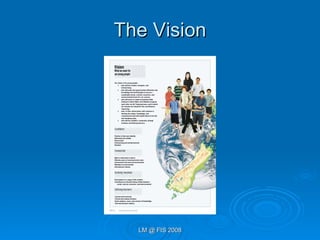
The Vision
The New Zealand Curriculum
The New Zealand Curriculum identifies five key competencies: Thinking Using language, symbols and texts Managing self Relating to others Participating and contributing  The Key Competencies
 
Key Competencies “ The key competencies are both the end and the means.  They are the focus for learning – and they enable learning.  They are the capabilities that young people need for growing, working, and participating in their communities and society.” Pg 38,  The New Zealand Curriculum , Ministry of Education, 2007,
Key Competencies Read pages 12-13  Highlight key words for each key competency
The Worlds Fastest Indian View the following snippet.  What key competencies was Burt Munroe displaying?
 
The Integrated Curriculum “ Making Connections: Students need to be able to integrate new learning with what they already understand.  When teachers deliberately build on what their students know, they maximise the use of learning time, anticipate students’ learning needs and avoid unnecessary duplication of content.  Teachers can help students to make connections across learning areas as well as make connections to home practises and to the wider world.”  Pg 24,  Effective Pedagogy, NZC, Draft for Consultation, 2006
Values, key competencies and learning areas “ In practice, the Key Competencies are most often used in combination.” “ Schools need to consider how each of these aspects of the curriculum will be promoted and developed in teaching and learning.”  “ Schools may, for example decide to organise their curriculum around one of these three aspects (values, key competencies, or learning areas) and deliberately weave the other two through their programmes.”  Pp 37-38,  The New Zealand Curriculum, Ministry of Education 2007
Collaborative Planning Task: Syndicates Collaborative plan  Key Competency Integrated across learning areas Include an aspect of e learning (might want to present the Key Competency in action?) Build up to Science Week
The Planning Process Now you choose one key competency based upon your: Student learning needs Learning opportunities/events next term Interests
Learning Goals and Criteria - What is the  big learning? - What might the criteria look like? (What do we have to know and do to ..?) -  Why is it important to learn this?
 
WE ARE LEARNING TO MANAGE SELF HOW WILL WE MANAGE OURSELVES IN ROOM …?  By becoming a responsible Class Member/Camp Participant  What do we have to know and do to…?   Details/Specifics   Know ourselves and each other  Rights and responsibilities  School/Class Rules/Basic Rights Expectations  Book Presentation Charts Personal Goals  FFI Goal Setting Setting high standards for oneself  Know when to seek assistance
Criteria Co-Constructed with Students We are Learning to Manage Self What do we have to know and do to…?   Details/Specifics Know myself Strengths, weaknesses Knowing my class mates Strengths, weaknesses, interests,  background Expectations Display Charts – learning,  behaviour, book work, uniform,  and communication Goal Setting SMART Goals Achievement Reflect on my own achievement
Expectations Chart Our Expectations for Learning  Always stay on task! Be organised. If a job needs to be done then do it –  show initiative. Work within time frames and time limits. Engage in learning conversations. If you need help – ask others. Know what work I need to do. We all contribute independently to help the team work together. Face challenges – take risks. Make mistakes and learn from them.
Expectations Chart Our Expectations for Communication Active Listening – Eye contact, proximity, body language Focus – Think about the task or conversation Engaged – Are you with me? Feedback – from me, my classmates and my teacher. No hands up in group discussion. We need to TRUST each other.
Learning Areas “ While the learning areas are presented as distinct, this should not limit the ways in which schools structure the learning areas offered to students.  All learning should make use of the natural connections that exist between learning areas to the values and key competencies.”  Pg 16,  The New Zealand Curriculum , Ministry of Education, 2007,
Learning Areas Brainstorm: What might this learning look like in relevant Learning Areas? (Natural links only)
Now think about… Learning Activities Achievement Objectives and SLO’s
Assessment Throughout the unit, teachers formally assessed the students against the achievement objectives – in the focused learning areas. We also used peer and self assessment to reflect on their learning within the Key Competency.
 
Assessment and the Key Competencies “ With appropriate teacher guidance and feedback, all students should develop strategies for self monitoring and collaborative  evaluation of their performance in relation to suitable criteria.  Self Assessments might involve students examining and discussing various kinds of evidence, making judgements about their progress and setting further goals.”  Page 38  The New Zealand Curriculum  2007
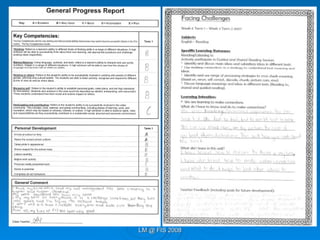
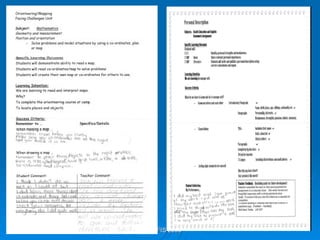
Examples of Students’ Self and Peer Assessments


Peer Assessment We are learning to manage ourselves  in order to help the group. What did ……………………… do in order to help the group complete the task? What would you suggest as a goal to work on next time so that they may contribute more to the group effort? My Thoughts:
Assessment Plan your assessment/reflection tasks.
Your Planning Key Competency Focus –  Big Learning, Learning Intention and Criteria Learning Areas  - AO’s/SLO’s Learning Activities  - Skills, knowledge, process, Thinking Strategy, E learning (ICT) Assessment
Digital Camera Blooms Question Starters Graphic Organisers To ask appropriate questions Investigating in science To ask questions in a simple investigation Assessment E learning Thinking Strategies Knowledge Skills AO’s/ SLO’s
Sharing  What did you plan? How did it go?
Student Voice about Key Competency Learning  “ We won’t forget this.  We will use it for jobs and our future.”   Rosemary “ When you self manage it is more fun at school.  It is easier for our teachers and us and for others. “  Rhianna “ I used to think school was a waste of time.”   Cayman
Our Last Thoughts Our School Curriculum is  Dynamic Evolving Driven by learners needs “ This curriculum gives schools the flexibility to actively involve students in what they learn, how it is taught and how the learning is assessed, and it invites schools to embrace the challenge of designing relevant and meaningful learning programmes that will motivate and engage all students.”  Hon. Steven Maharey Minister of Education 2007

Callaborative Planning Day Key Competency Focus

  • 1.
    Playing with theKey Competencies Lisa Morresey and Anne Gardiner Fairfield Intermediate School Eastern Arterial Learning Community
  • 2.
    Our Learning Toplan using the Key Competencies. Success Criteria: Develop a deeper knowledge of the Key Competencies; Plan using a collaborative process; Use Assessment for Learning principles, as part of the planning process.
  • 3.
    Not on theTest …. http:// www.notonthetest.com /
  • 4.
    The New ZealandCurriculum Implementation of the New Curriculum 1992 Curriculum Stock take 2002 Recommendations Clarifying principles and values; Clarifying how schools are intended to implement intent of document; Restructuring essential skills and attitudes into the key competencies; Ensuring achievement objectives are clear, appropriate and future focused; Strong emphasis on excellence and improved outcomes for students.
  • 5.
    The New ZealandCurriculum Draft for Consultation, 2006 Emphasised Importance of effective teaching and learning Encouraged home school partnerships Increased the profile and status of second language learning Importance of making stronger connections between what goes on in schools, needs of communities, societies and employers It aimed to make the curriculum more manageable for teachers by clarifying expectations.
  • 6.
  • 7.
  • 8.
    The New ZealandCurriculum
  • 9.
    The New ZealandCurriculum identifies five key competencies: Thinking Using language, symbols and texts Managing self Relating to others Participating and contributing The Key Competencies
  • 10.
  • 11.
    Key Competencies “The key competencies are both the end and the means. They are the focus for learning – and they enable learning. They are the capabilities that young people need for growing, working, and participating in their communities and society.” Pg 38, The New Zealand Curriculum , Ministry of Education, 2007,
  • 12.
    Key Competencies Readpages 12-13 Highlight key words for each key competency
  • 13.
    The Worlds FastestIndian View the following snippet. What key competencies was Burt Munroe displaying?
  • 14.
  • 15.
    The Integrated Curriculum“ Making Connections: Students need to be able to integrate new learning with what they already understand. When teachers deliberately build on what their students know, they maximise the use of learning time, anticipate students’ learning needs and avoid unnecessary duplication of content. Teachers can help students to make connections across learning areas as well as make connections to home practises and to the wider world.” Pg 24, Effective Pedagogy, NZC, Draft for Consultation, 2006
  • 16.
    Values, key competenciesand learning areas “ In practice, the Key Competencies are most often used in combination.” “ Schools need to consider how each of these aspects of the curriculum will be promoted and developed in teaching and learning.” “ Schools may, for example decide to organise their curriculum around one of these three aspects (values, key competencies, or learning areas) and deliberately weave the other two through their programmes.” Pp 37-38, The New Zealand Curriculum, Ministry of Education 2007
  • 17.
    Collaborative Planning Task:Syndicates Collaborative plan Key Competency Integrated across learning areas Include an aspect of e learning (might want to present the Key Competency in action?) Build up to Science Week
  • 18.
    The Planning ProcessNow you choose one key competency based upon your: Student learning needs Learning opportunities/events next term Interests
  • 19.
    Learning Goals andCriteria - What is the big learning? - What might the criteria look like? (What do we have to know and do to ..?) - Why is it important to learn this?
  • 20.
  • 21.
    WE ARE LEARNINGTO MANAGE SELF HOW WILL WE MANAGE OURSELVES IN ROOM …? By becoming a responsible Class Member/Camp Participant What do we have to know and do to…? Details/Specifics Know ourselves and each other Rights and responsibilities School/Class Rules/Basic Rights Expectations Book Presentation Charts Personal Goals FFI Goal Setting Setting high standards for oneself Know when to seek assistance
  • 22.
    Criteria Co-Constructed withStudents We are Learning to Manage Self What do we have to know and do to…? Details/Specifics Know myself Strengths, weaknesses Knowing my class mates Strengths, weaknesses, interests, background Expectations Display Charts – learning, behaviour, book work, uniform, and communication Goal Setting SMART Goals Achievement Reflect on my own achievement
  • 23.
    Expectations Chart OurExpectations for Learning Always stay on task! Be organised. If a job needs to be done then do it – show initiative. Work within time frames and time limits. Engage in learning conversations. If you need help – ask others. Know what work I need to do. We all contribute independently to help the team work together. Face challenges – take risks. Make mistakes and learn from them.
  • 24.
    Expectations Chart OurExpectations for Communication Active Listening – Eye contact, proximity, body language Focus – Think about the task or conversation Engaged – Are you with me? Feedback – from me, my classmates and my teacher. No hands up in group discussion. We need to TRUST each other.
  • 25.
    Learning Areas “While the learning areas are presented as distinct, this should not limit the ways in which schools structure the learning areas offered to students. All learning should make use of the natural connections that exist between learning areas to the values and key competencies.” Pg 16, The New Zealand Curriculum , Ministry of Education, 2007,
  • 26.
    Learning Areas Brainstorm:What might this learning look like in relevant Learning Areas? (Natural links only)
  • 27.
    Now think about…Learning Activities Achievement Objectives and SLO’s
  • 28.
    Assessment Throughout theunit, teachers formally assessed the students against the achievement objectives – in the focused learning areas. We also used peer and self assessment to reflect on their learning within the Key Competency.
  • 29.
  • 30.
    Assessment and theKey Competencies “ With appropriate teacher guidance and feedback, all students should develop strategies for self monitoring and collaborative evaluation of their performance in relation to suitable criteria. Self Assessments might involve students examining and discussing various kinds of evidence, making judgements about their progress and setting further goals.” Page 38 The New Zealand Curriculum 2007
  • 31.
    Examples of Students’Self and Peer Assessments
  • 32.
  • 33.
  • 34.
  • 35.
    Peer Assessment Weare learning to manage ourselves in order to help the group. What did ……………………… do in order to help the group complete the task? What would you suggest as a goal to work on next time so that they may contribute more to the group effort? My Thoughts:
  • 36.
    Assessment Plan yourassessment/reflection tasks.
  • 37.
    Your Planning KeyCompetency Focus – Big Learning, Learning Intention and Criteria Learning Areas - AO’s/SLO’s Learning Activities - Skills, knowledge, process, Thinking Strategy, E learning (ICT) Assessment
  • 38.
    Digital Camera BloomsQuestion Starters Graphic Organisers To ask appropriate questions Investigating in science To ask questions in a simple investigation Assessment E learning Thinking Strategies Knowledge Skills AO’s/ SLO’s
  • 39.
    Sharing Whatdid you plan? How did it go?
  • 40.
    Student Voice aboutKey Competency Learning “ We won’t forget this. We will use it for jobs and our future.” Rosemary “ When you self manage it is more fun at school. It is easier for our teachers and us and for others. “ Rhianna “ I used to think school was a waste of time.” Cayman
  • 41.
    Our Last ThoughtsOur School Curriculum is Dynamic Evolving Driven by learners needs “ This curriculum gives schools the flexibility to actively involve students in what they learn, how it is taught and how the learning is assessed, and it invites schools to embrace the challenge of designing relevant and meaningful learning programmes that will motivate and engage all students.” Hon. Steven Maharey Minister of Education 2007

Editor's Notes

  • #2 Welcome, Introductions Lisa, Anne, and supported by Barbara Reid – Eastern Arterial Learning Community Facilitator. Lisa Fairfield Intermediate School, in Hamilton. Decile 5 inner city school 830 students. Students come from Decile 10 – Decile 1 students. Second year on the ICT Contract. We have been working hard to develop a collaborative learning culture. Collaborative planning, integrated planning and the Draft Curriculum was a big focus for our learning last year. We have been literally playing with the Key Competencies and through dialogue and collaboration with other schools we discovered that we were perhaps developing a slightly different approach towards the Key Competencies. We were encouraged to share this and so we reluctantly submitted a proposal and here we are.