CABLE NET
AND TENSILE
STRUCTURES
19041AA102
CABLE NET
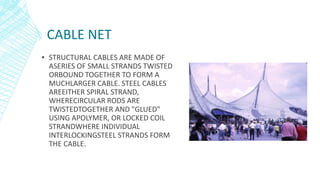
▪ STRUCTURAL CABLES ARE MADE OF
ASERIES OF SMALL STRANDS TWISTED
ORBOUND TOGETHER TO FORM A
MUCHLARGER CABLE. STEEL CABLES
AREEITHER SPIRAL STRAND,
WHERECIRCULAR RODS ARE
TWISTEDTOGETHER AND "GLUED"
USING APOLYMER, OR LOCKED COIL
STRANDWHERE INDIVIDUAL
INTERLOCKINGSTEEL STRANDS FORM
THE CABLE.
CABLE NET
▪ A CABLEIS A FLEXIBLE STRUCTURAL COMPONENT THAT OFFERS NORESISTANCE
WHEN COMPRESSED OR BENT IN A CURVED SHAPE.
▪ TECHNICALLY WE CAN SAY CABLE HAS ZERO BENDING RIGIDITYACABLEIS THE
MAIN COMPONENT OF CABLE SUPPORTED BRIDGEOR SUSPENDED ROOF
STRUCTURES THAT ARE CLASSIFIED ASFOLLOWS:
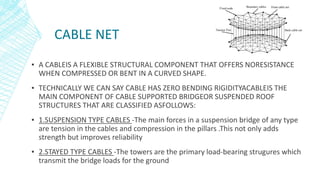
▪ 1.SUSPENSION TYPE CABLES -The main forces in a suspension bridge of any type
are tension in the cables and compression in the pillars .This not only adds
strength but improves reliability
▪ 2.STAYED TYPE CABLES -The towers are the primary load-bearing strugures which
transmit the bridge loads for the ground
TENSILE STRUCTURE
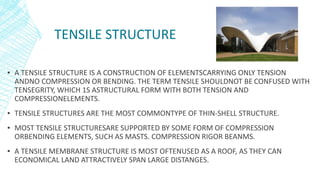
▪ A TENSILE STRUCTURE IS A CONSTRUCTION OF ELEMENTSCARRYING ONLY TENSION
ANDNO COMPRESSION OR BENDING. THE TERM TENSILE SHOULDNOT BE CONFUSED WITH
TENSEGRITY, WHICH 1S ASTRUCTURAL FORM WITH BOTH TENSION AND
COMPRESSIONELEMENTS.
▪ TENSILE STRUCTURES ARE THE MOST COMMONTYPE OF THIN-SHELL STRUCTURE.
▪ MOST TENSILE STRUCTURESARE SUPPORTED BY SOME FORM OF COMPRESSION
ORBENDING ELEMENTS, SUCH AS MASTS. COMPRESSION RIGOR BEANMS.
▪ A TENSILE MEMBRANE STRUCTURE IS MOST OFTENUSED AS A ROOF, AS THEY CAN
ECONOMICAL LAND ATTRACTIVELY SPAN LARGE DISTANGES.
TENSILE STRUCTURE
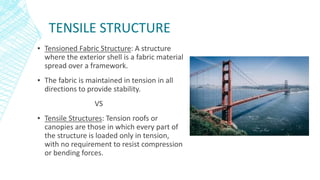
▪ Tensioned Fabric Structure: A structure
where the exterior shell is a fabric material
spread over a framework.
▪ The fabric is maintained in tension in all
directions to provide stability.
VS
▪ Tensile Structures: Tension roofs or
canopies are those in which every part of
the structure is loaded only in tension,
with no requirement to resist compression
or bending forces.
TYPES OF TENSILE STRUCTURE
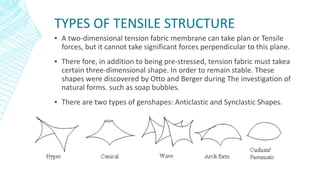
▪ A two-dimensional tension fabric membrane can take plan or Tensile
forces, but it cannot take significant forces perpendicular to this plane.
▪ There fore, in addition to being pre-stressed, tension fabric must takea
certain three-dimensional shape. In order to remain stable. These
shapes were discovered by Otto and Berger during The investigation of
natural forms. such as soap bubbles.
▪ There are two types of genshapes: Anticlastic and Synclastic Shapes.
TYPES OF TENSILE STRUCTURE
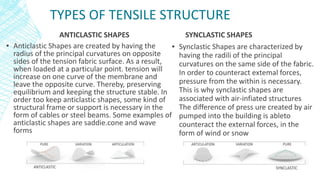
ANTICLASTIC SHAPES
▪ Anticlastic Shapes are created by having the
radius of the principal curvatures on opposite
sides of the tension fabric surface. As a result,
when loaded at a particular point. tension will
increase on one curve of the membrane and
leave the opposite curve. Thereby, preserving
equilibrium and keeping the structure stable. In
order too keep anticlastic shapes, some kind of
structural frame or support is necessary in the
form of cables or steel beams. Some examples of
anticlastic shapes are saddie.cone and wave
forms
SYNCLASTIC SHAPES
▪ Synclastic Shapes are characterized by
having the radili of the principal
curvatures on the same side of the fabric.
In order to counteract extemal forces,
pressure from the within is necessary.
This is why synclastic shapes are
associated with air-infiated structures
The difference of press ure created by air
pumped into the building is ableto
counteract the external forces, in the
form of wind or snow
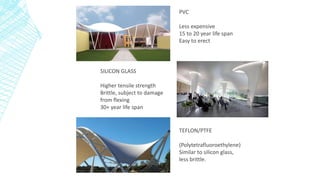
PVC
Less expensive
15 to 20 year life span
Easy to erect
SILICON GLASS
Higher tensile strength
Brittle, subject to damage
from flexing
30+ year life span
TEFLON/PTFE
(Polytetrafluoroethylene)
Similar to silicon glass,
less brittle.

CABLE NET AND TENSILE STRUCTURES - STRUCTURE

  • 1.
  • 2.
    CABLE NET ▪ STRUCTURALCABLES ARE MADE OF ASERIES OF SMALL STRANDS TWISTED ORBOUND TOGETHER TO FORM A MUCHLARGER CABLE. STEEL CABLES AREEITHER SPIRAL STRAND, WHERECIRCULAR RODS ARE TWISTEDTOGETHER AND "GLUED" USING APOLYMER, OR LOCKED COIL STRANDWHERE INDIVIDUAL INTERLOCKINGSTEEL STRANDS FORM THE CABLE.
  • 3.
    CABLE NET ▪ ACABLEIS A FLEXIBLE STRUCTURAL COMPONENT THAT OFFERS NORESISTANCE WHEN COMPRESSED OR BENT IN A CURVED SHAPE. ▪ TECHNICALLY WE CAN SAY CABLE HAS ZERO BENDING RIGIDITYACABLEIS THE MAIN COMPONENT OF CABLE SUPPORTED BRIDGEOR SUSPENDED ROOF STRUCTURES THAT ARE CLASSIFIED ASFOLLOWS: ▪ 1.SUSPENSION TYPE CABLES -The main forces in a suspension bridge of any type are tension in the cables and compression in the pillars .This not only adds strength but improves reliability ▪ 2.STAYED TYPE CABLES -The towers are the primary load-bearing strugures which transmit the bridge loads for the ground
  • 4.
    TENSILE STRUCTURE ▪ ATENSILE STRUCTURE IS A CONSTRUCTION OF ELEMENTSCARRYING ONLY TENSION ANDNO COMPRESSION OR BENDING. THE TERM TENSILE SHOULDNOT BE CONFUSED WITH TENSEGRITY, WHICH 1S ASTRUCTURAL FORM WITH BOTH TENSION AND COMPRESSIONELEMENTS. ▪ TENSILE STRUCTURES ARE THE MOST COMMONTYPE OF THIN-SHELL STRUCTURE. ▪ MOST TENSILE STRUCTURESARE SUPPORTED BY SOME FORM OF COMPRESSION ORBENDING ELEMENTS, SUCH AS MASTS. COMPRESSION RIGOR BEANMS. ▪ A TENSILE MEMBRANE STRUCTURE IS MOST OFTENUSED AS A ROOF, AS THEY CAN ECONOMICAL LAND ATTRACTIVELY SPAN LARGE DISTANGES.
  • 5.
    TENSILE STRUCTURE ▪ TensionedFabric Structure: A structure where the exterior shell is a fabric material spread over a framework. ▪ The fabric is maintained in tension in all directions to provide stability. VS ▪ Tensile Structures: Tension roofs or canopies are those in which every part of the structure is loaded only in tension, with no requirement to resist compression or bending forces.
  • 6.
    TYPES OF TENSILESTRUCTURE ▪ A two-dimensional tension fabric membrane can take plan or Tensile forces, but it cannot take significant forces perpendicular to this plane. ▪ There fore, in addition to being pre-stressed, tension fabric must takea certain three-dimensional shape. In order to remain stable. These shapes were discovered by Otto and Berger during The investigation of natural forms. such as soap bubbles. ▪ There are two types of genshapes: Anticlastic and Synclastic Shapes.
  • 7.
    TYPES OF TENSILESTRUCTURE ANTICLASTIC SHAPES ▪ Anticlastic Shapes are created by having the radius of the principal curvatures on opposite sides of the tension fabric surface. As a result, when loaded at a particular point. tension will increase on one curve of the membrane and leave the opposite curve. Thereby, preserving equilibrium and keeping the structure stable. In order too keep anticlastic shapes, some kind of structural frame or support is necessary in the form of cables or steel beams. Some examples of anticlastic shapes are saddie.cone and wave forms SYNCLASTIC SHAPES ▪ Synclastic Shapes are characterized by having the radili of the principal curvatures on the same side of the fabric. In order to counteract extemal forces, pressure from the within is necessary. This is why synclastic shapes are associated with air-infiated structures The difference of press ure created by air pumped into the building is ableto counteract the external forces, in the form of wind or snow
  • 8.
    PVC Less expensive 15 to20 year life span Easy to erect SILICON GLASS Higher tensile strength Brittle, subject to damage from flexing 30+ year life span TEFLON/PTFE (Polytetrafluoroethylene) Similar to silicon glass, less brittle.