




The Anatomy of Buzz Lessons in word of mouth marketing Emanuel Rosen Amsterdam January 13, 2009
Some definitions Buzz: all the person to person communication about a brand Verbal buzz. Visual buzz. Objective: Maximizing the number of positive comments exchanged among customers.
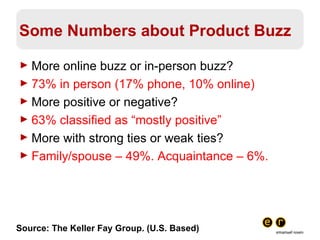
More online buzz or in-person buzz? 73% in person (17% phone, 10% online) More positive or negative? 63% classified as “mostly positive” More with strong ties or weak ties? Family/spouse – 49%. Acquaintance – 6%. Some Numbers about Product Buzz Source: The Keller Fay Group. (U.S. Based)
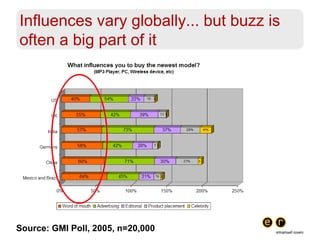
Influences vary globally... but buzz is often a big part of it Source: GMI Poll, 2005, n=20,000
“ Consumers around the world still place their highest levels of trust in other consumers.” 2007 Nielsen study in 47 countries
Stimulating Buzz
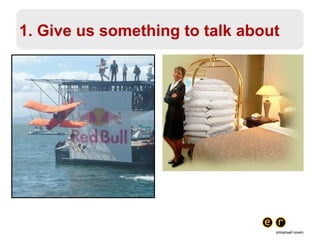
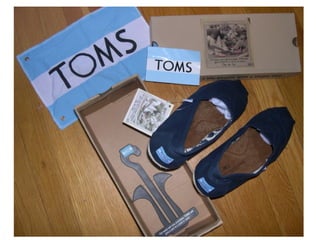
1. Give us something to talk about
Conversation Hook and Product Benefit
2. Encourage Participation Voting Reviews
 
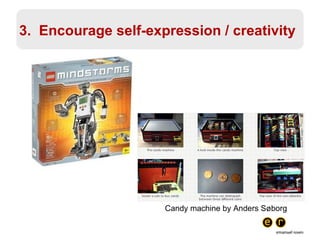
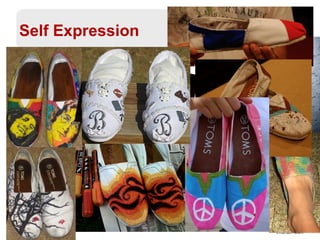
3.  Encourage self-expression / creativity Candy machine by Anders Søborg
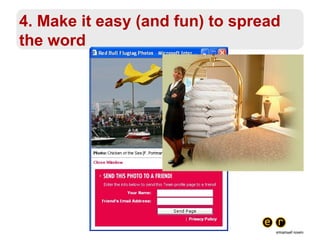
4. Make it easy (and fun) to spread the word
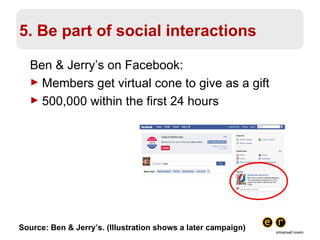
5. Be part of social interactions Ben & Jerry’s on Facebook: Members get virtual cone to give as a gift 500,000 within the first 24 hours Source: Ben & Jerry’s. (Illustration shows a later campaign)
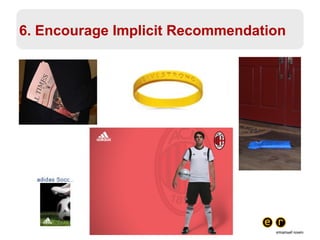
6. Encourage Implicit Recommendation
7. Evoke an emotional response 69% of BzzAgents reported at least one word of mouth incident. (nearly 40% above the average level of their previous campaigns at that time.)
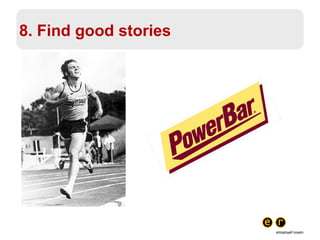
8. Find good stories
9. Listen and measure twitter, blogs, YouTube, Flickr Customer feedback programs Net promoter score Private communities MotiveQuest, Nielsen Online, etc. So where do you start?
So far… Give us something to talk about Encourage participation Encourage self expression / creativity Make it easy to spread the word Be part of social interaction Encourage implicit recommendation Evoke an emotional response Find good stories Listen
 
 
Self Expression
 
The Future of Word-of-Mouth Marketing
Hilton Hotels Kraft Nokia Cisco McKinsey & Company Prudential Vanguard  Hewlett-Packard Dell Kimberly-Clark Nestle USA The New York Times Yahoo  Wal-Mart  What do these companies have in common?
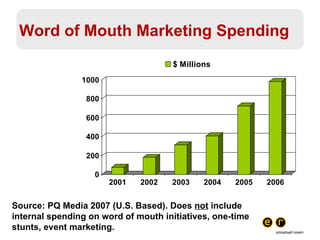
Word of Mouth Marketing Spending Source: PQ Media 2007 (U.S. Based). Does  not  include internal spending on word of mouth initiatives, one-time stunts, event marketing.
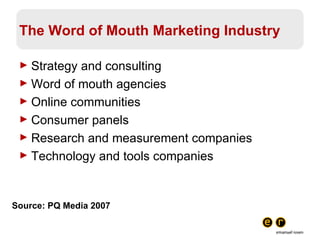
The Word of Mouth Marketing Industry Strategy and consulting Word of mouth agencies Online communities Consumer panels Research and measurement companies Technology and tools companies Source: PQ Media 2007
 
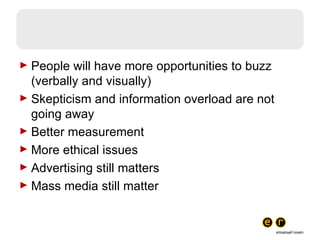
People will have more opportunities to buzz (verbally and visually) Skepticism and information overload are not going away Better measurement More ethical issues Advertising still matters Mass media still matter
Three important concepts
1. Volume of buzz is important but so is dispersion “ We’d never seen anything like this. The passion was there. The word of mouth was there.”  –Marc Schiller The movie bombed “… simple counts are not sufficient. There is valuable information in the extent to which the conversations are taking place across heterogeneous communities…”* * Godes & Mayzlin  “Using Online Conversations to Study Word-of-Mouth Communication.”  Marketing Science  2004
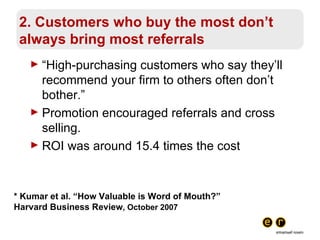
2. Customers who buy the most don’t always bring most referrals * Kumar et al. “How Valuable is Word of Mouth?” Harvard Business Review , October 2007 “ High-purchasing customers who say they’ll recommend your firm to others often don’t bother.” Promotion encouraged referrals and cross selling. ROI was around 15.4 times the cost
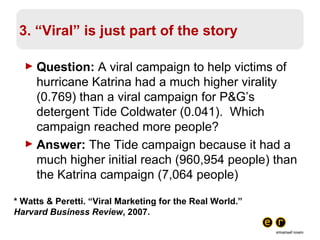
3. “Viral” is just part of the story * Watts & Peretti. “Viral Marketing for the Real World.”  Harvard Business Review , 2007. Question:  A viral campaign to help victims of hurricane Katrina had a much higher virality (0.769) than a viral campaign for P&G’s detergent Tide Coldwater (0.041).  Which campaign reached more people? Answer:  The Tide campaign because it had a much higher initial reach (960,954 people) than the Katrina campaign (7,064 people)
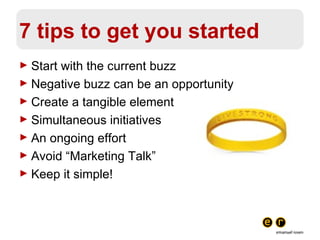
7 tips to get you started Start with the current buzz Negative buzz can be an opportunity Create a tangible element Simultaneous initiatives An ongoing effort Avoid “Marketing Talk” Keep it simple!
The Anatomy of Buzz Lessons in word of mouth marketing Emanuel Rosen
4. Advertising still matters What factor had the strongest relationship with the level of buzz in hundreds of CPG launches?* Advertising Increases the pool of potential buzzers Ads can  simulate  or  stimulate  buzz Help customers articulate why they like the product 17% of brand conversations refer to advertising (The Keller Fay Group) * Nielsen. Niederhoffer et al. “The Origin and Impact of CPG New-Product Buzz”  J.of Advertising Research  2007 .
Ethical issues “ We stand against shill and undercover marketing, whereby people are paid to make recommendations without disclosing their relationship with the marketer.” Word of Mouth Marketing Association Code of Ethics
Why you need to be proactive Even delighted customers can forget and run out of opportunities to talk about your brand. In one study, 30% of the negative word of mouth was about brands that have never been owned by those who talked about them.* Counterbalancing this constant trickle of negative comments with honest positive word of mouth is critical.  * East, et al. “The relative incidence of positive and negative word of mouth”  International J of Research in Marketing , 2007.

Buzz Awards Seminar 2009 Emanuel Rosen

  • 1.
    The Anatomy ofBuzz Lessons in word of mouth marketing Emanuel Rosen Amsterdam January 13, 2009
  • 2.
    Some definitions Buzz:all the person to person communication about a brand Verbal buzz. Visual buzz. Objective: Maximizing the number of positive comments exchanged among customers.
  • 3.
    More online buzzor in-person buzz? 73% in person (17% phone, 10% online) More positive or negative? 63% classified as “mostly positive” More with strong ties or weak ties? Family/spouse – 49%. Acquaintance – 6%. Some Numbers about Product Buzz Source: The Keller Fay Group. (U.S. Based)
  • 4.
    Influences vary globally...but buzz is often a big part of it Source: GMI Poll, 2005, n=20,000
  • 5.
    “ Consumers aroundthe world still place their highest levels of trust in other consumers.” 2007 Nielsen study in 47 countries
  • 6.
  • 7.
    1. Give ussomething to talk about
  • 8.
    Conversation Hook andProduct Benefit
  • 9.
  • 10.
  • 11.
    3. Encourageself-expression / creativity Candy machine by Anders Søborg
  • 12.
    4. Make iteasy (and fun) to spread the word
  • 13.
    5. Be partof social interactions Ben & Jerry’s on Facebook: Members get virtual cone to give as a gift 500,000 within the first 24 hours Source: Ben & Jerry’s. (Illustration shows a later campaign)
  • 14.
    6. Encourage ImplicitRecommendation
  • 15.
    7. Evoke anemotional response 69% of BzzAgents reported at least one word of mouth incident. (nearly 40% above the average level of their previous campaigns at that time.)
  • 16.
    8. Find goodstories
  • 17.
    9. Listen andmeasure twitter, blogs, YouTube, Flickr Customer feedback programs Net promoter score Private communities MotiveQuest, Nielsen Online, etc. So where do you start?
  • 18.
    So far… Giveus something to talk about Encourage participation Encourage self expression / creativity Make it easy to spread the word Be part of social interaction Encourage implicit recommendation Evoke an emotional response Find good stories Listen
  • 19.
  • 20.
  • 21.
  • 22.
  • 23.
    The Future ofWord-of-Mouth Marketing
  • 24.
    Hilton Hotels KraftNokia Cisco McKinsey & Company Prudential Vanguard Hewlett-Packard Dell Kimberly-Clark Nestle USA The New York Times Yahoo Wal-Mart What do these companies have in common?
  • 25.
    Word of MouthMarketing Spending Source: PQ Media 2007 (U.S. Based). Does not include internal spending on word of mouth initiatives, one-time stunts, event marketing.
  • 26.
    The Word ofMouth Marketing Industry Strategy and consulting Word of mouth agencies Online communities Consumer panels Research and measurement companies Technology and tools companies Source: PQ Media 2007
  • 27.
  • 28.
    People will havemore opportunities to buzz (verbally and visually) Skepticism and information overload are not going away Better measurement More ethical issues Advertising still matters Mass media still matter
  • 29.
  • 30.
    1. Volume ofbuzz is important but so is dispersion “ We’d never seen anything like this. The passion was there. The word of mouth was there.” –Marc Schiller The movie bombed “… simple counts are not sufficient. There is valuable information in the extent to which the conversations are taking place across heterogeneous communities…”* * Godes & Mayzlin “Using Online Conversations to Study Word-of-Mouth Communication.” Marketing Science 2004
  • 31.
    2. Customers whobuy the most don’t always bring most referrals * Kumar et al. “How Valuable is Word of Mouth?” Harvard Business Review , October 2007 “ High-purchasing customers who say they’ll recommend your firm to others often don’t bother.” Promotion encouraged referrals and cross selling. ROI was around 15.4 times the cost
  • 32.
    3. “Viral” isjust part of the story * Watts & Peretti. “Viral Marketing for the Real World.” Harvard Business Review , 2007. Question: A viral campaign to help victims of hurricane Katrina had a much higher virality (0.769) than a viral campaign for P&G’s detergent Tide Coldwater (0.041). Which campaign reached more people? Answer: The Tide campaign because it had a much higher initial reach (960,954 people) than the Katrina campaign (7,064 people)
  • 33.
    7 tips toget you started Start with the current buzz Negative buzz can be an opportunity Create a tangible element Simultaneous initiatives An ongoing effort Avoid “Marketing Talk” Keep it simple!
  • 34.
    The Anatomy ofBuzz Lessons in word of mouth marketing Emanuel Rosen
  • 35.
    4. Advertising stillmatters What factor had the strongest relationship with the level of buzz in hundreds of CPG launches?* Advertising Increases the pool of potential buzzers Ads can simulate or stimulate buzz Help customers articulate why they like the product 17% of brand conversations refer to advertising (The Keller Fay Group) * Nielsen. Niederhoffer et al. “The Origin and Impact of CPG New-Product Buzz” J.of Advertising Research 2007 .
  • 36.
    Ethical issues “We stand against shill and undercover marketing, whereby people are paid to make recommendations without disclosing their relationship with the marketer.” Word of Mouth Marketing Association Code of Ethics
  • 37.
    Why you needto be proactive Even delighted customers can forget and run out of opportunities to talk about your brand. In one study, 30% of the negative word of mouth was about brands that have never been owned by those who talked about them.* Counterbalancing this constant trickle of negative comments with honest positive word of mouth is critical. * East, et al. “The relative incidence of positive and negative word of mouth” International J of Research in Marketing , 2007.