




BUSINESS RISKS AND
INSURANCE
BY
ANAM RAFIQUE, NAILA RAFIQUE,
FAIZA JAMIL, NOOR-UL-AIN, IRAM SHAHZADI
AND
UZMA BATOOL
Definition of business
According to James Stephenson,
“Every human activity which is
engaged in for the sake of
earning profit may be called
business”.
• Risk – the possibility of loss
• or injury
• Business risk – risk of loss
that is naturally incurred by
owing and operating a
business
TYPES OF BUSINESS RISKS
• Insurable vs.
uninsurable risk
• Controllable vs.
uncontrollable risk
Pure risk
Economic risk
Human risk
Natural risk
OTHER TYPES OF RISK
PURE RISK
o Threat of loss with no opportunity for gain
Examples
Employee theft
Burglary
Bad checks
Accidents
Involving Customers or employees
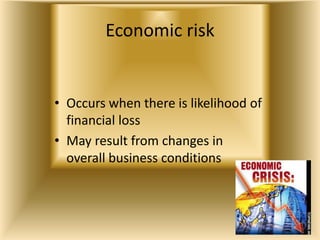
Economic risk
• Occurs when there is likelihood of
financial loss
• May result from changes in
overall business conditions
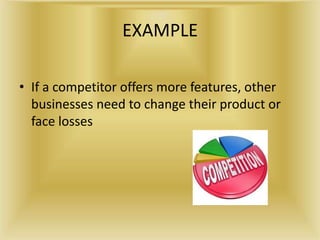
EXAMPLE
• If a competitor offers more features, other
businesses need to change their product or
face losses
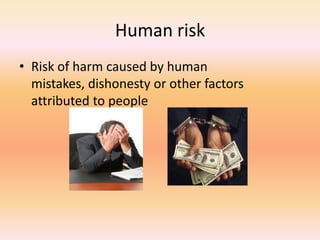
Human risk
• Risk of harm caused by human
mistakes, dishonesty or other factors
attributed to people
EXAMPLES
• Customer dishonesty
• Fraudulent payment
• Theft incompetence of employees
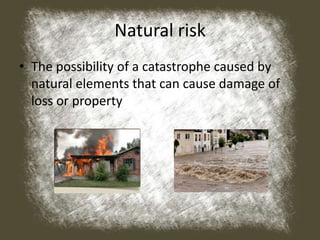
Natural risk
• The possibility of a catastrophe caused by
natural elements that can cause damage of
loss or property
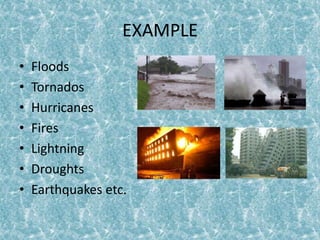
EXAMPLE
• Floods
• Tornados
• Hurricanes
• Fires
• Lightning
• Droughts
• Earthquakes etc.
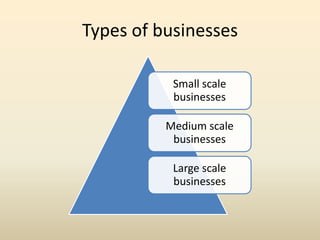
Types of businesses
Small scale
businesses
Medium scale
businesses
Large scale
businesses
Number of people in small businesses are
less than 100
Annual revenue is less than $ 7 million
Common risks in small businesses
• Breakdown of machinery and equipment
• High employees turnover or loss of key
staff members especially if they have
unique skills
• Security of data and intellectual
property
• theft
Common risks
• Bad debts creating customers
• Increase in competition
• Negative cash flow
• Natural disasters such as fires and
storms
Medium scale business
• Number of people in such businesses is
from 100 to 500
• Annual revenue is between $7 million to
$35 million dollar(estimate)
COMMON RISKS
 Intellectual property
 Theft
 Increased competition
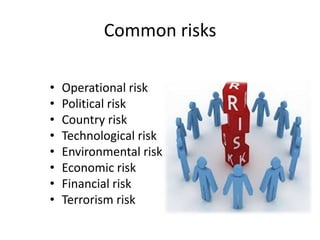
Common risks
• Operational risk
• Political risk
• Country risk
• Technological risk
• Environmental risk
• Economic risk
• Financial risk
• Terrorism risk
Large scale businesses
• Number of people in such business organization is more than
500
• Annual revenue is more than $35 million (estimate)
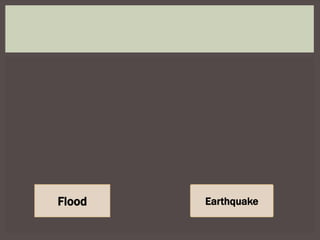
Flood Earthquake
 Natural causes are beyond the control of humans
 Natural disasters can lead to huge losses in business
 Which mainly occur due to natural calamities such as
earthquakes and flood etc.
NATURAL CAUSES
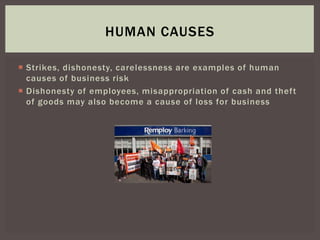
 Strikes, dishonesty, carelessness are examples of human
causes of business risk
 Dishonesty of employees, misappropriation of cash and theft
of goods may also become a cause of loss for business
HUMAN CAUSES
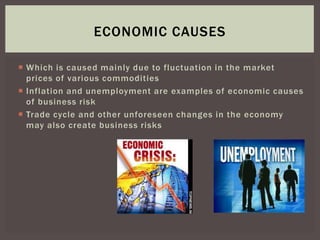
 Which is caused mainly due to fluctuation in the market
prices of various commodities
 Inflation and unemployment are examples of economic causes
of business risk
 Trade cycle and other unforeseen changes in the economy
may also create business risks
ECONOMIC CAUSES
 Assets used in business may depreciate in value
 Technical changes and mechanical defects also result in
business risks
PHYSICAL CAUSES
 Some political events can change the business scenario
 A major policy change by government can change the
business environment
 Changes in the taxation policies create uncertainty and loss
 political disturbances such as fall of government and civil
war etc. may lead to heavy loss in business
POLITICAL CAUSES
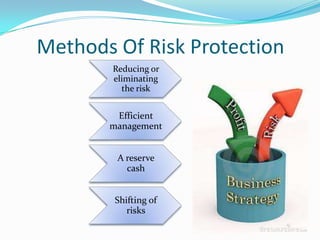
Methods Of Risk Protection
Reducing or
eliminating
the risk
Efficient
management
A reserve
cash
Shifting of
risks
Reducing or eliminating risk
Efficient management
A reserve cash
Shifting of risk
 Contract between two parties
 Process of collecting money
 Compensation to losses
According to Oxford Dictionary,
“Insurance means undertaking, by a
company, society or the state to
provide safeguard against
loss, provision against
sickness, death, etc. in return for
regular payments.”
MAIN POINTS OF DEFINITION
 An undertaking
 Safeguard
Benefits of insurance to
individuals
Peace of mind
Aversion of risk
Protects mortgaged properties
Provides self dependency
Tool of savings
Tool of investment
• Reduce reserve requirements
• Capital freed for investment
• Reduction of uncertainty
• Loss control activities
• Business and social stability
Benefits of insurance to society
 Protects wealth of country
 Helps in economic growth
 Control inflation
PRINCIPLES OF INSURANCE
• Utmost good faith
• The principle of indemnity
• Proximate cause
• Mitigation of loss
• Arbitration
Utmost good faith
• Contract between insured and insurer
• Both parties should disclose all facts to each
other
• A false information or non disclosure of
material facts makes the contract invalid
The principle of indemnity
• All insurance contracts, except life insurance
are the contract for indemnity
• The assured shall be compensated in case of
loss only
• The insured is not allowed to receive a higher
amount than the amount of loss
Proximate cause
An insured person can recover the only when it is
caused by any of the risk insured against. e.g.
cargo of wheat and rats
Mitigation of loss
• Insured should take all reasonable steps
to minimize the amount of loss
• He can recover the same from insurer if
he suffer loss in doing so.
• If he does not take care, his claim might
be lost
Cancellation
• Both parties have right to cancel or terminate
the insurance before its expiry date
• Their relationship come to an end on the date
of cancellation of policy
Life insurance
 We can define life insurance as a contract in
which insured person pay regular premium to
the insurer i.e. insurance company
 On the death of the insured or at the maturity
period, the insurance company pay the
compensation or the matured sum respectively
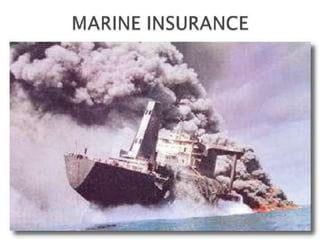
 This insurance is done by
businesses for safety delivery of
goods, while transferring goods
from one place to another by sea
way, land way, air way
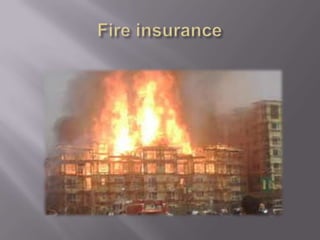
 Fire insurance is an insurance that cover
property such as home, shop and other fixed
asset protection against fire, burn etc.
 It also cover distraction of property due to fire
Which companies provide insurance in
Pakistan
• Adamjee insurance company limited(Karachi)
• Alpha insurance company limited (Karachi)
• Fins insurance company limited
• The united insurance company of Pakistan ltd
• Asia insurance company limited
• Premier insurance company limited
• Reliance insurance company limited
• Universal insurance company limited
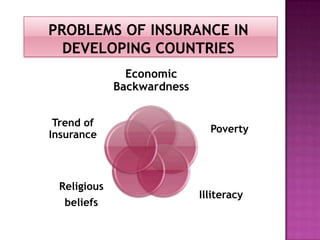
Economic
Backwardness
Poverty
Illiteracy
Religious
beliefs
Trend of
Insurance
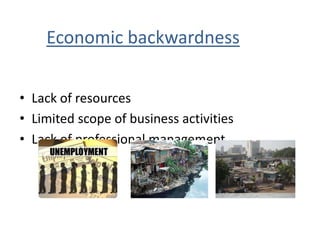
Economic backwardness
• Lack of resources
• Limited scope of business activities
• Lack of professional management
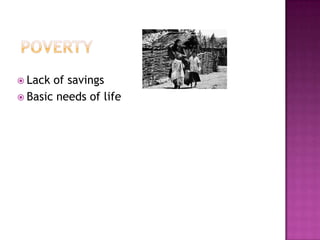
 Lack of savings
 Basic needs of life
 Illiterate majority
 Ignorance
 Views of people
 Varying opinions of religious scholars
 Deep attachment to scholars
 People considered it to be a form of Riba
 No fore sightness
 Legacy of people
Conclusion
Our visit
O To
state life insurance company limited
ANY QUESTION
business risks and insurance

business risks and insurance

  • 2.
    BUSINESS RISKS AND INSURANCE BY ANAMRAFIQUE, NAILA RAFIQUE, FAIZA JAMIL, NOOR-UL-AIN, IRAM SHAHZADI AND UZMA BATOOL
  • 3.
    Definition of business Accordingto James Stephenson, “Every human activity which is engaged in for the sake of earning profit may be called business”.
  • 4.
    • Risk –the possibility of loss • or injury • Business risk – risk of loss that is naturally incurred by owing and operating a business
  • 5.
    TYPES OF BUSINESSRISKS • Insurable vs. uninsurable risk • Controllable vs. uncontrollable risk
  • 7.
    Pure risk Economic risk Humanrisk Natural risk OTHER TYPES OF RISK
  • 8.
    PURE RISK o Threatof loss with no opportunity for gain Examples Employee theft Burglary Bad checks Accidents Involving Customers or employees
  • 9.
    Economic risk • Occurswhen there is likelihood of financial loss • May result from changes in overall business conditions
  • 10.
    EXAMPLE • If acompetitor offers more features, other businesses need to change their product or face losses
  • 11.
    Human risk • Riskof harm caused by human mistakes, dishonesty or other factors attributed to people
  • 12.
    EXAMPLES • Customer dishonesty •Fraudulent payment • Theft incompetence of employees
  • 13.
    Natural risk • Thepossibility of a catastrophe caused by natural elements that can cause damage of loss or property
  • 14.
    EXAMPLE • Floods • Tornados •Hurricanes • Fires • Lightning • Droughts • Earthquakes etc.
  • 15.
    Types of businesses Smallscale businesses Medium scale businesses Large scale businesses
  • 16.
    Number of peoplein small businesses are less than 100 Annual revenue is less than $ 7 million
  • 17.
    Common risks insmall businesses • Breakdown of machinery and equipment • High employees turnover or loss of key staff members especially if they have unique skills • Security of data and intellectual property • theft
  • 18.
    Common risks • Baddebts creating customers • Increase in competition • Negative cash flow • Natural disasters such as fires and storms
  • 19.
    Medium scale business •Number of people in such businesses is from 100 to 500 • Annual revenue is between $7 million to $35 million dollar(estimate)
  • 20.
    COMMON RISKS  Intellectualproperty  Theft  Increased competition
  • 21.
    Common risks • Operationalrisk • Political risk • Country risk • Technological risk • Environmental risk • Economic risk • Financial risk • Terrorism risk
  • 22.
    Large scale businesses •Number of people in such business organization is more than 500 • Annual revenue is more than $35 million (estimate)
  • 23.
  • 24.
     Natural causesare beyond the control of humans  Natural disasters can lead to huge losses in business  Which mainly occur due to natural calamities such as earthquakes and flood etc. NATURAL CAUSES
  • 25.
     Strikes, dishonesty,carelessness are examples of human causes of business risk  Dishonesty of employees, misappropriation of cash and theft of goods may also become a cause of loss for business HUMAN CAUSES
  • 26.
     Which iscaused mainly due to fluctuation in the market prices of various commodities  Inflation and unemployment are examples of economic causes of business risk  Trade cycle and other unforeseen changes in the economy may also create business risks ECONOMIC CAUSES
  • 27.
     Assets usedin business may depreciate in value  Technical changes and mechanical defects also result in business risks PHYSICAL CAUSES
  • 28.
     Some politicalevents can change the business scenario  A major policy change by government can change the business environment  Changes in the taxation policies create uncertainty and loss  political disturbances such as fall of government and civil war etc. may lead to heavy loss in business POLITICAL CAUSES
  • 29.
    Methods Of RiskProtection Reducing or eliminating the risk Efficient management A reserve cash Shifting of risks
  • 30.
  • 31.
  • 32.
  • 33.
  • 35.
     Contract betweentwo parties  Process of collecting money  Compensation to losses
  • 36.
    According to OxfordDictionary, “Insurance means undertaking, by a company, society or the state to provide safeguard against loss, provision against sickness, death, etc. in return for regular payments.”
  • 37.
    MAIN POINTS OFDEFINITION  An undertaking  Safeguard
  • 38.
    Benefits of insuranceto individuals Peace of mind Aversion of risk Protects mortgaged properties Provides self dependency Tool of savings Tool of investment
  • 39.
    • Reduce reserverequirements • Capital freed for investment • Reduction of uncertainty • Loss control activities • Business and social stability
  • 40.
    Benefits of insuranceto society  Protects wealth of country  Helps in economic growth  Control inflation
  • 41.
    PRINCIPLES OF INSURANCE •Utmost good faith • The principle of indemnity • Proximate cause • Mitigation of loss • Arbitration
  • 42.
    Utmost good faith •Contract between insured and insurer • Both parties should disclose all facts to each other • A false information or non disclosure of material facts makes the contract invalid
  • 43.
    The principle ofindemnity • All insurance contracts, except life insurance are the contract for indemnity • The assured shall be compensated in case of loss only • The insured is not allowed to receive a higher amount than the amount of loss
  • 44.
    Proximate cause An insuredperson can recover the only when it is caused by any of the risk insured against. e.g. cargo of wheat and rats
  • 45.
    Mitigation of loss •Insured should take all reasonable steps to minimize the amount of loss • He can recover the same from insurer if he suffer loss in doing so. • If he does not take care, his claim might be lost
  • 46.
    Cancellation • Both partieshave right to cancel or terminate the insurance before its expiry date • Their relationship come to an end on the date of cancellation of policy
  • 49.
  • 50.
     We candefine life insurance as a contract in which insured person pay regular premium to the insurer i.e. insurance company  On the death of the insured or at the maturity period, the insurance company pay the compensation or the matured sum respectively
  • 52.
     This insuranceis done by businesses for safety delivery of goods, while transferring goods from one place to another by sea way, land way, air way
  • 54.
     Fire insuranceis an insurance that cover property such as home, shop and other fixed asset protection against fire, burn etc.  It also cover distraction of property due to fire
  • 55.
    Which companies provideinsurance in Pakistan • Adamjee insurance company limited(Karachi) • Alpha insurance company limited (Karachi) • Fins insurance company limited • The united insurance company of Pakistan ltd • Asia insurance company limited • Premier insurance company limited • Reliance insurance company limited • Universal insurance company limited
  • 57.
  • 58.
    Economic backwardness • Lackof resources • Limited scope of business activities • Lack of professional management
  • 59.
     Lack ofsavings  Basic needs of life
  • 60.
     Illiterate majority Ignorance  Views of people
  • 61.
     Varying opinionsof religious scholars  Deep attachment to scholars  People considered it to be a form of Riba
  • 62.
     No foresightness  Legacy of people
  • 63.
  • 64.
    Our visit O To statelife insurance company limited
  • 65.