BUSINESS INTELLEGENCE
BY: SHIVALI
MBA 3A
ORIGIN
 Originally a term coined by the Gartner Group in 1993, Business Intelligence (BI) is a
broad range of software and solutions aimed at collection, consolidation, analysis and
providing access to information that allows users across the business to make better
decisions.
 The technology includes software for database query and analysis, multidimensional
databases or OLAP tools, data warehousing and data mining, and web enabled reporting
capabilities.
 Applied across disciplines but especially in Customer Relationship Management (CRM),
Supply Chain Management (SCM) Enterprise Resource Planning
 Provide better, faster and more accessible reports
BUSINESS INTELLIGENCE/BUSINESS
ANALYTICS
 Business intelligence (BI)
 Also referred to as business analytics
 A range of different applications and technologies used to extract and analyze
large amounts of data to aid in decision making
 Includes data-mining tools and querying tools
 Often interactive and visual
 There has been significant growth in the BI market in recent years
3
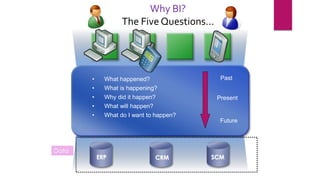
Why BI?
The Five Questions…
• What happened?
• What is happening?
• Why did it happen?
• What will happen?
• What do I want to happen?
ERP CRM SCM
Past
Present
Future
Data
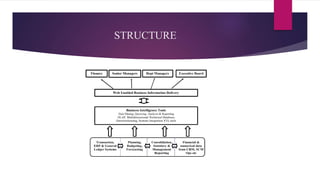
STRUCTURE
STAGES IN BUSINESS INTELLIGENCE
 Database systems and database integration
 Data warehousing, data stores and data marts
 Enterprise resource planning (ERP) systems
 Query and report writing technologies
 Data mining and analytics tools
 Decision support systems
 Customer relation management software
 Product lifecycle and supply chain management systems
TECHNOLOGIES SUPPORTING BI
BI careers cross over all industries:
 BI solution architects and integration specialists
 Business and BI analysts
 BI application developers and testers
 Data warehouse specialists
 Database analysts, developers and testers
 Database support specialists
EXAMPLES OF BI CAREERS
 Understanding of the flow of information throughout the organization
 Ability to effectively communicate with and get support from technology and
business specialists
 Ability to understand the use of data and information in each organizational units
 Ability to present data in a user-centric framework
 Ability to understand the decision making process and to focus on business
objectives
 Ability to train business users in information management and interpretation
CRITICAL BUSINESS AND CUSTOMER
SKILLS AND KNOWLEDGE
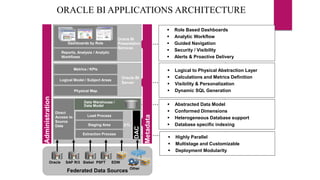
 Role Based Dashboards
 Analytic Workflow
 Guided Navigation
 Security / Visibility
 Alerts & Proactive Delivery
 Logical to Physical Abstraction Layer
 Calculations and Metrics Definition
 Visibility & Personalization
 Dynamic SQL Generation
 Highly Parallel
 Multistage and Customizable
 Deployment Modularity
 Abstracted Data Model
 Conformed Dimensions
 Heterogeneous Database support
 Database specific indexing
ORACLE BI APPLICATIONS ARCHITECTURE
Administration
Metadata
Oracle BI
Presentation
Services
Dashboards by Role
Reports, Analysis / Analytic
Workflows
Metrics / KPIs
Logical Model / Subject Areas
Physical Map
Oracle BI
Server
Direct
Access to
Source
Data
Data Warehouse /
Data Model
ETL
Load Process
Staging Area
Extraction Process
DAC
Federated Data Sources
SiebelOracle SAP R/3 PSFT EDW
Other
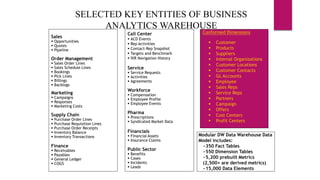
SELECTED KEY ENTITIES OF BUSINESS
ANALYTICS WAREHOUSE
Conformed Dimensions
 Customer
 Products
 Suppliers
 Internal Organizations
 Customer Locations
 Customer Contacts
 GL Accounts
 Employee
 Sales Reps
 Service Reps
 Partners
 Campaign
 Offers
 Cost Centers
 Profit Centers
Sales
 Opportunities
 Quotes
 Pipeline
Order Management
 Sales Order Lines
 Sales Schedule Lines
 Bookings
 Pick Lines
 Billings
 Backlogs
Marketing
 Campaigns
 Responses
 Marketing Costs
Supply Chain
 Purchase Order Lines
 Purchase Requisition Lines
 Purchase Order Receipts
 Inventory Balance
 Inventory Transactions
Finance
 Receivables
 Payables
 General Ledger
 COGS
Call Center
 ACD Events
 Rep Activities
 Contact-Rep Snapshot
 Targets and Benchmark
 IVR Navigation History
Service
 Service Requests
 Activities
 Agreements
Workforce
 Compensation
 Employee Profile
 Employee Events
Pharma
 Prescriptions
 Syndicated Market Data
Financials
 Financial Assets
 Insurance Claims
Public Sector
 Benefits
 Cases
 Incidents
 Leads
Modular DW Data Warehouse Data
Model includes:
~350 Fact Tables
~550 Dimension Tables
~5,200 prebuilt Metrics
(2,500+ are derived metrics)
~15,000 Data Elements
 http://www.spscc.ctc.edu/academics/programs/business-intelligence/class-description.html
 http://bellevuecollege.edu/business/info_bus_intelligence.html
 http://www.austincc.edu/techcert/microsoftbusintell.php
 http://www.sju-online.com/programs/business-intelligence-curriculum.asp
 http://www.setfocus.com/MastersProgram/curriculum_businessintelligence.aspx
 http://www.crmsoftware360.com/crmsoftware.htm
REFERENCES

Business intellegence erp

  • 1.
  • 2.
    ORIGIN  Originally aterm coined by the Gartner Group in 1993, Business Intelligence (BI) is a broad range of software and solutions aimed at collection, consolidation, analysis and providing access to information that allows users across the business to make better decisions.  The technology includes software for database query and analysis, multidimensional databases or OLAP tools, data warehousing and data mining, and web enabled reporting capabilities.  Applied across disciplines but especially in Customer Relationship Management (CRM), Supply Chain Management (SCM) Enterprise Resource Planning  Provide better, faster and more accessible reports
  • 3.
    BUSINESS INTELLIGENCE/BUSINESS ANALYTICS  Businessintelligence (BI)  Also referred to as business analytics  A range of different applications and technologies used to extract and analyze large amounts of data to aid in decision making  Includes data-mining tools and querying tools  Often interactive and visual  There has been significant growth in the BI market in recent years 3
  • 4.
    Why BI? The FiveQuestions… • What happened? • What is happening? • Why did it happen? • What will happen? • What do I want to happen? ERP CRM SCM Past Present Future Data
  • 5.
  • 6.
    STAGES IN BUSINESSINTELLIGENCE
  • 7.
     Database systemsand database integration  Data warehousing, data stores and data marts  Enterprise resource planning (ERP) systems  Query and report writing technologies  Data mining and analytics tools  Decision support systems  Customer relation management software  Product lifecycle and supply chain management systems TECHNOLOGIES SUPPORTING BI
  • 8.
    BI careers crossover all industries:  BI solution architects and integration specialists  Business and BI analysts  BI application developers and testers  Data warehouse specialists  Database analysts, developers and testers  Database support specialists EXAMPLES OF BI CAREERS
  • 9.
     Understanding ofthe flow of information throughout the organization  Ability to effectively communicate with and get support from technology and business specialists  Ability to understand the use of data and information in each organizational units  Ability to present data in a user-centric framework  Ability to understand the decision making process and to focus on business objectives  Ability to train business users in information management and interpretation CRITICAL BUSINESS AND CUSTOMER SKILLS AND KNOWLEDGE
  • 10.
     Role BasedDashboards  Analytic Workflow  Guided Navigation  Security / Visibility  Alerts & Proactive Delivery  Logical to Physical Abstraction Layer  Calculations and Metrics Definition  Visibility & Personalization  Dynamic SQL Generation  Highly Parallel  Multistage and Customizable  Deployment Modularity  Abstracted Data Model  Conformed Dimensions  Heterogeneous Database support  Database specific indexing ORACLE BI APPLICATIONS ARCHITECTURE Administration Metadata Oracle BI Presentation Services Dashboards by Role Reports, Analysis / Analytic Workflows Metrics / KPIs Logical Model / Subject Areas Physical Map Oracle BI Server Direct Access to Source Data Data Warehouse / Data Model ETL Load Process Staging Area Extraction Process DAC Federated Data Sources SiebelOracle SAP R/3 PSFT EDW Other
  • 11.
    SELECTED KEY ENTITIESOF BUSINESS ANALYTICS WAREHOUSE Conformed Dimensions  Customer  Products  Suppliers  Internal Organizations  Customer Locations  Customer Contacts  GL Accounts  Employee  Sales Reps  Service Reps  Partners  Campaign  Offers  Cost Centers  Profit Centers Sales  Opportunities  Quotes  Pipeline Order Management  Sales Order Lines  Sales Schedule Lines  Bookings  Pick Lines  Billings  Backlogs Marketing  Campaigns  Responses  Marketing Costs Supply Chain  Purchase Order Lines  Purchase Requisition Lines  Purchase Order Receipts  Inventory Balance  Inventory Transactions Finance  Receivables  Payables  General Ledger  COGS Call Center  ACD Events  Rep Activities  Contact-Rep Snapshot  Targets and Benchmark  IVR Navigation History Service  Service Requests  Activities  Agreements Workforce  Compensation  Employee Profile  Employee Events Pharma  Prescriptions  Syndicated Market Data Financials  Financial Assets  Insurance Claims Public Sector  Benefits  Cases  Incidents  Leads Modular DW Data Warehouse Data Model includes: ~350 Fact Tables ~550 Dimension Tables ~5,200 prebuilt Metrics (2,500+ are derived metrics) ~15,000 Data Elements
  • 12.
     http://www.spscc.ctc.edu/academics/programs/business-intelligence/class-description.html  http://bellevuecollege.edu/business/info_bus_intelligence.html http://www.austincc.edu/techcert/microsoftbusintell.php  http://www.sju-online.com/programs/business-intelligence-curriculum.asp  http://www.setfocus.com/MastersProgram/curriculum_businessintelligence.aspx  http://www.crmsoftware360.com/crmsoftware.htm REFERENCES