








Name of presentation
Company name


    More Free PowerPoint Templates at SmileTemplates.com
Business Exit Strategy
           …a strategic withdrawal


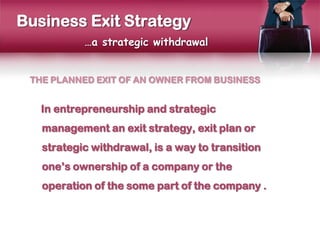
 THE PLANNED EXIT OF AN OWNER FROM BUSINESS


   In entrepreneurship and strategic
   management an exit strategy, exit plan or
   strategic withdrawal, is a way to transition
   one’s ownership of a company or the
   operation of the some part of the company .
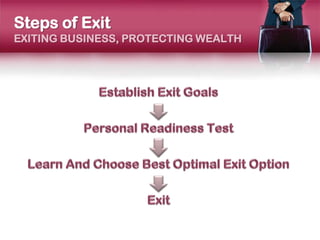
Steps of Exit
EXITING BUSINESS, PROTECTING WEALTH
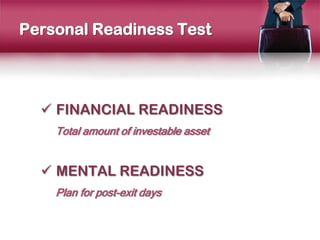
Personal Readiness Test


   FINANCIAL READINESS
    Total amount of investable asset


   MENTAL READINESS
    Plan for post-exit days
Choose The Optimal Exit Option


    Lifestyle Company

    Acquisition

    Transition Ownership to Emotional Partner

    Initial Public Offering (IPO)

    Liquidation
LIFESTYLE

COMPANY
Lifestyle Company
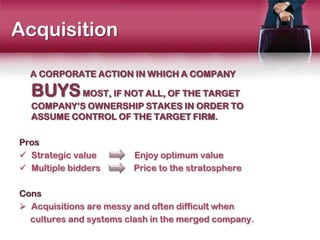
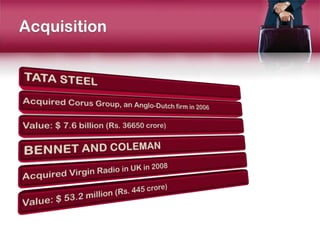
Acquisition

  A CORPORATE ACTION IN WHICH A COMPANY

  BUYS MOST, IF NOT ALL, OF THE TARGET
  COMPANY’S OWNERSHIP STAKES IN ORDER TO
  ASSUME CONTROL OF THE TARGET FIRM.

Pros
 Strategic value       Enjoy optimum value
 Multiple bidders      Price to the stratosphere

Cons
 Acquisitions are messy and often difficult when
  cultures and systems clash in the merged company.
TRANSITION
                                       OWNERSHIP
                                       TO AN
                                       EMOTIONAL
                                       PARTNER…


Someday, my son, all this will be yours…
Transition Ownership To An
Emotional Partner

PASSING OWNERSHIP TO ANOTHER

TRUE BELIEVER WHO WILL PRESERVE
 YOUR LEGACY.

Pros
 Less due diligence required
 Emotional satisfaction
Cons
 Selling to family can tear the company apart with jealousies
  and promotions that put emotion way ahead of business
  needs.
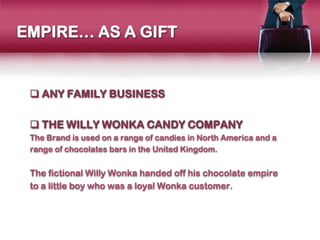
EMPIRE… AS A GIFT


  ANY FAMILY BUSINESS

  THE WILLY WONKA CANDY COMPANY
 The Brand is used on a range of candies in North America and a
 range of chocolates bars in the United Kingdom.


 The fictional Willy Wonka handed off his chocolate empire
 to a little boy who was a loyal Wonka customer.
Initial Public Offering - IPO

   SALE OF A COMPANY VIA

   STOCK MARKET
   Pros
    Highest value
    Covers of the magazines
   Cons
    Long processing time
    High attorney and accounting cost
    Huge restriction and conditions
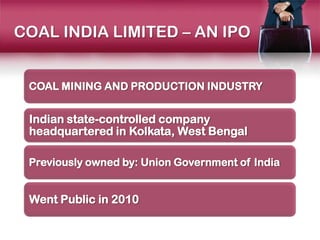
COAL INDIA LIMITED – AN IPO


 COAL MINING AND PRODUCTION INDUSTRY


 Indian state-controlled company
 headquartered in Kolkata, West Bengal

 Previously owned by: Union Government of India


 Went Public in 2010
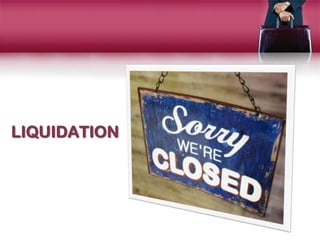
LIQUIDATION
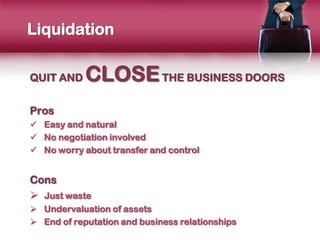
Liquidation

QUIT AND    CLOSE THE BUSINESS DOORS
Pros
 Easy and natural
 No negotiation involved
 No worry about transfer and control


Cons
 Just waste
 Undervaluation of assets
 End of reputation and business relationships
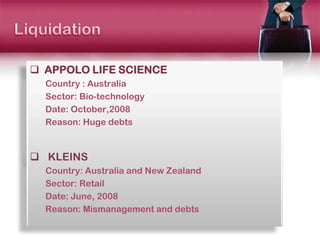
 APPOLO LIFE SCIENCE
  Country : Australia
  Sector: Bio-technology
  Date: October,2008
  Reason: Huge debts


 KLEINS
  Country: Australia and New Zealand
  Sector: Retail
  Date: June, 2008
  Reason: Mismanagement and debts
VALUATION OF BUSINESS
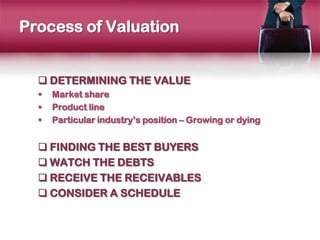
Process of Valuation


   DETERMINING THE VALUE
     Market share
     Product line
     Particular industry’s position – Growing or dying


   FINDING THE BEST BUYERS
   WATCH THE DEBTS
   RECEIVE THE RECEIVABLES
   CONSIDER A SCHEDULE
EXIT…
Business exit strategy presentation

Business exit strategy presentation

  • 1.
    Name of presentation Companyname More Free PowerPoint Templates at SmileTemplates.com
  • 2.
    Business Exit Strategy …a strategic withdrawal THE PLANNED EXIT OF AN OWNER FROM BUSINESS In entrepreneurship and strategic management an exit strategy, exit plan or strategic withdrawal, is a way to transition one’s ownership of a company or the operation of the some part of the company .
  • 3.
    Steps of Exit EXITINGBUSINESS, PROTECTING WEALTH
  • 5.
    Personal Readiness Test  FINANCIAL READINESS Total amount of investable asset  MENTAL READINESS Plan for post-exit days
  • 6.
    Choose The OptimalExit Option  Lifestyle Company  Acquisition  Transition Ownership to Emotional Partner  Initial Public Offering (IPO)  Liquidation
  • 7.
  • 8.
  • 10.
    Acquisition ACORPORATE ACTION IN WHICH A COMPANY BUYS MOST, IF NOT ALL, OF THE TARGET COMPANY’S OWNERSHIP STAKES IN ORDER TO ASSUME CONTROL OF THE TARGET FIRM. Pros  Strategic value Enjoy optimum value  Multiple bidders Price to the stratosphere Cons  Acquisitions are messy and often difficult when cultures and systems clash in the merged company.
  • 12.
    TRANSITION OWNERSHIP TO AN EMOTIONAL PARTNER… Someday, my son, all this will be yours…
  • 13.
    Transition Ownership ToAn Emotional Partner PASSING OWNERSHIP TO ANOTHER TRUE BELIEVER WHO WILL PRESERVE YOUR LEGACY. Pros  Less due diligence required  Emotional satisfaction Cons  Selling to family can tear the company apart with jealousies and promotions that put emotion way ahead of business needs.
  • 14.
    EMPIRE… AS AGIFT  ANY FAMILY BUSINESS  THE WILLY WONKA CANDY COMPANY The Brand is used on a range of candies in North America and a range of chocolates bars in the United Kingdom. The fictional Willy Wonka handed off his chocolate empire to a little boy who was a loyal Wonka customer.
  • 16.
    Initial Public Offering- IPO SALE OF A COMPANY VIA STOCK MARKET Pros  Highest value  Covers of the magazines Cons  Long processing time  High attorney and accounting cost  Huge restriction and conditions
  • 17.
    COAL INDIA LIMITED– AN IPO COAL MINING AND PRODUCTION INDUSTRY Indian state-controlled company headquartered in Kolkata, West Bengal Previously owned by: Union Government of India Went Public in 2010
  • 18.
  • 19.
    Liquidation QUIT AND CLOSE THE BUSINESS DOORS Pros  Easy and natural  No negotiation involved  No worry about transfer and control Cons  Just waste  Undervaluation of assets  End of reputation and business relationships
  • 20.
     APPOLO LIFESCIENCE Country : Australia Sector: Bio-technology Date: October,2008 Reason: Huge debts  KLEINS Country: Australia and New Zealand Sector: Retail Date: June, 2008 Reason: Mismanagement and debts
  • 21.
  • 22.
    Process of Valuation  DETERMINING THE VALUE  Market share  Product line  Particular industry’s position – Growing or dying  FINDING THE BEST BUYERS  WATCH THE DEBTS  RECEIVE THE RECEIVABLES  CONSIDER A SCHEDULE
  • 23.