By:
Upama Rai
25th April, 2016
• Consist of all components of surroundings of
a business organization which affect or
influence its operations and determine its
effectiveness
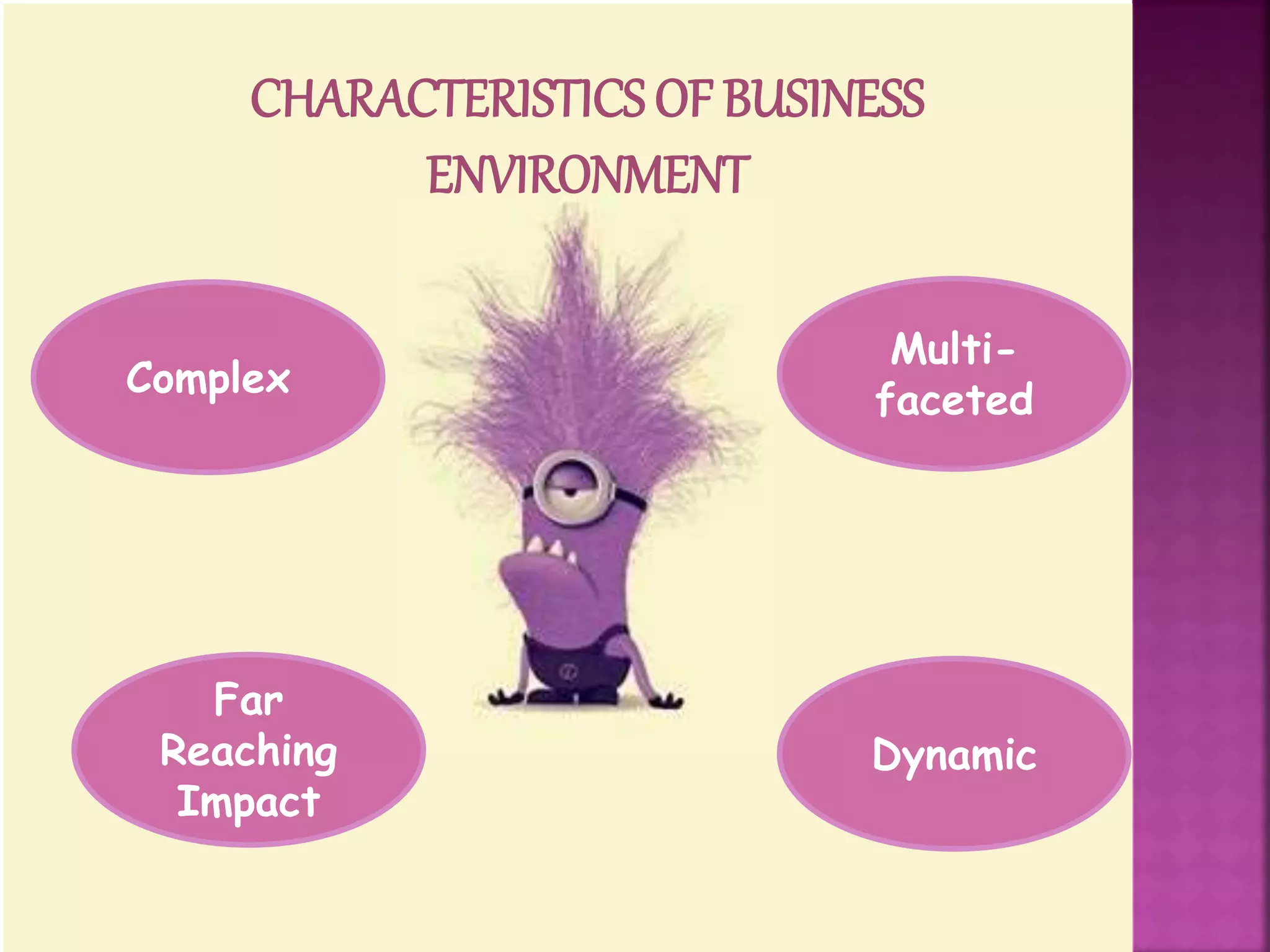
Multi-
faceted
Complex
Far
Reaching
Impact
Dynamic
CHARACTERISTICS OF BUSINESS
ENVIRONMENT
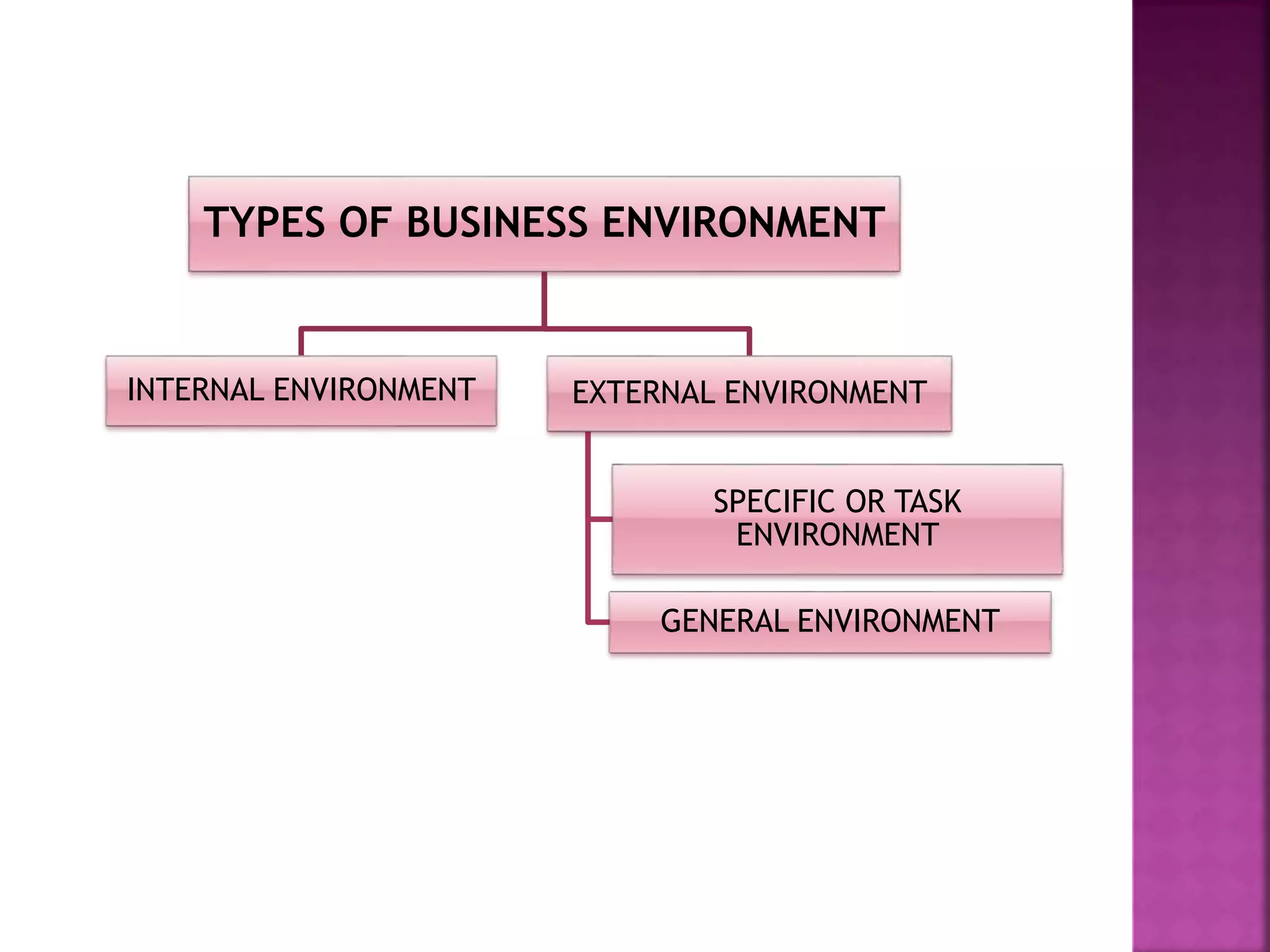
TYPES OF BUSINESS ENVIRONMENT
INTERNAL ENVIRONMENT EXTERNAL ENVIRONMENT
SPECIFIC OR TASK
ENVIRONMENT
GENERAL ENVIRONMENT
• Refers to all conditions and forces within
the organization affecting a business
operation
• Can be controlled by the management
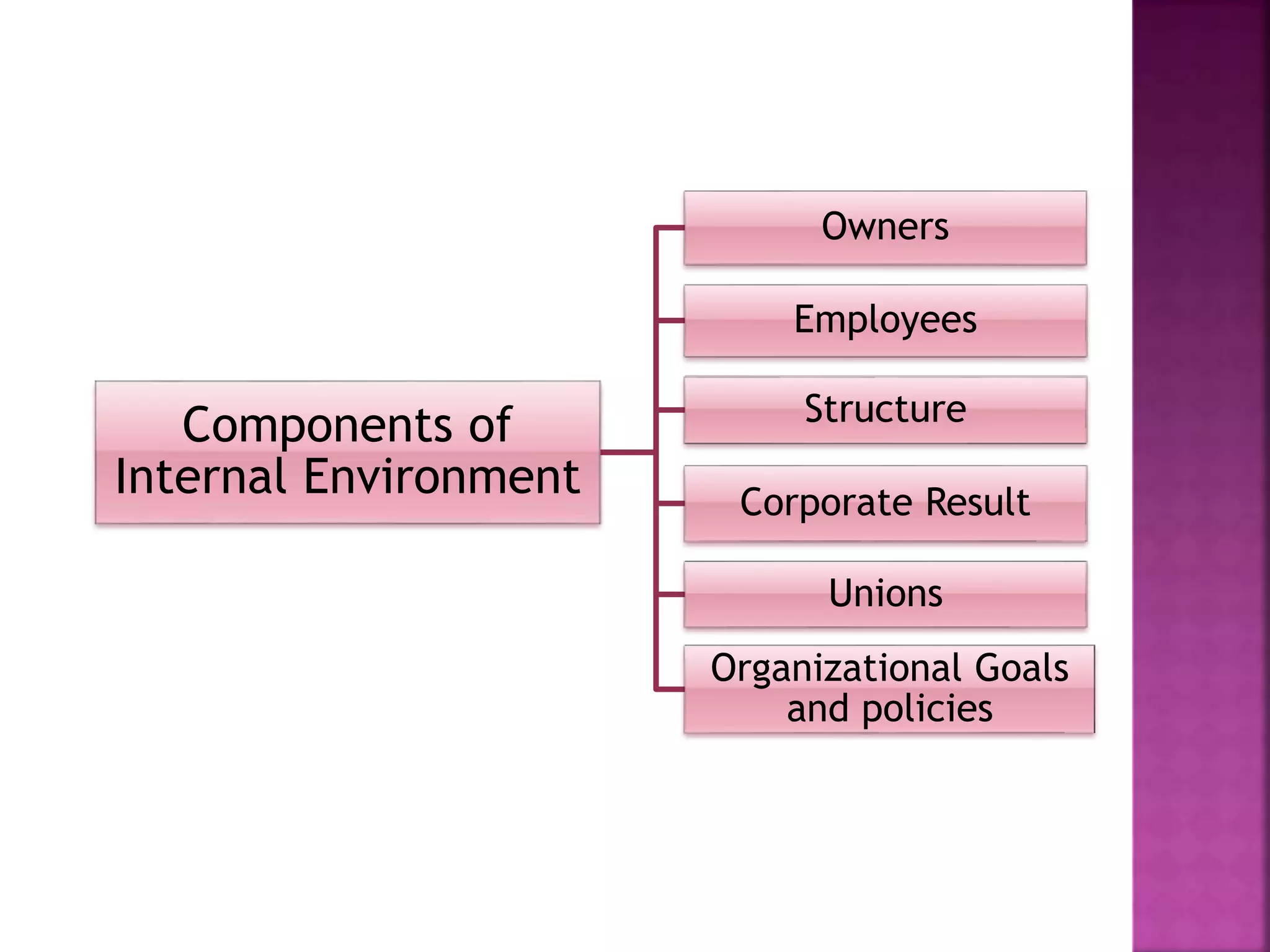
Components of
Internal Environment
Owners
Employees
Structure
Corporate Result
Unions
Organizational Goals
and policies
• Refers to that forces and institutions outside
the organization that potentially can affect the
organization’s performance.
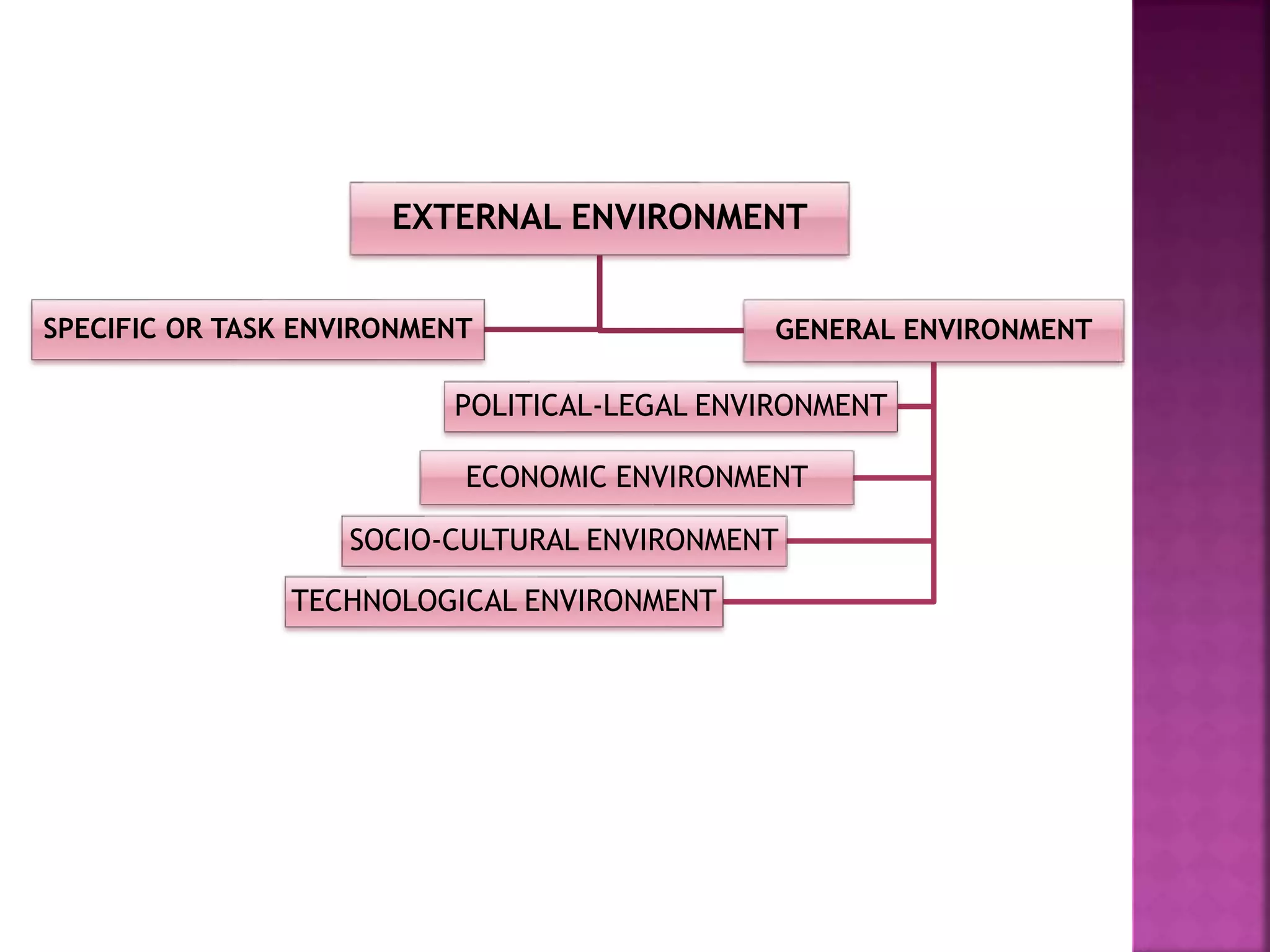
EXTERNAL ENVIRONMENT
SPECIFIC OR TASK ENVIRONMENT GENERAL ENVIRONMENT
POLITICAL-LEGAL ENVIRONMENT
ECONOMIC ENVIRONMENT
SOCIO-CULTURAL ENVIRONMENT
TECHNOLOGICAL ENVIRONMENT
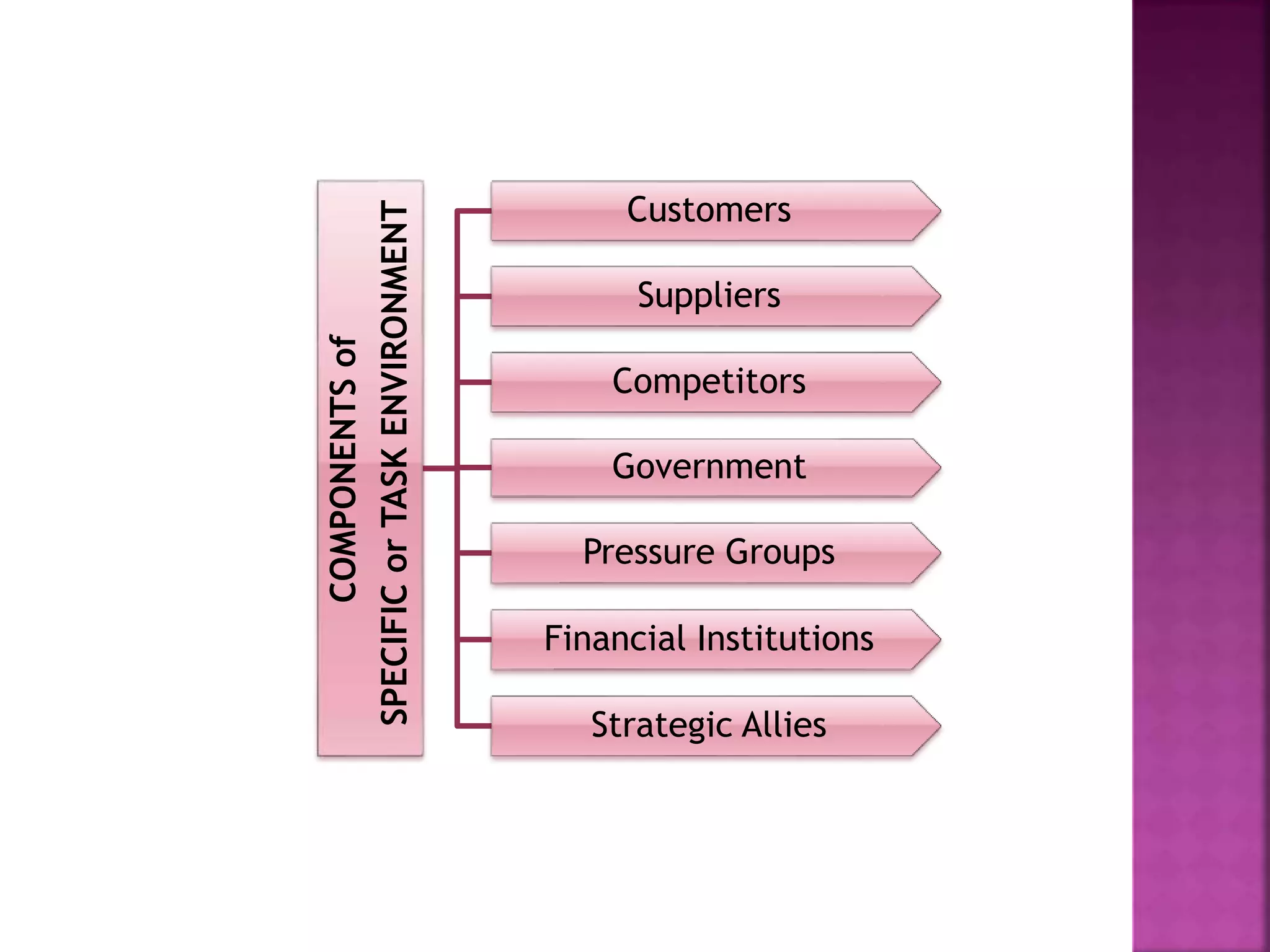
 Consists of specific organization or groups that
influence an organization’s performance.
 Have a direct and immediate impact on the
managerial decision and actions and are directly
relevant to the achievement of organizational goals.
Components:
COMPONENTSof
SPECIFICorTASKENVIRONMENT
Customers
Suppliers
Competitors
Government
Pressure Groups
Financial Institutions
Strategic Allies
 Refers to the broad external conditions that may
effect business activities of an organization.
 Uncontrollable and requires proper monitoring of
the components to adapt on the basis of emerging
changes.
Political
Environment
Economic
Environment
Socio-
Cultural
Environment
Technological
Environment
 Refers to government regulations and the legal
system for business.
Constitution
Political philosophy
Political Parties
Political institutions
Legal institutions
Components :
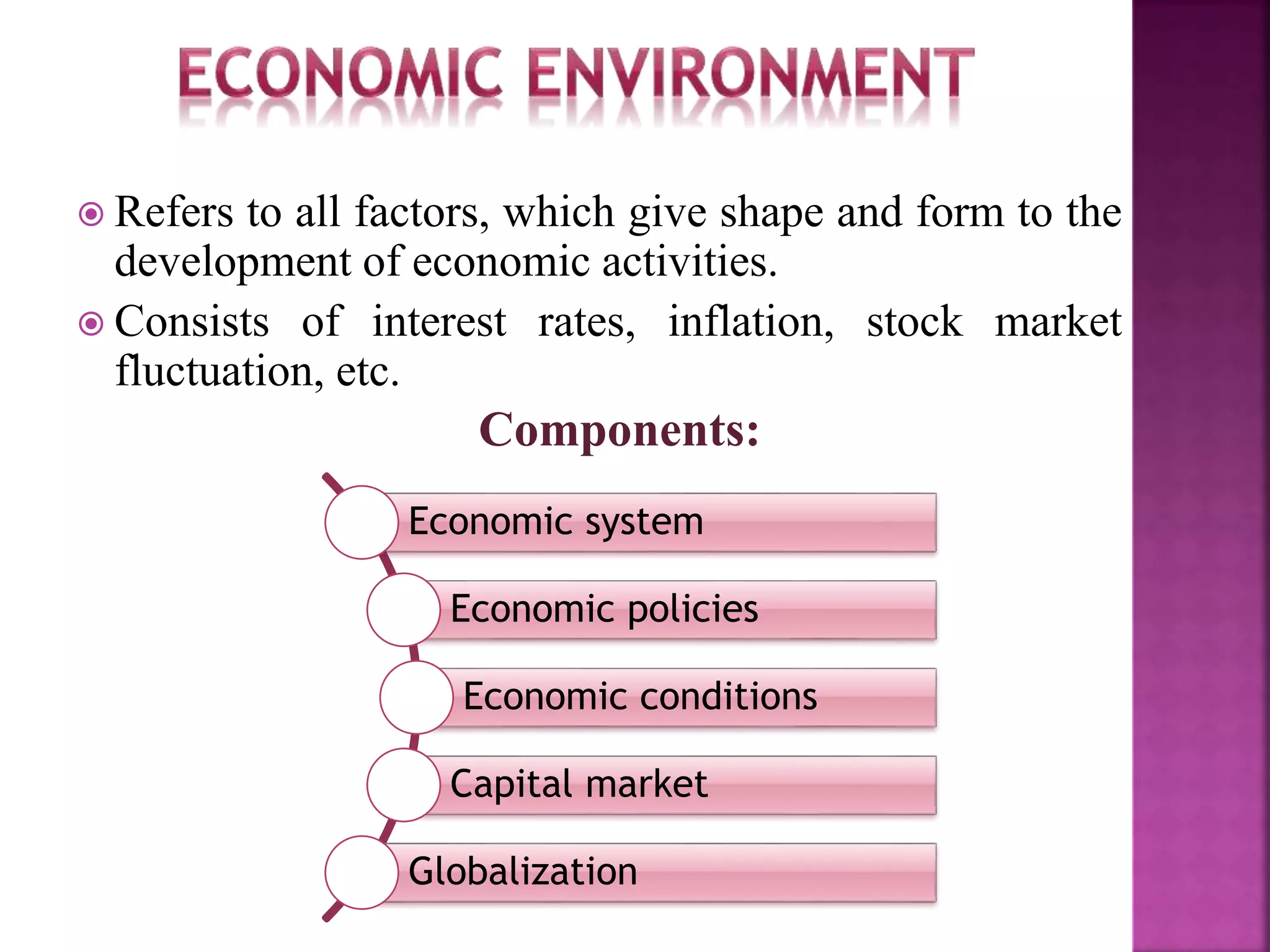
 Refers to all factors, which give shape and form to the
development of economic activities.
 Consists of interest rates, inflation, stock market
fluctuation, etc.
Economic system
Economic policies
Economic conditions
Capital market
Globalization
Components:
 Includes the total social forces within which the
organization operates.
 Involves traditions, social values, beliefs, norms,
attitudes custom and demographic composition.
Demography
Lifestyle
Social Values
Social Institutions
Religion
Language
Components :
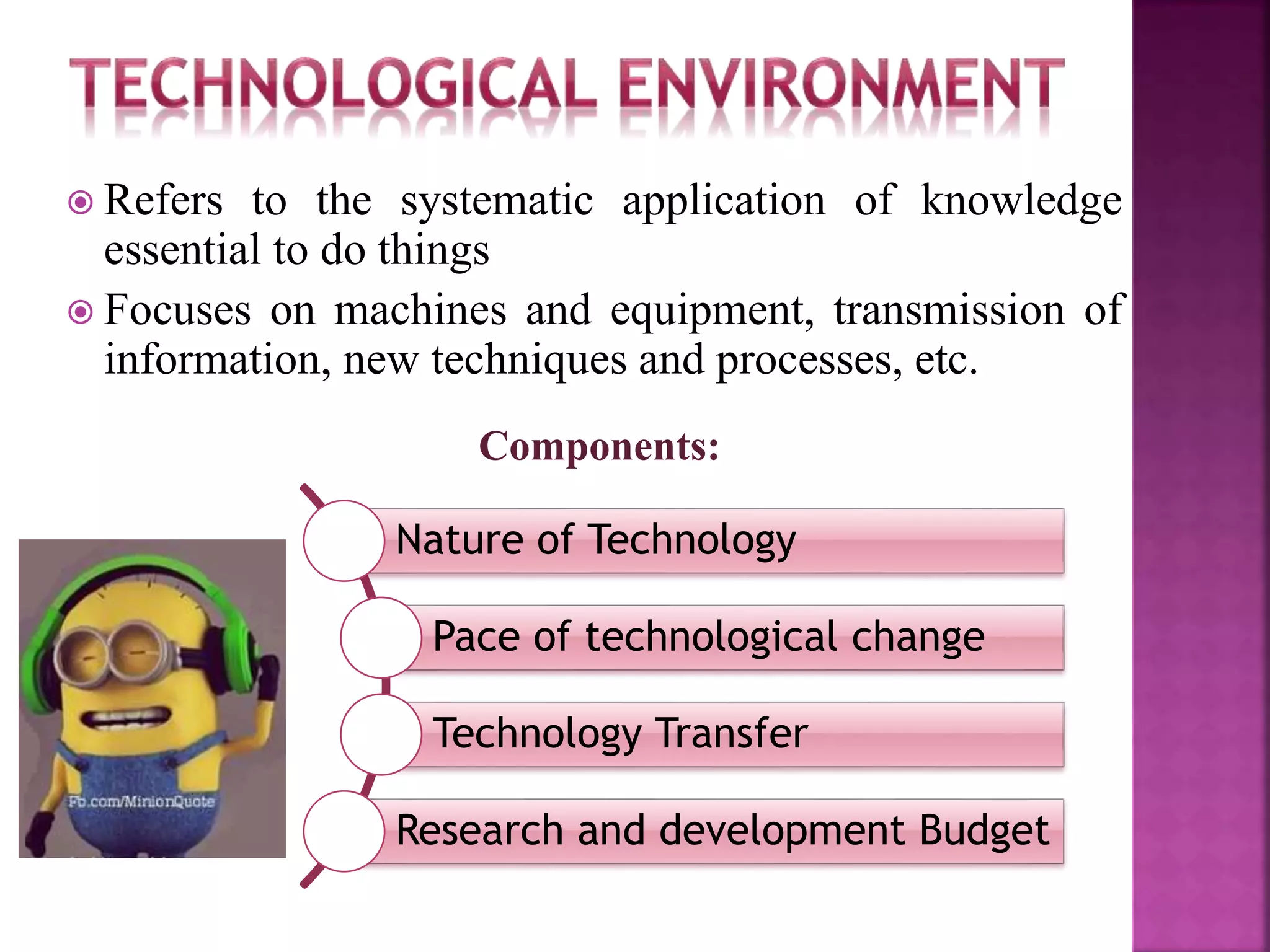
 Refers to the systematic application of knowledge
essential to do things
 Focuses on machines and equipment, transmission of
information, new techniques and processes, etc.
Components:
Nature of Technology
Pace of technological change
Technology Transfer
Research and development Budget
Business Environment and its Components

Business Environment and its Components