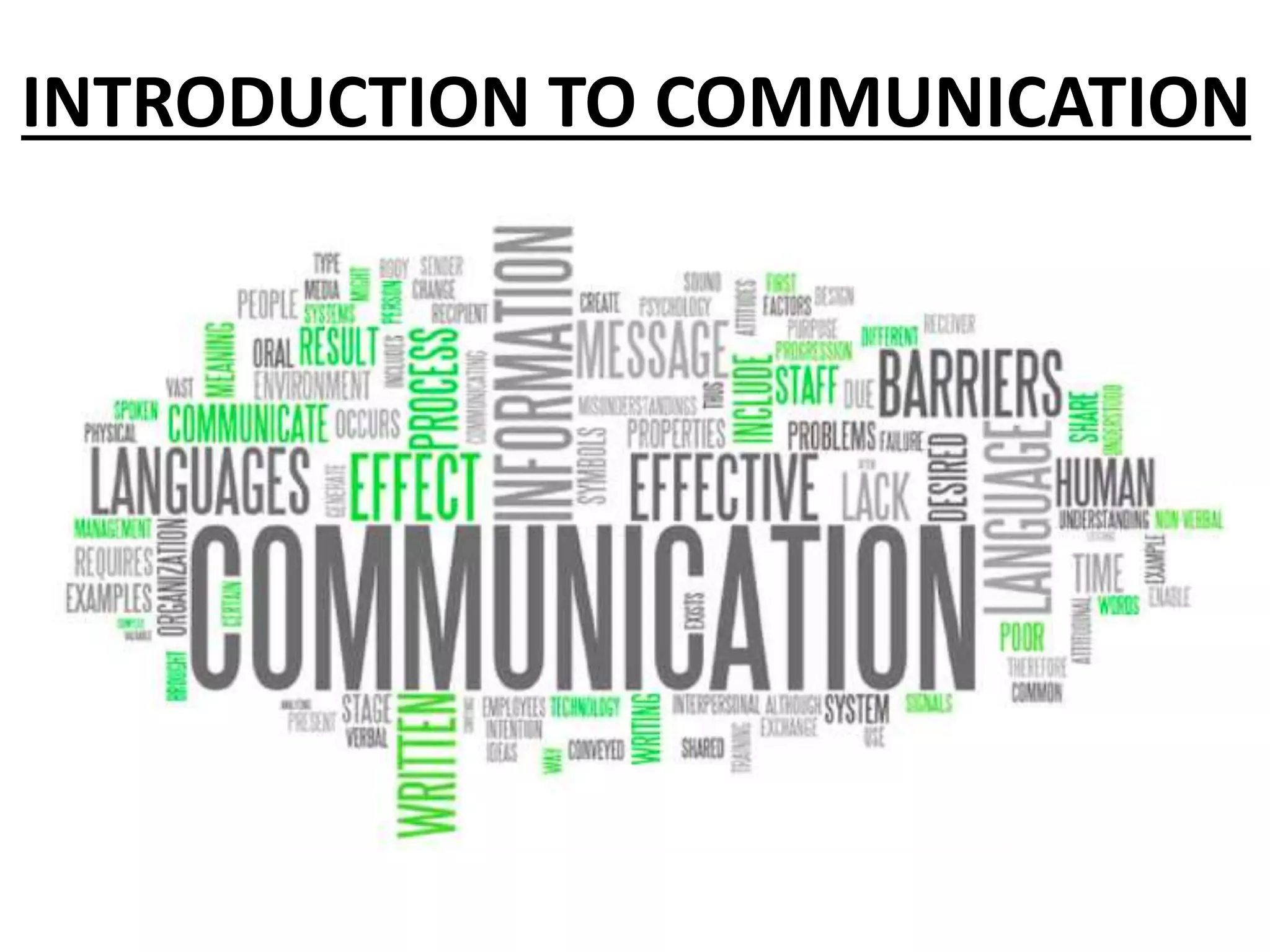
INTRODUCTION TO COMMUNICATION
CONTENT
 BUSINESS COMMUNICATION
 CHARACTERISTICS OF COMMUNICATION
 OBJECTIVES OF COMMUNICATION
 CHANNELS OF COMMUNICATION
TYPES OF COMMUNICATION
 INTRAPERSONAL COMMUNICATION
 INTERPERSONAL COMMUNICATION
FORMAL
INFORMAL
 GROUP COMMUNICATION
BUSINESS COMMUNICATION
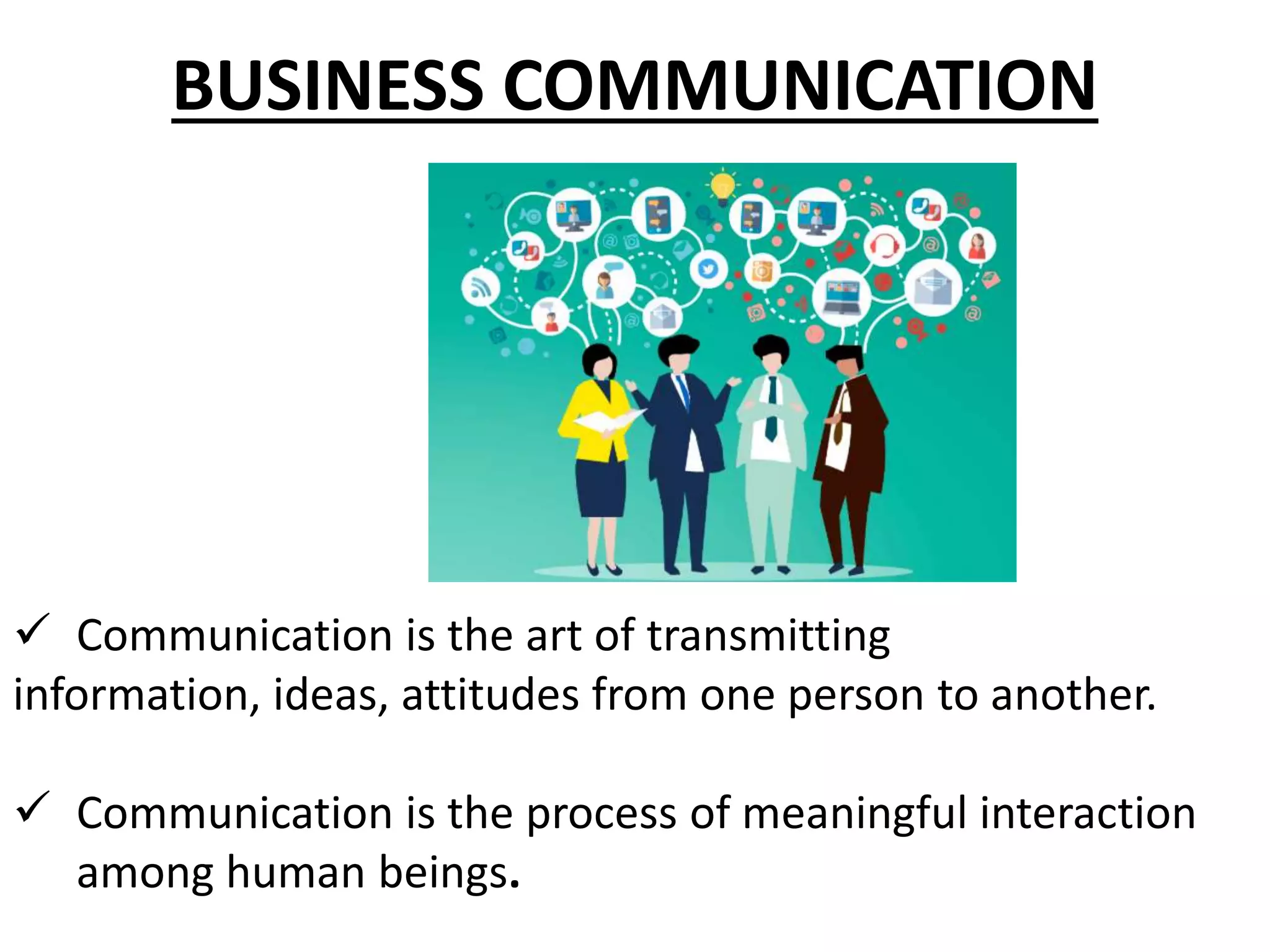
 Communication is the art of transmitting
information, ideas, attitudes from one person to another.
 Communication is the process of meaningful interaction
among human beings.
CHARACTERISTICS OF COMMUNICATION
It is a 2-way process
 Communication process happens between or
among two or more parties. (Sender and Receiver)
 Communication involves exchange of ideas,
feelings, information, thoughts, and knowledge.
 Communication should involves mutual
understanding between Sender and Receiver
OBJECTIVES OF BUSINESS
COMMUNICATION
 Conveying the right message
 Co-ordination of effort
 Good industrial relations
 Development of managerial skills
 To send message
 To receive message
 To promote
 To inform
WHY DO WE COMMUNICATE
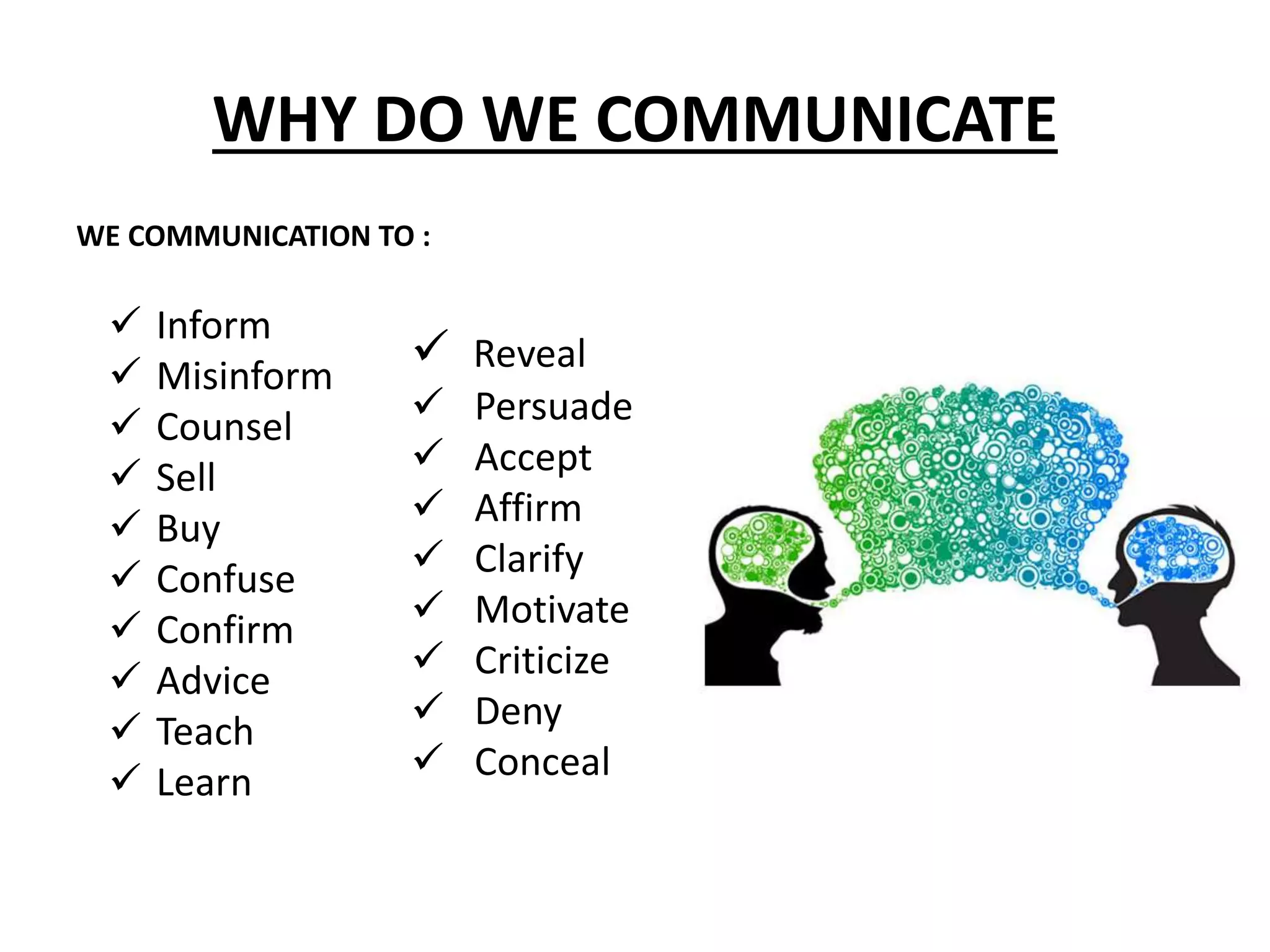
WE COMMUNICATION TO :
 Inform
 Misinform
 Counsel
 Sell
 Buy
 Confuse
 Confirm
 Advice
 Teach
 Learn
 Reveal
 Persuade
 Accept
 Affirm
 Clarify
 Motivate
 Criticize
 Deny
 Conceal
CHANNEL OF COMMUNICATION
EXAMPLE : CHANNEL OF
COMMUNICATION
INTRAPERSONAL COMMUNICATION
 Intrapersonal communication is language
use or thought internal to the
communicator.
 It occurs when an individual sends and
receives messages internally. (occurring
in the mind of the individual)
INTERPERSONAL COMMUNICATION
 Interpersonal communication is the
universal form of communication that takes
place between two individuals. Since it is
person to-person contact, it includes everyday
exchange of thoughts that may be formal or
informal.
GROUP COMMUNICATION
 Group communication is interpersonal
communication performed when there
are more than 3 individuals during
which information is shared, ideas
developed, decisions made, and/or
problems solved etc.
https://youtu.be/rDkxsNmKDGk
Business communication.pptx

Business communication.pptx

  • 1.
  • 3.
    CONTENT  BUSINESS COMMUNICATION CHARACTERISTICS OF COMMUNICATION  OBJECTIVES OF COMMUNICATION  CHANNELS OF COMMUNICATION
  • 4.
    TYPES OF COMMUNICATION INTRAPERSONAL COMMUNICATION  INTERPERSONAL COMMUNICATION FORMAL INFORMAL  GROUP COMMUNICATION
  • 5.
    BUSINESS COMMUNICATION  Communicationis the art of transmitting information, ideas, attitudes from one person to another.  Communication is the process of meaningful interaction among human beings.
  • 6.
    CHARACTERISTICS OF COMMUNICATION Itis a 2-way process  Communication process happens between or among two or more parties. (Sender and Receiver)  Communication involves exchange of ideas, feelings, information, thoughts, and knowledge.  Communication should involves mutual understanding between Sender and Receiver
  • 7.
    OBJECTIVES OF BUSINESS COMMUNICATION Conveying the right message  Co-ordination of effort  Good industrial relations  Development of managerial skills  To send message  To receive message  To promote  To inform
  • 8.
    WHY DO WECOMMUNICATE WE COMMUNICATION TO :  Inform  Misinform  Counsel  Sell  Buy  Confuse  Confirm  Advice  Teach  Learn  Reveal  Persuade  Accept  Affirm  Clarify  Motivate  Criticize  Deny  Conceal
  • 9.
  • 10.
    EXAMPLE : CHANNELOF COMMUNICATION
  • 11.
    INTRAPERSONAL COMMUNICATION  Intrapersonalcommunication is language use or thought internal to the communicator.  It occurs when an individual sends and receives messages internally. (occurring in the mind of the individual)
  • 13.
    INTERPERSONAL COMMUNICATION  Interpersonalcommunication is the universal form of communication that takes place between two individuals. Since it is person to-person contact, it includes everyday exchange of thoughts that may be formal or informal.
  • 15.
    GROUP COMMUNICATION  Groupcommunication is interpersonal communication performed when there are more than 3 individuals during which information is shared, ideas developed, decisions made, and/or problems solved etc.
  • 17.