IP Technology Adoption in Bhutan
Geoff Huston
APNIC Labs
Why?
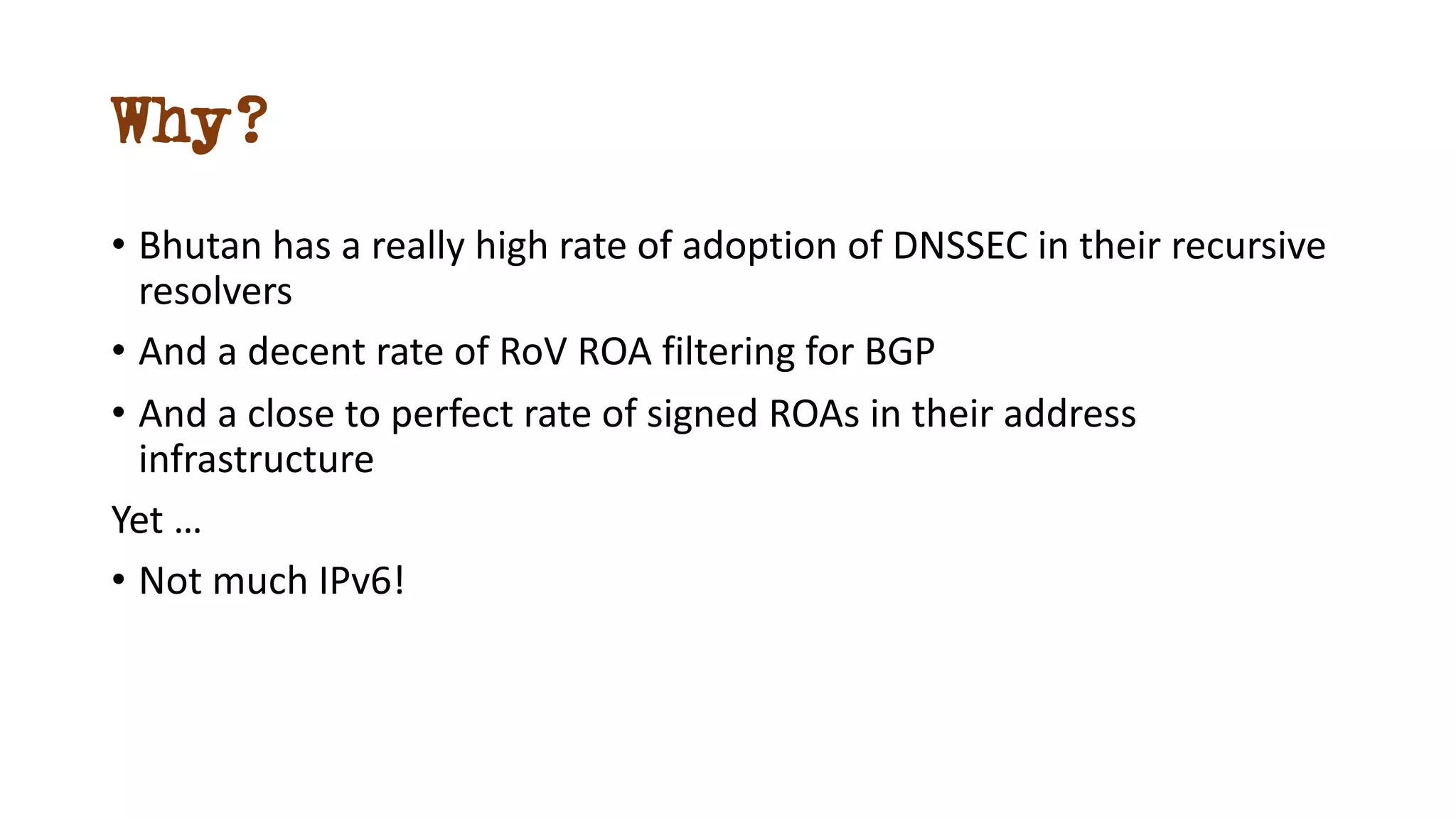
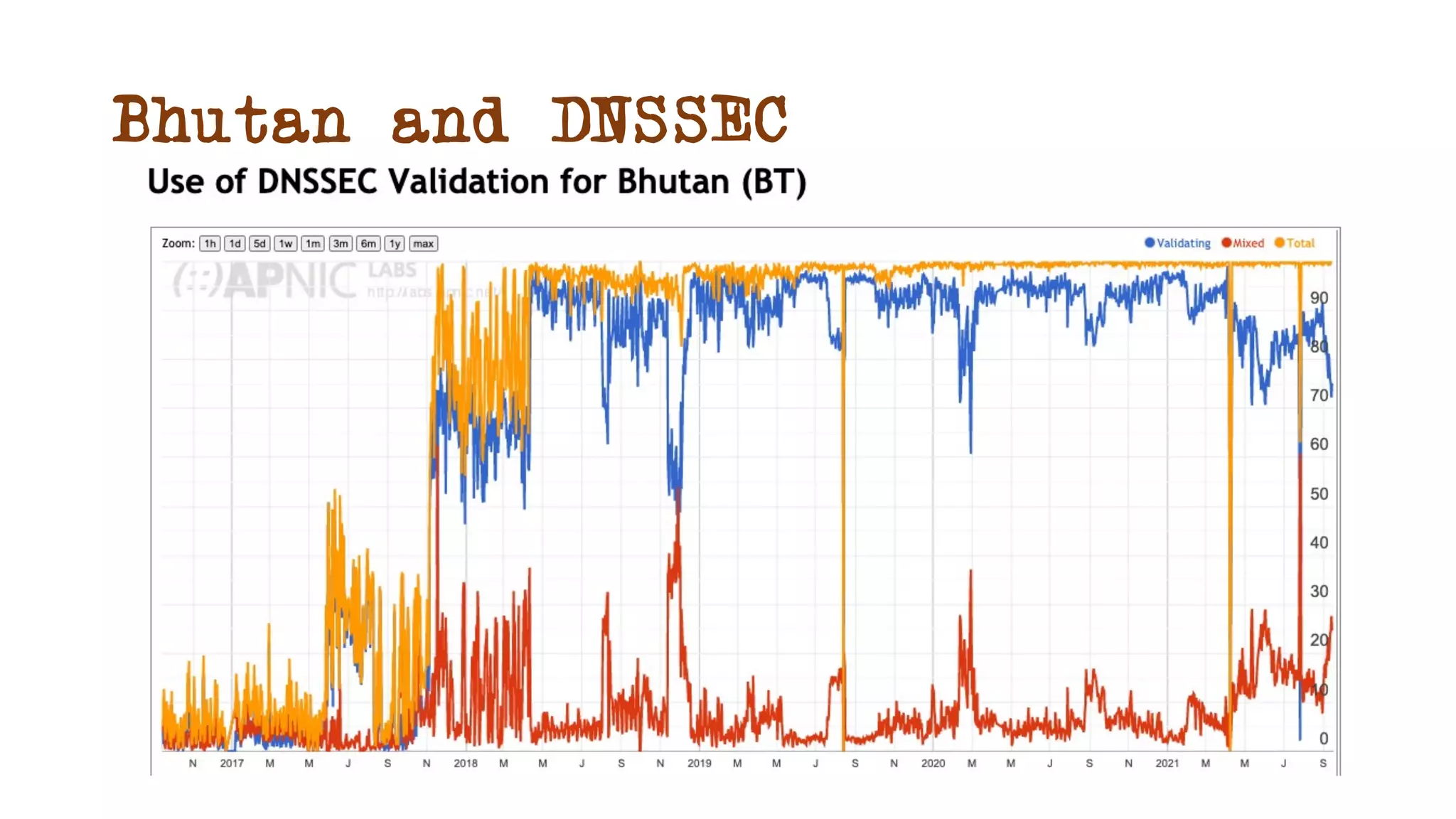
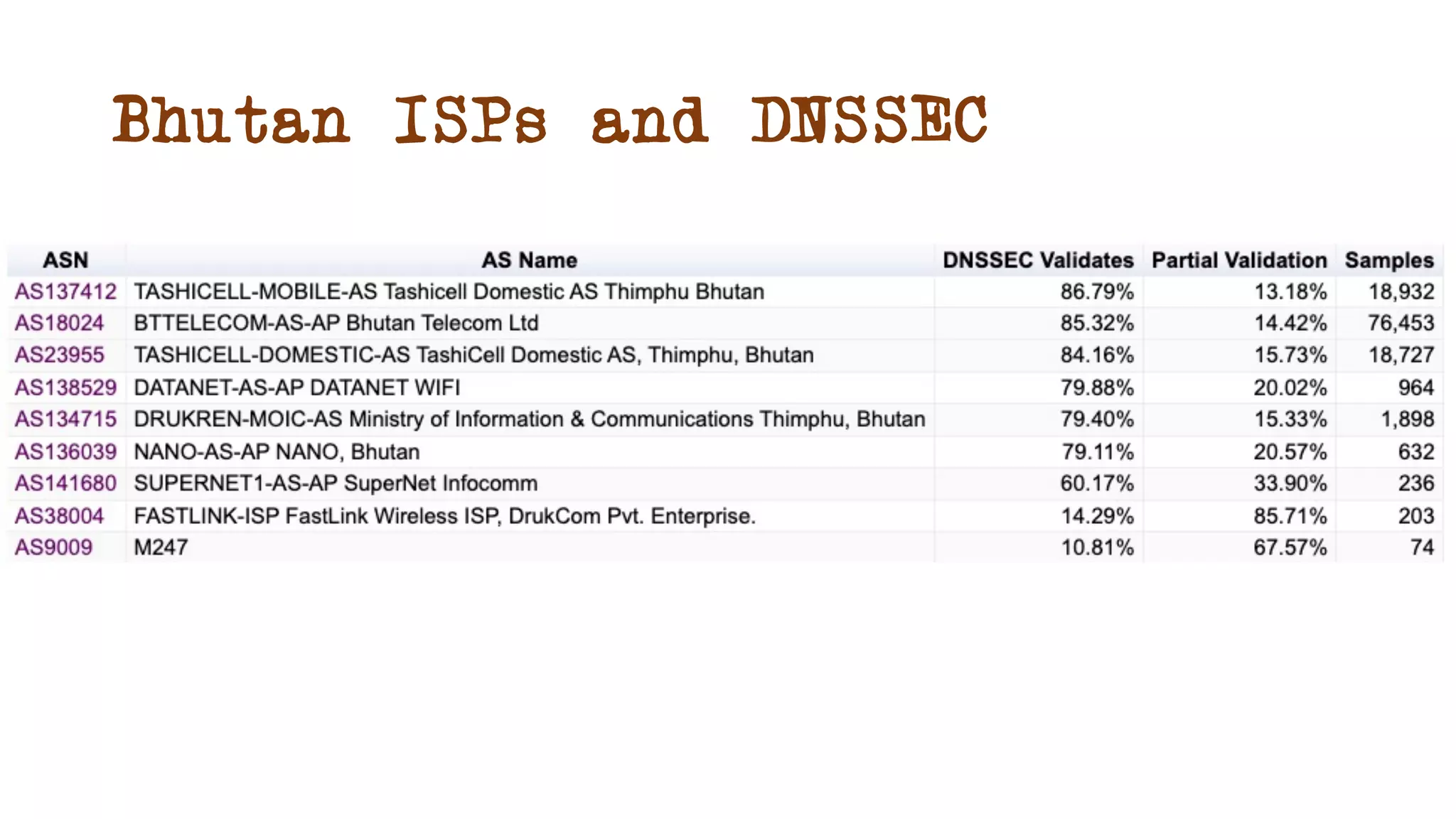
• Bhutan has a really high rate of adoption of DNSSEC in their recursive
resolvers
• And a decent rate of RoV ROA filtering for BGP
• And a close to perfect rate of signed ROAs in their address
infrastructure
Yet …
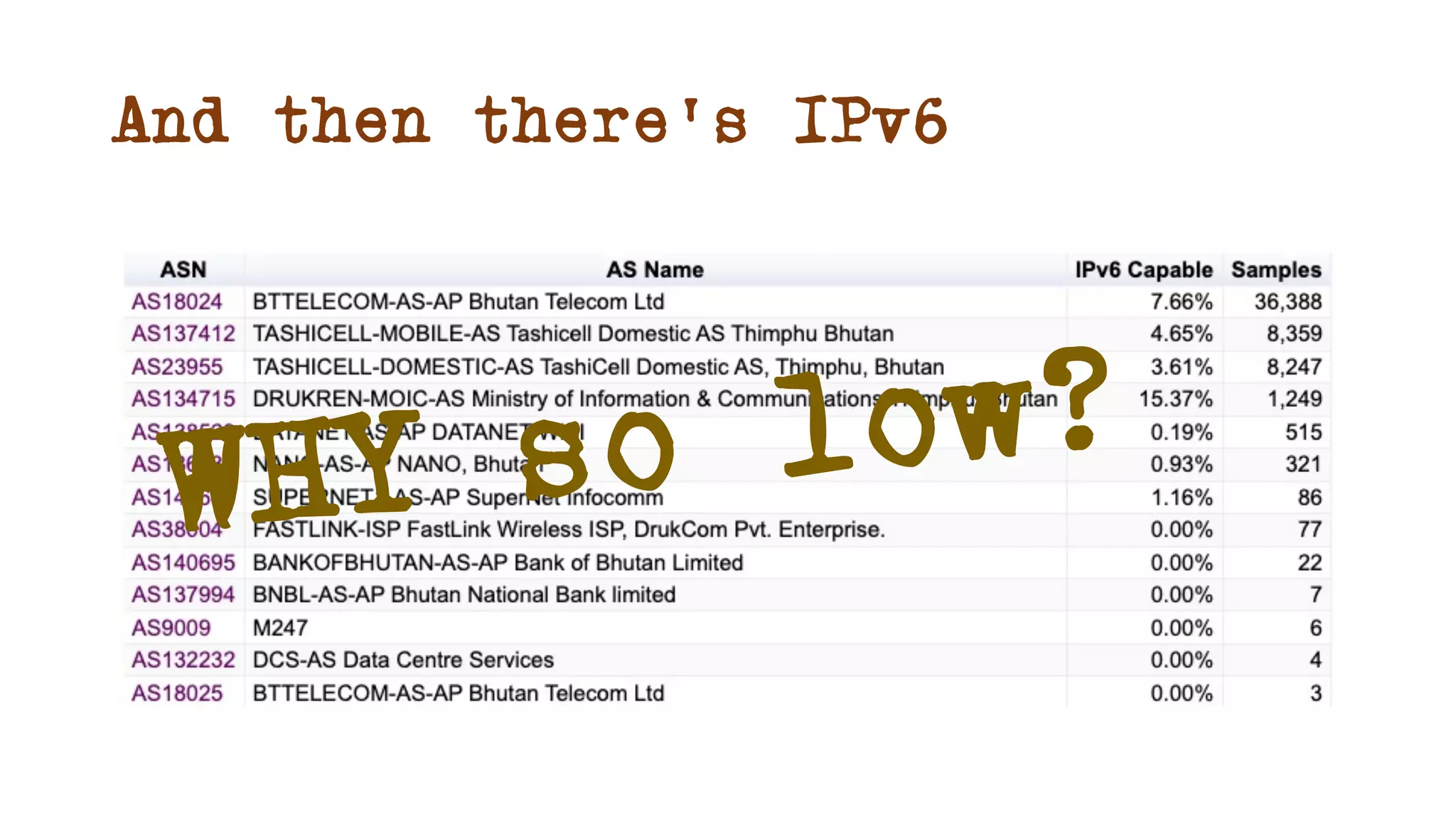
• Not much IPv6!
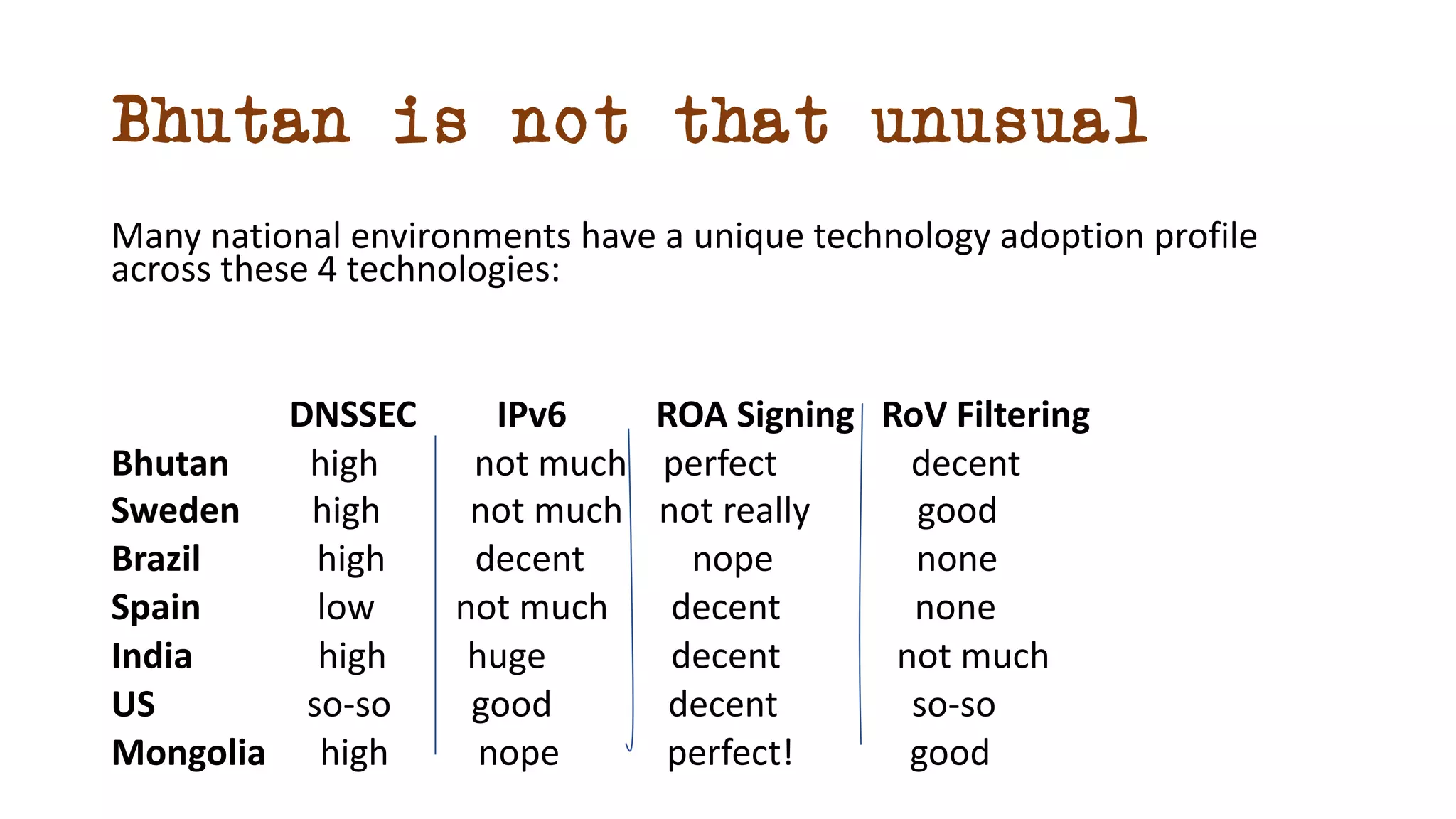
Bhutan is not that unusual
Many national environments have a unique technology adoption profile
across these 4 technologies:
DNSSEC IPv6 ROA Signing RoV Filtering
Bhutan high not much perfect decent
Sweden high not much not really good
Brazil high decent nope none

Spain low not much decent none
India high huge decent not much
US so-so good decent so-so
Mongolia high nope perfect! good
Sameness and Differences
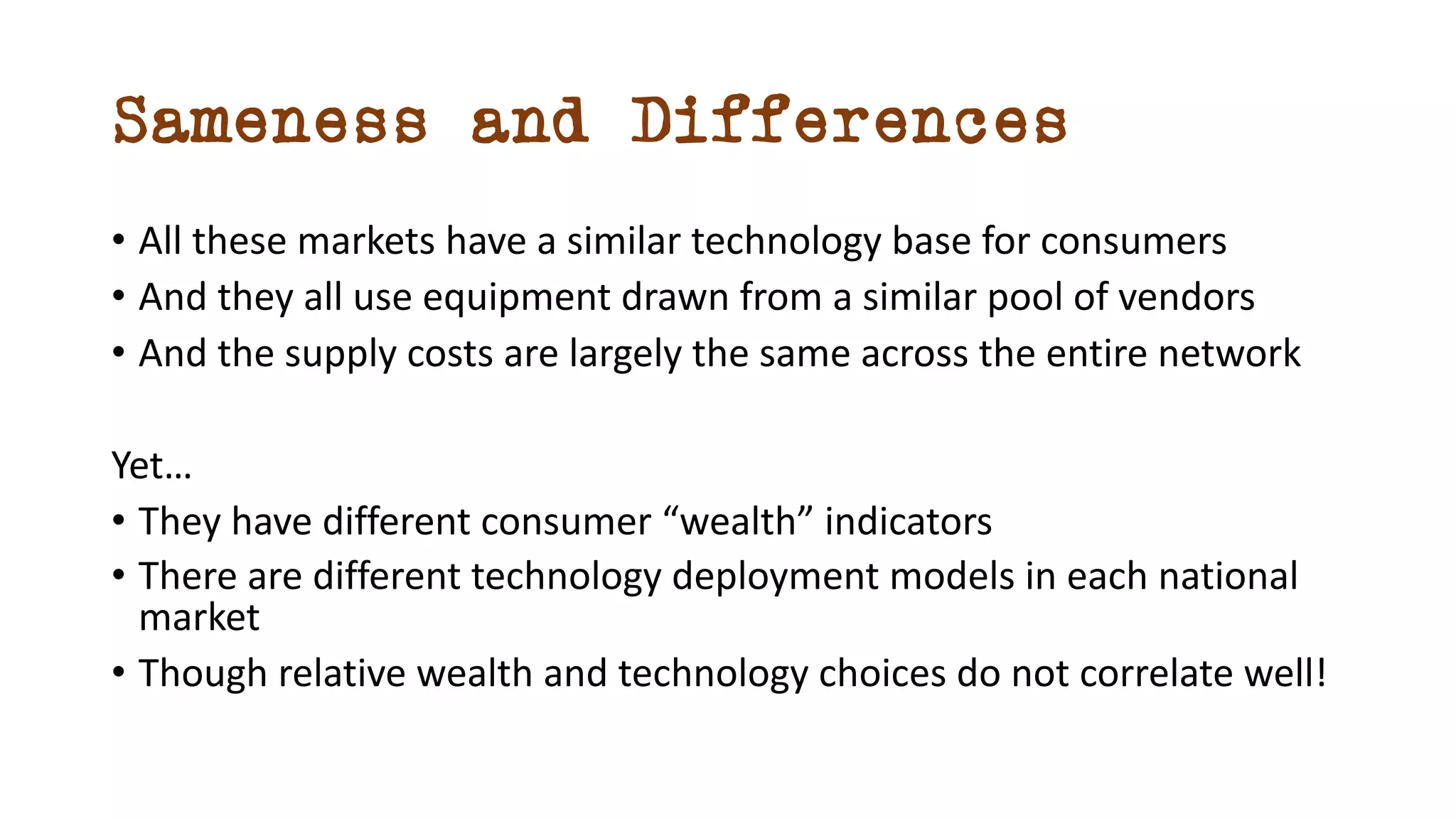
• All these markets have a similar technology base for consumers
• And they all use equipment drawn from a similar pool of vendors
• And the supply costs are largely the same across the entire network
Yet…
• They have different consumer “wealth” indicators
• There are different technology deployment models in each national
market
• Though relative wealth and technology choices do not correlate well!
Lets look at each technology
in a little more detail
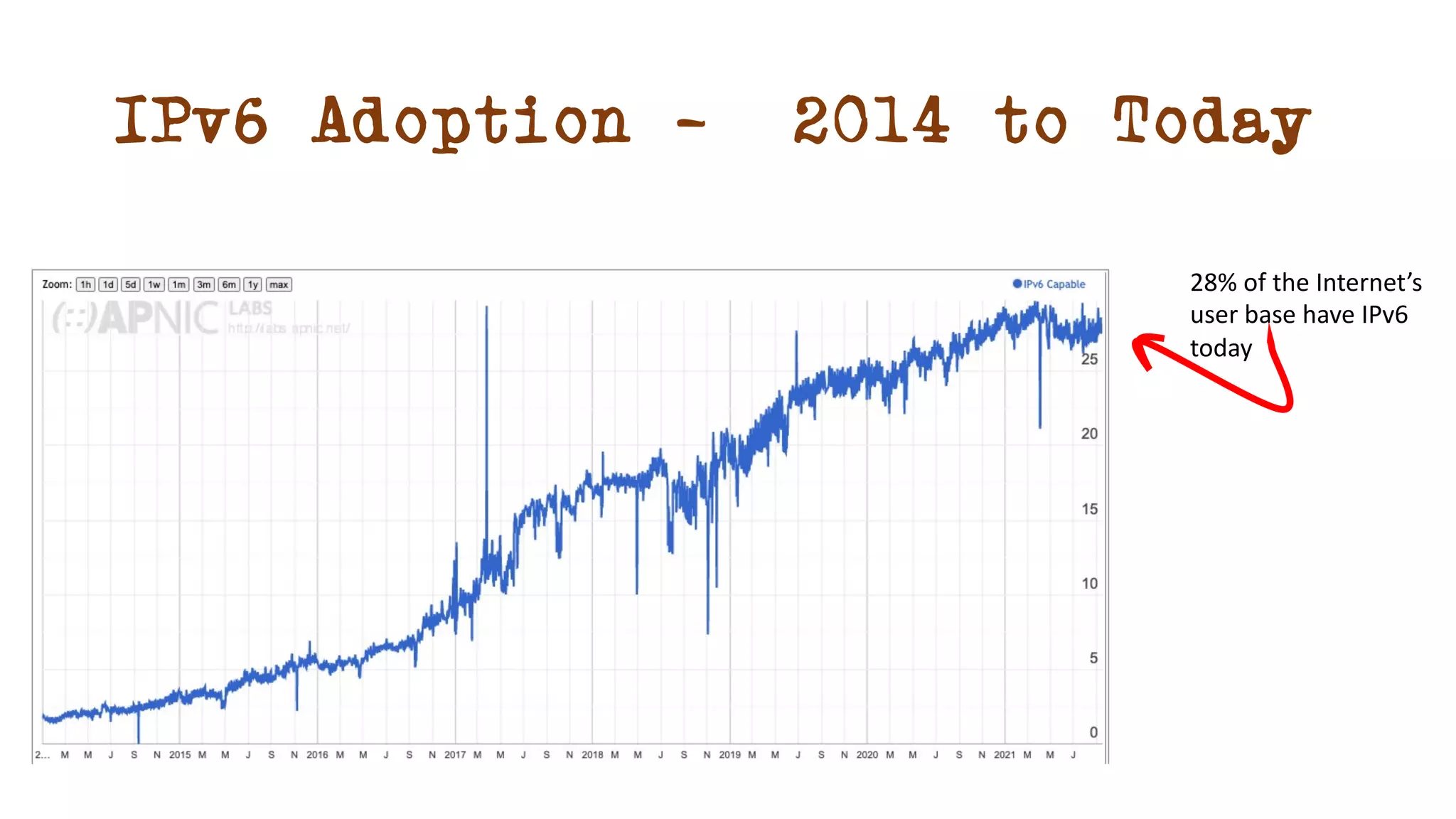
IPv6 Adoption - 2014 to Today
28% of the Internet’s
user base have IPv6
today
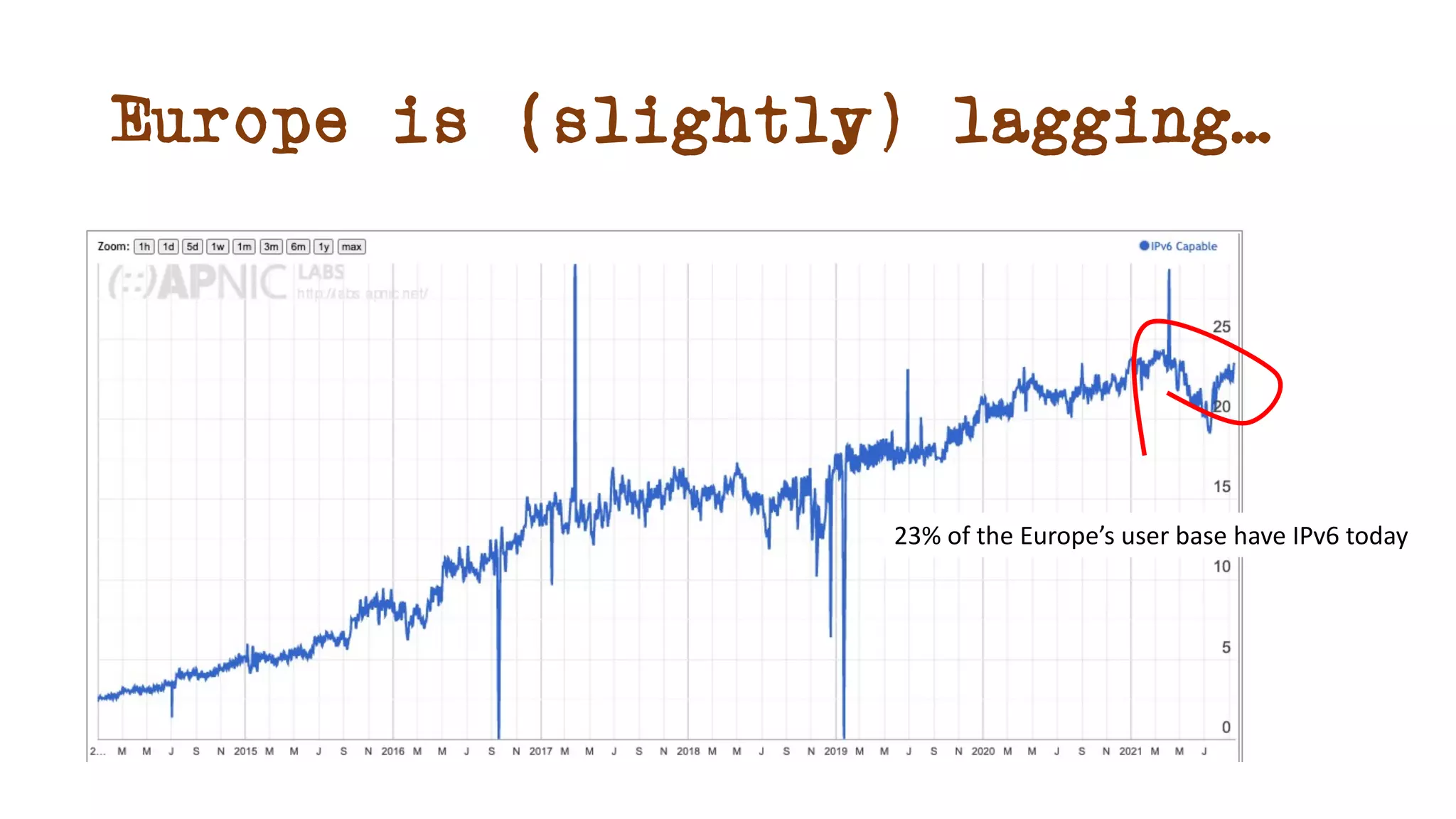
Europe is (slightly) lagging…
23% of the Europe’s user base have IPv6 today
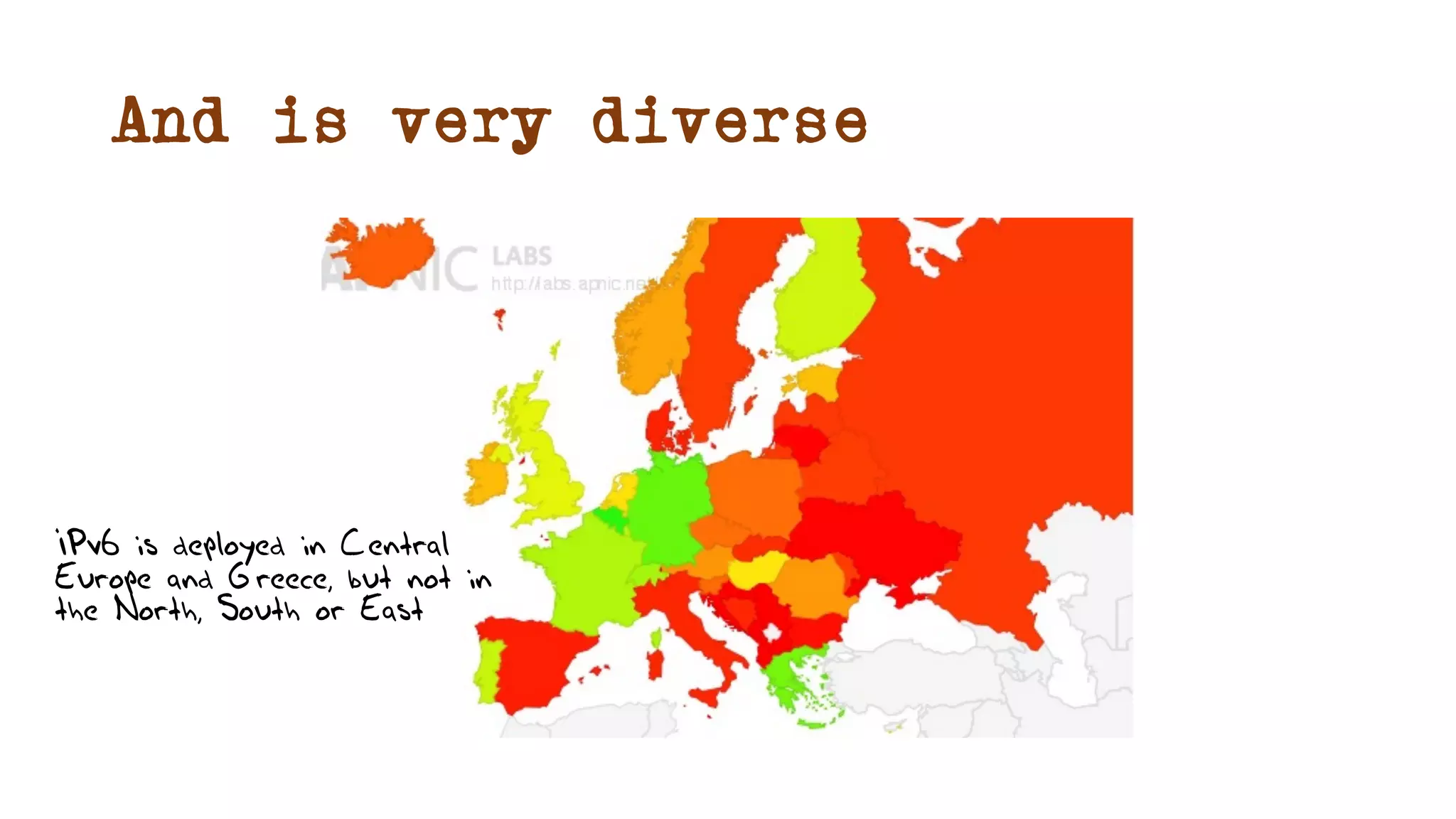
And is very diverse
IPv6 is deployed in Central
Europe and Greece, but not in
the North, South or East
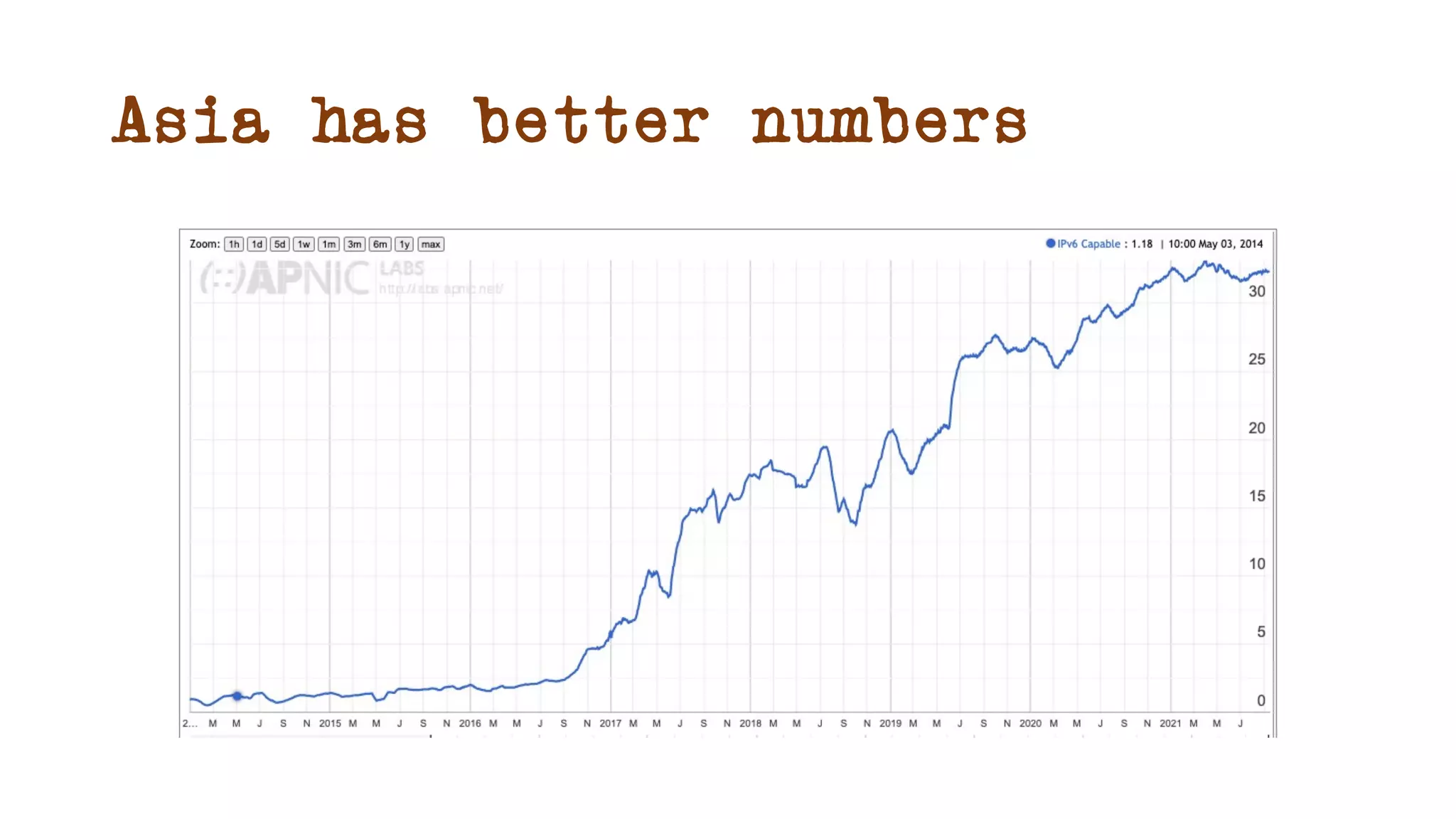
Asia has better numbers
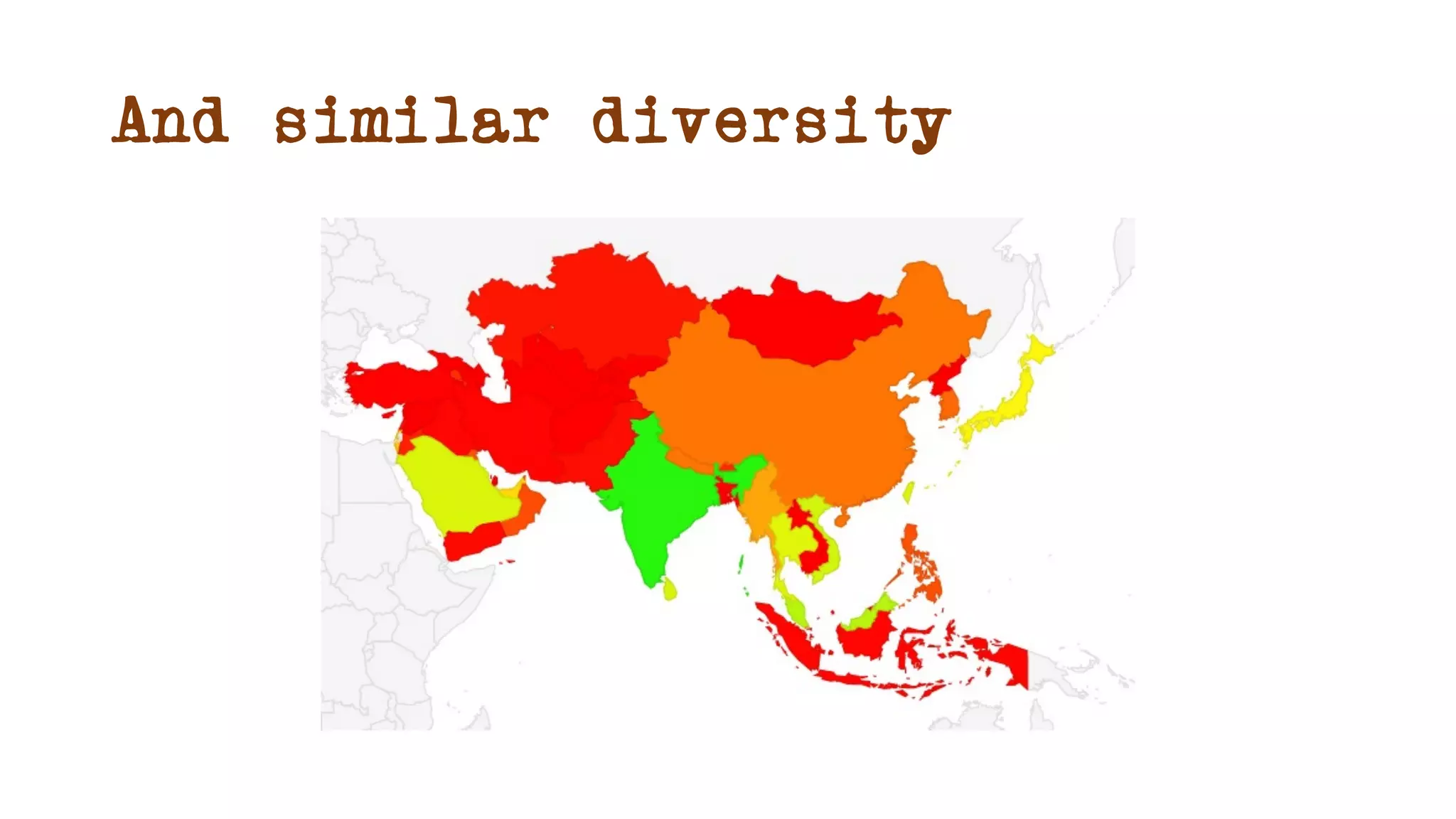
And similar diversity
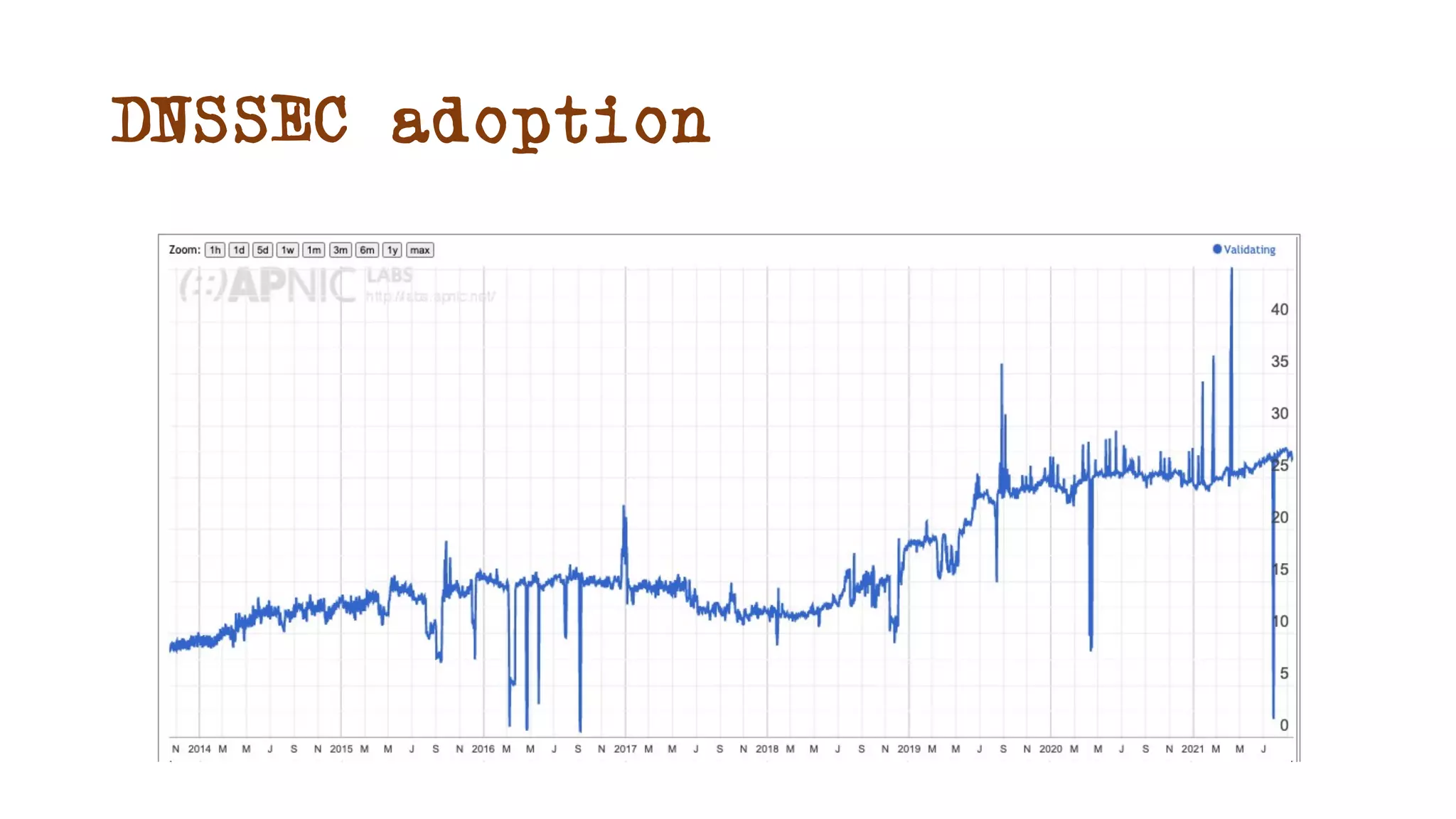
DNSSEC adoption
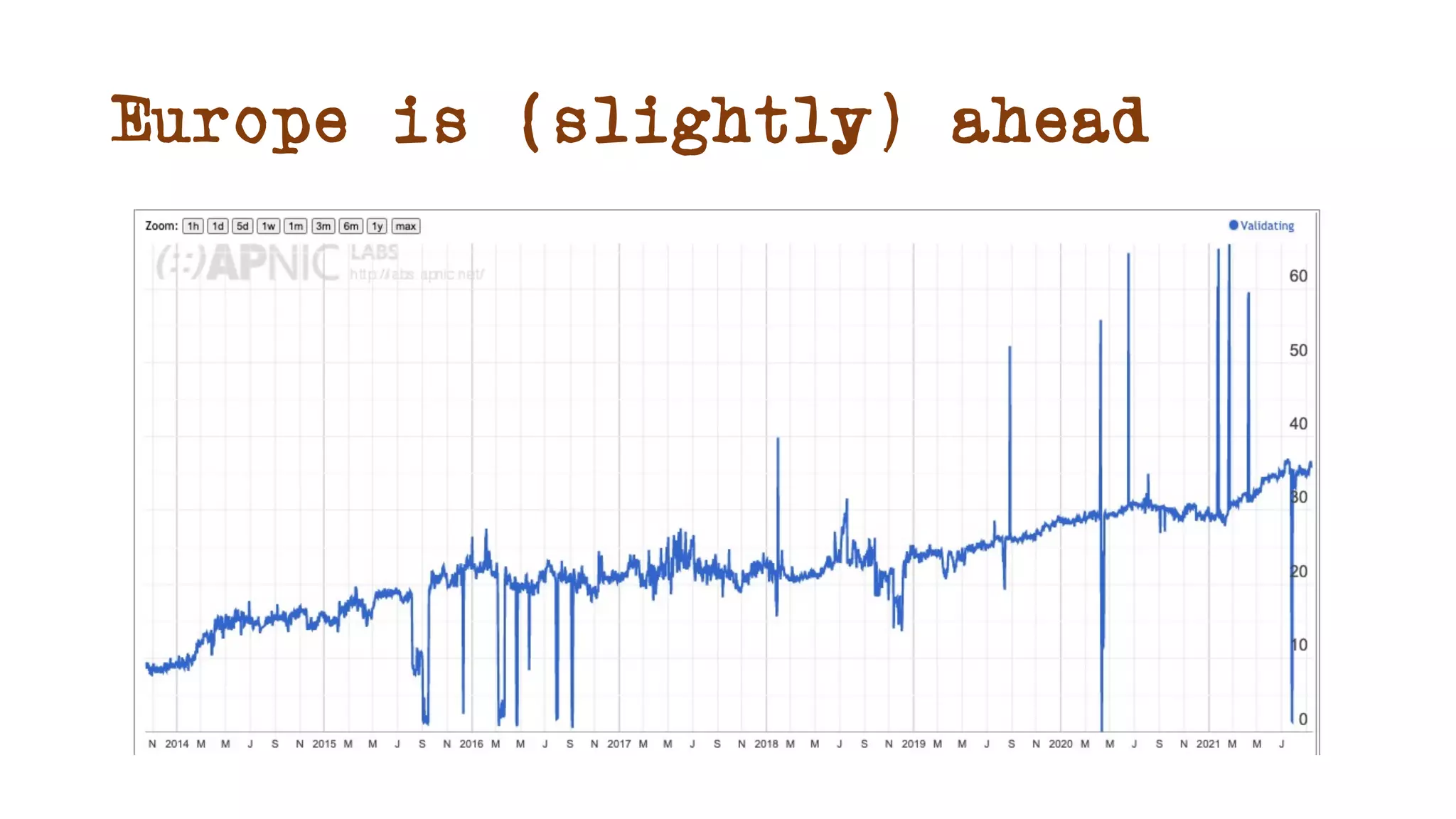
Europe is (slightly) ahead
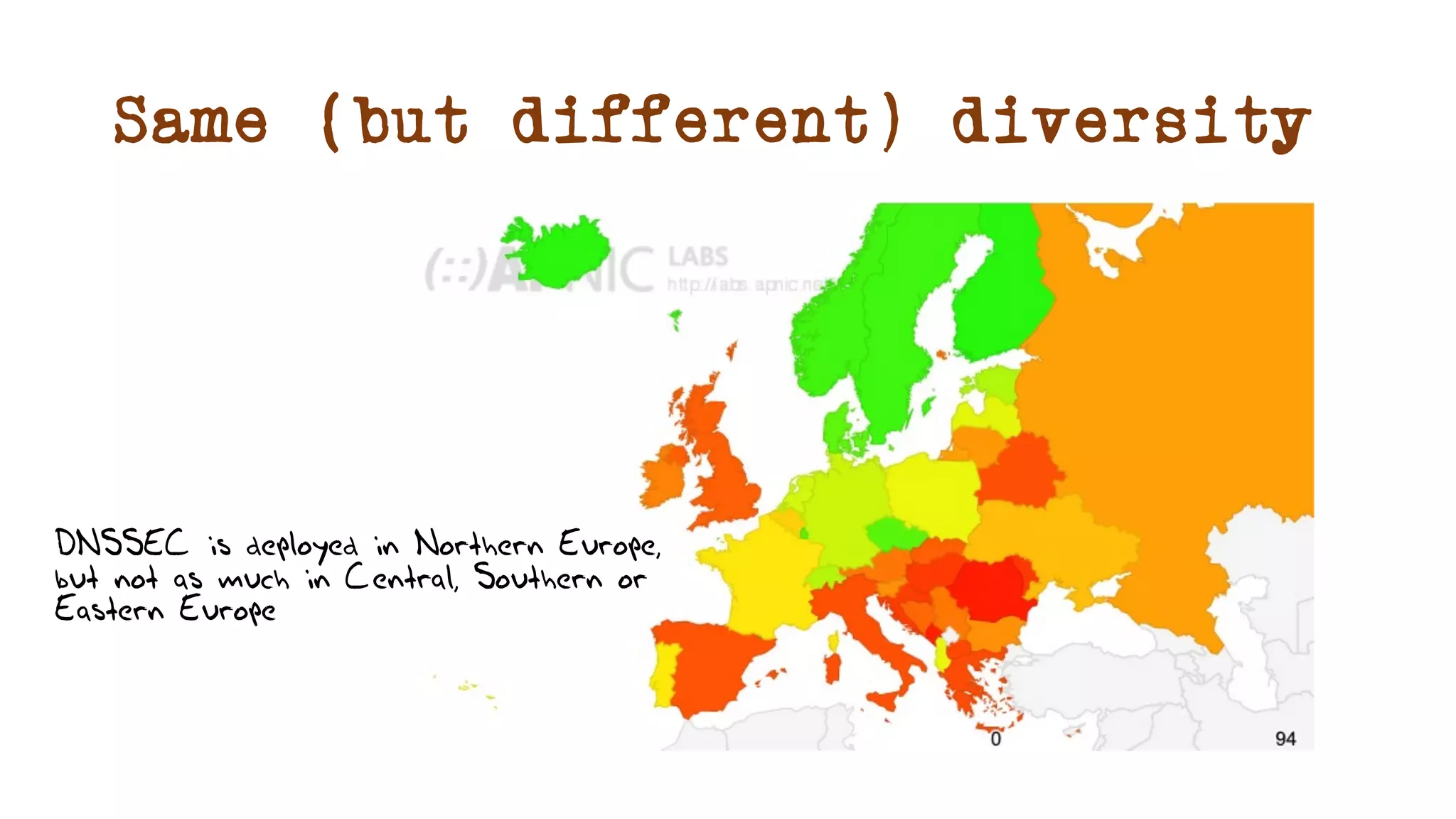
Same (but different) diversity
DNSSEC is deployed in Northern Europe,
but not as much in Central, Southern or
Eastern Europe
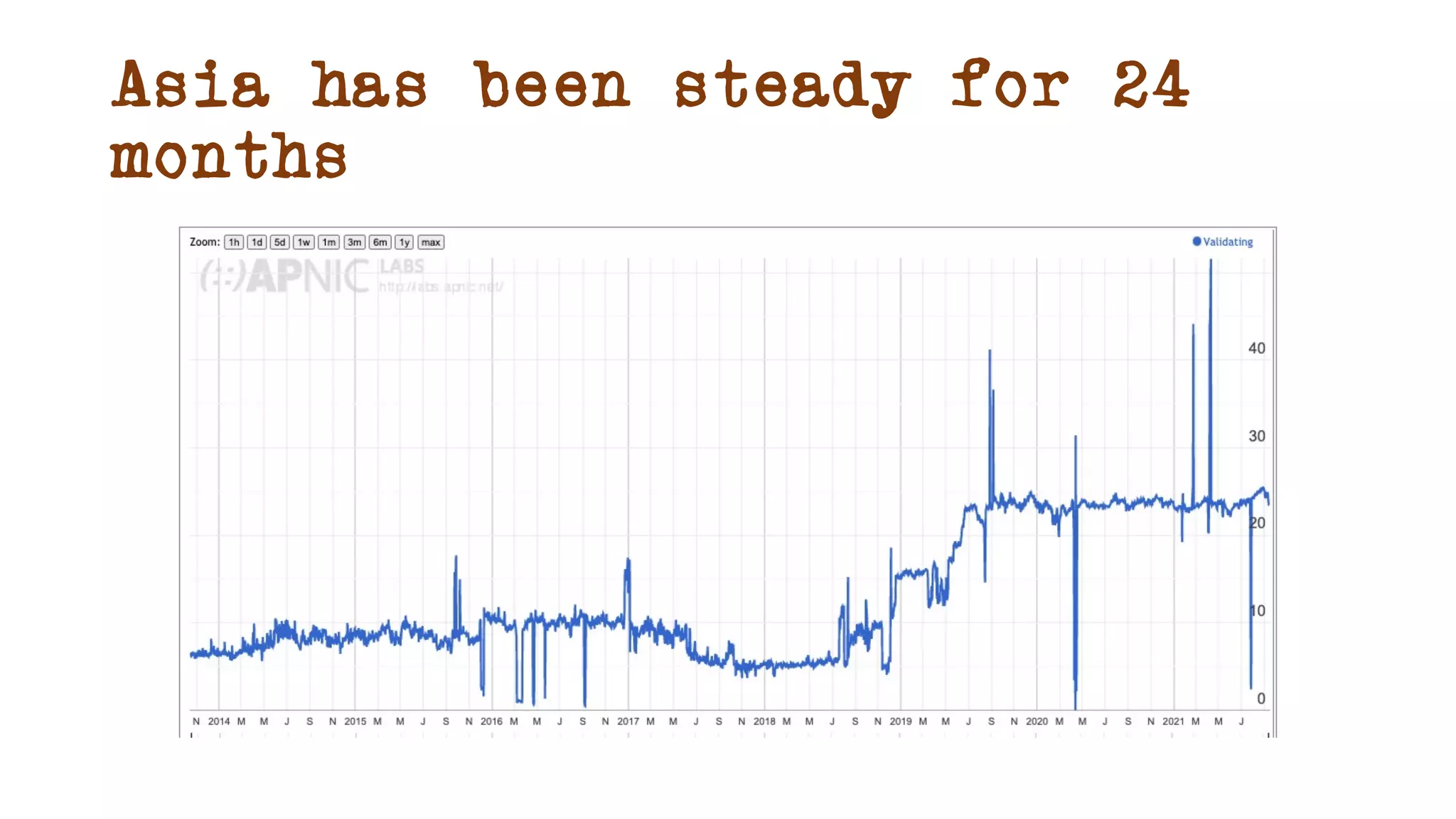
Asia has been steady for 24
months
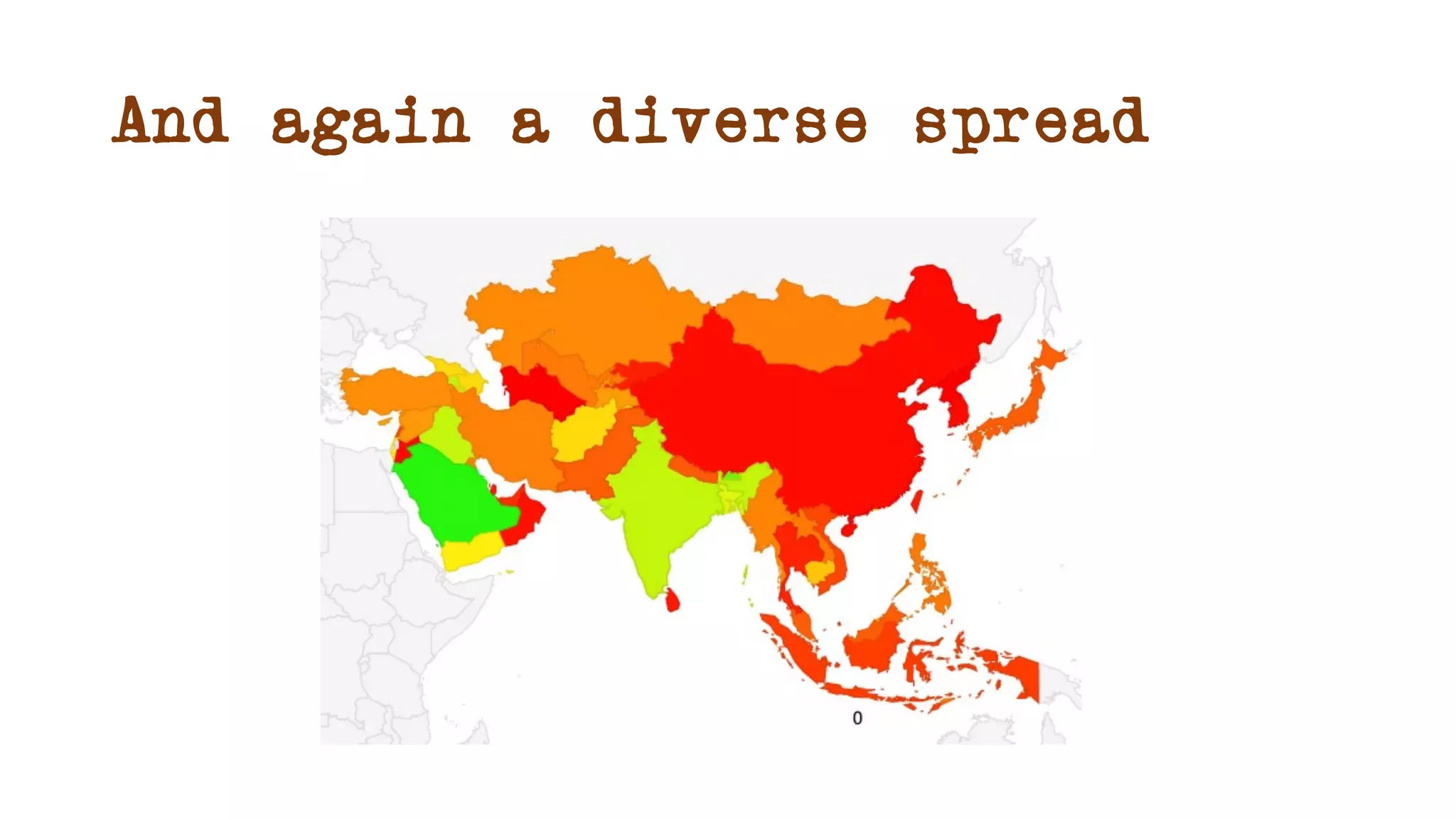
And again a diverse spread
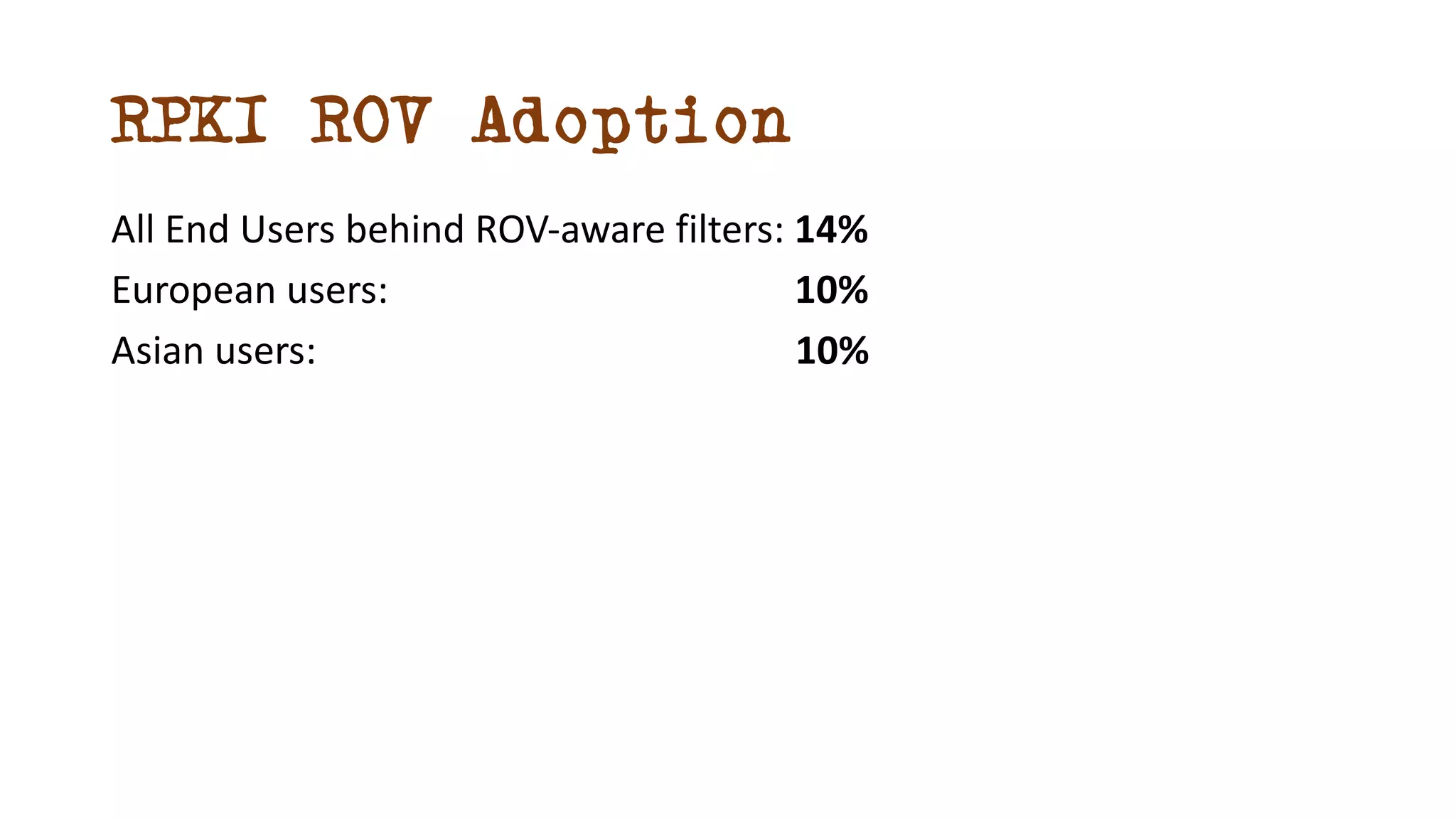
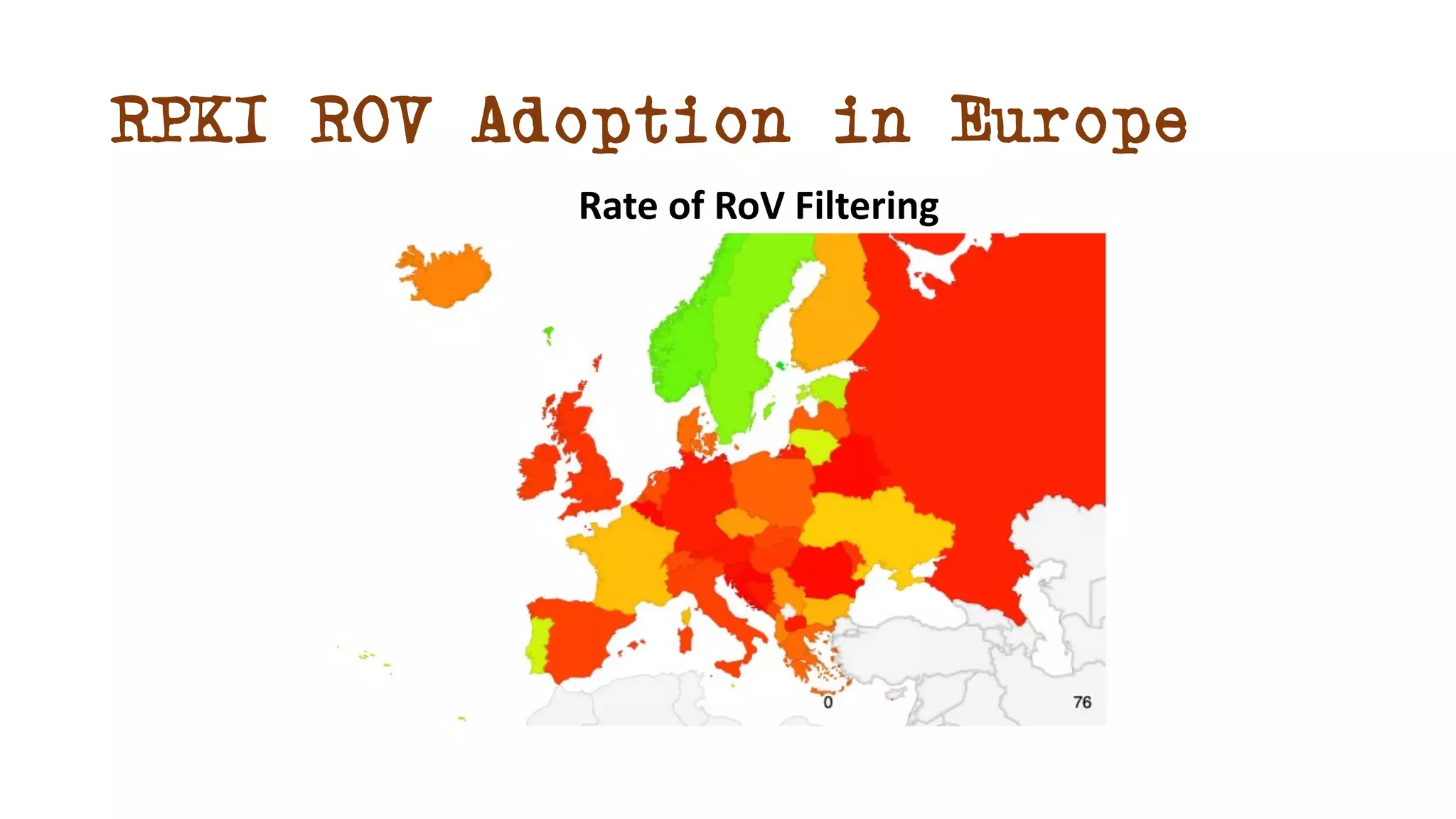
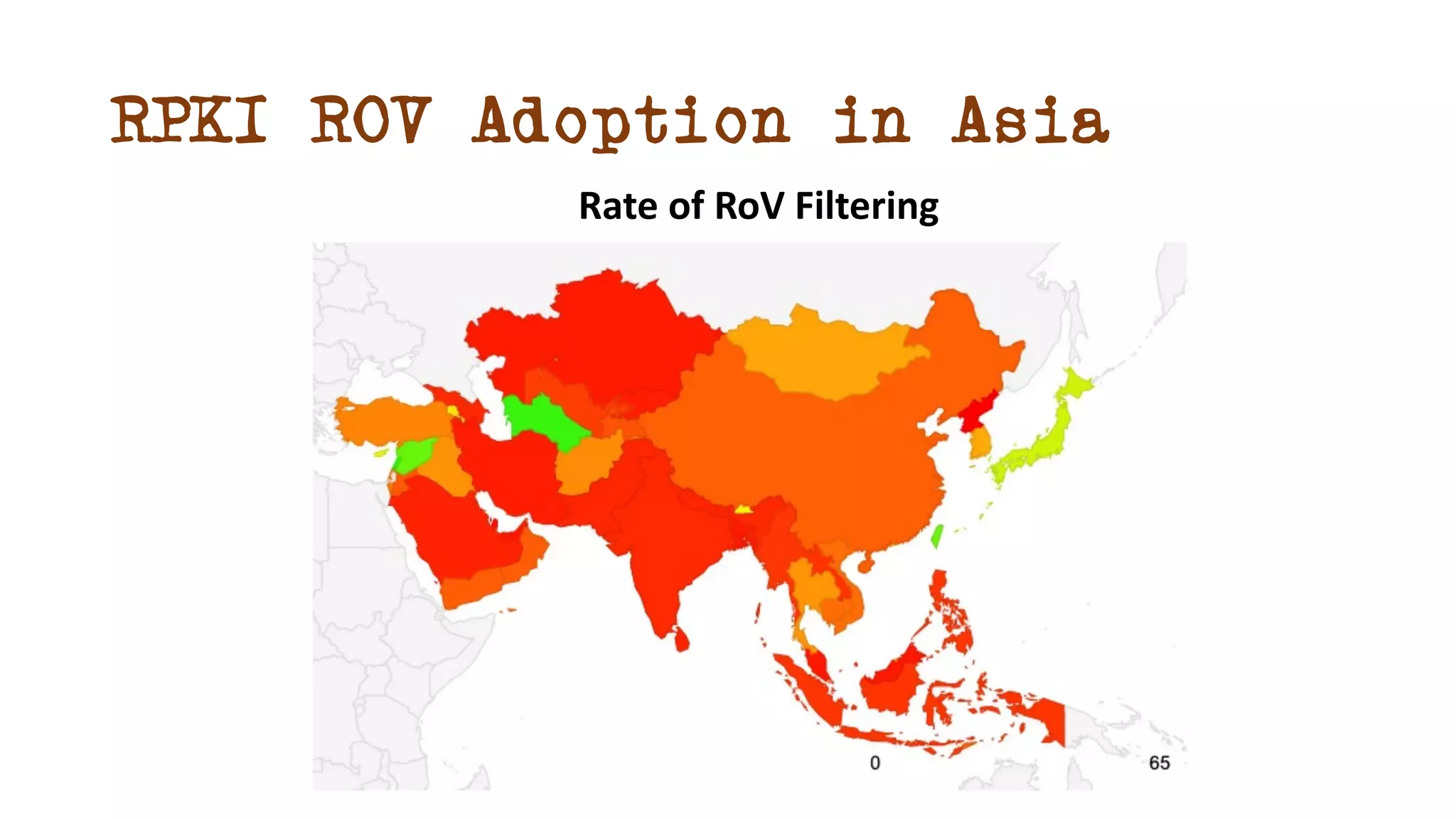
RPKI ROV Adoption
All End Users behind ROV-aware filters: 14%
European users: 10%
Asian users: 10%
RPKI ROV Adoption in Europe
Rate of RoV Filtering
RPKI ROV Adoption in Asia
Rate of RoV Filtering
Why is there such diversity in
deployment?
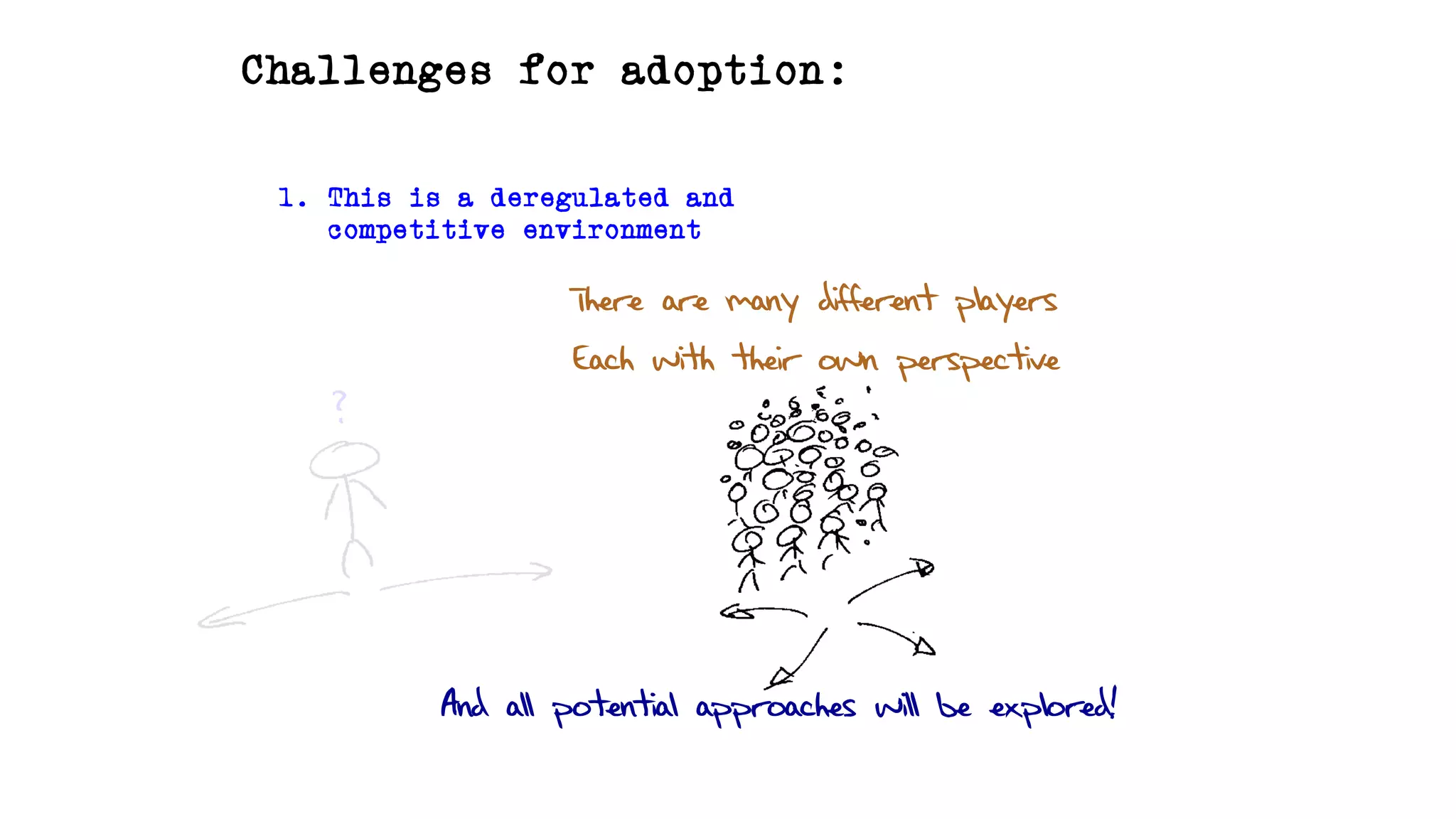
Challenges for adoption:
1. This is a deregulated and
competitive environment
There are many different players
Each with their own perspective
?
And all potential approaches will be explored!
Challenges for adoption:
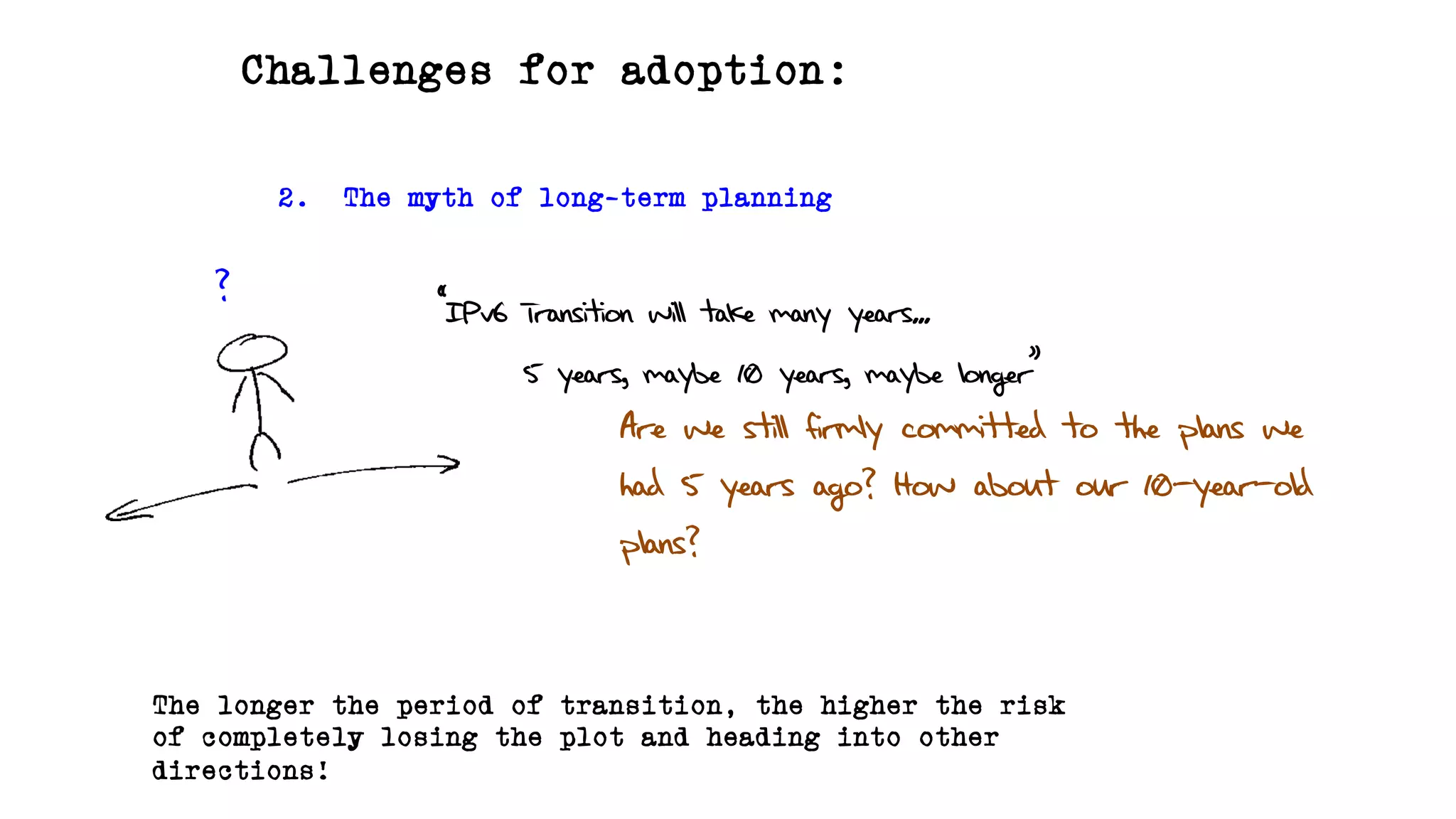
2. The myth of long-term planning
? “IPv6 Transition will take many years...
5 years, maybe 10 years, maybe longer”
Are we still firmly committed to the plans we
had 5 years ago? How about our 10-year-old
plans?
The longer the period of transition, the higher the risk
of completely losing the plot and heading into other
directions!
Challenges:
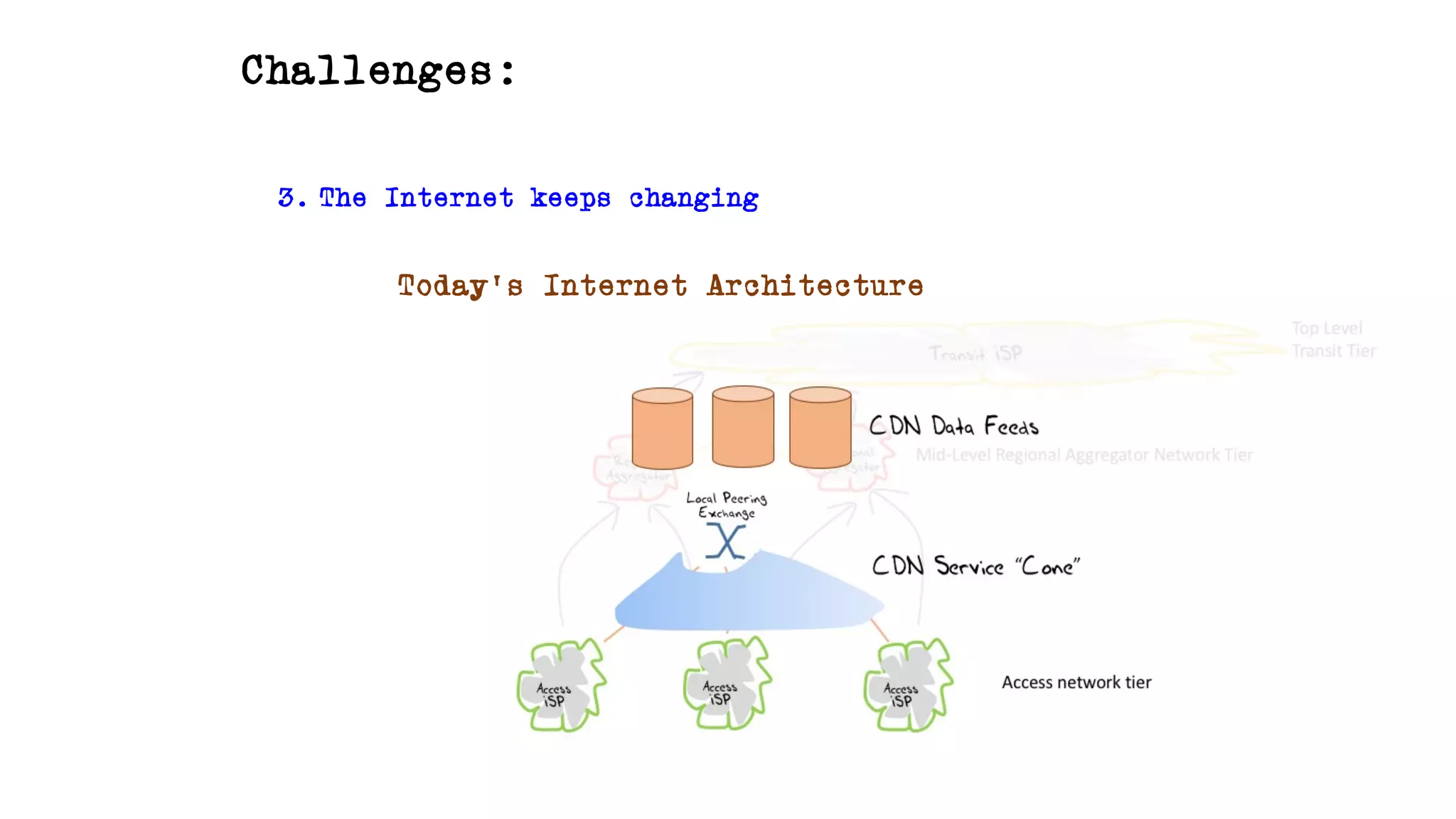
3. The Internet keeps changing
Today’s Internet Architecture
Some providers see advantage
in adoption
• Competitive positioning in a diverse market
• Early adoption of future mainstream technologies (first user
advantage)
• Perception of enhanced utility, security and safety in these more
recent technologies
Others see reasons to wait …
• IPv6 is a 1990’s technology solution to a 1980’s networking
architectural challenge – CDN feeder networks do not need globally
unique address plans across every device all of the time
• DNSSEC is only partially-implemented. If we pushed DNSSEC
validation to the edges of the network we’re scared that the DNS will
slow down to unacceptable levels.
• RPKI Route Origin Validation makes DNS route hijacking only slightly
harder. More moving parts can introduce fragility, and not necessarily
enhance operating stability
Lets return to Bhutan
• And see which service providers have adopted each of these
technologies
Bhutan and DNSSEC
Bhutan ISPs and DNSSEC
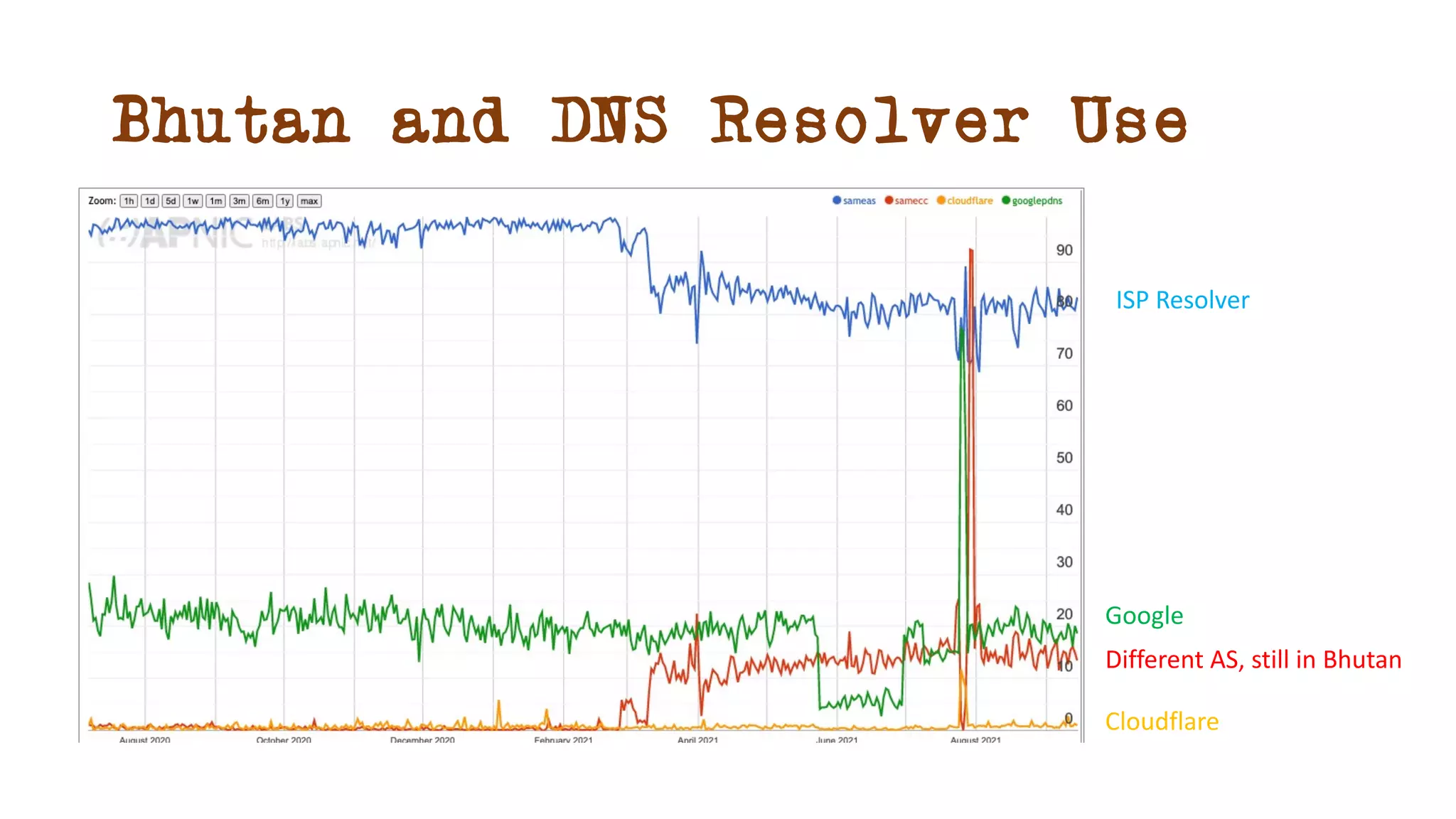
Bhutan and DNS Resolver Use
ISP Resolver
Google
Different AS, still in Bhutan
Cloudflare
Bhutan and DNS Resolver Use
ISP Resolver
Google
Different AS, still in Bhutan
Cloudflare
This is TashiCell Mobile (AS134417) using DNS
resolvers in Tashicell Domestic AS 23955)
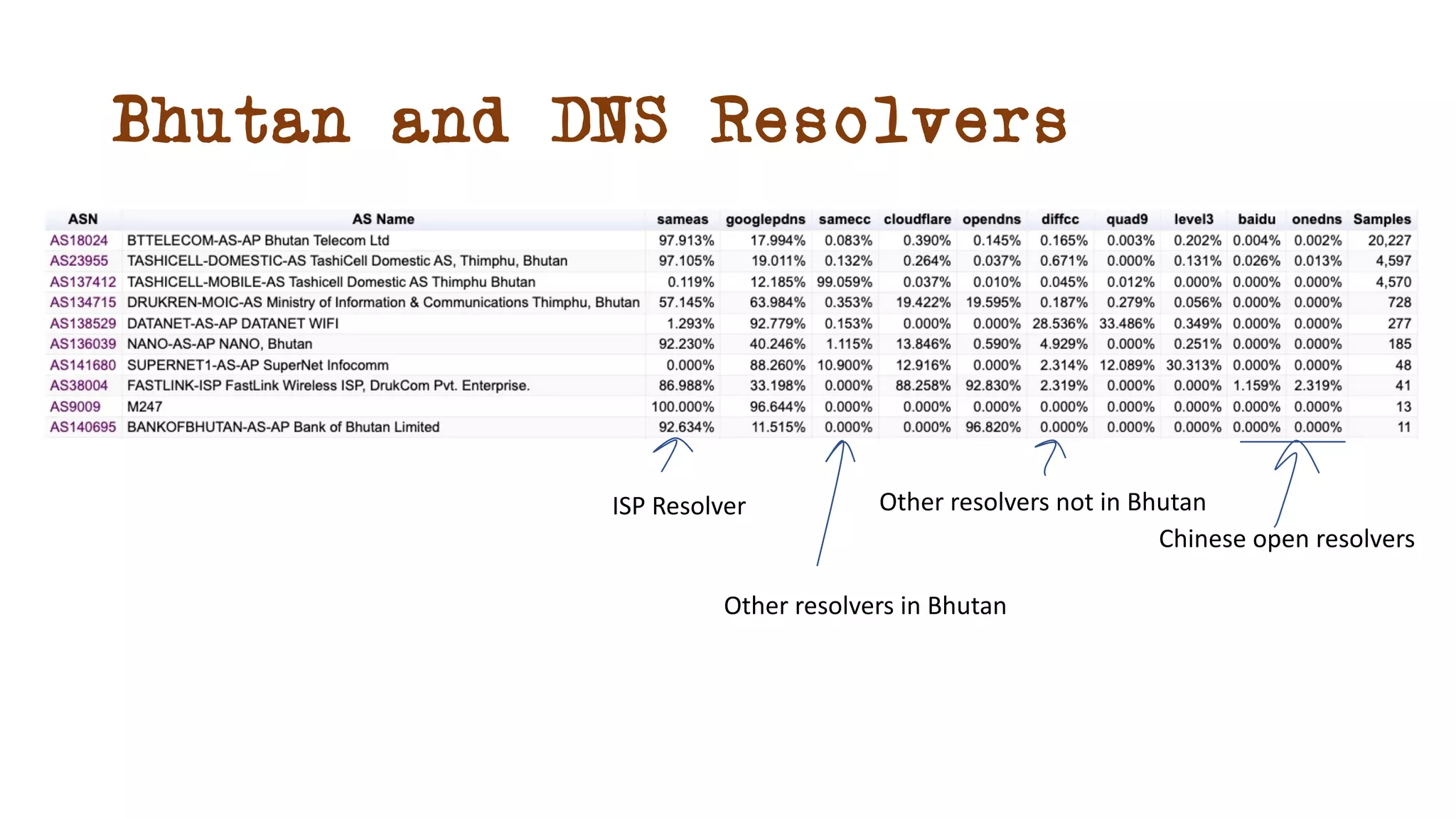
Bhutan and DNS Resolvers
Chinese open resolvers
Other resolvers not in Bhutan
ISP Resolver
Other resolvers in Bhutan
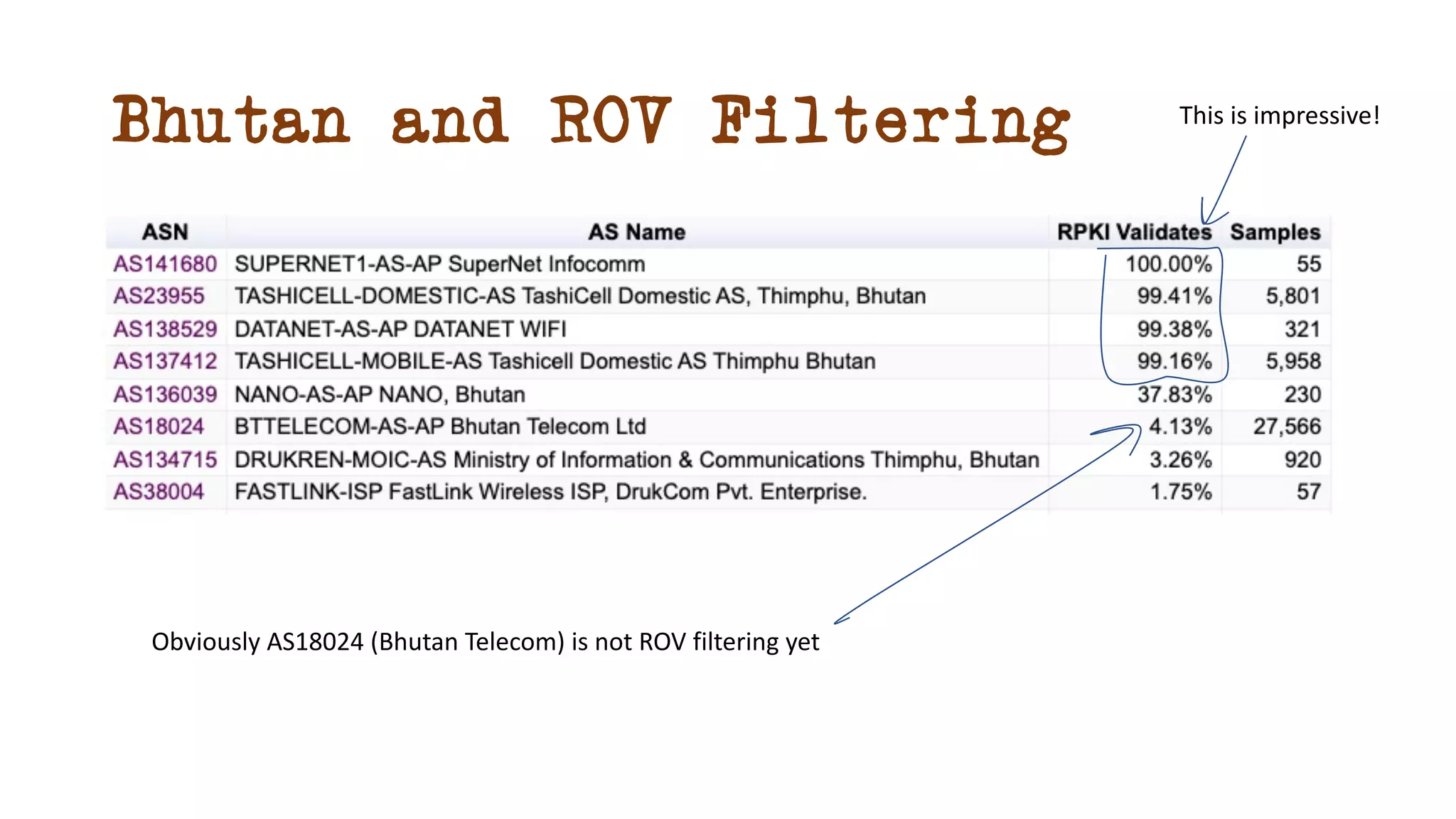
Bhutan and ROV Filtering
Obviously AS18024 (Bhutan Telecom) is not ROV filtering yet
This is impressive!
Bhutan and ROA Production IPv4
Bhutan and ROA Production IPv6
And then there’s IPv6
WHY so low?
Thanks!

btNOG 8: IP technology adoption in Bhutan

  • 1.
    IP Technology Adoptionin Bhutan Geoff Huston APNIC Labs
  • 2.
    Why? • Bhutan hasa really high rate of adoption of DNSSEC in their recursive resolvers • And a decent rate of RoV ROA filtering for BGP • And a close to perfect rate of signed ROAs in their address infrastructure Yet … • Not much IPv6!
  • 3.
    Bhutan is notthat unusual Many national environments have a unique technology adoption profile across these 4 technologies: DNSSEC IPv6 ROA Signing RoV Filtering Bhutan high not much perfect decent Sweden high not much not really good Brazil high decent nope none Spain low not much decent none India high huge decent not much US so-so good decent so-so Mongolia high nope perfect! good
  • 4.
    Sameness and Differences •All these markets have a similar technology base for consumers • And they all use equipment drawn from a similar pool of vendors • And the supply costs are largely the same across the entire network Yet… • They have different consumer “wealth” indicators • There are different technology deployment models in each national market • Though relative wealth and technology choices do not correlate well!
  • 5.
    Lets look ateach technology in a little more detail
  • 6.
    IPv6 Adoption -2014 to Today 28% of the Internet’s user base have IPv6 today
  • 7.
    Europe is (slightly)lagging… 23% of the Europe’s user base have IPv6 today
  • 8.
    And is verydiverse IPv6 is deployed in Central Europe and Greece, but not in the North, South or East
  • 9.
  • 10.
  • 11.
  • 12.
  • 13.
    Same (but different)diversity DNSSEC is deployed in Northern Europe, but not as much in Central, Southern or Eastern Europe
  • 14.
    Asia has beensteady for 24 months
  • 15.
    And again adiverse spread
  • 16.
    RPKI ROV Adoption AllEnd Users behind ROV-aware filters: 14% European users: 10% Asian users: 10%
  • 17.
    RPKI ROV Adoptionin Europe Rate of RoV Filtering
  • 18.
    RPKI ROV Adoptionin Asia Rate of RoV Filtering
  • 19.
    Why is theresuch diversity in deployment?
  • 20.
    Challenges for adoption: 1.This is a deregulated and competitive environment There are many different players Each with their own perspective ? And all potential approaches will be explored!
  • 21.
    Challenges for adoption: 2.The myth of long-term planning ? “IPv6 Transition will take many years... 5 years, maybe 10 years, maybe longer” Are we still firmly committed to the plans we had 5 years ago? How about our 10-year-old plans? The longer the period of transition, the higher the risk of completely losing the plot and heading into other directions!
  • 22.
    Challenges: 3. The Internetkeeps changing Today’s Internet Architecture
  • 23.
    Some providers seeadvantage in adoption • Competitive positioning in a diverse market • Early adoption of future mainstream technologies (first user advantage) • Perception of enhanced utility, security and safety in these more recent technologies
  • 24.
    Others see reasonsto wait … • IPv6 is a 1990’s technology solution to a 1980’s networking architectural challenge – CDN feeder networks do not need globally unique address plans across every device all of the time • DNSSEC is only partially-implemented. If we pushed DNSSEC validation to the edges of the network we’re scared that the DNS will slow down to unacceptable levels. • RPKI Route Origin Validation makes DNS route hijacking only slightly harder. More moving parts can introduce fragility, and not necessarily enhance operating stability
  • 25.
    Lets return toBhutan • And see which service providers have adopted each of these technologies
  • 26.
  • 27.
  • 28.
    Bhutan and DNSResolver Use ISP Resolver Google Different AS, still in Bhutan Cloudflare
  • 29.
    Bhutan and DNSResolver Use ISP Resolver Google Different AS, still in Bhutan Cloudflare This is TashiCell Mobile (AS134417) using DNS resolvers in Tashicell Domestic AS 23955)
  • 30.
    Bhutan and DNSResolvers Chinese open resolvers Other resolvers not in Bhutan ISP Resolver Other resolvers in Bhutan
  • 31.
    Bhutan and ROVFiltering
  • 32.
    Bhutan and ROVFiltering Obviously AS18024 (Bhutan Telecom) is not ROV filtering yet This is impressive!
  • 33.
    Bhutan and ROAProduction IPv4
  • 34.
    Bhutan and ROAProduction IPv6
  • 35.
  • 36.
  • 37.
    And then there’sIPv6 WHY so low?
  • 38.