
Understanding the Causal System
PC1: Improvement Science Basics
Louis Gomez & Sandra Park
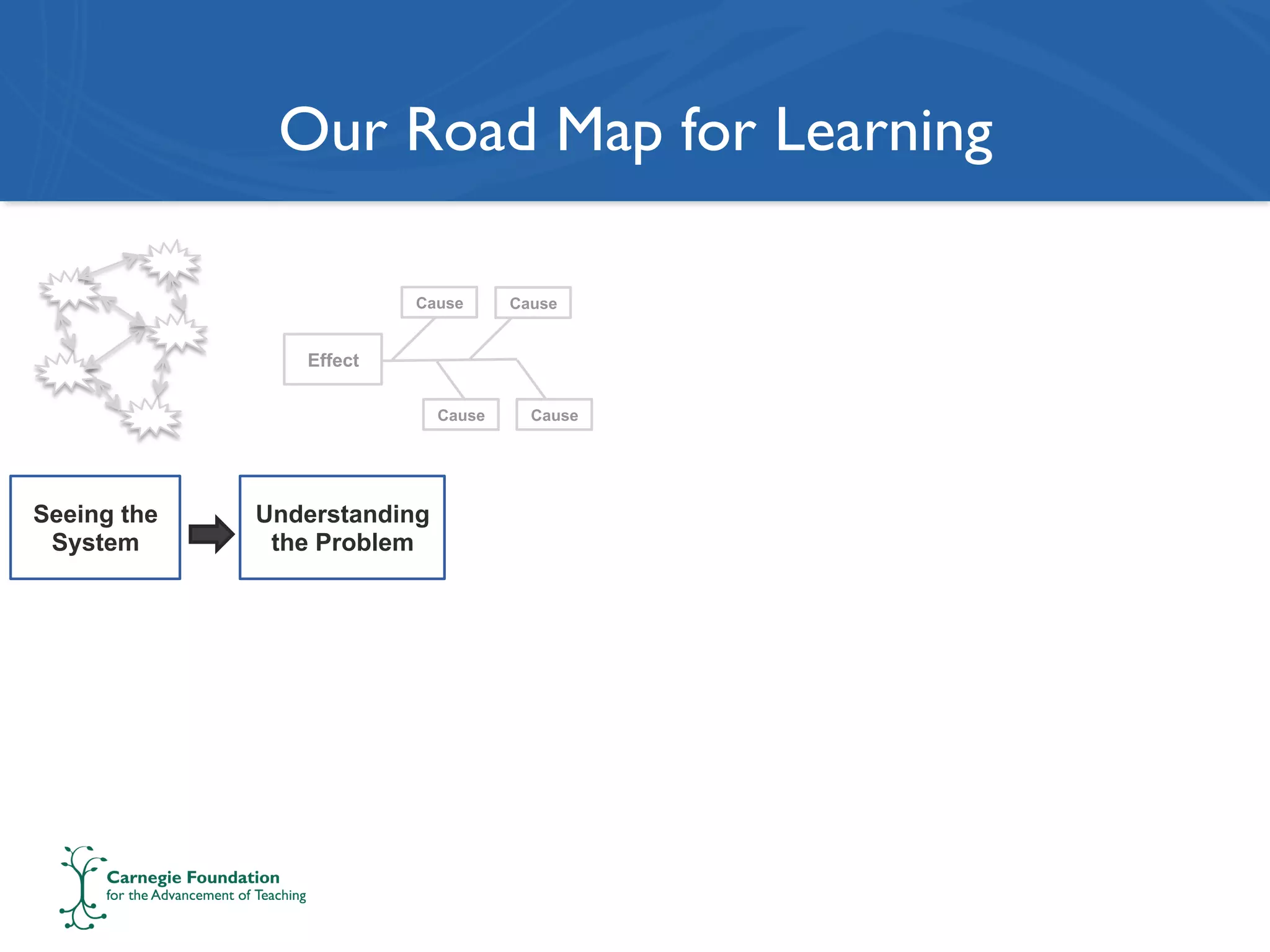
Our Road Map for Learning
Seeing the
System
Understanding
the Problem
Effect
Cause Cause
Cause Cause
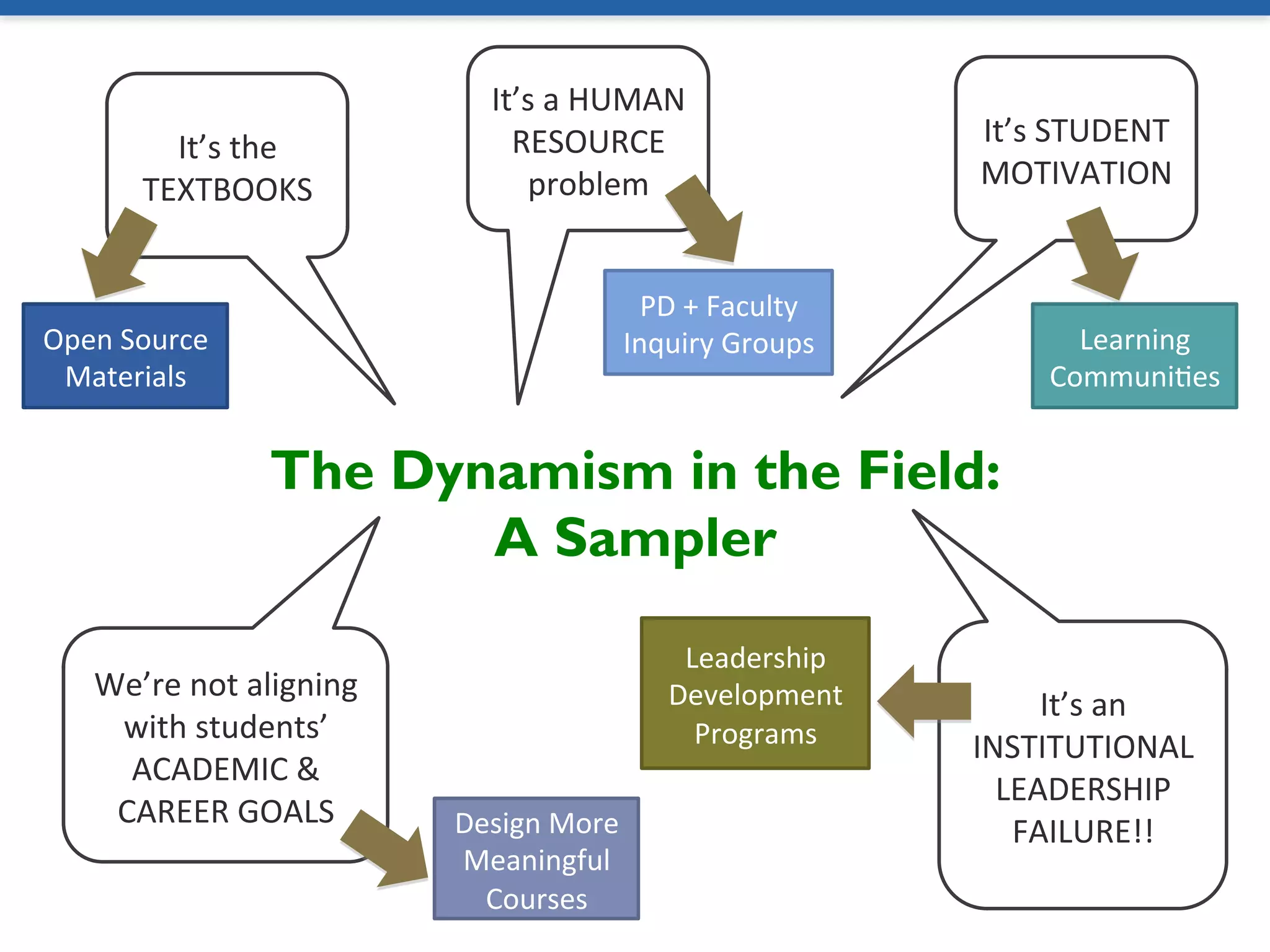
The Dynamism in the Field:
A Sampler
It’s	
  the	
  
TEXTBOOKS	
  
We’re	
  not	
  aligning	
  
with	
  students’	
  
ACADEMIC	
  &	
  
CAREER	
  GOALS	
  
It’s	
  STUDENT	
  
MOTIVATION	
  
It’s	
  a	
  HUMAN	
  
RESOURCE	
  
problem	
  
It’s	
  an	
  
INSTITUTIONAL	
  
LEADERSHIP	
  
FAILURE!!	
  
Open	
  Source	
  
Materials	
  
Learning	
  
CommuniMes	
  
Design	
  More	
  
Meaningful	
  
Courses	
  
PD	
  +	
  Faculty	
  
Inquiry	
  Groups	
  
Leadership	
  
Development	
  
Programs	
  
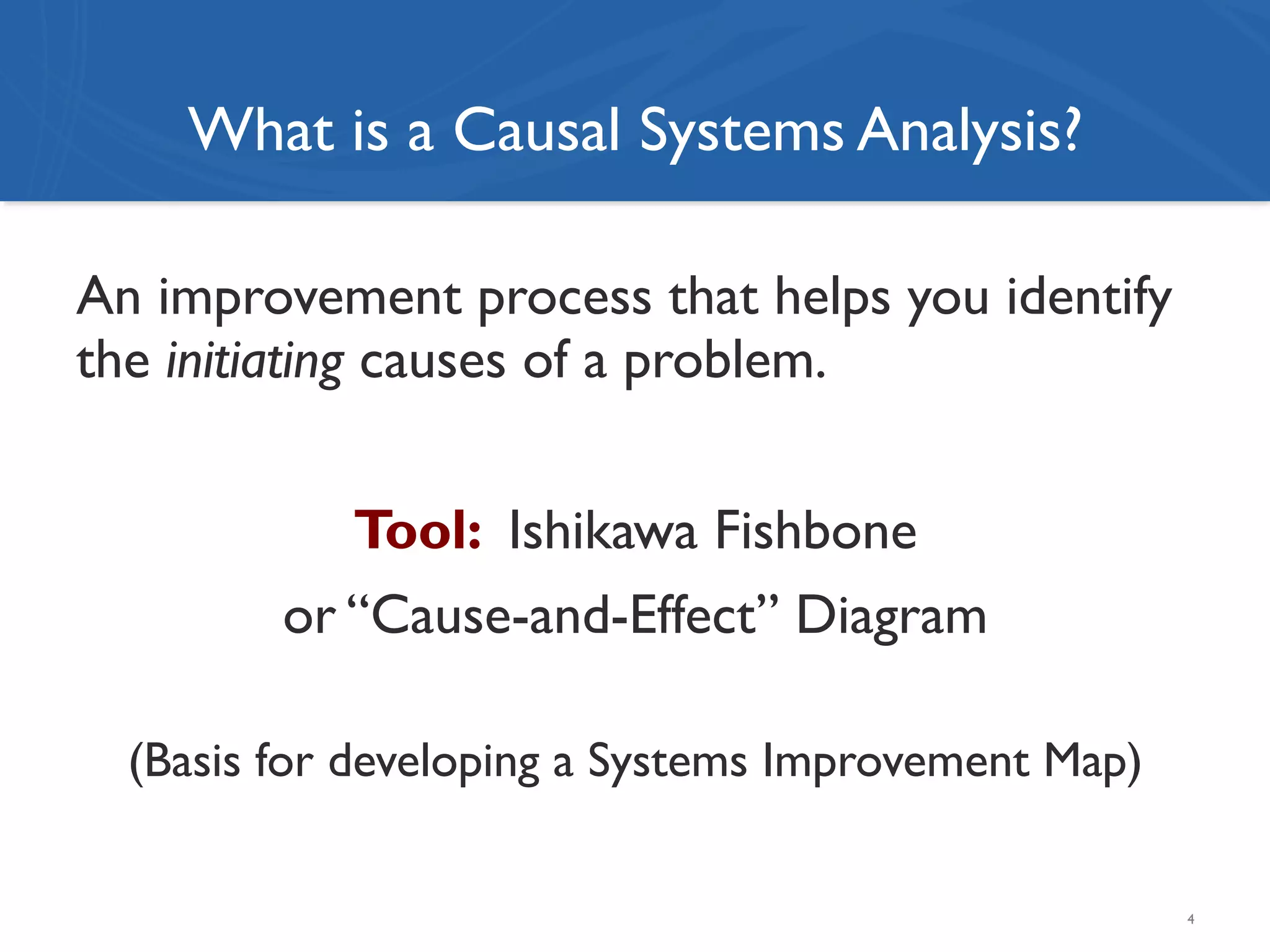
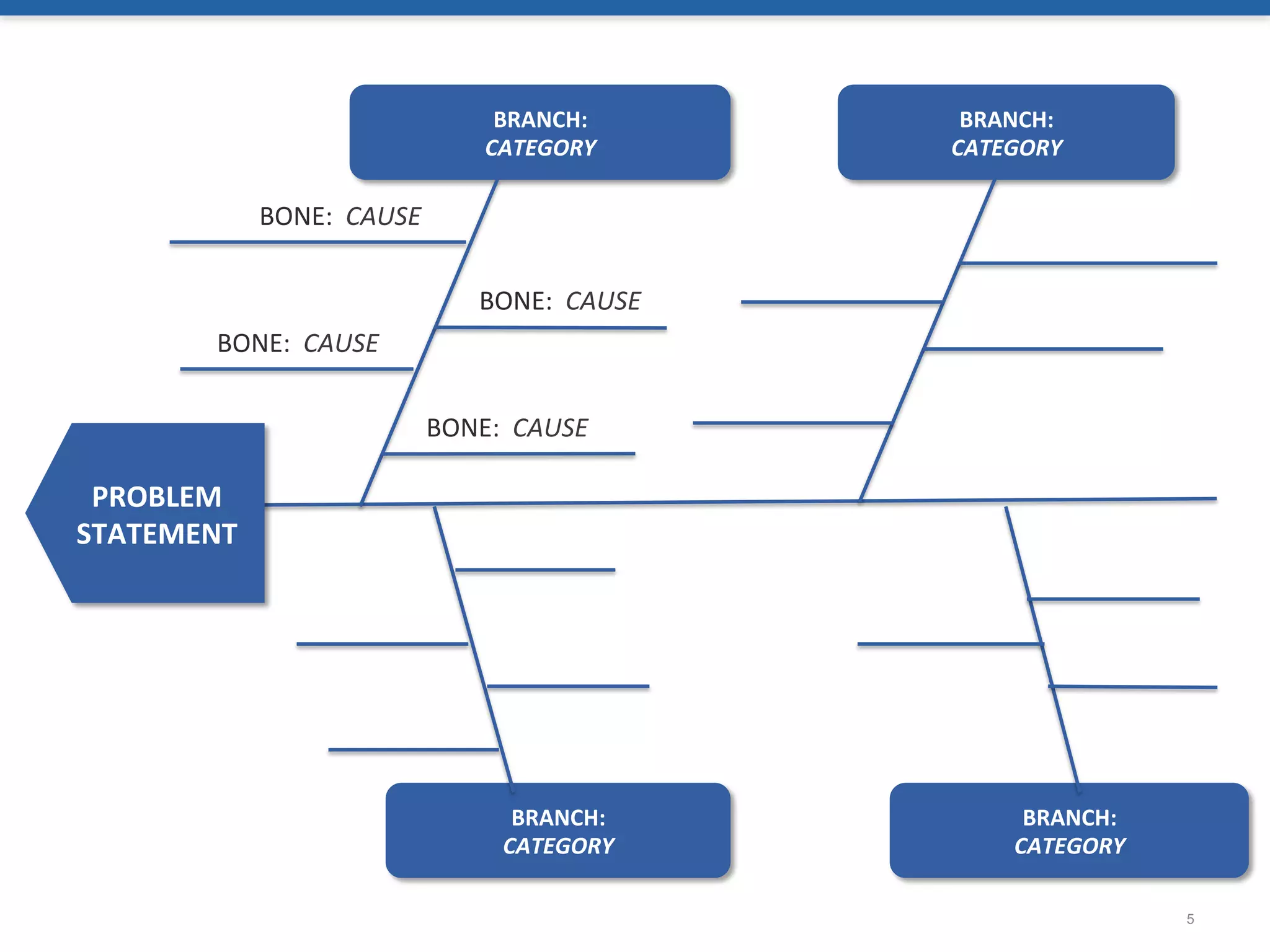
What is a Causal Systems Analysis?
An improvement process that helps you identify
the initiating causes of a problem.
Tool: Ishikawa Fishbone
or “Cause-and-Effect” Diagram
(Basis for developing a Systems Improvement Map)
4
5
BRANCH:	
  
CATEGORY	
  	
  
BRANCH:	
  
CATEGORY	
  	
  
BRANCH:	
  
CATEGORY	
  	
  
BRANCH:	
  
CATEGORY	
  	
  
PROBLEM	
  	
  
STATEMENT	
  
BONE:	
  	
  CAUSE	
  
BONE:	
  	
  CAUSE	
  
BONE:	
  	
  CAUSE	
  
BONE:	
  	
  CAUSE	
  
Activity: What is the specific problem?
6
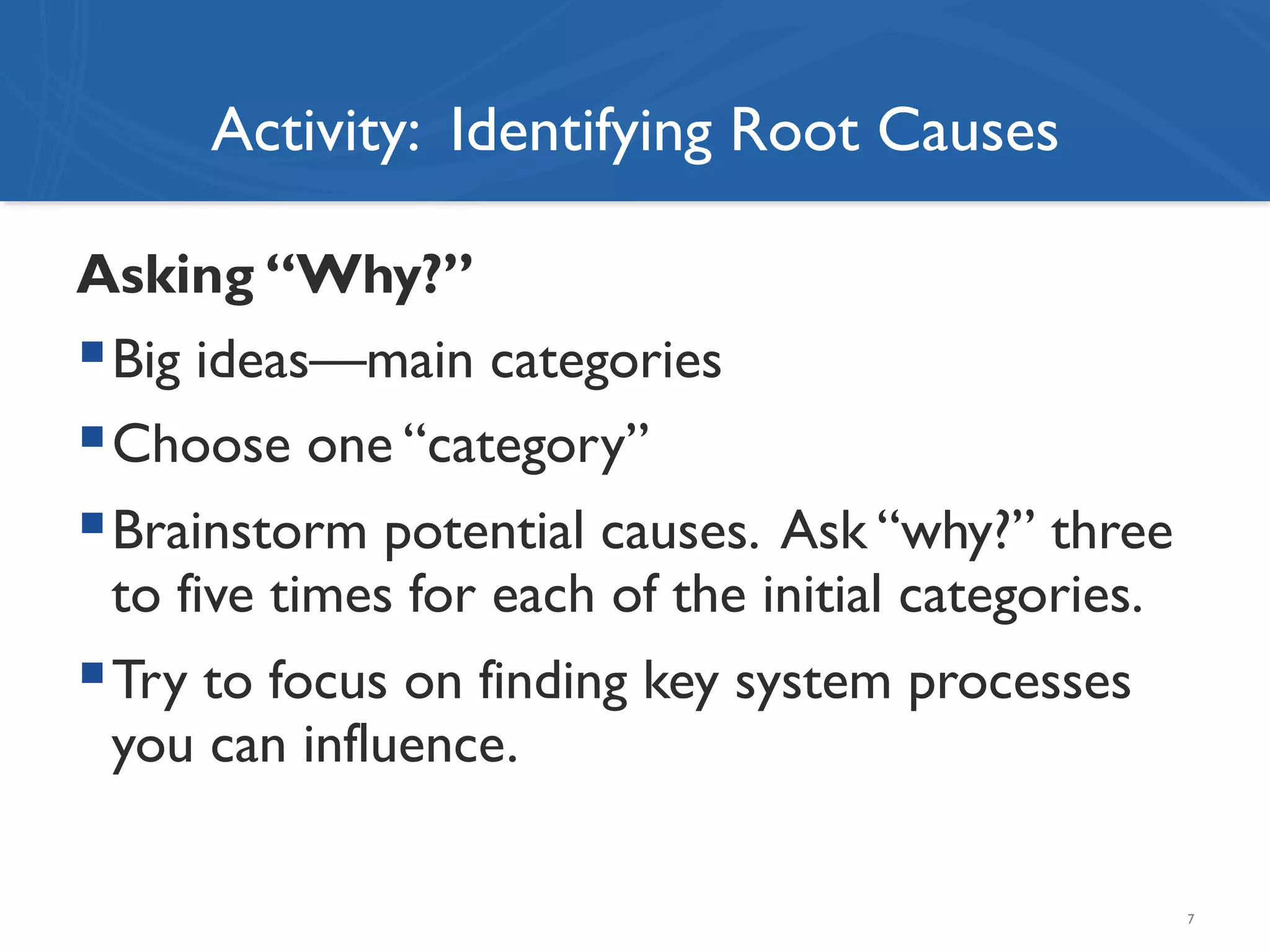
Activity: Identifying Root Causes
Asking “Why?”
! Big ideas—main categories
! Choose one “category”
! Brainstorm potential causes. Ask “why?” three
to five times for each of the initial categories.
! Try to focus on finding key system processes
you can influence.
7
8
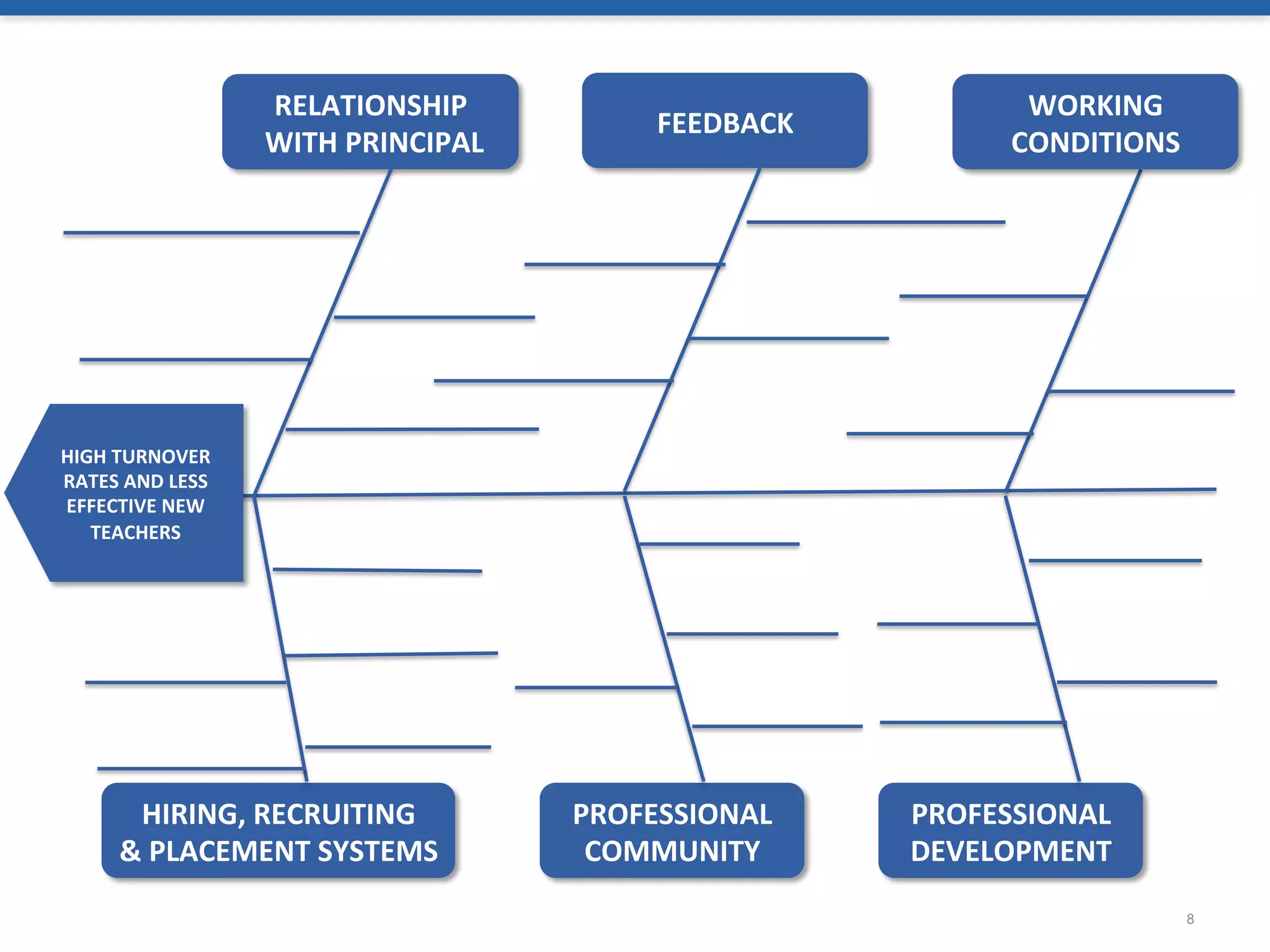
RELATIONSHIP	
  
	
  WITH	
  PRINCIPAL	
  
FEEDBACK	
  
HIRING,	
  RECRUITING	
  	
  
&	
  PLACEMENT	
  SYSTEMS	
  
PROFESSIONAL	
  	
  
COMMUNITY	
  
PROFESSIONAL	
  	
  
DEVELOPMENT	
  
HIGH	
  TURNOVER	
  
RATES	
  AND	
  LESS	
  
EFFECTIVE	
  NEW	
  
TEACHERS	
  
WORKING	
  
CONDITIONS	
  
9
RELATIONSHIP	
  
	
  WITH	
  PRINCIPAL	
  
FEEDBACK	
  
HIRING,	
  RECRUITING	
  	
  
&	
  PLACEMENT	
  SYSTEMS	
  
PROFESSIONAL	
  	
  
COMMUNITY	
  
PROFESSIONAL	
  	
  
DEVELOPMENT	
  
TURNOVER	
  RATES	
  
FOR	
  NEW	
  TEACHERS	
  
ARE	
  HIGH	
  AND	
  NEW	
  
TEACHERS	
  ARE	
  NOT	
  
EFFECTIVE	
  FAST	
  
ENOUGH	
  
WORKING	
  
CONDITIONS	
  
Lack of attention to relational
practices in the induction and
development of principals.
New teachers low priority
on principals’ time
Weak or absent culture
of trust district-wide
High principal
turnover
No common language
about good teaching
Not connected
to resources to improve
Those giving feedback
lack expertise
Feedback is experienced
as isolated and/or
evaluative events
Mismatch between
teacher background
and initial assignments
Lack of clarity around
roles and responsibilities
(e.g HR, principal, etc.)
Lack of information
necessary for good
school-teacher match
Processes not timely
Lack of communication
between prep programs
and districts
“It’s not my job”
Lack of
collective
responsibility
for students
and their
achievement Inadequate time,
resources and
structures
Each new teacher
invents curriculum
No concept of arc
of teacher dev
Not connected to
student learning
Not differentiated
by needs of
individual teachers
Lack of
coherence
Environment
not safe
Facilities
inadequate
No breaks
Tips for Crafting a Fishbone Diagram
STAY USER-CENTERED
! Talk to users to get their perspectives.
! See the system from different points of view.
! Solve the problem for users first.
! Be open-minded.
USE DATA WHEN POSSIBLE
! Measure the gap you’re trying to close.
! Test causes against data.
10
Bryk 2014 understanding the causal system

Bryk 2014 understanding the causal system

  • 1.
    Understanding the CausalSystem PC1: Improvement Science Basics Louis Gomez & Sandra Park
  • 2.
    Our Road Mapfor Learning Seeing the System Understanding the Problem Effect Cause Cause Cause Cause
  • 3.
    The Dynamism inthe Field: A Sampler It’s  the   TEXTBOOKS   We’re  not  aligning   with  students’   ACADEMIC  &   CAREER  GOALS   It’s  STUDENT   MOTIVATION   It’s  a  HUMAN   RESOURCE   problem   It’s  an   INSTITUTIONAL   LEADERSHIP   FAILURE!!   Open  Source   Materials   Learning   CommuniMes   Design  More   Meaningful   Courses   PD  +  Faculty   Inquiry  Groups   Leadership   Development   Programs  
  • 4.
    What is aCausal Systems Analysis? An improvement process that helps you identify the initiating causes of a problem. Tool: Ishikawa Fishbone or “Cause-and-Effect” Diagram (Basis for developing a Systems Improvement Map) 4
  • 5.
    5 BRANCH:   CATEGORY     BRANCH:   CATEGORY     BRANCH:   CATEGORY     BRANCH:   CATEGORY     PROBLEM     STATEMENT   BONE:    CAUSE   BONE:    CAUSE   BONE:    CAUSE   BONE:    CAUSE  
  • 6.
    Activity: What isthe specific problem? 6
  • 7.
    Activity: Identifying RootCauses Asking “Why?” ! Big ideas—main categories ! Choose one “category” ! Brainstorm potential causes. Ask “why?” three to five times for each of the initial categories. ! Try to focus on finding key system processes you can influence. 7
  • 8.
    8 RELATIONSHIP    WITH  PRINCIPAL   FEEDBACK   HIRING,  RECRUITING     &  PLACEMENT  SYSTEMS   PROFESSIONAL     COMMUNITY   PROFESSIONAL     DEVELOPMENT   HIGH  TURNOVER   RATES  AND  LESS   EFFECTIVE  NEW   TEACHERS   WORKING   CONDITIONS  
  • 9.
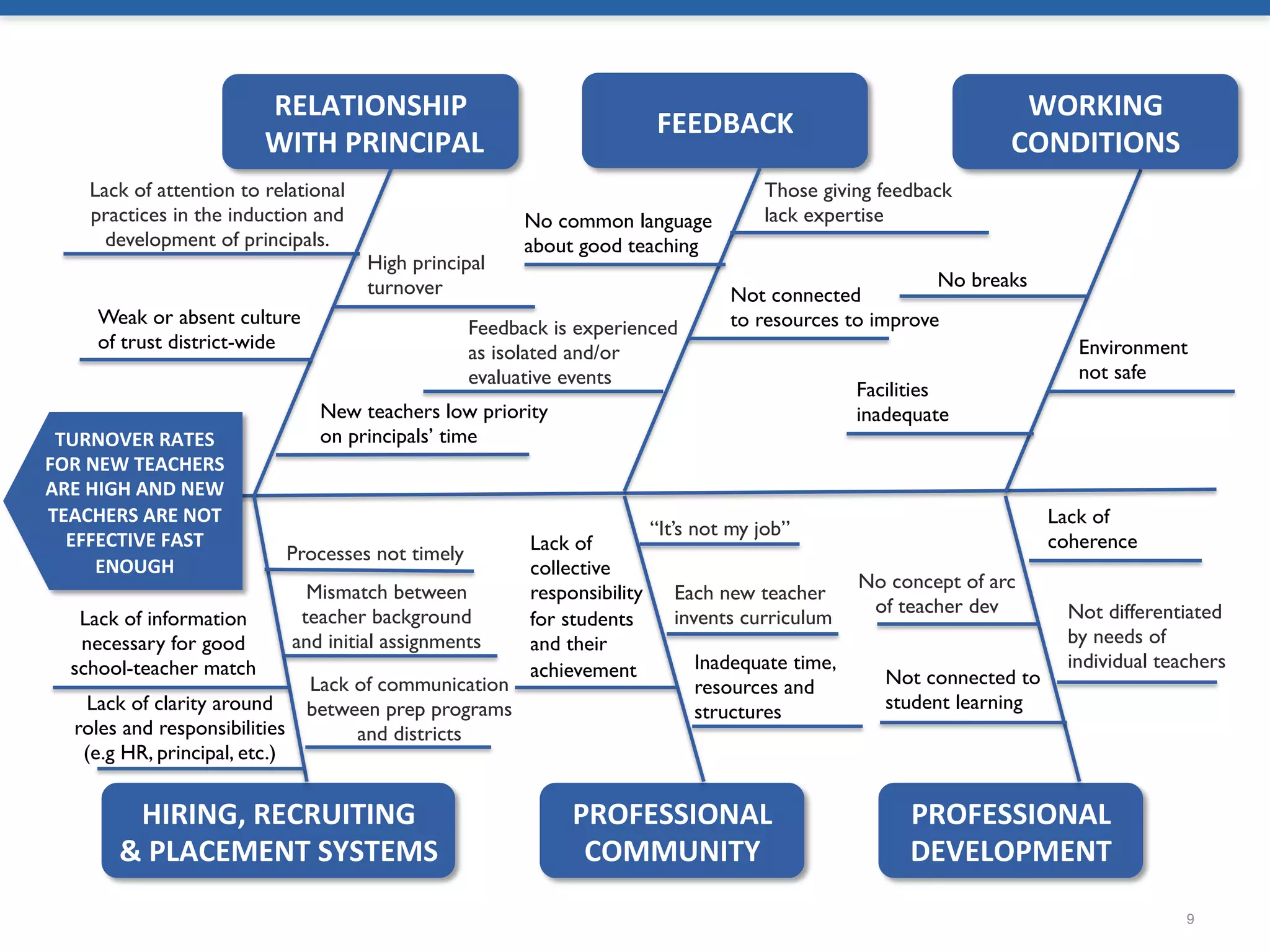
    9 RELATIONSHIP    WITH  PRINCIPAL   FEEDBACK   HIRING,  RECRUITING     &  PLACEMENT  SYSTEMS   PROFESSIONAL     COMMUNITY   PROFESSIONAL     DEVELOPMENT   TURNOVER  RATES   FOR  NEW  TEACHERS   ARE  HIGH  AND  NEW   TEACHERS  ARE  NOT   EFFECTIVE  FAST   ENOUGH   WORKING   CONDITIONS   Lack of attention to relational practices in the induction and development of principals. New teachers low priority on principals’ time Weak or absent culture of trust district-wide High principal turnover No common language about good teaching Not connected to resources to improve Those giving feedback lack expertise Feedback is experienced as isolated and/or evaluative events Mismatch between teacher background and initial assignments Lack of clarity around roles and responsibilities (e.g HR, principal, etc.) Lack of information necessary for good school-teacher match Processes not timely Lack of communication between prep programs and districts “It’s not my job” Lack of collective responsibility for students and their achievement Inadequate time, resources and structures Each new teacher invents curriculum No concept of arc of teacher dev Not connected to student learning Not differentiated by needs of individual teachers Lack of coherence Environment not safe Facilities inadequate No breaks
  • 10.
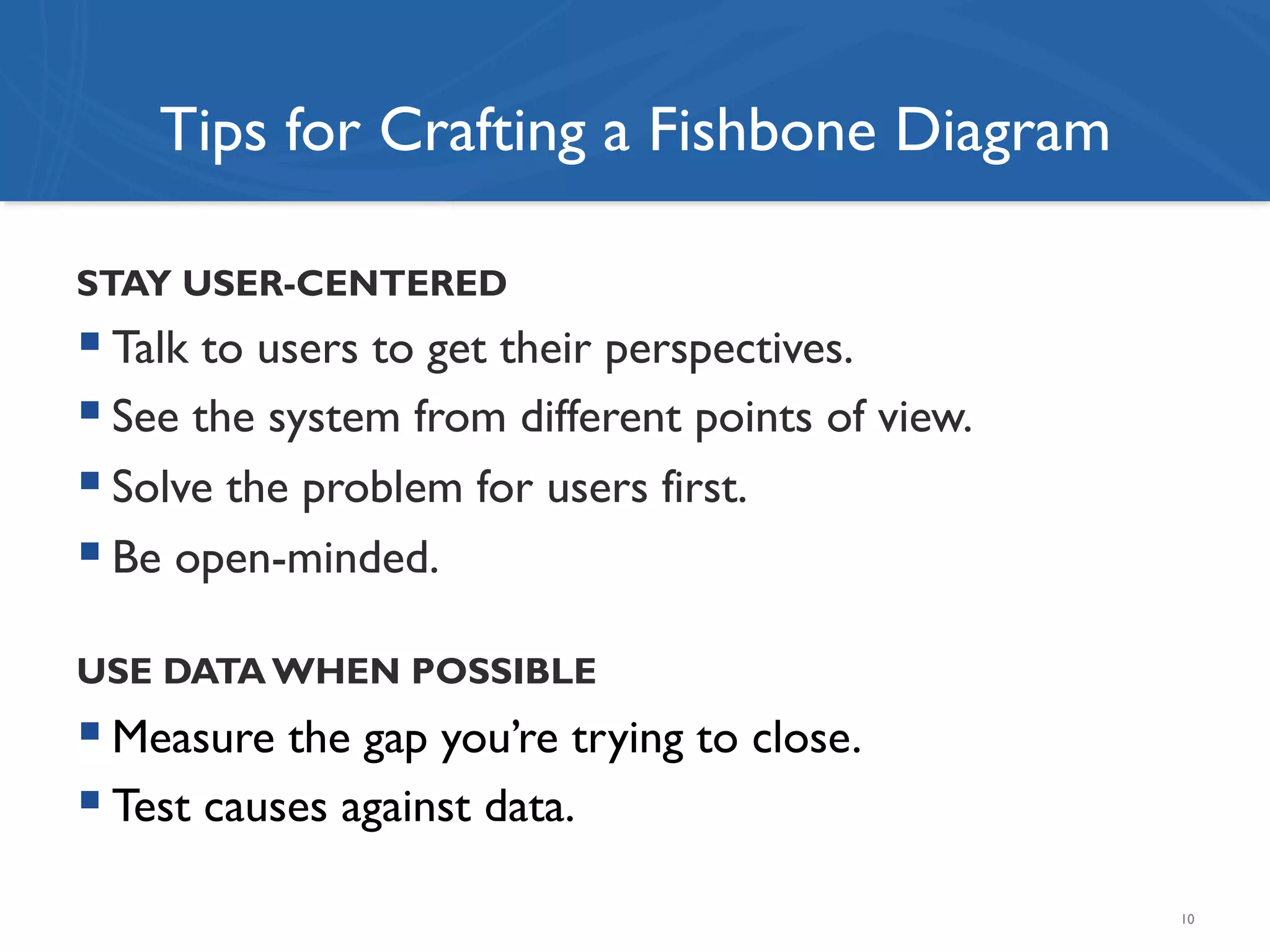
    Tips for Craftinga Fishbone Diagram STAY USER-CENTERED ! Talk to users to get their perspectives. ! See the system from different points of view. ! Solve the problem for users first. ! Be open-minded. USE DATA WHEN POSSIBLE ! Measure the gap you’re trying to close. ! Test causes against data. 10