TEACHER PERCEPTION OF THE USEFULNESS OF ONLINE RESOURCES FOR
PROFESSIONAL DEVELOPMENT, GROWTH, AND SUPPORT; A CASE STUDY
Bryan Artman M.Ed.
University of Houston- Leadership, Design, & Technology
Chapter 1- Introduction
Chapter 1 Introduction
Statement of the Problem
• What needs to be studied in further detail is whether and how teachers are
able to access online resources on their own for professional development,
growth, and support?
Chapter 1 Introduction
Definition of Terminology
Professional Development: The Improvement of Teacher Skills
Professional Growth: Increasing teacher understanding of their practice and
taking control of their career.
Professional Support: School based induction and mentoring programs.
Chapter 1 Introduction
Definition of Terminology
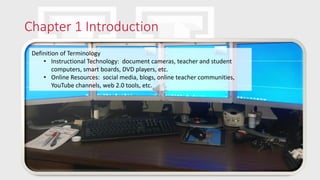
• Instructional Technology: document cameras, teacher and student
computers, smart boards, DVD players, etc.
• Online Resources: social media, blogs, online teacher communities,
YouTube channels, web 2.0 tools, etc.
Chapter 1 Introduction
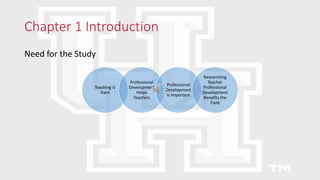
Need for the Study
Teaching is
Hard
Professional
Development
Helps
Teachers
Professional
Development
is Important
Researching
Teacher
Professional
Development
Benefits the
Field
Chapter 1 Introduction
Significance of the Study
• Positively Impact Pre-Service Teacher Instruction
• Positively Impact In-Service Teacher Professional Development Practices
Chapter 1 Introduction
Research Questions
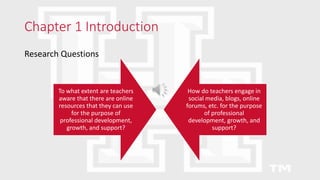
To what extent are teachers
aware that there are online
resources that they can use
for the purpose of
professional development,
growth, and support?
How do teachers engage in
social media, blogs, online
forums, etc. for the purpose
of professional
development, growth, and
support?
Chapter 2- Review of the Literature
Chapter 2 Review of the Literature
University Role in Teacher Technology Integration
• Priorities in Instructional Technology Integration Practices
• University Practices in Instructional Technology Integration
Chapter 2 Review of the Literature
Research on Professional Development
• Criticisms
• Calls For Improvement
• Factors and Attitudes That Affect Professional Development Participation
Chapter 2 Review of the Literature
The Role of Instructional Technology in Professional Development
• Enhancement of Professional Development Practices
• Instructional Technology Use to Affect Teacher Growth
• Current Professional Development Practices on the use of Instructional
Technology
Chapter 2 Review of the Literature
Instructional Technology Integration Practices in the Classroom
• Attitudes and Barriers
• Reports on Teacher Practices
Chapter 2 Review of the Literature
Online Communities of Practice
• Teacher Motivation for Participation
• Online Communities of Practice for Teacher Growth and Development
Chapter 3- Methodology
Chapter 3 Methodology
• Site Description
Chapter 3 Methodology
Research Design
• Case Study
• Series of one-on-one interviews
Chapter 3 Methodology
Coding
• Carspecken (1996) Critical Ethnography in Educational Research
Conclusion
Thank You

Bryan Artman 7389 power point

  • 1.
    TEACHER PERCEPTION OFTHE USEFULNESS OF ONLINE RESOURCES FOR PROFESSIONAL DEVELOPMENT, GROWTH, AND SUPPORT; A CASE STUDY Bryan Artman M.Ed. University of Houston- Leadership, Design, & Technology
  • 2.
  • 3.
    Chapter 1 Introduction Statementof the Problem • What needs to be studied in further detail is whether and how teachers are able to access online resources on their own for professional development, growth, and support?
  • 4.
    Chapter 1 Introduction Definitionof Terminology Professional Development: The Improvement of Teacher Skills Professional Growth: Increasing teacher understanding of their practice and taking control of their career. Professional Support: School based induction and mentoring programs.
  • 5.
    Chapter 1 Introduction Definitionof Terminology • Instructional Technology: document cameras, teacher and student computers, smart boards, DVD players, etc. • Online Resources: social media, blogs, online teacher communities, YouTube channels, web 2.0 tools, etc.
  • 6.
    Chapter 1 Introduction Needfor the Study Teaching is Hard Professional Development Helps Teachers Professional Development is Important Researching Teacher Professional Development Benefits the Field
  • 7.
    Chapter 1 Introduction Significanceof the Study • Positively Impact Pre-Service Teacher Instruction • Positively Impact In-Service Teacher Professional Development Practices
  • 8.
    Chapter 1 Introduction ResearchQuestions To what extent are teachers aware that there are online resources that they can use for the purpose of professional development, growth, and support? How do teachers engage in social media, blogs, online forums, etc. for the purpose of professional development, growth, and support?
  • 9.
    Chapter 2- Reviewof the Literature
  • 10.
    Chapter 2 Reviewof the Literature University Role in Teacher Technology Integration • Priorities in Instructional Technology Integration Practices • University Practices in Instructional Technology Integration
  • 11.
    Chapter 2 Reviewof the Literature Research on Professional Development • Criticisms • Calls For Improvement • Factors and Attitudes That Affect Professional Development Participation
  • 12.
    Chapter 2 Reviewof the Literature The Role of Instructional Technology in Professional Development • Enhancement of Professional Development Practices • Instructional Technology Use to Affect Teacher Growth • Current Professional Development Practices on the use of Instructional Technology
  • 13.
    Chapter 2 Reviewof the Literature Instructional Technology Integration Practices in the Classroom • Attitudes and Barriers • Reports on Teacher Practices
  • 14.
    Chapter 2 Reviewof the Literature Online Communities of Practice • Teacher Motivation for Participation • Online Communities of Practice for Teacher Growth and Development
  • 15.
  • 16.
    Chapter 3 Methodology •Site Description
  • 17.
    Chapter 3 Methodology ResearchDesign • Case Study • Series of one-on-one interviews
  • 18.
    Chapter 3 Methodology Coding •Carspecken (1996) Critical Ethnography in Educational Research
  • 19.