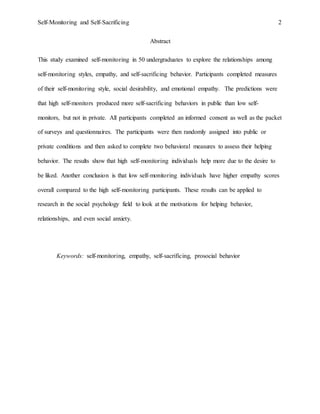
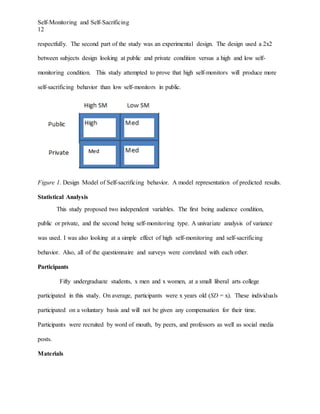
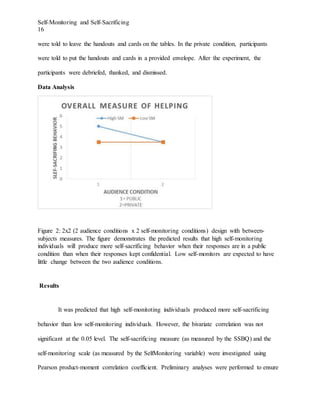
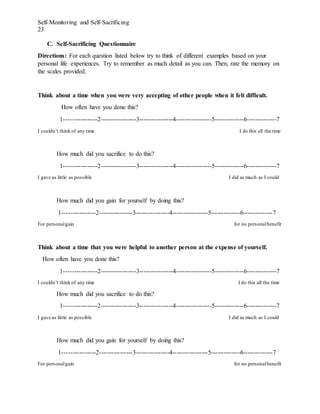
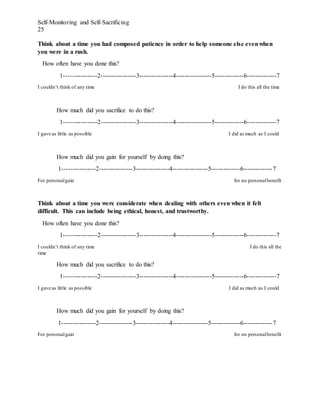
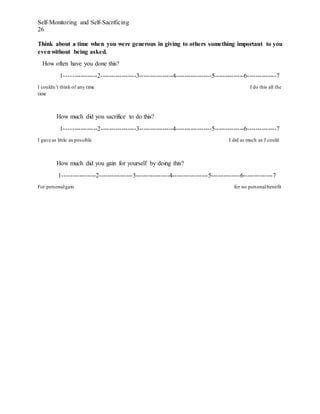
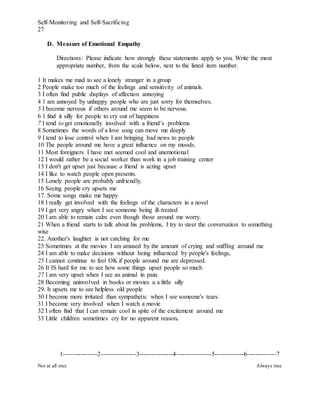
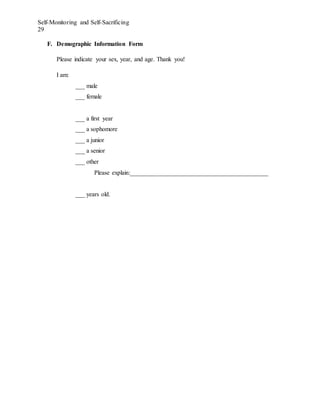
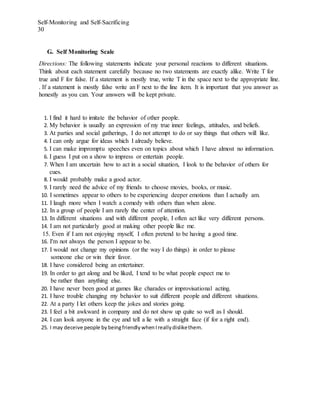
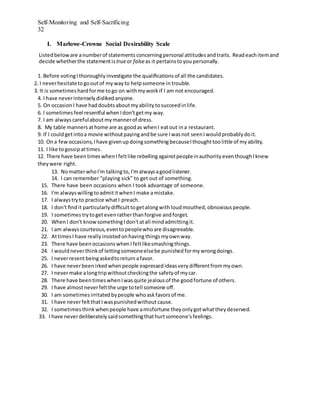
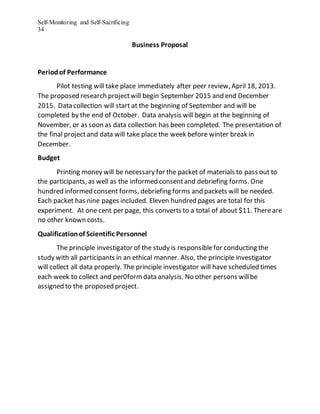
This study examined the relationships between self-monitoring styles, empathy, and self-sacrificing behavior in 50 undergraduate students. Participants completed measures of self-monitoring style, social desirability, and emotional empathy. High self-monitors were predicted to engage in more self-sacrificing behaviors in public than low self-monitors due to their greater desire to be liked. Results showed high self-monitors help more to be liked, while low self-monitors have higher empathy scores. Self-monitoring style influences motivations for prosocial behaviors like helping.