Project
Principles Of Management
Presented
Presented
Presented by:
by:
by: P.Komal & S.Srinija
P.Komal & S.Srinija
P.Komal & S.Srinija
VVISM
VVISM
VVISM
Controlling
Overview
What is controlling
Characteristics
Objectives
Advantages
The ? rule
Limitations
Steps involved
Types
Techniques
Conclusion
Introduction
Definition:-
HENRY FAYOL SAID THAT,”IN AN UNDERTAKING,CONTROL CONSISTS IN
VERIFYING WHETHER EVERYTHING OCCURS IN CONFIRMITY WITH THE PLAN
ADOPTED, THE INSTRUCTIONS ISSUED AND PRINCIPLES ESTABLISHED.”
GEORGE R TERRY ALSO DEFINED IT AS,”CONTROLLING IS DETERMINING
WHAT IS BEING ACCOMPLISHED THAT IS EVALUATING THE PERFRORMANCE,
IF ANY NECESSARY, APPLYING CORRECT MEASURES SO THAT THE
PERFORMANCE TAKES PLACE ACCORDING TO PLANS”
Managerial Function
Forward-looking
Dynamic process
Continuous activity
Action oriented
Characteristics
Objectives
Organizational goals
Co-ordination
Optimum utilization of resources
Employee motivation
Establishing standards
Minimizes errors
Order and discipline
Improved financial performance
Faster communication and co-ordination
Improves efficiency
Helps monitor performance
Advantages
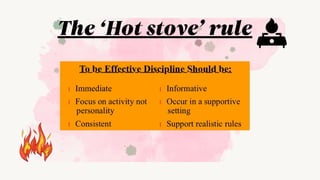
The ‘Hot stove’ rule
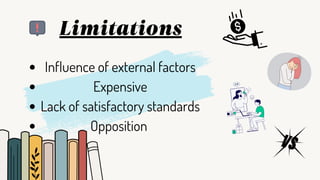
Influence of external factors
Expensive
Lack of satisfactory standards
Opposition
Limitations
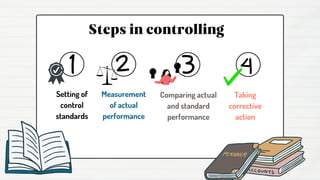
Steps in controlling
Setting of
control
standards
Measurement
of actual
performance
Comparing actual
and standard
performance
Taking
corrective
action
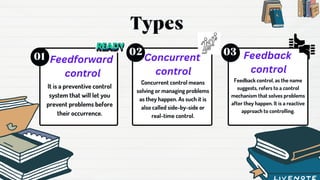
Types
It is a preventive control
system that will let you
prevent problems before
their occurrence.
01
Concurrent control means
solving or managing problems
as they happen. As such it is
also called side-by-side or
real-time control.
02
Feedback control, as the name
suggests, refers to a control
mechanism that solves problems
after they happen. It is a reactive
approach to controlling.
03
Feedforward
control
Concurrent
control
Feedback
control
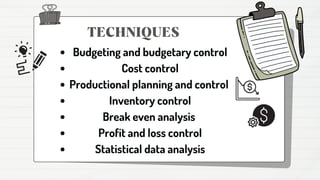
Budgeting and budgetary control
Cost control
Productional planning and control
Inventory control
Break even analysis
Profit and loss control
Statistical data analysis
TECHNIQUES
Controlling is an important management
function that involves ensuring tasks are
performed according to plans, detecting
deviations from plans and correcting deviations
to achieve set goals.
CONCLUSION
Thanks For
Listening

Brown and Yellow Scrapbook Brainstorm Presentation (2).pdf

  • 1.
    Project Principles Of Management Presented Presented Presentedby: by: by: P.Komal & S.Srinija P.Komal & S.Srinija P.Komal & S.Srinija VVISM VVISM VVISM Controlling
  • 2.
    Overview What is controlling Characteristics Objectives Advantages The? rule Limitations Steps involved Types Techniques Conclusion
  • 3.
    Introduction Definition:- HENRY FAYOL SAIDTHAT,”IN AN UNDERTAKING,CONTROL CONSISTS IN VERIFYING WHETHER EVERYTHING OCCURS IN CONFIRMITY WITH THE PLAN ADOPTED, THE INSTRUCTIONS ISSUED AND PRINCIPLES ESTABLISHED.” GEORGE R TERRY ALSO DEFINED IT AS,”CONTROLLING IS DETERMINING WHAT IS BEING ACCOMPLISHED THAT IS EVALUATING THE PERFRORMANCE, IF ANY NECESSARY, APPLYING CORRECT MEASURES SO THAT THE PERFORMANCE TAKES PLACE ACCORDING TO PLANS”
  • 4.
  • 5.
    Objectives Organizational goals Co-ordination Optimum utilizationof resources Employee motivation Establishing standards
  • 6.
    Minimizes errors Order anddiscipline Improved financial performance Faster communication and co-ordination Improves efficiency Helps monitor performance Advantages
  • 7.
  • 8.
    Influence of externalfactors Expensive Lack of satisfactory standards Opposition Limitations
  • 9.
    Steps in controlling Settingof control standards Measurement of actual performance Comparing actual and standard performance Taking corrective action
  • 10.
    Types It is apreventive control system that will let you prevent problems before their occurrence. 01 Concurrent control means solving or managing problems as they happen. As such it is also called side-by-side or real-time control. 02 Feedback control, as the name suggests, refers to a control mechanism that solves problems after they happen. It is a reactive approach to controlling. 03 Feedforward control Concurrent control Feedback control
  • 11.
    Budgeting and budgetarycontrol Cost control Productional planning and control Inventory control Break even analysis Profit and loss control Statistical data analysis TECHNIQUES
  • 12.
    Controlling is animportant management Controlling is an important management function that involves ensuring tasks are function that involves ensuring tasks are performed according to plans, detecting performed according to plans, detecting deviations from plans and correcting deviations deviations from plans and correcting deviations to achieve set goals. to achieve set goals. CONCLUSION
  • 13.