Bring Your Own Identity (BYOI)
strategies for organizations and their impact
Matthew Ulery
Director of Product Management
Agenda


What is BYOI?



Why do we care about BYOI?



When to allow BYOI?



What are others doing about BYOI?

2

© 2013 NetIQ Corporation. All rights reserved.
What is BYOI?


Bring your own Infrastructure



Bring your own Iron



Bring your own Identity



Bring your own Improv



Bring your own Intoxicant

3

© 2013 NetIQ Corporation. All rights reserved.
Early adopters and providers
BYOI Trends


Social, web resource and retail
─
─
─
─



Social identity providers investing in BYOI
─

4

Use LinkedIn account to access a whitepaper
Use Amazon ID rather than creating a new retail account
Apply to a new job using LinkedIn account
NYC adopting to support constituents
Seeking greater return on their identity validation investment

© 2013 NetIQ Corporation. All rights reserved.
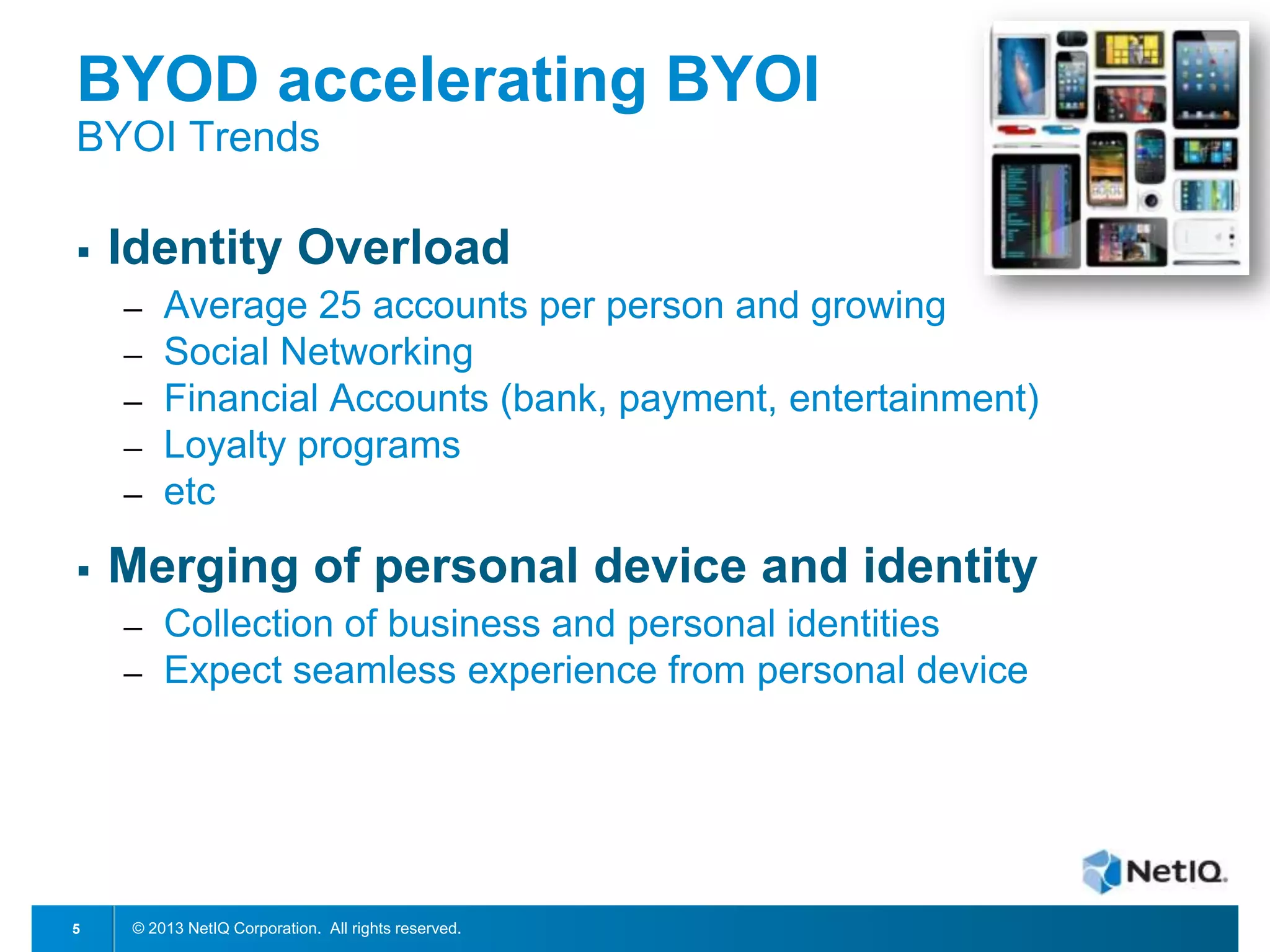
BYOD accelerating BYOI
BYOI Trends


Identity Overload
─
─
─
─
─



Merging of personal device and identity
─
─

5

Average 25 accounts per person and growing
Social Networking
Financial Accounts (bank, payment, entertainment)
Loyalty programs
etc
Collection of business and personal identities
Expect seamless experience from personal device

© 2013 NetIQ Corporation. All rights reserved.
6

© 2013 NetIQ Corporation. All rights reserved.
Why do we care about BYOI?


Cost reduction / avoidance
─



Increase customer / constituent engagement
─
─



Reduce registration abandonment
Enable more personalized experience interactions

Emerging changes in risk
─
─
─

7

Management of identities is expensive

Risk shared with customer/constituent and identity provider
Responsibility to protect customer privacy remains
Privacy risk mitigated by reducing identifiable information

© 2013 NetIQ Corporation. All rights reserved.
Big Question?

Should we allow BYOI?
8

© 2013 NetIQ Corporation. All rights reserved.
Security Concerns
When to allow BYOI?


Strength of authentication
─
─



Strength of identity administration
─
─



How is identity validated for administration?
What is required to issue a password reset?

Compromised identity
─
─

9

Hurdles required to create the identity
Hurdles required to validate the identity

Who is responsible if identity is breached?
How can you revoke access?

© 2013 NetIQ Corporation. All rights reserved.
Different Identity Types
When to allow BYOI?


Customer and constituents
─
─



Privileged users
─
─
─



Employees, partners, contractors, etc.
Significant access to sensitive information & systems
Much greater level of personal identifiable information

Allow BYOI…?
─

10

Limited to no access to sensitive information & systems
Limited amount of personal identifiable information

Must balance risk and value

© 2013 NetIQ Corporation. All rights reserved.
NYC.GOV
BYOI Case Study
• Different

Goals / Desires / Requirements

– Residents
– NYC
– Site

Politicians
admins

Needed a Lightly secured, customer facing portal
11

© 2013 NetIQ Corporation. All rights reserved.
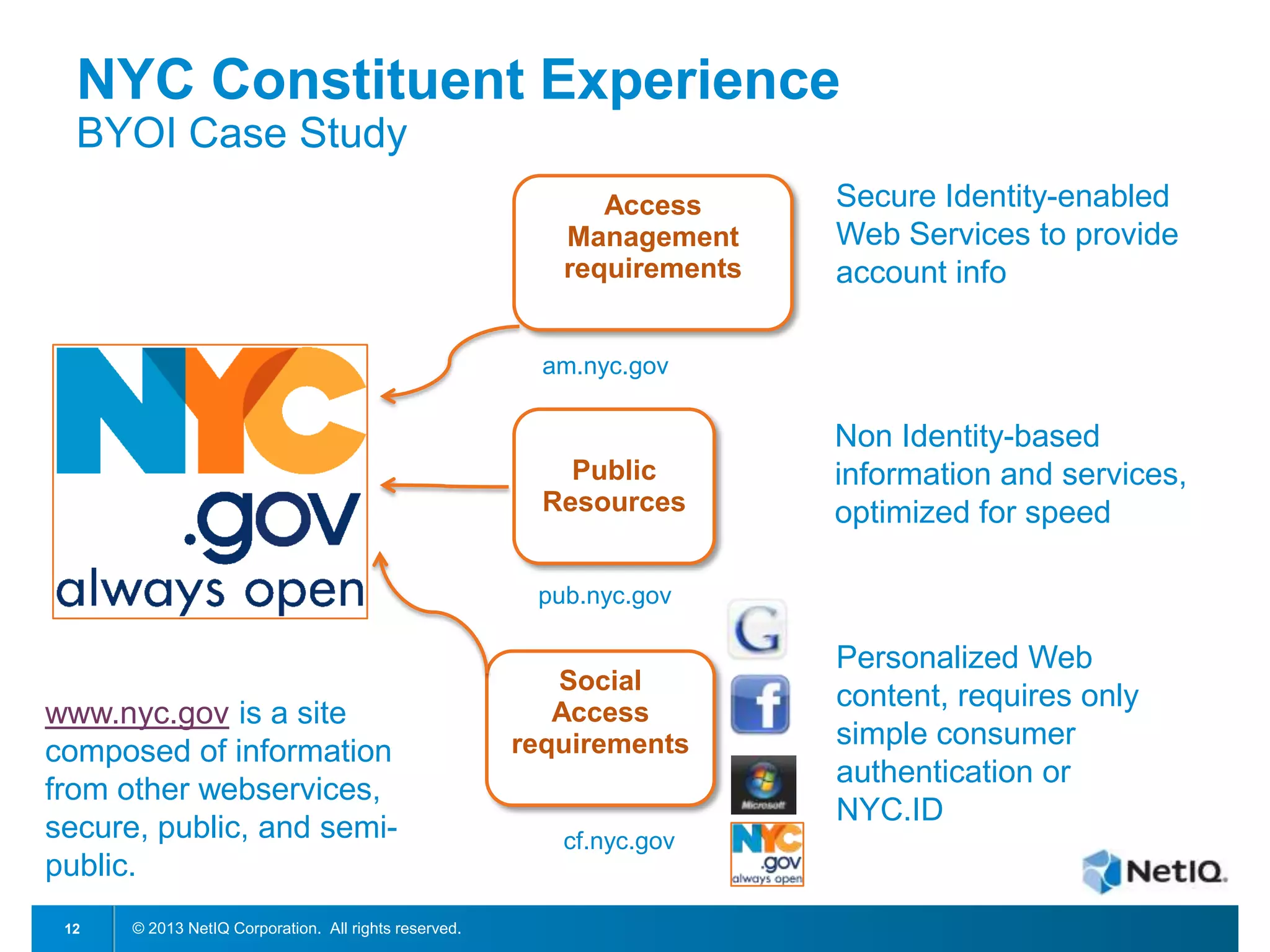
NYC Constituent Experience
BYOI Case Study
Access
Management
requirements

Secure Identity-enabled
Web Services to provide
account info

am.nyc.gov

Public
Resources

Non Identity-based
information and services,
optimized for speed

pub.nyc.gov

www.nyc.gov is a site
composed of information
from other webservices,
secure, public, and semipublic.
12

© 2013 NetIQ Corporation. All rights reserved.

Social
Access
requirements

cf.nyc.gov

Personalized Web
content, requires only
simple consumer
authentication or
NYC.ID
Management of public resources
BYOI Case Study


NYC Tennis Courts
─
─
─



Is this a candidate for BYOI?
─
─
─

13

60,000 permits and tickets, 500 courts
Annual permits ($100)
Scheduling courts a nightmare for NYC and permit holders

Low risk
Lower cost from web scheduling and external identity
Enables external payment collection (i.e. PayPal)

© 2013 NetIQ Corporation. All rights reserved.
Risk of Hacked Identity
Mat Honan, Wired Magazine


Linked many of his accounts
─
─

Social accounts: Twitter, LinkedIn
Personal: Amazon, Gmail



Hackers wanted Twitter handle



Hackers exploited weak link

14

© 2013 NetIQ Corporation. All rights reserved.
Risk of Hacked Identity
Mat Honan, Wired Magazine


“In the space of one hour, my entire digital
life was destroyed.”
─
─

─



15

“First my Google account was taken over, then deleted.”
“Next my Twitter account was compromised, and used as a
platform to broadcast racist and homophobic messages.”
“And worst of all, my AppleID account was broken into, and my
hackers used it to remotely erase all of the data on my iPhone,
iPad, and MacBook?”

“In many ways, this was all my fault. My
accounts were daisy-chained together.”

© 2013 NetIQ Corporation. All rights reserved.
Required no advanced skills
Mat Honan, Wired Magazine


Twitter linked to Gmail account
─
─
─



Resetting Apple account requires
─
─
─



Physical address & last four digits of credit card
Easy to get address
How could they get the credit card information?

Amazon and AppleID accounts linked
─

─
─

16

Google Account recovery page
Gave alternate email: m****n@me.com (hmmmm mhonan)…
Letting them know he had an AppleID

Name and email address needed to add a card to Amazon
Knowing card number allows resetting password
Now they have the credit card number for AppleID

© 2013 NetIQ Corporation. All rights reserved.
Key Take-aways
Balancing Risk and Value


BYOI benefits
─
─
─



BYOI risk assessment
─
─
─



Customers/constituents involved in identity selection
Security of identity beyond your control
Still must protect personal identifiable information

Must balance value against savings
─
─

17

Reduce cost of generating and managing identities
Reduce customer/constituent engagement
Enable more personalized experience interactions

What type of access does it fit?
May not be right for your organization…yet

© 2013 NetIQ Corporation. All rights reserved.
Q&A
matthew.ulery@netiq.com

Bring Your Own Identity

  • 1.
    Bring Your OwnIdentity (BYOI) strategies for organizations and their impact Matthew Ulery Director of Product Management
  • 2.
    Agenda  What is BYOI?  Whydo we care about BYOI?  When to allow BYOI?  What are others doing about BYOI? 2 © 2013 NetIQ Corporation. All rights reserved.
  • 3.
    What is BYOI?  Bringyour own Infrastructure  Bring your own Iron  Bring your own Identity  Bring your own Improv  Bring your own Intoxicant 3 © 2013 NetIQ Corporation. All rights reserved.
  • 4.
    Early adopters andproviders BYOI Trends  Social, web resource and retail ─ ─ ─ ─  Social identity providers investing in BYOI ─ 4 Use LinkedIn account to access a whitepaper Use Amazon ID rather than creating a new retail account Apply to a new job using LinkedIn account NYC adopting to support constituents Seeking greater return on their identity validation investment © 2013 NetIQ Corporation. All rights reserved.
  • 5.
    BYOD accelerating BYOI BYOITrends  Identity Overload ─ ─ ─ ─ ─  Merging of personal device and identity ─ ─ 5 Average 25 accounts per person and growing Social Networking Financial Accounts (bank, payment, entertainment) Loyalty programs etc Collection of business and personal identities Expect seamless experience from personal device © 2013 NetIQ Corporation. All rights reserved.
  • 6.
    6 © 2013 NetIQCorporation. All rights reserved.
  • 7.
    Why do wecare about BYOI?  Cost reduction / avoidance ─  Increase customer / constituent engagement ─ ─  Reduce registration abandonment Enable more personalized experience interactions Emerging changes in risk ─ ─ ─ 7 Management of identities is expensive Risk shared with customer/constituent and identity provider Responsibility to protect customer privacy remains Privacy risk mitigated by reducing identifiable information © 2013 NetIQ Corporation. All rights reserved.
  • 8.
    Big Question? Should weallow BYOI? 8 © 2013 NetIQ Corporation. All rights reserved.
  • 9.
    Security Concerns When toallow BYOI?  Strength of authentication ─ ─  Strength of identity administration ─ ─  How is identity validated for administration? What is required to issue a password reset? Compromised identity ─ ─ 9 Hurdles required to create the identity Hurdles required to validate the identity Who is responsible if identity is breached? How can you revoke access? © 2013 NetIQ Corporation. All rights reserved.
  • 10.
    Different Identity Types Whento allow BYOI?  Customer and constituents ─ ─  Privileged users ─ ─ ─  Employees, partners, contractors, etc. Significant access to sensitive information & systems Much greater level of personal identifiable information Allow BYOI…? ─ 10 Limited to no access to sensitive information & systems Limited amount of personal identifiable information Must balance risk and value © 2013 NetIQ Corporation. All rights reserved.
  • 11.
    NYC.GOV BYOI Case Study •Different Goals / Desires / Requirements – Residents – NYC – Site Politicians admins Needed a Lightly secured, customer facing portal 11 © 2013 NetIQ Corporation. All rights reserved.
  • 12.
    NYC Constituent Experience BYOICase Study Access Management requirements Secure Identity-enabled Web Services to provide account info am.nyc.gov Public Resources Non Identity-based information and services, optimized for speed pub.nyc.gov www.nyc.gov is a site composed of information from other webservices, secure, public, and semipublic. 12 © 2013 NetIQ Corporation. All rights reserved. Social Access requirements cf.nyc.gov Personalized Web content, requires only simple consumer authentication or NYC.ID
  • 13.
    Management of publicresources BYOI Case Study  NYC Tennis Courts ─ ─ ─  Is this a candidate for BYOI? ─ ─ ─ 13 60,000 permits and tickets, 500 courts Annual permits ($100) Scheduling courts a nightmare for NYC and permit holders Low risk Lower cost from web scheduling and external identity Enables external payment collection (i.e. PayPal) © 2013 NetIQ Corporation. All rights reserved.
  • 14.
    Risk of HackedIdentity Mat Honan, Wired Magazine  Linked many of his accounts ─ ─ Social accounts: Twitter, LinkedIn Personal: Amazon, Gmail  Hackers wanted Twitter handle  Hackers exploited weak link 14 © 2013 NetIQ Corporation. All rights reserved.
  • 15.
    Risk of HackedIdentity Mat Honan, Wired Magazine  “In the space of one hour, my entire digital life was destroyed.” ─ ─ ─  15 “First my Google account was taken over, then deleted.” “Next my Twitter account was compromised, and used as a platform to broadcast racist and homophobic messages.” “And worst of all, my AppleID account was broken into, and my hackers used it to remotely erase all of the data on my iPhone, iPad, and MacBook?” “In many ways, this was all my fault. My accounts were daisy-chained together.” © 2013 NetIQ Corporation. All rights reserved.
  • 16.
    Required no advancedskills Mat Honan, Wired Magazine  Twitter linked to Gmail account ─ ─ ─  Resetting Apple account requires ─ ─ ─  Physical address & last four digits of credit card Easy to get address How could they get the credit card information? Amazon and AppleID accounts linked ─ ─ ─ 16 Google Account recovery page Gave alternate email: m****n@me.com (hmmmm mhonan)… Letting them know he had an AppleID Name and email address needed to add a card to Amazon Knowing card number allows resetting password Now they have the credit card number for AppleID © 2013 NetIQ Corporation. All rights reserved.
  • 17.
    Key Take-aways Balancing Riskand Value  BYOI benefits ─ ─ ─  BYOI risk assessment ─ ─ ─  Customers/constituents involved in identity selection Security of identity beyond your control Still must protect personal identifiable information Must balance value against savings ─ ─ 17 Reduce cost of generating and managing identities Reduce customer/constituent engagement Enable more personalized experience interactions What type of access does it fit? May not be right for your organization…yet © 2013 NetIQ Corporation. All rights reserved.
  • 18.

Editor's Notes

  • #11 Identity provisioning really breaks down into two classes. The first class is that of people you provide a service to – constituents, customers , etc . The second class are employees. People who require access to provide a service for you.We collect different identity information from both of these groups. The mechanisms for collection and storage are different, as are the purposes for collection. While some of this identity information is equivalent in sensitivity, it is often handled differently.Depending on what identity class you lost the data from, it will probably have different mitigation requirements and even impact on your organization.
  • #12 Residents : Another #$%^$#**** account and password?Not more paperwork…NYC Politicianseasy to use and reduce work (admins)merge disparate accessprovide graded access for customers / constituents and employeeshandle high volume accessneed a drop in solutionneeds to be personalizedcheap (comptroller)Not going to get me in trouble ( compliance)Site admins – need to: work with staff they have
  • #13 Always appear to be openSecure identity be available, but did not want to mint a new identity for all constituents. Optimize the consituent experience on the web site to improve customer experience – what have they done before, highlight services based on who, what they have done in the pastAM – SecurityPR – Group of users to sort and filter informationSA – Tailoring it for them