

Secure and Smart IoT
Prof. Ahmed Banafa
IoT Expert | Faculty | Author | Keynote Speaker
College of Engineering
San Jose State University
San Jose, CA USA
Secure IoT
• The Internet of Things (IoT) as a concept is
fascinating and exciting, but one of the major
challenging aspects of IoT is having a secure
ecosystem encompassing all building blocks of IoT-
architecture.
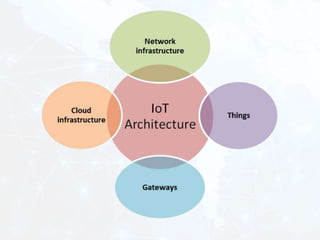
• Things: These are defined as uniquely identifiable
nodes, primarily sensors that communicate without
human interaction using different connectivity
methods.
• Gateways: These act as intermediaries between
things and the cloud to provide the needed
connectivity, security, and manageability.
• Network infrastructure: This is comprised of
routers, aggregators, gateways, repeaters and other
devices that control and secure data flow.
• Cloud infrastructure: Cloud infrastructure contains
large pools of virtualized servers and storage that
are networked together with computing and
analytical capabilities
Challenges to secure IoT deployments
• Many IoT Systems are poorly designed and
implemented, using diverse protocols and
technologies that create complex and sometimes
conflicting configurations.
• Limited guidance for life cycle maintenance and
management of IoT devices
• IoT privacy concerns are complex and not always
readily evident.
• There is a lack of standards for authentication and
authorization of IoT edge devices.
• Security standards, for platform configurations,
involving virtualized IoT platforms supporting multi-
tenancy is immature.
• The uses for Internet of Things technology are
expanding and changing—often in uncharted
waters.
• IoT security will be complicated by the fact that
many "things" use simple processors and operating
systems that may not support sophisticated
security approaches.
• A prime example of the urgent need for such new
security technologies is the recent massive
distributed denial of service attack (DDoS) that
crippled the servers of popular services like Twitter,
Netflix, NYTimes, and PayPal across the U.S. on
October 21st, 2016. It was the result of an
immense assault that involved millions of internet
addresses and malicious software.
• One source of the traffic for the attacks was devices
infected by the Mirai malware.
The Blockchain Approach
• Blockchain, the "distributed ledger" technology, has
emerged as an object of intense interest in the tech
industry and beyond.
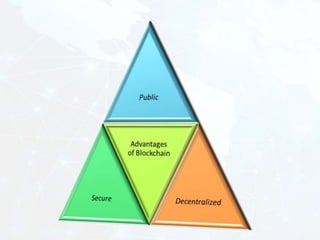
What are some advantages of
Blockchain?
• The big advantage of blockchain is that it's public.
Everyone participating can see the blocks and the
transactions stored in them. This doesn't mean
everyone can see the actual content of your
transaction, however; that's protected by your
private key.
• A blockchain is decentralized, so there is no single
authority that can approve the transactions or set
specific rules to have transactions accepted.
• That means there's a huge amount of trust involved
since all the participants in the network have to
reach a consensus to accept transactions.
• Most importantly, it's secure. The database can
only be extended and previous records cannot be
changed (at least, there's a very high cost if
someone wants to alter previous records).
The blockchain and IoT
• This decentralized approach would eliminate Single
Points of Failure, creating a more resilient
ecosystem for devices to run on. The cryptographic
algorithms used by blockchains would make
consumer data more private.
• In an IoT network, the blockchain can keep an
undisputable record of the history of smart devices.
• This feature enables the autonomous functioning
of smart devices without the need for centralized
authority.
• As a result, the blockchain opens the door to a
series of IoT scenarios that were remarkably
difficult, or even impossible to implement without
it.
• In this model, the blockchain will treat message
exchanges between devices similar to financial
transactions in a bitcoin network.
• To enable message exchanges, devices will
leverage smart contracts which then model the
agreement between the two parties
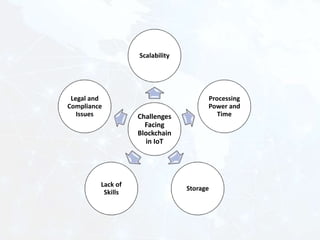
What are the challenges?
Challenges
Facing
Blockchain
in IoT
Scalability
Processing
Power and
Time
Storage
Lack of
Skills
Legal and
Compliance
Issues
• Scalability issues pertaining to the blockchain that
might lead to centralization, which is casting a
shadow over the future of the cryptocurrency.
• Processing power and time required to perform
encryption for all the objects involved in a
blockchain-based ecosystem.
• Storage too will be a hurdle. Blockchain eliminates
the need for a central server to store transactions
and device IDs, but the ledger has to be stored on
the nodes themselves. And the ledger will increase
in size as time passes.
• Lack of skills: few people understand how
blockchain technology really works and when you
add IoT to the mix that number will shrink
drastically.
• Legal and compliance issues: It's a new territory in
all aspects without any legal or compliance code to
follow, which is a serious problem for
manufacturers and service providers.
Smart IoT
AI and IoT Data Analytics
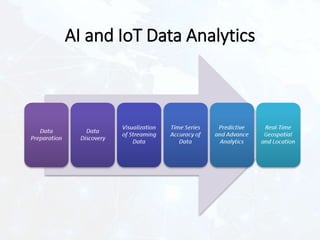
There are six types of IoT Data Analysis where AI can
help :
• Data Preparation: Defining pools of data and clean
them which will take us to concepts like Dark Data,
Data Lakes.
• Data Discovery: Finding useful data in the defined
pools of data
• Visualization of Streaming Data: On the fly dealing
with streaming data by defining, discovering data,
and visualizing it in smart ways to make it easy for
the decision-making process to take place without
delay.
• Time Series Accuracy of Data: Keeping the level of
confidence in data collected high with high
accuracy and integrity of data
• Predictive and Advance Analytics: a Very important
step where decisions can be made based on data
collected, discovered and analyzed
• Real-Time Geospatial and Location (logistical Data):
Maintaining the flow of data smooth and under
control.
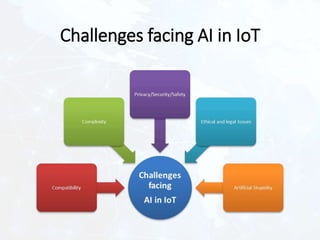
Challenges facing AI in IoT
• Compatibility: IoT is a collection of many parts and
systems they are fundamentally different in time
and space.
• Complexity: IoT is a complicated system with many
moving parts and non –stop stream of data making
it a very complicated ecosystem
• Privacy/Security/Safety (PSS): PSS is always an issue
with every new technology or concept, how far IA
can help without compromising PSS? One of the
new solutions for such problem is using Blockchain
technology.
• Ethical and legal Issues: It’s a new world for many
companies with no precedents, untested territory
with new laws and cases emerging rapidly.
• Artificial Stupidity: Back to the very simple concept
of GIGO, AI still needs “training” to understand
human reactions/emotions so the decisions will
make sense.
Thank you!
https://www.linkedin.com/in/ahmedbanafa
ahmed.banafa@sjsu.edu
@BanafaAhmed

Secure and Smart IoT

  • 1.
    Secure and SmartIoT Prof. Ahmed Banafa IoT Expert | Faculty | Author | Keynote Speaker College of Engineering San Jose State University San Jose, CA USA
  • 2.
  • 3.
    • The Internetof Things (IoT) as a concept is fascinating and exciting, but one of the major challenging aspects of IoT is having a secure ecosystem encompassing all building blocks of IoT- architecture.
  • 5.
    • Things: Theseare defined as uniquely identifiable nodes, primarily sensors that communicate without human interaction using different connectivity methods.
  • 6.
    • Gateways: Theseact as intermediaries between things and the cloud to provide the needed connectivity, security, and manageability.
  • 7.
    • Network infrastructure:This is comprised of routers, aggregators, gateways, repeaters and other devices that control and secure data flow.
  • 8.
    • Cloud infrastructure:Cloud infrastructure contains large pools of virtualized servers and storage that are networked together with computing and analytical capabilities
  • 9.
    Challenges to secureIoT deployments
  • 10.
    • Many IoTSystems are poorly designed and implemented, using diverse protocols and technologies that create complex and sometimes conflicting configurations. • Limited guidance for life cycle maintenance and management of IoT devices • IoT privacy concerns are complex and not always readily evident.
  • 11.
    • There isa lack of standards for authentication and authorization of IoT edge devices. • Security standards, for platform configurations, involving virtualized IoT platforms supporting multi- tenancy is immature. • The uses for Internet of Things technology are expanding and changing—often in uncharted waters.
  • 12.
    • IoT securitywill be complicated by the fact that many "things" use simple processors and operating systems that may not support sophisticated security approaches.
  • 13.
    • A primeexample of the urgent need for such new security technologies is the recent massive distributed denial of service attack (DDoS) that crippled the servers of popular services like Twitter, Netflix, NYTimes, and PayPal across the U.S. on October 21st, 2016. It was the result of an immense assault that involved millions of internet addresses and malicious software. • One source of the traffic for the attacks was devices infected by the Mirai malware.
  • 14.
  • 15.
    • Blockchain, the"distributed ledger" technology, has emerged as an object of intense interest in the tech industry and beyond.
  • 16.
    What are someadvantages of Blockchain?
  • 18.
    • The bigadvantage of blockchain is that it's public. Everyone participating can see the blocks and the transactions stored in them. This doesn't mean everyone can see the actual content of your transaction, however; that's protected by your private key.
  • 19.
    • A blockchainis decentralized, so there is no single authority that can approve the transactions or set specific rules to have transactions accepted. • That means there's a huge amount of trust involved since all the participants in the network have to reach a consensus to accept transactions.
  • 20.
    • Most importantly,it's secure. The database can only be extended and previous records cannot be changed (at least, there's a very high cost if someone wants to alter previous records).
  • 21.
  • 23.
    • This decentralizedapproach would eliminate Single Points of Failure, creating a more resilient ecosystem for devices to run on. The cryptographic algorithms used by blockchains would make consumer data more private.
  • 24.
    • In anIoT network, the blockchain can keep an undisputable record of the history of smart devices. • This feature enables the autonomous functioning of smart devices without the need for centralized authority. • As a result, the blockchain opens the door to a series of IoT scenarios that were remarkably difficult, or even impossible to implement without it.
  • 25.
    • In thismodel, the blockchain will treat message exchanges between devices similar to financial transactions in a bitcoin network. • To enable message exchanges, devices will leverage smart contracts which then model the agreement between the two parties
  • 26.
    What are thechallenges?
  • 27.
  • 28.
    • Scalability issuespertaining to the blockchain that might lead to centralization, which is casting a shadow over the future of the cryptocurrency.
  • 29.
    • Processing powerand time required to perform encryption for all the objects involved in a blockchain-based ecosystem.
  • 30.
    • Storage toowill be a hurdle. Blockchain eliminates the need for a central server to store transactions and device IDs, but the ledger has to be stored on the nodes themselves. And the ledger will increase in size as time passes.
  • 31.
    • Lack ofskills: few people understand how blockchain technology really works and when you add IoT to the mix that number will shrink drastically.
  • 32.
    • Legal andcompliance issues: It's a new territory in all aspects without any legal or compliance code to follow, which is a serious problem for manufacturers and service providers.
  • 33.
  • 34.
    AI and IoTData Analytics
  • 35.
    There are sixtypes of IoT Data Analysis where AI can help : • Data Preparation: Defining pools of data and clean them which will take us to concepts like Dark Data, Data Lakes.
  • 36.
    • Data Discovery:Finding useful data in the defined pools of data
  • 37.
    • Visualization ofStreaming Data: On the fly dealing with streaming data by defining, discovering data, and visualizing it in smart ways to make it easy for the decision-making process to take place without delay.
  • 38.
    • Time SeriesAccuracy of Data: Keeping the level of confidence in data collected high with high accuracy and integrity of data
  • 39.
    • Predictive andAdvance Analytics: a Very important step where decisions can be made based on data collected, discovered and analyzed
  • 40.
    • Real-Time Geospatialand Location (logistical Data): Maintaining the flow of data smooth and under control.
  • 41.
  • 42.
  • 43.
    • Compatibility: IoTis a collection of many parts and systems they are fundamentally different in time and space.
  • 44.
    • Complexity: IoTis a complicated system with many moving parts and non –stop stream of data making it a very complicated ecosystem
  • 45.
    • Privacy/Security/Safety (PSS):PSS is always an issue with every new technology or concept, how far IA can help without compromising PSS? One of the new solutions for such problem is using Blockchain technology.
  • 46.
    • Ethical andlegal Issues: It’s a new world for many companies with no precedents, untested territory with new laws and cases emerging rapidly.
  • 47.
    • Artificial Stupidity:Back to the very simple concept of GIGO, AI still needs “training” to understand human reactions/emotions so the decisions will make sense.
  • 48.