HOW DOES A BCI WORK?


Monday, March 19, 2012
MOTOR IMAGERY

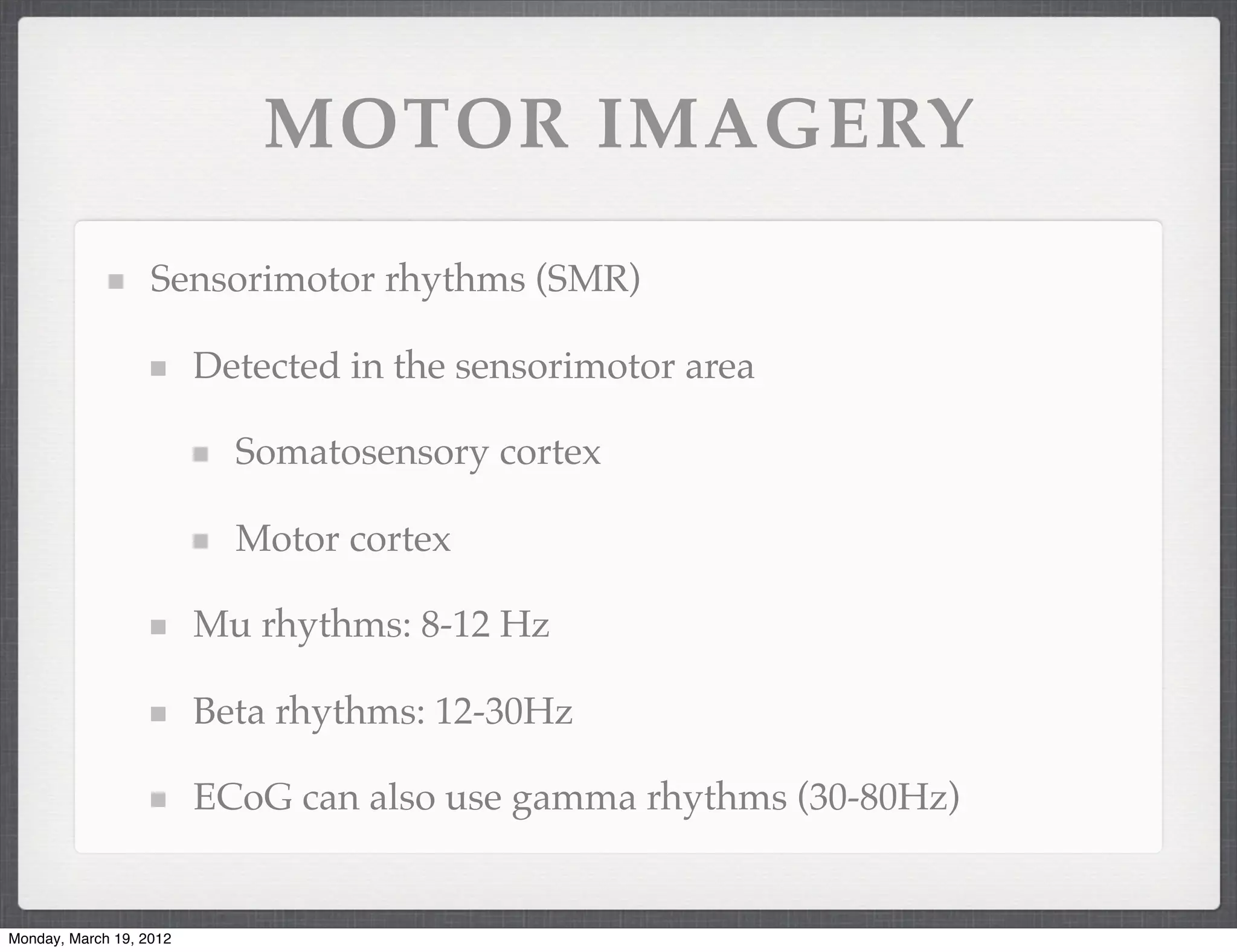
                   Sensorimotor rhythms (SMR)

                         Detected in the sensorimotor area

                           Somatosensory cortex

                           Motor cortex

                         Mu rhythms: 8-12 Hz

                         Beta rhythms: 12-30Hz

                         ECoG can also use gamma rhythms (30-80Hz)


Monday, March 19, 2012
MOTOR IMAGERY

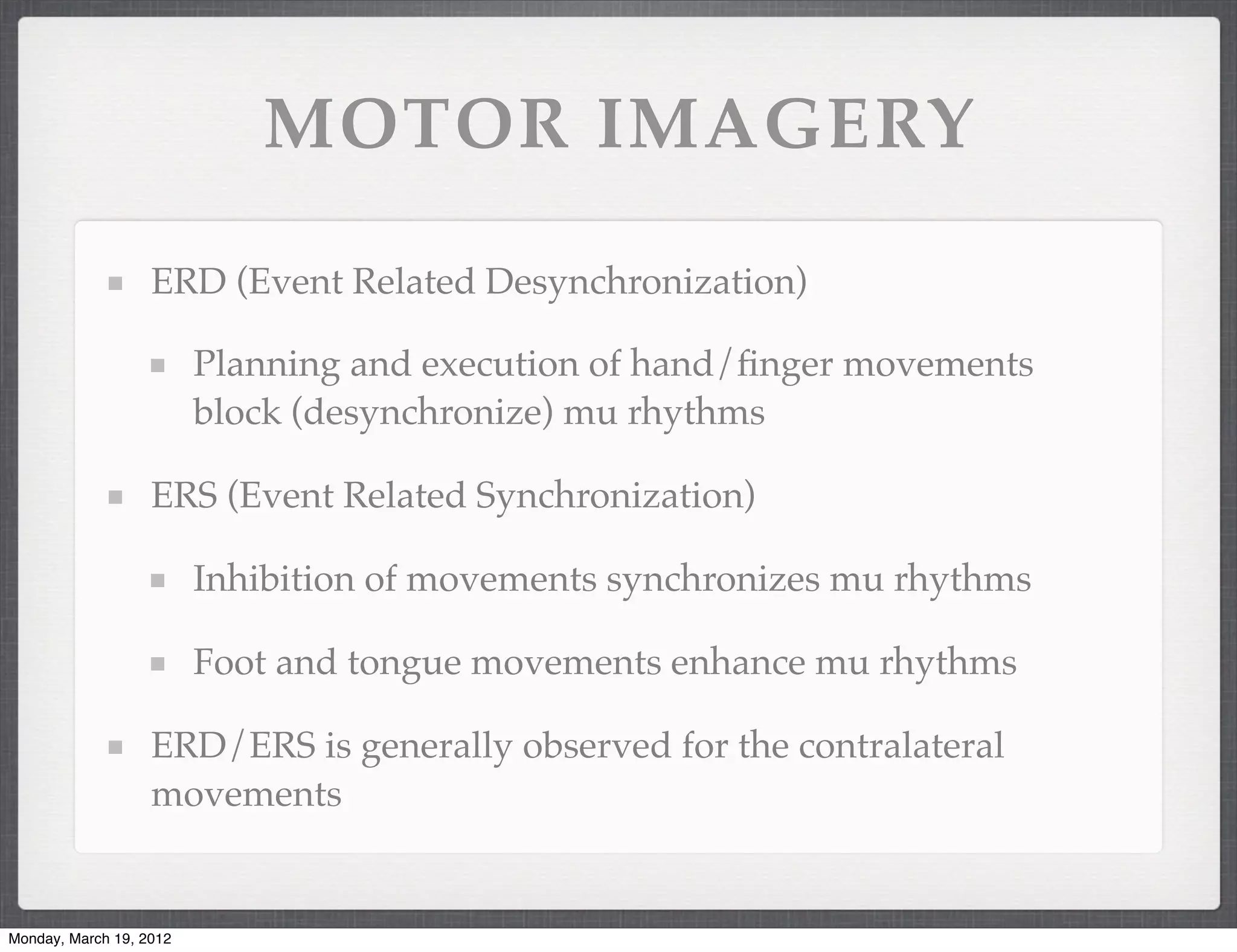
                   ERD (Event Related Desynchronization)

                         Planning and execution of hand/finger movements
                         block (desynchronize) mu rhythms

                   ERS (Event Related Synchronization)

                         Inhibition of movements synchronizes mu rhythms

                         Foot and tongue movements enhance mu rhythms

                   ERD/ERS is generally observed for the contralateral
                   movements


Monday, March 19, 2012
MOTOR IMAGERY


                   Does not need external stimuli

                   Does need long training

                   Users learn the best imagery

                   Closed-loop feedback plays an important role in
                   learning


Monday, March 19, 2012
SIGNAL PROCESSING

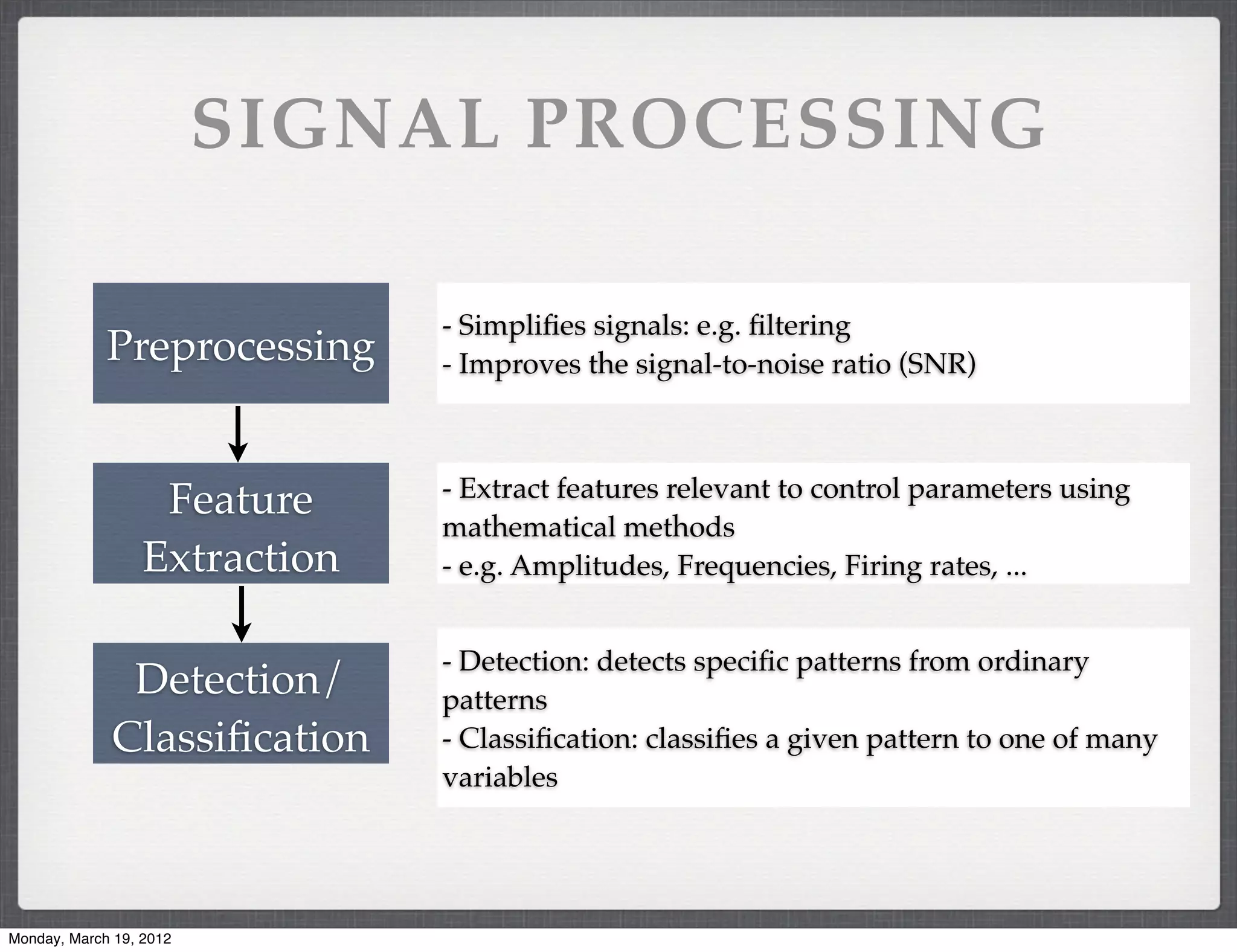
                               - Simplifies signals: e.g. filtering
             Preprocessing     - Improves the signal-to-noise ratio (SNR)


                               - Extract features relevant to control parameters using
                   Feature
                               mathematical methods
                  Extraction   - e.g. Amplitudes, Frequencies, Firing rates, ...


                               - Detection: detects specific patterns from ordinary
              Detection/       patterns
             Classification     - Classification: classifies a given pattern to one of many
                               variables


Monday, March 19, 2012
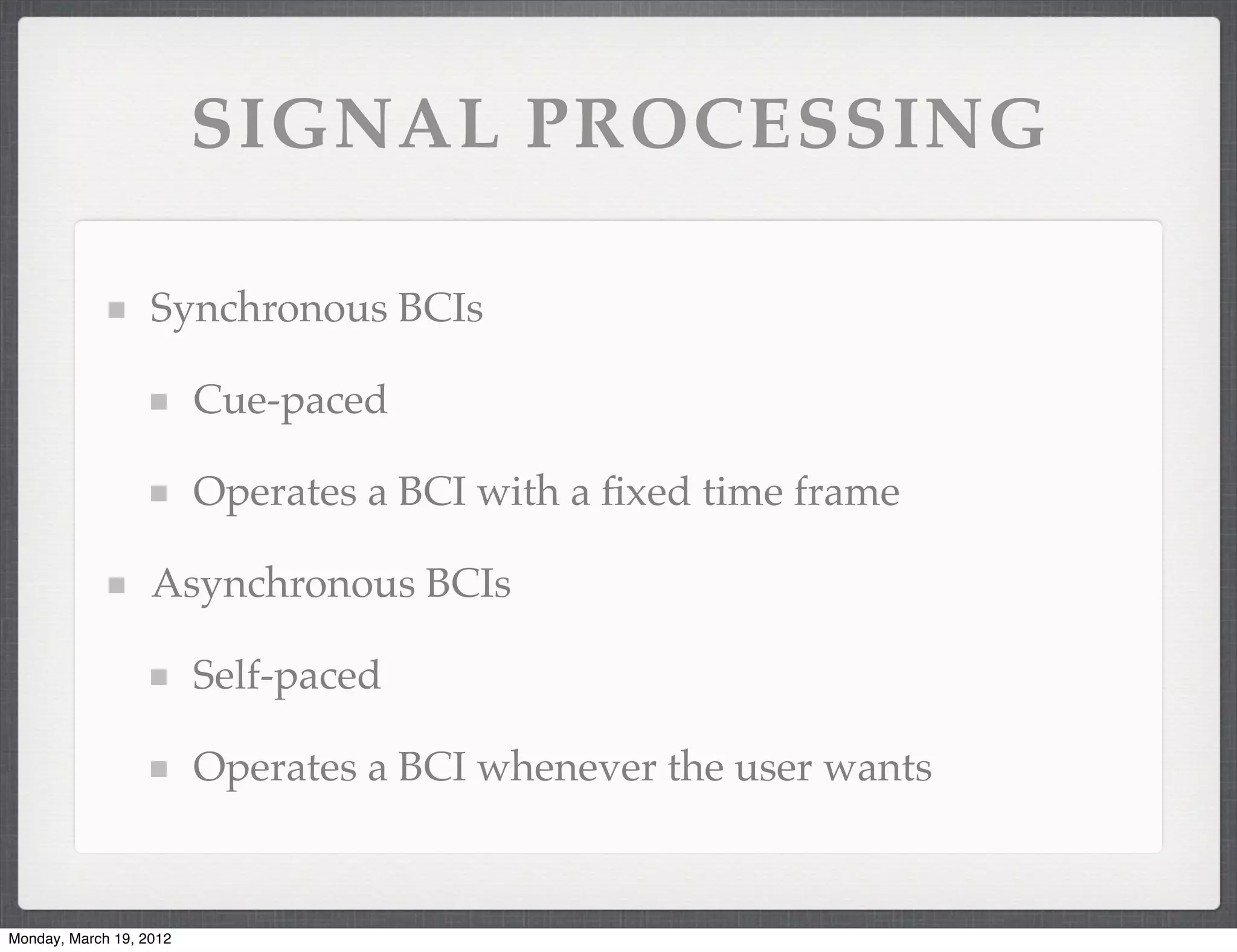
SIGNAL PROCESSING

                   Synchronous BCIs

                         Cue-paced

                         Operates a BCI with a fixed time frame

                   Asynchronous BCIs

                         Self-paced

                         Operates a BCI whenever the user wants


Monday, March 19, 2012
BCI PERFORMANCE


Monday, March 19, 2012
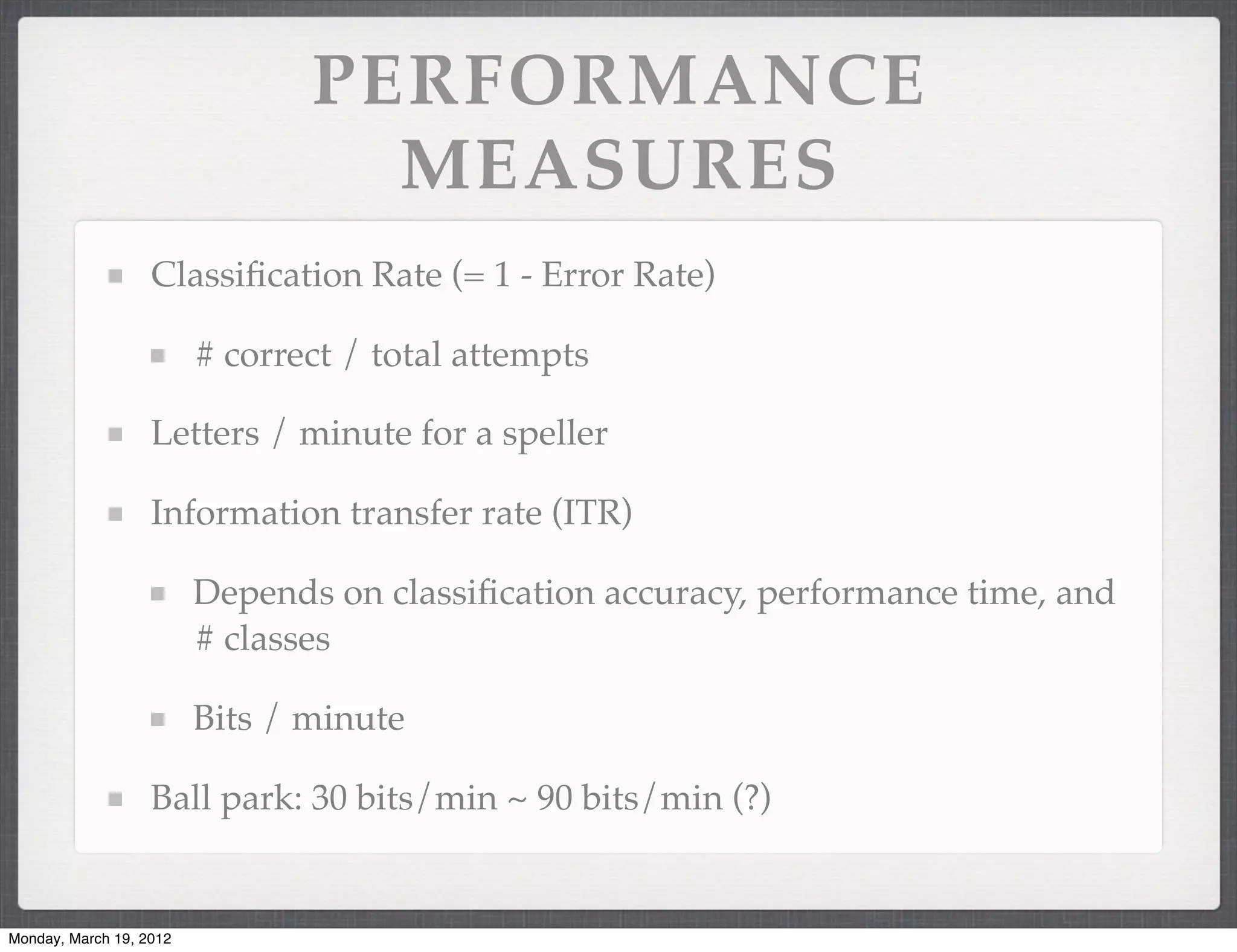
PERFORMANCE
                                  MEASURES
                   Classification Rate (= 1 - Error Rate)

                         # correct / total attempts

                   Letters / minute for a speller

                   Information transfer rate (ITR)

                         Depends on classification accuracy, performance time, and
                         # classes

                         Bits / minute

                   Ball park: 30 bits/min ~ 90 bits/min (?)


Monday, March 19, 2012
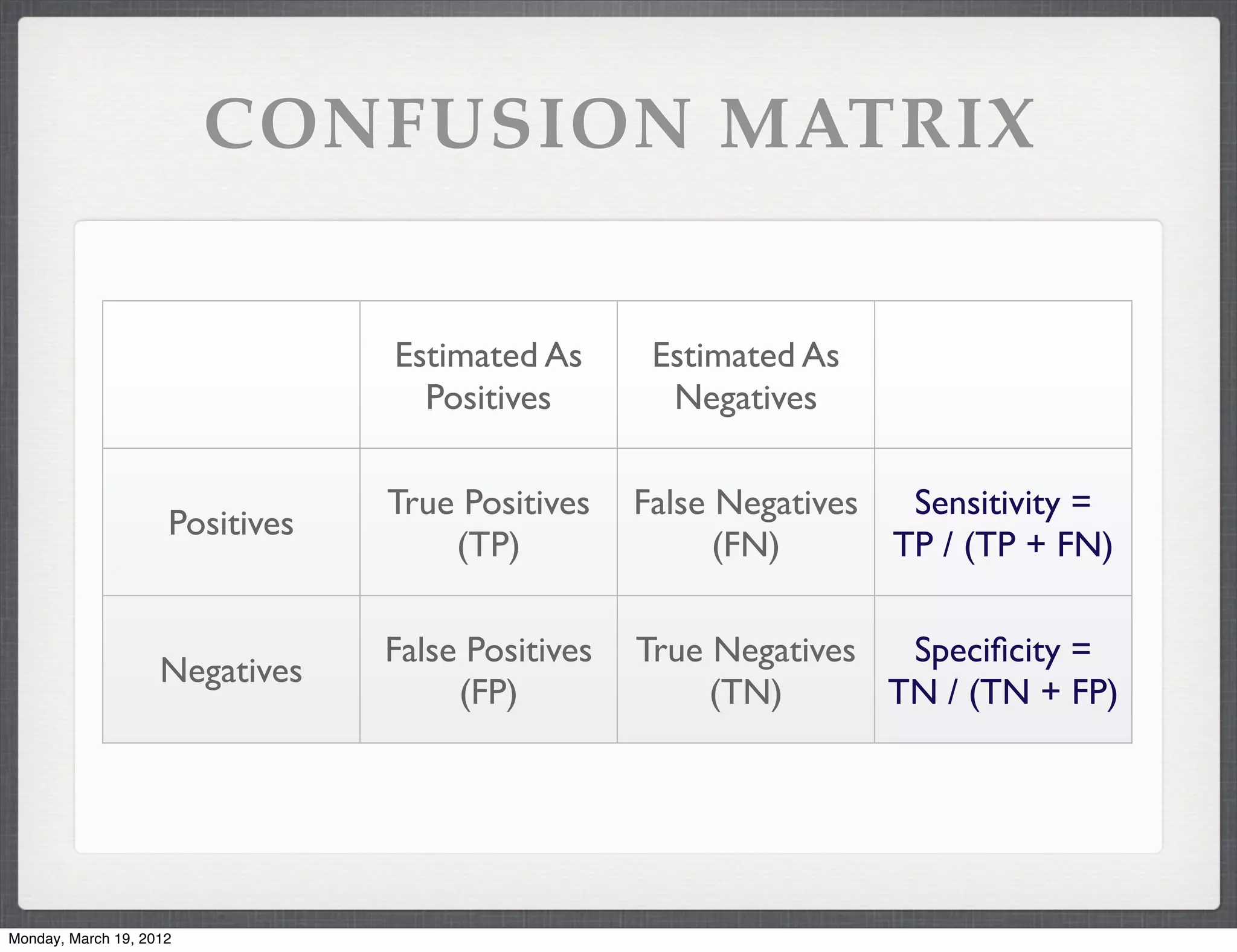
CONFUSION MATRIX


                                 Estimated As       Estimated As
                                   Positives         Negatives

                                 True Positives    False Negatives  Sensitivity =
                     Positives
                                     (TP)                (FN)      TP / (TP + FN)

                                 False Positives   True Negatives  Specificity =
                    Negatives
                                      (FP)              (TN)      TN / (TN + FP)


Monday, March 19, 2012
BCI APPLICATIONS


Monday, March 19, 2012
BCI OUTPUT

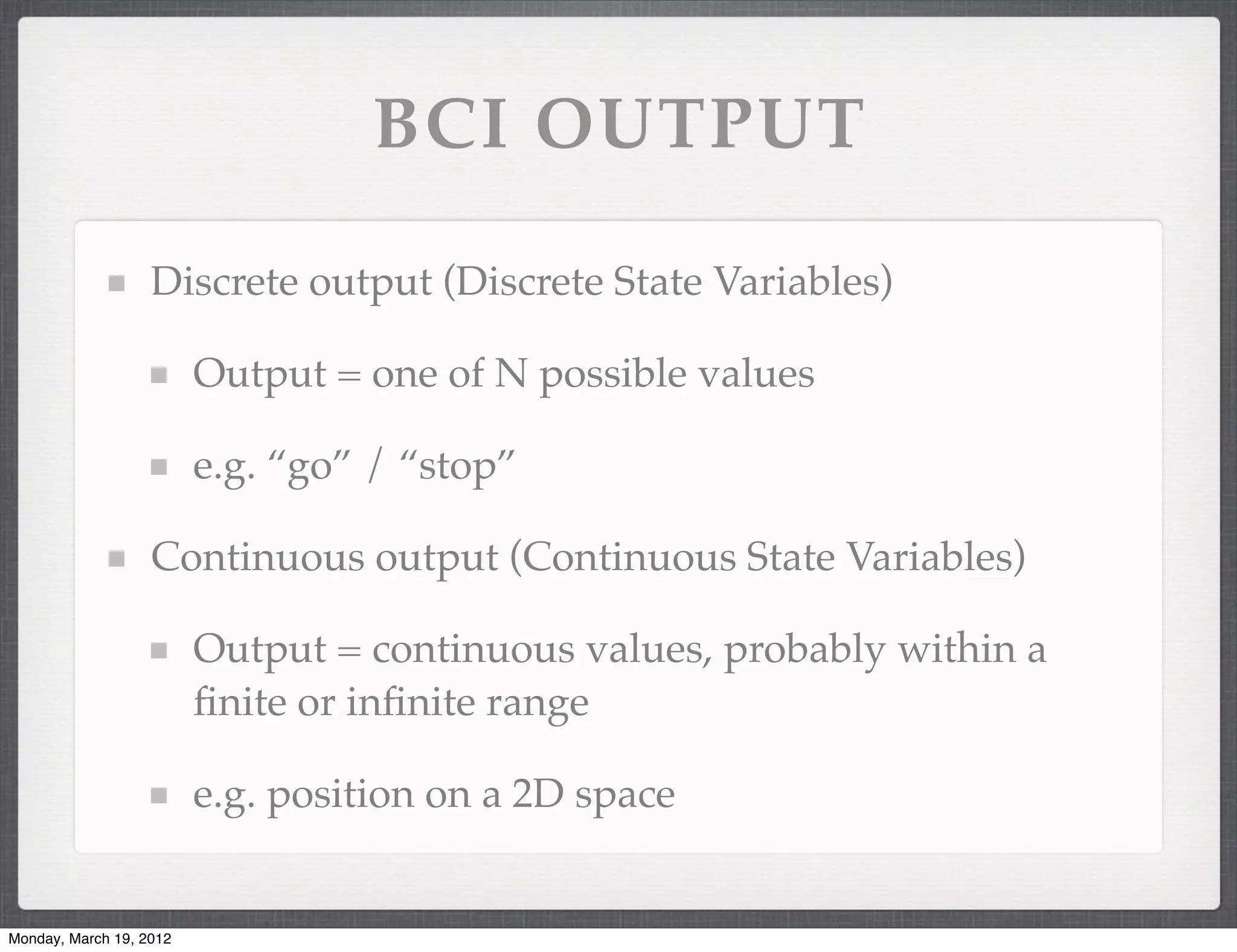
                   Discrete output (Discrete State Variables)

                         Output = one of N possible values

                         e.g. “go” / “stop”

                   Continuous output (Continuous State Variables)

                         Output = continuous values, probably within a
                         finite or infinite range

                         e.g. position on a 2D space


Monday, March 19, 2012
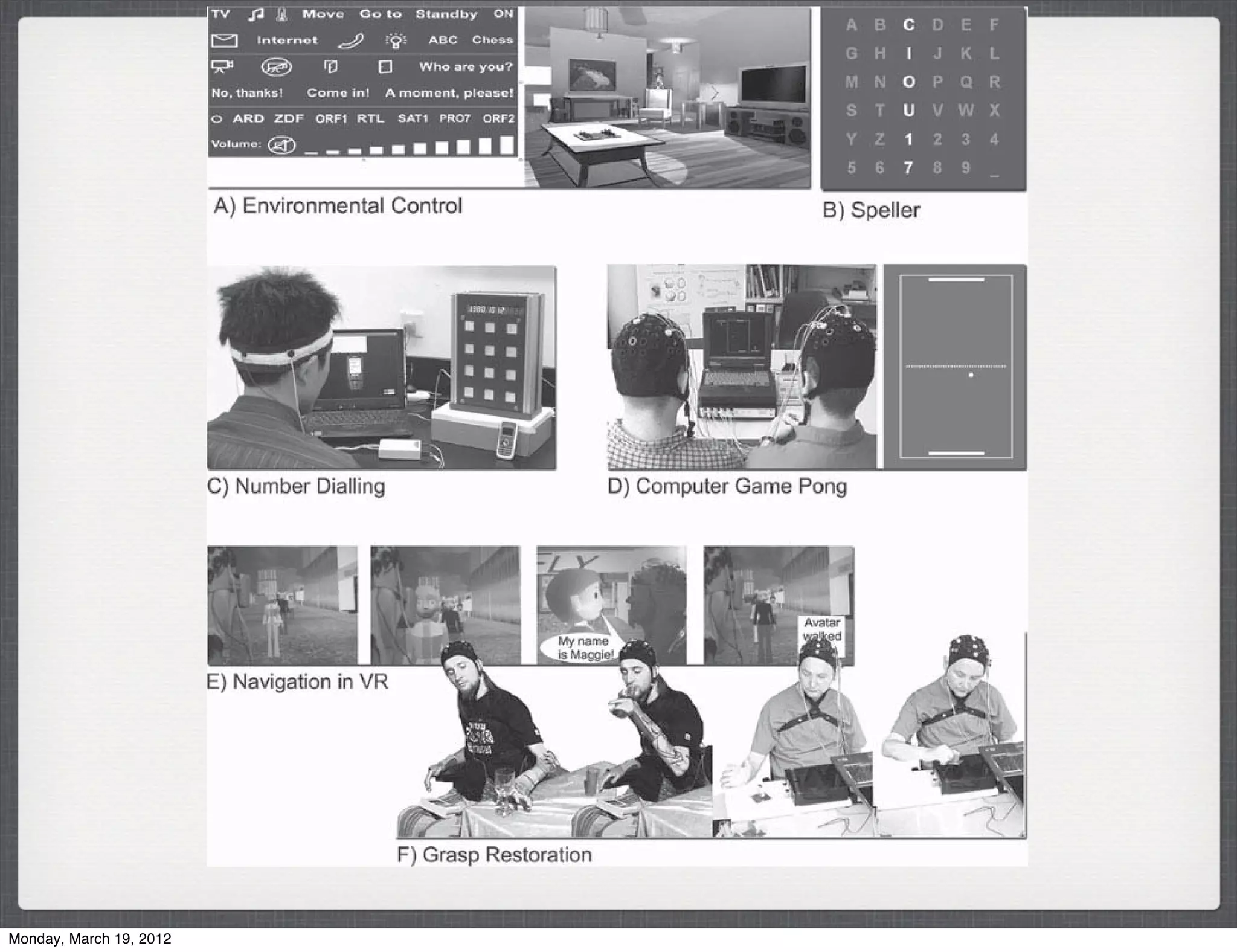
Fig. 7 Examples of BCI applications. (a) Environmental control with a P300 BCI (see chapter
                         “The First Commercial Brain–Computer Interface Environment”), (b) P300 Speller (see chapter
Monday, March 19, 2012
SMART HOME CONTROL


Monday, March 19, 2012
NAVIGATION IN VR


Monday, March 19, 2012
2D CURSOR CONTROL


Monday, March 19, 2012
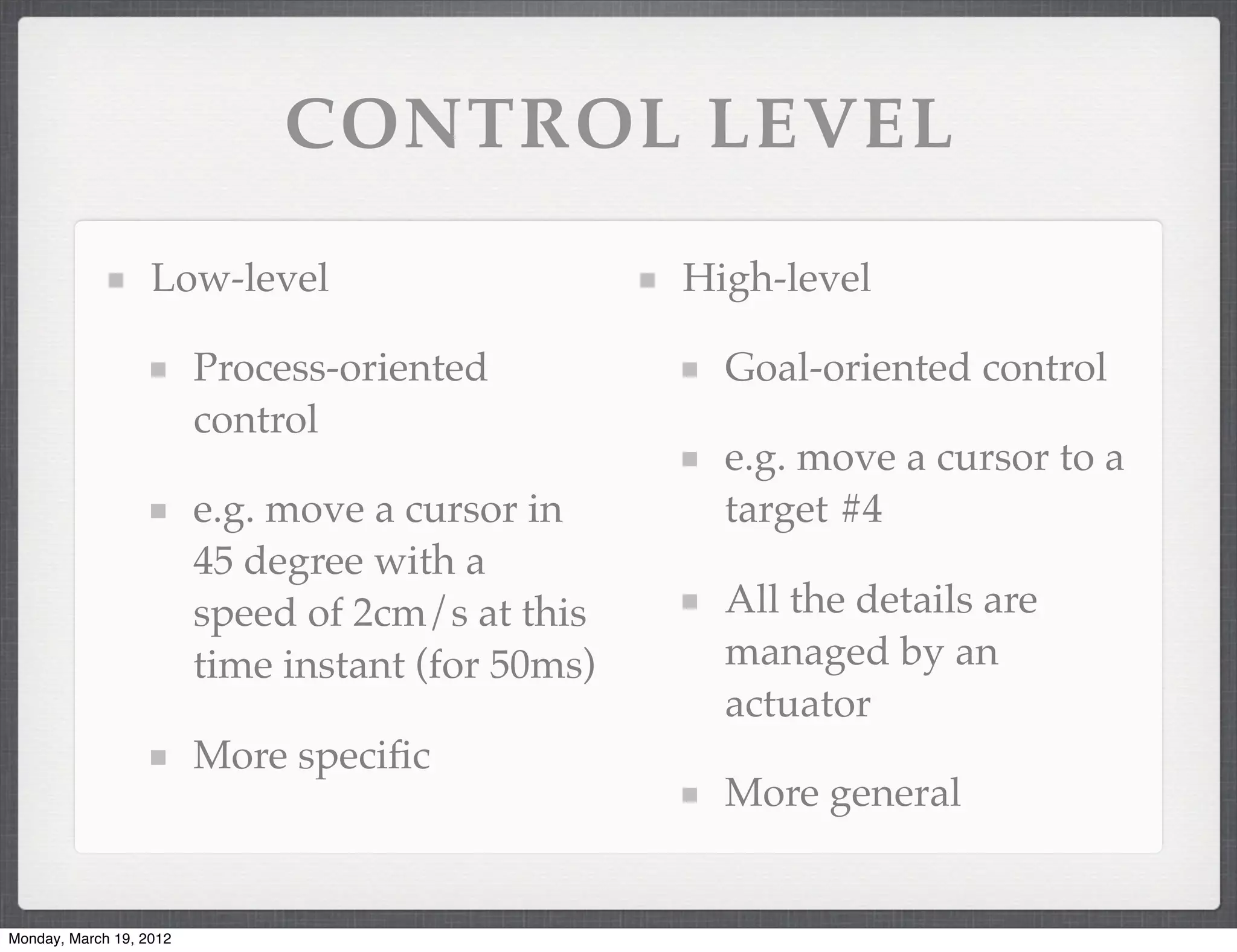
CONTROL LEVEL

                   Low-level                       High-level

                         Process-oriented            Goal-oriented control
                         control
                                                     e.g. move a cursor to a
                         e.g. move a cursor in       target #4
                         45 degree with a
                         speed of 2cm/s at this      All the details are
                         time instant (for 50ms)     managed by an
                                                     actuator
                         More specific
                                                     More general


Monday, March 19, 2012
It is system based on a conventional wheelchair equipped with a stereo camera sys-
            tem, a robot arm with 7 degrees-of-freedom, a gripper with force/torque sensor, a
            smart tray with tactile surface and weight sensors, and a computing unit consist-
            ing of three independent industrial PCs. FRIEND II can perform certain operations
                             Rolland III                                          FRIEND II


            Fig. 8 Semi-autonomous assistive devices developed at the University of Bremen that include
            high level control: Intelligent wheelchair Rolland III, and rehabilitation robot FRIEND II (modified
            from [35])
Monday, March 19, 2012
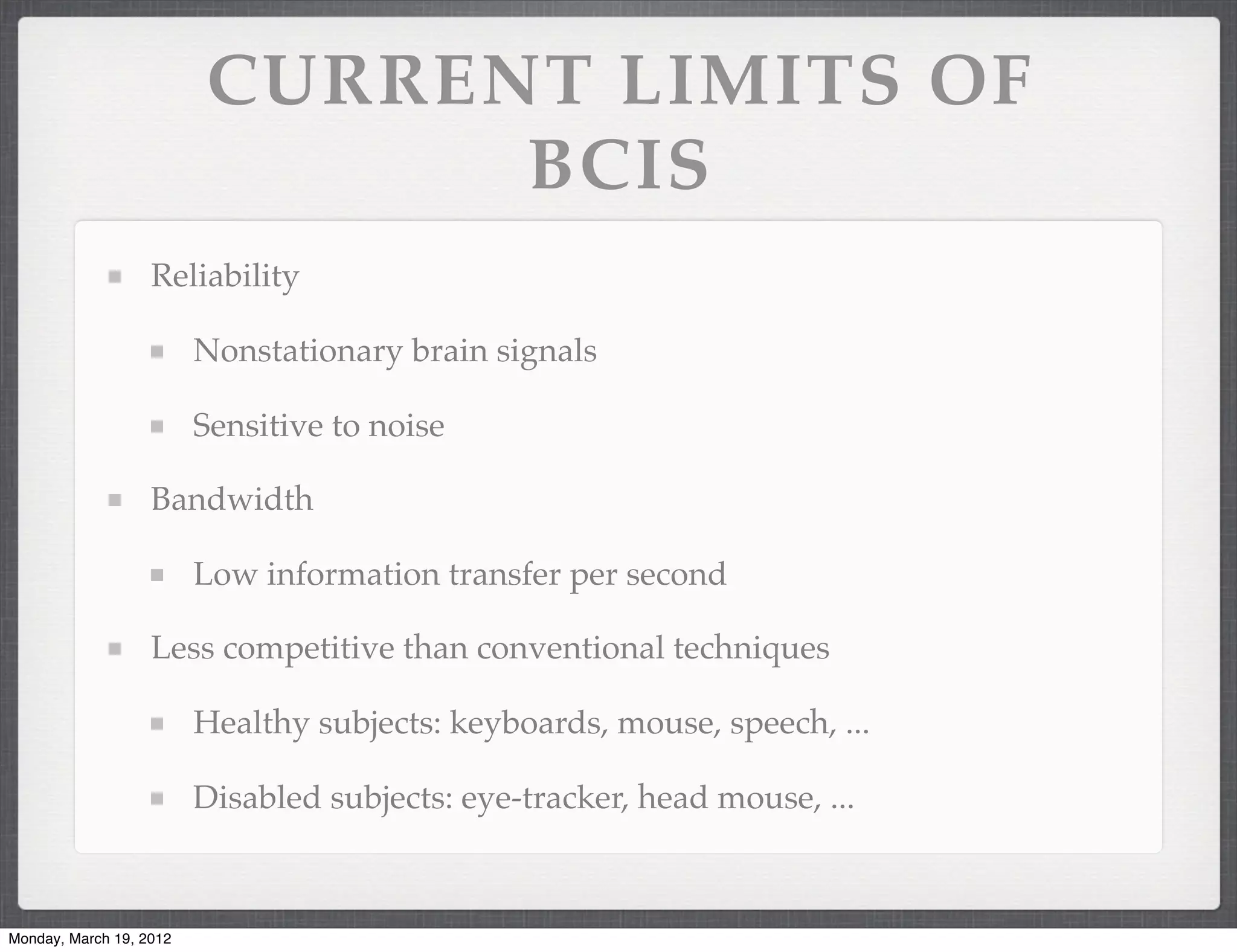
CURRENT LIMITS OF
                               BCIS
                   Reliability

                         Nonstationary brain signals

                         Sensitive to noise

                   Bandwidth

                         Low information transfer per second

                   Less competitive than conventional techniques

                         Healthy subjects: keyboards, mouse, speech, ...

                         Disabled subjects: eye-tracker, head mouse, ...


Monday, March 19, 2012
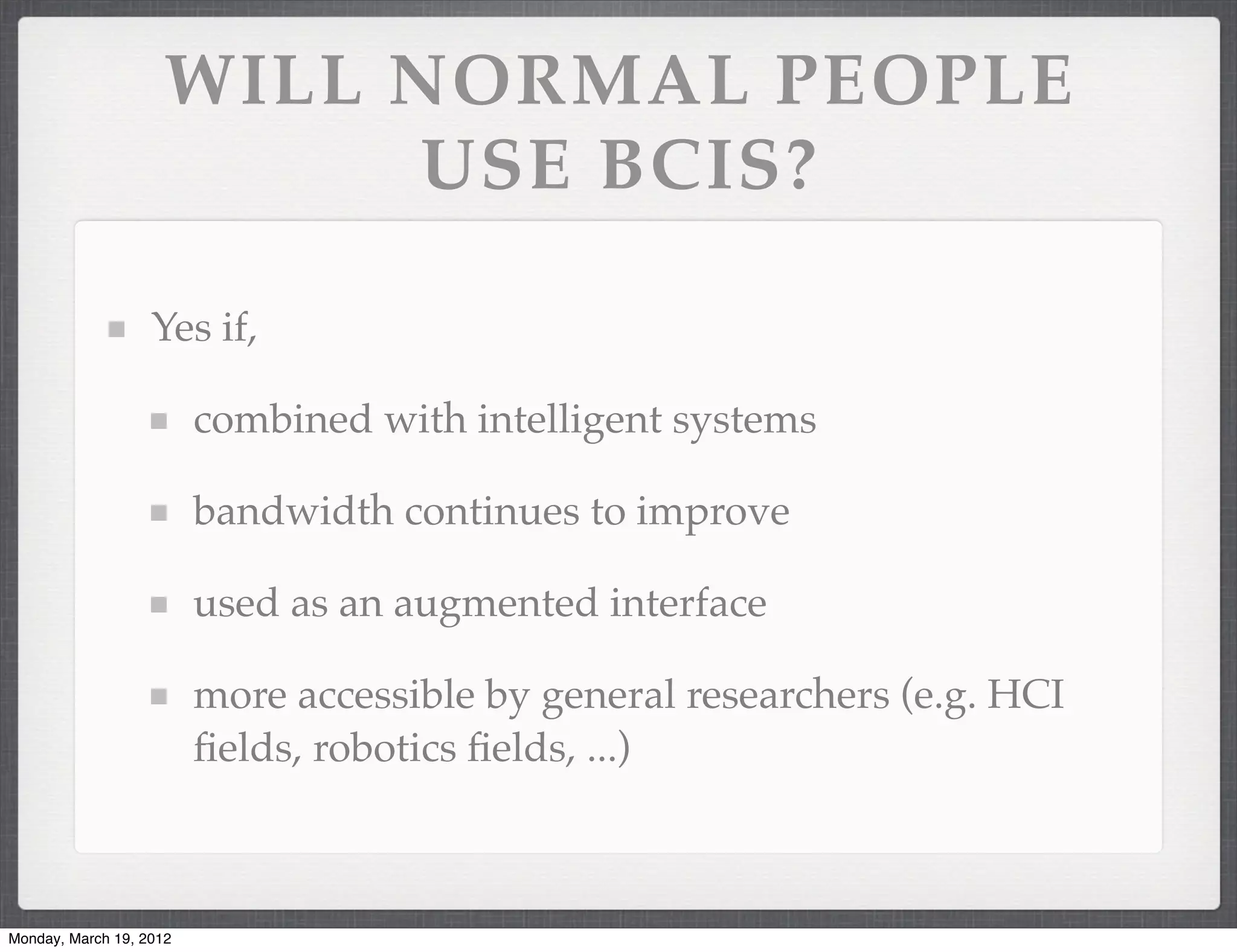
WILL NORMAL PEOPLE
                          USE BCIS?

                   Yes if,

                         combined with intelligent systems

                         bandwidth continues to improve

                         used as an augmented interface

                         more accessible by general researchers (e.g. HCI
                         fields, robotics fields, ...)


Monday, March 19, 2012
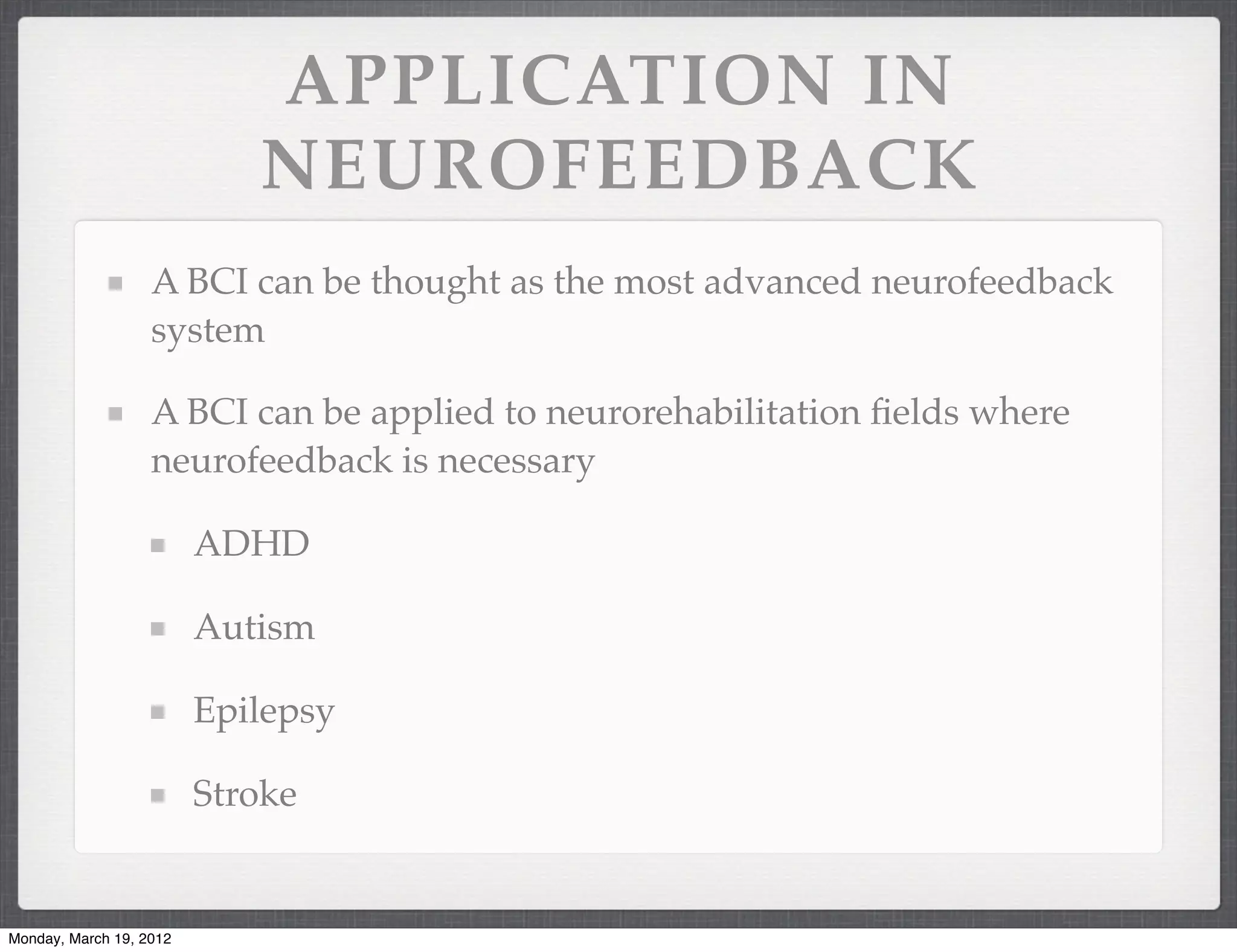
APPLICATION IN
                            NEUROFEEDBACK
                   A BCI can be thought as the most advanced neurofeedback
                   system

                   A BCI can be applied to neurorehabilitation fields where
                   neurofeedback is necessary

                         ADHD

                         Autism

                         Epilepsy

                         Stroke


Monday, March 19, 2012

Bri503 lecture05

  • 1.
    HOW DOES ABCI WORK? Monday, March 19, 2012
  • 2.
    MOTOR IMAGERY Sensorimotor rhythms (SMR) Detected in the sensorimotor area Somatosensory cortex Motor cortex Mu rhythms: 8-12 Hz Beta rhythms: 12-30Hz ECoG can also use gamma rhythms (30-80Hz) Monday, March 19, 2012
  • 3.
    MOTOR IMAGERY ERD (Event Related Desynchronization) Planning and execution of hand/finger movements block (desynchronize) mu rhythms ERS (Event Related Synchronization) Inhibition of movements synchronizes mu rhythms Foot and tongue movements enhance mu rhythms ERD/ERS is generally observed for the contralateral movements Monday, March 19, 2012
  • 4.
    MOTOR IMAGERY Does not need external stimuli Does need long training Users learn the best imagery Closed-loop feedback plays an important role in learning Monday, March 19, 2012
  • 5.
    SIGNAL PROCESSING - Simplifies signals: e.g. filtering Preprocessing - Improves the signal-to-noise ratio (SNR) - Extract features relevant to control parameters using Feature mathematical methods Extraction - e.g. Amplitudes, Frequencies, Firing rates, ... - Detection: detects specific patterns from ordinary Detection/ patterns Classification - Classification: classifies a given pattern to one of many variables Monday, March 19, 2012
  • 6.
    SIGNAL PROCESSING Synchronous BCIs Cue-paced Operates a BCI with a fixed time frame Asynchronous BCIs Self-paced Operates a BCI whenever the user wants Monday, March 19, 2012
  • 7.
  • 8.
    PERFORMANCE MEASURES Classification Rate (= 1 - Error Rate) # correct / total attempts Letters / minute for a speller Information transfer rate (ITR) Depends on classification accuracy, performance time, and # classes Bits / minute Ball park: 30 bits/min ~ 90 bits/min (?) Monday, March 19, 2012
  • 9.
    CONFUSION MATRIX Estimated As Estimated As Positives Negatives True Positives False Negatives Sensitivity = Positives (TP) (FN) TP / (TP + FN) False Positives True Negatives Specificity = Negatives (FP) (TN) TN / (TN + FP) Monday, March 19, 2012
  • 10.
  • 11.
    BCI OUTPUT Discrete output (Discrete State Variables) Output = one of N possible values e.g. “go” / “stop” Continuous output (Continuous State Variables) Output = continuous values, probably within a finite or infinite range e.g. position on a 2D space Monday, March 19, 2012
  • 12.
    Fig. 7 Examplesof BCI applications. (a) Environmental control with a P300 BCI (see chapter “The First Commercial Brain–Computer Interface Environment”), (b) P300 Speller (see chapter Monday, March 19, 2012
  • 13.
  • 14.
  • 15.
  • 16.
    CONTROL LEVEL Low-level High-level Process-oriented Goal-oriented control control e.g. move a cursor to a e.g. move a cursor in target #4 45 degree with a speed of 2cm/s at this All the details are time instant (for 50ms) managed by an actuator More specific More general Monday, March 19, 2012
  • 17.
    It is systembased on a conventional wheelchair equipped with a stereo camera sys- tem, a robot arm with 7 degrees-of-freedom, a gripper with force/torque sensor, a smart tray with tactile surface and weight sensors, and a computing unit consist- ing of three independent industrial PCs. FRIEND II can perform certain operations Rolland III FRIEND II Fig. 8 Semi-autonomous assistive devices developed at the University of Bremen that include high level control: Intelligent wheelchair Rolland III, and rehabilitation robot FRIEND II (modified from [35]) Monday, March 19, 2012
  • 18.
  • 19.
  • 20.
  • 21.
  • 22.
    CURRENT LIMITS OF BCIS Reliability Nonstationary brain signals Sensitive to noise Bandwidth Low information transfer per second Less competitive than conventional techniques Healthy subjects: keyboards, mouse, speech, ... Disabled subjects: eye-tracker, head mouse, ... Monday, March 19, 2012
  • 23.
    WILL NORMAL PEOPLE USE BCIS? Yes if, combined with intelligent systems bandwidth continues to improve used as an augmented interface more accessible by general researchers (e.g. HCI fields, robotics fields, ...) Monday, March 19, 2012
  • 24.
    APPLICATION IN NEUROFEEDBACK A BCI can be thought as the most advanced neurofeedback system A BCI can be applied to neurorehabilitation fields where neurofeedback is necessary ADHD Autism Epilepsy Stroke Monday, March 19, 2012
  • 25.