BRAZIL 
 Vu Le Nguyen 1158084 
 Truong Phuong Quyen 1158114 
 Le Phuong Nhi 1158089 
 Trinh Quang Anh Vu 1158159 
 Nguyen Thi Nhu Thao 1158130
CULTURAL ANALYSIS 
 Relevant history 
 Geographic setting 
 Communication 
 Social Institutions 
 Religion 
 Living conditions 
 Language
RELEVANT HISTORY 
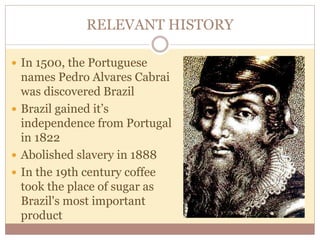
 In 1500, the Portuguese 
names Pedro Alvares Cabrai 
was discovered Brazil 
 Brazil gained it’s 
independence from Portugal 
in 1822 
 Abolished slavery in 1888 
 In the 19th century coffee 
took the place of sugar as 
Brazil's most important 
product
GEOGRAPHICAL SETTING 
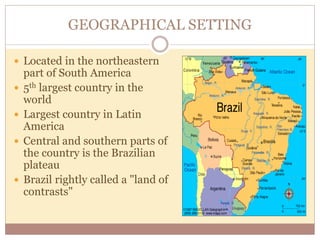
 Located in the northeastern 
part of South America 
 5th largest country in the 
world 
 Largest country in Latin 
America 
 Central and southern parts of 
the country is the Brazilian 
plateau 
 Brazil rightly called a "land of 
contrasts"
COMMUNICATION 
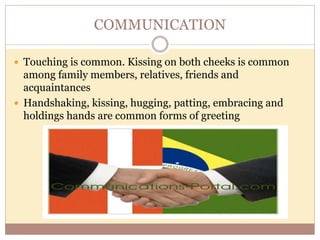
 Touching is common. Kissing on both cheeks is common 
among family members, relatives, friends and 
acquaintances 
 Handshaking, kissing, hugging, patting, embracing and 
holdings hands are common forms of greeting
SOCIAL INSTITUTIONS 
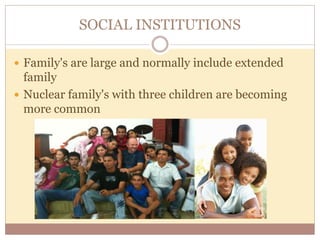
 Family's are large and normally include extended 
family 
 Nuclear family's with three children are becoming 
more common
SOCIAL INSTITUTIONS 
 Both sexes share in decision making 
 Children rarely leave home before they are married 
 Children normally live at home until they are 30 
 Family ties are very strong 
 Families are becoming more urbanized 
 Women are living home and moving into the 
workforce
SOCIAL INSTITUTIONS 
 Parental roles vary by region 
 Literacy throughout Brazil is 88% 
 Children are required to attend school for a 
minimum of 8 years 
 Each Brazilian state has a governor and 
legislature 
 Brazil is based on Roman code
RELIGION AND AESTHETICS 
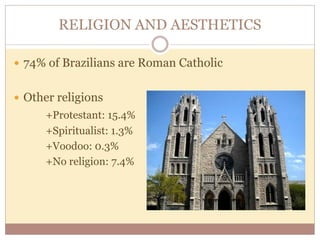
 74% of Brazilians are Roman Catholic 
 Other religions 
+Protestant: 15.4% 
+Spiritualist: 1.3% 
+Voodoo: 0.3% 
+No religion: 7.4%
RELIGION AND AESTHETICS 
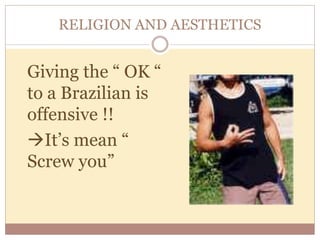
Giving the “ OK “ 
to a Brazilian is 
offensive !! 
It’s mean “ 
Screw you”
LIVING CONDITIONS 
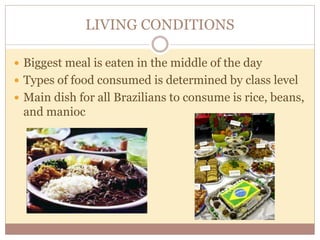
 Biggest meal is eaten in the middle of the day 
 Types of food consumed is determined by class level 
 Main dish for all Brazilians to consume is rice, beans, 
and manioc
LIVING CONDITIONS 
Housing in urban Brazil is very 
similar to the United States 
Generally houses have two stories 
Brazilians are faced with water 
shortages so water tanks are placed 
on the roof to alleviate issues
LIVING CONDITIONS 
 In the urban areas of Brazil, most people prefer 
modern clothing 
 Young men wear jeans and T-shirts 
 Short skirts and dresses are very popular among 
women 
 Businesswomen usually polish their nails and wear 
light make-up in the working environment 
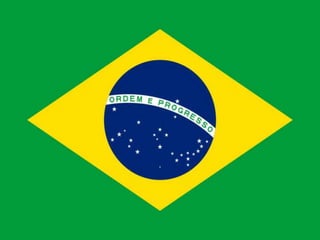
 Never wear the colors of the Brazilian flag, green and 
yellow. It's not a suitable combination
LIVING CONDITIONS 
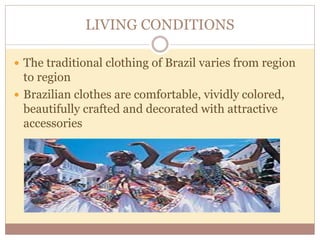
 The traditional clothing of Brazil varies from region 
to region 
 Brazilian clothes are comfortable, vividly colored, 
beautifully crafted and decorated with attractive 
accessories
LIVING CONDITIONS 
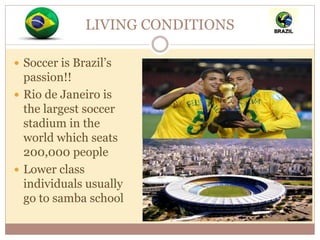
 Soccer is Brazil’s 
passion!! 
 Rio de Janeiro is 
the largest soccer 
stadium in the 
world which seats 
200,000 people 
 Lower class 
individuals usually 
go to samba school
LANGUAGE 
The official language is Portuguese 
There are more than 200 tribal 
groups that speak indigenous 
languages 
Some upper class individuals speak 
English, and other languages such 
as German, Italian, Spanish etc.
ECONOMIC ANALYSIS 
Population 
Economic statistics 
Development in Science and 
Technology 
Distribution Channels 
Media
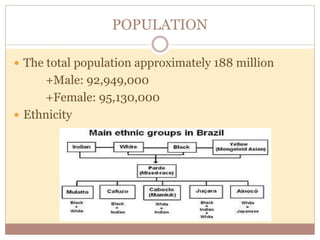
POPULATION 
 The total population approximately 188 million 
+Male: 92,949,000 
+Female: 95,130,000 
 Ethnicity
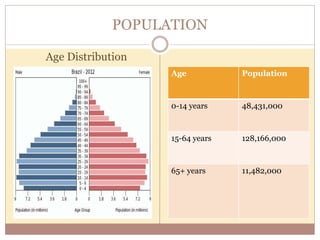
POPULATION 
Age Distribution 
Age Population 
0-14 years 48,431,000 
15-64 years 128,166,000 
65+ years 11,482,000
ECONOMIC STATISTICS 
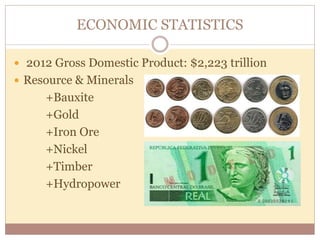
 2012 Gross Domestic Product: $2,223 trillion 
 Resource & Minerals 
+Bauxite 
+Gold 
+Iron Ore 
+Nickel 
+Timber 
+Hydropower
DEVELOPMENTS IN SCIENCE & 
TECHNOLOGY 
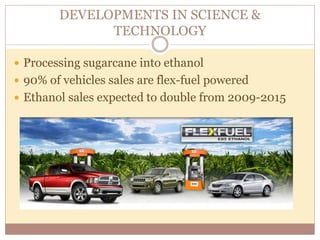
 Processing sugarcane into ethanol 
 90% of vehicles sales are flex-fuel powered 
 Ethanol sales expected to double from 2009-2015
DISTRIBUTION CHANNELS 
 Approximately 800,000 retail stores 
 Located in urbanized areas 
 Top stores 
+Carrefour 
+Sonae 
+Walmart
PRIMARY INDUSTRIES 
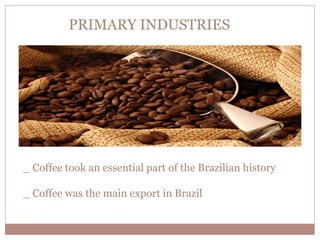
_ Coffee took an essential part of the Brazilian history 
_ Coffee was the main export in Brazil
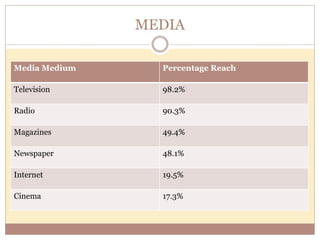
MEDIA 
MediaMedium Percentage Reach 
Television 98.2% 
Radio 90.3% 
Magazines 49.4% 
Newspaper 48.1% 
Internet 19.5% 
Cinema 17.3%
Brazil mkt

Brazil mkt

  • 2.
    BRAZIL  VuLe Nguyen 1158084  Truong Phuong Quyen 1158114  Le Phuong Nhi 1158089  Trinh Quang Anh Vu 1158159  Nguyen Thi Nhu Thao 1158130
  • 3.
    CULTURAL ANALYSIS Relevant history  Geographic setting  Communication  Social Institutions  Religion  Living conditions  Language
  • 4.
    RELEVANT HISTORY In 1500, the Portuguese names Pedro Alvares Cabrai was discovered Brazil  Brazil gained it’s independence from Portugal in 1822  Abolished slavery in 1888  In the 19th century coffee took the place of sugar as Brazil's most important product
  • 5.
    GEOGRAPHICAL SETTING Located in the northeastern part of South America  5th largest country in the world  Largest country in Latin America  Central and southern parts of the country is the Brazilian plateau  Brazil rightly called a "land of contrasts"
  • 6.
    COMMUNICATION  Touchingis common. Kissing on both cheeks is common among family members, relatives, friends and acquaintances  Handshaking, kissing, hugging, patting, embracing and holdings hands are common forms of greeting
  • 7.
    SOCIAL INSTITUTIONS Family's are large and normally include extended family  Nuclear family's with three children are becoming more common
  • 8.
    SOCIAL INSTITUTIONS Both sexes share in decision making  Children rarely leave home before they are married  Children normally live at home until they are 30  Family ties are very strong  Families are becoming more urbanized  Women are living home and moving into the workforce
  • 9.
    SOCIAL INSTITUTIONS Parental roles vary by region  Literacy throughout Brazil is 88%  Children are required to attend school for a minimum of 8 years  Each Brazilian state has a governor and legislature  Brazil is based on Roman code
  • 10.
    RELIGION AND AESTHETICS  74% of Brazilians are Roman Catholic  Other religions +Protestant: 15.4% +Spiritualist: 1.3% +Voodoo: 0.3% +No religion: 7.4%
  • 11.
    RELIGION AND AESTHETICS Giving the “ OK “ to a Brazilian is offensive !! It’s mean “ Screw you”
  • 12.
    LIVING CONDITIONS Biggest meal is eaten in the middle of the day  Types of food consumed is determined by class level  Main dish for all Brazilians to consume is rice, beans, and manioc
  • 13.
    LIVING CONDITIONS Housingin urban Brazil is very similar to the United States Generally houses have two stories Brazilians are faced with water shortages so water tanks are placed on the roof to alleviate issues
  • 14.
    LIVING CONDITIONS In the urban areas of Brazil, most people prefer modern clothing  Young men wear jeans and T-shirts  Short skirts and dresses are very popular among women  Businesswomen usually polish their nails and wear light make-up in the working environment  Never wear the colors of the Brazilian flag, green and yellow. It's not a suitable combination
  • 15.
    LIVING CONDITIONS The traditional clothing of Brazil varies from region to region  Brazilian clothes are comfortable, vividly colored, beautifully crafted and decorated with attractive accessories
  • 16.
    LIVING CONDITIONS Soccer is Brazil’s passion!!  Rio de Janeiro is the largest soccer stadium in the world which seats 200,000 people  Lower class individuals usually go to samba school
  • 17.
    LANGUAGE The officiallanguage is Portuguese There are more than 200 tribal groups that speak indigenous languages Some upper class individuals speak English, and other languages such as German, Italian, Spanish etc.
  • 18.
    ECONOMIC ANALYSIS Population Economic statistics Development in Science and Technology Distribution Channels Media
  • 19.
    POPULATION  Thetotal population approximately 188 million +Male: 92,949,000 +Female: 95,130,000  Ethnicity
  • 20.
    POPULATION Age Distribution Age Population 0-14 years 48,431,000 15-64 years 128,166,000 65+ years 11,482,000
  • 21.
    ECONOMIC STATISTICS 2012 Gross Domestic Product: $2,223 trillion  Resource & Minerals +Bauxite +Gold +Iron Ore +Nickel +Timber +Hydropower
  • 22.
    DEVELOPMENTS IN SCIENCE& TECHNOLOGY  Processing sugarcane into ethanol  90% of vehicles sales are flex-fuel powered  Ethanol sales expected to double from 2009-2015
  • 23.
    DISTRIBUTION CHANNELS Approximately 800,000 retail stores  Located in urbanized areas  Top stores +Carrefour +Sonae +Walmart
  • 24.
    PRIMARY INDUSTRIES _Coffee took an essential part of the Brazilian history _ Coffee was the main export in Brazil
  • 25.
    MEDIA MediaMedium PercentageReach Television 98.2% Radio 90.3% Magazines 49.4% Newspaper 48.1% Internet 19.5% Cinema 17.3%