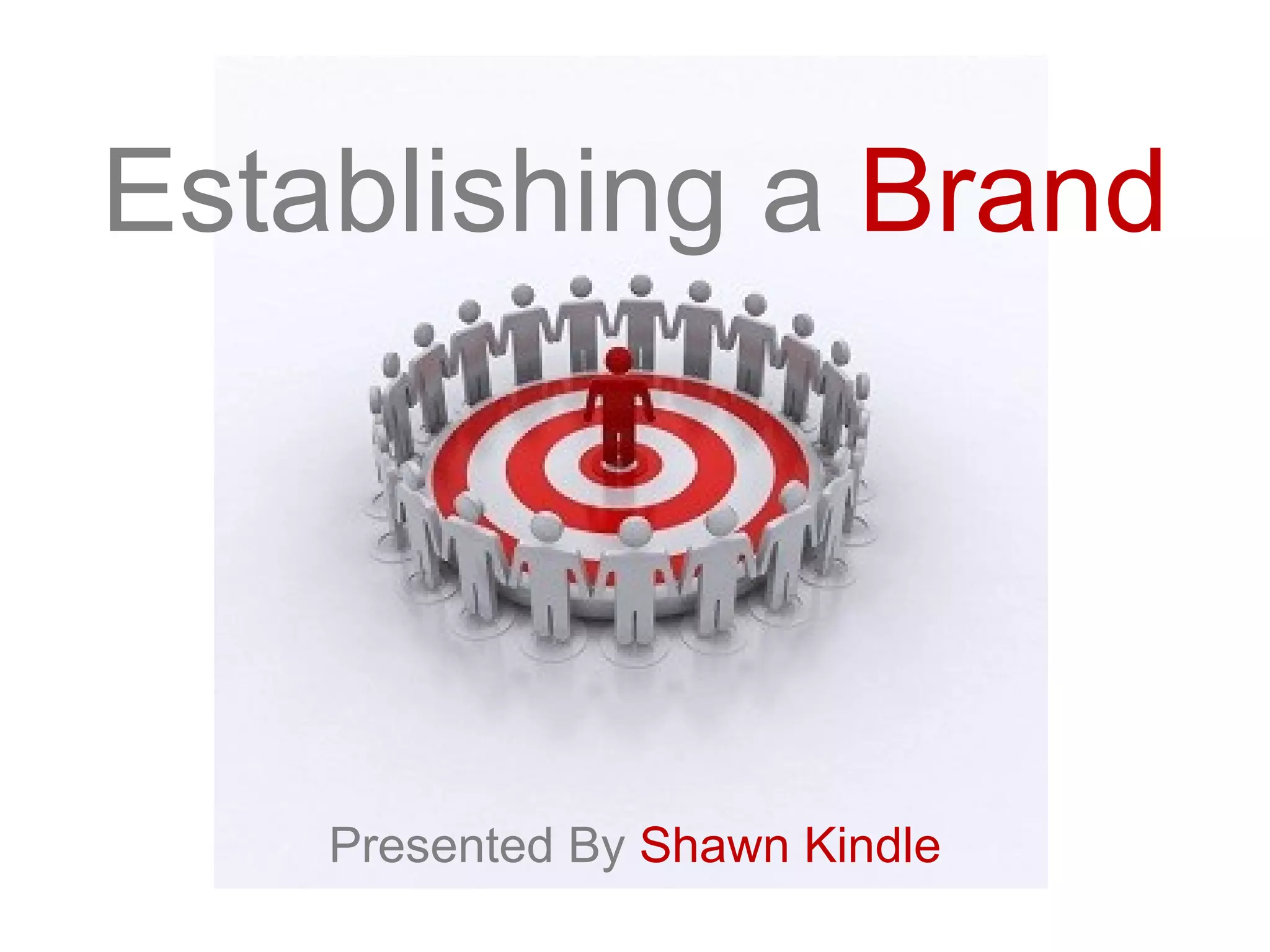
Establishing a  Brand Presented By  Shawn Kindle
Brand The  American Marketing Association  defines a  brand  as a "Name, term, design, symbol, or any other feature that identifies one seller's good or service as distinct from those of other sellers."  is the  personality   that identifies  a product, service or company (name, term, sign, symbol, or design, or combination of them) and how it relates to key constituencies: customers, staff, partners, investors etc.
Brand Fundamentals Brand image:  the symbolic construct created within the minds of people, consisting of all the information and expectations associated with a product, service or the company(ies) providing them  Brand recognition :  brand which is widely known in the marketplace  Brand franchise:  when a brand enjoys a critical mass of positive sentiment in the marketplace  Brand awareness :  Customers' ability to recall and recognize the brand under different conditions and link to the brand name, logo, jingles and so on to certain associations in memory
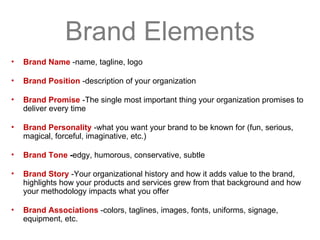
Brand Elements Brand Name  -name, tagline, logo Brand Position  -description of your organization Brand Promise  -The single most important thing your organization promises to deliver every time Brand Personality  -what you want your brand to be known for (fun, serious, magical, forceful, imaginative, etc.) Brand Tone  - edgy, humorous, conservative, subtle Brand Story  -Your organizational history and how it adds value to the brand, highlights how your products and services grew from that background and how your methodology impacts what you offer Brand Associations  -colors, taglines, images, fonts, uniforms, signage, equipment, etc.
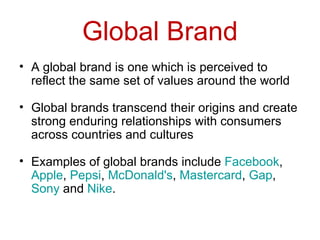
Global Brand A global brand is one which is perceived to reflect the same set of values around the world  Global brands transcend their origins and create strong enduring relationships with consumers across countries and cultures  Examples of global brands include  Facebook ,  Apple ,  Pepsi ,  McDonald's ,  Mastercard ,  Gap ,  Sony  and  Nike .
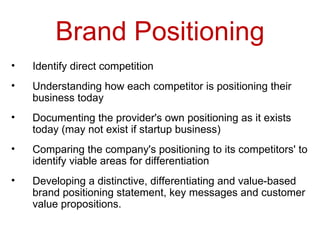
Brand Positioning Identify direct competition  Understanding how each competitor is positioning their business today  Documenting the provider's own positioning as it exists today (may not exist if startup business)  Comparing the company's positioning to its competitors' to identify viable areas for differentiation  Developing a distinctive, differentiating and value-based brand positioning statement, key messages and customer value propositions.
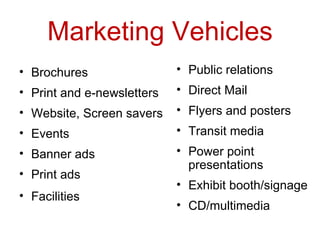
Marketing Vehicles Brochures Print and e-newsletters Website, Screen savers Events Banner ads Print ads Facilities Public relations Direct Mail Flyers and posters Transit media Power point presentations Exhibit booth/signage CD/multimedia

Brand Fundamentals

  • 1.
    Establishing a Brand Presented By Shawn Kindle
  • 2.
    Brand The American Marketing Association defines a brand as a "Name, term, design, symbol, or any other feature that identifies one seller's good or service as distinct from those of other sellers." is the personality that identifies a product, service or company (name, term, sign, symbol, or design, or combination of them) and how it relates to key constituencies: customers, staff, partners, investors etc.
  • 3.
    Brand Fundamentals Brandimage: the symbolic construct created within the minds of people, consisting of all the information and expectations associated with a product, service or the company(ies) providing them Brand recognition : brand which is widely known in the marketplace Brand franchise: when a brand enjoys a critical mass of positive sentiment in the marketplace Brand awareness : Customers' ability to recall and recognize the brand under different conditions and link to the brand name, logo, jingles and so on to certain associations in memory
  • 4.
    Brand Elements BrandName -name, tagline, logo Brand Position -description of your organization Brand Promise -The single most important thing your organization promises to deliver every time Brand Personality -what you want your brand to be known for (fun, serious, magical, forceful, imaginative, etc.) Brand Tone - edgy, humorous, conservative, subtle Brand Story -Your organizational history and how it adds value to the brand, highlights how your products and services grew from that background and how your methodology impacts what you offer Brand Associations -colors, taglines, images, fonts, uniforms, signage, equipment, etc.
  • 5.
    Global Brand Aglobal brand is one which is perceived to reflect the same set of values around the world Global brands transcend their origins and create strong enduring relationships with consumers across countries and cultures Examples of global brands include Facebook , Apple , Pepsi , McDonald's , Mastercard , Gap , Sony and Nike .
  • 6.
    Brand Positioning Identifydirect competition Understanding how each competitor is positioning their business today Documenting the provider's own positioning as it exists today (may not exist if startup business) Comparing the company's positioning to its competitors' to identify viable areas for differentiation Developing a distinctive, differentiating and value-based brand positioning statement, key messages and customer value propositions.
  • 7.
    Marketing Vehicles BrochuresPrint and e-newsletters Website, Screen savers Events Banner ads Print ads Facilities Public relations Direct Mail Flyers and posters Transit media Power point presentations Exhibit booth/signage CD/multimedia