Bottled and Tap Water
 ESA 324 - Robert Drew, Zack Fealk & Sruthi Naraharisetti
Production
 Processes
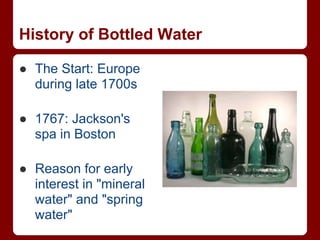
History of Bottled Water

● The Start: Europe
  during late 1700s

● 1767: Jackson's
  spa in Boston

● Reason for early
  interest in "mineral
  water" and "spring
  water"
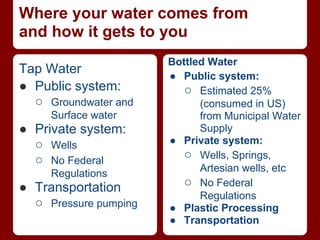
Where your water comes from
and how it gets to you
                       Bottled Water
Tap Water              ● Public system:
● Public system:         ○ Estimated 25%
  ○ Groundwater and          (consumed in US)
     Surface water           from Municipal Water
● Private system:            Supply
  ○ Wells              ● Private system:
  ○ No Federal           ○ Wells, Springs,
                             Artesian wells, etc
     Regulations
● Transportation         ○ No Federal
                             Regulations
  ○ Pressure pumping   ● Plastic Processing
                       ● Transportation
Regulations
●   Tap Water: Environmental Protection Agency
    (EPA)
    ○   Safe Drinking Water Act in 1974
    ○   Consumer Confidence Reports (CCR)
●   Bottled Water: Food and Drug Administration
    (FDA)
    ○   Current Good Manufacturing Practices
        (CGMPs)
    ○   Quality Standards
    ○   Standards of Identity (Labeling Regulations)
●   All bottled water sold in the US (whether
    imported or domestic) must meet all of the same
    regulations.
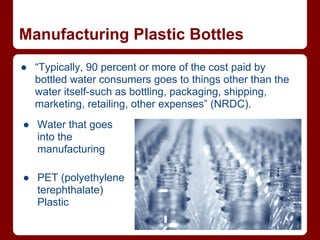
Manufacturing Plastic Bottles
● “Typically, 90 percent or more of the cost paid by
  bottled water consumers goes to things other than the
  water itself-such as bottling, packaging, shipping,
  marketing, retailing, other expenses” (NRDC).
● Water that goes
  into the
  manufacturing

● PET (polyethylene
  terephthalate)
  Plastic
Environmental
      Impacts
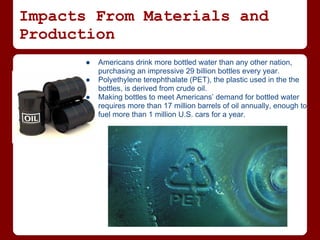
Impacts From Materials and
Production
      ●   Americans drink more bottled water than any other nation,
          purchasing an impressive 29 billion bottles every year.
      ●   Polyethylene terephthalate (PET), the plastic used in the the
          bottles, is derived from crude oil.
      ●   Making bottles to meet Americans’ demand for bottled water
          requires more than 17 million barrels of oil annually, enough to
          fuel more than 1 million U.S. cars for a year.
Concentrated Water Extraction

●   Heavy extraction leads to a lowering of the water table,
    and in some extreme cases a near complete draining of
    the water body being harvested.
●   Impacts the hydrology of the water system
●   These effects are often permanent as the water being
    extracted is shipped away from the source and are
    returned as wastewater to an altogether different water
    system, and as such these aquifers and water bodies
    being harvested are never replenished as they naturally
    would.
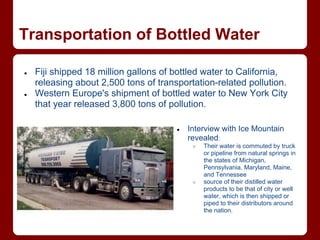
Transportation of Bottled Water

●   Fiji shipped 18 million gallons of bottled water to California,
    releasing about 2,500 tons of transportation-related pollution.
●   Western Europe's shipment of bottled water to New York City
    that year released 3,800 tons of pollution.

                                       ●   Interview with Ice Mountain
                                           revealed:
                                            ○   Their water is commuted by truck
                                                or pipeline from natural springs in
                                                the states of Michigan,
                                                Pennsylvania, Maryland, Maine,
                                                and Tennessee
                                            ○   source of their distilled water
                                                products to be that of city or well
                                                water, which is then shipped or
                                                piped to their distributors around
                                                the nation.
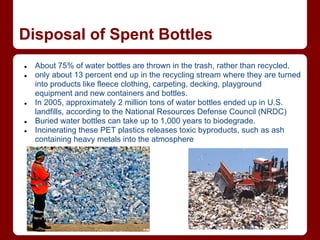
Disposal of Spent Bottles
●   About 75% of water bottles are thrown in the trash, rather than recycled.
●   only about 13 percent end up in the recycling stream where they are turned
    into products like fleece clothing, carpeting, decking, playground
    equipment and new containers and bottles.
●   In 2005, approximately 2 million tons of water bottles ended up in U.S.
    landfills, according to the National Resources Defense Council (NRDC)
●   Buried water bottles can take up to 1,000 years to biodegrade.
●   Incinerating these PET plastics releases toxic byproducts, such as ash
    containing heavy metals into the atmosphere
Societal
 Impacts
Shifting Values
Public Good               Private Good
● use of water for all    ● developed, used, traded
  people                    and sold for economic
● unnecessary               productivity and
  boundaries                financial gain
● over regulated          ● $$ gained from finite
● heavy government          resource
  influence               ● shipped away from
● Heavily mandated by       watershed
  EPA                     ● Manufacturer's
● Uniform guidelines of     responsibility from
  testing                   FFDCA [Federal Food, Drug, and
                             Cosmetic Act]
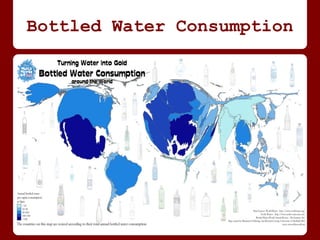
Bottled Water Consumption
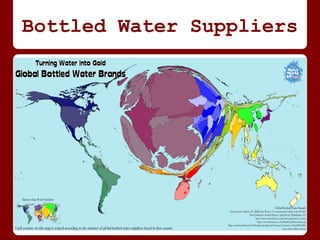
Bottled Water Suppliers
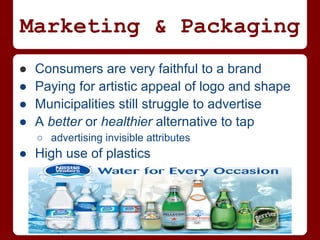
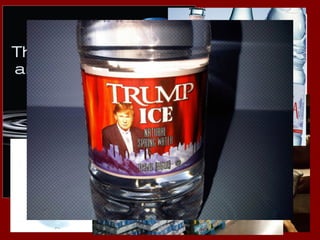
Marketing & Packaging
●   Consumers are very faithful to a brand
●   Paying for artistic appeal of logo and shape
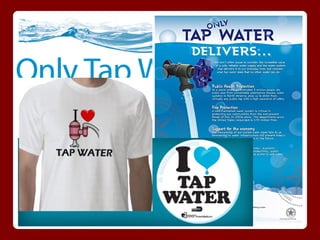
●   Municipalities still struggle to advertise
●   A better or healthier alternative to tap
    ○ advertising invisible attributes
● High use of plastics
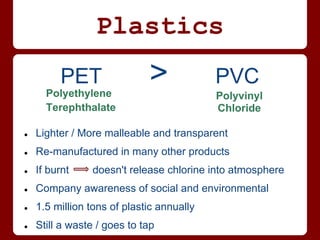
Plastics
         PET
      Polyethylene
                             >             PVC
                                           Polyvinyl
      Terephthalate                        Chloride

●   Lighter / More malleable and transparent
●   Re-manufactured in many other products
●   If burnt    doesn't release chlorine into atmosphere
●   Company awareness of social and environmental
●   1.5 million tons of plastic annually
●   Still a waste / goes to tap
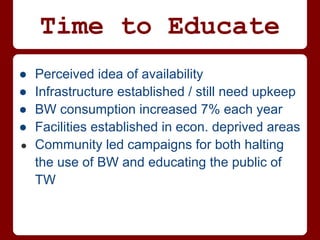
Time to Educate
● Perceived idea of availability
● Infrastructure established / still need upkeep
● BW consumption increased 7% each year
● Facilities established in econ. deprived areas
● Community led campaigns for both halting
  the use of BW and educating the public of
  TW
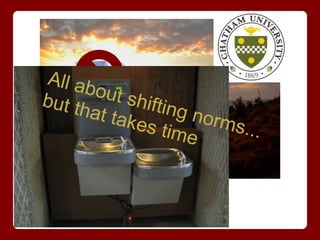
All ab
but th  out s
              hiftin
       at tak        g nor
              es tim       ms...
                      e

Bottled tapwater

  • 1.
    Bottled and TapWater ESA 324 - Robert Drew, Zack Fealk & Sruthi Naraharisetti
  • 2.
  • 3.
    History of BottledWater ● The Start: Europe during late 1700s ● 1767: Jackson's spa in Boston ● Reason for early interest in "mineral water" and "spring water"
  • 4.
    Where your watercomes from and how it gets to you Bottled Water Tap Water ● Public system: ● Public system: ○ Estimated 25% ○ Groundwater and (consumed in US) Surface water from Municipal Water ● Private system: Supply ○ Wells ● Private system: ○ No Federal ○ Wells, Springs, Artesian wells, etc Regulations ● Transportation ○ No Federal Regulations ○ Pressure pumping ● Plastic Processing ● Transportation
  • 5.
    Regulations ● Tap Water: Environmental Protection Agency (EPA) ○ Safe Drinking Water Act in 1974 ○ Consumer Confidence Reports (CCR) ● Bottled Water: Food and Drug Administration (FDA) ○ Current Good Manufacturing Practices (CGMPs) ○ Quality Standards ○ Standards of Identity (Labeling Regulations) ● All bottled water sold in the US (whether imported or domestic) must meet all of the same regulations.
  • 6.
    Manufacturing Plastic Bottles ●“Typically, 90 percent or more of the cost paid by bottled water consumers goes to things other than the water itself-such as bottling, packaging, shipping, marketing, retailing, other expenses” (NRDC). ● Water that goes into the manufacturing ● PET (polyethylene terephthalate) Plastic
  • 7.
  • 8.
    Impacts From Materialsand Production ● Americans drink more bottled water than any other nation, purchasing an impressive 29 billion bottles every year. ● Polyethylene terephthalate (PET), the plastic used in the the bottles, is derived from crude oil. ● Making bottles to meet Americans’ demand for bottled water requires more than 17 million barrels of oil annually, enough to fuel more than 1 million U.S. cars for a year.
  • 9.
    Concentrated Water Extraction ● Heavy extraction leads to a lowering of the water table, and in some extreme cases a near complete draining of the water body being harvested. ● Impacts the hydrology of the water system ● These effects are often permanent as the water being extracted is shipped away from the source and are returned as wastewater to an altogether different water system, and as such these aquifers and water bodies being harvested are never replenished as they naturally would.
  • 10.
    Transportation of BottledWater ● Fiji shipped 18 million gallons of bottled water to California, releasing about 2,500 tons of transportation-related pollution. ● Western Europe's shipment of bottled water to New York City that year released 3,800 tons of pollution. ● Interview with Ice Mountain revealed: ○ Their water is commuted by truck or pipeline from natural springs in the states of Michigan, Pennsylvania, Maryland, Maine, and Tennessee ○ source of their distilled water products to be that of city or well water, which is then shipped or piped to their distributors around the nation.
  • 11.
    Disposal of SpentBottles ● About 75% of water bottles are thrown in the trash, rather than recycled. ● only about 13 percent end up in the recycling stream where they are turned into products like fleece clothing, carpeting, decking, playground equipment and new containers and bottles. ● In 2005, approximately 2 million tons of water bottles ended up in U.S. landfills, according to the National Resources Defense Council (NRDC) ● Buried water bottles can take up to 1,000 years to biodegrade. ● Incinerating these PET plastics releases toxic byproducts, such as ash containing heavy metals into the atmosphere
  • 12.
  • 13.
    Shifting Values Public Good Private Good ● use of water for all ● developed, used, traded people and sold for economic ● unnecessary productivity and boundaries financial gain ● over regulated ● $$ gained from finite ● heavy government resource influence ● shipped away from ● Heavily mandated by watershed EPA ● Manufacturer's ● Uniform guidelines of responsibility from testing FFDCA [Federal Food, Drug, and Cosmetic Act]
  • 14.
  • 15.
  • 16.
    Marketing & Packaging ● Consumers are very faithful to a brand ● Paying for artistic appeal of logo and shape ● Municipalities still struggle to advertise ● A better or healthier alternative to tap ○ advertising invisible attributes ● High use of plastics
  • 18.
    Plastics PET Polyethylene > PVC Polyvinyl Terephthalate Chloride ● Lighter / More malleable and transparent ● Re-manufactured in many other products ● If burnt doesn't release chlorine into atmosphere ● Company awareness of social and environmental ● 1.5 million tons of plastic annually ● Still a waste / goes to tap
  • 19.
    Time to Educate ●Perceived idea of availability ● Infrastructure established / still need upkeep ● BW consumption increased 7% each year ● Facilities established in econ. deprived areas ● Community led campaigns for both halting the use of BW and educating the public of TW
  • 21.
    All ab but th out s hiftin at tak g nor es tim ms... e