SEGMENTATION
AND SALES
ORGANIZATION
PROPOSAL
Bologna Business School
Business Marketing
Professor Lelli
April 8, 2016
DRIVING SUSTAINABILITY
AGENDA
Proposal
Company
Market Analysis
Segmentation Analysis
Strategy Shift
Organizational Analysis
Implementation
Next Steps
EXECUTIVE SUMMARY
The current segmentation strategy is not designed to handle the evolution of the
customer mindset in emerging markets, specifically the rotogravure market. As a result,
the organizational structure cannot support the shift to emergin markets and the sales
force is having difficulty penetrating the market.
The current proposal offers a segmentation strategy based on Mature and Emerging
markets, and segments customers into Key and Prime customers, based on size, need,
and level of service expected. The organizational structure is informed by the new
segmentation strategy and proposes a departmental shift, change in mindset, and a
dedicated Product Management division.
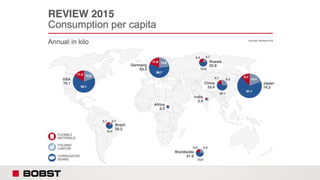
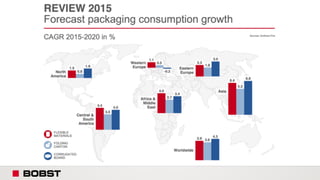
Rotogravure is a growing worldwide market, but is stagnant in mature market. Changing
strategy to reflect this change is necessary for the long-term strength of the company.
PROPOSAL SCOPE
ISSUES
Cost of sales has been rising gradually
Cost of lead acquisition is increasing
Current segmentation cannot support expansion
Current sales organization is ineffective
SCOPE
Create a leaner sales process for rotogravure printing
machines
Reduce overall cost of sales
Develop a sales structure that supports the market growth
Develop a sales structure that supports entering emerging
markets
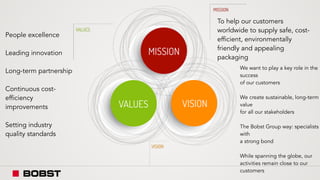
To help our customers
worldwide to supply safe, cost-
efficient, environmentally
friendly and appealing
packaging
We want to play a key role in the
success

of our customers

We create sustainable, long-term
value

for all our stakeholders

The Bobst Group way: specialists
with

a strong bond

While spanning the globe, our
activities remain close to our
customers
People excellence


Leading innovation


Long-term partnership
Continuous cost-
efficiency
improvements
Setting industry
quality standards
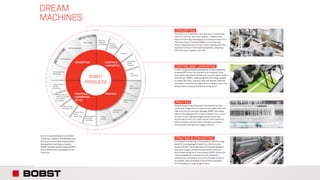
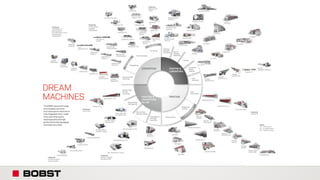
PRODUCT OFFERINGS
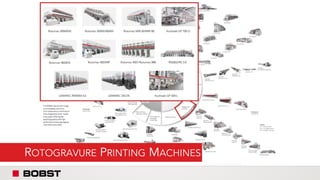
ROTOGRAVURE PRINTING MACHINES
MARKET ANALYSIS
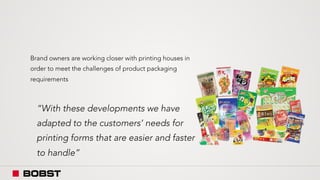
Brand owners are working closer with printing houses in
order to meet the challenges of product packaging
requirements
“With these developments we have
adapted to the customers’ needs for
printing forms that are easier and faster
to handle”
EMERGING MARKET ANALYSIS
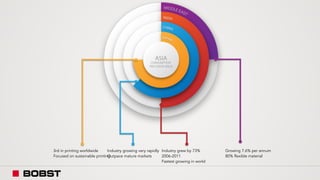
Growing 7.6% per annum
80% flexible material
Industry grew by 73%
2006-2011
Fastest growing in world
Industry growing very rapidly
Outpace mature markets
3rd in printing worldwide
Focused on sustainable printing
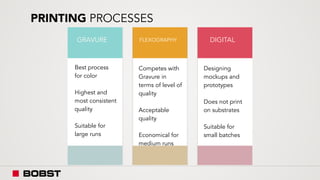
PRINTING PROCESSES
GRAVURE FLEXOGRAPHY DIGITAL
Best process
for color
Highest and
most consistent
quality
Suitable for
large runs
Competes with
Gravure in
terms of level of
quality
Acceptable
quality
Economical for
medium runs
Designing
mockups and
prototypes
Does not print
on substrates
Suitable for
small batches
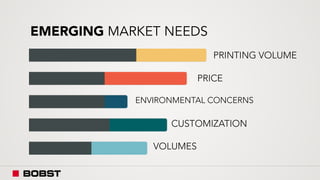
EMERGING MARKET NEEDS
PRINTING VOLUME
PRICE
ENVIRONMENTAL CONCERNS
CUSTOMIZATION
VOLUMES
The market requirements have changed. Integrated and
customer-specific solutions are important to cope with the
new challenges. A flexible, platform-based press concept, for
example, would allow different processes and tools to be
combined together and modules exchanged between
different printing presses.
STRATEGY AGAINST COMPETITORS
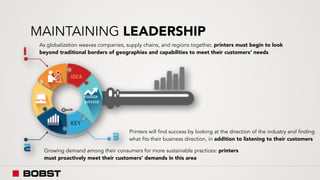
MAINTAINING LEADERSHIP
As globalization weaves companies, supply chains, and regions together, printers must begin to look
beyond traditional borders of geographies and capabilities to meet their customers’ needs
Growing demand among their consumers for more sustainable practices: printers
must proactively meet their customers’ demands in this area
Printers will find success by looking at the direction of the industry and finding
what fits their business direction, in addition to listening to their customers
SEGMENTATION ANALYSIS
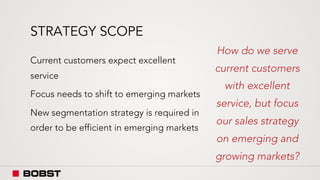
STRATEGY SCOPE
Current customers expect excellent
service
Focus needs to shift to emerging markets
New segmentation strategy is required in
order to be efficient in emerging markets
How do we serve
current customers
with excellent
service, but focus
our sales strategy
on emerging and
growing markets?
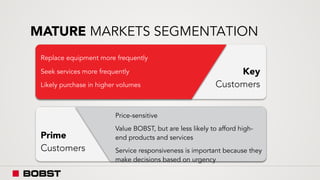
MATURE MARKETS SEGMENTATION
Key
Customers
Prime
Customers
Replace equipment more frequently
Seek services more frequently
Likely purchase in higher volumes
Price-sensitive
Value BOBST, but are less likely to afford high-
end products and services
Service responsiveness is important because they
make decisions based on urgency
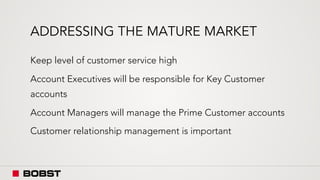
ADDRESSING THE MATURE MARKET
Keep level of customer service high
Account Executives will be responsible for Key Customer
accounts
Account Managers will manage the Prime Customer accounts
Customer relationship management is important
STRATEGY SHIFT
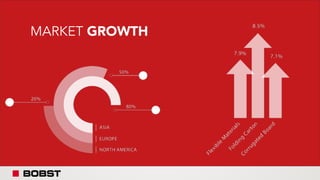
MARKET GROWTH
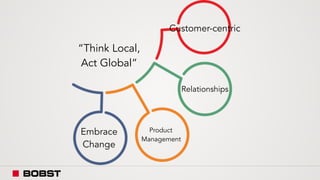
“Think Local,
Act Global”
Customer-centric
Product
Management
Relationships
Embrace
Change
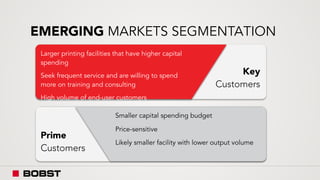
EMERGING MARKETS SEGMENTATION
Key
Customers
Prime
Customers
Larger printing facilities that have higher capital
spending
Seek frequent service and are willing to spend
more on training and consulting
High volume of end-user customers
Smaller capital spending budget
Price-sensitive
Likely smaller facility with lower output volume
ADDRESSING THE EMERGING MARKET
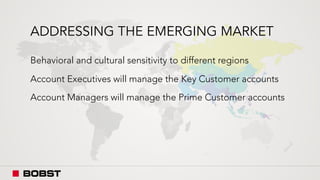
Behavioral and cultural sensitivity to different regions
Account Executives will manage the Key Customer accounts
Account Managers will manage the Prime Customer accounts
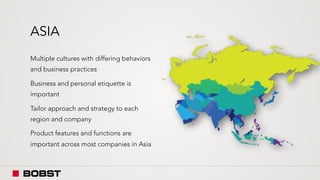
ASIA
Multiple cultures with differing behaviors
and business practices
Business and personal etiquette is
important
Tailor approach and strategy to each
region and company
Product features and functions are
important across most companies in Asia
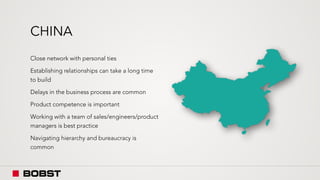
CHINA
Close network with personal ties
Establishing relationships can take a long time
to build
Delays in the business process are common
Product competence is important
Working with a team of sales/engineers/product
managers is best practice
Navigating hierarchy and bureaucracy is
common
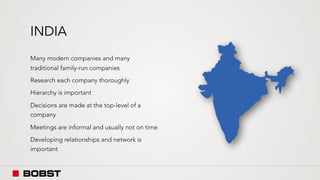
INDIA
Many modern companies and many
traditional family-run companies
Research each company thoroughly
Hierarchy is important
Decisions are made at the top-level of a
company
Meetings are informal and usually not on time
Developing relationships and network is
important
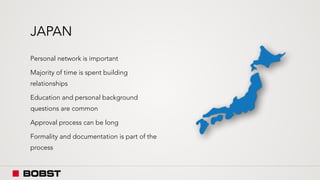
JAPAN
Personal network is important
Majority of time is spent building
relationships
Education and personal background
questions are common
Approval process can be long
Formality and documentation is part of the
process
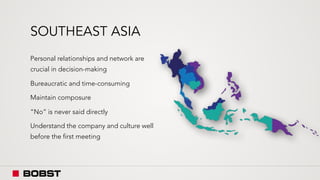
SOUTHEAST ASIA
Personal relationships and network are
crucial in decision-making
Bureaucratic and time-consuming
Maintain composure
“No” is never said directly
Understand the company and culture well
before the first meeting
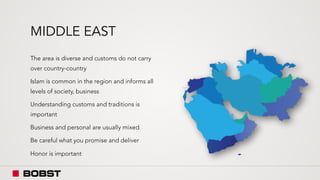
MIDDLE EAST
The area is diverse and customs do not carry
over country-country
Islam is common in the region and informs all
levels of society, business
Understanding customs and traditions is
important
Business and personal are usually mixed
Be careful what you promise and deliver
Honor is important
ORGANIZATIONAL ANALYSIS
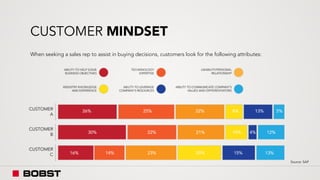
CUSTOMER MINDSET
When seeking a sales rep to assist in buying decisions, customers look for the following attributes:
Source: SAP
Customers have different needs
Sales strategy has to reflect the
customer’s mindset
Utilizing new tools and
technologies to deliver leads and
close sales
WHAT DOES IT MEAN?
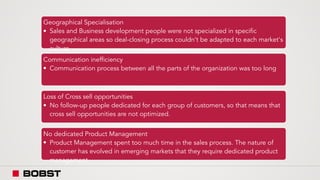
Geographical Specialisation
• Sales and Business development people were not specialized in specific
geographical areas so deal-closing process couldn’t be adapted to each market's
culture
Communication inefficiency
• Communication process between all the parts of the organization was too long
Loss of Cross sell opportunities
• No follow-up people dedicated for each group of customers, so that means that
cross sell opportunities are not optimized.
No dedicated Product Management
• Product Management spent too much time in the sales process. The nature of
customer has evolved in emerging markets that they require dedicated product
management
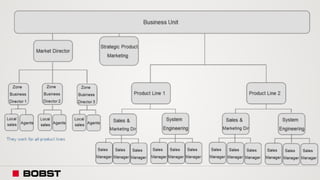
ORGANIZATIONAL STRUCTURE PROPOSAL
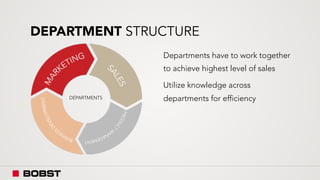
DEPARTMENT STRUCTURE
Departments have to work together
to achieve highest level of sales
Utilize knowledge across
departments for efficiencyDEPARTMENTS
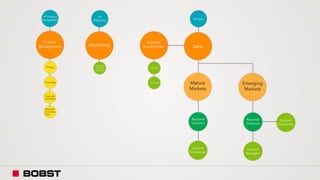
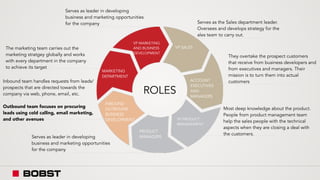
VP MARKETING
AND BUSINESS
DEVELOPMENT
VP SALES
ACCOUNT
EXECUTIVES
AND
MANAGERS
VP PRODUCT
MANAGEMENT
PRODUCT
MANAGERS
INBOUND
OUTBOUND
BUSINESS
DEVELOPMENT
MARKETING
DEPARTMENT
Serves as leader in developing
business and marketing opportunities
for the company
The marketing team carries out the
marketing stratgey globally and works
with every department in the company
to achieve its target
Inbound team handles requests from leads/
prospects that are directed towards the
company via web, phone, email, etc.
Outbound team focuses on procuring
leads using cold calling, email marketing,
and other avenues
Serves as the Sales department leader.
Oversees and develops strategy for the
ales team to carry out.
They overtake the prospect customers
that receive from business developers and
from executives and managers. Their
mission is to turn them into actual
customers
Most deep knowledge about the product.
People from product management team
help the sales people with the technical
aspects when they are closing a deal with
the customers.
Serves as leader in developing
business and marketing opportunities
for the company
ROLES
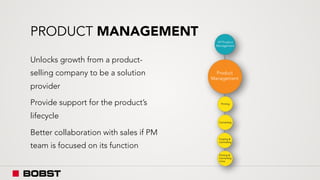
PRODUCT MANAGEMENT
Unlocks growth from a product-
selling company to be a solution
provider
Provide support for the product’s
lifecycle
Better collaboration with sales if PM
team is focused on its function
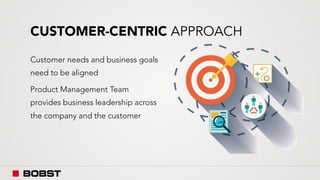
CUSTOMER-CENTRIC APPROACH
Customer needs and business goals
need to be aligned
Product Management Team
provides business leadership across
the company and the customer
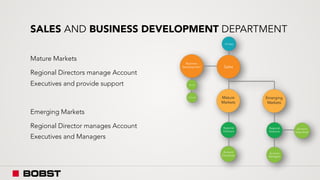
SALES AND BUSINESS DEVELOPMENT DEPARTMENT
Mature Markets
Regional Directors manage Account
Executives and provide support
Emerging Markets
Regional Director manages Account
Executives and Managers
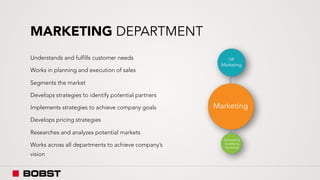
MARKETING DEPARTMENT
Understands and fulfills customer needs
Works in planning and execution of sales
Segments the market
Develops strategies to identify potential partners
Implements strategies to achieve company goals
Develops pricing strategies
Researches and analyzes potential markets
Works across all departments to achieve company’s
vision
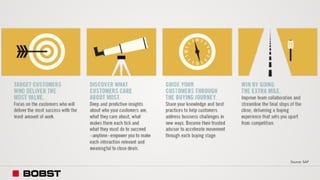
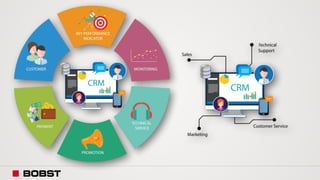
ACQUIRING NEW CUSTOMERS
Source: SAP
IMPLEMENTATION
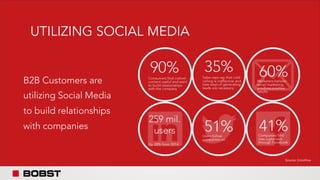
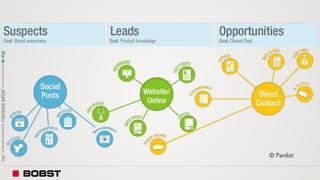
UTILIZING SOCIAL MEDIA
Source: IntroHive
B2B Customers are
utilizing Social Media
to build relationships
with companies
CONTENT MARKETING
Important to establish reputation as a leader
Customer’s will rely on a “thought-leader”
Email nurture and drip marketing is necessary to
succeed against competitors
Increased conversion potential
Decrease marketing costs
Increase sales
© Pardot
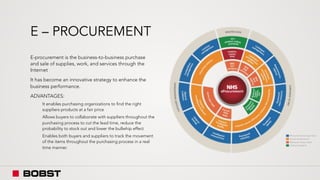
E – PROCUREMENT
E-procurement is the business-to-business purchase
and sale of supplies, work, and services through the
Internet
It has become an innovative strategy to enhance the
business performance.
ADVANTAGES:
It enables purchasing organizations to find the right
suppliers products at a fair price
Allows buyers to collaborate with suppliers throughout the
purchasing process to cut the lead time, reduce the
probability to stock out and lower the bullwhip effect
Enables both buyers and suppliers to track the movement
of the items throughout the purchasing process in a real
time manner.
TYPES
THIRD PARTY MARKETS
Applied to a specialized industry with deep roots in a given industry.
SPONSORED MARKETS
A public platform that collaborates with sponsors in order to help the vertical industry e-
marketplaces and trading communities
PRIVATE MARKETS
Refers to the buying and selling of pre-existing investor commitments to private equity
and other alternative investment funds
REQUIREMENTS
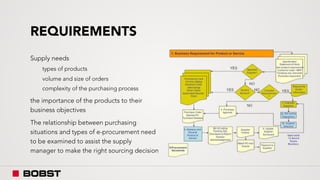
Supply needs
types of products
volume and size of orders
complexity of the purchasing process
the importance of the products to their
business objectives
The relationship between purchasing
situations and types of e-procurement need
to be examined to assist the supply
manager to make the right sourcing decision
BENEFITS OF COMMUNICATION TECHNOLOGY
Simplify communication process
Increase approach to new customers by 10%
Decrese sales time
Customers are enabled to see the process,
which is important in the emerging market
NEXT STEPS
SALES PROCESS
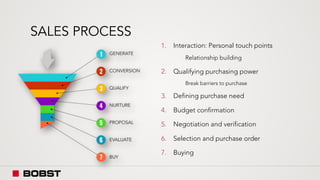
1. Interaction: Personal touch points
Relationship building
2. Qualifying purchasing power
Break barriers to purchase
3. Defining purchase need
4. Budget confirmation
5. Negotiation and verification
6. Selection and purchase order
7. Buying
SHORTEN THE SALES CYCLE
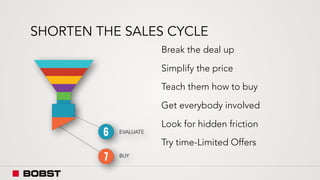
Break the deal up
Simplify the price
Teach them how to buy
Get everybody involved
Look for hidden friction
Try time-Limited Offers
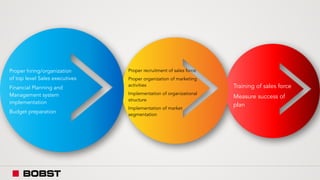
Proper hiring/organization
of top level Sales executives
Financial Planning and
Management system
implementation
Budget preparation
Proper recruitment of sales force
Proper organization of marketing
activities
Implementation of organizational
structure
Implementation of market
segmentation
Training of sales force
Measure success of
plan
THANK YOU

BOBST_Presentation

  • 2.
    SEGMENTATION AND SALES ORGANIZATION PROPOSAL Bologna BusinessSchool Business Marketing Professor Lelli April 8, 2016
  • 5.
  • 6.
    AGENDA Proposal Company Market Analysis Segmentation Analysis StrategyShift Organizational Analysis Implementation Next Steps
  • 7.
    EXECUTIVE SUMMARY The currentsegmentation strategy is not designed to handle the evolution of the customer mindset in emerging markets, specifically the rotogravure market. As a result, the organizational structure cannot support the shift to emergin markets and the sales force is having difficulty penetrating the market. The current proposal offers a segmentation strategy based on Mature and Emerging markets, and segments customers into Key and Prime customers, based on size, need, and level of service expected. The organizational structure is informed by the new segmentation strategy and proposes a departmental shift, change in mindset, and a dedicated Product Management division. Rotogravure is a growing worldwide market, but is stagnant in mature market. Changing strategy to reflect this change is necessary for the long-term strength of the company.
  • 8.
  • 9.
    ISSUES Cost of saleshas been rising gradually Cost of lead acquisition is increasing Current segmentation cannot support expansion Current sales organization is ineffective
  • 10.
    SCOPE Create a leanersales process for rotogravure printing machines Reduce overall cost of sales Develop a sales structure that supports the market growth Develop a sales structure that supports entering emerging markets
  • 11.
    To help ourcustomers worldwide to supply safe, cost- efficient, environmentally friendly and appealing packaging We want to play a key role in the success
 of our customers
 We create sustainable, long-term value
 for all our stakeholders
 The Bobst Group way: specialists with
 a strong bond
 While spanning the globe, our activities remain close to our customers People excellence 
 Leading innovation 
 Long-term partnership Continuous cost- efficiency improvements Setting industry quality standards
  • 12.
  • 16.
  • 22.
  • 25.
    Brand owners areworking closer with printing houses in order to meet the challenges of product packaging requirements “With these developments we have adapted to the customers’ needs for printing forms that are easier and faster to handle”
  • 28.
  • 29.
    Growing 7.6% perannum 80% flexible material Industry grew by 73% 2006-2011 Fastest growing in world Industry growing very rapidly Outpace mature markets 3rd in printing worldwide Focused on sustainable printing
  • 30.
    PRINTING PROCESSES GRAVURE FLEXOGRAPHYDIGITAL Best process for color Highest and most consistent quality Suitable for large runs Competes with Gravure in terms of level of quality Acceptable quality Economical for medium runs Designing mockups and prototypes Does not print on substrates Suitable for small batches
  • 31.
    EMERGING MARKET NEEDS PRINTINGVOLUME PRICE ENVIRONMENTAL CONCERNS CUSTOMIZATION VOLUMES
  • 32.
    The market requirementshave changed. Integrated and customer-specific solutions are important to cope with the new challenges. A flexible, platform-based press concept, for example, would allow different processes and tools to be combined together and modules exchanged between different printing presses.
  • 33.
  • 34.
    MAINTAINING LEADERSHIP As globalizationweaves companies, supply chains, and regions together, printers must begin to look beyond traditional borders of geographies and capabilities to meet their customers’ needs Growing demand among their consumers for more sustainable practices: printers must proactively meet their customers’ demands in this area Printers will find success by looking at the direction of the industry and finding what fits their business direction, in addition to listening to their customers
  • 35.
  • 36.
    STRATEGY SCOPE Current customersexpect excellent service Focus needs to shift to emerging markets New segmentation strategy is required in order to be efficient in emerging markets How do we serve current customers with excellent service, but focus our sales strategy on emerging and growing markets?
  • 37.
    MATURE MARKETS SEGMENTATION Key Customers Prime Customers Replaceequipment more frequently Seek services more frequently Likely purchase in higher volumes Price-sensitive Value BOBST, but are less likely to afford high- end products and services Service responsiveness is important because they make decisions based on urgency
  • 38.
    ADDRESSING THE MATUREMARKET Keep level of customer service high Account Executives will be responsible for Key Customer accounts Account Managers will manage the Prime Customer accounts Customer relationship management is important
  • 39.
  • 40.
  • 41.
  • 42.
    EMERGING MARKETS SEGMENTATION Key Customers Prime Customers Largerprinting facilities that have higher capital spending Seek frequent service and are willing to spend more on training and consulting High volume of end-user customers Smaller capital spending budget Price-sensitive Likely smaller facility with lower output volume
  • 43.
    ADDRESSING THE EMERGINGMARKET Behavioral and cultural sensitivity to different regions Account Executives will manage the Key Customer accounts Account Managers will manage the Prime Customer accounts
  • 44.
    ASIA Multiple cultures withdiffering behaviors and business practices Business and personal etiquette is important Tailor approach and strategy to each region and company Product features and functions are important across most companies in Asia
  • 45.
    CHINA Close network withpersonal ties Establishing relationships can take a long time to build Delays in the business process are common Product competence is important Working with a team of sales/engineers/product managers is best practice Navigating hierarchy and bureaucracy is common
  • 46.
    INDIA Many modern companiesand many traditional family-run companies Research each company thoroughly Hierarchy is important Decisions are made at the top-level of a company Meetings are informal and usually not on time Developing relationships and network is important
  • 47.
    JAPAN Personal network isimportant Majority of time is spent building relationships Education and personal background questions are common Approval process can be long Formality and documentation is part of the process
  • 48.
    SOUTHEAST ASIA Personal relationshipsand network are crucial in decision-making Bureaucratic and time-consuming Maintain composure “No” is never said directly Understand the company and culture well before the first meeting
  • 49.
    MIDDLE EAST The areais diverse and customs do not carry over country-country Islam is common in the region and informs all levels of society, business Understanding customs and traditions is important Business and personal are usually mixed Be careful what you promise and deliver Honor is important
  • 50.
  • 51.
    CUSTOMER MINDSET When seekinga sales rep to assist in buying decisions, customers look for the following attributes: Source: SAP
  • 52.
    Customers have differentneeds Sales strategy has to reflect the customer’s mindset Utilizing new tools and technologies to deliver leads and close sales WHAT DOES IT MEAN?
  • 53.
    Geographical Specialisation • Salesand Business development people were not specialized in specific geographical areas so deal-closing process couldn’t be adapted to each market's culture Communication inefficiency • Communication process between all the parts of the organization was too long Loss of Cross sell opportunities • No follow-up people dedicated for each group of customers, so that means that cross sell opportunities are not optimized. No dedicated Product Management • Product Management spent too much time in the sales process. The nature of customer has evolved in emerging markets that they require dedicated product management
  • 55.
  • 57.
    DEPARTMENT STRUCTURE Departments haveto work together to achieve highest level of sales Utilize knowledge across departments for efficiencyDEPARTMENTS
  • 58.
    VP MARKETING AND BUSINESS DEVELOPMENT VPSALES ACCOUNT EXECUTIVES AND MANAGERS VP PRODUCT MANAGEMENT PRODUCT MANAGERS INBOUND OUTBOUND BUSINESS DEVELOPMENT MARKETING DEPARTMENT Serves as leader in developing business and marketing opportunities for the company The marketing team carries out the marketing stratgey globally and works with every department in the company to achieve its target Inbound team handles requests from leads/ prospects that are directed towards the company via web, phone, email, etc. Outbound team focuses on procuring leads using cold calling, email marketing, and other avenues Serves as the Sales department leader. Oversees and develops strategy for the ales team to carry out. They overtake the prospect customers that receive from business developers and from executives and managers. Their mission is to turn them into actual customers Most deep knowledge about the product. People from product management team help the sales people with the technical aspects when they are closing a deal with the customers. Serves as leader in developing business and marketing opportunities for the company ROLES
  • 59.
    PRODUCT MANAGEMENT Unlocks growthfrom a product- selling company to be a solution provider Provide support for the product’s lifecycle Better collaboration with sales if PM team is focused on its function
  • 60.
    CUSTOMER-CENTRIC APPROACH Customer needsand business goals need to be aligned Product Management Team provides business leadership across the company and the customer
  • 61.
    SALES AND BUSINESSDEVELOPMENT DEPARTMENT Mature Markets Regional Directors manage Account Executives and provide support Emerging Markets Regional Director manages Account Executives and Managers
  • 62.
    MARKETING DEPARTMENT Understands andfulfills customer needs Works in planning and execution of sales Segments the market Develops strategies to identify potential partners Implements strategies to achieve company goals Develops pricing strategies Researches and analyzes potential markets Works across all departments to achieve company’s vision
  • 63.
  • 64.
  • 65.
  • 68.
    UTILIZING SOCIAL MEDIA Source:IntroHive B2B Customers are utilizing Social Media to build relationships with companies
  • 69.
    CONTENT MARKETING Important toestablish reputation as a leader Customer’s will rely on a “thought-leader” Email nurture and drip marketing is necessary to succeed against competitors Increased conversion potential Decrease marketing costs Increase sales
  • 70.
  • 71.
    E – PROCUREMENT E-procurementis the business-to-business purchase and sale of supplies, work, and services through the Internet It has become an innovative strategy to enhance the business performance. ADVANTAGES: It enables purchasing organizations to find the right suppliers products at a fair price Allows buyers to collaborate with suppliers throughout the purchasing process to cut the lead time, reduce the probability to stock out and lower the bullwhip effect Enables both buyers and suppliers to track the movement of the items throughout the purchasing process in a real time manner.
  • 72.
    TYPES THIRD PARTY MARKETS Appliedto a specialized industry with deep roots in a given industry. SPONSORED MARKETS A public platform that collaborates with sponsors in order to help the vertical industry e- marketplaces and trading communities PRIVATE MARKETS Refers to the buying and selling of pre-existing investor commitments to private equity and other alternative investment funds
  • 73.
    REQUIREMENTS Supply needs types ofproducts volume and size of orders complexity of the purchasing process the importance of the products to their business objectives The relationship between purchasing situations and types of e-procurement need to be examined to assist the supply manager to make the right sourcing decision
  • 74.
    BENEFITS OF COMMUNICATIONTECHNOLOGY Simplify communication process Increase approach to new customers by 10% Decrese sales time Customers are enabled to see the process, which is important in the emerging market
  • 75.
  • 76.
    SALES PROCESS 1. Interaction:Personal touch points Relationship building 2. Qualifying purchasing power Break barriers to purchase 3. Defining purchase need 4. Budget confirmation 5. Negotiation and verification 6. Selection and purchase order 7. Buying
  • 77.
    SHORTEN THE SALESCYCLE Break the deal up Simplify the price Teach them how to buy Get everybody involved Look for hidden friction Try time-Limited Offers
  • 78.
    Proper hiring/organization of toplevel Sales executives Financial Planning and Management system implementation Budget preparation Proper recruitment of sales force Proper organization of marketing activities Implementation of organizational structure Implementation of market segmentation Training of sales force Measure success of plan
  • 79.